

A kavisli led ekran is an LED video wall built along an arc instead of a flat plane. It wraps around an audience, a stage or a building column, and it removes the hard edges that make flat walls look like a rectangle bolted to a room.
Most curved walls are not made of bent panels. They are made of standard flat cabinets joined at a small angle, or of soft modules that bend to a set radius. Which method you use decides the radius you can reach, how fast the wall goes up and how much it costs.
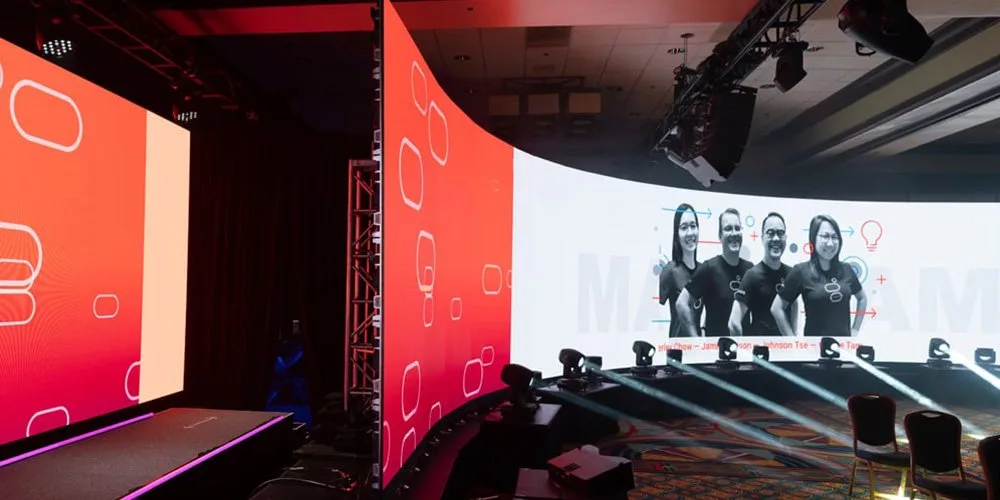
Anahtar teslim paketler
- There are three types of curved LED screen: concave, convex and flexible.
- Concave and convex walls are usually rigid cabinets joined with arc locks. On the EA500C6, each joint sets anywhere from -6° to +6°.
- Radius depends on cabinet width and the angle per joint: R = w / (2 × sin(θ/2)). A 500 mm cabinet at 6° gives about 4.8 m.
- Tighter shapes such as columns and cylinders need flexible modules.
- A curved wall costs more than a flat wall because of curve hardware, structure and content work, not the LEDs themselves.
This guide is for event companies, AV integrators, retailers and venue owners planning a curved LED wall. It covers the three types of curve, how the radius is set, how curved compares with flat, which specs matter, and what drives the price.
1. Types of Curved LED Screens: Concave, Convex and Flexible
There are three ways to curve an LED wall. Concave and convex walls are usually built from rigid cabinets with curve locks; tight curves, columns and waves need flexible modules.
| Menşei | Shape | nasıl inşa edilir | Tipik kullanımlar |
|---|---|---|---|
| Concave (inner arc) | Curves toward the viewer | Rigid cabinets joined at an inward angle with arc locks | Stage backdrops, control rooms, immersive rooms, simulators, wide event walls |
| Convex (outer arc) | Curves away from the viewer | Rigid cabinets joined at an outward angle | Building corners, kiosks, lobby features, 360° displays seen from outside |
| Flexible (soft module) | Any radius, including full cylinders and S-curves | Soft PCB modules on a curved frame, or flexible rental cabinets | Columns, wave walls, ceilings, arches, irregular architecture |
01. Concave Walls
Concave walls keep every part of the screen at a similar distance from a central viewing point. That makes them the usual choice for wide stage screens and command rooms, where people at the edges would otherwise see a skewed image.
02. Convex Walls
Convex walls spread the image outward so it can be seen from more directions. They suit corners and free-standing features in malls and lobbies.
03. Esnek LED Ekranlar
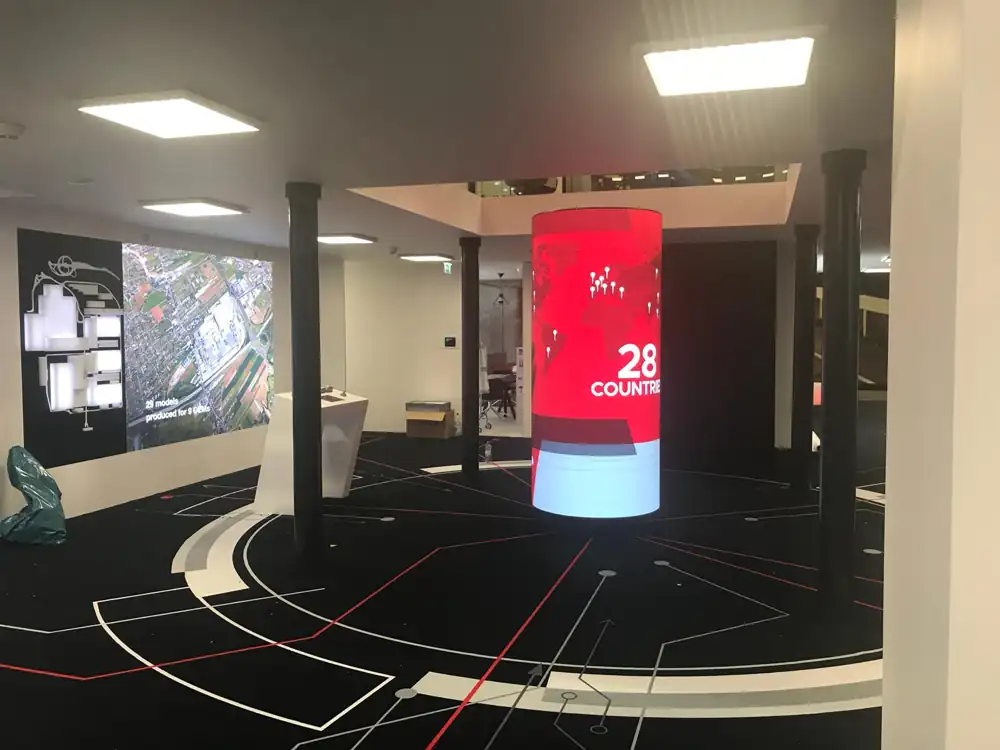
Flexible LED screens are the only practical way to build small-radius shapes such as a pillar wrap. See our esnek LED ekran kılavuzu for module details and flexible LED column cost for budgeting a cylinder.
2. How Curving Works: Arc Locks, Angles and Radius
01. Rigid Cabinets with Arc Locks
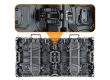
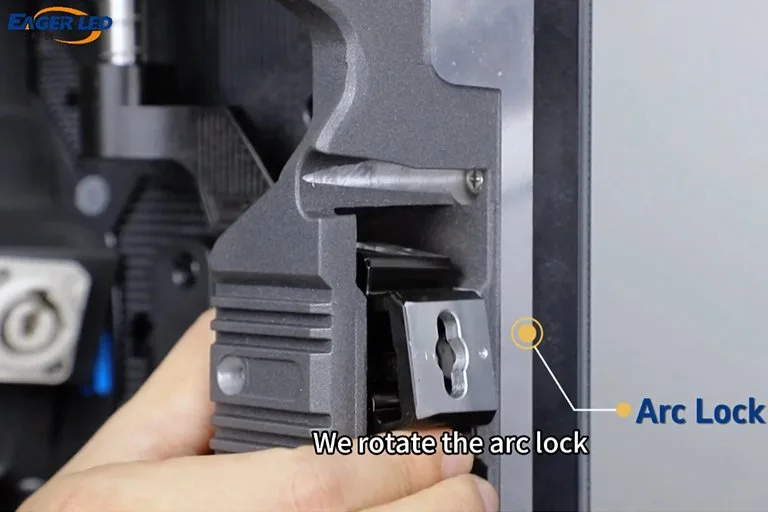
Most rental cabinets, such as our EA500C6 kiralık LED ekran, use an adjustable arc lock between cabinets. On the EA500C6 the lock sets each joint anywhere from -6° (concave) to +6° (convex), and every joint along the wall repeats the chosen angle. Set the locks to 0° and the same cabinets build a flat wall for the next show.
02. Flexible Cabinets and Soft Modules
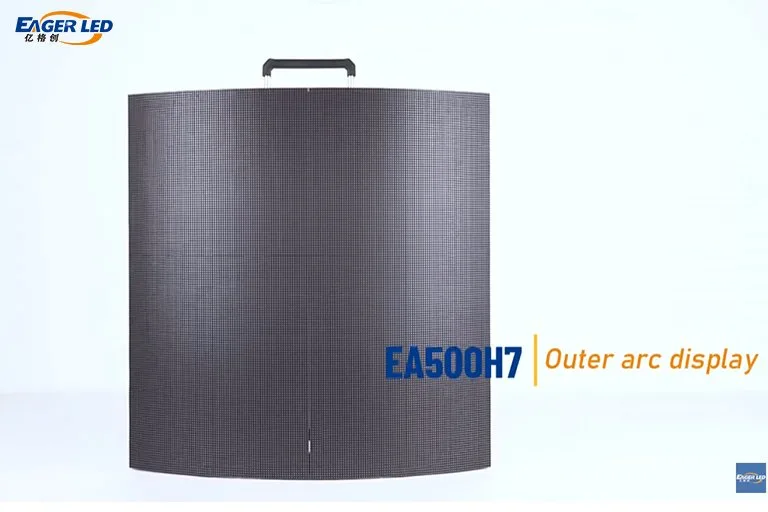
MKS EA500H7 flexible rental LED display uses soft modules and a sliding adjustment mechanism, so it can form concave, convex and cylindrical shapes. Fixed installations use soft modules mounted on a rolled steel frame.
03. Working Out the Radius
For a wall of flat cabinets, the radius depends on cabinet width and the angle at each joint:
R = w / (2 × sin(θ / 2))
where R is the radius, w is the cabinet width and θ is the angle between two neighbouring cabinets. For a 500 mm wide cabinet:
| Angle per joint | yarıçap | Cabinets for a full 360° circle |
|---|---|---|
| 2.5 ° | 11.46 m | 144 |
| 5 ° | 5.73 m | 72 |
| 7.5 ° | 3.82 m | 48 |
| 10 ° | 2.87 m | 36 |
| 15 ° | 1.92 m | 24 |
With the EA500C6 at its full 6° per joint, a 500 mm cabinet wall reaches a radius of about 4.8 m, and 60 cabinets close a full circle. A wider cabinet at the same angle gives a larger radius. If your design needs a tighter radius than the arc lock allows, switch to flexible modules. Always confirm the permitted angle range on the cabinet’s spec sheet before you fix the design.
Not sure which angle your design needs? Send us the wall width and the curve you want, and our engineers will work out the angle per joint and the cabinet count.
3. Curved vs Flat LED Wall: Which Should You Choose?
Choose curved when the wall is wide relative to the room, when people watch from a central area, or when the shape itself is part of the design. Choose flat when the budget is tight, the content is mostly text, or the wall will be moved and rebuilt often.
| faktör | Curved LED wall | Düz LED duvar |
|---|---|---|
| izleme deneyimi | More immersive; edges stay closer to the viewer in a concave wall | Standard; edges can look skewed from the side on very wide walls |
| Görsel etki | Strong; the shape draws attention | Tanıdık |
| Tasarım özgürlüğü | Arcs, corners, columns, waves | Rectangles and right angles |
| Structure | Curved truss, rolled frame or ground stack with curve locks | Standard truss or wall bracket |
| Kurulum zamanı | Longer; angles must be set and checked joint by joint | Daha hızlı |
| İçerik | Needs mapping to the curve; straight lines can appear bent | Any standard 16:9 content |
| Ücret | Higher (curve locks or soft modules, custom structure, content work) | Alt |
A hybrid often works best for events: a flat centre screen with curved wings. Rental cabinets with switchable flat and curve locks let you build both from the same stock.
4. Curved LED Video Wall Design Ideas and Applications
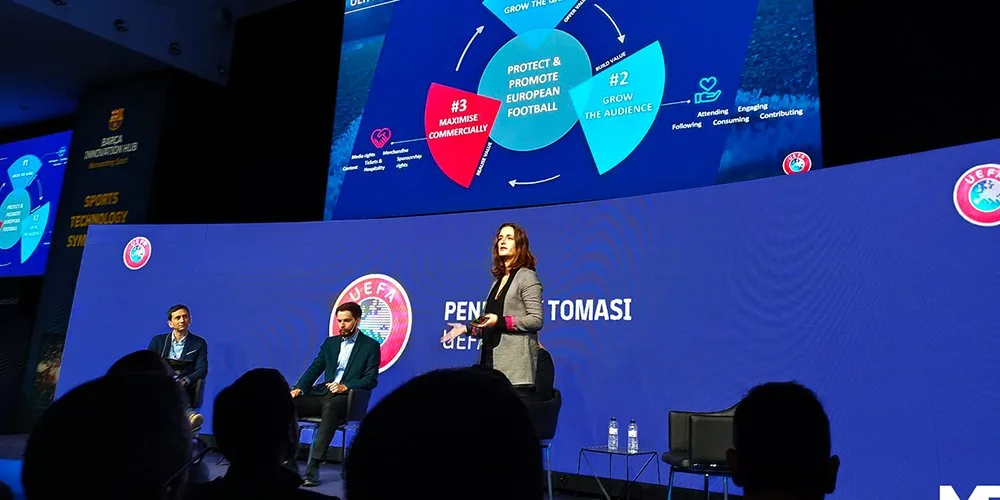
- Concert and stage backdrops. A concave wall behind the stage fills the audience’s view. Curved wings either side of a flat centre screen are a common touring layout, and rental cabinets such as the EA500C6 switch between the two.
- Sergi stantları. A curved back wall or a convex tower makes a booth visible from several aisles.
- Control rooms and command centres. A shallow concave arc keeps all operators at a similar distance from the screen. Use a fine pixel pitch here.
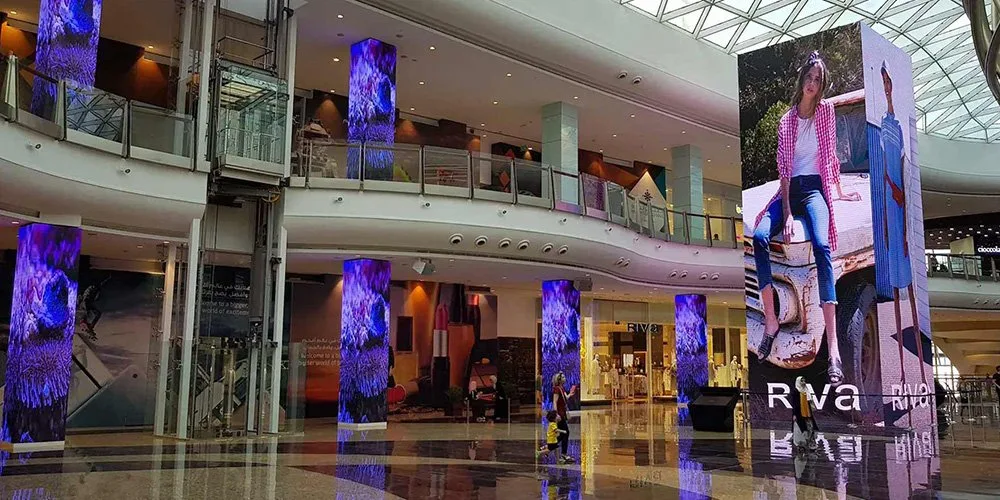
- Perakende ve alışveriş merkezleri. Column wraps, curved storefronts and curved glass facades. For glass, see curved glass LED film.
- Corporate lobbies and museums. A convex feature wall or a ribbon screen that follows a curved reception desk.
- Immersive rooms, simulators and esports arenas. Deep concave or full 360° walls for an enveloping image.
- Churches and auditoriums. A gentle concave arc matched to the seating layout keeps the image readable from side seats.
5. How to Choose the Right Curved LED Screen: 6 Specs to Check
- Radius and angle range. Start from the shape. Work out the radius you need, then check that the cabinet’s arc lock covers that angle per joint. If not, use flexible modules.
- Cabinet size. Smaller cabinets follow a curve more smoothly. 500 × 500 mm cabinets give a rounder arc than 500 × 1000 mm cabinets at the same radius, because each flat face is narrower.
- Piksel aralığı. Match it to the closest viewing distance. A common rule of thumb is about 1 m of minimum viewing distance per 1 mm of pitch. Control rooms and close-up retail need P1.2–P2.5; stages and outdoor events usually use P2.6–P4.8. See our piksel aralığı kılavuzu.
- Görüş açısı. A curved surface is seen at many angles at once, so a wide viewing angle matters more than on a flat wall. Look for 140° or more horizontally, especially on convex walls.
- Brightness and protection. Indoor curved walls typically run at 800–1,500 nits. Outdoor walls need much higher brightness and IP65 front protection; outdoor EA500C6 and EA500H7 models offer IP65. Corner protectors also help, since curved walls are often rebuilt.
- Yenileme hızı. If the wall will be filmed or broadcast, ask for 3,840 Hz or higher to avoid scan lines on camera.
6. Curved LED Wall Installation Methods
| Yöntem | İçin en iyisi | Kilit nokta |
|---|---|---|
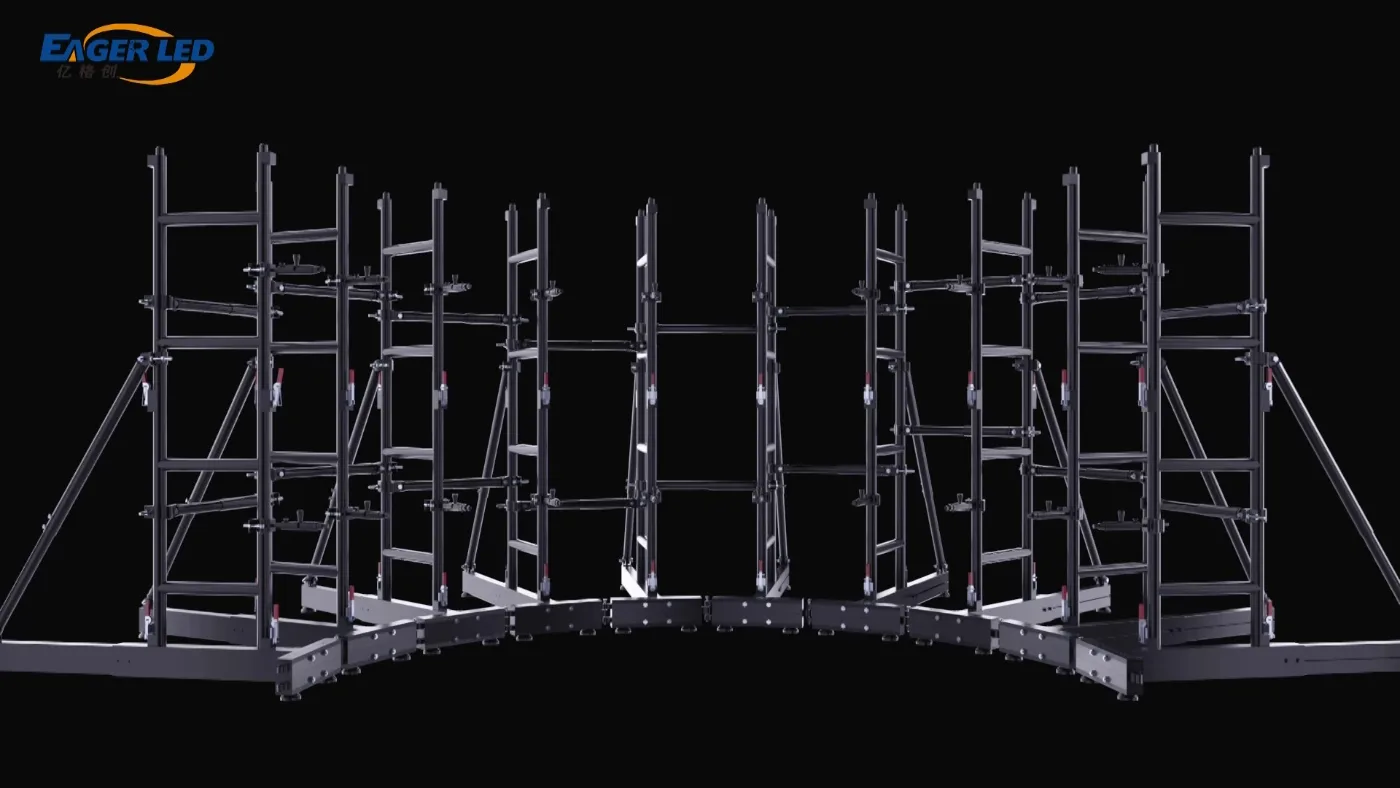
| Hanging from curved truss | Concerts, stages, events | The truss must follow the same radius as the screen; check rigging load per hanging point |
| Yer istifleme | Exhibitions, outdoor events without rigging | Use stacking brackets and rear braces at each curve joint; add ballast outdoors |
| Fixed steel frame | Permanent concave or convex walls, building corners | A rolled or segmented steel frame is made to the radius before the cabinets go on |
| Soft modules on a curved frame | Columns, waves, arches, small radius | Modules attach magnetically to a frame bent to the exact shape; front maintenance only |
A few site rules apply to every curved wall:
- Set all curve locks to the same angle before lifting, and check the arc with a template or laser at the top and bottom rows.
- Leave access for maintenance. Concave walls on a frame are usually serviced from the front; check this before choosing cabinets.
- Plan power and data routing along the curve, since cable runs differ from a flat layout.
- Calibrate brightness and colour after the build. Light hits each cabinet at a slightly different angle on a curve.
For labour and site costs, see our LED video duvarı kurulum maliyeti kontrol listesi.
7. How Much Does a Curved LED Screen Cost?
A curved LED wall costs more than a flat wall of the same area and pixel pitch. The extra comes from the curve hardware, the structure and the content work, not from the LEDs themselves. When comparing quotes, check that each one includes these items:
| Maliyet kalemi | What changes for a curved wall |
|---|---|
| Cabinets or modules | Curve locks or flexible cabinets cost more than flat-lock cabinets; soft modules cost more than rigid modules of the same pitch |
| Piksel aralığı | Same as flat: a finer pitch raises the price per square metre sharply |
| Structure | Curved truss, a rolled steel frame or a custom bracket system made to the radius |
| Kurulum işçiliği | More time to set and check angles joint by joint |
| İçerik | Video must be mapped to the curve, and 3D or panoramic content costs more to produce |
| Yedekleri | Keep spare modules and curve locks; a damaged lock stops the wall holding its shape |
To get an accurate quote, send us the wall width and height, the radius or angle of the curve, indoor or outdoor use, the closest viewing distance and whether the wall is fixed or for rental.
8. Curved LED Screen FAQs
01. Can any LED panel be curved?
No. Rigid cabinets need curve locks built for angled splicing. Small radii and cylinders need flexible modules. Standard flat-lock cabinets cannot be curved safely.
02. What is the difference between a concave and a convex LED screen?
A concave screen curves toward the viewer, like the inside of a circle. A convex screen curves away, like the outside of a column.
03. What is the smallest radius a curved LED wall can have?
It depends on cabinet width and the maximum angle per joint. A 500 mm cabinet at 15° per joint gives a radius of about 1.9 m. Tighter shapes need soft modules.
04. Can the same rental cabinets be used flat and curved?
Yes, if they have adjustable arc locks. Our EA500C6 cabinets switch between flat, concave and convex layouts, and the EA500H7 handles flat and flexible curved walls.
05. Does a curved LED wall need special content?
Standard video plays on a gentle curve. Deep curves, columns and 360° walls look best with content mapped to the exact pixel layout.
06. Can curved LED screens be used outdoors?
Yes. Choose IP65 front protection and outdoor brightness. The outdoor versions of the EA500C6 and EA500H7 are built for this.
9. Plan Your Curved LED Wall with EagerLED
EagerLED builds concave, convex and flexible LED walls for rental and fixed projects. Send us your size, radius and viewing distance, and our engineers will suggest the cabinet, pixel pitch and structure. Contact us at info@eagerled.com or Bir teklif isteği.