

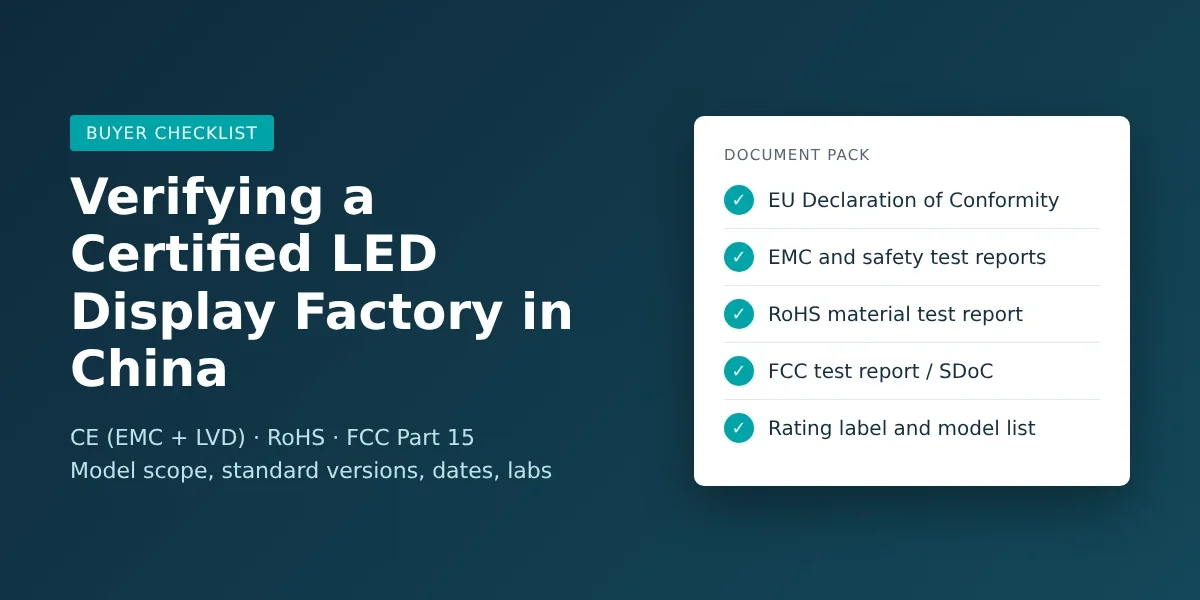
A certified LED display factory in China is one that can send you current, model-specific compliance documents for the exact screen you are buying: CE test reports for EMC and electrical safety, a RoHS material test report, FCC Part 15 test data for the United States, and a rating label that matches all of them. A logo row on a website is not proof. The proof is a set of documents you can trace to a named lab and a model list that includes your pixel pitch and cabinet.
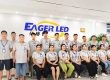
EagerLED (شنتشن EagerLED Co., Ltd.) has manufactured LED displays in Shenzhen since 2009 and lists CE, RoHS, FCC and CCC among its product certifications. It sells as a mid-priced, factory-direct supplier with strict quality control, not as the cheapest option. This guide is written for procurement managers and project buyers in Europe and North America who are shortlisting Chinese factories, and it applies the same checks to EagerLED that it applies to anyone else.
You will find what each mark covers, the document pack to request, eight checks that catch most weak paperwork, and the production evidence that tells you whether the screen you receive matches the sample that was tested.
1. What “Certified” Covers for an LED Display
When a supplier calls itself a certified LED display factory, it usually means its products have been tested against the requirements of one or more markets. Each mark answers a different question, and none of them is a general quality rating. Knowing the boundaries keeps you from accepting a document that looks official but does not cover your risk.
01. CE is a manufacturer’s declaration backed by tests
For an LED video wall sold in the European Union, CE marking normally rests on two directives: the EMC Directive (2014/30/EU), which deals with electromagnetic emissions and immunity, and the Low Voltage Directive (2014/35/EU), which deals with electrical safety. The manufacturer signs an EU Declaration of Conformity and keeps a technical file. Independent labs test samples and issue reports; a one-page “certificate of compliance” from a lab summarizes those reports but does not replace them. This is why the full test report matters more than the decorative certificate.
02. RoHS is about materials, not performance
RoHS (Directive 2011/65/EU and its amendment (EU) 2015/863) limits ten hazardous substances, such as lead, mercury, cadmium and certain flame retardants and phthalates, in electrical equipment. A RoHS report tells you about the chemistry of the modules, power supplies and cables. It says nothing about brightness, color uniformity or lifetime.
03. FCC Part 15 is about radio-frequency interference in the US
An LED display contains digital circuits, so in the United States it falls under FCC Part 15 rules for unintentional radiators. Most commercial displays are authorized through a Supplier’s Declaration of Conformity based on test results. Class A limits apply to commercial and industrial settings; Class B limits are stricter and apply to products marketed for residential use. FCC compliance is not an electrical safety listing.
04. What none of these marks cover
CE, RoHS and FCC do not prove that a factory ships consistent product, that the cabinet structure suits your wind load, or that a city inspector will approve the installation. In North America, many permanent installations also need a listing from a Nationally Recognized Testing Laboratory (for example UL or ETL), which is a separate program. A certified LED display factory should be clear about which of these it has and which it does not.
| علامة | السوق الرئيسي | ما يغطيه | Who prepares the evidence | المستند المطلوب |
|---|---|---|---|---|
| سي (إي إم سي) | الإتحاد الأوربي | Emissions and immunity of the electronics | Manufacturer, with lab test reports | EMC test report and EU Declaration of Conformity |
| CE (LVD) | الإتحاد الأوربي | Electrical safety of the display and power section | Manufacturer, with lab test reports | Safety test report listing the standard and edition |
| بنفايات | EU, UK and others | المواد المحظورة في المواد | Manufacturer, with lab analysis | RoHS test report covering modules and power supply |
| FCC الجزء 15 | الولايات المتحدة | Radio-frequency emissions, Class A or B | Responsible party, based on lab tests | FCC test report and the declaration statement |
| UL / ETL listing | الولايات المتحدة الأمريكية وكندا | Product safety under a listing program | Listing laboratory with factory follow-up | Listing file number you can search in the lab’s directory |
| CCC | السوق المحلي الصيني | Mandatory Chinese product certification | هيئة إصدار الشهادات الصينية | Useful as a sign of factory discipline, not a substitute for CE or FCC |

2. The Document Pack to Request from a Certified LED Display Factory
Ask for documents before you compare quotes, not after you have chosen the cheapest one. A certified LED display factory that is used to export work can usually send a complete pack within a day or two, because the files already exist. If the reply is a single JPEG with a CE logo, treat it as a starting point for questions, not as evidence.
For a typical outdoor or indoor fixed project going to Europe or North America, request:
- إعلان المطابقة من الاتحاد الأوروبي signed by the manufacturer, naming the product, models and directives.
- تقرير اختبار التوافق الكهرومغناطيسي with the standards and editions used, test dates, sample description and results.
- Electrical safety test report for the LVD, again with standard edition and sample details.
- تقرير اختبار بنفايات, ideally covering the LED module, the power supply and the cabling used in your configuration.
- FCC test report and the compliance statement that will appear in the user manual, if the screen goes to the US.
- Model list or family declaration that shows how the tested sample relates to the pitches and cabinets you are ordering.
- Photo of the rating label exactly as it will be printed on your cabinets.
If you buy through a distributor, ask whose name appears on the documents. The exporter of record, the brand on the label and the applicant on the test report should line up, or the distributor should be able to explain the relationship in writing.

3. Eight Checks for Any Certified LED Display Factory
These checks take about an hour per supplier and catch most problems: borrowed certificates, outdated standards, or reports that cover a different product. Run them the same way for every certified LED display factory on your shortlist, including EagerLED.
01. The name on the paper matches the company you pay
Compare the applicant and manufacturer fields with the company on your proforma invoice. Trading companies sometimes forward a certified LED display factory’s report; that can be legitimate, but you should know who actually holds the technical file.
02. The model scope includes your screen
LED display reports often list a family of pixel pitches. Check that your pitch, cabinet size and indoor or outdoor version are on the list. A report for indoor P2.5 modules does not cover an outdoor P8 cabinet with a different power supply.
03. The standards are current editions
Standards are revised. For EMC, multimedia equipment is now tested to EN 55032 (emissions) and EN 55035 (immunity); EN 55022 and EN 55024 have been withdrawn. For safety, EN 62368-1 replaced EN 60950-1 for audio, video and IT equipment. A report that still cites the older numbers is old, and you should ask whether the certified LED display factory has a newer test for the current product design.
04. Dates make sense
Look at the test date, the issue date and any validity date printed by the lab. An EU Declaration of Conformity does not expire by itself, but lab certificates often carry their own validity period, and component changes since the test can make an old report irrelevant. Ask what has changed in the design since the test date.
05. The lab confirms the report number
Email the issuing lab with the report number and ask whether it is genuine and still valid. Reputable labs answer these requests, and a genuine certified LED display factory will not object to you asking. Use contact details from the lab’s own channels, not the phone number printed on the document you are checking.
06. You have the full report, not only the summary
The test report shows which configuration was tested, what the margins were and whether anything was modified to pass. A certificate summary cannot tell you whether the sample had extra ferrite cores or a different power supply from what you will receive.
07. The rating label matches the paperwork
Compare the voltage range, frequency and current on the label photo with the safety report. Most LED display power supplies are rated for 100–240 V at 50/60 Hz, but the cabinet’s maximum current depends on module count and brightness. Mismatches here often reveal a report for a different product.
08. The FCC class fits your installation
For US projects, confirm whether testing was to Class A or Class B limits. Class A is common for commercial signage; if your screen will be marketed or installed in a residential setting, ask about Class B data before you commit.
| ماذا ترى | علم احمر | علامة جيدة | سؤال للمتابعة |
|---|---|---|---|
| اسم مقدم الطلب | A different company with no explanation | Matches the factory or a declared brand owner | Who holds the technical file? |
| قائمة النماذج | Generic “LED display” with no models | Pitches and cabinets listed or defined as a family | Is my pitch and cabinet covered? |
| المعايير | EN 55022 or EN 60950-1 only | EN 55032, EN 55035 and EN 62368-1 with editions | Has the current design been retested? |
| تمور | Lab validity date already passed | Recent test date and stable design | What changed since the test? |
| شكل | Single image, no report number | Full PDF report with page count and signatures | Can you send the complete report? |
| Lab response | Lab cannot find the number | Lab confirms the report in writing | Stop and ask for an explanation |

4. Paper Versus Production: Why Certificates Are Only Half the Answer
A test report describes one sample on one date. What you receive is a production batch built months later. The useful question for a certified LED display factory is therefore not only “Do you have CE?” but “How do you keep production identical to the tested design?”
01. Component consistency
EMC results depend heavily on the receiving card, the power supply, the module driver ICs and the cable layout. Ask the certified LED display factory to state these components in the quotation and to tell you before substituting any of them. Then write that requirement into the purchase contract. This one clause does more to protect your CE and FCC position than any certificate image.
02. Process steps you can ask to see
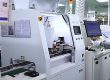
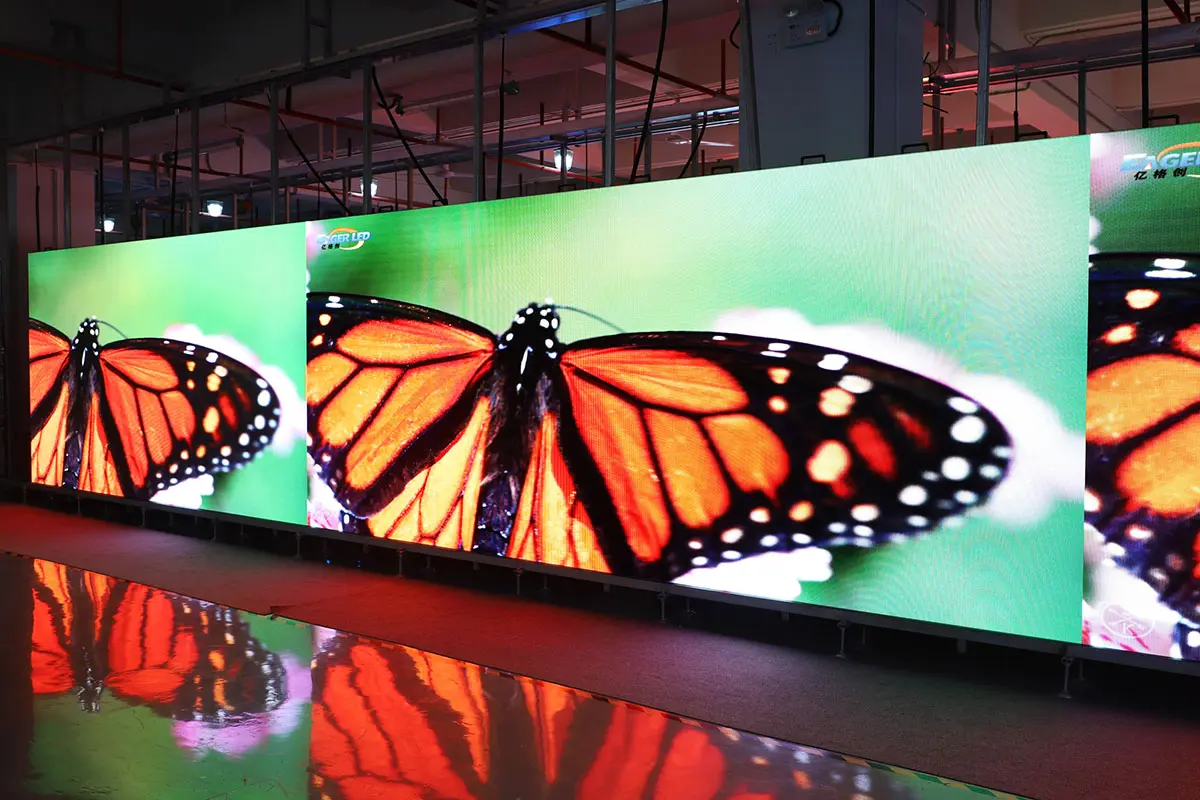
EagerLED documents a 12-step production flow at its Shenzhen plant: LED baking, PCB surface-mount placement, LED placement, lighting test, conformal coating, bottom shell assembly, potting for outdoor modules, mask installation, QC testing for brightness and color consistency, module aging, cabinet assembly and full-screen aging of at least 72 hours. Production runs in a dust-free workshop, and finished screens ship in wooden crates or flight cases. You can ask for photos or a video call at any of these stations during your order.
03. Inspection records tied to your order
Ask for the inspection record for your batch: aging duration, dead-pixel checks, brightness and color uniformity results and photos of the labels. A certified LED display factory that keeps these records can attach them to your shipping documents. One that cannot is relying on the certificate to do work it was never meant to do.

For a full description of the inspection flow, see EagerLEDالصورة LED screen quality control page, and for workshop and equipment photos, the نظرة عامة على مصنع شاشات LED.
5. Market Notes for the EU, UK, US and Canada
The documents you need depend on where the screen will be installed and who will inspect it. These notes reflect common buyer practice; your importer, electrician or local authority has the final word.
01. الاتحاد الأوروبي
Expect CE marking under the EMC and Low Voltage directives plus RoHS. The installation runs on 220–240 V supply. The EU importer named on the product or paperwork carries legal responsibilities, so agree in advance who that is and make sure the Declaration of Conformity is available in a language the authorities accept.
02. المملكة المتحدة
Great Britain has its own UKCA marking, and the government has extended recognition of CE marking for many product categories. Rules have changed several times since 2021, so confirm the current position for electrical equipment with your importer before the labels are printed. Supply voltage is 230 V.
03. الولايات المتحدة الامريكانية
FCC Part 15 covers emissions. For permanent installations, electrical inspectors often expect an NRTL listing such as UL or ETL on the display or its power components, and outdoor screens may need sign permits. Supply is usually 120 V or 208–240 V, so confirm the power supply input range and the cabinet’s current draw at your voltage.
04. كندا
Digital equipment is generally expected to meet ICES-003 emission requirements, and inspectors typically look for Canadian safety approval marks (such as CSA, cUL or cETL). Raise these early, because adding a listing to an existing product takes time.
نصيحة عملية: send your installation country, supply voltage and the inspector’s expectations with your first inquiry. A certified LED display factory can then tell you which existing reports apply and where a gap needs extra testing, before price becomes the only topic.
6. EagerLED’s Published Record and How to Check It
The table below lists what EagerLED publishes about itself and how you can verify each point. It is not a ranking; it is the same evidence-based approach this guide recommends for every supplier. EagerLEDالصورة الصفحة الرئيسية و ملف الشركة carry the same figures.
| العناصر | ابحث عن EagerLED الولايات | كيفية التحقق |
|---|---|---|
| Company and location | شنتشن EagerLED Co., Ltd., LED display manufacturer founded in 2009, Shenzhen, China | Business license and factory address; video call or visit |
| مقياس المصنع | 5,000+ m² (53,800+ sq ft) production workshop; 6,000+ m² (64,500+ sq ft) monthly capacity | Workshop video tour; production schedule for your order |
| تصدير الوصول | عملاء في أكثر من 120 دولة ومنطقة | Ask for project references in your own region |
| الشهادات المدرجة | ce ، بنفايات ، fcc ، ccc | Request the full reports for your exact model and confirm report numbers with the labs |
| غير مدرج | UL or ETL listing is not among the certifications EagerLED ينشر | If your project requires an NRTL listing, raise it before quoting |
| Quality steps | 12-step process, module aging, full-screen aging of 72 hours or more | Batch inspection records and aging photos with your shipment |
| الأقسام | Common sizes such as 320 × 160 mm and 250 × 250 mm; 1,920 Hz or 3,840 Hz refresh options; LEDs from brands such as Nationstar and Kinglight | Confirm the exact LED, driver IC and refresh rate in the quotation |
| الضمان وقطع الغيار | 2-year standard warranty on complete screens; 2% spare parts included; extended warranty available at a modest extra cost | Read the warranty terms and spare-parts list before signing |
| نموذج العمل | Mid-priced, factory-direct; OEM service and an international distributor program | Compare a full like-for-like quotation, not only price per square meter |
EagerLED is a reasonable fit for buyers who want factory-direct pricing, export documentation and a supplier willing to answer detailed compliance questions. It is not the right choice if your only criterion is the lowest possible price, or if your project specification demands a UL listing that EagerLED would have to obtain first. Distributors who want to resell under these terms can read the LED screen distributor program.

For a look at the production line on video, EagerLED publishes factory clips on its EagerLED factory YouTube channel.
الأسئلة الشائعة
Is a CE certificate from a Chinese lab valid in the EU?
Yes, if it is genuine and relevant. A test report from a competent lab, in China or elsewhere, can support CE marking for a certified LED display factory’s product. What matters is that the report covers your product, uses current standards and is genuine. For most LED displays no notified body is involved; the manufacturer declares conformity based on the tests.
Can a factory share one certificate across all its LED screens?
Only if the report defines a product family that includes your model and the differences between models do not affect the results. Different power supplies, receiving cards or cabinet designs often need separate testing.
Does FCC compliance mean the screen is safe to install in the US?
No. FCC Part 15 covers radio-frequency emissions. Electrical safety in the US is usually shown through an NRTL listing such as UL or ETL, which inspectors may require for permanent installations.
How long does it take a supplier to send compliance documents?
A supplier that already holds the reports can usually send them within one to two working days. Long delays, or offers to “arrange” a certificate after you order, suggest the supplier is not yet a certified LED display factory for that product and the reports do not exist yet.
What should I write into the purchase contract about certification?
List the documents to be delivered with the shipment, name the key components (power supply, receiving card, LED and driver IC), and require written notice before any substitution. Include the rating label wording and the FCC class if you import to the US.
Do I need RoHS documents for a screen going to the US?
There is no federal RoHS rule in the US, but some states and many corporate buyers have their own restricted-substance requirements. A RoHS report is still useful evidence of material control.
Requesting Documents and a Quote from EagerLED
To get a useful answer quickly, send EagerLED your installation country, supply voltage, indoor or outdoor use, pixel pitch, screen size and any inspector or client requirements such as an NRTL listing. Ask for the compliance reports for the specific model in the same message, so you can verify them while the quotation is prepared. You can reach the team through the EagerLED صفحة الاتصال.