

An OEM rental LED display factory should be assessed as a long-term fleet supplier, not simply as a source of panels with your logo. For a distributor, the critical questions are whether later orders will fit the first batch, which branding and documentation you actually control, and who can restore a failed cabinet before the next event.
This guide is for distributors planning a private-label inventory purchase for customers in North America or Europe. It covers the decisions to settle before sample approval and the evidence to request before a production order. EagerLED manufactures rental-grade display equipment for sale; an event-day rental service is a separate business.
Start with one repeatable cabinet platform and a written change-control process. An attractive sample has limited value if its modules, receiving-card settings, locks, cases, or replacement stock change without notice.
1. Define the Distributor Program Before Requesting a Quote
A useful OEM rental LED display factory inquiry begins with the jobs the fleet must serve, the territory in which you will sell it, and the support you can provide locally. The word “OEM” can cover a printed case label, a branded user manual, an approved cabinet marking, or a deeper engineering change. Those are different scopes with different costs, sample requirements, and lead times.
01. Describe the first customers and the operating cycle
List the event types you expect your dealers or rental customers to handle: indoor corporate presentations, exhibition booths, touring stages, or outdoor festivals. State the closest audience position, whether cameras will film the wall, likely screen dimensions, setup frequency, and how cabinets will travel. These details decide whether you should prioritize fine pixel pitch, daylight brightness, handling protection, service access, or a specific cabinet size. A catalog image cannot settle these tradeoffs.
Estimate the number of cabinets needed for a typical job and the number held as ready-to-deploy replacements. Keep those two quantities separate. If your fleet must cover two simultaneous events, ask how many complete systems and accessories each crew needs; a pool of bare cabinets does not include power, signal, processing, cases, support hardware, or spare modules.
02. Separate private labeling from a new product design
Ask the factory to list each requested change against its standard model. Branding can involve artwork approval and packaging; a connector change, revised cabinet, or different module is an engineering project. If you plan to mix private-label stock with existing inventory, provide the exact model and revision of that inventory. Do not assume matching dimensions mean mechanical, electrical, or color compatibility.
EagerLED'S distribütör programı açıklar EagerLED-branded sales and OEM branding for qualified orders. Treat the published program as a starting point for a written proposal, with branding scope and commercial terms confirmed for your order. An OEM rental LED display factory should identify what is standard, what is optional, and what requires a new sample.
2. Choose an OEM Rental LED Display Factory Around One Compatible Platform
Cabinet continuity is the core of a profitable rental fleet. Decide on the primary format, then verify every planned expansion against the same mechanical and electrical configuration. The EagerLED kiralık teşhir ürün yelpazesi contains several families, so a model name and revision belong on the purchase order; “500 mm rental panel” is not a complete specification.
01. Match the cabinet format to transport and screen geometry
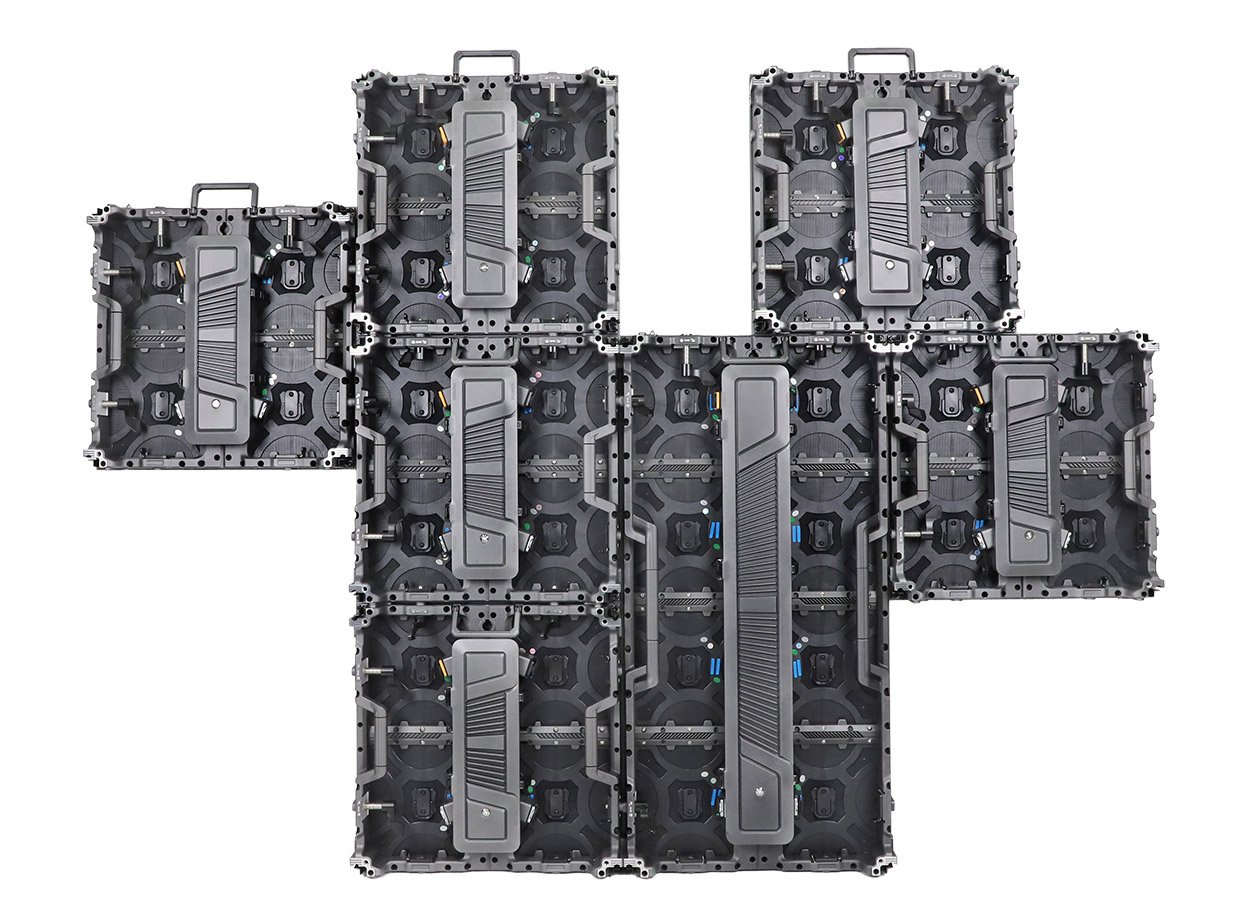
A 500 × 500 mm (19.7 × 19.7 in) cabinet allows smaller changes to a screen outline. A 500 × 1000 mm (19.7 × 39.4 in) cabinet may reduce cabinet count on some rectangular builds. Neither is automatically faster in your operation: case layout, doorways, lifting method, crew count, and access behind the wall also matter. Ask the factory to show the actual packing pattern and the rigging or stacking accessories for your typical screen.
| Seçim | Sığabileceği yere | Numunede neleri doğrulamak gerekiyor? |
|---|---|---|
| 500 × 500 mm dolaplar | Smaller walls, stepped edges, or layouts that change between jobs | Locking sequence, case capacity, handling time, edge protection |
| 500 × 1000 mm dolaplar | Repeated rectangular layouts where taller units suit the crew and route | Lift and handling method, transport limits, service access |
| Mixed cabinet sizes | Layouts requiring both proportions in one compatible family | Approved orientation, matching pitch and configuration, seam and color match |
For a documented example, EagerLED diyor ki EA500C6 500 × 500 mm kabin can be vertically mixed with the EA1000C6 500 × 1000 mm kabin. That statement applies to those C6 models; confirm matching pixel pitch and configuration for the units being purchased. It is not permission to mix any two rental families.
02. Freeze the parts that determine compatibility
Request a configuration sheet naming the pixel pitch, module size and orientation, cabinet revision, receiving card, power supply, connector set, cable pinout, processor assumptions, and control-file version. Ask which items are interchangeable across indoor and outdoor models and which are not. The same nominal pixel pitch does not establish a shared spare-module pool.
For outdoor stock, obtain the protection rating for the quoted model and installation condition, including connector handling and rear access. Do not transfer a rating from one model or side of a cabinet to the entire assembled system. A qualified local team still needs to approve the event structure, electrical distribution, and weather response. An OEM rental LED display factory should provide the model documentation needed for that planning.
3. Put Branding, Documentation, and Service Ownership in Writing
Private labeling creates obligations beyond the visible logo. Before ordering from an OEM rental LED display factory, agree on exactly what the customer sees, what the local distributor may edit, and who responds when a component fails. Otherwise a branded product can arrive with inconsistent manuals, labels, or warranty messages.
01. Approve every customer-facing item
Make an artwork and documentation list: cabinet and case marks, serial labels, outer cartons, quick-start sheet, user manual, packing list, and any permitted digital assets. Specify the language, electrical markings required for the destination market, and who approves proofs before printing. Ask for photographs of a finished sample with the actual marks in place. Do not assume that an OEM program includes every possible customization; each item should be priced and approved separately.
Keep the technical identity visible to your service team even when customer-facing material carries your brand. A serial number should lead back to the production batch, cabinet version, module type, and test record. Decide whether the manufacturer, distributor, or both can access the configuration files and replacement-part mapping. An unlabeled spare that looks similar but takes a different receiver file can create a failure during an event.
02. Define the handoff between factory and local support
Put the warranty start point, claim procedure, parts supply route, diagnostic responsibilities, and shipping terms in the agreement. Decide who trains dealer technicians, who holds local spares, and which failures require return to the factory. The factory may provide product support while the distributor manages the customer relationship, but those roles need written boundaries.
Ask for current service instructions for the exact cabinet. A design with accessible modules or a rear power box is useful only if your crew has the tools, replacement parts, and safe access at the venue. EagerLED'S EA500H9 ürün sayfası, for example, describes front module and rear power-box service. That is a product-specific feature, not a promise about every rental model.
4. Approve a Sample That Represents the Production Order
The purpose of a sample is to expose mismatches before a large private-label purchase. Give the OEM rental LED display factory a signed configuration and ask it to state whether the sample uses the same bill of materials, firmware, connectors, protective hardware, and branded items planned for production. Record any differences as open issues, not as informal assurances.
01. Test the build your customers will actually repeat
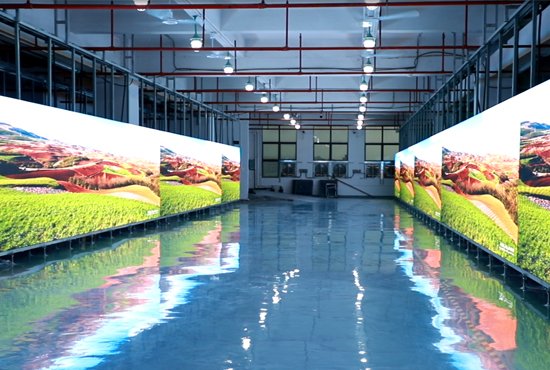
Assemble a small wall in the orientation you plan to sell. Check lock engagement, cabinet flatness, corner protection, handles, cable clearance, case loading, module removal, and access to power and control components. Use a real processor and the intended signal path. Save the tested receiving-card file and cabinet map. If mixed cabinet sizes or curves are part of the offer, build that exact configuration rather than accepting a flat single-size demonstration.
Run solid colors, grayscale, dark scenes, fine text, motion, and the content your typical buyer will show. Inspect seam consistency from relevant viewing positions. For camera-heavy events, test with the actual or representative camera shutter and frame rate; a refresh-rate number alone cannot guarantee a clean recorded picture. Log brightness setting, controller version, and any correction applied so the result can be repeated.
02. Turn the sample result into acceptance criteria
Write pass or fail criteria for the production lot before it is built. Include visual inspection, correct markings, cabinet count and serials, functional patterns, configuration backup, agreed spares, packaging, and shipment documents. Ask for test records tied to serial ranges and for photos of packed goods. State who may approve substitutions and whether a changed part requires a new sample. An OEM rental LED display factory should be able to answer these questions in a way the distributor can audit later.
Factory acceptance does not replace site commissioning. On arrival, inspect transport damage and count every case, cabinet, accessory, and spare against the packing list. Rebuild a representative wall before allocating stock to customers. Keep any failure record linked to the affected serial number so the supplier can distinguish shipping damage, assembly errors, and component defects.
5. Compare the Complete Landed Fleet Package
A low cabinet price can conceal an incomplete rental system. Ask each OEM rental LED display factory to quote the same quantities and scope, with options separated from the base package. The distributor needs a landed, serviceable fleet cost, not only a panel unit price. Published web prices are rarely comparable without the exact pitch, indoor or outdoor build, accessories, destination, and commercial terms.
| Satır Öğesi | Ne belirtilmelidir? | Kararı neden etkiliyor? |
|---|---|---|
| Teşhir dolapları | Model, pitch, revision, indoor/outdoor version, quantity, supplied modules | Defines the usable fleet and future replacement match |
| Control and cabling | Processor, receiving-card configuration, power and signal cable lengths, backups | Prevents a panel-only quote from hiding system cost |
| Handling and support | Cases, hanging bars, ground support interfaces, curve hardware if required | Determines safe transport and usable screen layouts |
| Servis stoğu | Spare cabinets, modules, cards, supplies, connectors, and tools by part number | Determines how quickly the fleet can return to service |
| OEM kapsamı | Artwork proofs, labels, packaging, manuals, sample or tooling charges | Separates branding cost from product cost |
| Teslimat ve destek | Trade term, destination, packing dimensions, warranty procedure, training | Connects the factory price to the distributor’s real obligations |
Calculate the inventory you can actually deploy, not just the screen area purchased. A distributor may need reserve cabinets and modules, plus enough cases and cables for two crews to operate independently. Ask whether spares are from the same production batch and how replacements will be matched later. For budgeting, compare quotations on a common incoterm and destination; have your freight and customs partners validate the landed estimate.
Do not infer warranty coverage, certifications, or market approvals from the word “OEM.” Request documents that apply to the quoted model and destination, and ask which party is named on relevant paperwork. If a buyer requires a specific listing or test report, resolve it before ordering rather than after goods arrive.
6. Protect Repeat Orders and Local Service
The first shipment is only the beginning of an inventory program. Ask the OEM rental LED display factory how it manages revisions, component substitutions, calibration data, and spare availability over time. Put a notification period and an approval route for material changes into the supply agreement. The buyer should know whether the next batch will build a single wall with the first one and what matching work may be required.
01. Maintain a fleet configuration register
For each batch, record model and pitch, cabinet and module revisions, receiving-card model, firmware and configuration files, calibration files, serial range, test date, and spare-part identifiers. Link any service action to that record. When the factory proposes a substitute, request a compatibility statement and sample test against your existing stock. This is especially important when the fleet grows in stages or different dealers purchase at different times.
Color matching deserves a specific plan. Two batches can be individually acceptable yet show a visible seam when assembled together. Ask how calibration files are stored, whether later cabinets can be matched to the earlier lot, and who performs the work. Do not promise invisible mixing to customers until your own representative wall has passed that check.
02. Plan a repair route for the destination market
Identify which parts a trained local technician may replace and which repairs require factory involvement. Keep labeled spares and the current service instructions where your fleet is stored. Define the evidence needed for a claim: serial number, failure description, photos or video, configuration file, and operating conditions. A clear escalation route reduces disputes while a customer is waiting for a usable panel.
For live events, your local company remains responsible for the equipment it offers to customers. Product documentation helps, but venue rigging, electrical distribution, and weather decisions require qualified local assessment. EagerLED'S stage rental setup and safety guide covers the broader event workflow; this article addresses the distributor’s procurement and repeat-order controls.
7. Send a Factory-Ready Inquiry Brief
A concise, consistent inquiry lets an OEM rental LED display factory give a useful answer and lets you compare suppliers on the same basis. Send a one-page program brief before requesting a detailed quotation. Leave a field marked “to be confirmed” when a requirement is open; a guessed specification can produce a precise but unsuitable offer.
Include your target territory and buyer type; expected indoor or outdoor jobs; typical wall dimensions and nearest viewing position; camera use; preferred cabinet format; required branded items; initial quantity and potential reorder timing; destination city; local service capability; and any existing fleet that must be compatible. Attach a simple screen drawing and state whether you need a standard product with approved branding or a physical design change.
Request a response containing a model-specific configuration, itemized bill of materials, sample plan, compatibility statement, acceptance procedure, spare-parts list, documentation package, commercial terms, and named support contact. If two offers use different pitches or omit cases, normalize the scope before comparing prices. The right outcome is a fleet your customers can build, maintain, and expand predictably.
8. Sık Sorulan Sorular
01. Is there one minimum order quantity for private-label rental LED cabinets?
No universal quantity applies. Branding method, cabinet model, artwork, packaging, and whether engineering changes are needed all affect the threshold. Ask for the minimum and unit price for each requested customization, plus the sample charge, in a current written proposal.
02. Can 500 × 500 mm and 500 × 1000 mm rental cabinets be combined?
Only when the manufacturer approves the exact family, pitch, configuration, and orientation. EagerLED states that EA500C6 and EA1000C6 support vertical mixed splicing; confirm the specific versions and test a representative assembly before selling that layout.
03. Does a private-label logo make the distributor the manufacturer?
A logo does not settle legal or service responsibilities. The agreement and destination-market rules determine who is responsible for labeling, documentation, product claims, import obligations, warranty handling, and customer support. Have qualified local advisers review obligations that apply to your market.
04. Can later production batches always expand an earlier rental fleet?
Not automatically. Compare cabinet, module, receiving card, firmware, connectors, and calibration records, then build a mixed-batch test wall. Require the factory to disclose substitutions before production and document any matching work.
05. Does a high refresh-rate specification guarantee clean camera footage?
No. Camera shutter, frame rate, processor settings, scan behavior, brightness, and content also affect the result. Test the proposed display with representative cameras and operating settings, and save the settings that pass.
06. What should a distributor ask for if a cabinet fails between events?
Ask for a documented diagnosis route, part numbers, spare-stock plan, service instructions, warranty procedure, and a contact who can interpret the serial and configuration record. The distributor should test replacement parts against its own fleet before returning a cabinet to service.
9. Request a Private-Label Rental Display Configuration
For a useful OEM rental LED display factory discussion, send EagerLED your intended market, event types, cabinet format, screen drawings, first-order quantity, proposed branding list, and service plan. Ask for the exact product configuration and a sample plan that can be tested against your future fleet. İletişim EagerLED with your distributor brief to discuss the available rental models and OEM scope.