

An outdoor LED display upgrade should start with a condition survey, not a new module catalog. Repair or retrofit the existing screen when its structure, cabinets, environmental protection, service access, and control architecture remain suitable and the proposed parts can be verified as compatible. Replace the screen when those foundations are unsafe, difficult to service, or unable to support the image and operating requirements you now have.
This guide is for the buyer responsible for an existing fixed outdoor advertising display who is comparing a targeted upgrade with a complete replacement. It shows how to define the work, what to ask an installer or supplier to verify, and how to compare proposals on the same scope. It does not turn a visual inspection into structural or electrical approval.
The outdoor LED display upgrade decision is rarely all or nothing. A failed power supply may call for a matched repair; an aging but sound cabinet may support a carefully engineered electronics change; a corroded support or inaccessible enclosure may make a new display the more defensible investment. The useful question is: which existing parts can be retained with evidence, and what risk stays with them?
1. Choose the Scope of an Outdoor LED Display Upgrade
An outdoor LED display upgrade can mean three different jobs: restoring failed components, changing a defined subsystem, or replacing the display assembly. Ask every bidder to state which one they propose. A module-only price and a complete installed-screen price cannot be compared until exclusions, retained assets, and acceptance criteria are visible.
| 範圍 | 適用情況 | 買方必須核實的內容 | Main unresolved risk |
|---|---|---|---|
| Like-for-like repair | A limited fault is diagnosed and approved matching parts are available. | Part revision, failure cause, seal restoration, image match, and post-repair test. | Other aged components may fail later. |
| Engineered retrofit | Retained cabinets and support remain suitable, but modules, control equipment, or power components need a defined change. | Mechanical, electrical, thermal, optical, and controller compatibility as a complete system. | New and old parts may interact in ways a component quote misses. |
| Complete display replacement | The enclosure, access, weather protection, or required performance cannot be justified with retained hardware. | New screen specification plus separate approval of support, power, access, permits, and disposal scope. | Site work and downtime can exceed the hardware allowance. |
First rule out an ordinary fault. A dark area could arise from a module, receiving card, power circuit, or signal path. If a qualified technician can isolate and repair that fault, a capital project may be premature. If failures are widespread, repeated, or linked to water ingress, a one-part fix may only reset the clock until the next shutdown.
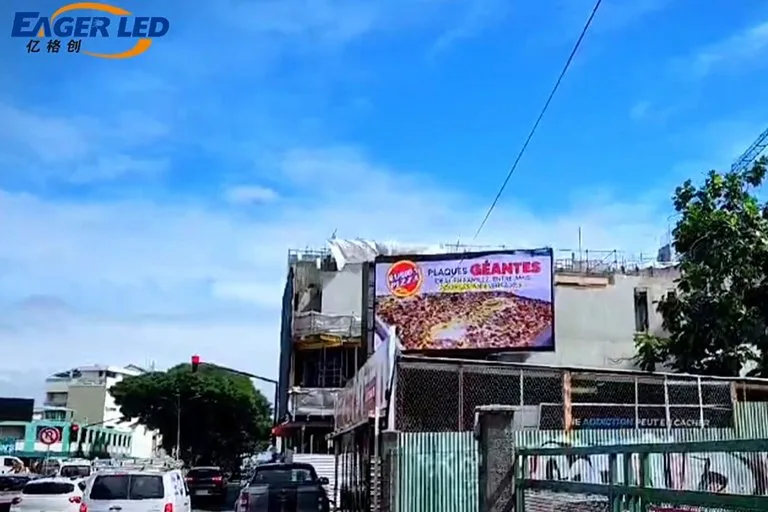
Use the same decision boundary for every proposal: say exactly what remains on site, who accepts responsibility for retained hardware, and what test proves that the finished display works. This turns an outdoor LED display upgrade from an attractive list of components into a reviewable project.
2. Survey the Installed Screen Before Requesting a Retrofit
An outdoor LED display upgrade survey should establish the current screen identity and its condition. Ask the maintenance team for the purchase record, cabinet and module labels, drawings, controller files, prior service reports, and any available inspection results. If these are missing, record the gap; do not infer a cabinet revision from a similar image on a current product page. EagerLED“ LED顯示器現場測量清單 gives a broader format for drawings, photographs, access, and unresolved items.
01. Separate structural approval from cabinet condition
A support frame can look sound from the street while connections, anchors, or concealed steel need investigation. Have the responsible structural professional assess retained supports against the proposed screen weight, wind loading, and local requirements. Changing cabinet material or screen size can change those loads. A supplier’s cabinet weight does not approve an existing roof or facade.
Record corrosion, damaged fasteners, deformation, pooling water, loose trim, and any history of leaks. Then inspect the display enclosure itself: module seats, gaskets, doors, cable entries, drainage, and ventilation. A front-rated module does not prove the rear of the assembled display is protected. If the enclosure cannot be restored to a documented outdoor configuration, replacing internal electronics alone is a weak plan.
02. Test how technicians will reach the installed equipment
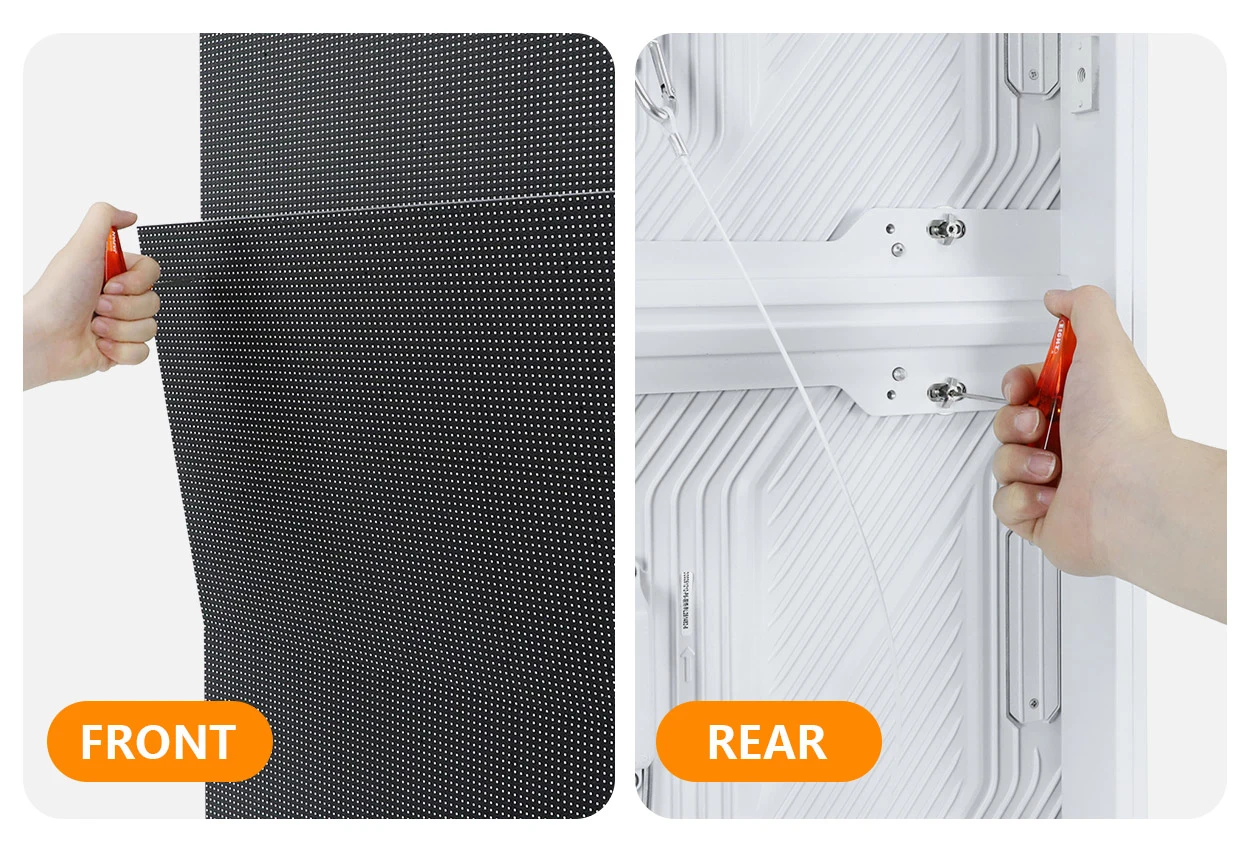
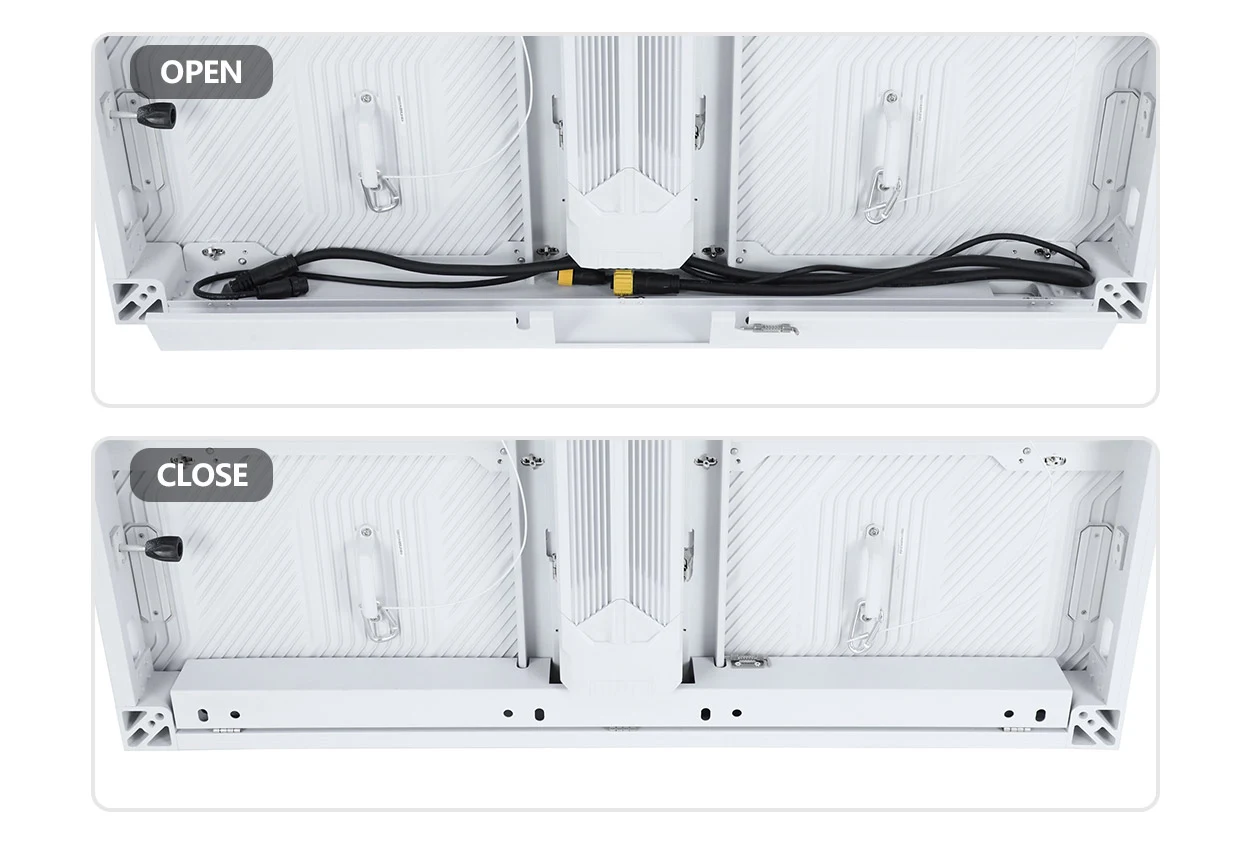
Confirm whether the actual cabinets allow front service, rear service, or both. A nominally serviceable design may become inaccessible after a billboard is fixed against a wall or surrounded by cladding. Record the safe route for personnel, tools, replacement modules, and any lift equipment, together with the allowed shutdown window. The site-specific maintenance guide explains why a service plan must identify the installed configuration and the real access route.
03. Document electrical and control boundaries
A qualified electrical professional should review the existing supply, distribution, protective devices, grounding, cable condition, and available capacity for the proposed configuration. Photograph labels and routes without opening energized equipment for a content survey. Record the controller, receiving cards, media player, brightness sensor, network connection, and current configuration backup. If a control change is proposed, identify what can be reused and who will configure and test the complete signal chain.
For an outdoor LED display upgrade, the most useful survey output is a marked-up drawing and an exception list: “retain after verification,” “replace,” and “unknown pending test.” That list lets each bidder price the same work. It also prevents an apparently economical retrofit from hiding major site repairs in provisional allowances.
3. Define a Retrofit That Can Actually Be Tested
For an outdoor LED display upgrade that retains cabinets, the supplier must define every interface between old and new equipment, then demonstrate the result on a representative section before committing to the full screen. Pixel pitch, module dimensions, and a matching connector shape are starting information, not proof of interchangeability.
01. Match modules as a system, not by pitch
For module replacement, check physical dimensions, fixing points, flatness, gasket arrangement, connector position, supply voltage, scan mode, driver configuration, and receiving-card settings. Then compare brightness, color, viewing angle, and calibration behavior with the adjacent modules. A new batch may light correctly but form visible patches against an older screen. If matching stock is unavailable, replacing a complete visible section can sometimes create a more consistent result than scattering new modules across the face.

Request a labeled sample and written compatibility review before buying a large replacement quantity. EagerLED“ spare-parts planning guide is useful for recording exact revisions and replenishment responsibilities. Keep approved spares and the configuration files with the asset record; a spare that cannot be identified or calibrated has limited operational value.
02. Treat power and control changes as separate work packages
A new controller may improve input or management options, but it will not repair a leaking cabinet or an undersized electrical circuit. A power supply replacement must be matched to the installed electrical design, load, protection, mounting, and thermal conditions. Ask the responsible supplier to show the proposed wiring and controller architecture, not just a list of devices. Require a rollback plan for a phased cutover.
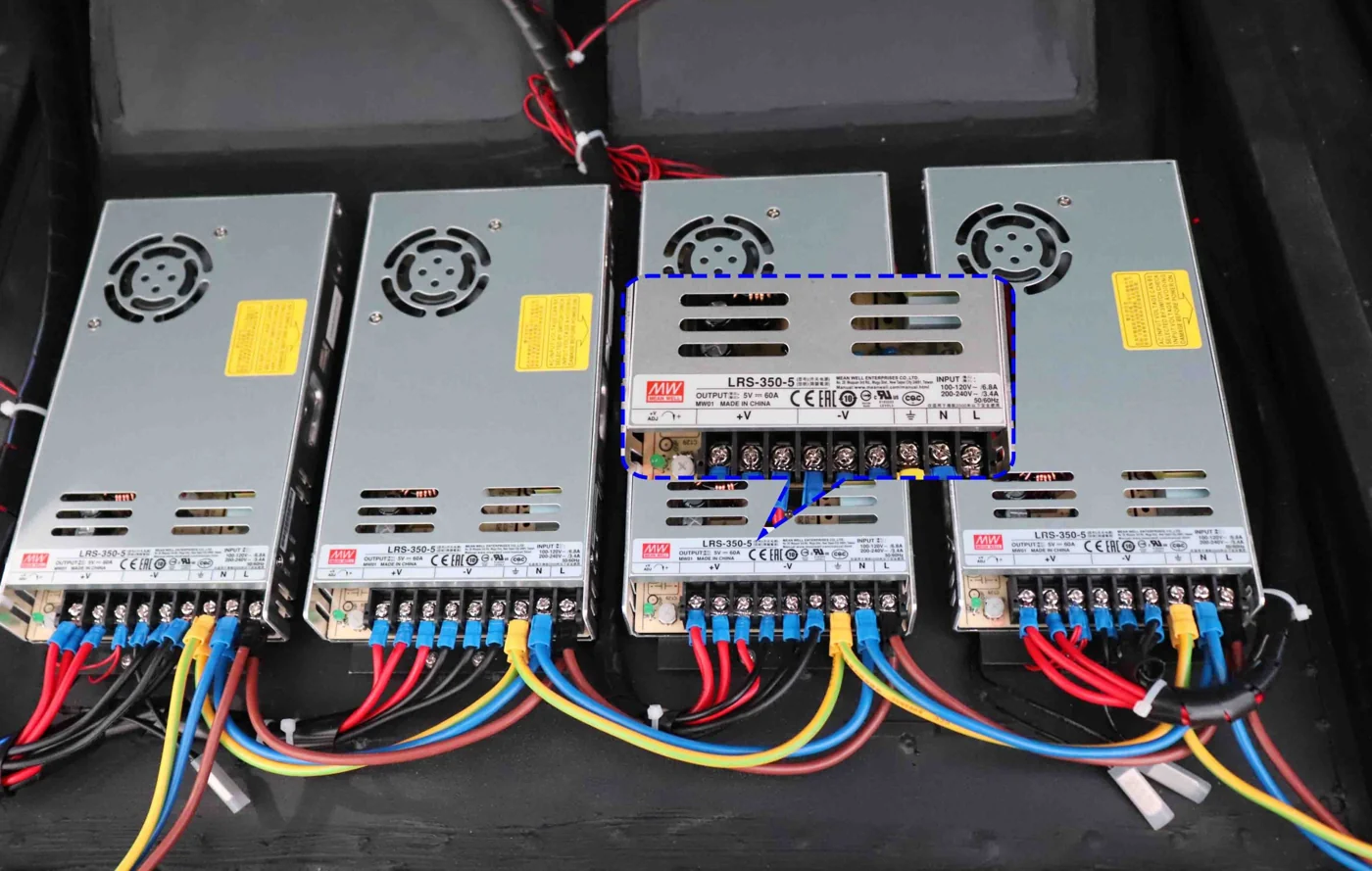
A useful pilot includes the hardest interface: one representative cabinet or section with the proposed modules, power arrangement, receiving-card configuration, seals, and service method. Test image uniformity in daylight and at night, run the planned content, and inspect for abnormal heat or moisture exposure under an agreed procedure. Record acceptance thresholds before the pilot, including failed pixels, visible seams, brightness control, and any required camera performance. A short successful demonstration is evidence for the tested setup only; it does not waive site approval for the full installation.
4. Know When a New Display Is the Cleaner Scope
For an outdoor LED display upgrade, replacement becomes the stronger option when the retained system cannot meet a necessary requirement without replacing most of its subsystems or accepting unresolved risk. The decision is about the installed asset, not its age alone. An older display with known parts and reliable service access may still be repairable; a newer screen with repeated ingress and inaccessible rear panels may not be.
Common triggers include a support or cabinet that fails inspection, recurring weather-related faults, obsolete parts with no verifiable substitute, inadequate access for the proposed service method, and a required resolution or operating pattern beyond the practical limits of the current cabinet and controller. A change in permitted sign dimensions, ownership requirements, or local approval can also make the original arrangement unsuitable. Document the actual trigger in the request for quotation.
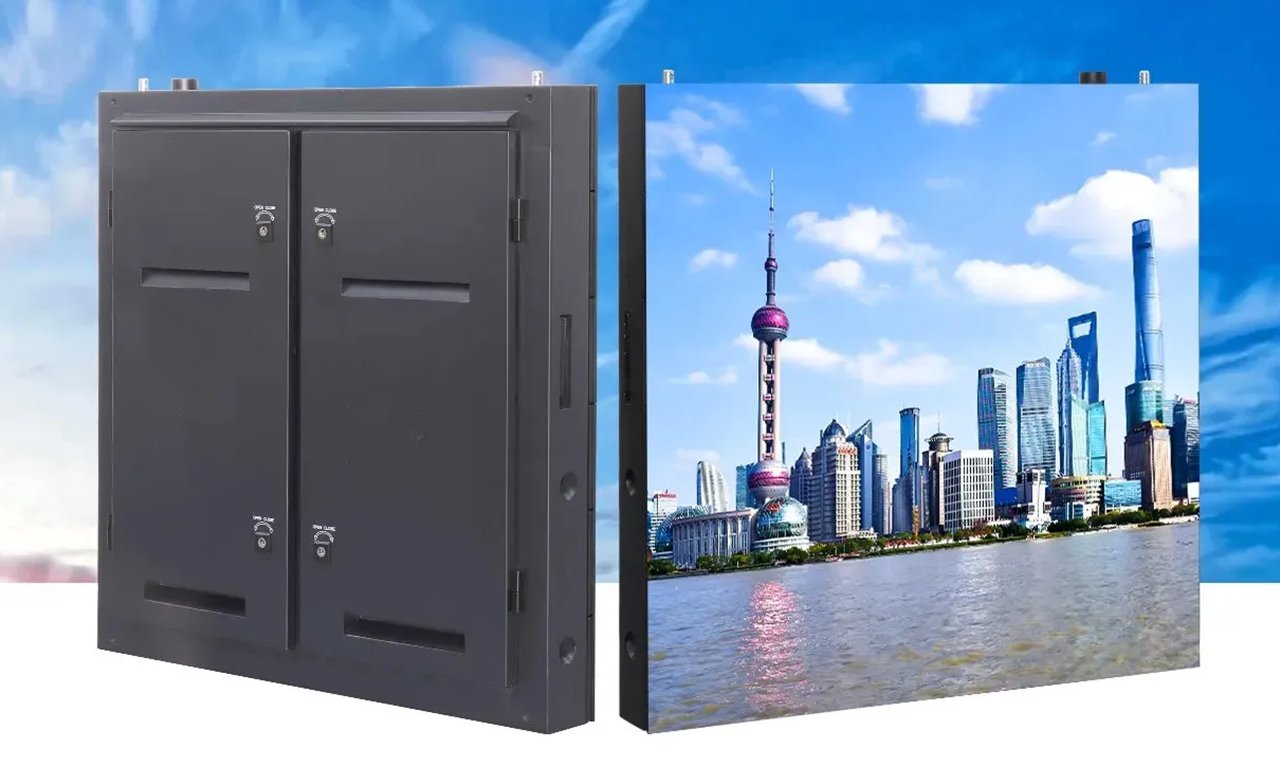
For a new system, specify the assembled display’s required environmental performance, service side, dimensions, pixel pitch, brightness control, control equipment, spares, and acceptance test. The EA-OFixed outdoor board is one example of a fixed-installation product family; its published cabinet features describe that product, not a promise that it will fit an existing structure. Ask for a model-specific drawing and specification before making a structural or electrical decision.
An outdoor LED display upgrade may still retain useful site assets during a screen replacement, such as a suitable approved support or cable route. Require the installer and relevant professionals to verify each retained element. “New screen” does not automatically mean “new structure,” and “reuse structure” does not mean the structure is already approved for the new load.
5. Check What the New Image Requirement Does to the System
For an outdoor LED display upgrade, do not select a finer pitch simply because a newer catalog offers it. Start with the closest viewing position, the message or video detail that must be legible, the active screen dimensions, and the conditions under which the audience will see it. EagerLED“ outdoor display buying guide covers the general selection factors; for an existing asset, add the question of whether the installed cabinet grid and control chain can support the change.
01. Calculate resolution, then check cabinet geometry
As a planning illustration, a 5 m by 3 m (16.4 ft by 9.8 ft) active area at a nominal 10 mm pitch gives about 500 by 300 pixels, or 150,000 pixels. At 5 mm pitch, the nominal count becomes 1,000 by 600, or 600,000 pixels. This fourfold change follows from halving pitch in both directions; it is 不會 an EagerLED configuration or a promised image improvement. Real dimensions must align with the chosen module and cabinet grid, and the final pixel count must be confirmed from the approved drawing.
More pixels can require a different receiving-card layout, controller capacity, content mapping, and data distribution. It may also change power and thermal requirements depending on the selected hardware and operating profile. Ask for an end-to-end design rather than assuming that modules with a finer pitch can be swapped into the same frame. If the advertising content remains large text seen from a distance, the extra pixels may not justify the cost or system change.
02. Define visibility and operating behavior
Ask bidders to state the intended brightness range, sensor or schedule control, viewing angle, and test conditions for the exact configuration. Sun-facing and shaded installations create different requirements. Compare power estimates at a representative luminance and content sequence; use maximum ratings for electrical design, not as a forecast of normal consumption. The LED display power-consumption worksheet explains how area, operating hours, and representative watts per square meter affect a running-cost estimate.
If the screen is filmed, include the intended camera and shutter settings in acceptance testing. If it runs overnight near residences or roads, include the planned brightness policy and any applicable local conditions. These requirements belong in the procurement brief even when the existing screen already operates at the location.
6. Compare Complete Cost, Downtime, and Retained Risk
The lowest hardware quote is not necessarily the lowest project cost. For an outdoor LED display upgrade, compare a repair, a retrofit, and a new display over the same evaluation period and operating assumptions. Include the work needed to make each option usable, not just the purchase price of the visible components.
| 項目類別 | Ask for in the proposal | 為什麼它改變了比較方式 |
|---|---|---|
| 場地準備 | Survey, engineering review, permits, access equipment, removal, and disposal. | A replacement may need more site work; a retrofit can still require extensive access. |
| Display and interfaces | Cabinets or modules, control equipment, power distribution, cabling, seals, and cooling. | Excluded interfaces can become change orders. |
| 調試 | Configuration, calibration, weather-protection checks, training, and documented acceptance. | A lit image is not the whole handover. |
| 操作 | Energy assumptions, expected service tasks, spares, warranty scope, and local labor. | Recurring costs and service delays affect the asset after installation. |
| 打斷 | Planned outage, contingency window, phased work, and fallback content or signage. | A display that sells advertising may have a measurable cost of downtime. |
Build a simple worksheet: initial installed cost plus estimated energy, service, parts, and interruption costs for the chosen evaluation period. Use actual tariffs, operating hours, repair history, contract terms, and supplier test data. Do not treat a quoted maximum power value as average use, and do not assume a new screen will save a fixed percentage of energy without a controlled comparison at the same brightness and content.
Risk should be explicit. A retrofit may keep functioning cabinets but also retain their corrosion, access limits, and uncertain component life. A replacement may resolve those issues but introduce construction, approval, and commissioning work. Ask who warrants new parts, who is responsible for old parts kept in service, and what happens if the pilot reveals an incompatible interface. The answer can change the preferred option even when the prices are close.
7. Send One Brief That Makes Quotes Comparable
A supplier can assess an outdoor LED display upgrade faster when the buyer provides the existing asset record and the intended outcome together. Send the active width and height, installation location, minimum viewing distance, content type, operating hours, current photos, model and label photos, and a fault history. Add drawings of the support and power route where available, plus the permitted service side and shutdown window.
State the business requirement in plain terms: “restore uniform color,” “reduce recurring dark sections,” “make text legible from the pedestrian approach,” or “replace a screen whose rear cannot be serviced.” This prevents an attractive pitch or brightness specification from becoming the project objective by default. List unknowns separately and assign a site survey or test to resolve them.
Ask for three clearly identified outcomes where feasible: a diagnosed repair scope, an engineered retrofit with a pilot, and a full replacement. Each response should mark retained and new assets on the same drawing, state exclusions and assumptions, identify responsible designers, and give a practical work sequence. Require a model-specific bill of materials, compatibility statement, and acceptance procedure. For replacement, include removal and disposal responsibility. For retrofit, include how the supplier will restore cabinet sealing and manage differences between new and old modules.
Finally, ask for the records you will own at handover: as-built drawings, equipment identifiers, controller and calibration backups, approved spare list, operating instructions, test results, and warranty contacts. These materials make the next repair or future outdoor LED display upgrade easier to assess. A quote that stops at delivery leaves the asset manager to reconstruct the system later.
8.常見問題解答
Can a newer P5 module replace an existing P10 module in the same cabinet?
Only after the supplier verifies the full mechanical and electrical design. Pitch changes module resolution, but cabinet fit, fasteners, connectors, power, scan mode, receiving-card settings, and optical consistency also matter. Request a drawing and representative pilot; do not order from pitch alone.
Can an existing support be reused with a new outdoor LED screen?
Possibly. A qualified structural professional must assess the actual support, connections, condition, and site loads for the proposed display and local requirements. A similar screen size does not establish the same weight or wind behavior.
Will a controller upgrade make an old display look like a new screen?
A controller can change signal handling and configuration, but it cannot restore aged LEDs, damaged masks, leaking seals, or poor cabinet alignment. Define the visual defect first and test whether the proposed control change addresses it.
How should mixed-age modules be accepted visually?
Agree a test image, viewing positions, ambient conditions, brightness settings, and acceptable uniformity before installation. Check both daytime and nighttime appearance. If a replacement batch is visibly different, a larger matched section or full-face change may be needed.
Is an IP65-rated module enough for an outdoor retrofit?
No. The assembled cabinet, rear cover, connectors, cable entries, drainage, and installation details must suit the exposure. Ask for evidence for the complete proposed configuration and an inspection after the work.
What if the original screen model and configuration files are missing?
Record labels, photograph both sides of representative modules and cabinets, and have the supplier identify the control chain and interfaces. Budget for diagnostic work and a pilot. Do not assume a current catalog product is interchangeable with the unidentified installation.
9. Request a Scope Review for Your Existing Screen
For an outdoor LED display upgrade proposal, send EagerLED the screen dimensions, installation and viewing conditions, cabinet and module photos, current faults, access constraints, and the outcome you need. Ask for a repair, retrofit, or replacement scope with the compatibility checks and site responsibilities stated clearly. 聯繫我們 EagerLED about your outdoor display project to discuss the suitable product and the information needed for a project-specific quotation.