



Buy Indoor LED Screen
EagerLED supplies indoor LED screens for churches, shops, studios, and meeting rooms, with modular designs and front-service options. Compare pixel pitch, cabinet size, and pricing to find the right display for your project.
Indoor LED Screen Buying Guide: Specs and Price
Choose an indoor LED display screen by matching pixel pitch to viewing distance, cabinet layout to wall size, and brightness to room lighting. This guide explains the specifications, maintenance access and total project costs to check before buying. Product examples link to EagerLED specification pages so you can verify the model and configuration.
Table of Contents
1. What is indoor LED Screen?
2. Features of indoor LED Screen
3. Advantages of Indoor LED Screen
4. How to Choose LED Screen Indoor?
5. Indoor LED Screen Trends
6. Indoor LED Screen Applications
7. Choosing EagerLED as Your Indoor LED Screen Supplier
8. Indoor LED Screen Frequently Asked Questions
9. Request an Indoor LED Screen Quote
1. What Is Indoor LED Screen?
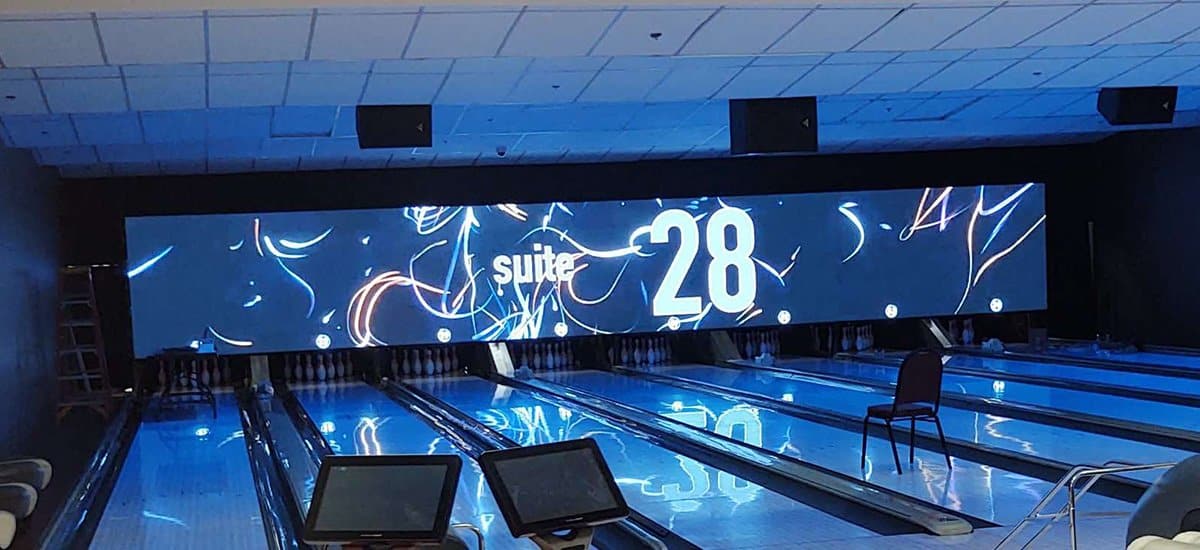
An indoor LED screen combines LED modules and cabinets to form a continuous display surface. Each pixel emits its own light, so the wall does not need a projector. The system also needs power supplies, receiving cards and a compatible video controller.
Pixel pitch is the distance between adjacent pixel centers, measured in millimeters. P2 means a 2 mm pitch. A smaller pitch puts more pixels into the same area; the final resolution depends on both pitch and physical screen size.
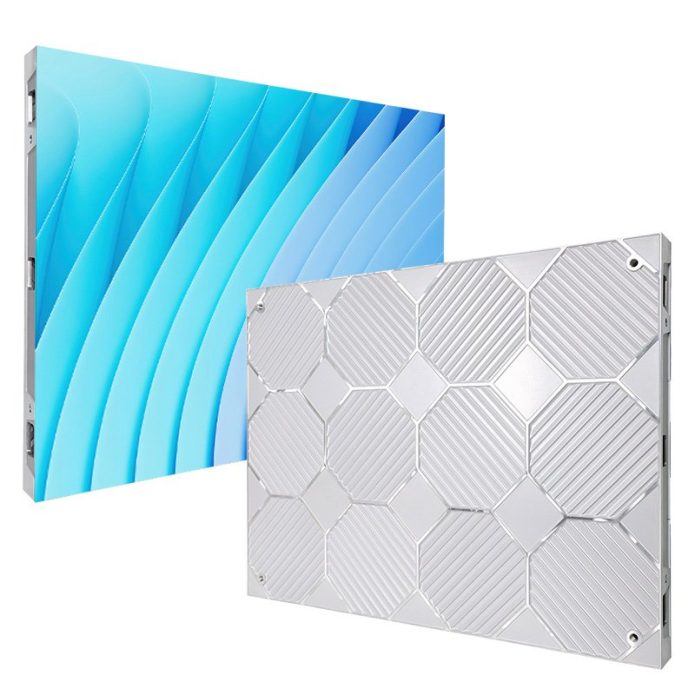
For example, the EagerLED EA640F2 specifications list SMD options from P1.25 to P4 in 640 x 480 mm cabinets. The following differences help you compare indoor and outdoor displays.
1.1 Brightness Level
Set brightness for the actual room lighting and viewing task. The EA640F2 SMD specification table lists 600 to 800 cd/m², depending on pixel pitch; 1 cd/m² equals 1 nit. These are model-specific values, not a requirement for every indoor display. Window-facing installations need a separate assessment of daylight, reflections and heat.
1.2 Pixel Pitch
A smaller pixel pitch improves detail at a given screen size and supports closer viewing. However, text size, source resolution and the nearest seat also affect readability. Compare candidate screens with your own presentation slides or video at the intended distance before choosing the pitch.
1.3 Protection
Check the protection rating on the selected model. EA640F2 is listed as IP31 and should not be treated as an outdoor weatherproof screen. For locations exposed to rain, cleaning spray or heavy dust, ask for a display and installation design rated for those conditions.
1.4 Indoor LED Screen Price Factors
Indoor LED screen price depends on screen area, pixel pitch, LED package, electronics and cabinet design. A cabinet-only or price-per-square-meter quote may exclude the controller, mounting structure and installation. Ask suppliers to itemize the same scope so the totals are comparable.
For an indoor fixed installation, prioritize readable content, suitable brightness and access for service. Specify the exact model and pitch in the quotation, then verify its cabinet dimensions, power requirements and environmental rating against the installation site.
2. Features of Indoor LED Screen
2.1 High Resolution Screen
Resolution comes from the number of pixels across the complete wall. At P2, a 640 x 480 mm EA640F2 cabinet has a calculated resolution of 320 x 240 pixels. More cabinets increase the image area and pixel count; a finer pitch increases pixel count within the same area.
2.2 Diversified Application Places
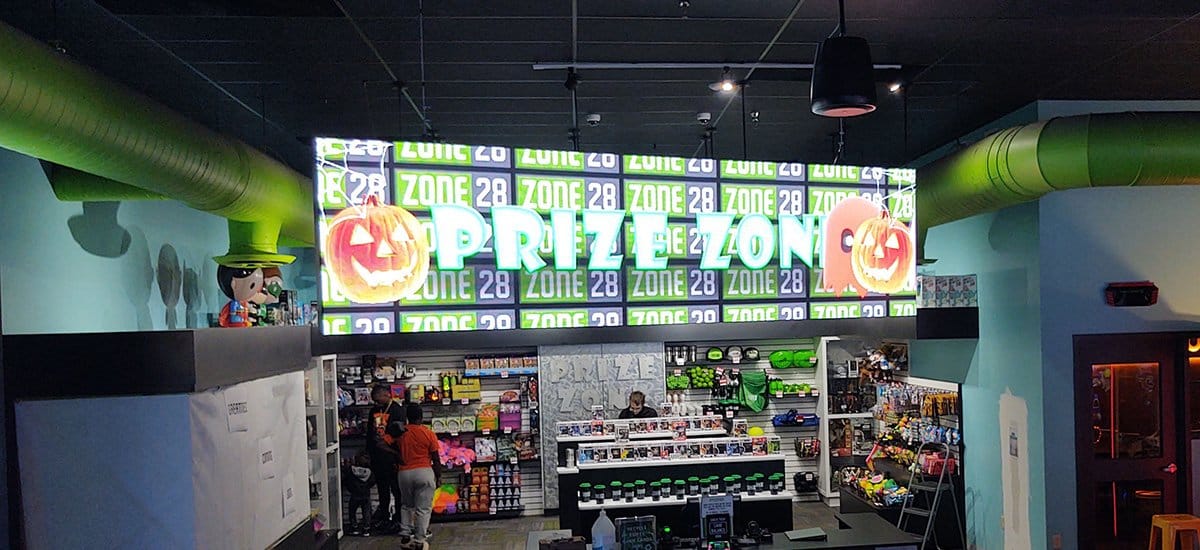
Indoor displays can serve retail stores, hotel lobbies, offices, restaurants and exhibition halls. Each site needs different content sizes, viewing angles and brightness settings. Check direct sunlight, ventilation and service access before selecting the cabinet series.
2.3 Customized Screen and Size
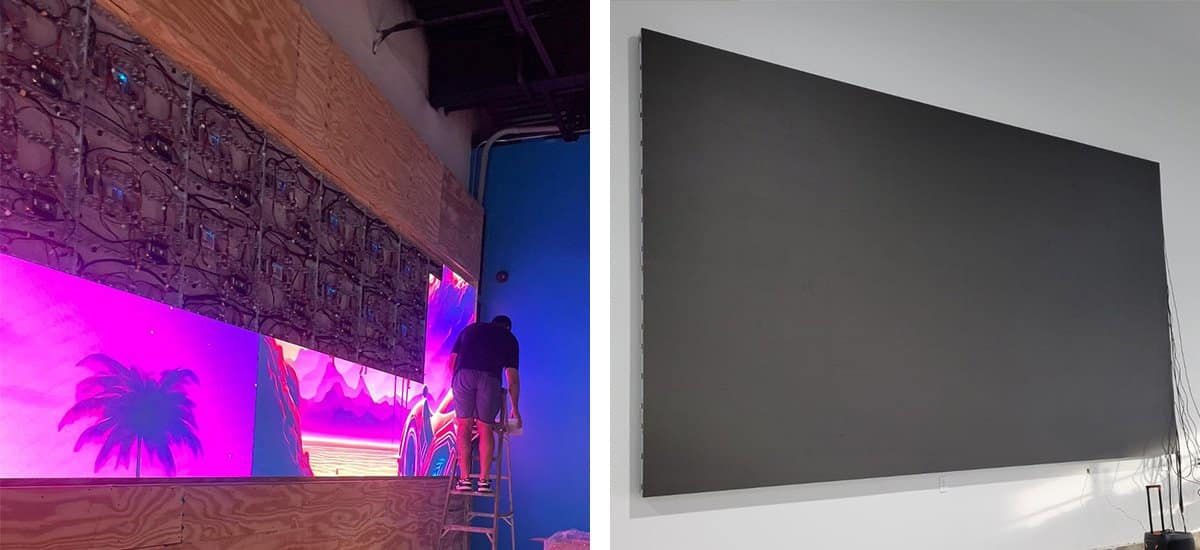
A modular wall can be configured to fit the available installation area. EagerLED can help match cabinet layout, pixel pitch and control equipment to the project. Confirm the finished dimensions and resolution on a cabinet layout drawing before ordering.
2.4 Front-Service Installation and Maintenance
Front-service access is useful when there is no maintenance corridor behind a wall. The EA640F2 front-service indoor LED display allows its LED modules, power supplies and receiving cards to be serviced from the front. Its published cabinet dimensions are 640 x 480 x 60 mm, with a listed weight of 7.5 kg per cabinet.
2.5 Brightness and Contrast
Use a brightness setting that keeps content readable without making the screen uncomfortable for nearby viewers. Contrast also depends on ambient light and surface reflections. For an indoor HD LED display, compare grayscale and color uniformity at the brightness you will actually use.
2.6 Total Cost of Ownership
Compare the cost of the complete system over its intended operating period. Include spare modules, installation, control equipment and service access as well as the screen price. Ask for the warranty terms and support scope in writing with the quotation.
3. Advantages of Indoor LED Screen
3.1 High Definition Display
Indoor digital signs have a small pixel pitch and high resolution per unit area, enabling them to display higher definition graphics, images and video. Its high grayscale performance means stronger color expression, higher sense of image hierarchy and vividness, bringing better visual experience.
3.2 High Refresh Rate and High Contrast Ratio
The EA640F2 specification table lists a refresh frequency of at least 3,840 Hz. This is a model specification, not a universal minimum for indoor LED screens. A high refresh rate can help camera performance, but shutter speed, frame rate, scan mode and synchronization also matter. Test the exact camera and display settings before a broadcast or studio installation.
3.3 Good Color Reproduction
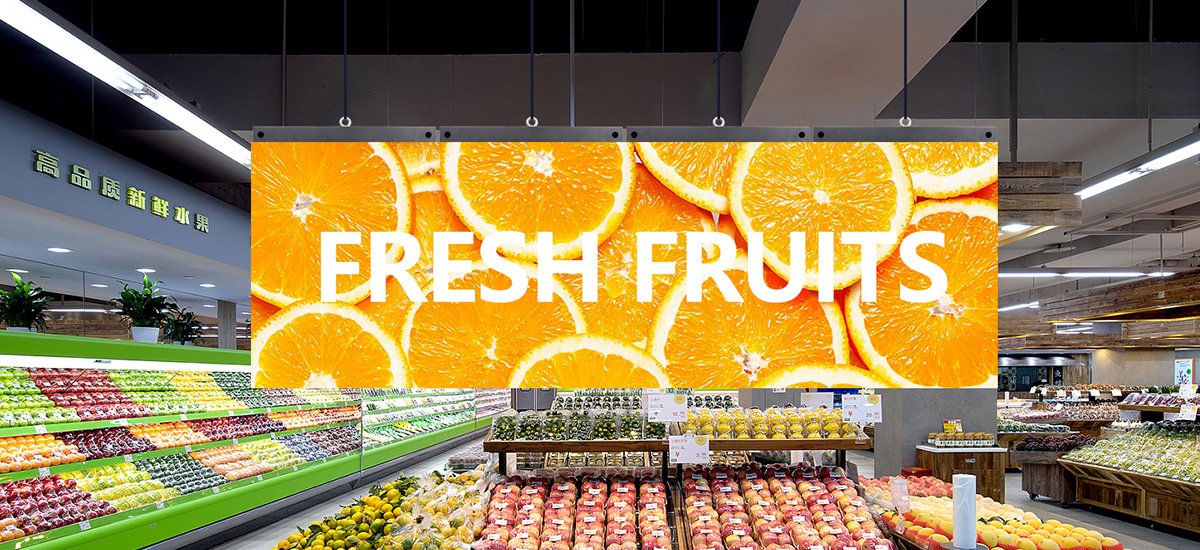
Indoor LED display screens combine the light-emitting principle of LED itself and adopt point-by-point correction technology to retain the authenticity of colors. Whether it is advertising or video playback, indoor LED screen display can provide excellent color reproduction capabilities and bring immersive visual experience to the audience.
3.4 Large-Format Visual Experience
A large continuous image can create an immersive backdrop for video and presentations. A conventional flat LED wall does not automatically produce a three-dimensional image. Any perspective-based 3D effect depends on the content, screen geometry and viewing position.
3.5 Service Life and Maintenance
Service life depends on operating temperature, brightness, daily use and component maintenance. Keep ventilation paths clear and follow the model-specific service instructions. Replaceable modules and accessible electronics can help reduce downtime; compare spare-part availability and warranty coverage before purchase.
4. How to Choose Indoor LED Screen?
Start with the nearest viewing distance and the smallest text the audience must read. Then check wall dimensions, target resolution, room lighting, camera use and maintenance access. Finally, compare quotations with the same equipment and installation scope.
4.1. Consider Viewing Distance
Viewing distance is a guide, not a fixed limit derived from pitch alone. Planar explains pixel pitch and viewing distance using several methods and notes that comfortable viewing is subjective.
For a P2 display, its reference table gives an average comfortable viewing estimate of 3.44 m and a visual-acuity distance of 6.88 m. These describe different criteria; neither guarantees that your content will be readable. Check a sample with your smallest text at the nearest seat, and do not calculate a maximum viewing distance from pixel pitch alone.
4.2. Combine with Your Budget
A finer pitch typically costs more at the same wall size because it contains more pixels. For example, P2 has a calculated density of 250,000 pixels/m², while P2.5 has 160,000 pixels/m². Choose the coarser option only if it still meets your viewing and content requirements. Include controllers, mounting, cabling, spare parts and installation in the budget.
4.3. Size Matters
Cabinet dimensions determine the available wall sizes. With EA640F2 640 x 480 mm cabinets, a layout of 3 cabinets wide by 2 high produces a 1,920 x 960 mm screen with a 2:1 aspect ratio.
At P2, that six-cabinet example has a calculated native resolution of 960 x 480 pixels. Physical size in millimeters is not the same as resolution in pixels. A 4-wide by 3-high layout produces a 2,560 x 1,440 mm wall with a 16:9 aspect ratio, but 16:9 alone does not mean Full HD or 4K.
Ask EagerLED to confirm the cabinet count, native pixel resolution and controller capacity for your target screen size. Use the exact module pitch and pixel matrix from the selected product specification.
4.4 Considering Special Requirements
For studios and virtual production, evaluate refresh rate, scan mode, grayscale, synchronization and camera shutter settings together. Fine pitch alone cannot guarantee artifact-free footage. For offices or control rooms, also check operating hours, ventilation, noise and whether every serviceable component is accessible.
5. Indoor LED Screen Trends
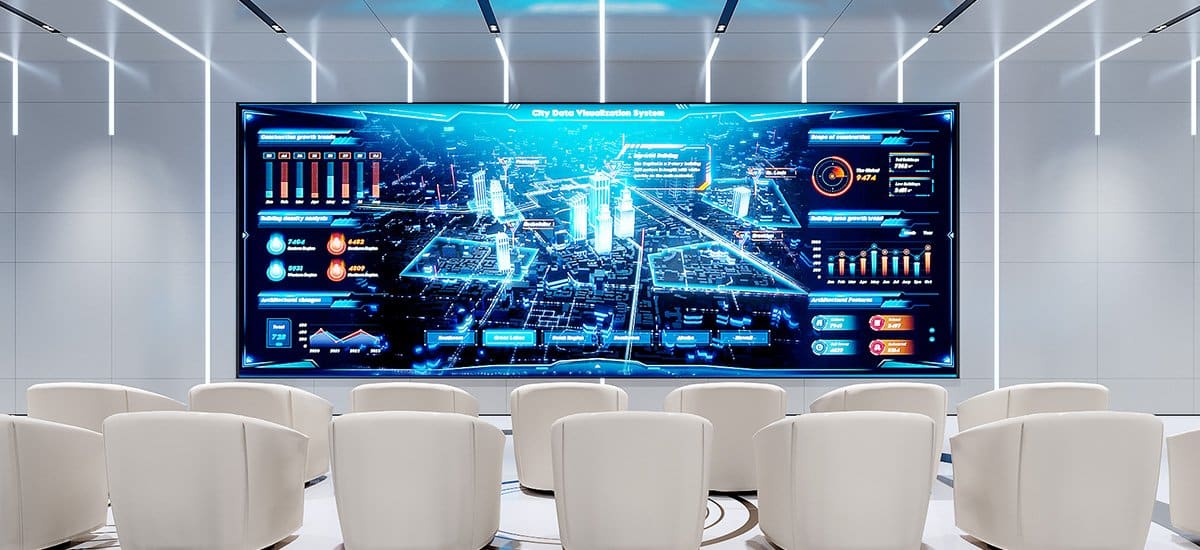
Indoor display choices include surface-mounted-device (SMD) and chip-on-board (COB) LED packages, corner configurations and integrated presentation systems. Compare the available model specifications and maintenance method. A technology label alone does not establish image quality or suitability for your room.
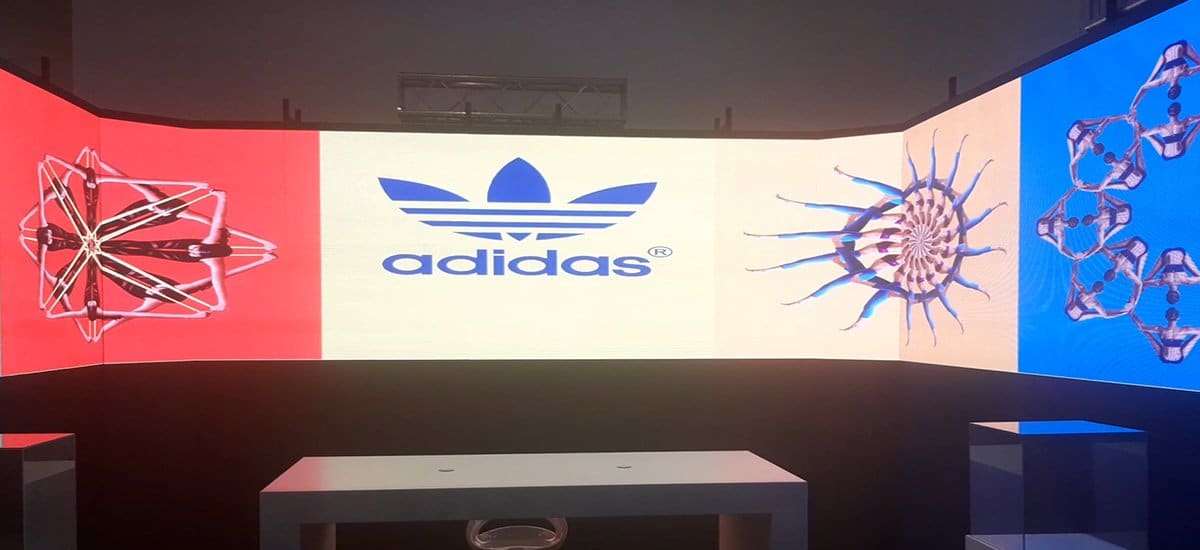
5.1 90° LED Display Series
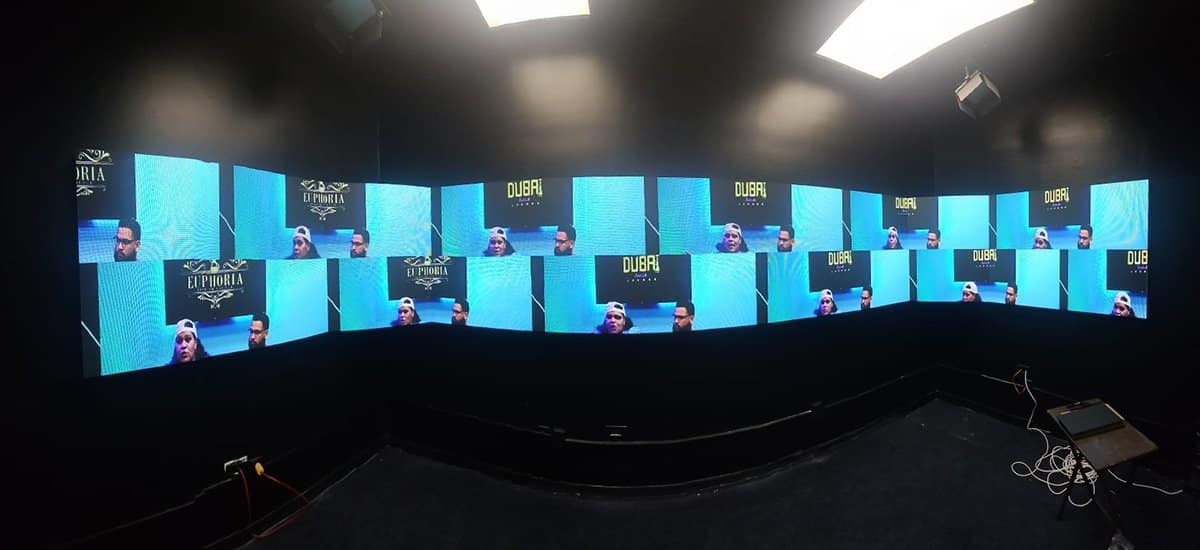
A right-angle installation joins two display faces at a 90-degree corner. This differs from a smoothly curved wall, which needs compatible curved cabinets or flexible modules. Confirm the corner geometry, module alignment and content mapping with EagerLED before ordering a creative display.
5.2 COB Small Pitch LED Displays
COB means chip-on-board: LED chips are mounted directly on the board and covered by a protective surface. EagerLED offers COB options in the EA640F2 series, with P1.25, P1.53 and P1.86 listed in its COB specification table. Compare the precise pitch, surface characteristics and repair method with the SMD option.
5.3 All-in-One Series
All-in-one systems combine a display with integrated control equipment. Wireless presentation, whiteboarding and video communication depend on the included hardware and software. Request a feature list and connection diagram so you know which functions are built in and which need external equipment.
5.4 Virtual Production LED Wall Series
Virtual production uses an LED wall to display a digital background during filming. The complete setup may also require camera tracking, a rendering system and synchronization. Select the display as part of that workflow and test for scan artifacts, moiré and color behavior with the intended camera.
6. Indoor LED Screen Applications
6.1 Indoor LED Display for Churches
Church LED walls can display lyrics, scripture, speaker video and service announcements. Test text from the nearest and farthest seats, and check sightlines across the room. For livestreamed services, include camera compatibility and brightness control in the specification.
6.2 Indoor LED Signs for Business
An indoor LED screen for a shop can display promotions, product videos and brand messages. Choose the resolution for the text and images customers need to read. Window-facing positions also require an assessment of daylight visibility and ventilation.
6.3 Indoor LED Video Wall for Office
Meeting-room video walls show presentations, shared documents and remote participants. Small text and spreadsheets often require finer pitch than full-screen video. Confirm the native resolution, input connections and software compatibility before specifying the system.
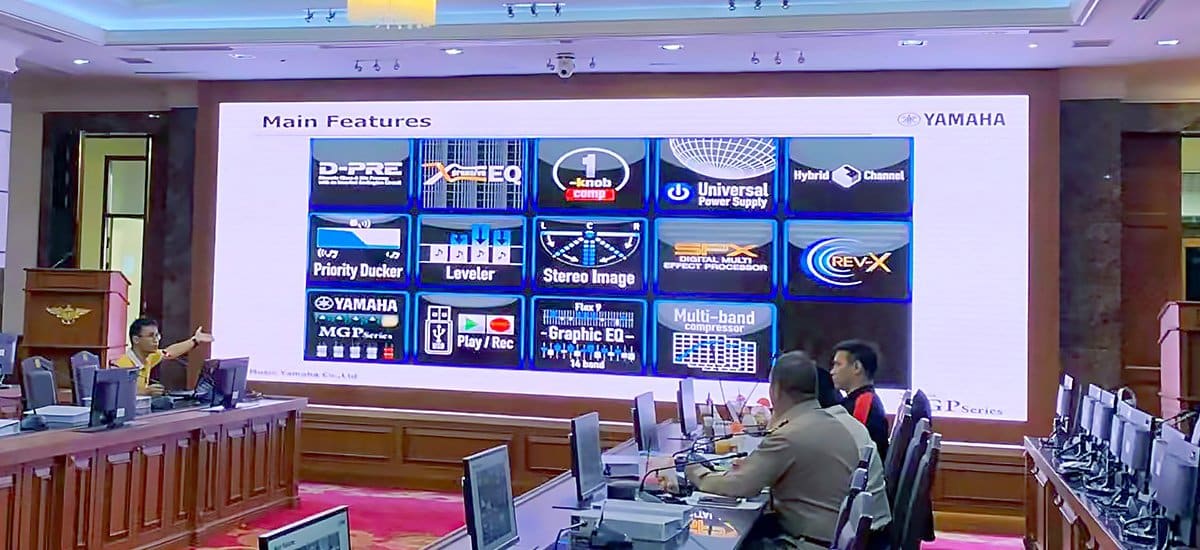
6.4 Indoor LED Wall for Command Center
Command-center displays can combine monitoring feeds, dashboards and operational maps. Check text readability, controller input capacity, service access and the required daily operating hours. Discuss redundancy and spare parts where continued operation is essential.
6.5 Indoor LED Signage for Airport
Airports and stations can use indoor signage for schedules, directions and advertising. Confirm that the content management system can supply the required information reliably. Choose character sizes and brightness for the viewing distance and ambient light.
6.6 Indoor LED Panel for School
Schools and training rooms can use an LED wall for teaching materials, demonstrations and video. Verify visibility from all seating positions and compatibility with the existing presentation equipment. Plan brightness settings and access for routine maintenance.
7. Choosing EagerLED as Your Indoor LED Screen Supplier
7.1 Product Specifications and Verification
EagerLED is an indoor LED screen supplier offering cabinet series for fixed installations and project-specific configurations. Compare the published specifications and request a sample demonstration with your content. Confirm the selected LED package, driver IC, receiving card and power supply in the final quotation.
7.2 Customized Options
In order to meet the needs of specific customers, EagerLED offers a wide range of customization options, including screen size, shape, resolution, brightness and color.
7.3 Technical Support and After-sales Service
We provide our customers with comprehensive technical support and after-sales service to help you solve various problems when installing, operating and maintaining LED displays.
7.4 Global Customer References
Ask EagerLED for references that match your application, screen size and installation method. A comparable project is more useful than a generic portfolio image. Request details of the cabinet model, viewing conditions and service arrangement when evaluating a reference.
8. Indoor LED Screen Frequently Asked Questions
8.1 What Is a Reasonable Pixel Pitch for Indoor LED Screen?
Choose pixel pitch from the nearest viewing distance, required text detail and total screen resolution. A smaller pitch supports closer viewing, but there is no universal best-distance formula. Planar lists 3.44 m as an average comfortable viewing estimate for P2; treat this as a reference and test your own content before deciding. See the source and limitations in section 4.1.
8.2 What Are Indoor LED Screen Sizes?
The finished screen size follows the cabinet layout. Six EA640F2 cabinets, each 640 x 480 mm, arranged 3 wide by 2 high form a 1,920 x 960 mm wall. Larger layouts use more cabinets. Always distinguish physical dimensions from native pixel resolution when requesting a quote.
8.3 What Are the Parameters to Look for When Purchasing an Indoor LED Screen?
Confirm pixel pitch, native resolution, brightness, refresh rate, cabinet dimensions and weight. Also compare maximum and average power consumption, control-system capacity, maintenance access and the specified operating environment. For camera use, test the full system at your actual frame rate and shutter settings rather than relying on refresh rate alone.
8.4 How Much Does an Indoor LED Display Cost?
Indoor LED display price is project-specific. Request an itemized quote for your screen dimensions and pixel pitch; a screen-only price per square meter is not the total installed cost.
(1) Screen configuration: Area, pixel pitch, LED package, driver IC and cabinet design affect the screen cost. Use the same specification when comparing suppliers.
(2) Control and power equipment: Include the video processor, sending and receiving hardware, power supplies, distribution and cabling. The number of power supplies depends on the cabinet design and load, not a fixed number per square meter.
(3) Installation and logistics: Confirm the mounting structure, labor, freight, taxes and any site work. State what is included and excluded from each quote.
(4) Service and operating costs: Budget for spare modules and support. The EA640F2-P2 table lists 150 W/m² average and 439 W/m² maximum power consumption. Actual energy use depends on brightness, content and operating hours.
Use the LED display price calculator for an initial estimate, then request a project-specific quotation. Confirm the final price and scope with EagerLED before ordering.
8.5 How to Install Indoor LED Screen?
Installation starts with a site survey and a model-specific mounting plan. Qualified installers should check the supporting structure, electrical supply, ventilation and service clearance. They then mount and align the cabinets, connect power and data, configure the controller and test the complete wall. Ask EagerLED for the installation drawing and instructions for the selected model.
The EA640F2 installation video above illustrates the mounting workflow for that series. Use it alongside the current model-specific instructions and project drawings. After commissioning, record the controller configuration and maintenance procedures for the team operating the display.
9. Request an Indoor LED Screen Quote
To specify an indoor LED screen, send EagerLED the required width and height, nearest viewing distance, application, installation location and budget. Include your target resolution, camera use and installation schedule. Contact EagerLED for a cabinet layout and an itemized quotation covering the display, controller, structure, spares and agreed support.
GET A QUOTE
—