


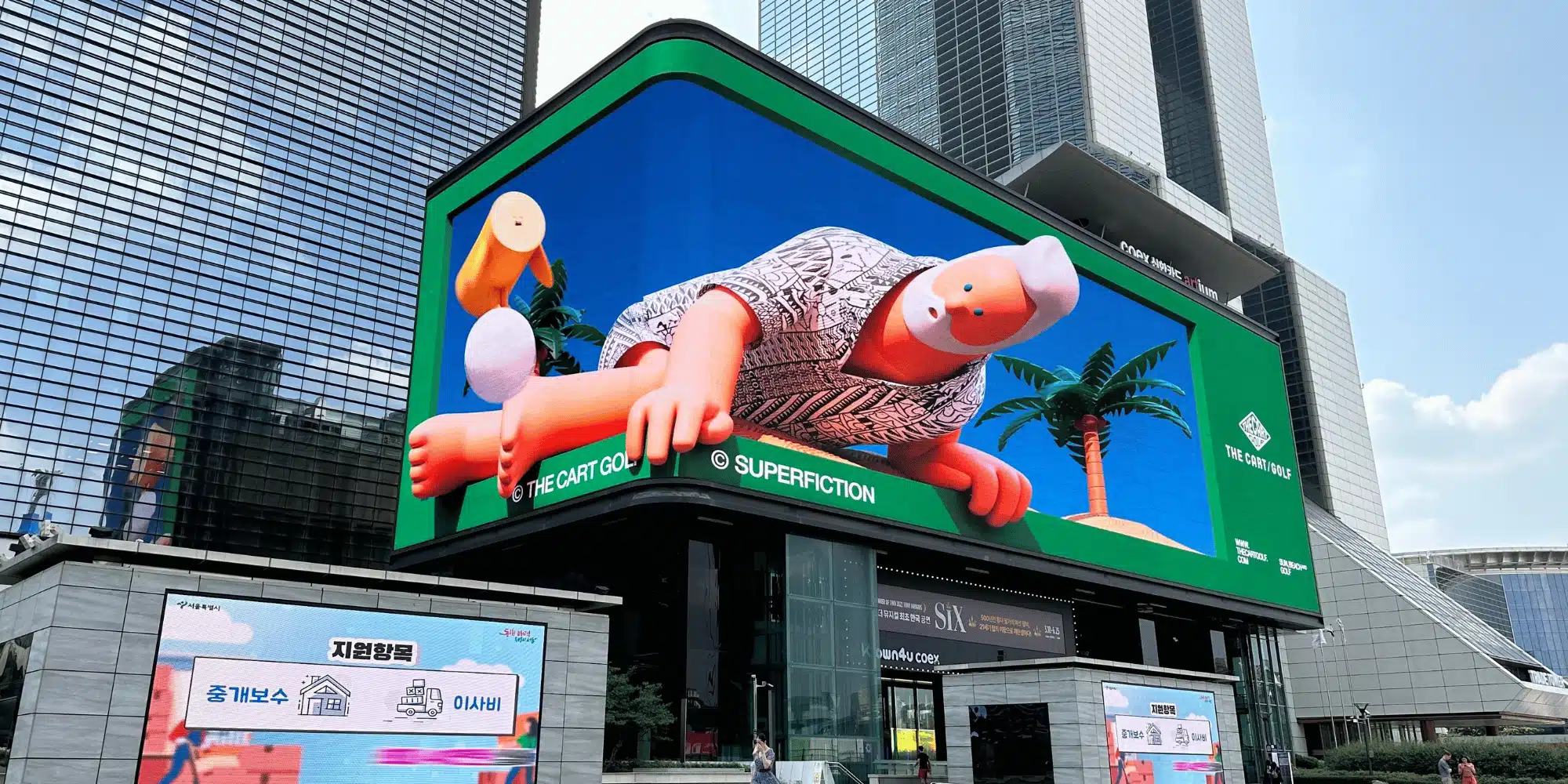
Recommended 3D LED Displays
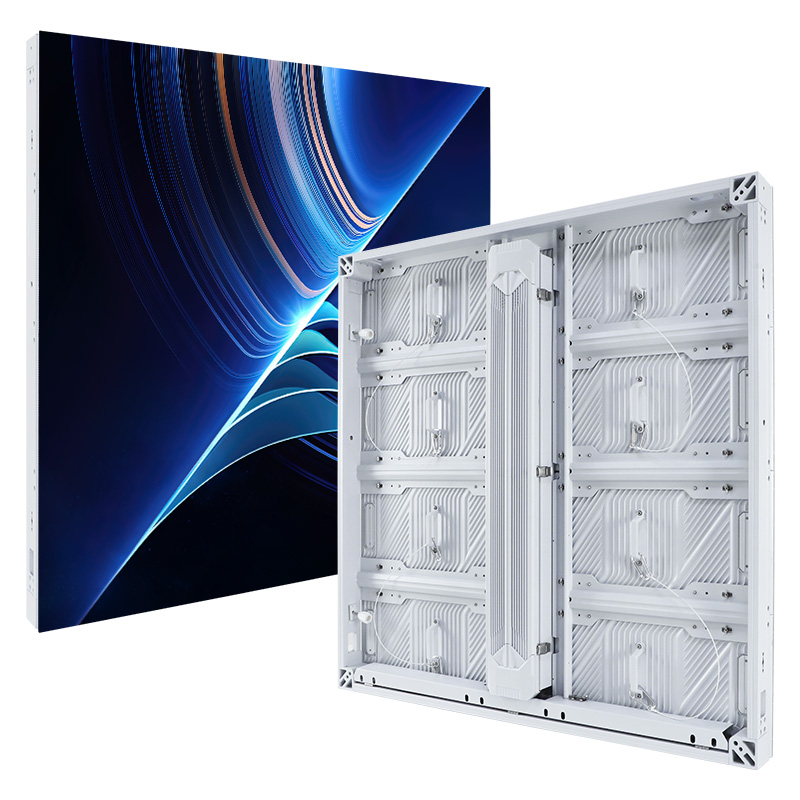
EA1000F2 Outdoor Advertising LED Screen
Front and Rear Service
Optional 90° Curved Cabinet
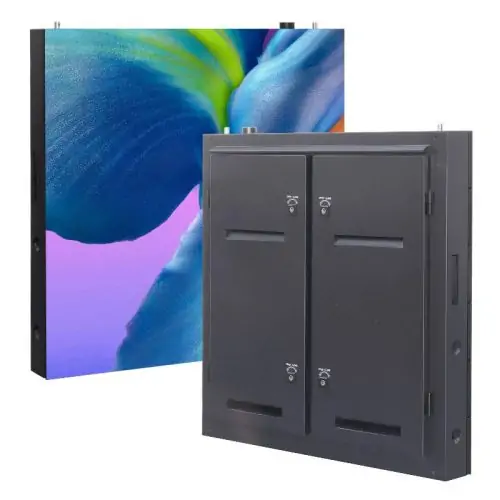
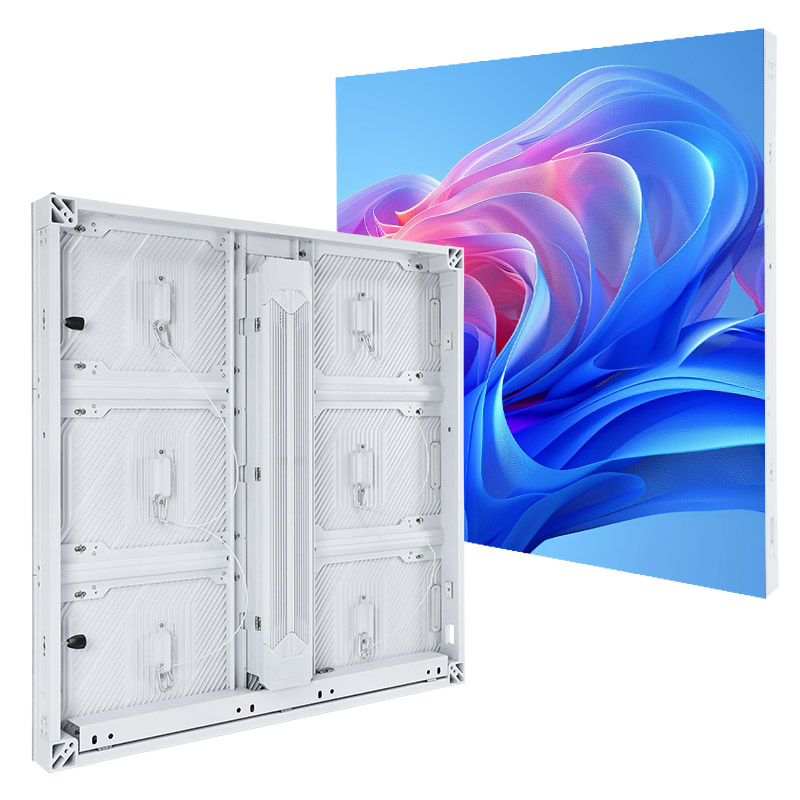
EA960F4 Outdoor Advertising LED Display
Front and Rear Maintenance
IP65 Outdoor Protection
Request a 2026 LED Screen Quote
6 Unique Features of 3D LED Displays
1. Immersive Visual Effects: Perspective-aware 3D content can create a convincing sense of depth on a large LED surface.
2. Glasses-Free Viewing: Anamorphic content produces a 3D illusion from a planned viewing position without headsets or glasses.
3. High Outdoor Brightness: Outdoor LED modules remain readable in bright ambient light when the specified brightness matches the site.
4. Wide Viewing Coverage: Cabinet geometry and content calibration help preserve image quality across the intended audience area.
5. Remote Content Management: Networked control systems support scheduled updates and remote screen monitoring.
6. Scalable Cabinet Design: Modular cabinets can be configured for flat, right-angle, or curved installations.
Where Can You Use 3D Billboards?
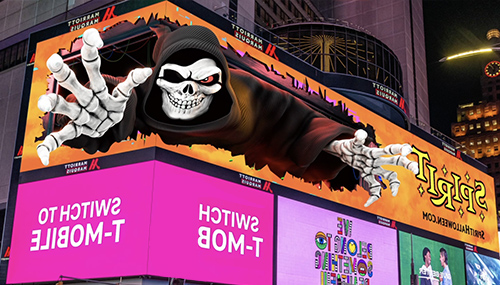
Urban Centers and High-Traffic Areas
A 3D LED billboard in a busy urban center, such as Times Square, or beside a high-traffic roadway places anamorphic advertising where commuters and pedestrians can see it. The strongest effect comes from content rendered for the screen geometry and intended viewing zone.
Corporate Buildings
Corporate buildings and exhibition venues can use 3D LED displays for branded presentations, product launches, and wayfinding. Match the pixel pitch, brightness, and content format to the viewing distance and ambient light.
Landmarks
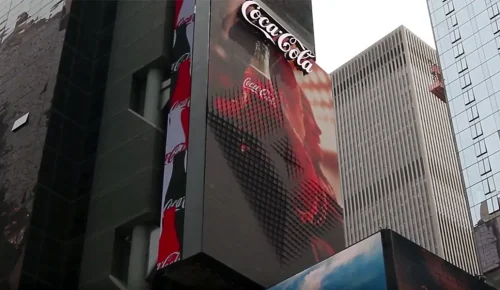
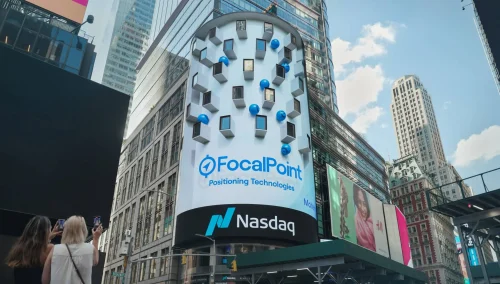
Near landmarks and public spaces, 3D LED billboards can present branded campaigns, cultural content, and public information. Installation planning should account for sightlines, local regulations, structural loads, and maintenance access.
Transportation Hubs
Airports, railway stations, and bus terminals can combine advertising with passenger information on large LED displays. Clear content hierarchy and dependable remote management are essential in high-traffic transport environments.
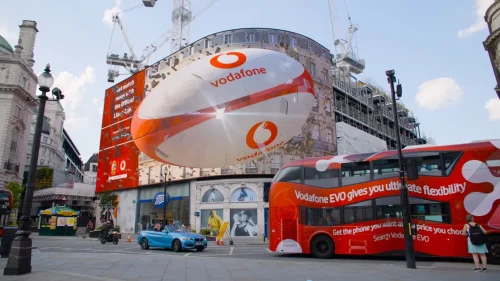
EagerLED LED 3D Display Solutions
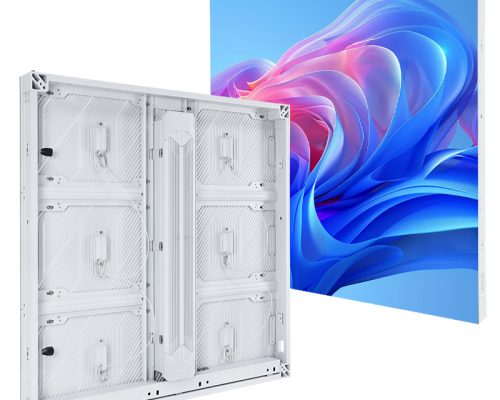
EA960F4 Outdoor Advertising LED Display
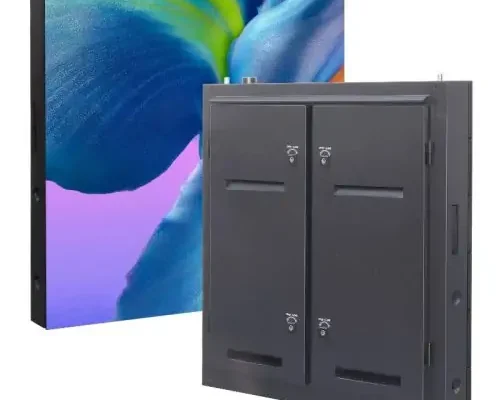
EA-OFixed Fixed LED Display
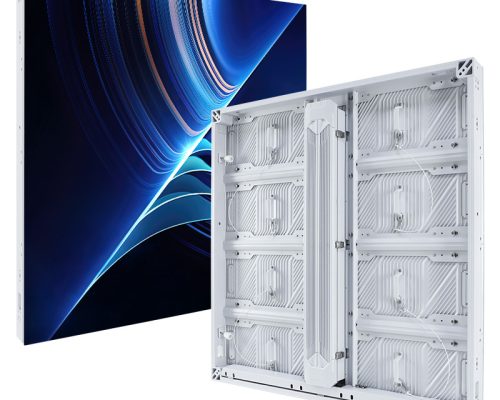
EA1000F2 Outdoor Advertising LED Screen
3D LED Display Guide: Technology, Costs, and Trends
A 3D LED display is an LED video wall that creates a depth illusion through stereoscopic viewing, autostereoscopic optics, or glasses-free anamorphic content. Outdoor advertising projects commonly combine a flat, corner, or curved LED surface with content rendered for a defined viewing position.
This guide explains how 3D LED displays work, which specifications matter to buyers, how screen geometry affects the viewing zone, and what to consider when sourcing hardware and content. It also separates glasses-based, autostereoscopic, and anamorphic systems so you can evaluate the right approach for each venue.
Table of Contents
1. How Does a 3D LED Display Work?
2. Key Specifications Buyers Should Prioritize
3. What Benefits Can a 3D LED Display Deliver?
4. Evolution of 3D Billboards and Large-Scale Displays
5. How Much Does a 3D LED Display Cost in China?
6. Planning 3D Billboards for Chinese Commercial Districts
7. How to Source 3D Assets and Production Tools
8. Future Trends in 3D LED Screen Technology
9. Future Advantages and Challenges of 3D LED Displays
10. FAQs
11. Conclusion
1. How Does a 3D LED Display Work?
Compared with traditional 2D LED displays, 3D LED displays are revolutionizing visual technology by creating immersive and depth-perceived content. Here is an analysis of the core principle and main types of 3D LED technology.
1.1 Core Principles of 3D LED Displays
Three-dimensional depth can be created in several ways. Stereoscopic systems show slightly different images to each eye, reproducing binocular disparity. Autostereoscopic systems direct separate views without glasses. Anamorphic billboards instead use perspective-distorted content, a large LED surface, and a planned viewing position to create the illusion that objects extend beyond the screen.
1.2 Two Main Types of 3D Screens
3D display systems fall into three practical groups: glasses-based stereoscopic displays, autostereoscopic displays, and glasses-free anamorphic LED billboards. Each uses a different method to create perceived depth.
(1) Glasses-Based 3D LED Displays
Glasses-based 3D systems use polarized or active-shutter eyewear so each eye receives a different view. They are best suited to controlled environments where audience position, lighting, and eyewear can be managed.
(2) Glasses-Free 3D LED Screens
Glasses-free systems use two different approaches. Autostereoscopic displays use lenticular lenses or parallax barriers to direct different views to each eye. Anamorphic LED billboards use perspective content and screen geometry to create a depth illusion from a planned viewing zone, without an optical lens layer.
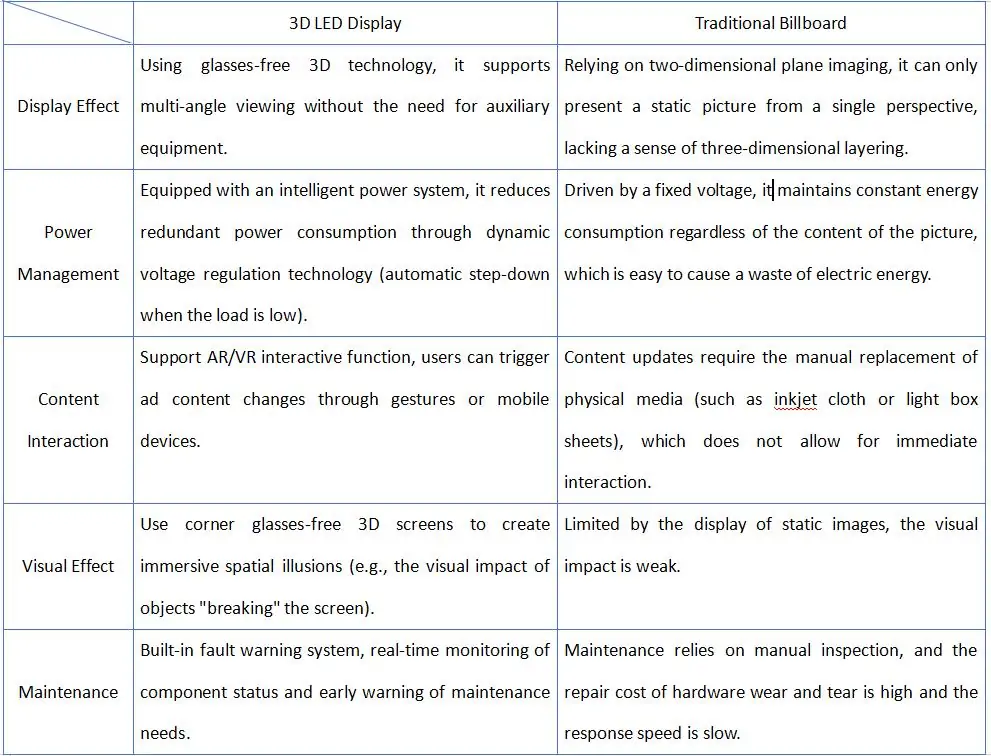
1.3 What Are the Technical Differences Between Dynamic 3D Billboards and Traditional Billboards?
2. Key Specifications Buyers Should Prioritize
Choosing the right 3D billboard requires careful consideration of several key specifications to ensure it meets your needs for visibility, durability, and performance. Here are the most important specifications to evaluate:
2.1 Resolution and Pixel Pitch
Pixel Pitch: The distance between pixels (measured in millimeters). Smaller pixel pitch means higher resolution and sharper images, especially for close viewing distances.
- Outdoor 3D Billboards: Typically use larger pixel pitch (e.g., P6-P10) due to longer viewing distances.
- Indoor 3D Displays: Use smaller pixel pitch (e.g., P1.2-P4) for detailed visuals.
Resolution: Higher resolution ensures clearer and more detailed display.
2.2 Brightness
Outdoor 3D displays: Select brightness for the screen orientation and ambient light; many fixed outdoor projects specify at least 5,000 nits. Indoor 3D screens: Use lower brightness in controlled lighting and confirm the appropriate setting during commissioning.
2.3 Refresh Rate
A high refresh rate reduces visible flicker and improves camera capture. For advertising displays that may be filmed, a ≥3,840 Hz model provides a stronger specification baseline.
2.4 Naked Eye 3D Optical Design
Anamorphic billboards: Render content for a defined viewing point and match it to the screen’s flat, corner, or curved geometry. Autostereoscopic displays: Lenticular or directional-optics systems create multiple views but require tighter control of viewing zones.
2.5 Interaction and Content Management
Real-time data integration: Use approved APIs for dynamic content such as weather, transport, or campaign data. Remote control platform: Choose a content management system that supports scheduling, health monitoring, user permissions, and centralized control of multiple screens.
2.6 IP Rating (Waterproof and Dust-Proof)
Outdoor 3D LED displays need an enclosure rating suited to rain and dust; IP65 is a common specification for fixed outdoor cabinets. Indoor displays can use a lower rating when the installation environment is controlled. Confirm the rating for the complete cabinet, not only the LED module.
3. What Benefits Can a 3D LED Display Deliver?
When screen geometry, viewing position, and content are planned together, a 3D LED billboard can create a strong visual focal point. Campaign performance still depends on location, audience, creative quality, dwell time, and the call to action.
Measure each installation with project-specific metrics such as footfall, qualified leads, QR-code scans, campaign reach, and content completion rate. These metrics are more reliable than applying a generic conversion claim to every venue.
3.1 Increased Engagement
The dynamic and interactive nature of 3D LED displays naturally draws more viewers and keeps them engaged. The glasses-free 3D effect encourages people to stop, watch, and interact with the 3D content. This increased engagement translates into more meaningful connections with your audience, helping you achieve your communication goals more effectively.
3.2 Social Sharing Potential
Distinctive 3D billboard content can encourage visitors to record and share the display on social platforms. Design the creative for both the on-site viewing zone and vertical or horizontal mobile capture, then track reach and referral traffic separately from physical footfall.
3.3 Enhanced Visual Impact
3D LED screens bring visuals to life with their immersive and lifelike effects, creating a powerful visual impact that captures attention instantly. Unlike traditional 2D displays, 3D technology adds depth and realism, making your content stand out in any environment. Whether it’s a billboard on a busy street or a display at a trade show, the stunning visuals leave a lasting impression on viewers, ensuring your message is memorable.
3.4 Improved Brand Perception
Associating 3D displays with your marketing strategy positions your brand as innovative and forward-thinking. Not only does the cutting-edge technology grab attention but it leaves an indelible mark on viewers, creating stronger customer loyalty.
3.5 Flexibility in Content Creation
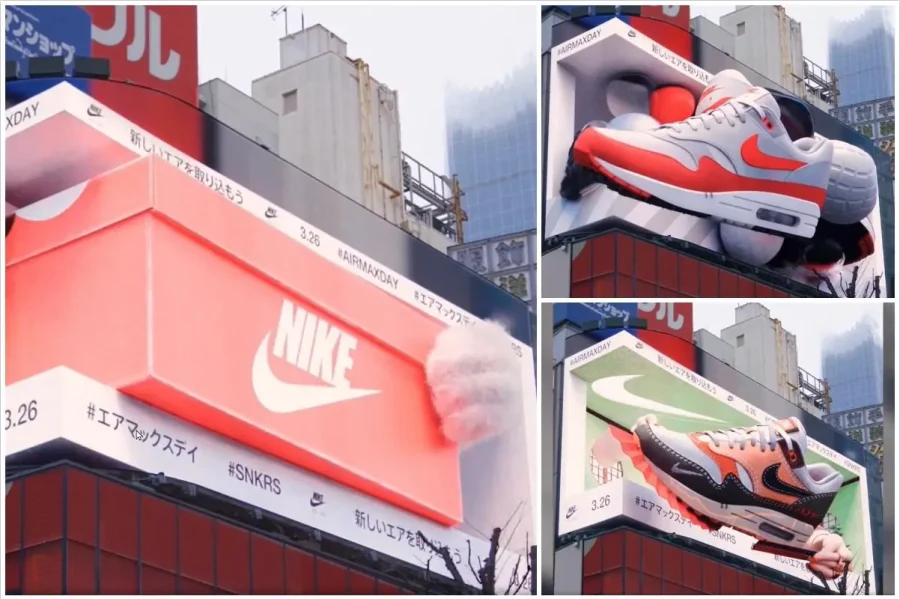
3D LED screens support campaign-specific imagery, scheduled playback, and remote content updates. Build each asset for the exact cabinet geometry, resolution, viewing position, and playback system so the illusion remains consistent after deployment.
4. Evolution of 3D Billboards and Large-Scale Displays
4.1 Verified Milestones in Large-Format 3D Displays
2017 – Coca-Cola Times Square: Guinness World Records lists The Coca-Cola Company’s mechanical 3D billboard at 210.22 m², using 1,715 moving LED cubes and 245 static cubes. The record was measured in New York on 8 August 2017.
2020s – Anamorphic LED advertising: Flat, right-angle, and curved LED surfaces can create a glasses-free depth illusion when the content is rendered for a defined viewing position. Unlike the Coca-Cola installation, this approach relies on perspective content rather than moving display cubes.
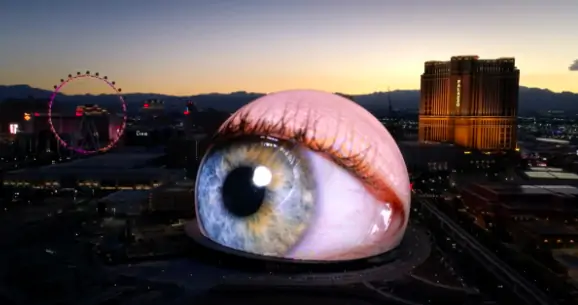
2023 – Sphere in Las Vegas: Sphere’s official science page lists 580,000 sq ft of LEDs on the Exosphere, a 160,000 sq ft interior LED media plane, and imagery displayed in 16K.
Current project design: Buyers can select flat, beveled, right-angle, or curved cabinet geometry according to the building, viewing zone, content plan, and maintenance access.
4.2 Reference-Scale 3D Display Projects
4.2.1 MSG Sphere, Las Vegas, USA
Published display area: Sphere reports 580,000 sq ft of LEDs on the exterior and a 160,000 sq ft LED media plane inside the venue.
Content system: The curved interior display wraps over and behind the audience. Sphere states that its imaging system displays 16K content and maps imagery to the curved surface using projection formulas and spherical geometry.
4.2.2 Yonge-Dundas Square, Toronto, Canada
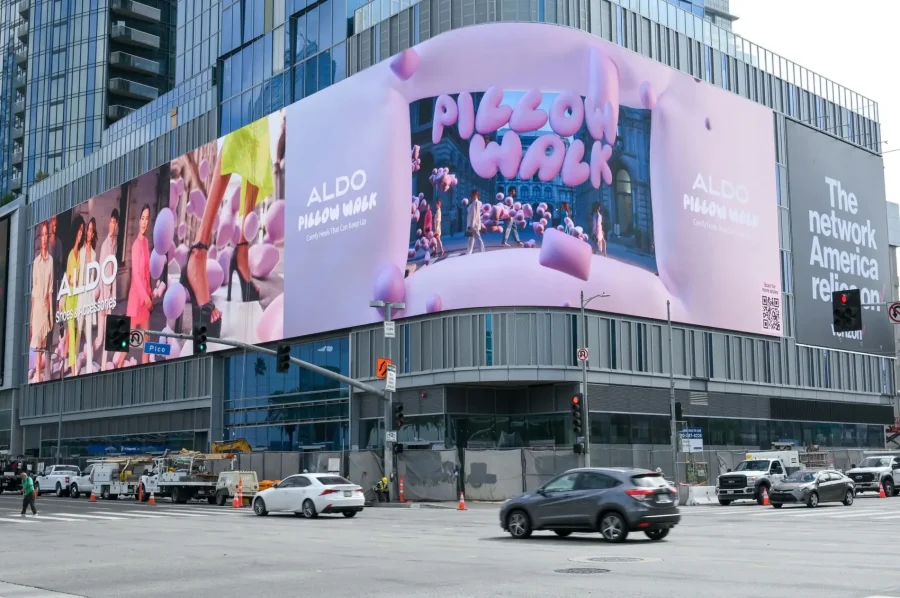
Yonge-Dundas Square illustrates the conditions that large urban LED projects must address: pedestrians and vehicles approach from several directions, viewing distances change quickly, and surrounding signs compete for attention. For a 3D billboard in this type of location, define the primary viewing zone first, then calibrate the screen geometry, camera perspective, brightness, and content duration for that zone.
5. How Much Does a 3D LED Display Cost in China?
There is no reliable universal price per square metre for a 3D LED display. The project cost depends on pixel pitch, total resolution, cabinet geometry, brightness, control hardware, supporting structure, installation access, freight, spare parts, and content production. Request an itemized quotation so hardware, structure, services, and creative work can be compared separately.
5.1 Key Pricing Factors
1. Pixel pitch and viewing distance: A smaller pixel pitch increases pixel density and processing load. Select it according to the closest intended viewer, screen dimensions, content detail, and budget rather than choosing the smallest pitch automatically.
2. Screen area and total resolution: Screen area affects the number of modules, cabinets, power supplies, receiving cards, structural components, and installation labor. Total pixel count also affects the controller, media server, and content-rendering workload.
3. Screen geometry: An anamorphic billboard normally uses perspective-rendered content on a flat, right-angle, or curved LED surface; it does not automatically require a special optical 3D module. Optional beveled or curved cabinets, custom steelwork, and non-standard dimensions can increase engineering and fabrication costs.
4. 3D content production: Quote creative development separately from display hardware. The production brief should define the brand assets, key message, screen pixel map, exact cabinet geometry, primary viewing position, video duration, frame rate, delivery codec, revision rounds, audio requirements, and usage rights.
5. Site conditions: Structural capacity, wind load, mounting height, crane access, electrical distribution, network access, local permits, working hours, and maintenance clearance all affect the installed cost. A site survey should resolve these items before the final quotation.
5.2 Additional Project Costs
Installation and commissioning: Include steelwork, lifting equipment, electrical work, data cabling, calibration, weather sealing, testing, and operator training.
Lifecycle planning: Budget for spare LED modules, power supplies, receiving cards, routine cleaning, access equipment, software licenses, preventive inspections, and future content updates.
For an accurate project budget, ask the manufacturer to quote the selected pixel pitch, brightness, cabinet size, geometry, refresh rate, control system, steel structure, installation, freight, spare parts, warranty scope, and 3D content production. Compare the EA1000F2 outdoor advertising LED screen and EA960F4 outdoor advertising LED display before selecting a cabinet platform.
6. Planning 3D Billboards for Chinese Commercial Districts
6.1 Chengdu Taikoo Li: Plan for Dense Pedestrian Traffic
In a dense pedestrian district such as Taikoo Li near Chunxi Road, viewers approach the screen from changing angles and distances. Place the primary 3D reveal where foot traffic naturally faces the display, keep essential brand information readable outside the ideal viewing point, and test the content at daytime and nighttime brightness levels.
6.2 Beijing Wangfujing: Design for Multiple Viewing Distances
A Wangfujing-style retail street combines long sightlines, heavy pedestrian flow, storefront lighting, and competing digital signs. Survey the approach paths before choosing pixel pitch and brightness, and reserve a clear focal zone where the perspective effect can be understood quickly.
6.3 Shanghai Nanjing Road: Coordinate Urban Sightlines
On a dense retail street such as Nanjing Road, 3D content must communicate before the viewer leaves the optimal zone. Use a short visual setup, one dominant depth effect, a legible brand frame, and a clean ending that works both on site and in mobile video recordings.
6.4 Hangzhou: Build a Landmark-Led Content Concept
Seasonal campaigns can use culturally relevant subjects, but the creative should remain readable to viewers who see only part of the loop. Define the story in a compact sequence, avoid placing essential text inside the most distorted area, and produce a standard 2D fallback version for secondary viewing angles.
6.5 Guangzhou Zhujiang New Town: Plan for High-Rise Context
For a building-facade installation in a district such as Zhujiang New Town, coordinate the LED screen with the facade grid, corner radius, structural anchors, maintenance doors, drainage, and nearby sightlines. Hardware and content teams should use the same approved geometry model throughout design and commissioning.
7. How to Source 3D Assets and Production Tools
7.1 Stock 3D Model Libraries and Licensing
Stock 3D assets: A licensed model can shorten concept development, but confirm commercial usage rights, texture resolution, polygon count, file format, animation controls, and whether the model can be separated into layers. Treat stock assets as production inputs, not finished billboard content.
7.2 AI-Assisted 3D Asset Generation
AI-assisted concepting: Generative tools can accelerate mood boards, storyboards, and early geometry exploration. Before production, artists still need to inspect topology, textures, scale, brand accuracy, licensing terms, and frame-to-frame consistency, then rebuild or clean assets that do not meet delivery requirements.
7.3 Professional 3D Software and Marketplaces
Production software: Blender, Autodesk Maya, and Cinema 4D can support modeling, animation, camera work, lighting, and rendering. Blender’s official feature page documents keyframing, non-linear animation, forward/inverse kinematics, sound synchronization, rigging, constraints, drivers, and shape keys.
7.4 Research Libraries and Technical References
Commissioned production: Give the studio the final pixel map, physical screen dimensions, corner or curve geometry, primary camera position, safe text zones, playback frame rate, codec, color profile, loop duration, and processor limits. Require test frames and a low-resolution motion preview before full rendering.
8. Future Trends in 3D LED Screen Technology
8.1 Connected Control and AI-Assisted Operations
Context-aware playback: Approved weather, transport, venue, or campaign data can trigger relevant content variations. Define data latency, fallback content, error handling, user permissions, and privacy requirements before connecting a live data source.
AI-assisted operations: AI tools can support content tagging, scheduling, anomaly detection, and creative versioning, but operators should retain approval control for public-facing playback.
8.2 Autostereoscopic and Anamorphic 3D Methods
Autostereoscopic displays: Lenticular lenses or parallax barriers direct different views toward the viewer’s eyes. They require controlled viewing zones and are distinct from standard outdoor LED billboards.
Anamorphic LED billboards: Perspective-distorted content and a flat, corner, or curved screen create a depth illusion from a planned viewing position without an optical lens layer.
8.3 Flexible and Transparent LED Displays
Shaped LED surfaces: Modular cabinets can form right-angle, curved, cylindrical, or other architectural displays when the structure and content map are designed together.
Transparent LED displays: These preserve sightlines through glass, but transparency, brightness, pixel pitch, viewing distance, and the background scene all affect image contrast and the suitability of a 3D effect.
8.4 Industry-Specific 3D Display Applications
Remote operations: Centralized platforms can schedule content, monitor device status, record alarms, and manage user permissions across multiple displays. Procurement teams should confirm which functions work without third-party licenses and how the system behaves during a network outage.
Service planning: Front and rear access, replaceable modules, spare-part inventory, and fault logging reduce the time needed to diagnose and repair a permanent installation.
8.5 Energy Management and Serviceability
Measure energy use: Compare rated maximum power, estimated average power, brightness settings, operating hours, content profile, cooling requirements, and standby behavior for the exact configuration. Do not apply a generic energy-saving percentage to every display.
Design for repair: Replaceable modules, power supplies, receiving cards, and cabinet components can extend service life and reduce unnecessary material replacement.
9. Future Advantages and Challenges of 3D LED Displays
Future 3D LED projects will benefit from more flexible cabinet geometry, higher refresh rates, and better content workflows. The main constraints remain hardware cost, specialist content production, heat management, energy use, maintenance access, and the limited viewing zone of some 3D methods.
9.1 Future Opportunities for 3D LED Billboards
1. Cabinet geometry and image performance: Current fixed outdoor platforms combine high refresh rates, outdoor brightness, service access, and optional corner geometry. The EA1000F2 supports P2.97-P10.42 configurations, while the EA960F4 supports P4.44-P10 configurations; both product pages list IP65 protection and refresh rates of at least 3,840 Hz.
2. Flexible content workflows: One LED platform can present standard advertising, scheduled information, event content, and perspective-rendered 3D creative. The operator can publish a conventional 2D version when the viewing angle or campaign objective does not suit an anamorphic effect.
3. Scalable project design: Modular cabinets allow the display dimensions and service plan to match the building. Flat, beveled, right-angle, and curved sections can be combined when the structural model, pixel map, content camera, and installation tolerances are coordinated.
9.2 Technical and Operational Constraints
1. Total project cost: Hardware is only one budget line. Buyers must also compare structure, installation, electrical work, control hardware, freight, spare parts, warranty scope, maintenance access, software, and 3D content production.
2. Viewing-zone and maintenance constraints: The strongest anamorphic effect is visible from a planned position, so the display will not look equally three-dimensional from every angle. Heat management, calibration, weather sealing, module access, signal redundancy, and spare-part availability also affect long-term reliability.
3. Energy and approval requirements: Model annual consumption from the selected cabinet, brightness schedule, average content load, cooling system, and operating hours. Confirm structural, electrical, planning, brightness, and advertising requirements with the relevant local authorities before fabrication.
10. Frequently Asked Questions
1. What Is the Best Viewing Angle for a Glasses-Free 3D Display?
There is no universal viewing angle for every glasses-free 3D display. For anamorphic billboards, the best viewing zone depends on screen size, corner or curve geometry, pixel pitch, mounting height, and the camera position used to render the content. Confirm the viewing zone with a content test before installation.
2. Which Company Makes 3D LED Billboards?
EagerLED manufactures fixed outdoor LED displays for flat, right-angle, and curved billboard projects. The EA1000F2 and EA960F4 support front and rear service, IP65 outdoor protection, and optional cabinet geometry for 3D advertising installations.
3. What Software and Hardware Are Required for 3D Content Creation?
A typical workflow uses 3D modeling and animation software such as Blender, Maya, or Cinema 4D, plus a render engine and an LED content processor. The creative team also needs the exact screen resolution, cabinet geometry, pixel map, viewing position, frame rate, and playback specifications.
4. How Do You Reduce Ghosting or Glare in 3D LED Content?
First identify whether the problem comes from content, viewing position, ambient reflections, camera settings, or signal synchronization. Then verify the pixel map, render perspective, brightness, refresh rate, processor configuration, and panel calibration. Stereoscopic systems may also require parallax and left/right synchronization checks.
5. Do 3D LED Displays Need More Brightness Than Standard LED Screens?
Not automatically. Brightness should match the installation environment, screen orientation, ambient light, content, and local limits. EagerLED’s EA1000F2 lists 5,000–6,500 nits, while the EA960F4 lists 6,000–6,500 nits; confirm the selected model and site conditions before ordering.
11. Conclusion
A successful 3D LED display project aligns the screen geometry, pixel pitch, brightness, refresh rate, viewing zone, content workflow, structure, and maintenance plan. Compare the EA1000F2 outdoor advertising LED screen and EA960F4 outdoor advertising LED display, then select the cabinet and content-production method that fit the venue.
Planning a 3D LED screen? Share the installation dimensions, viewing distance, environment, target pixel pitch, and project schedule to receive a tailored quotation.