

LED poster daylight visibility should be checked with the real message, at the intended viewing positions, under representative daylight. A brightness specification helps shortlist a screen, but it cannot prove that customers will read a price, recognize a product or follow a direction at your storefront. Agree on those tasks before approving a sample.
This guide is for retail project buyers comparing outdoor-facing LED posters before placing an order. It explains how to organize a fair demonstration, record the conditions and turn the result into a written acceptance requirement. The procedure below is a recommended procurement method, not a report of an EagerLED field trial or a substitute for a formal laboratory standard.
EagerLED supplies LED display products, including outdoor foldable posters. Start with the LED poster display overview for product categories, then use this guide to define what a shortlisted unit must demonstrate at your location.
1. Define LED Poster Daylight Visibility as a Viewing Task
Replace “looks bright enough” with an observable task. For example, a person approaching the entrance must identify the promoted product and read its price from an agreed location during one complete message. Another project may prioritize recognizing a directional arrow from across a forecourt. These are different requirements even when both use the same screen.
Write down the essential information and the information that may be secondary. A decorative background can lose detail without defeating a promotion; an unreadable decimal point or qualifying phrase may change its meaning. Include the actual language and longest likely product name so the demonstration reflects the hardest normal content.
01. Identify who must read what
Ask the retail team to select representative viewers who were not involved in designing the artwork. Give them the task without telling them the answer. Record what they read, where they stood and whether the message remained visible long enough. A viewer who already knows the price can unconsciously fill in missing information.
For LED poster daylight visibility, agree in advance which tasks are mandatory and how many observations the buyer will require. There is no universal pass percentage suitable for every retail project. The buyer and supplier should choose the sample size, viewing conditions and decision rule before seeing the results.
02. Separate a stationary check from an approach check
A stationary observer has time to inspect a message. A customer walking past may see it for only part of a loop. Test both situations when they matter. Mark the approach route and note when obstructions, door frames or other signs first reveal and then hide the poster.
As a planning example, a visible route of 3 m, about 9.8 ft, traversed at an assumed 1.2 m per second gives a 2.5-second viewing window. This arithmetic estimates exposure time only; it does not establish reading speed or a guaranteed conversion outcome. Time the real route rather than adopting the example as a requirement.
When LED poster daylight visibility fails on the approach but passes while stationary, investigate message duration and hierarchy as well as hardware. A larger headline, simpler layout or different position may solve the specific problem. Preserve the original trial result so that the next version is a documented improvement.
Keep a separate note for accessibility-related needs identified by the retailer. A trial with a few staff members cannot establish readability for every customer, particularly when vision, language or mobility differs. Review essential information across the wider customer journey, including an alternative way to obtain offer details when the moving display cannot communicate them reliably.
2. Record Daylight and Viewing Conditions Before the Demo
Record the installation position, orientation and intended operating hours. Direct sunlight on the display face, reflected light from nearby surfaces and bright scenery behind the viewer can change the experience. “Outdoor” is too broad a description to make two demonstrations comparable.
A site photograph is useful context, but it cannot replace a written condition record. Include the camera direction, time, weather and whether the display was in shade. Note temporary shade from trees, awnings, parked vehicles or an open door, because it may disappear during normal trading hours.
| Condition to include | Viewing task | Record before testing |
|---|---|---|
| Brightest relevant trading period | Read the principal offer from the planned customer position | Time, sky condition, face orientation and shade |
| Oblique approach from each side | Recognize the product and direction of travel | Route, distance, approximate angle and obstructions |
| Through the actual storefront glazing, if applicable | Read the price and mandatory qualifying copy | Glass type if known, reflections, cleanliness and screen setback |
| Late trading or after sunset | Read comfortably without excessive brightness | Surrounding lighting, selected brightness and nearby sightlines |
Use LED poster daylight visibility observations from the periods that matter to your business. A noon-only demonstration may miss low-angle afternoon sun on the same facade. If the demonstration cannot reproduce a critical period, identify that gap explicitly and keep approval conditional on a later check.
01. Include the actual glass and layout
A screen behind a window is a system consisting of the display, glass, reflections and surrounding architecture. A sample demonstrated outdoors without glazing does not validate a behind-glass installation. Test through the intended pane when possible, including any film or coating already specified for the storefront.
Also record the screen’s height, setback and permitted orientation. Moving a sample closer to the window can change reflections and visibility while creating a different installation. Treat proposed location changes as design changes requiring agreement, rather than quietly accepting a more favorable demonstration position.
02. Treat each face as its own viewing condition
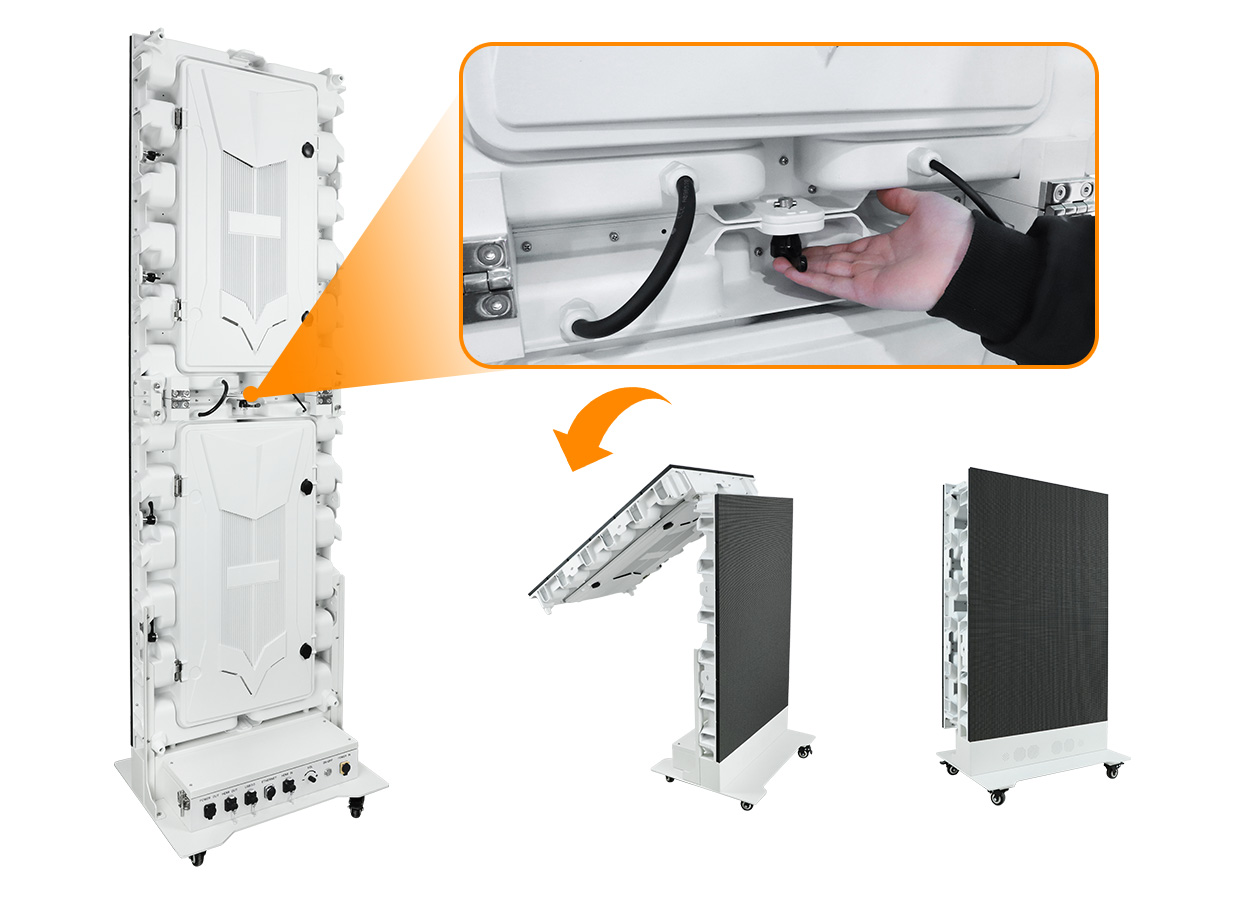
For a double-sided poster, assess both faces independently. One side may face open sky while the other sits in building shade. Identify the sides in the record and assign the correct content to each. A strong result on one face does not establish the same performance on the other.
Do not move or rotate equipment simply to chase better sunlight during a trial. Have the supplier confirm approved operating arrangements, positioning and any installation constraints. Readability observations do not establish structural stability, electrical suitability or weather operating limits; those require their own project documentation.
3. Compare Samples With the Same Content and Settings
A useful LED poster daylight visibility comparison changes the product under test while holding the important conditions steady. Use the same approved message, equivalent physical message size and agreed viewing positions. Record any remaining differences rather than presenting the demonstration as perfectly controlled.
Use representative retail content alongside simple diagnostic material. The retail asset checks the actual task. A diagnostic asset with labeled text sizes, light and dark regions, and familiar color patches can help locate a problem. Neither file alone proves that every future campaign will work.
01. Lock the production playback path
Confirm the native pixel map, player, scaling and content region with the supplier. Test the exported asset through the playback path proposed for delivery. A laptop preview or phone recording does not show whether the ordered player crops fine print, changes levels or places the message in the wrong region.
Keep a versioned copy of the test asset. Record its filename, pixel dimensions and, where practical, a checksum. Save the playback configuration and any adjustments. The LED poster content planning guide covers the artwork handoff in more detail; this demonstration record should refer to the approved version.
02. Control comparison order and observer knowledge
If samples are tested sequentially, daylight may change between them. Record the order and repeat important observations if clouds, shade or exposure change materially. Side-by-side testing can reduce time differences, but it still needs equivalent orientation and viewing geometry. Neither arrangement automatically makes the comparison fair.
Ask observers to report the message before discussing which screen they prefer. Record “price read incorrectly” separately from “background less vivid.” This keeps a buying decision focused on the intended task. For LED poster daylight visibility, an attractive scenic clip should not outweigh a failed mandatory message.
Photographs and video are supporting records. Automatic exposure, white balance and camera processing can make two screens appear more similar or more different than they are. For comparative documentation, keep capture settings and position consistent, record them, and retain original files. Evaluate the screen directly as well.
4. Understand What Brightness Measurements Can Prove
Display luminance describes light emitted toward the observer and is commonly expressed in cd/m², also called nits. Illuminance describes light arriving at a surface and is expressed in lux. They are different quantities. There is no single lux-to-nits conversion that can prescribe a readable poster for every surface, angle and message.
LED poster daylight visibility depends on ambient reflections as well as emitted light. NIST research on daylight display measurements examines how illumination and reflection affect ambient contrast. The practical purchasing implication is to evaluate the display under relevant lighting, rather than treating a dark-room contrast figure as a daylight guarantee.
| Evidence | What it helps establish | What remains unproven |
|---|---|---|
| Published luminance specification | A starting point for model selection and questions about test conditions | Readability through your glass or from your viewing route |
| Brightness control setting | The configured operating level for a repeatable trial | Calibrated luminance; a percentage is not a nit reading |
| Illuminance reading at the display | A documented ambient-light condition using a suitable instrument | The display’s emitted luminance or a universal readability threshold |
| Observer task record | Whether the agreed message was read under recorded conditions | All seasons, every future asset or commercial return |
| Controlled optical measurement report | The measured quantities within its stated method and uncertainty | Unmeasured viewing angles or a different installation |
01. Request an appropriate measurement method
When the contract requires numerical luminance or ambient contrast, engage a competent measurement provider and agree on the method. Specify the instrument, calibration status, test pattern, viewing direction and ambient-light condition. Ask how measurement uncertainty and decision boundaries will be handled before accepting a numerical pass or fail.
The UK’s National Physical Laboratory provides traceable photometry services for quantities including illuminance and luminance. Traceability supports measurement confidence; it does not make an improvised phone reading equivalent to a calibrated professional measurement. A retail demonstration may remain primarily task-based unless the procurement specification calls for instrumented testing.
For LED poster daylight visibility, record both the selected operating setting and any measured value. Do not label “100%” as the published maximum luminance without a corresponding measurement or documented basis. Also retain the normal configuration rather than allowing an unexplained demonstration-only preset.
02. Use a product specification as a reference, not a result
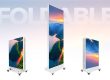
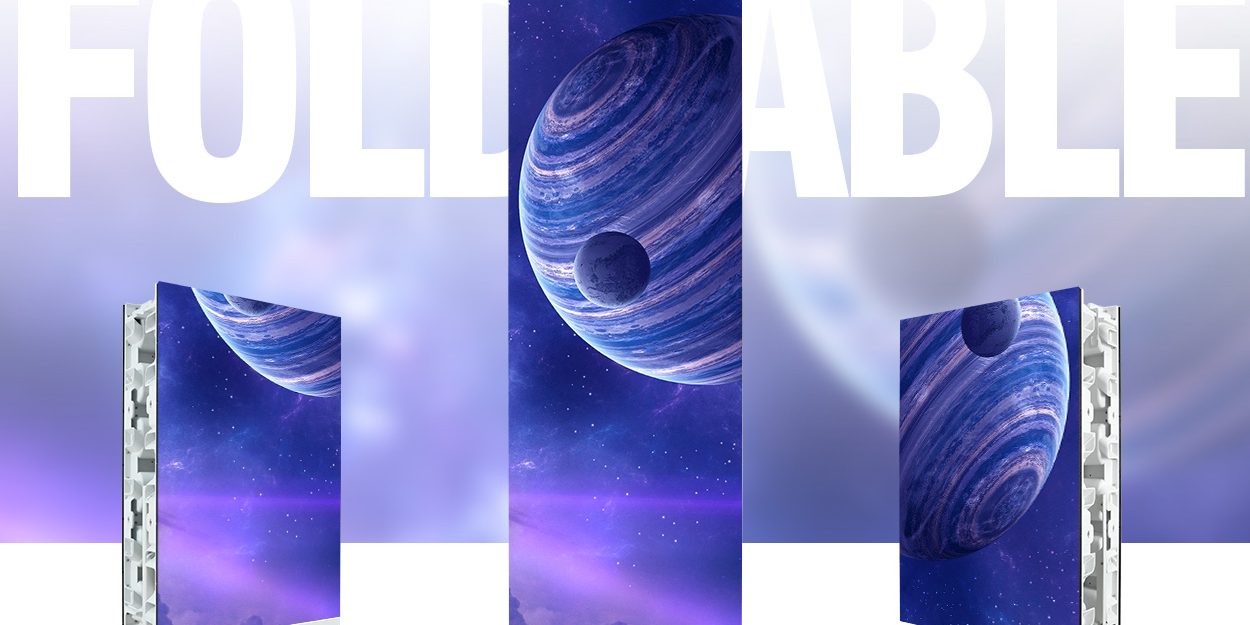
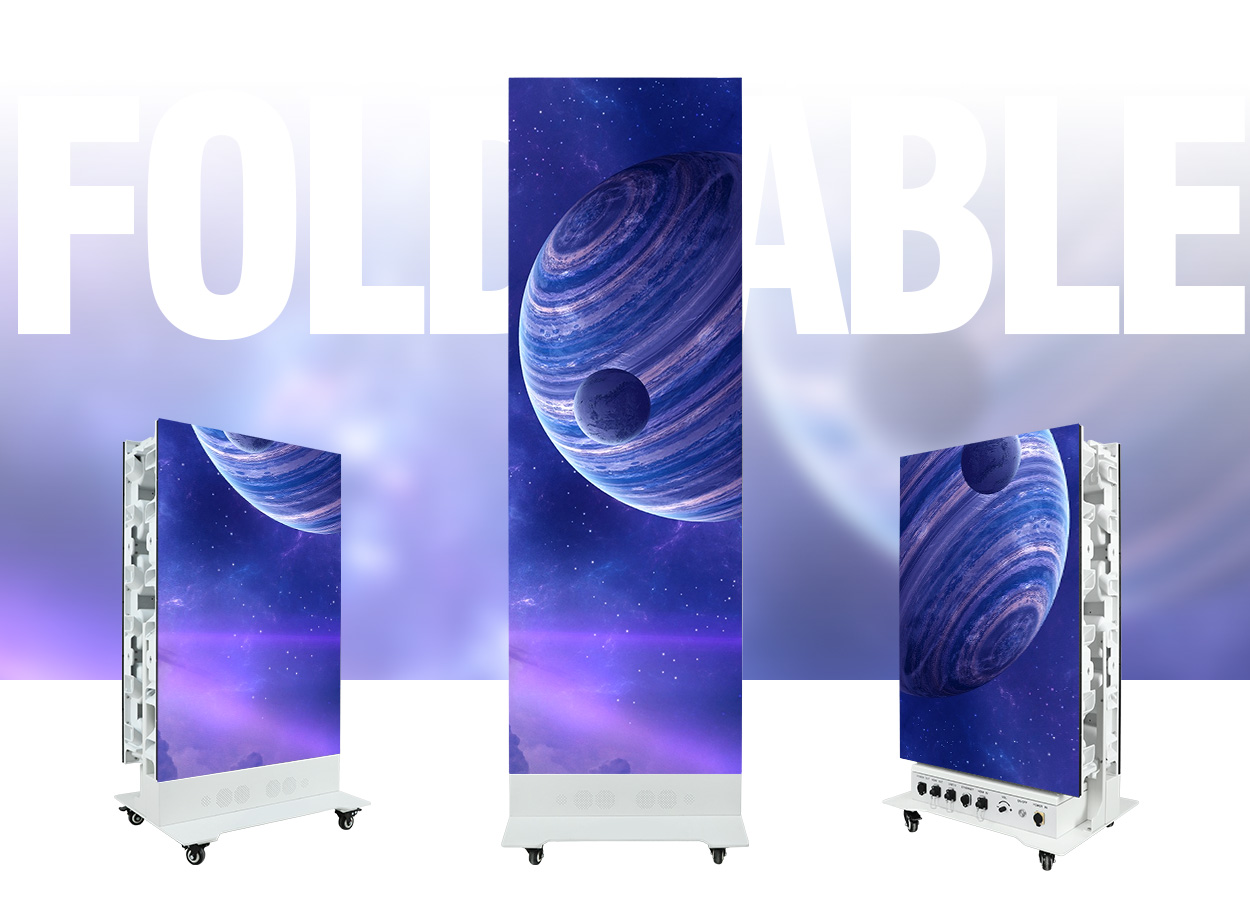
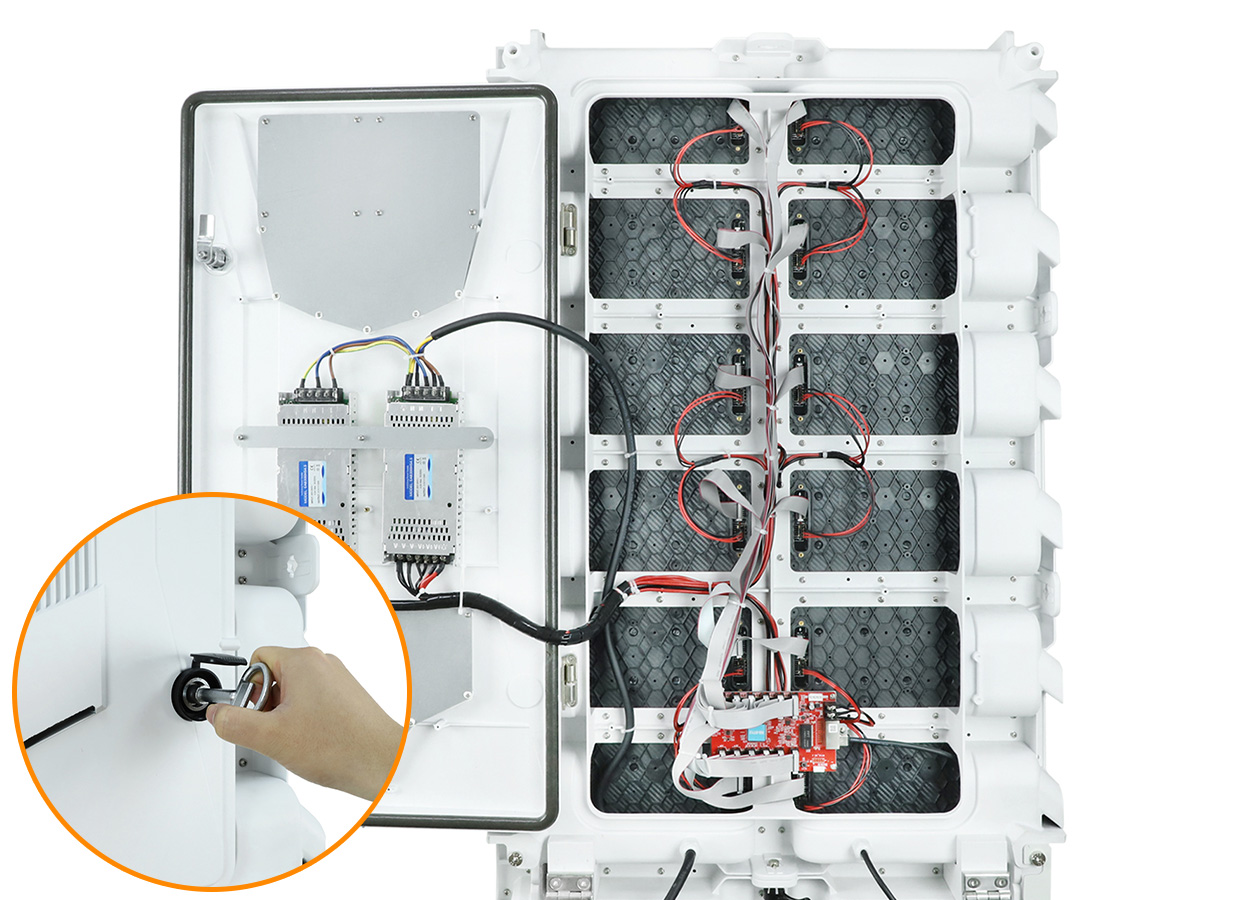
The published EagerLED EA1920OP2 outdoor foldable poster page lists a 640 × 1920 mm display format, P1.86, P2 and P2.5 options, 5000 cd/m² brightness, a refresh rate of at least 3840 Hz, and front and rear IP65 protection. It also describes double-sided content and a wheeled, folding structure. Confirm the selected configuration and current order specification with EagerLED.
Those published details identify a product to evaluate. They do not demonstrate a particular site’s LED poster daylight visibility, establish a viewing-distance guarantee or confirm automatic brightness-control equipment. Ask which control functions are supplied and what documentation supports them.
A measurement request for LED poster daylight visibility should identify who owns the report and which raw records will accompany it. Retain original readings, instrument details, sample identification and any deviations from the agreed method. A summary slide without those supporting records makes later disagreements harder to resolve.
5. Put the Demonstration Into a Written Acceptance Record
A useful approval identifies the exact configuration, files, viewing conditions and result. Keep the record with the quotation and acceptance schedule so that the ordered equipment can be compared with the demonstrated sample. Avoid an unqualified statement such as “sunlight readable” with no site or task attached.
For LED poster daylight visibility, distinguish acceptance from an open issue. A task that has not been tested is pending, even if another observer thinks it will probably pass. Record the owner, corrective action and retest condition for each unresolved item.
| Record field | Required detail | Action if incomplete |
|---|---|---|
| Configuration identity | Model, pitch, sample identification, player and operating mode | Reconcile differences with the proposed order |
| Mandatory task result | Observer response, viewing location, content version and decision rule | Revise the relevant element and repeat the task |
| Condition coverage | Tested time periods, glazing, both faces and critical approaches | List missing conditions and a retest owner |
| Operating controls | Approved daytime and evening settings; available control method | Demonstrate the actual supplied control workflow |
| Change record | Subsequent changes to glass, location, content or equipment | Assess whether affected observations must be repeated |
One possible project clause is: “Acceptance requires successful completion of the viewing tasks in the attached site matrix using the listed content and delivered configuration. Untested conditions remain open until the named parties approve the recorded retest.” Adapt the wording and responsibilities to the actual purchase agreement.
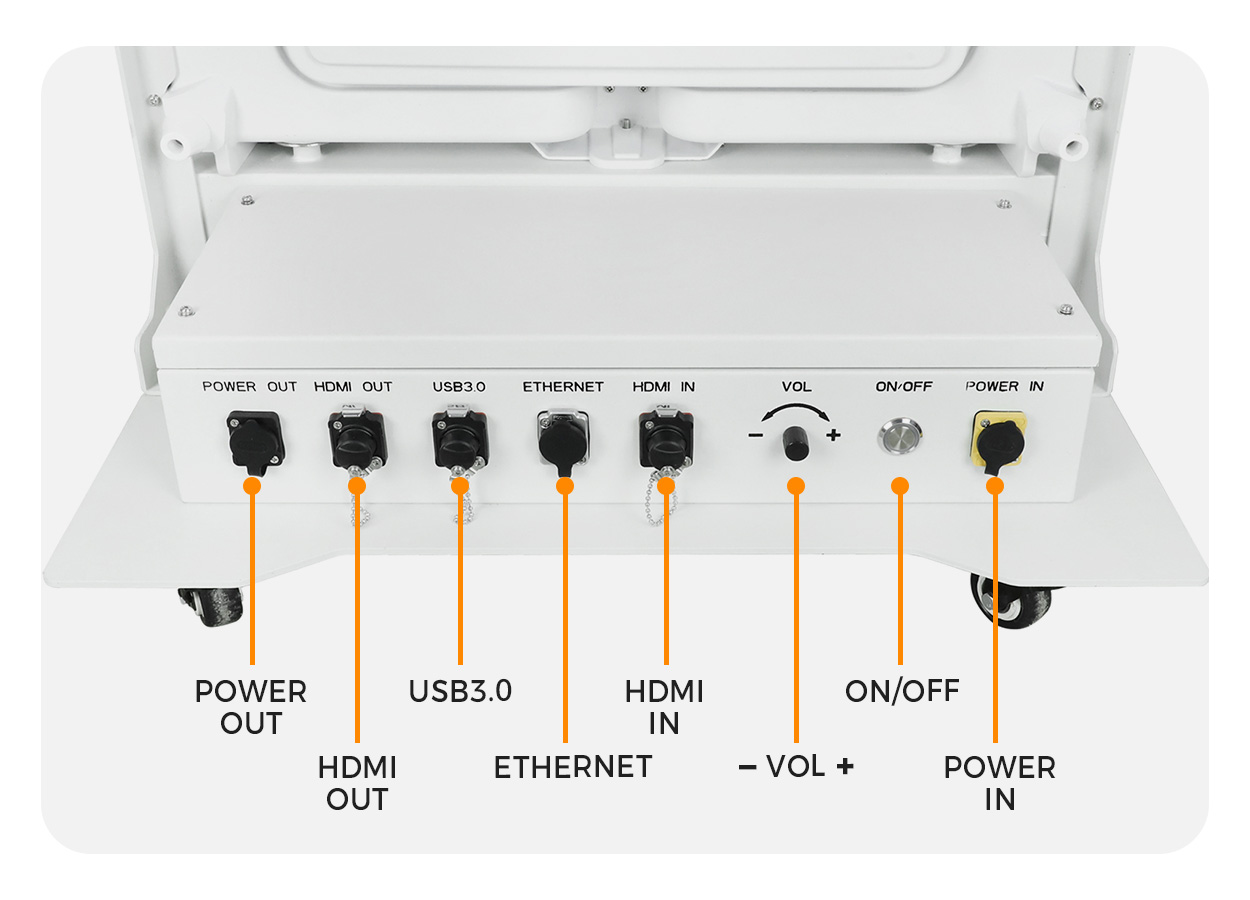
Include an evening check and the actual brightness-control workflow. If scheduled control is supplied, demonstrate its clock settings, restart behavior and approved levels. If a sensor is supplied, verify its location and response. Do not assume either function exists because a product has network or USB ports.

Weather protection and LED poster daylight visibility answer different questions. An IP rating addresses defined enclosure protection tests; it does not establish visibility, wind resistance or every permitted operating condition. Obtain the supplier’s installation and operating instructions and resolve project constraints separately from the optical demonstration.
After delivery, give store operations a short handover covering the approved content version, normal controls and whom to contact when conditions change. Keep the LED poster daylight visibility record available to the person who replaces campaign files. Otherwise, a later change to text size or background contrast can invalidate the original viewing result without anyone noticing.
Frequently Asked Questions
Should observers wear polarized sunglasses during the test?
Include them when they represent normal customer use. Record the lens type and viewing direction, and test the actual display rather than assuming the effect from its category. Keep unaided viewing results separate so an accessory-specific observation does not obscure the underlying condition.
What if a supplier cannot bring a sample to the site?
Request a documented demonstration that approximates the important conditions and lists the differences. Keep site-dependent approval conditional, or agree on an appropriate sample arrangement before the main order. A remote video can support discussion but cannot close an untested on-site viewing requirement.
Does a successful autumn demonstration cover summer operation?
It covers the conditions actually recorded. Seasonal sun angles, foliage and operating hours may differ. Identify material seasonal gaps during planning and agree on further evidence or a later check where those conditions could affect the buying decision.
Must a screen be retested after window film is added?
Review the change because the tested optical path has changed. Repeat the affected viewing tasks through the finished glazing and update the record. Retaining the old approval without recording the new film would leave the final installation different from the demonstrated system.
Can the demonstration establish a sales uplift?
No. It establishes performance against the agreed viewing tasks under recorded conditions. Sales impact requires a separate evaluation that accounts for campaign, pricing, store traffic and other changes. Keep optical acceptance and commercial measurement as separate records.
Prepare Your Daylight Demonstration With EagerLED
Send EagerLED a location photograph, planned operating hours, viewing routes, glazing details and the message customers must read. Include the proposed poster arrangement and identify conditions you cannot reproduce during a sample demonstration.
For a useful LED poster daylight visibility discussion, bring the acceptance matrix as well as the artwork. Contact EagerLED to review the product configuration and demonstration requirements, confirm available controls and request the current specification for your project. Approve the order against recorded evidence and agreed responsibilities.