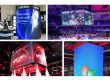
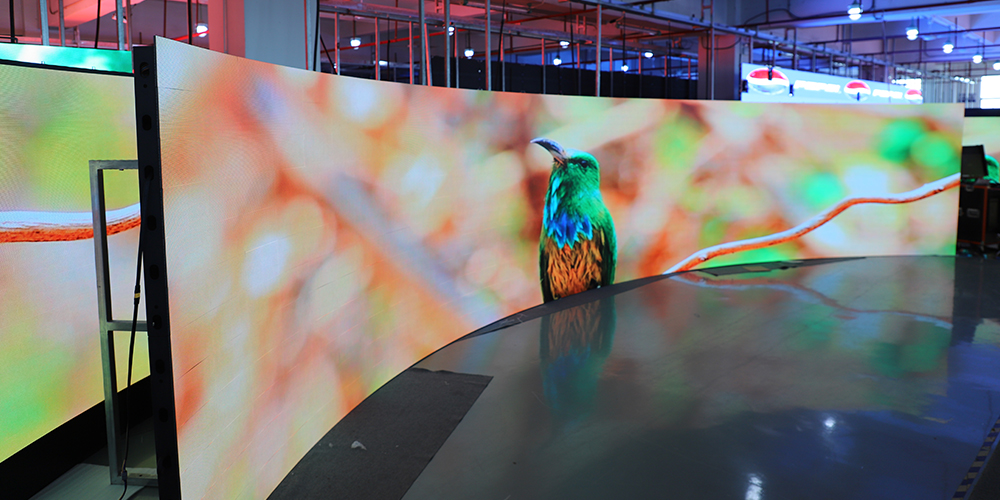
A custom flexible LED display starts with the shape of the installation, not the screen size alone. To plan a curved wall, column, wave or product-shaped screen, define the surface geometry, viewing distance, indoor or outdoor conditions, support structure and content layout before selecting LED modules. This guide shows what to specify, what to ask a manufacturer, and which trade-offs affect the finished display and its quote.
Quick answer: flexible LED modules can follow a designed support frame, but each module has a permitted bending limit. A tight curve, a 360° wrap and a compound shape require different module layouts and content mapping. Send a drawing with dimensions and the required radius to the supplier; do not assume that any soft module can bend to any shape.
1. Which custom LED shape fits your project?
Begin with the viewing experience and the surface the display must follow. A gentle curve may work with an angled rigid cabinet; a continuous wrap or sculptural surface typically calls for flexible modules and a purpose-built frame. For the underlying technology and available product families, see EagerLED’s flexible LED screen overview.
| Shape | Design priority | Question to resolve before ordering |
|---|---|---|
| Concave or convex wall | Smooth visual line and correct sightlines | What is the exact radius at every point? |
| Cylinder or column wrap | Circumference, seam position and 360° content | Is it a full wrap, and where will the service opening sit? |
| Wave or ribbon | Changing curvature and frame accuracy | Where do the curves reverse or become too tight? |
| Can or product shape | Brand silhouette and custom edge treatment | Which surfaces must show content, and from which angles? |
| Sphere or compound form | Panel segmentation and content distortion | Can the proposed module layout reproduce the geometry? |
Practical rule: ask for an elevation, a plan view and a section through the tightest curve. A single rendering can hide the exact bend that determines whether a module fits.

2. Specify the modules, image and environment
Geometry and module size
A flexible module bends; it does not eliminate the need for an accurately fabricated support structure. EagerLED lists EA-Flex indoor module formats of 240 × 120 mm, 256 × 128 mm, 320 × 160 mm, 250 × 250 mm and 300 × 168.75 mm. Its EA-Flex product page states a bending limit of up to 45° for the listed design. Ask EagerLED to confirm the permitted bend and minimum radius for the exact module and assembly in your proposal. An angle alone does not define the radius of a finished cylinder.
Pixel pitch and viewing distance
Pixel pitch is the distance between adjacent pixels. Choose it from the closest normal viewing position and the detail in your content. For example, a 320 mm wide P2 module has 320 ÷ 2 = 160 pixels across; the matching 160 mm height gives 80 pixels. This arithmetic helps you check the proposed native resolution before artwork is produced. Do not choose the smallest pitch automatically: compare the final pixel count, controller capacity, viewing distance and cost.
Brightness, camera use and surroundings
Define whether the screen is in a controlled indoor space, next to daylight, or exposed to weather. The published EA-Flex product information describes an indoor range with model-dependent brightness of 600–800 cd/m², a 140° viewing angle and refresh frequency of at least 3,840 Hz. Request the data sheet for your selected model; these figures should not be applied to every flexible screen. For a stage or filmed installation, include camera distance, shutter settings and expected shooting angles in the brief.
Outdoor caution: do not specify an indoor soft module for exposed outdoor use solely because the shape is right. Ask for the chosen assembly’s weather rating, drainage, power protection and service plan. For broader product comparisons, see the flexible screen options.

3. How do you customize a flexible LED screen shape?
- Measure the site. Record overall width and height, the tightest radius, obstacles, access routes, loading limits and available power. For a column, provide diameter at the top and bottom rather than assuming it is constant.
- Choose the viewing zone. Mark where people will stand, their closest viewing distance, the main sightline and any blind side. This informs pitch, seam placement and content.
- Check module fit. Ask the supplier to show how the selected modules cover the surface, including cuts, gaps, edges and the transition between curves. Request confirmation of the allowed bend for that model.
- Design the support and service access. Flexible modules attach to a frame that holds the intended geometry. EA-Flex uses magnetic assembly and front service; confirm that a technician can still reach modules, power and data connections in the installed position.
- Map the content. Calculate the display’s final pixel canvas. Put critical text away from seams, sharp turns and areas viewed at an angle. Test a rendered preview on a flat template and, where possible, a physical sample.
- Approve a build drawing. Confirm module count, frame drawing, power and signal routing, controller plan, spare parts and the acceptance test before production.
For a cylindrical installation, circumference is approximately 3.14 × diameter. A 1 m diameter column therefore needs roughly 3.14 m of display width before allowances for seams and frame details. This is a planning calculation, not a guaranteed module count; the supplier must resolve the actual layout against module dimensions and service openings.

4. What does a shaped LED project look like in practice?
EagerLED’s EA-DCan indoor can-shaped LED screen video shows a branded object rather than a conventional flat wall. It is a useful reference when briefing a product-shaped installation: specify the silhouette, which surfaces carry video, where the display can be serviced and how content wraps around the form. Another EagerLED flexible screen project video provides a second visual reference for discussing curvature with a supplier.
These videos show possible forms; they do not establish that one module specification fits every project. Ask for the product data sheet and a drawing for the exact shape you intend to buy. If your project is a conventional indoor display with no continuous curve, compare it with an indoor LED wall before committing to a flexible build.
5. What changes the price of a custom flexible LED display?
A useful quote separates the display from the custom engineering around it. Price varies with the pixel pitch, total area, number and size of modules, frame complexity, controller and content mapping, installation access, shipping and spares. A 360° wrap or wave can need more design work than a simple curved wall of the same area.
- Tighter pitch generally means more pixels for the same area and should be justified by viewing distance and content.
- More complex geometry can increase frame fabrication, edge treatment and installation time.
- Front service and access may change the structure even when the visible screen dimensions stay the same.
- Content production is easy to overlook: a cylinder or irregular form may need a custom pixel canvas and preview renders.
- Environment affects the enclosure, power protection and long-term maintenance plan.
Request an itemized proposal showing the module model, pitch, active display area, native resolution, brightness, refresh rate, support frame, controller, spare modules, shipping terms and warranty scope. EagerLED’s flexible LED screen and price guide explains the wider product choices.
6. Send this project brief for an accurate quote
Share the following in one document so each supplier prices the same installation:
- Installation location and whether it is indoor, sheltered or exposed outdoor
- Drawing or CAD file with width, height, radius or column diameter, plus photos of the site
- Main viewing distance, viewing angles and whether cameras will film the screen
- Desired shape, visible edges and preferred location of seams and service access
- Content type, intended pixel canvas and any live video or interactive requirement
- Available power, mounting surface, load constraints and cable routes
- Required delivery date, installation responsibilities and spare-parts plan
When you are ready, send EagerLED the drawing and project brief and ask for a module layout and itemized quotation. The team can then confirm whether EA-Flex or another solution suits the geometry.
Frequently asked questions
Can a flexible LED display form any shape?
No. A soft module can follow curves within its model-specific bending limit, while the frame, edges and panel layout determine the finished shape. Compound forms and sharp transitions need engineering review.
What is the difference between a curved cabinet and flexible LED modules?
A curved cabinet uses rigid components arranged to make an arc. Flexible modules can follow a shaped support more continuously. The right option depends on the radius, viewing distance, desired seam appearance and access for maintenance.
How do I choose pixel pitch for a custom shape?
Start with the closest typical viewing distance and the smallest detail viewers must read. Then calculate the finished native resolution from the selected module’s pixel dimensions. Ask for a content mockup before approving pitch.
Can EA-Flex be installed outdoors?
EagerLED describes EA-Flex as an indoor flexible display. For an exposed outdoor project, request an outdoor-rated product and confirmation of the weather protection of the complete assembly, including power and connections.
What should I send a manufacturer first?
Send dimensions, a drawing of the shape, the tightest radius, site photos, environment, viewing distance and content requirements. Those inputs let the supplier check module fit and produce a meaningful quote.
Next step: keep the URL and project drawing together. A clear shape brief makes it easier to compare proposals, confirm a buildable solution and produce content at the right resolution.