

A giant cat appears to lean over a building. A product seems to move beyond the edge of a billboard. The effect looks three-dimensional, yet the audience needs no glasses. How does a 3D LED screen work, and what does a buyer actually need to create that effect?
For most large outdoor installations, the answer is a combination of LED display hardware, screen geometry, and video made for a specific viewing position. The image remains on the surface of the display. Carefully designed perspective, shadows, and movement make the scene appear to extend into the space around it.
That distinction matters to LED display buyers, distributors, AV integrators, and contractors. A capable screen alone cannot turn ordinary video into convincing naked-eye 3D. The site, display design, control system, and content team have to work from the same plan. This guide explains how the illusion works and what to check before specifying or purchasing a system.
1. What Is a 3D LED Screen?
In commercial signage, a 3D LED screen usually means a direct-view LED display playing video that creates a visible illusion of depth without glasses. You may also see the terms naked-eye 3D LED display, anamorphic LED billboard, or glasses-free 3D billboard.
The most familiar examples cover a building corner. LED panels on two faces of the building form one continuous canvas. A specially prepared animation uses that shape to suggest a box, a room, or an object occupying space beyond the display. Other installations use a curved screen or even a flat surface, although each format gives the content designer different possibilities and constraints.

The word “3D” can cause confusion. Most large 3D LED billboards do not send a separate picture to each eye, as a stereoscopic cinema system does. Nor do they create a physical object floating in the air. They show a two-dimensional image that looks spatial from a planned viewpoint. Research on anamorphic billboard imagery identifies perspective and occlusion among the visual cues behind the effect.
For a buyer, the useful definition is therefore practical: a 3D LED screen is a site-specific display and content system. The LED cabinets provide the canvas; the animation provides the illusion. If either is designed without accurate information about the other, the result may still play video, but the intended depth effect can fall apart. For more examples of this format, see EagerLED’s 3D billboard guide.
2. How Does a 3D LED Screen Create a 3D Illusion?
The basic idea is forced perspective. Imagine painting a shape across a floor and wall so that it looks like an ordinary cube from one marked spot. From another spot, the painted shape looks stretched. An anamorphic 3D LED screen applies the same principle to moving digital images.
First, the designer chooses where the intended audience will see the display: perhaps a pedestrian area opposite a building corner. Next, the creative team builds a virtual model of the real screen, including its dimensions, corner or curve, and the viewer’s position. They place a virtual camera at that position and develop the scene around it. Finally, they map the finished images onto the LED surface.

Several cues work together. A drawn frame can make the display look like a deep opening. An object can pass behind that frame and then appear in front of it. Shadows establish where the object seems to sit; changes in scale and motion suggest that it is approaching or receding. At the planned viewpoint, the separate parts line up into a believable scene. Move far enough away from that position and the object may look distorted.
The LED technology does not perform this perspective calculation by itself. The display plays the video it receives. A bright, well-aligned canvas helps preserve the effect, but ordinary footage will not become anamorphic merely because it is shown on a corner screen. Equally, strong creative work cannot conceal an obvious gap between LED faces or a visible mismatch in color at the corner.
This is why a convincing 3D LED screen starts with a coordinated brief. The site survey informs the screen design; the screen design gives the animation team its geometry; and the finished content is tested against the position of real viewers.
3. What Parts Make Up a 3D LED Display?
A 3D LED screen uses many of the same electrical and mechanical elements as a conventional LED video wall. Its special requirement is that those elements must form a reliable canvas for precisely mapped content.
Each display module contains arrays of LED pixels. Cabinets hold the modules in a repeatable structure. Power supplies, signal connections, receiving cards, and a controller bring the image to the screen. A media player or other video source supplies the finished animation. The supporting structure, weather protection, and service access depend on the installation.
| System element | What it does | Why it matters for a 3D project |
|---|---|---|
| LED modules and cabinets | Form the visible screen surface | Uneven alignment can reveal seams that interrupt the illusion |
| Corner or curved components | Join screen faces or follow the intended shape | Their real dimensions must match the content model |
| Video source and controller | Deliver and map image data to the display | The output must match the full pixel canvas and panel layout |
| Receiving cards and calibration | Drive sections of the screen and help maintain image consistency | Color or brightness differences are conspicuous across a continuous scene |
| Power, data, and structural systems | Keep the installation operating safely | They must suit the site and allow practical access for maintenance |
| Site-specific 3D content | Supplies the perspective illusion | It must be made for the installed geometry and intended audience position |
The pixel pitch is the distance between the centers of neighboring pixels. A finer pitch puts more pixels into a given area and can support closer viewing, but the appropriate choice depends on the audience distance and the detail in the content. It is not automatically the best-value choice for a distant outdoor billboard. Planar’s pixel-pitch guide explains the relationship between pitch and viewing distance.
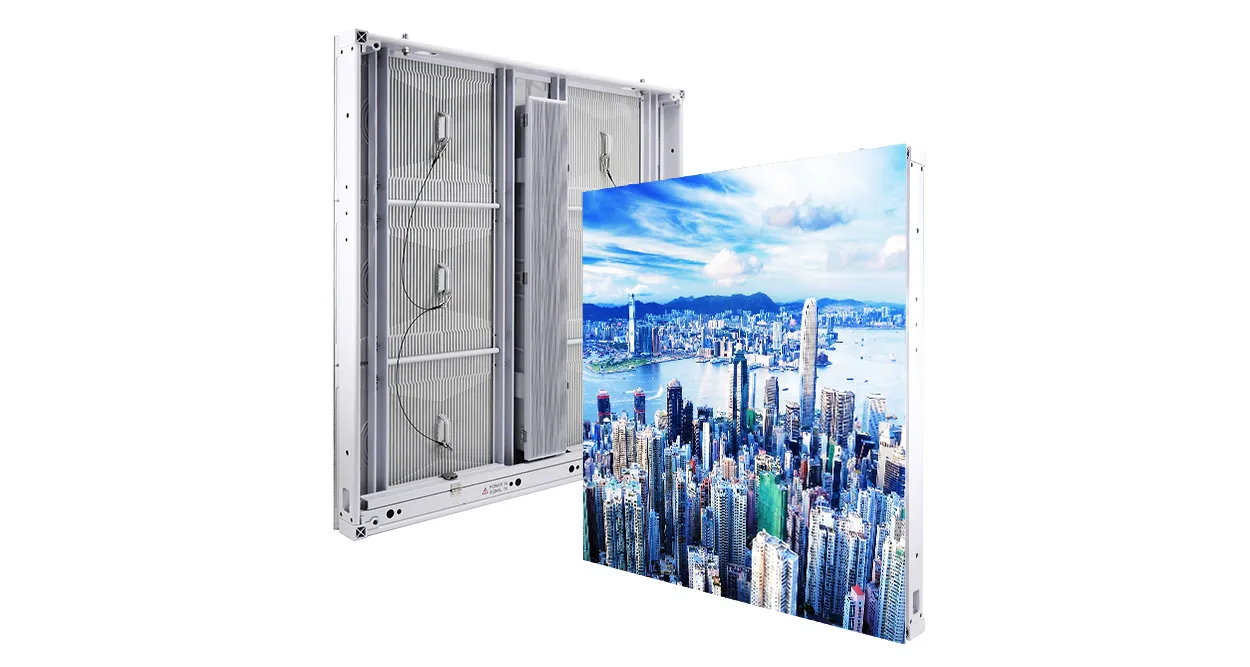
Brightness, contrast, color consistency, and refresh performance also affect how cleanly a 3D LED screen presents the animation. Buyers should examine these as measured properties of the proposed configuration, under the conditions in which it will operate. A claim that a panel “supports 3D” says little about whether the complete installation will look convincing from the street.
The control path deserves equal attention. A controller and receiving cards manage how source images reach the correct pixels; calibration and configuration help the assembled display appear consistent. NovaStar’s controller documentation illustrates the screen-configuration and input-management work involved in a large LED system. For a 3D project, the content team also needs the final pixel map before delivering master files.
4. How Is Content Made for a 3D LED Screen?
Content production begins with measurements, not with an eye-catching character animation. The creative team needs the installed screen width and height, the dimensions of each face, the corner radius if applicable, the pixel layout, and the expected viewer location. Architectural drawings are useful, but measurements of the finished installation should guide final mapping.
The team then builds a digital version of the site. They can use it to check whether a product, character, or architectural effect looks believable from the selected viewpoint. The animation is rendered and adapted to the actual LED canvas, which may be unusually wide or split across surfaces meeting at an angle.
Good 3D content uses depth cues deliberately. An object emerging from a simulated opening needs a convincing relationship to the opening’s edge. Its scale, lighting, and shadow should remain coherent as it moves. Fast motion or an oversized subject may attract attention, but neither repairs incorrect perspective. For a B2B campaign, the visual idea must also leave viewers enough time to recognize the product or message.

A useful approval process for a 3D LED screen includes two kinds of preview. A viewpoint render shows what the audience is meant to perceive. An unfolded or panel-mapped preview shows exactly what files will be sent to the screen. The first checks the illusion; the second helps reveal mapping and delivery errors. Neither replaces a test on the installed display, where ambient light, nearby structures, and the actual viewing area become apparent.
Content ownership should be settled early. Ask who will provide editable project files, final playback files, and revisions if the built screen differs from the original drawings. If several advertisers will use the same 3D LED screen, each will need the correct canvas specification and creative template. A reusable screen can still require custom work for every new anamorphic campaign.
5. Why Do Viewing Angle and Screen Shape Matter?
Every display has a technical viewing angle: a range over which its picture remains visible. An anamorphic animation has a different requirement: a preferred viewing area where its perspective appears correct. These should not be confused. A passerby may see a bright, legible image from the side while missing most of the intended 3D effect.
Screen geometry changes what a creative team can achieve. A corner gives the image two physical planes, making it easier to suggest a box-like space. A curve provides a continuous surface but needs careful mapping. A flat screen can still show convincing perspective imagery, provided the concept suits that surface and the audience position.
| Screen format | Suitable situation | Design question to resolve |
|---|---|---|
| Building-corner wrap | Viewers approach an exposed building corner | Where do most people actually see both faces together? |
| Curved LED surface | The architecture calls for a smooth wrap | Can the content be mapped to the built curve accurately? |
| Flat LED wall | A single-facing site with a defined audience area | Will the creative concept create enough depth without a physical corner? |
| Multi-sided indoor display | Viewers circulate around an object or installation | Is each face intended to work independently or as one scene? |
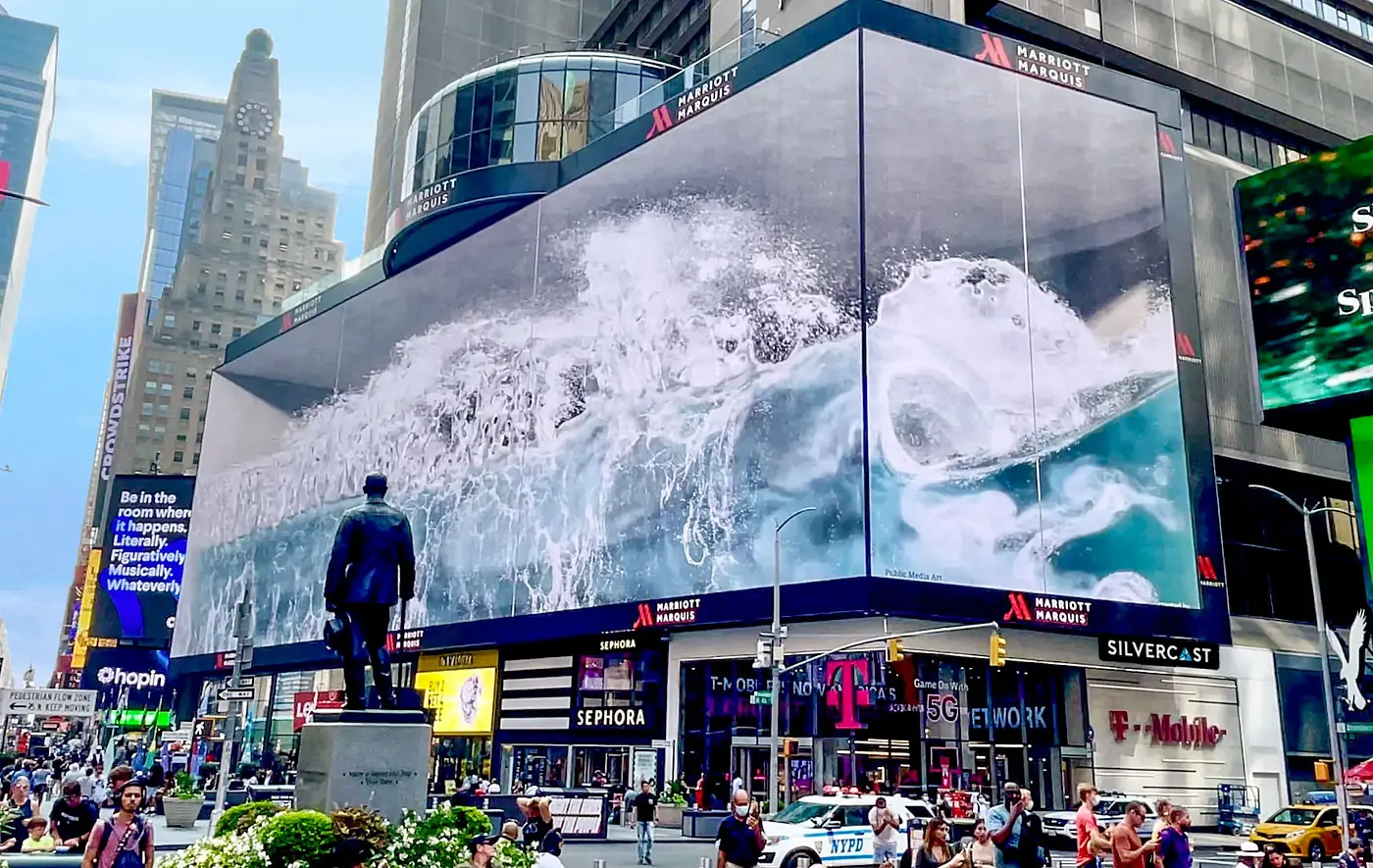
A site survey should identify pedestrian and vehicle routes, normal viewing distances, places where people pause, and anything that blocks sightlines. The “best” position cannot simply be the most flattering camera location for a demonstration video. It needs to be somewhere a meaningful share of the real audience can view the screen.
This also affects project sign-off. Instead of approving a 3D LED screen from one close-up video, evaluate it from several agreed locations. Check the preferred position, the approaches people will use, and less favorable side views. The illusion need not look identical everywhere, but stakeholders should know what the audience will see across the site.
6. How Do 3D LED Screens Differ From Standard LED Screens?
The distinction is mainly in how the display is designed and used, not in a mysterious new kind of LED pixel. Both systems can use modular direct-view LED hardware. Both need appropriate power, control, structural support, and maintenance. A 3D LED screen adds tighter coordination between geometry, viewpoint, and specially produced content.
| Project question | Standard LED installation | Anamorphic 3D LED installation |
|---|---|---|
| Can it play ordinary video and graphics? | Yes, if formatted for the canvas | Yes, if the content and controller are configured correctly |
| Does content need a defined viewer position? | Usually not for basic readability | Yes, for the strongest perspective effect |
| Is a building corner required? | No | No, though a corner can support certain illusions |
| Can existing ads be reused unchanged? | Often, after resizing or reformatting | They can play, but will not become convincing 3D creative |
| What needs special coordination? | Site, display, and playback requirements | Those requirements plus exact geometry and perspective-mapped content |
A standard screen may be suitable if the objective is flexible digital signage with many routine campaigns. A purpose-planned 3D LED screen makes more sense when the venue can support an effective viewpoint and the operator is prepared to commission suitable creative work. EagerLED’s broader 3D LED display overview shows several applications and display formats.
The distinction also helps with procurement language. Ask a supplier to identify which parts of a proposal are standard LED components, which are customized for the site, and who is responsible for the 3D content. That produces a clearer comparison than treating “3D capable” as a complete specification.
7. What Are the Benefits and Limitations of 3D LED Screens?
The main benefit of a 3D LED screen is its ability to present a spatial visual idea in a public setting without requiring viewers to wear equipment. It can give a product launch, venue entrance, or landmark display a distinctive visual format. The same screen can also show conventional material when no anamorphic campaign is running.
For operators, a corner or curved installation can make use of an architectural surface that is visible from more than one approach. For integrators, a modular LED system offers a way to adapt the canvas to site dimensions. Those advantages depend on a sound design and a useful audience position; they should be evaluated for the specific project rather than assumed from a promotional video.
The limitations are equally concrete. The illusion is strongest within a planned area and weakens as viewers move away. Custom content adds production time and ongoing creative expense. Corners and curves complicate measurement, alignment, and maintenance. Outdoors, the system must also cope with the site’s environmental and operating requirements.
A 3D LED screen is therefore a poor fit when the audience has no clear sightline, the display must carry mostly dense text, or the project has no budget for appropriately mapped content. These are not flaws in LED technology. They are signs that the desired communication task may call for a simpler format.
8. Where Are 3D LED Screens Used?
Large outdoor advertising is the best-known application, particularly on building corners facing busy public areas. A 3D LED screen can also serve a shopping center, entertainment venue, exhibition entrance, or brand showcase. Indoors, a smaller multi-sided or curved installation may let visitors encounter a visual from several directions. EagerLED’s indoor 3D LED poster display illustrates a different form factor from a building-scale billboard.

The useful question is less “Where can a 3D LED screen be installed?” than “What should viewers understand or do after seeing it?” A retail installation might demonstrate a product’s shape. An exhibition display might draw visitors toward a stand. A venue feature might reinforce the identity of the place. These goals lead to different choices of screen size, viewing area, playback schedule, and creative concept.
Project teams should also consider the content mix. If the operator expects frequent promotions, event notices, or tenant messages, the screen should be specified to handle those ordinary formats well. The 3D effect can then be reserved for campaigns that benefit from it. Designing only for a launch animation may leave the owner with an awkward everyday signage asset.
For distributors and contractors, this creates a useful early conversation with the client. Establish who controls the location, who supplies campaigns, how often content will change, and who will operate the display. Those answers can influence the proposed system as much as the visual demonstration does.
9. What Should You Consider Before Buying a 3D LED Screen?
Begin with a site brief. Record the available surface, mounting conditions, expected audience positions, operating hours, and access for installation and service. Share that information with both the display supplier and the content producer. If one party works from assumed dimensions while the other works from site measurements, the problem may only become visible during commissioning.
Next, define the complete deliverable. Does the quotation include the LED display, structure, control equipment, content production, installation, calibration, spares, training, and support? Prices or technical claims are difficult to compare until every bidder is describing the same scope. EagerLED’s LED screen buying guide likewise recommends examining the full configuration behind a quoted pixel pitch, including control, structure, calibration, service, and spare parts.
| Procurement item | Information to request | Why it affects the decision |
|---|---|---|
| Site and audience | Drawings, sightlines, nearest and typical viewing positions | Establishes the useful canvas and 3D viewpoint |
| Screen layout | Dimensions, cabinet plan, corner or curve details, total pixel map | Gives the creative team an accurate surface to build against |
| Image performance | Proposed pitch, brightness approach, calibration method, sample viewing test | Lets buyers judge the image under realistic conditions |
| Structure and access | Mounting design, site responsibilities, front or rear service plan | Determines whether installation and maintenance are workable |
| Control and playback | Signal path, input formats, scheduling, backup or recovery approach | Clarifies who operates the screen and what happens when playback fails |
| Creative deliverables | Viewpoint plan, mapped previews, master files, revision allowance | Makes the promised 3D effect reviewable before handover |
| Acceptance and support | Test locations, sign-off criteria, spare parts, warranty and response terms | Gives buyer and supplier a shared definition of completion |
For an outdoor project, ask how the proposed cabinets and connections suit the local environment and how service will be performed after installation. For an indoor project, close viewing distances, heat management, and the visitor route may deserve greater attention. Requirements vary by model and site; verify the specifications of the equipment actually offered.
It is reasonable to request a design review using the proposed geometry before ordering. Ask to see where the main viewing position will be, how the content crosses the corner or curve, and how ordinary 2D content will appear. If possible, require a site-based acceptance test using both test patterns and approved creative. An attractive render is a design aid, not proof that the built 3D LED screen has been calibrated.
EagerLED lists outdoor cabinet options intended for corner applications, including an EA960F3 configuration that can be customized for a 90-degree corner, as described in its billboard guide. That illustrates an important purchasing point: discuss the proposed configuration and its fit for the project, rather than assuming a model name alone guarantees the finished effect. The final choice should follow the site survey, content plan, and technical review.
10. FAQ
01. Does a 3D LED screen require 3D glasses?
The anamorphic 3D LED screen described in this guide does not. Its video is designed to look three-dimensional from a planned viewing area using perspective cues. Other technologies also use the term “3D display,” so ask the supplier which method a proposal uses.
02. Can a 3D LED screen display normal advertisements?
Yes. It can play standard video, graphics, and other content supported by its playback system. Ordinary ads may need to be resized or laid out for an unusual canvas, especially across a corner. They will not acquire an anamorphic effect unless they are created for one.
03. Can an existing LED billboard be converted to show 3D content?
Possibly, but its size, shape, sightlines, pixel map, and control system must be assessed first. A flat billboard may support a perspective-based concept even without a corner. Conversion should begin with a feasibility review and creative test, not a promise that any existing file will look three-dimensional.
04. Is a curved screen better than a corner screen?
Neither is universally better. A corner offers two distinct faces that can help suggest a box-like space; a curve may fit the architecture and provide a continuous canvas. Audience location and the creative concept matter more than choosing a shape in isolation.
05. How can a buyer review the 3D effect before installation?
Request a digital model based on the proposed screen dimensions and site. Review the scene from the intended viewpoint and from other likely audience positions. Treat this as a design check, then make final acceptance depend on a test of the installed and calibrated display.
06. Why does a 3D animation look good on a laptop but distorted on site?
The preview may use different screen dimensions, a different corner shape, or a camera position that does not match the real audience. The playback file may also be mapped incorrectly. Compare the approved site model, final pixel map, installed geometry, and actual viewing position before revising the animation.
07. Who normally creates content for a 3D LED screen?
A specialist animation or creative team usually develops the anamorphic scene, while the display supplier and integrator provide the canvas details needed to map it. The contract should identify who owns the geometry model, approves previews, supplies playback files, and makes revisions after installation.
08. How much power does a 3D LED screen use?
There is no useful single figure. Consumption depends on screen area, the selected cabinets and power supplies, brightness settings, and displayed content. Ask for the proposed system’s documented maximum and expected operating figures, then have the project’s electrical design checked against those figures.
09. How should an operator plan for future campaigns?
Keep an accurate record of the installed dimensions, pixel map, preferred viewing position, and approved file requirements. Give those materials to every future creative team. This reduces the chance of commissioning content that looks impressive in isolation but does not fit the actual 3D LED screen.
11. Conclusion
A 3D LED screen works by displaying perspective-mapped video on an LED canvas designed around a real viewing area. The apparent depth comes from the relationship between the animation, the screen’s geometry, and the audience’s position. It is an illusion presented by a physical display, not an object projected into open air.
For a professional buyer, the strongest starting point is a measured site and a clear project brief. Evaluate the LED hardware, structure, control system, and content as one deliverable. When those parts are coordinated—and the finished result is tested where people will actually stand—a 3D LED screen can be both a convincing visual feature and a practical long-term display asset.