


A flexible LED display is a direct-view video screen assembled from bendable LED modules on a shaped support frame. Also called a soft-module or flexible LED screen, it can follow curved walls, columns and wave designs. Choose it by pixel pitch, module dimensions, approved bending radius, installation depth and service access, not by shape alone.
This guide focuses on specifying an indoor commercial installation: comparing EA-Flex modules, checking design limits and preparing a complete quotation. For the electronics and operating principles, see how a flexible LED display works.
Key buying points: A bendable module is not a freely foldable finished screen. Indoor protection is not outdoor weatherproofing. The module thickness is only one part of the installed depth. Compare a complete system quotation with the same scope.
1. What is a flexible LED display?
Soft LED modules combine a flexible circuit board, LEDs, driver components and a pliable housing or mask. The modules connect to power supplies and a control system, then attach to a structure that defines the final surface. The LEDs form the picture directly; the flexible substrate allows the module to follow an approved curve.
The EagerLED EA-Flex indoor soft-module system uses magnetic front service. A flexible LED panel can be one replaceable part of a much larger video wall, so a module-only listing should not be mistaken for a complete ready-to-use display.
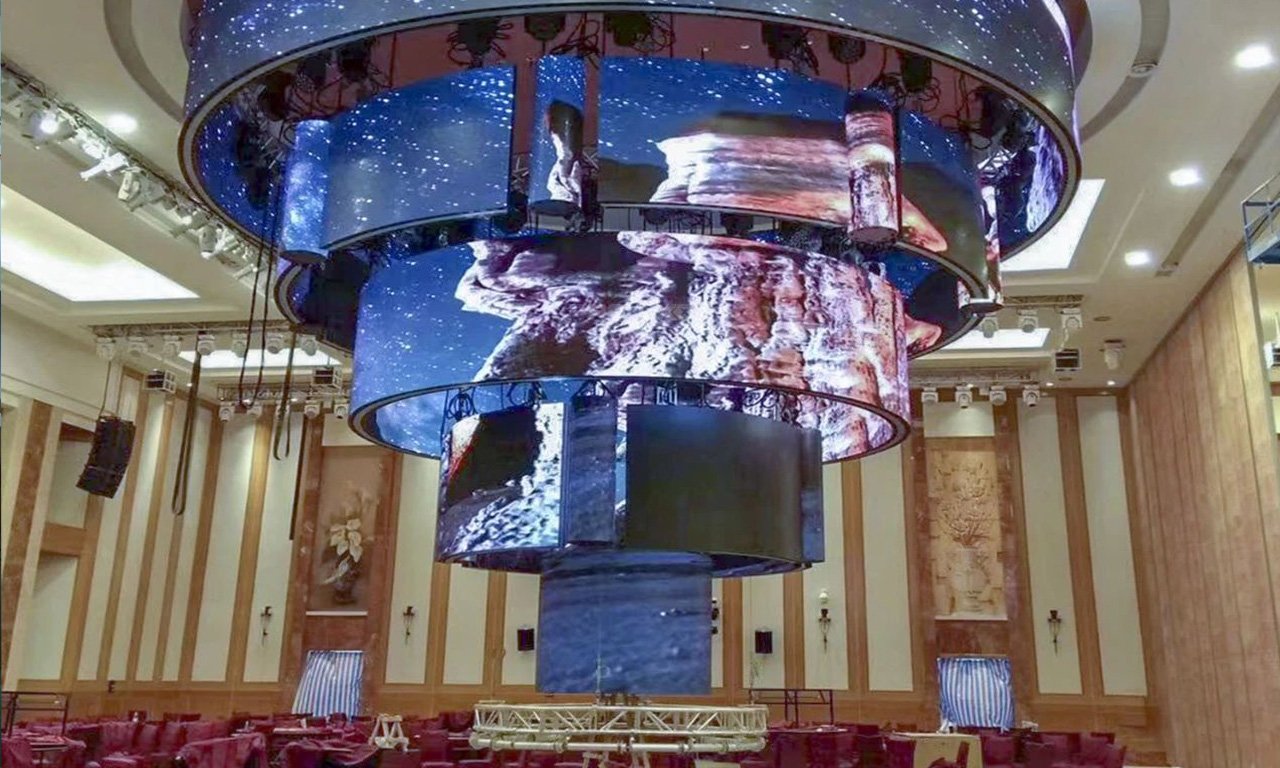
Flexible LED, TV, LCD and transparent film are different
A commercial soft-module LED wall is not a rollable OLED television or a flexible LCD panel. It normally needs a separate controller, power distribution and a custom frame. For a glass window where visibility through the screen matters, consider EA-iFilm2 transparent flexible LED film. Film-on-glass and opaque magnetic soft modules have different mounting methods and specifications.
2. Features and design limits
Bendable modules, with a defined limit
Flexibility supports concave, convex and flowing surfaces within the selected module’s mechanical limits. EA-Flex’s product page describes bending with a limit of 45 degrees, but this is not a universal minimum-radius specification. Confirm the bending axis, permitted direction and minimum radius for the exact module before fabricating the frame. Do not crease, stretch or repeatedly roll an assembled screen unless its documentation expressly allows that use.
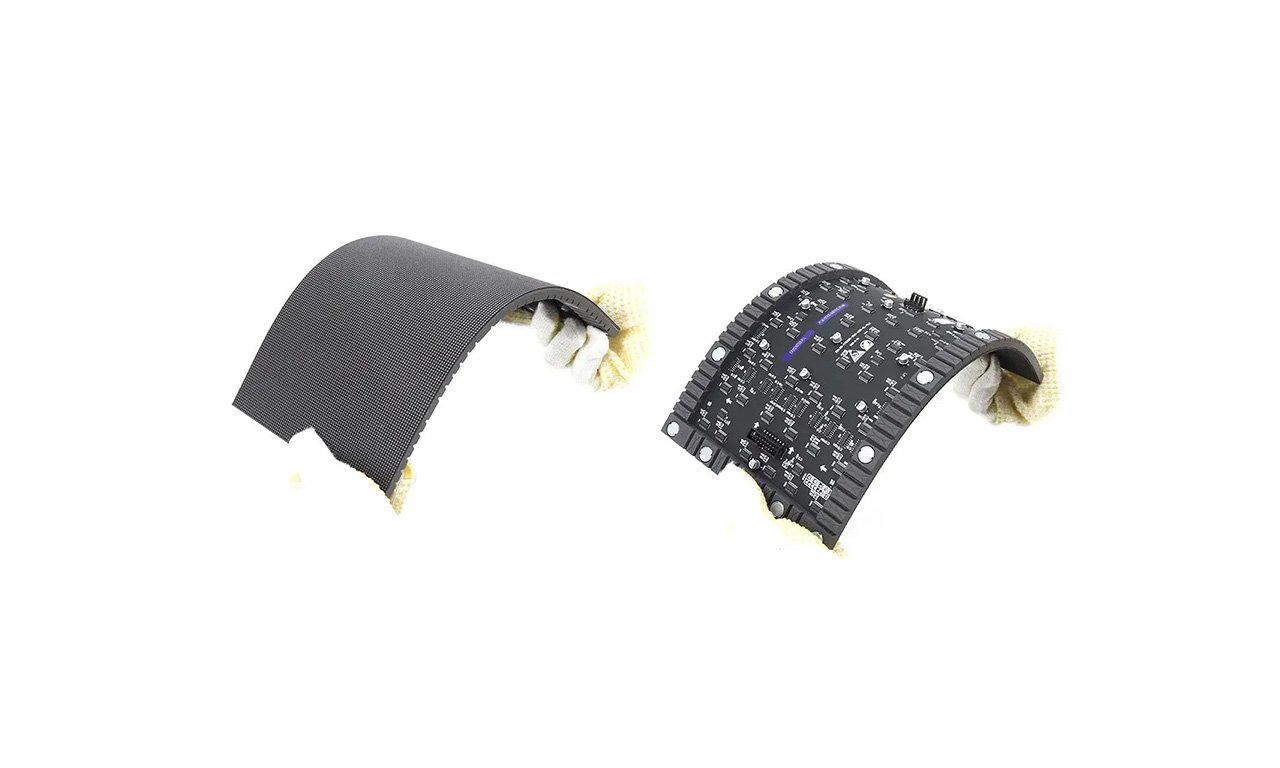
Magnetic front service
Front access lets a technician remove an individual module from a suitable metal support using the specified service tool. Plan access to connectors, receiving cards and power supplies as well. A removable front module does not automatically make every component easy to replace.
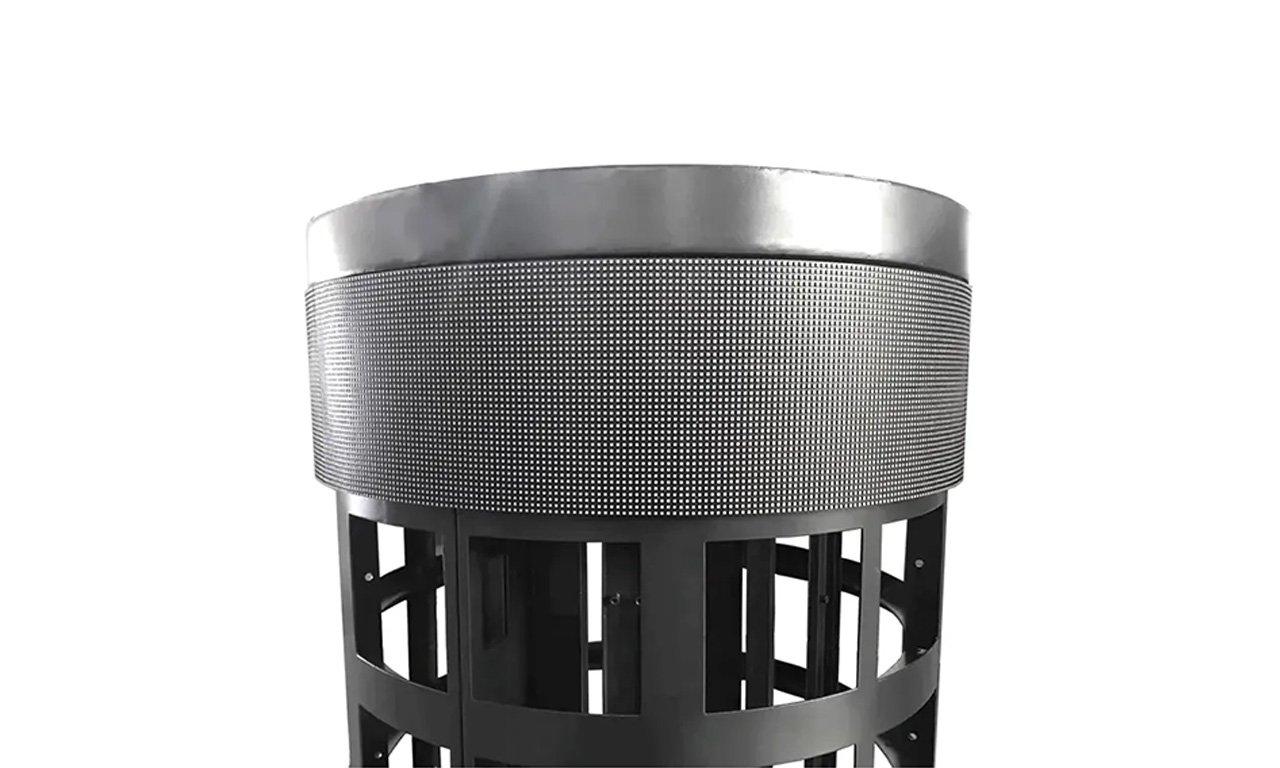
Thin modules do not define the finished depth
Ask for a section drawing showing the module, magnets, frame, cables, power supplies, ventilation and service clearance. Earlier illustrations for this article showed an 8.6 mm module; that figure is not a specification for every current EA-Flex option or the complete wall. Confirm the selected model’s thickness and the total installed depth separately.
Indoor use and controlled brightness
The EA-Flex configurations compared below are listed as IP31 indoor products. They should not be specified for direct outdoor rain exposure. Match brightness to ambient light and viewing distance, and assess reflections at the actual viewing angles. A curved surface alone does not guarantee less glare.
3. EA-Flex module specifications
The following examples are taken from EagerLED’s EA-Flex product tables, checked on September 7, 2026. These are selected configurations, not a complete availability list. The four 240 x 120 mm options and the 320 x 160 mm P5 option retain the module sizes and resolutions covered by this article, with current model identifiers and brightness added.
| Model | Pitch | Module size | Resolution | Brightness |
|---|---|---|---|---|
| EA-Flex-240-P1.875 | 1.875 mm | 240 x 120 mm | 128 x 64 pixels | 700 cd/m² |
| EA-Flex-240-P2 | 2 mm | 240 x 120 mm | 120 x 60 pixels | 700 cd/m² |
| EA-Flex-240-P3 | 3 mm | 240 x 120 mm | 80 x 40 pixels | 650 cd/m² |
| EA-Flex-240-P4 | 4 mm | 240 x 120 mm | 60 x 30 pixels | 650 cd/m² |
| EA-Flex-320-P5 | 5 mm | 320 x 160 mm | 64 x 32 pixels | 600 cd/m² |
For these five configurations, the published tables list a refresh frequency of at least 3,840 Hz and IP31 protection. Verify the final datasheet and quotation for the ordered hardware revision. Refresh frequency is not source-video frame rate and does not, by itself, guarantee freedom from camera artifacts.
Why size matters: P2 describes pixel spacing, not module dimensions. A 240 x 120 mm P2 module has 120 x 60 pixels, while the product table’s 320 x 160 mm P2 version has 160 x 80 pixels. Match both dimensions and pixel count when calculating the frame layout, receiving-card mapping and spare-module requirements.
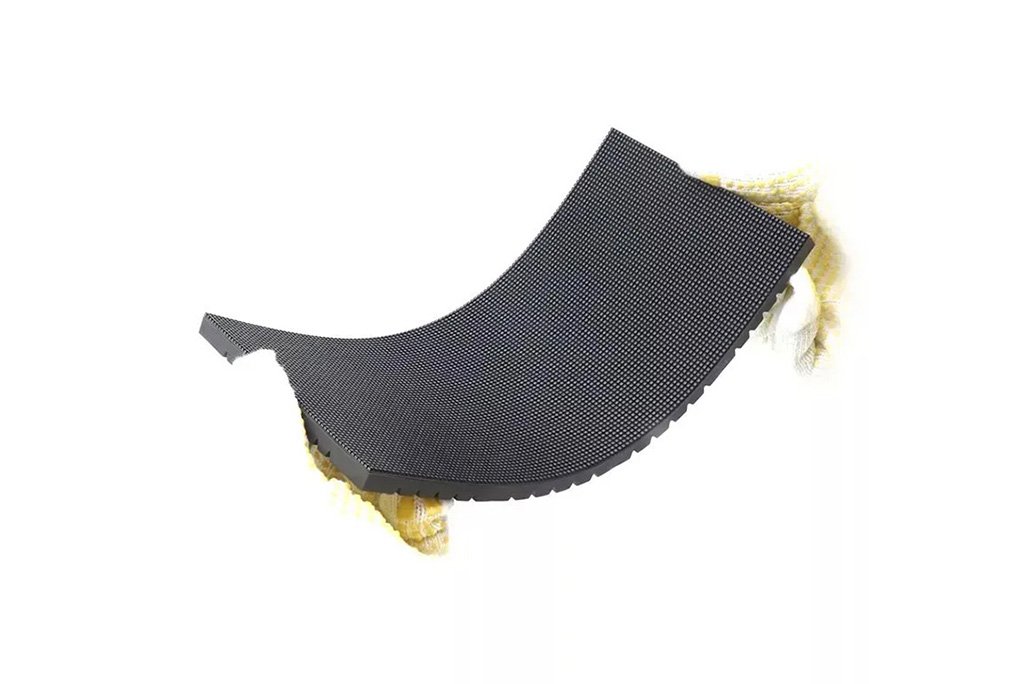
Calculate the pixel canvas before ordering
For an illustrative rectangular layout of ten 240 x 120 mm P2 modules across and ten down, the display surface is 2,400 x 1,200 mm and the pixel canvas is 1,200 x 600 pixels, or 720,000 pixels. This is a layout calculation, not a packaged product specification. Curved installations also require checks of arc length, frame tolerances and the closing seam.
4. Curved, cylindrical and custom shapes
Curved walls and waves
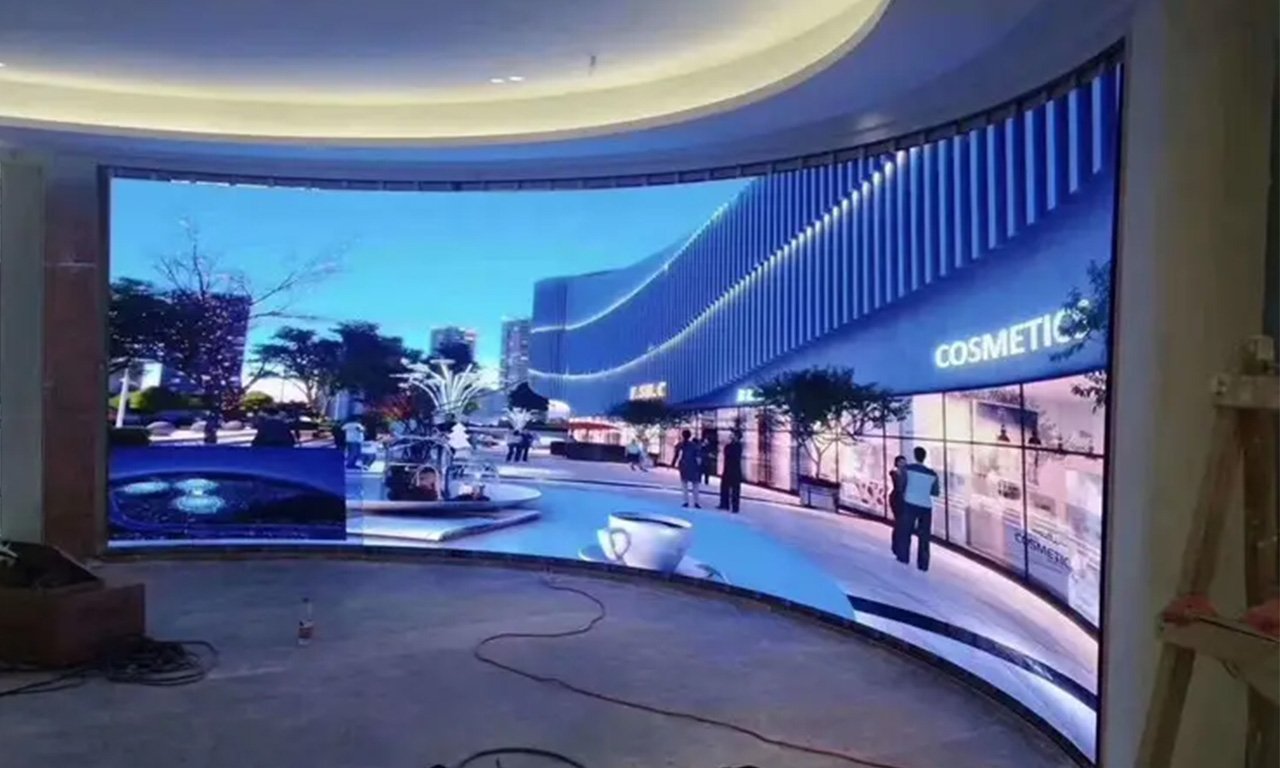
A curved LED wall follows a concave or convex frame. Wave designs change direction along the surface and need an approved bend at each transition. Specify the curve from a drawing and prepare video content for the finished pixel map, especially where a logo or text crosses a change in direction.
Cylindrical displays
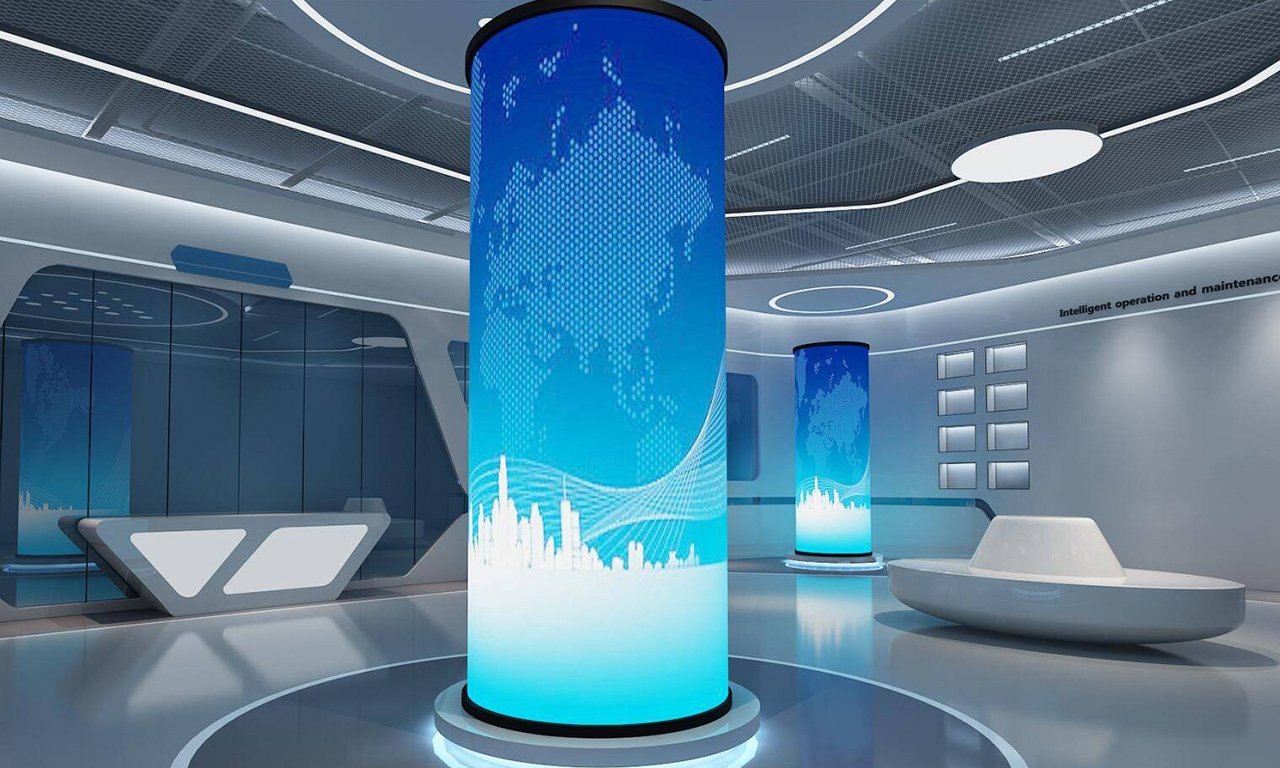
A cylindrical screen wraps a column or a purpose-built frame. Check the finished diameter, height, module orientation and closure before manufacturing. Content should remain understandable from different approach directions; a visitor normally sees only part of the circumference at once.
Spheres and other special shapes
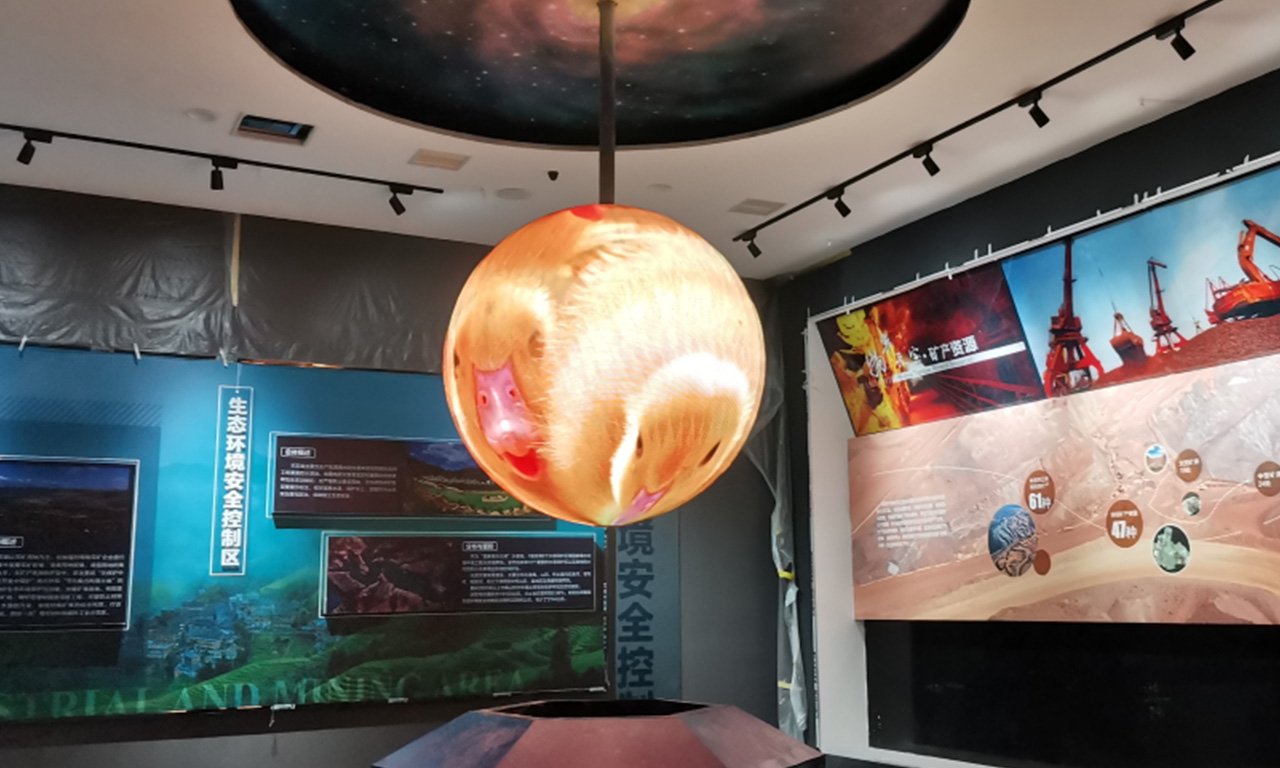
A sphere has curvature in more than one direction and may need specially shaped modules and a dedicated structure. Standard rectangular soft modules should not be assumed to fit any sphere, triangle or irregular outline. Ask the supplier to validate the module layout, service method and content mapping for the proposed shape.
5. Applications and selection checklist
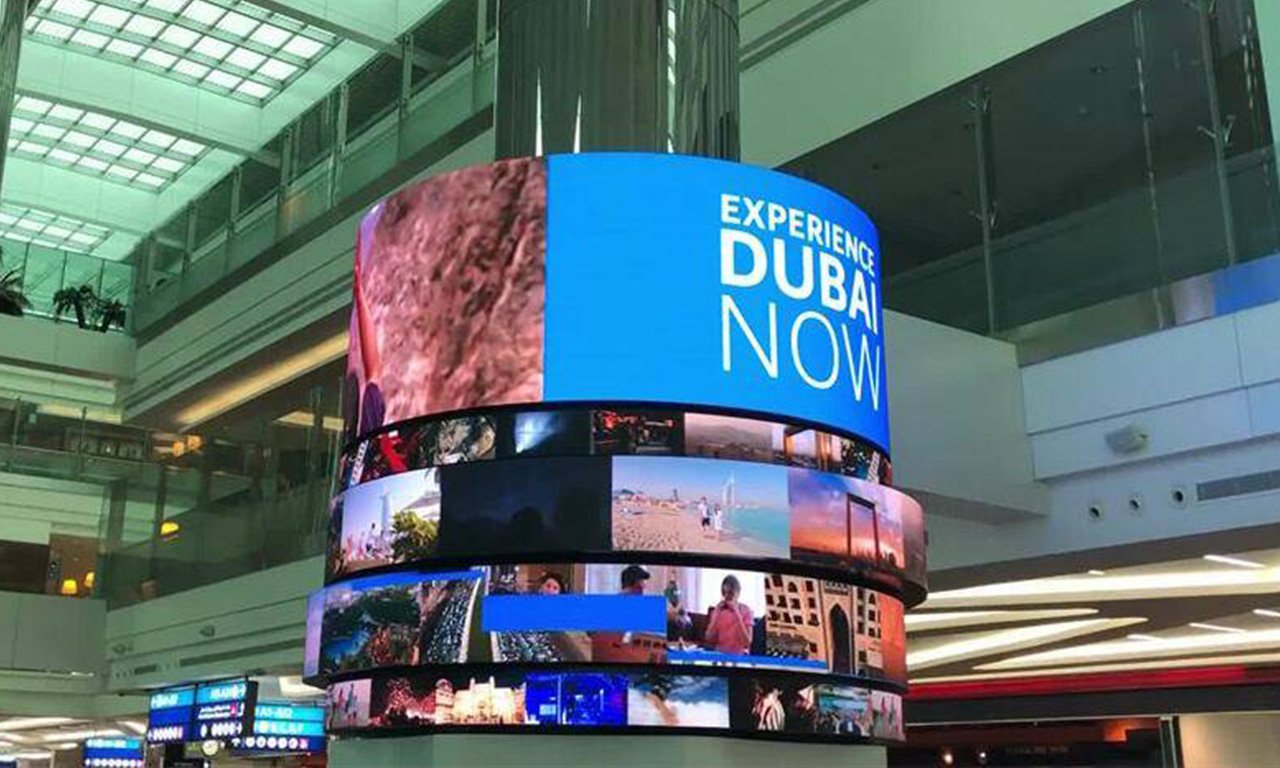
Retail stores and shopping malls can use column wraps for campaign content and wayfinding. Exhibition halls and museums can integrate curved displays into exhibits. Entertainment venues and stages can use wave or curved surfaces as part of a set. Choose each screen for the content, environment and maintenance plan; a creative outline alone is not evidence of improved sales.
| Project condition | What to check | What to request |
|---|---|---|
| Close viewers or small text | Pixel pitch, total pixel resolution and smallest text size | A content sample at the intended viewing distance |
| Column or tight curve | Minimum radius, bending direction and module seams | Approved frame and module-layout drawings |
| Window or bright interior | Ambient light, reflections and transparency needs | A brightness and sightline assessment |
| Stage or broadcast camera | Refresh behavior, scan settings, shutter and moire | A test using the planned camera and content |
| Shallow wall or enclosed column | Heat dissipation, installed depth and component access | A section drawing and maintenance plan |
For installation, approve the structure first, then verify power and data routing, module alignment, controller mapping and calibration. Retain the configuration files and specify compatible spares. For frequently moved event systems, confirm the frame, connections and transport protection are suitable for repeated setup.
6. Flexible LED screen price factors
There is no single meaningful price for every flexible LED display. Compare quotations with the same pixel pitch, screen area, geometry, component specification and delivery scope. A low module price can exclude the frame, controller, power supplies and installation that make the display operational.
- Modules: pitch, dimensions, pixel package, protective treatment and spare quantities.
- Structure: custom radius, mounting method, finish, service access and installation tolerances.
- Electronics: controller capacity, receiving cards, power supplies, cables and any required redundancy.
- Commissioning: assembly, mapping, calibration, content preparation and on-site labor.
- Delivery and support: packaging, freight, taxes, warranty terms and replacement-part arrangements.
Ask for the module or display-surface cost separately from the complete installed-system cost. Provide the destination and delivery terms so freight and taxes can be identified. No unverified price range is used here because the scope of a custom curved installation changes the total materially.
7. Frequently asked questions
How thick are industrial flexible LED screens?
There is no universal thickness. The soft module is only the front layer; the installed depth also includes its mounting system, frame, cables, power supplies and ventilation space. Request the exact module datasheet and a complete installation section drawing rather than treating a module-only thickness as the finished screen depth.
Can a flexible LED display be used outdoors?
Only a system specified for the actual outdoor conditions should be used outdoors. The EA-Flex configurations in this guide are indoor models listed as IP31. They should not be specified for direct rain exposure; an outdoor project needs verified weather protection, brightness, thermal design and structural suitability.
Do flexible LED screens reduce glare?
Flexibility alone does not reduce glare. Reflections and viewing comfort depend on the LED surface treatment, brightness settings, ambient lighting and viewing angles. Evaluate a sample under the project’s lighting and avoid directing strong reflected light toward viewers.
Is a flexible LED screen the same as a flexible LED TV or LCD?
No. The screen discussed here is a modular direct-view LED video wall with a separate control and power system. A rollable OLED television or flexible LCD uses a different panel technology. Specify the intended application and pixel resolution rather than using these names interchangeably.
Can flexible LED modules make any shape?
No. Modules can follow approved curves within their bending limits, but the frame, module dimensions and bending axis constrain the shape. Cylinders need a planned closing seam, while spheres and other compound curves may require specially shaped modules and dedicated content mapping.
8. Plan your EagerLED project
Send the information below through the EagerLED project inquiry page to request a suitable module configuration and quotation:
- Installation location, indoor environment and ambient-light conditions.
- Screen width and height, or column diameter and height, with a drawing of the curve.
- Closest viewing distance, content type and any camera requirements.
- Available installation depth, mounting surface and maintenance access.
- Delivery destination, project schedule and the required supply or installation scope.
Technical reference: EagerLED EA-Flex indoor product parameter tables, reviewed September 7, 2026. The numerical examples above use the stated module dimensions and resolutions. Product images illustrate configurations; final availability, dimensions and operating limits must match the ordered model and approved drawings.