

LED lamp beads account for roughly a third to half of an LED display’s total component cost. But that number understates their real importance, because a display with mediocre driver ICs still shows a watchable picture. A display with the wrong LED lamp beads — or worse, inconsistently binned ones — looks broken the moment it powers on. Brightness dips off-axis. Colors shift panel to panel. Cameras pick up scan lines your eyes miss.
Most people approach LED lamp bead selection by reading spec sheets. That is the wrong starting point. The spec sheet tells you what the bead can do under ideal conditions. What you actually need to know is which of those numbers translate into visible quality on a finished screen, and which ones exist mainly to fill a sales brochure. That distinction is what the rest of this article is about.
1.What Makes LED Lamp Beads the Most Critical Component in Your Display
2.The Specifications of LED Lamp Beads That Actually Matter, and a Few You Can Skip
3.SMD, COB, GOB, IMD: Which Package Type Fits Your Project
4.How Bead Quality Determines What the Audience Sees
5.Matching Beads to Use Cases
6.Brand Matters, Just Not the Way Most Buyers Think
7.What Most Buyers Get Wrong About LED Lamp Bead Selection
8.FAQs
9.Conclusion
1. What Makes LED Lamp Beads the Most Critical Component in Your Display
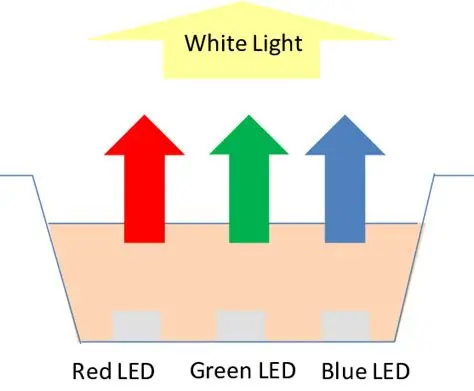
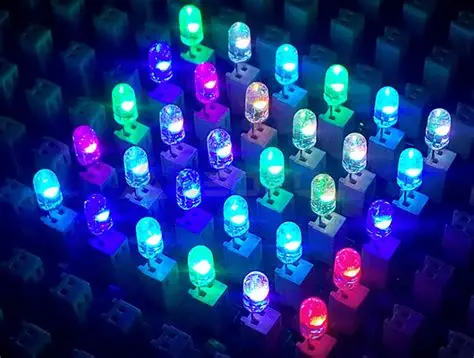
A typical SMD module contains thousands of individual LED lamp beads. Each one is a tiny package with a red, green, and blue chip inside. When every bead in the array behaves the same way — same brightness at the same current, same color coordinates, same emission angle — the screen is seamless. When even a small percentage drift from the mean, you see it immediately.
The physics works against uniformity. LED chips are semiconductors, and like all semiconductors, they come off the production line with natural variation. A wafer might produce chips spanning a 15% brightness range and a noticeable color temperature spread. What separates a premium LED lamp bead from a commodity one is how aggressively the manufacturer sorts, or “bins,” that variation. And how honest they are about what is left.
This sorting is where the cost piles up. Tighter binning means more rejected chips and higher per-unit pricing. When you see two LED lamp beads with identical specs on paper but a 2x price gap, the difference almost always traces back to binning tolerance and the consistency guarantees behind it. The binning certificate matters more than the datasheet, because the datasheet describes what the bead can do. The binning cert tells you what percentage of beads in your actual shipment will hit those numbers.
Think of LED lamp bead selection as the foundation. You can calibrate a screen after installation to fix minor uniformity issues. Point-by-point calibration systems exist for exactly that reason. But calibration has limits. It cannot fix a 30% brightness variance between adjacent beads without crushing dynamic range, and it cannot recover viewing angle performance from badly designed lens geometries. The bead is the ceiling. Everything downstream either respects that ceiling or wastes money trying to hide it.
2. The Specifications of LED Lamp Beads That Actually Matter, and a Few You Can Skip
Spec sheets for LED lamp beads are dense. A dozen parameters, each with a number and a unit that means something to the packaging engineer and very little to the person buying a finished display. Here is what to pay attention to, and what to let slide.
2.1 Brightness and the Viewing Angle Trade-Off
Brightness, usually given in millicandelas or lumens, is the first number most buyers check. Outdoor displays need high output. Think 5,000 nits or more at the module level to compete with direct sunlight. Indoor applications run fine at 800 to 1,500 nits.
There is a hidden cost to chasing peak brightness numbers. High brightness LED lamp beads typically achieve their output by narrowing the emission cone. The viewing angle shrinks. A bead rated at 6,000 mcd with a 90 degree horizontal angle can deliver worse off-axis uniformity than a 4,500 mcd bead with a 120 degree spread, even though the datasheet favors the brighter option. For most real-world applications, viewing angle consistency matters more than peak center brightness.
2.2 Color Consistency and Chromaticity Binning
This spec is what separates display grade LED lamp beads from general illumination beads. Illumination grade beads are binned for total luminous flux. As long as they produce enough light, small color differences do not matter when the beads are scattered across a ceiling fixture.
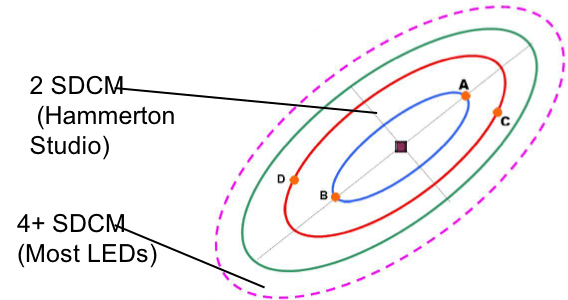
Display grade beads need chromaticity binning. Each bead gets measured for its exact color coordinates and sorted into groups with tightly controlled variance. The metric to look for is SDCM, Standard Deviation of Color Matching. For a display that people will look at directly, especially in broadcast or corporate settings, you want LED lamp beads binned to 1 SDCM or tighter. At 3 SDCM, color differences between adjacent beads are visible to a trained eye. At 5 SDCM, most viewers notice something is off even if they cannot say why. They will just feel like the screen looks cheap.
2.3 Refresh Rate and Gray Scale Are Not the Same Thing
People mix these up constantly. Refresh rate, in Hertz, is how many times per second the LED driver updates the bead state. Gray scale, in bits, is how many brightness steps are available between off and full on.
A display can have high refresh and poor gray scale, which produces visible banding in smooth gradients. Or it can have deep gray scale and low refresh, which flickers on camera. For any application where the display gets photographed or filmed (concerts, conferences, broadcast studios, virtual production), you need at least 3,840 Hz refresh to avoid scan line artifacts on professional cameras. Gray scale of 14 bits or higher keeps low brightness rendering smooth, which matters a lot for indoor fine pitch displays where viewers are close enough to spot subtle banding.
2.4 Parameters You Can Usually Ignore
Spec sheets love to highlight theoretical lifespan. 100,000 hours is the standard claim. That number comes from LM-80 testing under lab conditions and represents L70, the point where luminous flux drops to 70% of initial output. In outdoor deployments with real temperature cycling, humidity, and UV exposure, actual lifespan is shorter. Sometimes much shorter. The LM-80 number helps compare relative quality within a product line, but you should not base a procurement decision on it.
Peak wavelength specs are another one. The exact nanometer reading of each color chip is less actionable than the chromaticity coordinates those chips produce when combined. Unless you are doing color critical work tied to a specific color space, focus on measured white point and SDCM tolerance. Skip the wavelength deep dive.
3. SMD, COB, GOB, IMD: Which Package Type Fits Your Project
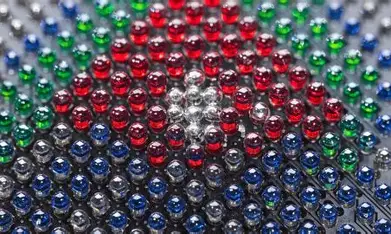
If you are buying a display for the first time, the alphabet soup of packaging technologies is probably the most confusing part. Four LED lamp bead package types dominate right now. For most projects the choice narrows fast once you stop reading about technologies in the abstract and start matching them to what you actually need the screen to do.
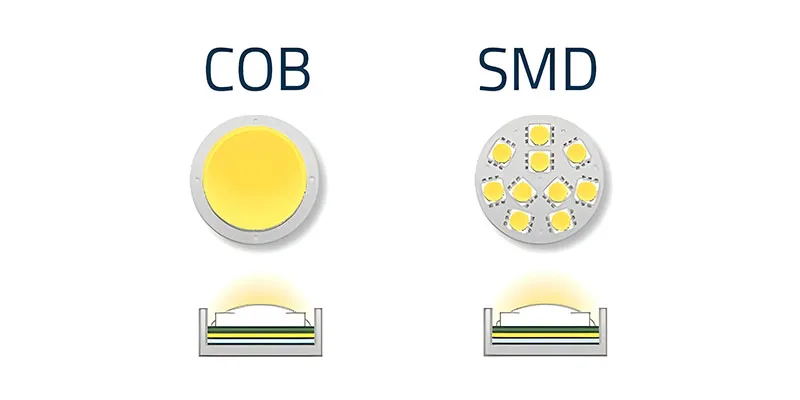
SMD, surface mounted device, is the workhorse. Individual LED lamp beads are soldered onto the PCB surface, each containing red, green, and blue chips in a single package. It is the most mature option and the cheapest per unit. Beads are replaceable at the individual level, which keeps maintenance practical for rental displays that get beaten up during load in and load out. For outdoor fixed installations at P4 and above, SMD in the 2727 or 3535 package size is the proven choice. The downsides: SMD beads are more vulnerable to impact than bonded alternatives, and the physical gaps between beads produce slightly lower contrast ratios.
COB, chip on board, takes a different approach. Instead of packaging individual LED lamp beads and soldering them one at a time, COB bonds bare LED chips directly to the PCB and encapsulates the whole surface in a continuous epoxy or silicone layer. You get a smoother, darker surface with higher contrast and better protection against moisture, dust, and physical knocks. For fine pitch indoor work at P1.5 and below, COB has become the default in control rooms, corporate lobbies, and broadcast environments. The surface shrugs off the kind of accidental contact that would send SMD beads flying during installation or cleaning. The catch is repairability. You cannot replace a single failed bead on a COB module. When something goes, the whole module gets swapped. Module level replacement costs more than bead level repair, but in practice the failure rate is low enough that total maintenance spend often tilts toward COB for installations where downtime is expensive.
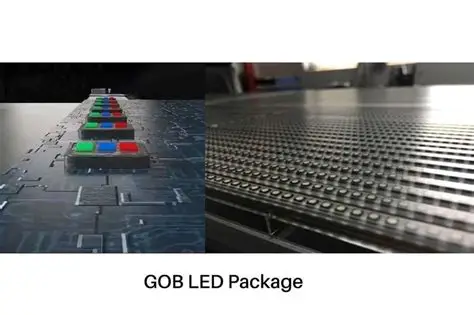
Then there are the middle options. GOB, glue on board, is SMD with a protective gel coating applied over the assembled beads. Same underlying packaging, but the coating adds impact resistance and improves the visual surface by filling the gaps between beads. It works well for rental displays that need better durability than bare SMD without the cost of COB. IMD, integrated matrix device, packages multiple pixel groups (typically four) into one larger package. For pixel pitches between P1.2 and P1.8, it gives you better alignment precision than individual SMD placement at a lower cost than COB. It is a transitional technology, but in that specific window it makes sense.
If you need a decision rule, here is one that works in practice: define your pitch range, then your durability requirements, then your budget. For outdoor and rental at P3+, SMD is still the default. For fine pitch indoor below P1.5, COB is usually right if you can afford it. The intermediate options earn their place when SMD has a specific weakness you need to fix without paying for full COB.
4. How Bead Quality Determines What the Audience Sees
Engineers evaluate LED lamp beads through datasheets. Audiences evaluate them through what appears on screen. The distance between those two perspectives is where most procurement mistakes happen.
4.1 White Balance Drift Over Time
White balance drift is the most common quality failure, and it is not the one people check for. Red, green, and blue LED chips degrade at different rates. The red chips, built on aluminum gallium arsenide or aluminum gallium indium phosphide, typically outlast the blue and green chips built on indium gallium nitride. Over thousands of hours this differential aging shifts the white point. A screen that was perfectly calibrated at install drifts toward magenta or cyan, and the drift is not uniform because beads from different production batches age at slightly different speeds. Premium LED lamp bead manufacturers publish aging curves for each color channel. Commodity suppliers usually do not. No aging data means you should budget for recalibration sooner.
4.2 Dead Pixels and the Caterpillar Effect
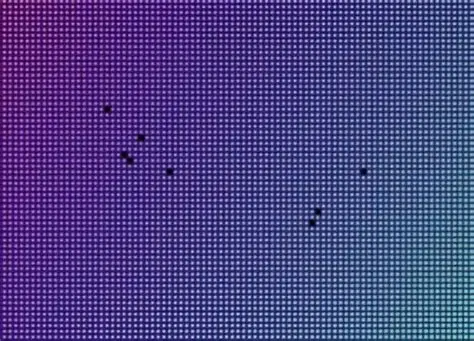
Dead pixels are more visible but, oddly, less important than color drift for most applications. A few dead beads on a large display are invisible to anyone more than a few meters back. The real headache is clustered failures, what the industry calls the caterpillar effect. One failed bead creates a visible line or dark cluster because of how the driver scans rows and columns. Caterpillar failures usually trace to wire bonding defects inside the LED lamp bead package. Cheap copper wire bonds, poorly encapsulated, corrode in humid environments and eventually crack. Gold wire bonds resist corrosion far better, but they add cost. This is exactly the kind of invisible materials decision that makes two lamp beads with matching spec sheets behave completely differently after two years outdoors.
4.3 Moire and Scan Lines: What Cameras Expose
Then there is the camera problem. Moire patterns and scan line artifacts come from the interaction between a camera sensor grid and the physical pixel grid of the display. COB continuous surface helps compared to the discrete bead structure of SMD. But refresh rate and PWM dimming behavior matter more than packaging. A high quality LED lamp bead paired with a driver that uses low frequency PWM will still flicker on camera. The bead and the driver are one system. Choose either in isolation and the on camera results will disappoint someone.
5. Matching Beads to Use Cases
There is no universal best LED lamp bead. The answer changes completely depending on where the display lives and what it needs to do.
5.1 Outdoor Fixed Installation
Outdoor fixed installation puts LED lamp beads through the hardest physical test. Direct sun, rain, surface temperatures swinging from below freezing to over 50 degrees C, and years of UV breaking down encapsulant materials. Outdoor beads need at least 5,000 nits at the module level, an IP65 or better front seal, and packaging materials built for wide temperature ranges. SMD 3535 and 2727 packages dominate here because their larger size handles heat better and supports more robust internal construction. Within these package sizes, insist on gold wire bonding and silicone encapsulant rated for outdoor UV. Skip this and the cost savings will evaporate in the first two summers.
5.2 Rental and Staging
Rental and staging is about one thing: uniformity. A rental company might deploy modules from five different production batches on the same stage. If those batches are not tightly binned for brightness and color, the seams between panels will show. Visible seams lose rental business faster than any other technical shortcoming. Rental grade LED lamp beads need the tightest binning specs in the industry, ideally 1 SDCM or better. Durability matters too since beads get knocked around during transport and setup. SMD 2121 and 1921 packages are standard for indoor rental. GOB coatings are gaining traction for the extra impact protection without the weight of COB.
5.3 Fine Pitch Indoor
Fine pitch indoor at P1.5 and below is a different world. Viewers are close, sometimes under a meter away. Surface quality and pixel level uniformity become non negotiable. COB dominates here. Its continuous surface eliminates the screen door effect that individual SMD beads create at close range, and the reduced black area between pixels pushes contrast higher. For control rooms, boardrooms, and broadcast studios where image quality under scrutiny matters more than upfront cost, COB with LED lamp beads binned to tight chromaticity tolerance is what you want.
5.4 Transparent and Creative Displays
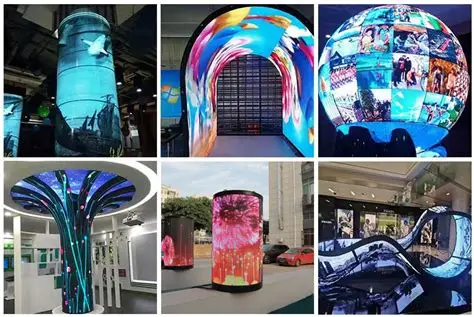
Transparent and creative displays play by different rules entirely. LED lamp beads sit on narrow strips with gaps to preserve transparency. The bead physical size and emission pattern directly determine how much transparency you can achieve at a given pitch. Side emitting beads sometimes get specified here because their emission direction works better with the narrow mounting surface. This is a niche within a niche, and the available options are thinner than for conventional displays.
6. Brand Matters, Just Not the Way Most Buyers Think
Walk into a procurement conversation declaring “I want Nichia beads” or “spec CREE on everything,” and you are likely to pay a brand premium while missing the actual quality variables that determine whether your screen looks good.
The major LED lamp bead manufacturers fall into tiers based on consistency and support, not peak performance numbers. Nichia and CREE earned their reputations through tight binning, thorough LM-80 documentation, and a willingness to stand behind aging curve data. Among Chinese manufacturers, Nationstar and Kinglight have built strong positions in the display segment with tiered product lines ranging from commodity to display grade depending on the series.
6.1 What the Brand Premium Actually Buys
The useful question is not “which brand is best.” It is “what am I actually paying for when I pay a brand premium.” You are usually paying for three things. First, binning honesty. A top tier LED lamp bead manufacturer published tolerances are conservative, so most production falls well within spec. Second, batch to batch consistency. When you reorder the same part number six months later, the color coordinates have not drifted because upstream chip sourcing and phosphor formulation stay controlled. Third, documentation. You can get the LM-80 reports, reliability test data, and aging curves when you ask for them. Commodity suppliers often cannot or will not provide this paperwork, and that silence is information.
6.2 How to Spot an Inflated Spec Sheet
On spotting inflated spec sheets: when the same spec from three suppliers shows a 2x price spread, at least one of them is not telling the truth about their numbers. Ask for LM-80 test reports for the specific LED lamp bead part number being quoted, not a similar product or an equivalent. Check that the test conditions match where your display will actually live. Then ask for chromaticity shift data from a 72 hour burn in on production samples. A supplier that dodges this request is telling you something useful about their confidence in their own product.
6.3 The Golden Rule of Bead Procurement
The golden rule: do not specify a brand. Specify verifiable acceptance criteria. A procurement spec that says LED lamp beads must maintain chromaticity within 2 SDCM across all delivered modules, dead bead rate below 50 PPM after 72 hour burn in” gets you the quality you need from whichever qualified supplier meets the bar at the best price. You are buying consistency, not a logo.
7. What Most Buyers Get Wrong About LED Lamp Bead Selection
The most expensive mistake in LED lamp bead procurement is treating price as the main decision variable. Procurement compares three quotes for the same spec on paper, picks the lowest, and saves 15%. Then two years pass. Dead bead rates climb. Brightness drops. The white point turns into a patchwork of slightly different shades across the screen. The repair bills and downtime have erased the upfront savings. Cheap LED lamp beads do not save money. They just move the spending to a moment when it hurts more.
The mirror image of this mistake goes the other way. An integrator specs imported top tier LED lamp beads on every project regardless of application because “that is what quality looks like.” For a fine pitch broadcast monitor wall, fair enough. For a P10 billboard that people will see from fifty meters away, it is wasteful. Viewing distance and application criticality should drive specifications. Brand loyalty should not.
Another one I see regularly: treating the LED lamp bead as a standalone decision, separate from driver IC selection and module design. Put a high performance bead with a cheap driver that cannot deliver clean current at low brightness, and the gray scale performance will be disappointing no matter how good the bead is. The bead, the driver, and the PCB layout are a system. Optimize one in isolation and you are leaving performance on the table.
Then there is the competitor BOM trap. Specifying LED lamp beads based on a competitor parts list without knowing why they chose those parts. Maybe they picked that bead because it was the only thing in stock during a supply crunch, not because it was optimal. Copying a competitor BOM copies their constraints along with their decisions.
8. FAQs
1. Can I mix different brands of LED lamp beads on the same display?
Technically yes, but you should not. Different manufacturers use different chip sources, phosphor formulations, and binning grids. Even when two brands spec sheets look identical, the chromaticity coordinates at a given drive current are unlikely to match well enough for seamless uniformity across panels. If you absolutely must mix batches from the same brand, get chromaticity data for both and check the delta before installation.
2. How many dead pixels are acceptable on a new LED display?
Industry convention for display grade modules puts the line around 50 PPM (pixels per million) out of the box. Most premium manufacturers deliver under 30 PPM. If you are seeing more than that, push for replacement before accepting the shipment. Your contract should spell out both the out of box dead pixel rate and a maximum cumulative failure rate over the warranty period. Vague language here benefits only the supplier.
3. Does a smaller pixel pitch always produce a better looking image?
No. Pixel pitch sets the potential resolution at a given viewing distance. Whether you actually get that resolution depends on the LED lamp beads having adequate brightness uniformity, color consistency, and viewing angle. A P1.2 display built with poorly binned beads will look worse than a well executed P1.8 at the same distance. Pitch gives you a ceiling. Bead quality determines whether you can touch it.
4. How do I verify LED lamp bead quality before placing a bulk order?
Get a pre production sample run, 10 to 20 modules, and burn them in for at least 72 hours at operating brightness. Measure brightness and color coordinates before and after, at multiple points per module. The change during burn in tells you far more than a single point measurement ever could. Also request LM-80 data for the exact LED lamp bead part number being quoted and confirm the chromaticity binning range matches what your application needs.
5. How long do LED lamp beads actually last outdoors?
LM-80 testing projects L70 (70% of initial output) at a set temperature, usually 55 or 85 degrees C. Quality outdoor LED lamp beads carry L70 ratings of 50,000 to 100,000 hours under those test conditions. But a lab bench is not a rooftop in Guangzhou in August. Humidity cycling, UV on the encapsulant, and temperature swings beyond the test range all eat into real world lifespan. The better question to ask a supplier is not “how many hours on the LM-80 report” but “what does your warranty cover, and for how long.”
6. Are Chinese LED lamp bead brands competitive with Japanese or American ones?
At the top of their product lines, yes. Leading Chinese manufacturers produce display grade LED lamp beads with binning and reliability that compete credibly with Nichia and CREE, especially in SMD where Chinese fabs have enormous scale and experience. The gap is not really about quality ceiling. It is about consistency floor. Top tier Japanese and American brands tend to control batch to batch variation more tightly and publish more complete documentation. For commercial display work outside color critical broadcast or cinema, a top series Chinese bead is a technically sound choice.
9. Conclusion
LED lamp beads seem like generic goods with nearly identical datasheets across suppliers. Yet critical factors like binning tolerance, batch uniformity, material quality and long-term warranties only reveal themselves long after purchase. Ultimately, prioritize consistency over raw specifications.
A single spec value means little if beads vary widely in brightness or shift in color over time. Brand reputation also takes a backseat to solid warranties and reliable test data. Set clear performance standards, test samples upfront and formalize requirements in contracts. Though tiny in size, these components decide an LED display’s overall value and long-term performance.