

An LED advertising screen earns its place when people can see, understand, and act on its message. Buying more pixels or a larger display will not fix poor placement, unreadable creative, or an incomplete installation budget. Start with the audience, viewing conditions, and advertising objective, then choose the format and specification. This guide compares practical screen options, explains published hardware price ranges, and shows how to evaluate locations before ordering. You will also find sourced specification tables, a worked operating-cost example, and a buying checklist to help turn an initial idea into a clear, comparable project brief for suppliers.
Table of Contents
1. What Is an LED Advertising Screen?
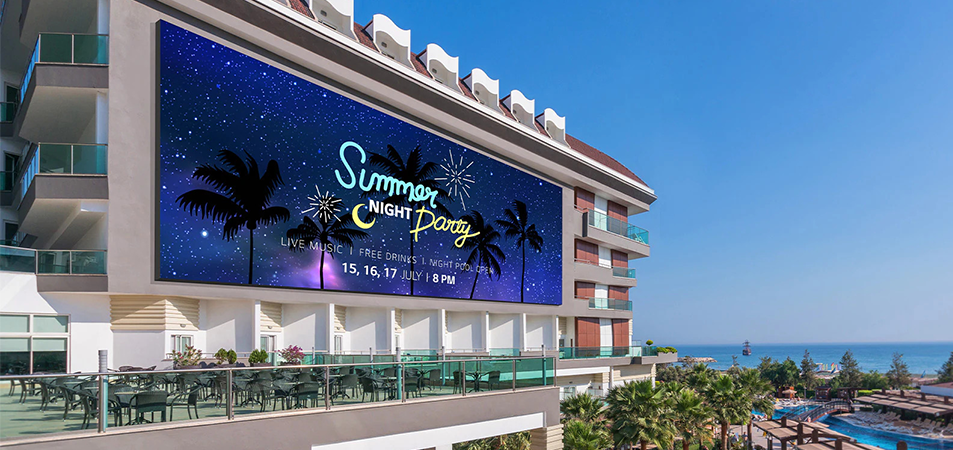
An LED advertising screen is a direct-view display that creates images with light-emitting diodes. Modules combine into cabinets, and cabinets form a larger canvas for advertisements, promotions, wayfinding, or brand content. Unlike an LCD video wall, the assembled surface does not have the same repeated display bezels. Its dimensions can follow the building, storefront, or campaign rather than a television size.
1.1 Understand the complete system
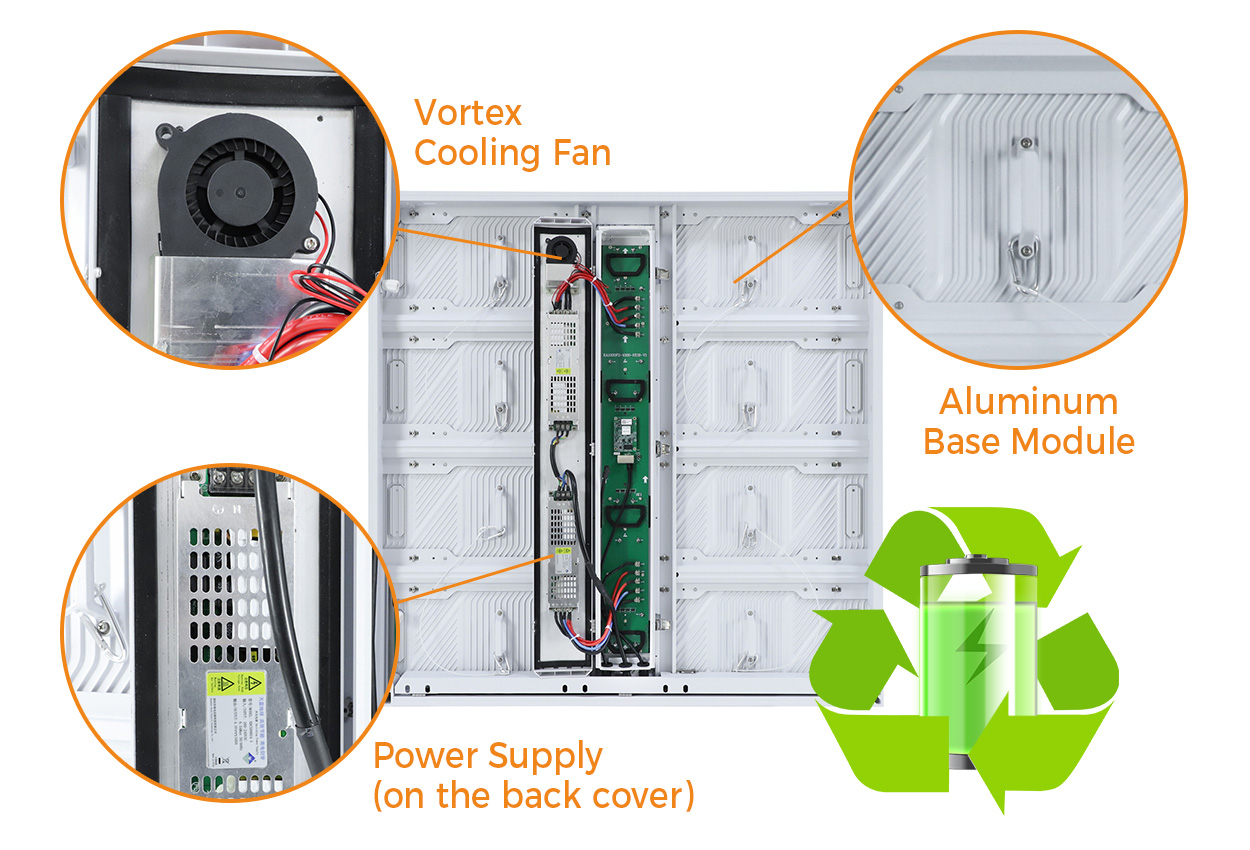
The visible surface is only part of the installation. A complete LED advertising screen also needs power supplies, receiving cards, a controller or media player, signal distribution, mounting hardware, and a content workflow. For an LED advertising screen, the supporting structure and service access deserve attention as early as resolution. A panel that cannot be reached safely will be expensive to maintain.
Separate three decisions: what hardware to buy, where to install it, and what advertisements to show. A supplier can specify a reliable display, but the operator still needs useful creative, a publishing schedule, and a way to measure results. If you intend to sell advertising slots, define inventory and reporting before promising advertisers exposure.
1.2 Match the LED advertising screen to the commercial objective
A storefront might need product recognition from across a street; a shopping-center lobby might need readable offers at walking distance. These are different briefs. Write down one primary outcome for your LED advertising screen, such as promoting a product category or directing visitors to a store. That outcome determines content size, dwell time, and the best position.
2. Choose the Right Advertising Format
Choose the physical format before comparing quotations. An LED advertising screen can be permanently fixed, repeatedly assembled for events, integrated into glass, or packaged as a movable poster. Each choice changes structural work, content production, and maintenance.
2.1 Indoor fixed walls
An indoor LED advertising screen suits retail interiors, showrooms, reception areas, and mall advertising. Close viewers make pixel structure and text clarity important, while excessive brightness can be uncomfortable. Front-service construction helps where there is no maintenance corridor behind the display. For example, EagerLED’s EA640F2 indoor display uses 640 × 480 mm cabinets and allows front maintenance of modules, power supplies, and receiving cards.
2.2 Outdoor fixed billboards
An outdoor LED advertising screen must handle daylight, rain exposure, heat, and the chosen mounting arrangement. Do not select an LED advertising screen by brightness alone. Confirm drainage, cable entry protection, cooling, structural loads, and access to replace components. A high facade and a ground-level roadside structure can use similar display technology while requiring very different engineering and installation budgets.
2.3 Posters, rental screens, and transparent installations
Poster displays suit entrance promotions and campaigns that move between positions. Check stability, cable routing, and usable viewing height. Rental cabinets suit temporary activations because locks, handling protection, and repeatable assembly matter. Here, “rental” describes a cabinet category; purchasing rental hardware is different from paying a daily hire fee.
A transparent LED advertising screen can preserve some visibility through a storefront, but its image competes with whatever is behind the glass. Assess the actual daytime scene and content, rather than evaluating transparency alone. Curved or corner installations need custom creative; a conventional video stretched around a corner will not automatically produce a convincing three-dimensional effect.
Outdoor advertising LED display demonstration: EA1000F2. Watch the 1000F2 series outdoor LED display wall run advertising and 3D demonstration content.
3. Specify Size, Resolution, and Brightness
For an LED advertising screen, physical dimensions and pixel resolution answer different questions. Dimensions determine how much space the sign occupies. Resolution determines how much image detail that space can reproduce. Both must be checked against real viewing positions.
3.1 Calculate the native canvas
Pixel pitch is the distance between adjacent pixel centers, measured in millimeters. A smaller pitch gives more pixels per square meter. As an initial calculation, divide screen width and height in millimeters by pitch. A hypothetical 4,000 × 2,250 mm display at exactly 2.5 mm pitch produces 1,600 × 900 pixels. Feeding it a 4K video does not make the physical display native 4K.
Use the manufacturer’s module and cabinet pixel counts for the final design because advertised pitch numbers can be rounded. Ask the designer to export advertisements to the actual canvas. Keep prices, dates, logos, and calls to action away from cropped edges. The best LED advertising screen specification is one that renders the intended message clearly at the nearest normal viewing position.
3.2 Compare configurations within a product family
The following values come from EagerLED’s published EA1000F2 specification table for flat 1000 × 1000 mm cabinets. They illustrate why a model name and pitch are not always enough to identify a configuration.
| Flat cabinet configuration | Pixel density (pixels/m²) | Brightness (cd/m²) | Average / maximum power (W/m²) |
|---|---|---|---|
| P2.97 | 112,896 | 5,000 | 175 / 520 |
| P3.91, 16S | 65,536 | 5,000 | 150 / 450 |
| P3.91, 8S | 65,536 | 6,500 | 150 / 450 |
| P6.25 | 25,600 | 6,500 | 150 / 450 |
| P10.42 | 9,216 | 6,500 | 185 / 550 |
Source: EagerLED EA1000F2 product specifications, accessed September 16, 2026. These are manufacturer-published values, not independent measurements. Average consumption varies with content, brightness, and operating conditions.
Notice the two P3.91 versions: their listed brightness differs even though their pixel density is identical. Request the exact model, scan configuration, and operating specification in your quotation. For an LED advertising screen exposed to changing light, also request automatic dimming and a demonstration at the brightness you intend to use.
3.3 Test readable content, not only demonstration video
Use representative advertisements with real prices, product names, and legal copy where applicable. Walk through the viewing area and check oblique angles, reflections, and changing ambient light. If people will film the display, test their likely cameras and shutter settings. A refresh-rate figure alone does not guarantee clean camera footage. EagerLED’s pixel-pitch guide provides additional selection context.
4. LED Advertising Screen Cost: Hardware and Ownership
An LED advertising screen budget should distinguish screen hardware from a complete installed project. Public price guides are useful for an early feasibility check, but they do not replace a quotation with a defined bill of materials and delivery scope.
4.1 Public hardware price references
The table below reproduces selected ranges from LEGIDATECH’s online price guide, updated August 25, 2026. Its stated basis includes modules, cabinets, power supplies, and receiving cards, and excludes the control system, steel structure, installation, shipping, and duties. These are one supplier’s advertised reference ranges, not verified market averages or EagerLED prices.
| Category | Published pitch range | Reference hardware price (USD) | Pricing unit |
|---|---|---|---|
| Indoor | P1.25–P3 | $350–$1,500 | per m² |
| Outdoor | P4–P10 | $280–$950 | per m² |
| Rental cabinets (purchase) | P2.6–P4.81 | $650–$1,450 | per m² |
| Poster display | P1.8–P3 | $800–$3,500 | per unit |
Do not conclude that every outdoor LED advertising screen costs less than an indoor display. These categories cover different pitches and configurations. Compare like-for-like proposals with the same brightness, cabinet construction, control hardware, spare parts, warranty scope, and quantity.
4.2 Build an itemized LED advertising screen budget
Calculate display area as width multiplied by height, then multiply by the quoted hardware rate. Add the controller, signal distribution, mounting structure, electrical work, installation labor, lifting equipment, commissioning, freight, duties, and tax where applicable. Include content production, software subscriptions, connectivity, spare parts, and access equipment in the operating plan.
For illustration, assume an 18 m² LED advertising screen is quoted at $800/m². Hardware would be $14,400. This rate is an arithmetic assumption, not an EagerLED offer. If other separately quoted project items totaled $7,000, the initial total would be $21,400 before any excluded taxes or charges. Replace both assumptions with actual quotations before approving expenditure.
A low LED advertising screen price can be offset by difficult access or missing installation items. Ask who pays shipping for warranty repairs, whether on-site labor is included, and how replacement components will be matched to the original batch. A clear service arrangement is part of the LED advertising screen cost, even when it does not appear in the cabinet price.
4.3 Estimate energy with stated assumptions
Electricity consumption equals area × average power per square meter × operating hours. Using the published 150 W/m² average for selected EA1000F2 configurations, an 18 m² display would draw an illustrative average of 2.7 kW. At 12 hours daily for 365 days, that is 11,826 kWh annually. At an assumed $0.15/kWh, display electricity would cost approximately $1,774 per year.
This estimate excludes auxiliary equipment, cooling, demand charges, and local tariff details. It also assumes the published average matches your content and brightness settings. Use maximum specified demand and a qualified electrical design for circuit sizing; do not size supply capacity from an average energy estimate. Ask for a representative operating test before finalizing the long-term budget.
Outdoor LED display cost walkthrough. See which hardware, structure, and installation factors move an outdoor LED advertising screen budget.
5. Place the Screen Where the Message Works
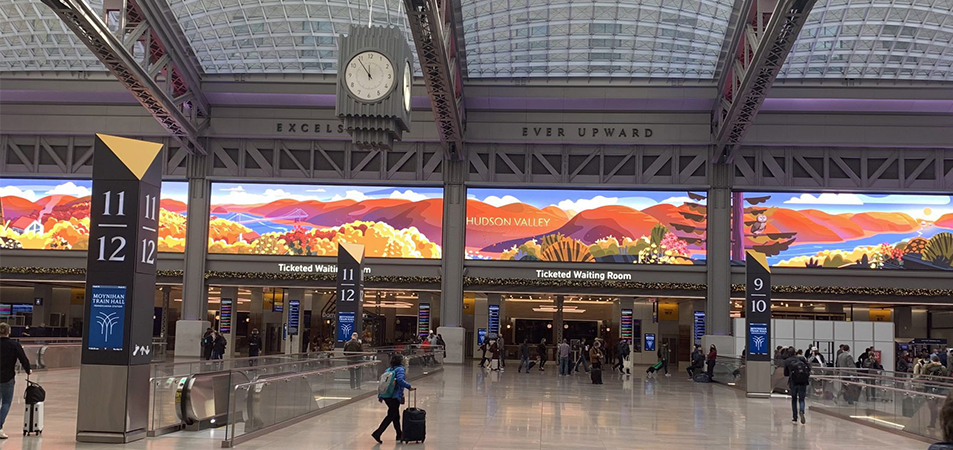
The strongest location for an LED advertising screen combines a relevant audience, a clear sightline, enough reading time, and practical access. The busiest location is not necessarily the most useful if people face away from the display or cannot understand the offer.
5.1 Survey the approach before placing an LED advertising screen
Record where viewers first see the sign, where they stop, and what blocks the image along the way. Trees, parked vehicles, kiosks, columns, and seasonal decorations can reduce visibility. Check the installation in daytime and after dark. Photograph the proposed position from real audience locations, including the nearest and farthest useful viewing points.
Set height and angle around the target viewer. An LED advertising screen mounted high above an entrance may look impressive in a building photograph yet be difficult for nearby pedestrians to read. Mark the proposed outline temporarily and test sample text at scale before committing to steelwork. For indoor spaces, assess glare on nearby glass and the effect on adjacent tenants.
5.2 Match the message to the available attention
Walking audiences often need one product, one benefit, and one next action. Waiting areas can support a longer sequence. Measure actual dwell time instead of assuming everyone watches a full loop. A message that appears once per minute can easily be missed by someone who sees the display for only a few seconds.
Keep each creative understandable on its own. Use large typography, strong contrast, and limited competing elements. A QR code is useful only where people can safely pause and scan it; it should not be the primary response mechanism for moving drivers. Test the finished LED advertising screen from the intended viewing position, with the actual advertisement running.
5.3 Make service access part of placement
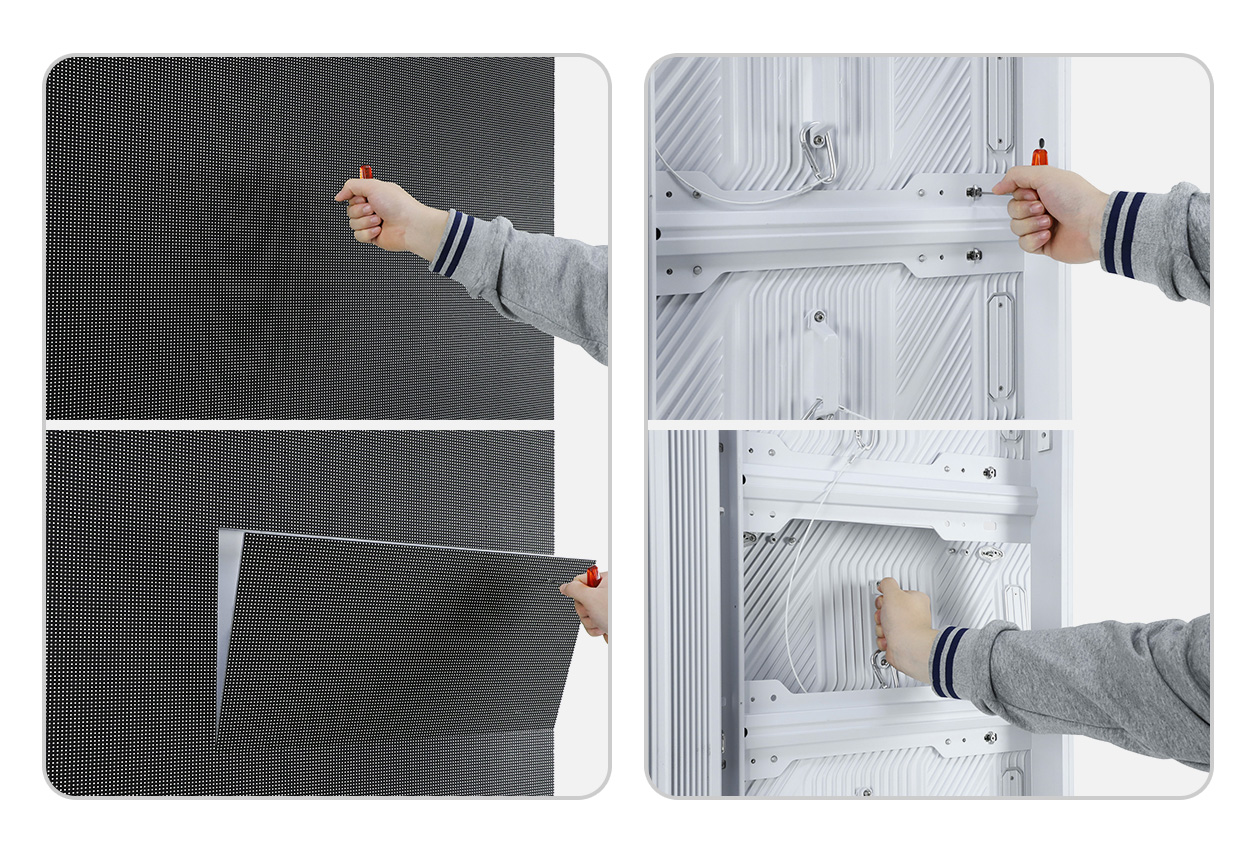
Front maintenance can reduce the need for rear working space, but it does not eliminate safe access requirements. Technicians still need room and a suitable method to remove modules. Confirm that power supplies, controllers, and cables are also reachable, not just the visible panels. Avoid placing a frequently serviced component where every repair requires closing a busy entrance.
Before purchasing an outdoor LED advertising screen, obtain site-specific guidance from the relevant local planning, building, electrical, and road authorities as applicable. Rules differ by jurisdiction and location. This guide does not prescribe a universal brightness limit, animation rule, or permit exemption. Have the structure and electrical installation reviewed for the actual site rather than relying on a product’s weather-resistance rating.
6. Prepare Content, Maintenance, and the Buying Brief
6.1 Establish ownership of the advertising workflow
Before operating an LED advertising screen, decide who approves advertisements, who schedules them, and who responds if the display goes offline. Give each operator an individual account where supported, restrict publishing permissions, and keep a fallback image available. Test recovery after a network interruption or power cycle. An LED advertising screen should return to approved content without depending on someone remembering to restart a laptop.
If you sell media space, separate playback logs from audience measurements. A log can demonstrate that a file ran at a certain time; it cannot prove how many people looked at it. For store promotions, use trackable offers or landing pages and compare results over similar periods. Avoid promising a sales increase simply because a display has been installed.
6.2 Plan for component replacement and heat
Request a documented spare-parts list and a method for retaining calibration information. Store replacement modules appropriately and record the exact power-supply and receiving-card models. Establish cleaning and inspection procedures suited to the environment. Dust, obstructed vents, or water entering poorly protected connections can compromise an otherwise suitable LED advertising screen.
6.3 Send suppliers the same brief
- Application: audience, advertising objective, indoor or outdoor location, and daily operating hours.
- Dimensions: usable opening, proposed aspect ratio, viewing distances, and photographs from the audience position.
- Environment: sunlight exposure, weather conditions, ventilation, available power, and network connection.
- Performance: native resolution, content examples, brightness control, camera requirements, and input sources.
- Installation: drawings, mounting method, access restrictions, service direction, and responsibility for engineering.
- Commercial scope: destination, delivery terms, installation date, spares, training, warranty, and explicit exclusions.
For a fixed outdoor LED advertising screen, the EA1000F2 range is one EagerLED option to assess against this brief. Indoor fixed projects have different requirements, while temporary activations can start with EagerLED’s rental display range. Request a project-specific recommendation rather than choosing solely from a product photograph.
6.4 Avoid the most expensive shortcuts
Common mistakes include ordering before a site survey, comparing prices with different inclusions, buying unnecessary resolution, and leaving content design until installation day. Another is treating a nominal IP rating as proof that every connection and mounting detail is weatherproof. Before accepting an LED advertising screen, inspect seams, color uniformity, dimming, sample content, and service procedures against an agreed checklist.
7. Frequently Asked Questions
7.1 What pixel pitch does an advertising display need?
Begin with the nearest regular viewer and the smallest important detail in the advertisement. Compare sample content on candidate pitches at that distance. There is no single pitch-to-distance rule that guarantees acceptable results for every viewer, message, and screen size. Confirm cabinet pixel counts and the final native canvas before producing files.
7.2 How much does an LED advertising screen cost?
Published hardware references vary widely. The sourced table above lists $350–$1,500/m² for selected indoor products and $280–$950/m² for selected outdoor products from one supplier. These are not installed quotations. Your final budget must include the chosen configuration, control system, structure, transport, installation, and ongoing operation.
7.3 Can an indoor LED advertising screen be used behind a shop window?
Possibly, but an indoor location does not guarantee easy lighting conditions. Direct sunlight, reflections, heat buildup, and the view through the glass need assessment. Test a representative sample at the proposed position and time of day. Choose the LED advertising screen only after confirming brightness, thermal conditions, and readability.
7.4 Does a curved screen automatically show 3D advertising?
No. A corner or curved display provides a physical canvas, while the apparent depth effect comes from content designed for its geometry and a planned viewing position. Request a content-production brief alongside the hardware proposal. Ordinary flat video may still play, but it will not automatically create the intended illusion.
7.5 Should a business buy or rent?
Buying an LED advertising screen can suit continuous operation in a permanent location, while hiring equipment can suit a short campaign or occasional event. Compare the full period of use, including installation, transport, storage, labor, support, and content adaptation. Purchasing rental-style cabinets is a separate decision from hiring an event supplier’s equipment and crew.
8. Conclusion
The right LED advertising screen starts with a clear audience and a workable site, not the lowest cabinet price. Choose the format around the installation, calculate the native canvas, and test real advertising content from actual viewing positions. Use published prices for early planning, then compare itemized quotations with the same scope and service commitments. Include energy, maintenance, and creative production in the ownership budget. Share your dimensions, site photographs, viewing distances, and operating schedule with EagerLED to develop a suitable specification. With those decisions made, the display becomes a practical advertising tool that your team can operate and maintain.