

Choosing the right LED Display Cabinet is an important step in any LED screen project. Cabinet design influences installation efficiency, screen flatness, structural load, maintenance access, transportation, heat dissipation, and the long-term reliability of the display.
Different applications require different cabinet solutions. A lightweight rental cabinet may be ideal for concerts and exhibitions, while a permanent outdoor billboard needs stronger weather resistance and structural stability. This complete buyer’s guide explains the main cabinet types, materials, sizes, maintenance methods, and selection factors so you can choose the right solution for your project.
1. What Is an LED Display Cabinet?
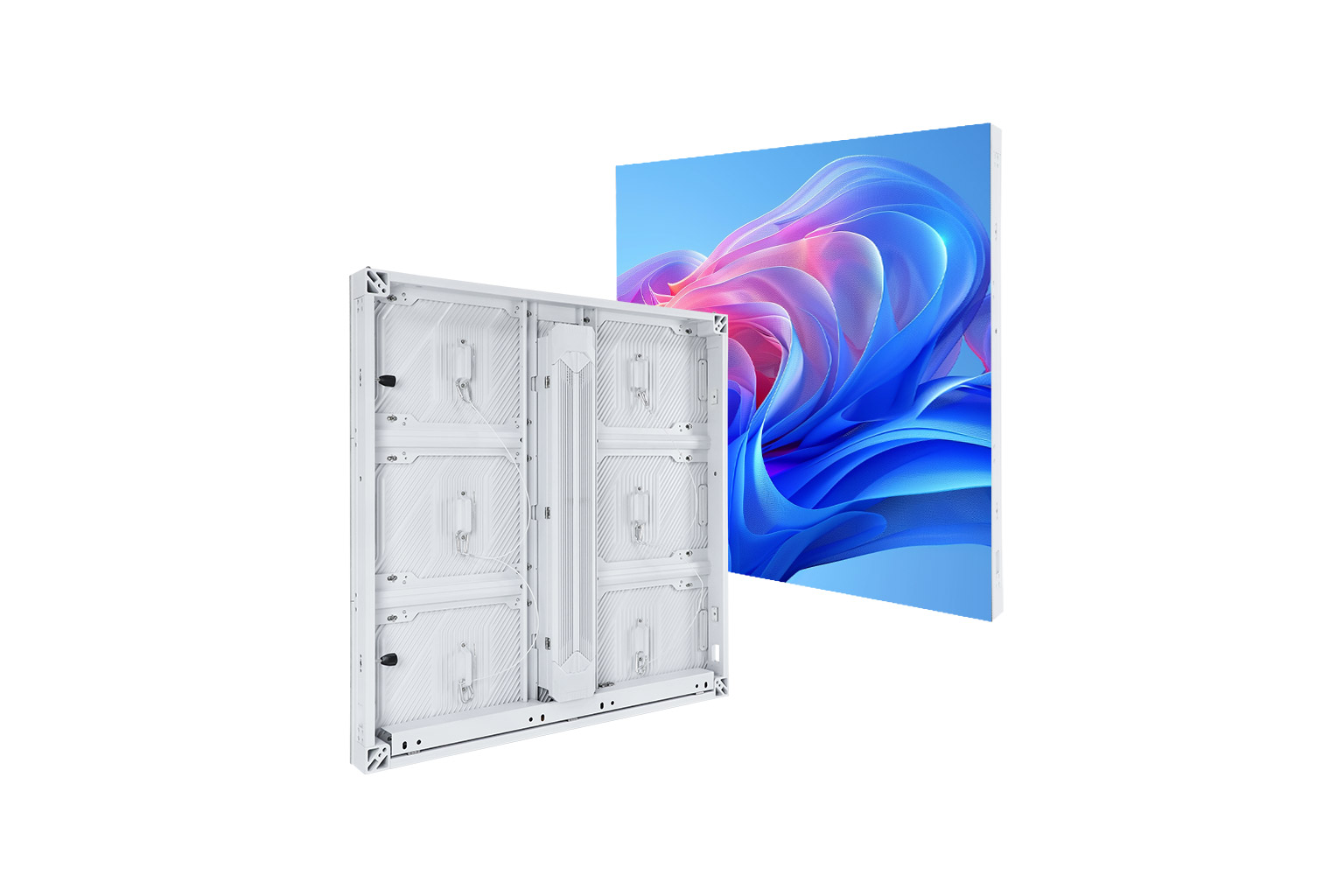
An LED Display Cabinet is the structural unit used to hold LED modules, power supplies, receiving cards, cables, connectors, and other electronic components. Multiple cabinets are connected horizontally and vertically to form a complete LED display.
The cabinet is not simply an enclosure. It provides mechanical support, maintains module alignment, protects internal components, organizes power and signal connections, and makes installation and maintenance more efficient.
1.1 Main Components of an LED Display Cabinet
A typical cabinet contains LED modules, a cabinet frame, power supplies, receiving cards, HUB boards, power and signal cables, connectors, locking systems, positioning pins, handles, and rear covers or service panels. The modules create the image, while the frame keeps every module accurately aligned.
Power supplies convert incoming electricity, receiving cards distribute image data, and connectors carry power and signals between adjacent cabinets. Reliable hardware reduces installation errors and simplifies troubleshooting.
1.2 Why Cabinet Design Matters
Cabinet design affects almost every stage of a project. Rental screens may be assembled many times each month, so low weight, quick locks, ergonomic handles, and corner protection can save labor and reduce damage.
For a fixed wall-mounted display, front maintenance may be essential because technicians cannot reach the rear. Outdoor projects require protection against rain, dust, heat, humidity, and corrosion. Selection should therefore be based on the real application, not appearance or unit price alone.
2. Main Types of LED Display Cabinet
Different cabinet types are designed for different environments. The main categories are rental, indoor fixed, outdoor fixed, transparent, and curved or creative cabinets.
2.1 Rental LED Display Cabinet
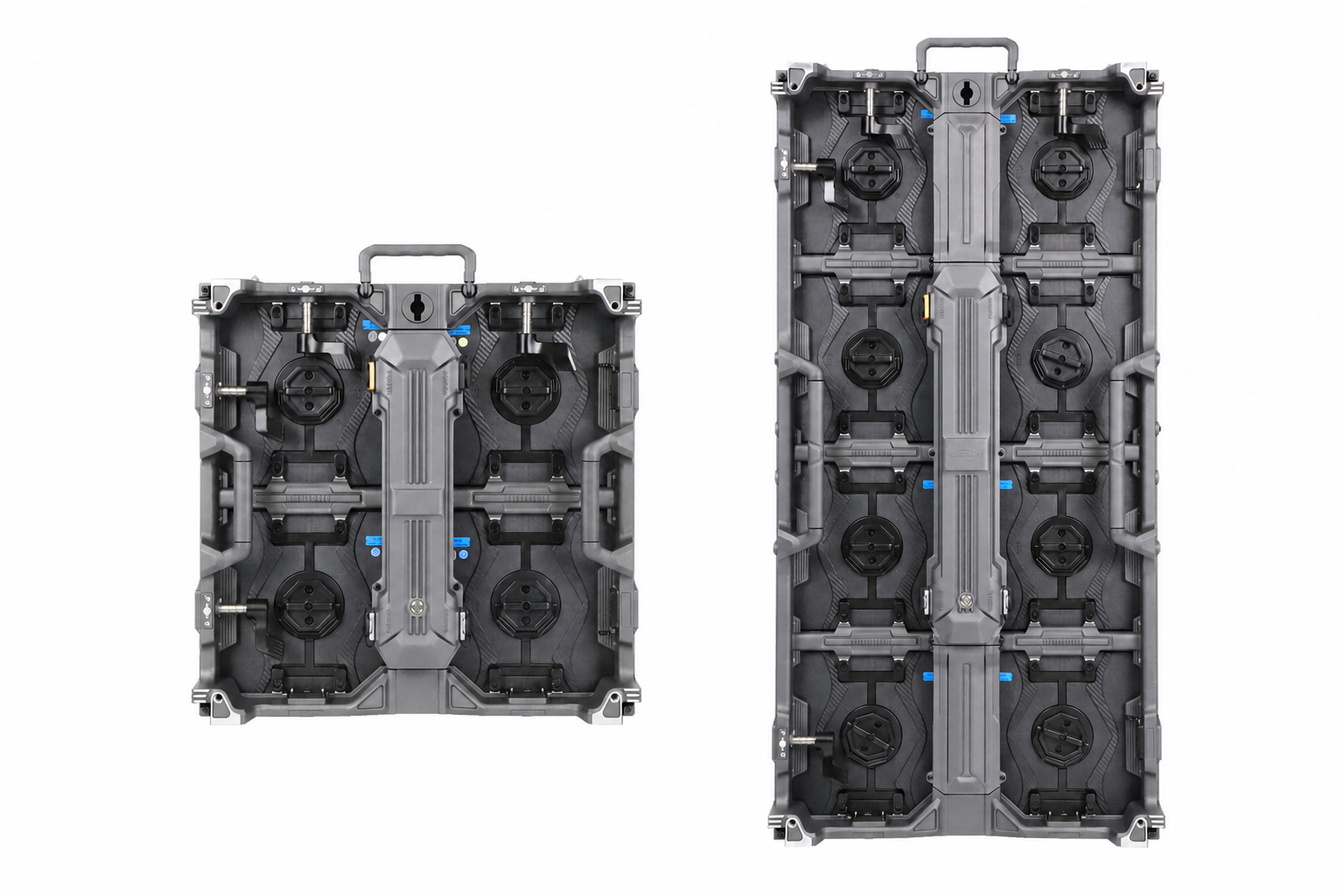
Rental cabinets are used for concerts, stages, exhibitions, conferences, weddings, touring shows, and temporary advertising. They prioritize fast assembly, accurate alignment, convenient transport, and repeated handling.
Common sizes are 500 × 500 mm and 500 × 1000 mm. The smaller format offers flexibility for different screen dimensions and creative layouts. The taller format covers more area with fewer cabinets. Compatible systems may combine both sizes in one display.
2.2 Indoor Fixed LED Display Cabinet
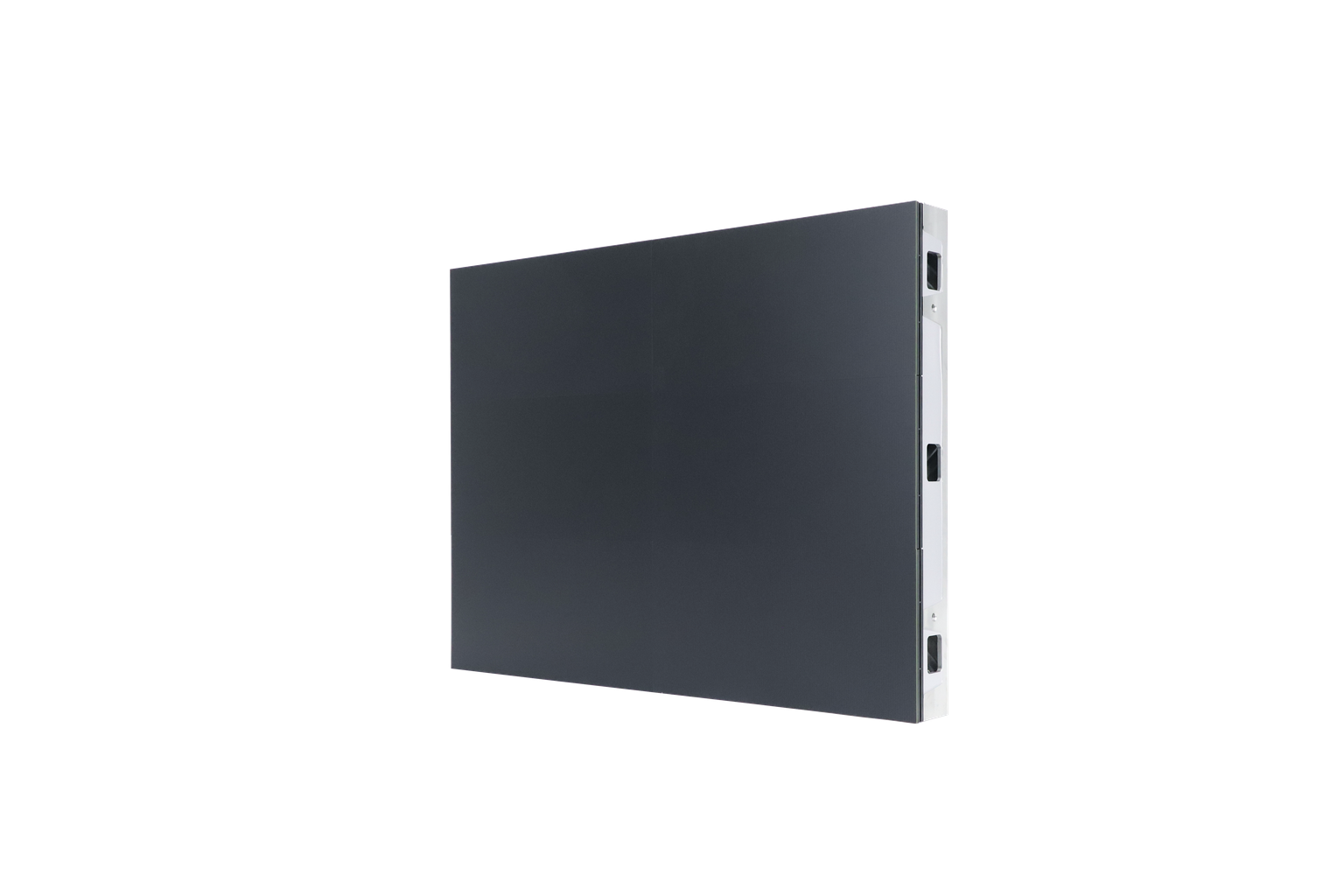
Indoor fixed cabinets are used in conference rooms, control rooms, retail stores, studios, showrooms, auditoriums, and exhibition halls. Buyers usually prioritize slim depth, fine-pixel-pitch compatibility, screen flatness, quiet operation, and easy wall mounting.
A 640 × 480 mm format is common for indoor front-service installations. Its 4:3 cabinet ratio can help designers build familiar video aspect ratios with practical cabinet combinations.
2.3 Outdoor Fixed LED Display Cabinet
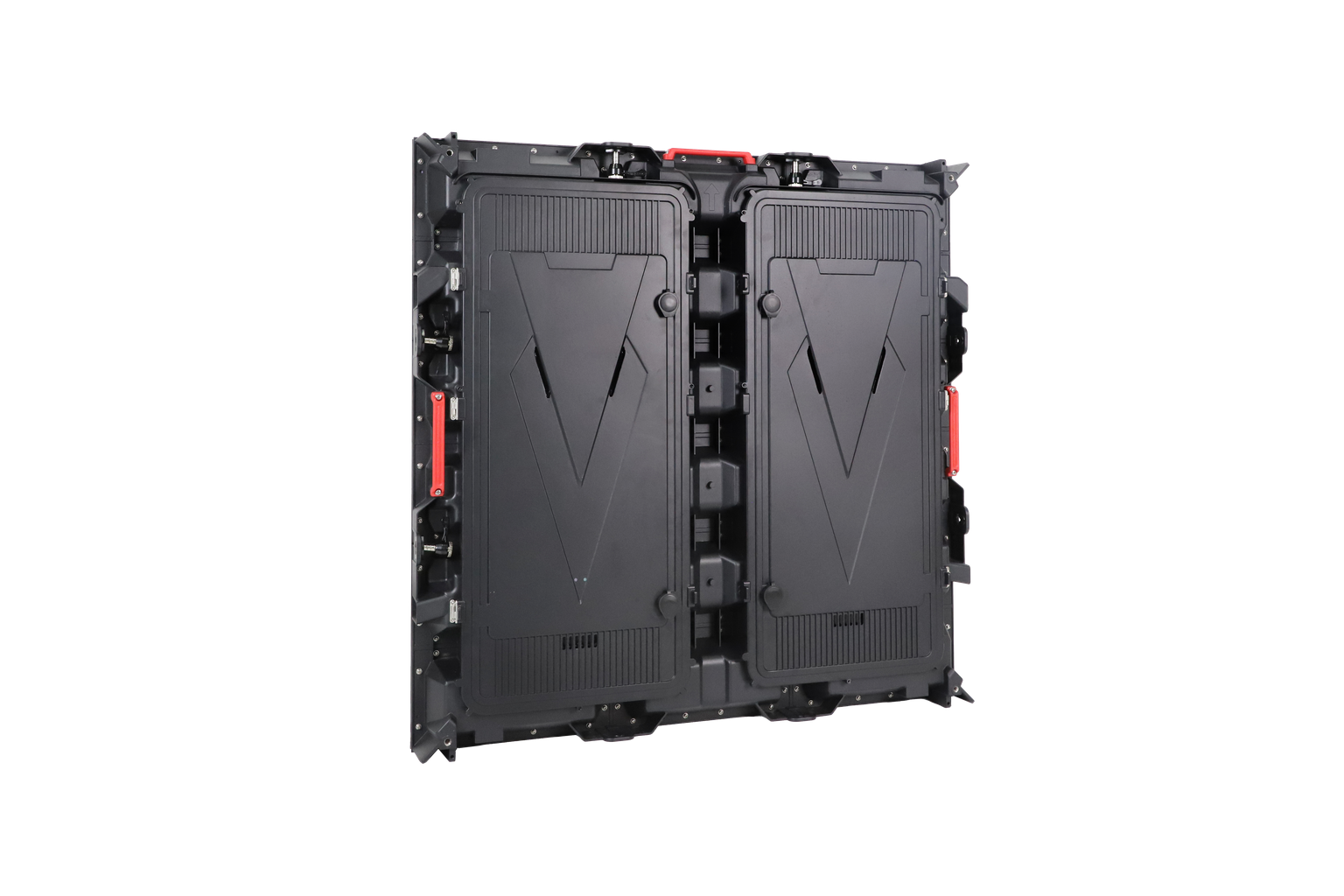
Outdoor fixed cabinets serve roadside billboards, building facades, stadiums, transportation hubs, shopping centers, and public information displays. They need waterproof construction, dust protection, corrosion resistance, strong frames, effective heat dissipation, and reliable power connections.
A 960 × 960 mm cabinet is widely used for large outdoor advertising screens because it reduces the number of structural units and connections required over a large area.
2.4 Transparent and Creative Cabinets
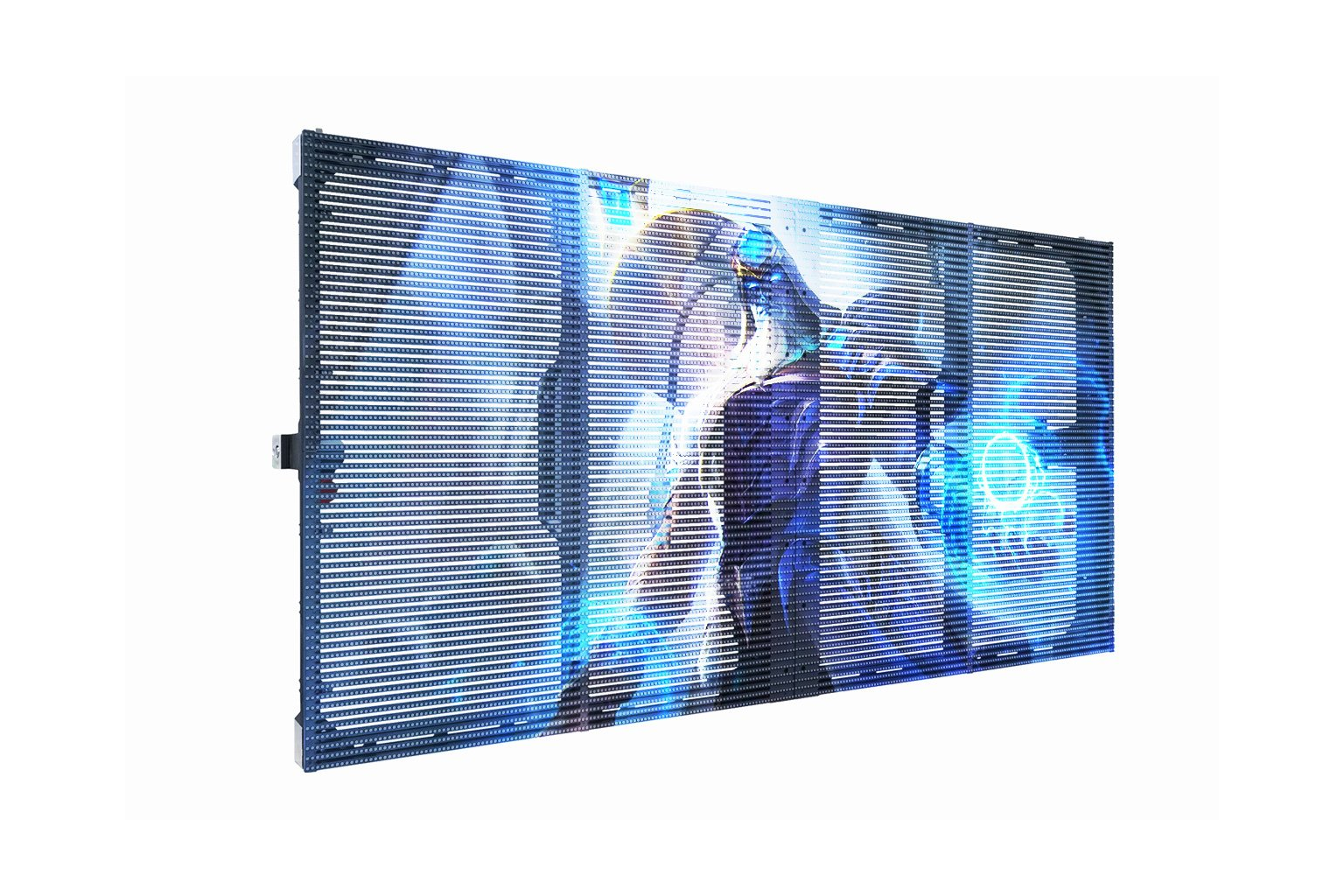
Transparent displays are installed behind glass, in retail windows, malls, showrooms, airports, and architectural spaces. Common formats include 1000 × 500 mm and 1000 × 1000 mm. Buyers must balance image performance, transparency, weight, sightlines, and service access.
Curved and creative projects may require concave, convex, right-angle, cylindrical, or irregular configurations. Adjustable arc locks and purpose-designed cabinet edges allow neighboring units to connect at controlled angles while maintaining alignment.
3. LED Display Cabinet Materials
Cabinet material influences weight, structural strength, manufacturing precision, heat dissipation, durability, and cost. The most common options are die-cast aluminum, fabricated aluminum, steel, and magnesium alloy.
3.1 Die-Cast Aluminum
Die-cast aluminum is widely used for rental displays because it offers high dimensional accuracy, good surface flatness, low weight, structural strength, and consistent production. These properties help cabinets align smoothly during frequent assembly.
It also transfers heat effectively and is suitable for integrated quick locks, handles, corner protectors, and detachable power boxes. Its tooling and manufacturing costs can be higher than basic fabricated steel.
3.2 Aluminum, Steel, and Magnesium Alloy
Fabricated aluminum is common in indoor and outdoor fixed installations. It reduces weight compared with steel and provides useful heat-transfer characteristics. Steel offers strong, mature, cost-effective construction but is heavier and may require careful corrosion protection.
Magnesium alloy can provide a very lightweight structure for specialized applications, although availability, repair methods, and cost should be confirmed with the supplier.
3.3 Material Comparison
| Material | Weight | Precision | Typical application |
|---|---|---|---|
| Die-cast aluminum | Light | High | Rental screens |
| Aluminum | Light to medium | High | Indoor and outdoor fixed displays |
| Steel | Heavy | Medium | Permanent installations |
| Magnesium alloy | Very light | High | Specialized lightweight projects |
If a screen travels frequently, weight and impact resistance deserve special attention. For permanent projects, structural strength, weather resistance, thermal performance, and total installed cost may matter more.
4. Key Factors to Consider When Choosing an LED Display Cabinet
A good LED Display Cabinet must match the environment, screen size, installation method, maintenance plan, supporting structure, and operating conditions.
4.1 Indoor or Outdoor Environment
Indoor systems emphasize slim construction, quiet operation, convenient maintenance, and efficient use of space. Outdoor systems require appropriate ingress protection, weather-resistant materials, sealed connectors, ventilation or thermal management, and a structure designed for wind and environmental loads.
Do not judge outdoor suitability from the front module alone. Confirm protection for cabinet seams, rear covers, power boxes, ventilation paths, and every exposed connection.
4.2 Front, Rear, or Dual Maintenance
Front-service cabinets allow modules and other components to be removed from the viewing side. They suit wall-mounted displays and locations without a rear corridor. Rear-service cabinets can be practical where technicians have safe access behind the screen.
Dual-service designs offer greater flexibility but should still be evaluated component by component. Confirm how technicians can reach modules, power supplies, receiving cards, and cables after the supporting structure is complete.
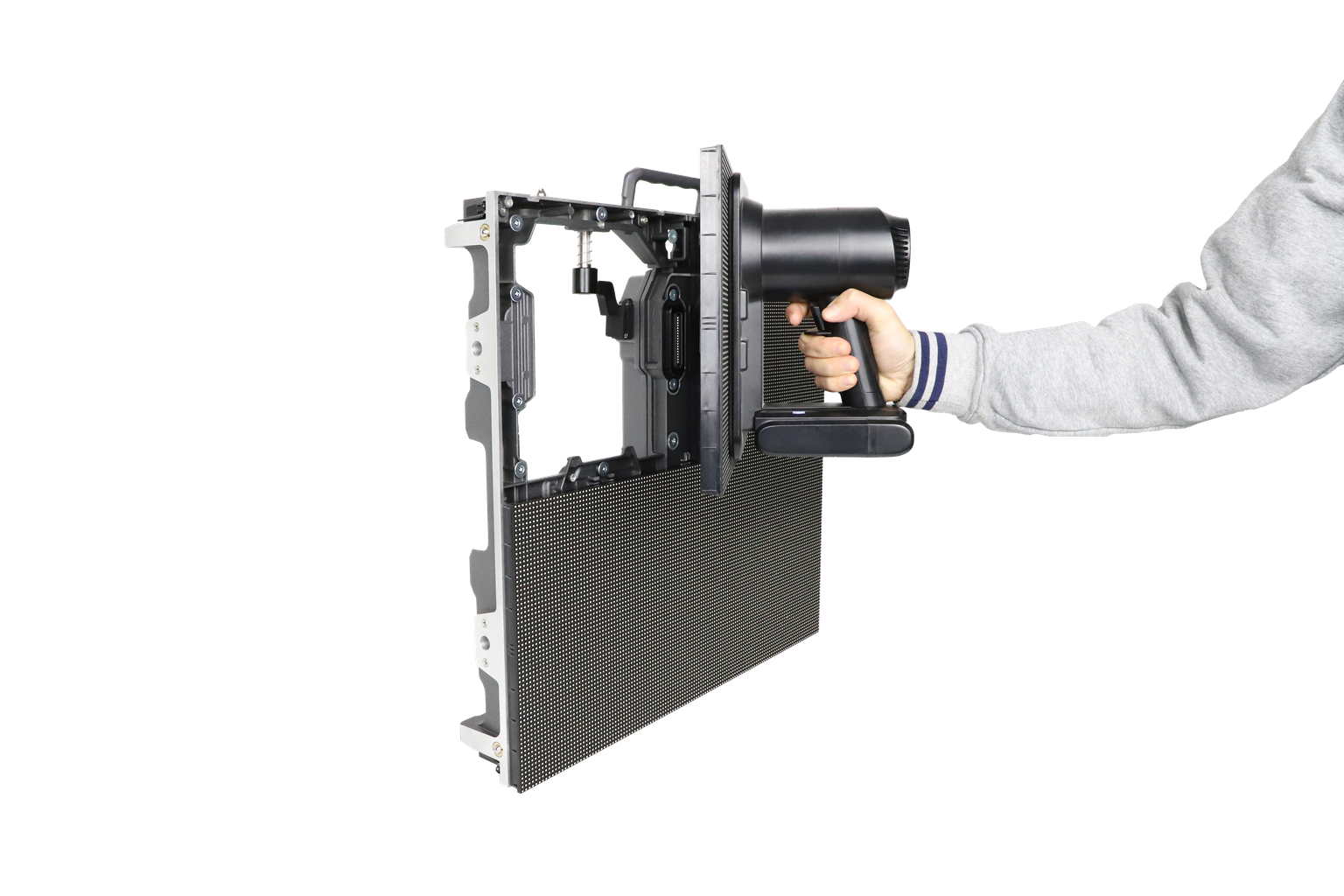
4.3 Weight, Thickness, and Structural Load
Weight affects shipping, handling, hanging load, labor, and support-frame design. Thickness affects how far the screen projects from a wall. Compare weight per square meter rather than cabinet weight alone because different cabinet sizes cover different areas.
For hanging installations, include cabinets, rigging bars, cables, processors, power distribution, and an appropriate safety factor in structural calculations. A qualified engineer should verify critical supporting structures.
4.4 Locks, Alignment, and Heat Dissipation
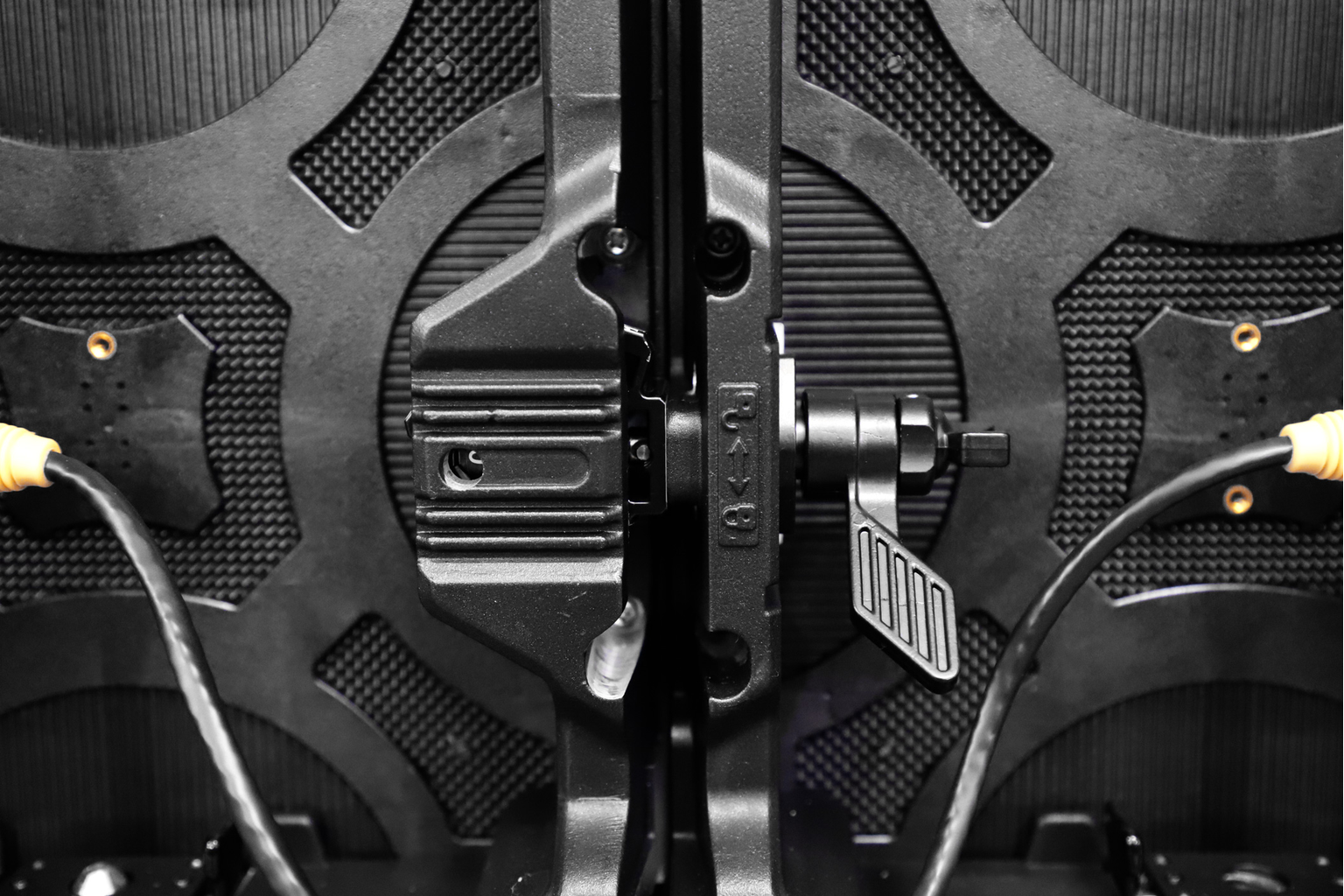
Quick locks reduce assembly time, while positioning pins help neighboring cabinets align. Test whether locks can be operated safely with gloves and whether they remain reliable after repeated use.
LED modules, power supplies, and control electronics generate heat. Review airflow, passive heat paths, fan maintenance, ambient-temperature limits, brightness, and daily operating hours together rather than considering cabinet cooling in isolation.
5. How to Choose the Right LED Display Cabinet Step by Step
A structured selection process prevents late design changes and makes supplier quotations easier to compare.
5.1 Define the Application
Start by classifying the project as permanent indoor, permanent outdoor, rental and touring, transparent architectural, or creative and curved. Record viewing distances, expected content, operating hours, ambient conditions, and whether the screen will be hung, stacked, wall-mounted, or structure-mounted.
5.2 Confirm Screen Size and Pixel Pitch
Determine the physical width and height, then select a pixel pitch based on the closest viewer, content detail, camera requirements, and budget. Confirm that cabinet and LED module dimensions can form the target screen without partial units.
For more product and application context, review EagerLED’s LED display solutions. You can also consult the LED display overview for general background terminology.
5.3 Decide the Service Route
Ask where a technician will stand during maintenance and how a failed component can be removed. Verify working clearances, access doors, lifting equipment, safety rails, and cable routes before approving the cabinet type.
5.4 Request Samples and Documentation
Inspect a sample cabinet using real content and realistic viewing positions. Check flatness, seams, color consistency, lock operation, module removal, noise, cable quality, and camera performance. Request drawings, specifications, test reports, spare-parts recommendations, warranty terms, and maintenance instructions.
6. Cabinet Size and Quantity Planning
Cabinet dimensions determine how the screen is divided into rows and columns. They influence transport cases, installation speed, structure spacing, final dimensions, and total connection count.
6.1 Common Cabinet Sizes
Common project-oriented sizes include 500 × 500 mm and 500 × 1000 mm for rental displays, 640 × 480 mm for indoor fixed screens, 960 × 960 mm for outdoor advertising, and 1000 × 500 mm or 1000 × 1000 mm for transparent displays.
These sizes are common rather than universal. Always verify the exact module matrix, cabinet resolution, and compatible pixel pitches offered by the manufacturer.
6.2 How to Calculate Cabinet Quantity
Divide total screen width by cabinet width and total screen height by cabinet height. Multiply the two results to obtain the total number of cabinets.
For example, a 5 m × 3 m screen using 500 × 500 mm cabinets requires 10 cabinets horizontally and 6 vertically, for a total of 60 cabinets. The target dimensions must divide evenly by the selected cabinet size.
6.3 Plan Spares and Transport
The purchase quantity should include an agreed spare-parts allowance for modules, power supplies, receiving cards, connectors, and other service items. Rental users should also confirm flight-case capacity, stacking limits, lifting points, and the number of cabinets each crew member can handle safely.
7. Common LED Display Cabinet Buying Mistakes
Avoiding a few common mistakes can reduce installation delays and long-term operating costs.
7.1 Choosing by Price or Weight Alone
The lowest cabinet price may exclude important features, while the lightest cabinet may sacrifice protection or stiffness. Compare complete installed systems, including structure, processing, power distribution, transport, labor, spare parts, and service.
7.2 Ignoring Maintenance Access
A rear-service cabinet installed against a solid wall can create a serious service problem. Define access routes before structural drawings and wall finishes are approved.
7.3 Mixing Incompatible Cabinets
Cabinets that share exterior dimensions are not automatically interchangeable. Module layout, cabinet depth, locks, positioning hardware, power connectors, receiving cards, calibration data, and color characteristics may differ.
7.4 Overlooking Long-Term Support
Confirm warranty coverage, technical-response procedures, spare-module availability, calibration support, and compatible replacement parts. Long-term serviceability is especially important for fixed displays expected to operate for many years.
8. Final LED Display Cabinet Buying Checklist
Before placing an order, confirm the application, indoor or outdoor environment, total dimensions, pixel pitch, native resolution, cabinet size, cabinet material, weight, thickness, and installation method.
Also confirm front or rear maintenance, IP protection where applicable, thermal design, lock and alignment system, curved-installation requirements, power and signal connections, supporting structure, transport plan, spare parts, warranty, and technical support.
Ask the supplier to provide a final cabinet drawing and system configuration that match the approved screen dimensions. Verify sample quality and service procedures before mass production whenever the project scale or risk justifies it.
9. FAQs
9.1 What Is an LED Display Cabinet?
An LED Display Cabinet is the structural unit that holds LED modules, power supplies, receiving cards, cables, and other components. Multiple cabinets are connected to form a complete LED display.
9.2 What Is the Most Common LED Display Cabinet Size?
Common sizes include 500 × 500 mm and 500 × 1000 mm for rental displays, 640 × 480 mm for indoor fixed screens, and 960 × 960 mm for outdoor advertising displays.
9.3 Which Material Is Best for an LED Display Cabinet?
Die-cast aluminum is widely used for rental displays because it is lightweight, precise, and easy to install. Aluminum and steel are also commonly used for fixed installations.
9.4 What Is the Difference Between Front and Rear Maintenance?
Front maintenance allows technicians to service components from the front of the screen, making it suitable for wall-mounted installations. Rear maintenance requires enough working space behind the display.
9.5 How Do I Choose the Right LED Display Cabinet?
Consider the installation environment, cabinet size, material, weight, maintenance method, IP protection, screen dimensions, and installation type. The best LED Display Cabinet should match the actual requirements of your project.
10. Conclusion
Choosing the right LED Display Cabinet requires more than comparing dimensions and prices. The cabinet should match the installation environment, screen size, pixel pitch, maintenance route, supporting structure, transportation needs, and expected operating conditions. Evaluating these factors together helps prevent avoidable installation problems and long-term service difficulties.
A well-selected LED Display Cabinet provides accurate alignment, efficient installation, reliable protection, and practical maintenance throughout the display’s service life. Before ordering, confirm the final cabinet drawings, system configuration, spare-parts plan, warranty, and technical support with the supplier so the completed LED display can meet both current project requirements and future operational needs.