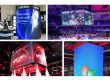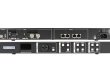


An LED display module is the replaceable building block of a direct-view LED screen; an LED display board is the assembled sign or screen that uses modules, cabinets, power and control hardware. If you are buying for a venue, shop, stage or outdoor advertisement, choose the finished board by viewing distance, content and installation conditions. If you are repairing or building a screen, match the module to the existing cabinet and electronics. This guide explains the difference, the specifications that matter and what to send a supplier for an accurate quote.
Quick answer: Module = one display unit. Cabinet or panel = the frame containing several modules plus supporting parts. LED display board = the working display assembled from one or more cabinets. Suppliers sometimes use “board,” “panel” and “screen” loosely, so confirm which level of assembly a quotation covers.
Module vs board | Module types | Specs to compare | How to choose | FAQs
LED display module vs LED display board: what is the difference?
A module carries the LED pixels and their driving circuitry. Several modules mount to a cabinet or frame. The cabinet also houses or connects to components such as a power supply, receiving card, hub board and cables. One or more cabinets form the visible LED display board or video wall. The media player and video processor may be separate from the board.
| Item | What you receive | Best buying question |
|---|---|---|
| LED display module | Pixel array with its PCB, driver circuitry and connectors; accessories depend on the model. | Will its pitch, dimensions, mounting, data interface and batch match my screen? |
| LED cabinet or panel | A structural unit holding modules and associated power and signal hardware. | What are its pixel resolution, service access, weight and power requirements? |
| LED display board or screen | A complete configured display made from cabinets, with the agreed control system and installation scope. | What is included in the delivered, working system and quotation? |
For example, a 320 × 160 mm module at P2.5 has a nominal pixel resolution of 128 × 64 because 320 ÷ 2.5 = 128 and 160 ÷ 2.5 = 64. That calculation describes the module, not the resolution of a finished screen. The screen resolution depends on how many modules and cabinets are assembled. Confirm the actual product drawing before ordering because nominal pitch and usable dimensions may differ by model.

Which LED display module type fits your project?
Indoor LED display modules serve applications such as meeting rooms, retail interiors and indoor rental screens. EagerLED lists indoor pitches and module sizes across several series; its indoor product page identifies 320 × 160 mm and 250 × 250 mm formats. Choose the exact model by required viewing distance, cabinet compatibility and brightness, rather than assuming one indoor specification fits every room.
Outdoor LED display modules are designed for daylight viewing and exposure to weather when installed as part of a suitable enclosure. EagerLED lists P2.5 through P10 options, among others, and describes IP65 protection for its outdoor modules. Ask for the front and rear IP ratings of the assembled cabinet, including connectors and service doors. A module rating alone does not establish the protection of the complete installation.
Flexible LED modules can follow an approved curved structure. Verify the minimum bend radius, support method, service access and the approved cabinet or frame before specifying a curved board. A flexible module does not make every cabinet bendable.
Fine-pitch, GOB and COB options address different resolution and surface-protection needs. Compare the exact product construction, repair method and cost with your application. For a deeper technology comparison, see EagerLED’s COB vs GOB guide.
Seven specifications to compare before buying an LED display board
1. Pixel pitch and final resolution
Pixel pitch is the center-to-center distance between neighboring pixels, measured in millimeters. A smaller pitch provides more pixels in the same area, but the right pitch depends on the nearest viewer, screen size and the detail in your content. Ask for both the physical size and pixel dimensions of the complete board. Use EagerLED’s pixel pitch guide for a more detailed selection method.
2. Brightness for the actual light level
Request brightness in nits (cd/m²) for the proposed model and ask whether the figure is typical or maximum. Indoor and sun-facing outdoor sites need different levels. More brightness is not automatically better: an oversized setting can make an indoor display uncomfortable and raise energy use. Confirm that brightness can be adjusted for the venue.
3. Weather protection and operating environment
For outdoor work, confirm the assembled screen’s front and rear IP ratings, drainage, ventilation, corrosion considerations and temperature limits. Check whether the board will be under a canopy, exposed to driven rain or mounted in a humid location. The installation design matters as much as the rating on an individual module.
4. Refresh rate and camera performance
For broadcast, live events or filmed content, request the refresh-rate specification at the proposed configuration and review sample footage under the intended camera settings. EagerLED’s indoor module listing describes 3,840 Hz as a standard specification for listed series, but the final result depends on the module, driver, receiving card and setup. Do not treat a single component number as a guarantee for the complete board.
5. Service access and replacement matching
Ask whether modules are serviced from the front, rear or both sides. Record the module part number, physical dimensions, mounting positions, pitch, LED package, driver IC, scan configuration, connector type and calibration data. A replacement that fits physically can still show a visible color or brightness mismatch. Agree on compatible spare modules and their production batch at purchase.
6. Power, structure and control
Request typical and maximum power consumption for the proposed complete screen, plus circuit and heat-load requirements. Confirm the cabinet weight, mounting design, controller, receiving cards, input sources, media player and any software licenses. These items affect the installed price and the ability to operate the board.
7. Warranty and acceptance checks
Check the warranty scope, exclusions, spare-parts process and support location in writing. EagerLED’s current indoor and outdoor module listings state a two-year warranty and describe 72-hour aging tests for those module lines. Verify that the specific quoted model and finished board carry the same terms. Before acceptance, inspect for dead pixels, color uniformity, seams, signal stability and the agreed brightness and refresh settings.

How to choose the right module or board
- Define the job. State whether you need replacement modules, cabinets or a complete installed LED display board. Include the site, content type and expected operating hours.
- Measure the viewing and installation conditions. Share screen width and height, closest viewing distance, ambient light, indoor or outdoor exposure, mounting surface and available service space.
- Set the image requirement. Specify the desired pixel dimensions, text size, camera use and input sources. Have the supplier calculate the resulting resolution from the proposed pitch and cabinet layout.
- Check system compatibility. For repairs, supply photos and the existing module and controller labels. For a new board, request a complete bill of materials and a drawing showing cabinets, power, data and maintenance access.
- Compare the complete quote. Confirm modules, cabinets, controller, processor or player, mounting, cables, spare parts, shipping, installation, commissioning and warranty. A low module price may omit essential system parts.
For a fixed outdoor advertising screen, prioritize viewing conditions, weather protection and maintenance access. For a conference room, prioritize pixel pitch, text clarity and comfortable brightness. For a rental stage, prioritize cabinet handling, fast locks, spares and camera performance. The appropriate specification follows the use case.

What to send EagerLED for a useful quotation
Send the installation location, intended application, target width and height, nearest viewing distance, photos or drawings of the site, indoor or outdoor exposure, content sources, service-access constraints and target delivery date. If you need only a module, include the existing module’s label, front and rear photos, dimensions, connector and controller model. EagerLED can then propose a compatible LED module or a complete board configuration for review.
Contact EagerLED for a project-specific specification and quote. Ask the team to identify the exact model, cabinet drawing, included control equipment, power requirements, warranty and spare-parts plan before placing an order.
Frequently asked questions
Is an LED display module the same as an LED display board?
No. The module is one replaceable pixel unit. A finished LED display board includes multiple modules and the supporting cabinet, power and control system. Confirm the supplier’s terminology on the quotation.
Can I replace one module without replacing the whole screen?
Often yes, if the cabinet permits module service and a compatible replacement is available. Match mechanical, electrical and optical specifications, then check calibration and color uniformity after installation.
How do I calculate an LED board’s resolution?
Divide the active width and height in millimeters by the pixel pitch in millimeters, then confirm the result against the module and cabinet layout. For example, a nominal 2,000 × 1,000 mm active area at P2.5 is about 800 × 400 pixels. Cabinet dimensions may require the final size to be adjusted.
Does an IP65 module make the complete display waterproof?
No. Outdoor protection must be checked for the assembled cabinet, connectors, cable entries and installation. Ask for front and rear ratings and an installation plan suited to the site.
What affects LED display board price most?
Pixel pitch, total display area, brightness, packaging technology, cabinet design, control equipment, weather protection, installation, shipping and spares all affect the quote. Compare complete system scopes rather than module prices alone.