LED display spare parts should be planned as an inventory of approved, identifiable and usable items, with a clear method for replenishing them after service. The right starting quantity depends on the installed equipment, access to repair, replacement lead time and the consequences of an interruption. A universal percentage cannot answer all those questions.
This guide helps buyers, distributors, AV integrators and project contractors organize stock for a screen or a group of screens. It focuses on inventory decisions and purchasing records. It does not provide instructions for live electrical repair or imply that parts with similar appearances are interchangeable.
The worksheets and stock calculations are proposed planning examples, not EagerLED failure statistics or guaranteed service levels. Use the actual bill of materials and supplier approval when ordering LED display spare parts. Keep uncertainty visible until the responsible technical team resolves it.
1. Define the unit of LED display spare parts stock
Start with the installed system, not a shopping list of generic components. Give every screen a project identifier and obtain its final equipment schedule. Separate cabinet families, module types, receiving cards, power assemblies and connection accessories. Record which items the maintenance team is authorized and equipped to replace.
A complete cabinet and an individual module solve different service problems. The cabinet may suit a rapid replacement procedure for the approved system. A module may address a smaller affected area but require a different access method. LED display spare parts planning should connect each stocked item to an actual service procedure.
The EagerLED parts and tutorial library separates several component and service topics. Use that as product context, then request the item list for the delivered screen. A general tutorial does not establish the contents of a particular quotation or authorize an untrained operator to perform a repair.
Define the stock unit clearly. Does one ordered item mean a module, a pair, an assembly or a complete service kit? State whether mounting hardware, cables or configuration work are included. A price comparison is unreliable if suppliers quote different units under the same short description.
For LED display spare parts, distinguish consumable accessories from repairable assemblies. A damaged cable may be replaced and removed from usable stock. A controller sent for repair needs a separate status until it returns and passes acceptance. Counting both as available while one is away creates a false picture of readiness.

2. Build an approved compatibility record
Create one record for each approved replacement item. Include the manufacturer’s identifier, the supplier’s ordering code and any revision information needed to distinguish variants. Attach clear photographs of labels and connectors, but do not use photographs as the only proof of compatibility. Ask the supplier to confirm the applicable installed equipment in writing.
LED display spare parts can match physically without producing the required result. EagerLED’s module selection guide explains that replacement compatibility includes the system and that different batches can show visual differences. Treat electrical operation and acceptable visual matching as separate acceptance questions.
| Item group | Identity evidence | Approval needed |
|---|---|---|
| LED module | Model, revision, dimensions and production identification | Fit, electrical compatibility and visual acceptance. |
| Receiving card | Exact model, supported version and configuration reference | Compatibility with the delivered cabinet system. |
| Power assembly | Part number, ratings, connectors and mounting arrangement | Supplier-approved replacement for the actual assembly. |
| Cable set | Function, ends, length and environmental suitability | Approved connection and routing application. |
| Mechanical item | Manufacturer code, location and applicable drawing | Approved use in the specified cabinet or support system. |
A shared inventory is useful only when the allowed applications are documented. If two screens use an approved common item, list both project identifiers. If compatibility is unknown, keep separate records. Do not merge LED display spare parts merely because the screens have the same pixel pitch or were purchased from the same supplier.
Configuration files belong in the technical record associated with an item. A receiving card may need the appropriate settings before it is ready for service. Keep the approved file reference, version and responsible technician visible. Store access credentials through the organization’s authorized process, not on a broadly circulated inventory sheet.
Before accepting a substitute, ask what has changed and which evidence supports it. LED display spare parts substitutions may require a controlled fit, function or visual check. Record the approved replacement relationship instead of erasing the original item code. Future technicians need to know which change was intentional.
3. Choose quantities and storage locations
Quantity planning starts with the required recovery approach. Identify how long the owner can tolerate the defined fault, who can attend the site and how quickly approved replacements can arrive. Then decide which items must be at the screen, which can sit at a local depot and which can be ordered when needed.
For LED display spare parts, use actual service history where it exists. Separate wear, handling incidents, installation damage and unexplained failures rather than combining every replacement into one rate. A recently installed screen with little history requires an explicitly provisional policy. Do not invent a reliability figure to make the calculation look precise.
| Operating situation | Inventory question | Evidence to request |
|---|---|---|
| Single fixed screen near service support | Which faults justify immediate local stock? | Attendance arrangements and replenishment lead time. |
| Remote fixed installation | What must be available before transport can arrive? | Real delivery route and authorized service capability. |
| Several compatible screens | Can a depot support simultaneous demands? | Compatibility list and transfer response process. |
| Touring rental equipment | What travels and what remains at the workshop? | Deployment schedule, handling history and repair turnaround. |
| Phased expansion | Will later deliveries use the same approved items? | Revision policy and supplier confirmation. |
Consider an illustrative stock review: a team expects to issue two approved modules during a replenishment period and chooses an additional contingency of three. Its proposed reorder trigger is five usable units before considering outstanding orders and reservations. These inputs are hypothetical decisions, not a recommendation that any screen needs five modules.
The value of that example is the explicit reasoning. The team can revise expected demand, lead time or contingency separately as evidence improves. LED display spare parts planning should make these assumptions inspectable. A percentage copied from another installation provides no equivalent explanation of what the inventory is meant to cover.
Where multiple sites share stock, agree who can release it. A cabinet reserved for tomorrow’s event should not silently appear available to another project. Record transit time, receiving responsibility and the location that holds the item physically. Availability must mean the item can reach the intended job under the agreed arrangement.
Budget for storage, inspection, transport and administration as well as purchase price. Excess stock ties up resources, while insufficient stock may delay restoration. For LED display spare parts, the practical objective is an approved level of readiness with known costs and limits, not the largest possible pile of components.
4. Accept LED display spare parts before shelving them
Separate goods received from goods accepted. On arrival, compare the shipment with the order and the approved item record. Check quantity, labels, packaging condition and visible damage. Keep discrepancies identifiable and notify the responsible purchasing or technical contact before uncertain items enter the usable balance.
Agree the technical acceptance procedure with the supplier. Depending on the component, this may include a controlled functional check or a visual comparison with the installed system. The qualified technician should use an approved setup and record the result. Avoid improvising a repair or applying power to an unidentified assembly.
| Check | Evidence retained | If unresolved |
|---|---|---|
| Order identity | Purchase reference and exact item code | Hold the item outside usable stock. |
| Physical condition | Package and component condition record | Preserve evidence and request disposition. |
| Compatibility | Approved application or substitution record | Obtain technical confirmation. |
| Required test | Method, result, date and technician | Mark testing pending, not passed. |
| Storage readiness | Label, packaging and assigned location | Resolve protection or identification gaps. |
For LED display spare parts that affect the visible image, agree the comparison conditions. Record the screen settings and content used for acceptance. A successful electrical test does not establish an acceptable color match, and a photograph taken with automatic exposure may not show the full difference that an observer sees.

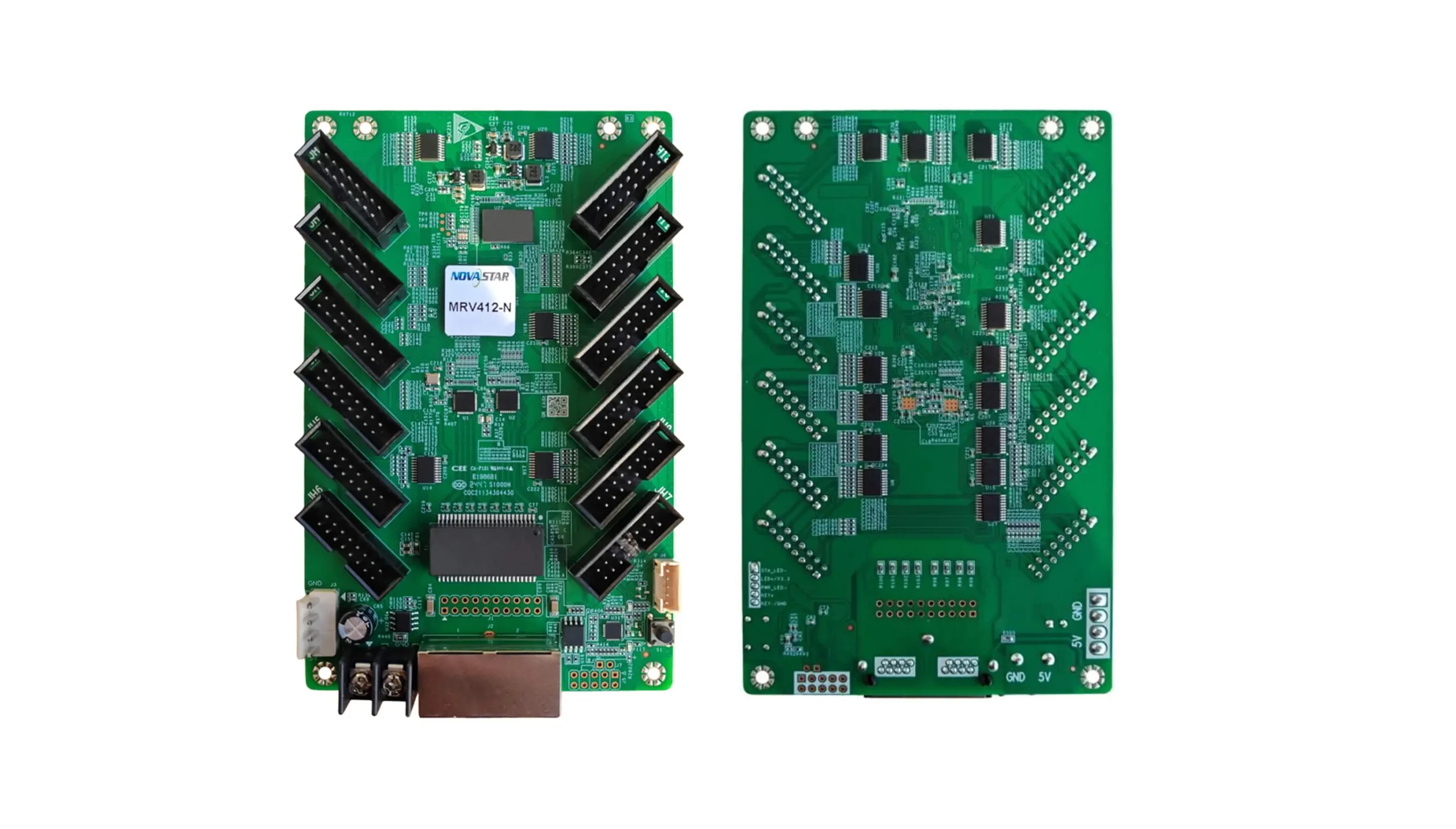
Follow the storage and handling instructions for each item. For example, the MRV412-N specification sheet provides component-specific storage conditions. Do not apply one receiving card’s limits to every module, power supply or packaged assembly. Ask for missing instructions before selecting a storage location.
Keep accepted LED display spare parts identifiable after opening the original carton. A loose component without its label can become unusable stock even if it is undamaged. Retain the relationship between the part, its packaging, test record and approved applications. If a label becomes unreadable, restore identification through verified records.
5. Track usable stock rather than shelf totals
Use distinct statuses for ready, reserved, under inspection, in transit, under repair and rejected items. Define what each status means and who can change it. LED display spare parts should enter the usable balance only after the required acceptance steps have passed. This keeps purchasing decisions tied to real availability.
| Event | Record | Effect on availability |
|---|---|---|
| Receipt | Item, quantity, order and inspection status | Pending until accepted. |
| Acceptance | Approval reference and storage location | Add to usable stock. |
| Reservation | Project, quantity and release date | Remove from freely available balance. |
| Issue to service | Work order, screen and recipient | Reduce stock at the issuing location. |
| Return from service | Condition and reason for return | Do not restore usability without disposition. |
| Transfer | Sending site, receiving site and receipt confirmation | Track transit separately from local availability. |
As a simple hypothetical example, a shelf contains twelve modules. Three are awaiting inspection and two are reserved for an approved job. Only seven are freely available under that definition. Reporting all twelve as ready would overstate the service team’s options. Record these categories explicitly even if the inventory is small enough for a spreadsheet.
Connect each issue of LED display spare parts to a work order. Record the removed component’s identity and the symptom that prompted replacement. The resulting history can help the technical team distinguish repeated faults from unrelated incidents. It also gives purchasing better evidence than a stock count alone.

Returned items need a decision. A technician may bring back an unused spare, a defective component or an assembly whose condition is uncertain. Keep those outcomes separate. Do not let an unlabeled return become the next urgent replacement simply because someone placed it beside accepted stock.
Periodically compare the record with physical inventory. For LED display spare parts, review identity and condition as well as quantity. A correct total can still conceal mixed revisions or missing packaging. Investigate discrepancies and document the correction rather than adjusting the number without understanding what happened.
6. Reorder with revisions and repair status in view
Review the usable balance against the approved trigger and upcoming commitments. Check open purchase orders before placing another order. Confirm promised delivery dates rather than treating every ordered item as immediately available. A late shipment and an accepted local part should never have the same operational status.
When reordering LED display spare parts, send the exact item record and installed-system reference. Ask the supplier to identify changes before shipment. A new revision may be suitable, but the buyer needs the supporting approval and any revised configuration or acceptance requirements. “Equivalent” is not a complete technical description.
For repairable equipment, track the expected return separately from new purchases. Require a repair report and the agreed return-to-stock check. Repair completion does not automatically restore the same warranty or service commitment as a new item; use the actual terms agreed with the supplier.
Ask about future availability when the installed system will operate for several years. LED display spare parts planning should identify who will communicate discontinuation, substitutions or a final ordering opportunity. Avoid treating that conversation as a guarantee of indefinite supply. Retain the supplier’s actual written commitment and review its conditions.
Give the reorder review a named owner and an action deadline. A low-stock alert is useful only if someone can confirm the requirement, obtain approval and place the order. For LED display spare parts, record the decision when a trigger is deliberately overridden, including the reason and the date it should be reviewed again.
Finally, review inventory after a significant equipment change. Stock that served a retired screen may no longer support the remaining fleet. Verify another approved use before reallocating it. Keep a clear disposition for obsolete or rejected items so they do not inflate the readiness reported to management.
7. LED display spare parts FAQ
What percentage of spare modules should we buy?
There is no universal percentage supported by this guide. Plan LED display spare parts from the actual system, service history, replenishment time and recovery requirement. Ask the supplier to explain the proposed quantity and revisit it when operational evidence becomes available.
Can screens with the same pixel pitch share stock?
Only when compatibility has been confirmed for the exact items and screens. Pixel pitch alone does not establish dimensions, electrical design or visual matching. Keep LED display spare parts separate until the supplier approves a shared application record.
Does a warranty remove the need for local inventory?
No automatic conclusion follows. Warranty terms determine covered remedies, while local stock addresses availability during service. For LED display spare parts, compare the actual response, shipping and repair arrangements with the owner’s acceptable interruption before deciding what to hold.
Should repaired parts count as ready immediately?
Count them only after the agreed return-to-stock acceptance. Record the repair outcome and any limitations. LED display spare parts under repair or awaiting testing should remain visible in the inventory without being reported as freely usable.
Is buying every replacement from the original batch enough?
Batch traceability is useful, but it does not replace acceptance of condition, compatibility and visual performance. LED display spare parts can be mishandled or stored incorrectly. Keep the required inspection and test process even when the production identification matches.
Should the distributor or end user store the inventory?
Choose the location that supports the agreed response and competent service access. LED display spare parts held by a distributor may serve several approved installations, but transfer time and reservations must be explicit. Confirm ownership and release responsibility in the service arrangement.
What should we send when the original part is unavailable?
Send the installed-system record, exact labels, photographs and configuration references through the supplier’s support process. For LED display spare parts, ask for an approved substitution and its acceptance requirements. Do not accept a similar-looking item as sufficient evidence.
8. Conclusion
LED display spare parts deliver practical value when their identity, condition, location and replenishment are controlled. Build the plan around approved service actions, count only usable stock and keep substitutions traceable. Review quantities with actual operating evidence instead of relying on an unexplained percentage.
For an EagerLED screen or fleet, contact EagerLED with your equipment list and service requirements. Include installed models, site locations, existing stock and the intended recovery arrangement. That information supports a specific discussion of LED display spare parts and the documentation needed to keep them ready.