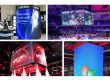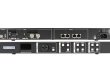


LED screen rental in Chicago should be specified as a coordinated exhibit package: the display, booth structure, freight route, power service, installation crew and content test must fit the same plan. Before comparing prices, identify who delivers each part and which venue or show contractor must approve it. A panel rate alone cannot establish the cost or readiness of an installed booth.
This guide is for exhibit project managers preparing a rental request for quotation. It focuses on the interfaces between the screen supplier and the exhibition team, using McCormick Place as a local planning example. Other Chicago venues and individual shows can have different arrangements. EagerLED manufactures rental-grade display equipment for purchase; local event hire, crew availability and venue services require confirmation with the relevant provider.
1. Define the Booth Brief for LED Screen Rental in Chicago
Start with the job the screen performs. A wall attracting visitors from the aisle needs a different content plan from a close-view product demonstration. If sales staff will explain technical drawings, identify the smallest labels that must remain readable. If the wall mainly presents motion graphics, prioritize the approved visual sequence and the relationship to physical products.
Record the event name, hall, booth number, booth type and appointed exhibit contractor. Attach the current floor plan with its revision date. Show the display face, counter positions, meeting area, storage and likely visitor approach. The screen supplier should receive the same drawing that the booth builder uses, with dimensions and a clear orientation.
For LED screen rental in Chicago, specify when the display must be ready for content review, not just when doors open. A rehearsal deadline gives the team time to resolve cropped slides, missing adapters or an unsuitable laptop output. Put the required readiness time into the quotation so it becomes part of the supplier’s planned work.
List each intended source: local playback, a demonstration computer, a live camera or a remotely updated presentation. Identify which sources are essential and which can be dropped if time is limited. For a software demonstration, state whether visitors need to read the complete application window or a selected view. That choice can change both the canvas and the production work.

2. Confirm Local Service Responsibilities Before Booking
01. Use the current show manual
McCormick Place’s official exhibitor information directs exhibitors to the organizer and general service contractor for event-specific details. It also identifies separate service responsibilities within the building. Treat that as a reason to obtain the current manual and named contacts early, rather than assuming the screen supplier can perform every task.
A useful LED screen rental in Chicago brief separates responsibility from purchasing. The exhibitor may pay for a service while the booth contractor coordinates it and another provider performs it. Name all three where relevant. Otherwise, an item can appear in two quotations while nobody has actually placed the necessary order.
Ask the organizer to confirm who handles material movement, display assembly, electrical distribution, overhead support and network services for the proposed build. Describe the actual equipment and work rather than requesting a blanket statement about “AV labor.” Keep the response with the drawing revision to which it applies.
02. Check contractor access and service boundaries
McCormick Place publishes an Exhibitor Appointed Contractor registration program for third-party companies working on site. Its published information distinguishes registration with the event from registration with the building. Before appointing a crew, ask that company and the organizer to confirm the current requirements, deadlines and documentation for the planned services.
The venue’s Exhibitor Bill of Rights also distinguishes full-time exhibitor personnel from contractor personnel; exhibitor rights cannot simply be transferred to a hired contractor. This matters when a proposal assumes that the customer will supply labor. Have the responsible venue or show contact settle the work allocation before including any self-performed tasks in the budget.
These checks do not establish a universal labor rule for every Chicago event. For LED screen rental in Chicago, the practical deliverable is a written allocation for your show, venue and equipment. A familiar rental cabinet or experienced traveling crew does not remove that coordination step.
| Interface | Question to resolve | Record to retain |
|---|---|---|
| Freight to booth | Where does the carrier’s service end, and who moves cases onward? | Delivery instructions and receiving contact |
| Support to display | Who approves the support and confirms cabinet attachment compatibility? | Coordinated drawing and responsible reviewer |
| Power to equipment | Who orders supply, distributes it and connects the approved load? | Load schedule and service order reference |
| Playback to processor | Who supplies adapters, switching, scaling and the tested playback device? | Signal diagram and source list |
| Finished booth to operation | Who accepts the picture and remains available for faults? | Acceptance sheet and support contact |
3. Coordinate Cabinet Geometry With the Booth Build
A nominal booth dimension is not the screen’s available installation envelope. Allow for the support, cabinet depth, service route, cable bends, trim and neighboring components. Ask the booth builder to show the finished opening and the screen provider to show the actual assembled outline. Resolve differences before fabrication.
When comparing LED screen rental in Chicago, distinguish active image dimensions from overall equipment dimensions. The graphics team needs the active pixel canvas. The builder needs the physical envelope. The installation team needs the assembly and removal route. One sketch rarely answers all three unless those views are deliberately included.
EagerLED’s EA500C6 product information describes a 500 × 500 mm cabinet, approximately 19.7 × 19.7 inches. As a layout example, a rectangular 4 × 2.5 m active wall, approximately 13.1 × 8.2 ft, would use eight columns and five rows of that format: forty active cabinets. Spares, structure and surrounding clearances are additional. This arithmetic describes a possible grid, not a recommended booth design.
Do not label that example “4K” from its physical size. Native pixel count depends on the selected cabinet version. Obtain the confirmed pixel map before exporting artwork. For software demonstrations, test representative labels at the intended viewing distance, with the application scaling and processor settings that will be used on site.

LED screen rental in Chicago may involve a flat rear wall, an island display or several smaller surfaces. Choose the arrangement from visitor movement and demonstration needs. A curved or staggered wall can change the visual impact, but it also changes drawing coordination, support, trimming and media preparation. Price those consequences before approving the appearance.
Ask how a faulty component will be accessed after the booth is complete. A storage door, graphic panel or product plinth may block a route that was open during assembly. Include a service demonstration or a drawing review with the booth contractor. A maintenance opening that requires dismantling finished scenery should be visible in the proposal, not discovered during show hours.
4. Sequence Delivery, Services and Installation
01. Plan the handoffs, not just the truck arrival
McCormick Place publishes freight and marshaling guidance, while show-specific receiving instructions govern the actual delivery plan. Confirm the required destination, timing and check-in route with the organizer or service contractor. Do not send equipment to a general building address on the assumption that it will be stored until your crew arrives.
For LED screen rental in Chicago, request a case list with dimensions, gross weights and contents. The count should include processing, cables, tools and spares as well as cabinets. Identify anything that requires special handling. The case schedule helps the logistics team assess the delivery and prevents the display from arriving without a small but essential control package.
Build the schedule around dependencies. Floor services may need attention before flooring is closed. Support may need approval before cabinets can be fitted. The finished screen needs power and a tested signal before media acceptance. Ask each provider what must be complete before their crew starts, then place those conditions in the shared schedule.

Arrange a receiving check that records case condition, missing items and the responsible contact. Photograph any visible transit damage before packing is discarded. Keep a controlled list of cases sent to storage, including those needed sooner for spare access. A show-floor repair becomes harder when the right spare is inside an unidentified empty case.
02. Protect rehearsal and dismantling time
A credible LED screen rental in Chicago schedule reserves a content test after the booth’s lighting and nearby structures are in their final positions. Testing early is useful, but a bright work-light setting and an empty booth do not reproduce the finished visitor experience. Assign someone with authority to approve the content and request changes.
Plan dismantling with the same care as installation. Define the point at which content operation ends, equipment can be isolated, protective cases become available and the carrier can receive the shipment. Do not assume that a screen technician can dismantle the entire booth or that the first available truck can collect every case.
Before flooring or trim is closed, ask the installation lead to confirm that planned service access remains usable and that cable routes match the approved drawing. Record any change while the responsible crews are still present.
Keep one change log for the integrated build. If the screen moves, update the cable route, source position, support drawing and graphics canvas where affected. Ask the project lead to distribute an approved revision rather than allowing separate suppliers to work from informal messages. This is especially useful when an exhibit changes after service orders have been submitted.
5. Compare Complete Quotations and Their Assumptions
The lowest LED screen rental in Chicago equipment line may not produce the lowest project total. Normalize proposals against the same dates, active dimensions, content sources, access conditions and operating hours. Ask suppliers to identify exclusions clearly and distinguish fixed charges from estimates that depend on labor time or site conditions.
Separate equipment rental from freight, material movement, venue services, installation and operation. This does not mean every line must come from one company. It means the buyer can see how the pieces combine and which provider owns each gap. Where a cost is provisional, record the assumption and what would change it.
| Quotation line | Common basis to request | Possible change trigger |
|---|---|---|
| Display and processing | Cabinet model, active grid, native pixels, processor and specified spares | Different pitch, layout or source requirements |
| Freight and handling | Case schedule, receiving route, storage and return plan | Extra cases, revised delivery window or handling requirement |
| Build and services | Support scope, power order, crew tasks and scheduled work periods | Drawing revision, delayed readiness or additional service work |
| Content and operation | Formatting, rehearsal, operator attendance and support response | New live inputs, longer operating hours or late media |
| Commercial terms | Rental dates, damage process, cancellation terms and itemized applicable charges | Event extension, equipment damage or scope cancellation |
For LED screen rental in Chicago, request the supplier’s substitution process. A different cabinet may preserve total area while changing pixel count, weight, service access or image appearance. Require notification and review of the affected documents before substitution, especially after artwork or booth fabrication has been approved.
Also ask what “technician included” means. It might describe setup attendance, scheduled show support or a person continuously assigned to the booth. State the required coverage and communication method. If several displays share one technician, confirm how competing requests are handled and who can operate approved content when that person is elsewhere.
EagerLED’s rental LED display range is relevant when an AV company is purchasing equipment for repeated use. Buying cabinets and hiring a complete local show service are separate decisions. A manufacturer quotation should not be treated as proof of Chicago crew, warehouse, event delivery or venue-service availability.

6. Accept the Finished Exhibit With a Defined Test
The acceptance test for LED screen rental in Chicago should connect the approved brief to the actual installation. First verify the delivered model, grid and physical placement. Then check the planned sources, content and operating controls. Record what was tested, who witnessed it and any limitation that remains before visitors arrive.
Use a short, purposeful sequence: a mapping pattern, uniform backgrounds, the smallest demonstration text, a normal promotional loop and every required live input. Look from the aisle and the intended close-view position. Confirm that counters, visitors and booth structures do not obscure essential information. Have the content owner approve any crop or revised layout.
If cameras will record the display, test the actual camera chain at the intended lighting and brightness settings. A refresh specification does not by itself prove clean footage. Check the recorded image as well as the direct view, and let the video team resolve source, camera and display settings together.
Ask the technician to demonstrate the agreed recovery behavior using an approved, controlled procedure. Identify the holding graphic, backup playback copy and person authorized to select them. Do not assume that a spare cable creates automatic redundancy or that every processor stores content. The plan must match the equipment actually provided.

Close the handover with the accepted media revision, source configuration and support contact. For LED screen rental in Chicago, this record gives the booth team a practical starting point when the next shift arrives. After the show, record delivery delays, content changes and faults so the next quotation reflects experience rather than repeating untested assumptions.
Frequently Asked Questions
Can the same wall serve a private meeting room after the exhibition?
Possibly, but treat the relocation as another installation. Confirm access, support, power, transport within the venue and the second room’s viewing conditions. Include dismantling, rebuilding and another content check in the scope before committing to the move.
Should every international presenter bring a separate playback laptop?
Not necessarily. Agree on a controlled playback arrangement and collect the required files early. A live software demonstration may need its own machine, while ordinary presentation media can often use an approved shared system. Test any required adapters and output settings in advance.
How should a booth team handle confidential product demonstrations?
Give the operator an approved display version and clear instructions about what may appear publicly. Remove unrelated notifications and unintended desktop content from the demonstration workflow. Confirm recording and access arrangements with the content owner before the presentation begins.
Can different exhibitors share one large display?
Yes, if the participants agree on content approval, scheduling and technical control. Define who pays for changes and who can interrupt playback. A shared wall needs a coordinated media plan; dividing the rental charge does not automatically divide the operator’s responsibilities.
What if the organizer changes the assigned booth?
Reissue the location and drawing to every affected provider. Check access, dimensions, power position, support and sightlines before accepting the revised plan. Preserve the original quotation assumptions so any resulting cost or schedule change can be traced and agreed.
Prepare a Coordinated Request for Your Chicago Exhibit
Before booking LED screen rental in Chicago, bring the booth drawing, service responsibilities, equipment schedule and acceptance test into one revision-controlled request. Ask each provider to confirm its scope and exclusions against that document. Resolve the interfaces before comparing the final totals.
For a rental-fleet equipment purchase, send your recurring layouts, viewing distances and service requirements to EagerLED for a configuration quotation. For a single exhibition, confirm local hire, installation and show services with the responsible event providers. Keep the hardware decision tied to the complete exhibit plan.