


LED screen rental in Toronto should be compared using the complete event cost, with every quotation expressed in the same currency, rental period and service scope. A cabinet rate alone does not show what you will pay. Separate equipment, production labor, venue orders, transport and adjustments before choosing the lowest total.
This guide is for corporate event organizers reviewing competing proposals before booking. It explains how to build a comparison worksheet and carry it through to final invoicing. EagerLED manufactures display equipment; the cabinet examples below explain hardware choices, not a promise of Toronto rental inventory, local technicians or venue services.

1. Fix the Event Baseline Before Comparing Rates
Start with one written event brief and send the same revision to every bidder. Identify the building, room, event date, audience size, operating hours and planned content. Include the nearest seats and the smallest text that must be readable. A general request for a large screen invites suppliers to price different solutions.
For LED screen rental in Toronto, list installation, rehearsal, live operation and removal as separate time windows. A one-day conference may need equipment inside the venue the evening before and a crew returning after the final session. Ask how each period affects rental duration, staffing and transport. Do not infer these terms from the event date alone.
01. Describe the display in usable dimensions
Specify the active picture width and height, then request the complete footprint including supports, ballast, cable space and any control position. A screen that fits the stage elevation may still consume space needed by presenters or a service aisle. Have the venue review the complete arrangement before treating its price as approved.
State whether the screen carries presentation slides, audience camera images, sponsor loops or a mixed program. Include an example of the most demanding slide. Small spreadsheet text can change the required resolution even when the overall screen size stays constant. Suppliers should identify assumptions instead of silently pricing a different content standard.
02. Create a revision trail
Give the brief a date and revision number. When a supplier proposes a change, record whether it is an equivalent solution, an optional upgrade or a reduction in scope. Circulate accepted changes to the remaining bidders. Otherwise, the last quotation may look better simply because it responds to a different version of the job.
2. Make Currency and Tax Presentation Explicit
For LED screen rental in Toronto, a dollar symbol is not enough. Ask the supplier to label the quotation currency and payment currency explicitly. Confirm whether deposits and final balances use the same currency. If your organization budgets in another currency, maintain a separate internal conversion column without altering the original supplier amount.
Record the date and source of the conversion used for budget comparison, and state that it is a planning assumption. Ask the payment team about transfer and conversion charges. A comparison becomes unreliable when one quote uses a live conversion and another uses a convenient historical rate, especially if the balance is payable later.
01. Keep the tax lines visible
Request an itemized subtotal, the supplier’s applicable tax treatment, the tax amount and the final amount payable. This guide does not prescribe a tax rate or determine your organization’s eligibility for a credit. Have the supplier and your finance team confirm treatment for the actual transaction, contracting entities and services.
Do not compare a tax-inclusive quote directly with a tax-exclusive one. Keep two clearly labeled totals if finance needs both a cash-payment view and an internal accounting view. Avoid deducting a possible recoverable amount from the purchasing comparison before finance confirms the assumption. The approval record should explain which total the spending authorization covers.
02. Distinguish deposits from additional costs
A deposit may form part of the agreed rental amount; a refundable security hold may follow different conditions. Ask how each payment is credited or released and what documentation accompanies it. Separate a payment schedule from the cost schedule so an early payment is not accidentally added to the full quotation twice.
Keep bank or payment instructions within your normal procurement process. A revised invoice that changes the recipient or payment destination should receive independent verification through established contacts. The screen comparison worksheet should reference approved invoice numbers, rather than become a place to circulate unnecessary financial account details.
3. Separate Venue Orders from Rental Charges
LED screen rental in Toronto may involve more than one contracting party. A rental provider can supply cabinets and a technician while a venue-designated provider supplies a building connection or rigging service. Ask who orders each service, who receives its invoice and who is responsible for confirming readiness before installation begins.
As a local example, the Metro Toronto Convention Centre lists SHOWTECH as its official exclusive partner for electrical, mechanical and staging services. Its published operating guidance also identifies requirements for rigging attached to the facility. Confirm the current event-specific process with the venue; do not apply that arrangement automatically to another Toronto property.
The practical question is whether a supplier’s quoted installation price includes the services the venue actually requires. Request the current organizer or exhibitor service package, identify the relevant orders and obtain written confirmation of any exclusions. A broad phrase such as “power available” does not establish that the required connection has been ordered.
| Interface | Confirmation needed | Record in the comparison |
|---|---|---|
| Electrical supply | Connection, distribution responsibility and service window | Ordering party, quoted allowance and separate invoice reference |
| Suspended structure | Venue approval and permitted rigging provider | Approved drawing revision and excluded services |
| Receiving and handling | Delivery route, receiving slot and case storage | Carrier cost versus on-site handling cost |
| Internet or network | Whether the show actually needs an external connection | Required service and who orders it |
| Removal | Access after the event and collection sequence | Crew window, transport collection and delay assumptions |
For LED screen rental in Toronto, retain the venue contact’s confirmation alongside the proposal. Name the person who will resolve a discrepancy if the ordered service differs from the installation drawing. This is especially useful when the organizer, hotel or convention venue, rental provider and production agency all hold separate purchase orders.
4. Specify Comparable Equipment and Support
Two walls with the same active area may have different pixel counts, indoor or outdoor ratings, control systems and service access. Ask for the proposed cabinet model, pixel pitch, cabinet count, finished dimensions and pixel canvas. Request any substitutions in writing before the event. A vague “equivalent LED” description makes later comparison difficult.
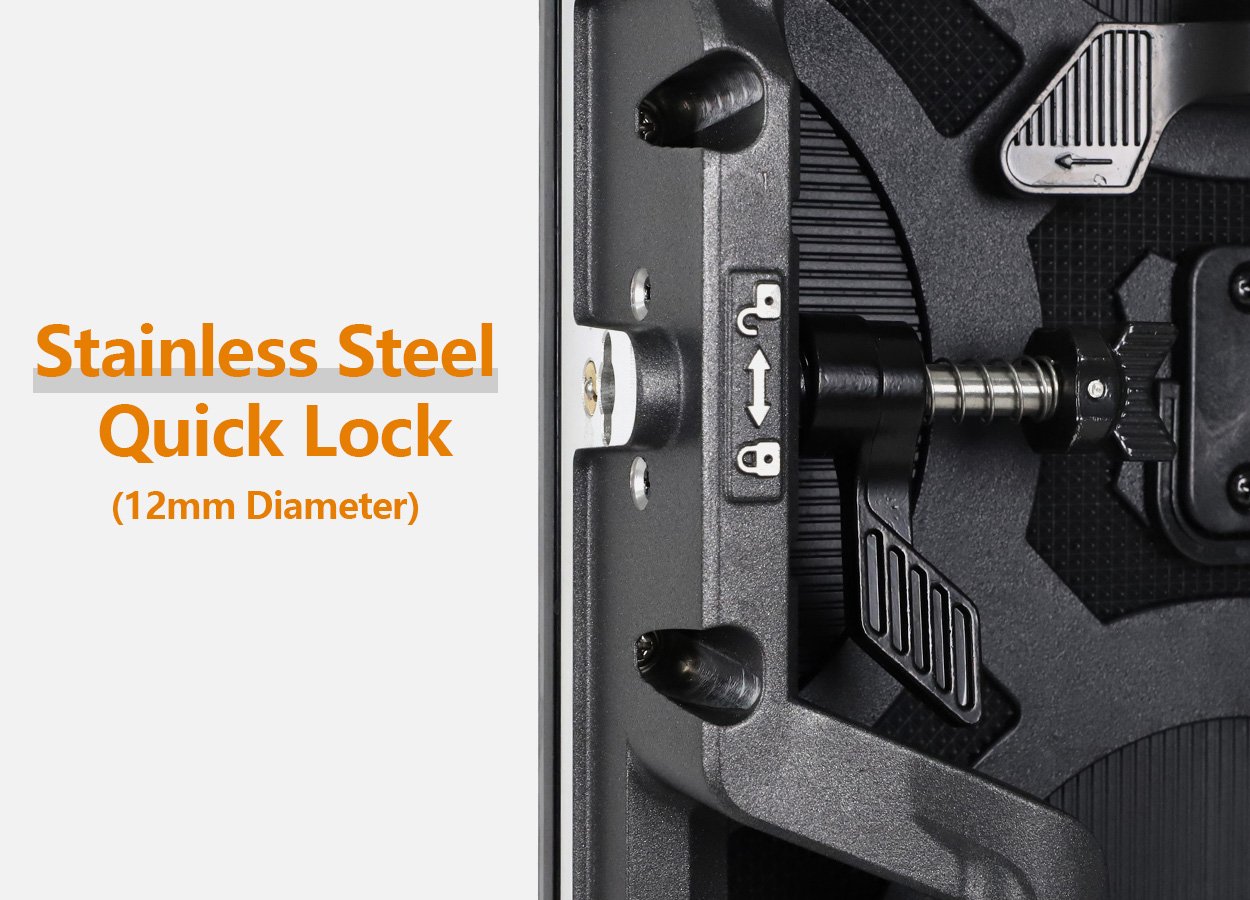
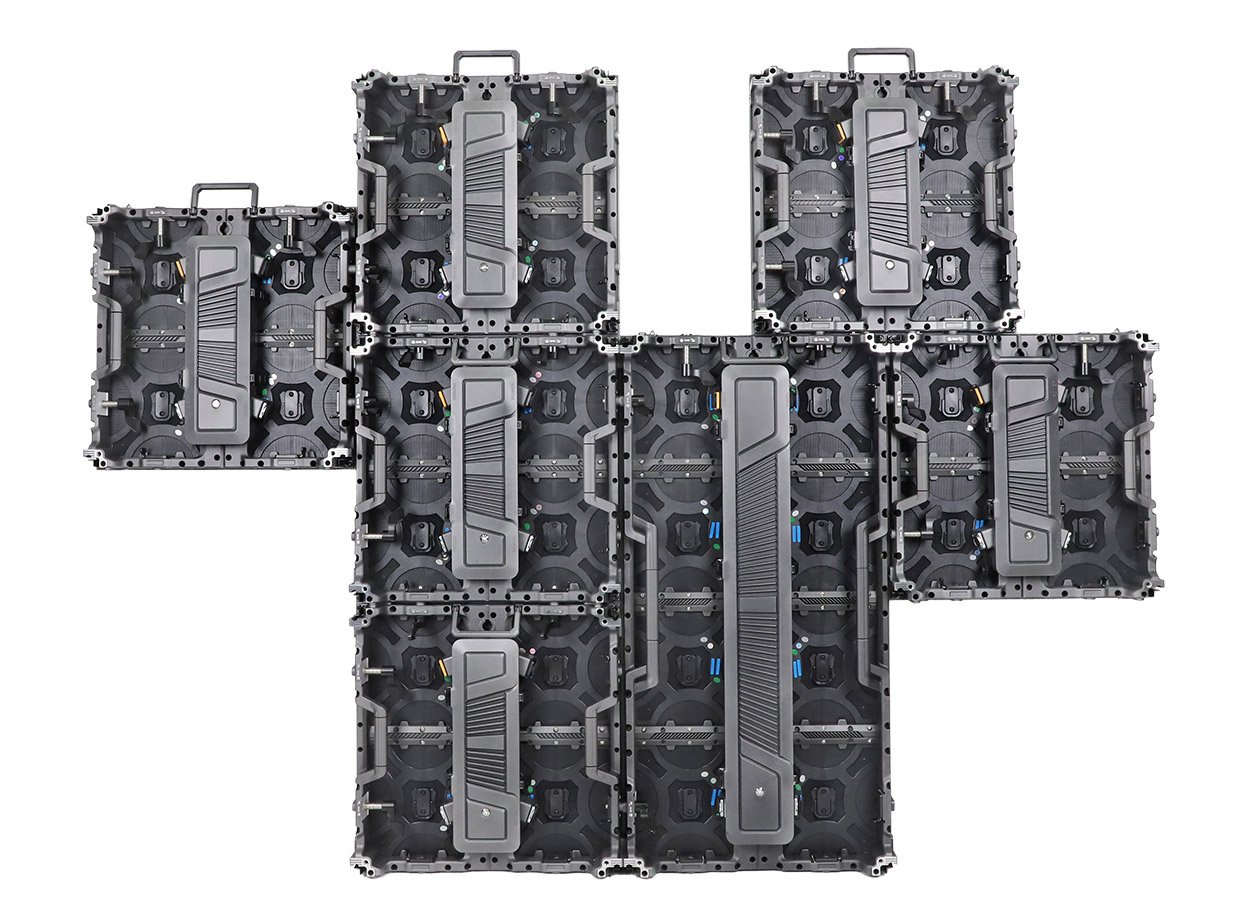
The EA500C6 rental cabinet is a 500 × 500 mm hardware example with quick locks and a removable rear cover. Its configuration must be selected for the application. Those product features help frame the equipment discussion, but do not establish a local supplier’s available stock or its installation service.
When reviewing LED screen rental in Toronto, ask whether the processing and playback equipment is included. Identify the source connection, accepted file format, final canvas dimensions and responsibility for adapting slides. A display technician may configure the wall without editing presentation content. Treat those as separate services unless the proposal explicitly combines them.
01. Compare support by coverage, not a label
“Technical support included” can describe remote assistance, a technician during setup, or an operator present throughout the event. Record the coverage period, role and escalation route. If an operator leaves after rehearsal, identify who will handle a new laptop, a changed presentation or a failed source during the next session.
Ask which spare components will be on site and which require a delivery. Confirm whether replacing a component requires access behind the wall. The appropriate spare plan depends on the cabinet and event; avoid imposing an arbitrary spare percentage without discussing what failures the proposed stock can actually address.

02. Separate optional features from essentials
A curved wall, additional confidence display or live camera package may be useful, but price it as a visible option unless it is part of the baseline. Ask the supplier to explain what problem an upgrade solves. Smaller pitch has value when it improves the planned viewing experience, rather than simply appearing more impressive on paper.
The broader rental LED display equipment range can help an AV team identify hardware categories. For a single event, however, compare the complete service proposal from the event supplier. Purchasing cabinets and hiring an installed, staffed wall are different commercial arrangements with different responsibilities.
5. Compare LED Screen Rental in Toronto with One Worksheet
A useful LED screen rental in Toronto worksheet retains the supplier’s original line items and adds normalized comparison columns. Do not erase detail by replacing every quote with a single cost per square meter. Area-based rates can help examine equipment pricing, but they do not represent fixed transport, crew or venue charges.
| Cost group | Normalize across bidders | Question before approval |
|---|---|---|
| Display equipment | Same active size, pitch, dates and included accessories | Does the amount include processing and spare components? |
| Production crew | Same calls, roles, rehearsal and live coverage | How are additional hours authorized and billed? |
| Transport | Same destination, delivery and collection windows | Are waiting time and return trips included? |
| Venue services | Same approved connection and installation assumptions | Which amounts are paid directly to another party? |
| Content work | Same number of files, revisions and delivery deadline | What counts as a late change? |
| Commercial adjustments | Same currency and clearly separated tax presentation | Are allowances fixed, estimated or subject to reconciliation? |
For each missing amount, mark “unquoted” rather than entering zero. Request clarification or retain a clearly identified planning allowance approved by your team. A blank line is uncertainty, not a saving. Separate confirmed supplier charges from your internal allowances so nobody later mistakes a planning estimate for a promised price.
LED screen rental in Toronto quotations should also state their validity period and equipment reservation conditions. A quoted configuration is not necessarily held indefinitely. Ask what confirms the booking and what happens if approval arrives after the stated deadline. Record the supplier’s answer without inventing a standard cancellation or rescheduling policy.
Consider two hypothetical proposals: one includes a live operator and the other provides installation only. Their totals become comparable only after the second supplier prices the required coverage, or your team deliberately removes that requirement from both. The correct decision may change after normalization; there is no honest universal winner based on the original headline prices.
Use a separate evaluation column for evidence quality. Mark whether a line is supported by a confirmed equipment schedule, a venue order, a written assumption or an unanswered question. This lets the decision maker distinguish an economical complete proposal from one that simply leaves more work to the organizer. Do not turn those labels into an unexplained numerical score.
Where two complete proposals remain close, examine the consequence of each difference. An earlier rehearsal may give your presenters time to correct files; an additional operator may protect a busy session changeover. Conversely, a decorative feature may add little to a text-heavy business program. Ask the event lead to identify which differences matter, then document the chosen tradeoff. Keep the comparison proportional to the event: the purpose is to expose material obligations and decisions, not to create a spreadsheet so complex that nobody maintains it after booking.
6. Control Changes and Final Invoice Adjustments
After awarding LED screen rental in Toronto, keep a simple change register. Record the request, reason, affected service, price impact and authorized approver. Confirm whether a change replaces an earlier line item or adds to it. This prevents a larger screen or extra rehearsal from being billed both as an original item and a full new package.
Define who can authorize extra hours on site. A technician may receive a request from a presenter who has no spending authority. Give the crew a named contact and a practical escalation route before rehearsal. Ask how unavoidable delays will be documented, including the start time, cause and affected resources.
Review delivery and removal assumptions together. If the event finishes later, the effect may involve crew time, vehicle waiting, storage or a second collection. Request the supplier’s actual charging method in advance. Avoid assuming that all additional costs are hourly or that one extended shift covers every affected contractor.
Before paying the balance, compare the final invoice with the approved proposal, signed changes and completion record. Check rental dates, duplicate transport lines, unused allowances and credited deposits. Send specific discrepancies for clarification with document references. A clear audit trail makes this a straightforward reconciliation rather than an argument about recollections.

7. Approve the Package with a Short Evidence File
For LED screen rental in Toronto, the approval file should include the final brief, quotation revision, equipment schedule, venue confirmations and payment milestones. Add a list of unresolved conditions with an owner and due date. Do not mark a conditional item complete merely because a supplier says it will probably be acceptable.
Give the event lead a concise operational copy: display size, final canvas, crew contacts, arrival times, rehearsal slot and escalation path. Finance needs the commercial record; the show team needs a usable operating brief. Both should refer to the same revision so the approved equipment and the delivered package remain aligned.
At handover, display the actual slides and playback files from the planned source. Check legibility from the intended audience positions, record any agreed adjustments and identify the operator responsible for the next session. Retain a completion note for invoice review. A photo can document appearance, but it does not prove every quoted service was delivered.
Frequently Asked Questions
Can two departments split one rental invoice?
Ask the supplier and your finance team before booking. Establish the contracting party, purchase order references and approval responsibility. An internal budget split does not automatically require the supplier to issue multiple invoices, and it should not leave changes without a clear approver.
Should we compare LED with a projector at the same time?
Yes, if the display technology is still open. Compare each against the same content, room lighting and sightline requirements. Keep that decision separate from comparing equivalent LED proposals; otherwise, differences in display approach can hide differences in service scope.
Does a refundable damage deposit belong in the event budget?
Track it in the cash requirement and record the release conditions separately from the expected service cost. Finance can decide how to present it internally. Keep the inspection and return documentation needed to reconcile the hold after collection.
Can we use a quote for a later event date?
Request a revised confirmation. Availability, crew scheduling, venue access and the supplier’s commercial terms may change. Reusing an old total without checking its validity creates an assumption that neither party may have accepted.
What if one bidder refuses to itemize its package?
Ask it to confirm inclusions, exclusions and change rates against your worksheet even if it retains a package price. If critical boundaries remain unclear, record that uncertainty in the evaluation. A single total can be usable when its deliverables are sufficiently explicit.
Prepare a Quote Request Your Team Can Approve
Send one event brief, one service responsibility list and one comparison format to prospective providers of LED screen rental in Toronto. Require explicit currencies, tax presentation, venue exclusions and change procedures. If your project involves buying rental display equipment, contact EagerLED with your cabinet and system requirements for an equipment supply discussion.