

The NovaStar H15 is a 15U modular video wall splicer that combines video processing and LED control in one chassis. It supports up to 30 input cards (120 input channels), 10 output cards (40 output channels), 8K input through the H_1xHDMI2.1+1xDP1.4 card, and a maximum loading capacity of 260 million pixels with the H_4xfiber sending card (enhanced).
The H15 is specified for fine-pitch indoor LED walls in control rooms, command centers, broadcast studios, exhibitions and stage rental projects. This review covers what the H15 is, its verified specifications, the input and output card options, price factors, and how it compares with the H5, H9 and H20 in the NovaStar H Series.
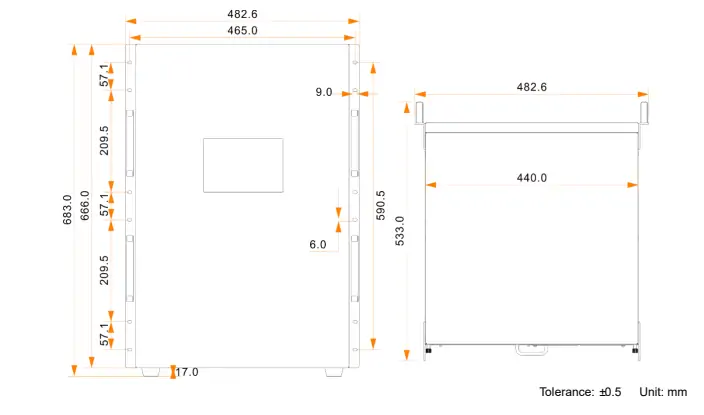
| Chassis | 15U rack unit, 482.6 mm x 683.0 mm x 533.0 mm, 41.1 kg |
| Cards | Up to 30 input cards (120 channels) and 10 output cards (40 channels) |
| Max loading capacity | 130 million pixels (H_20xRJ45), 208 million (H_4xfiber), 260 million (H_4xfiber enhanced) |
| 8K input | H_1xHDMI2.1+1xDP1.4 card: 8Kx4K@30Hz or 4Kx2K@120Hz |
| Layers | 160 layers per chassis, up to 16 layers per card |
| Processing | 10-bit, HDR10 and HLG, latency as low as 1 frame |
| Power | Dual power supplies as standard, up to 900 W, optional redundant PSUs |
| Certifications | CCC, CE, FCC, IC, KC, RCM, UKCA, UL, CB, CMIM, PSE |
1. What is Novastar H15 Video Processor?
The Novastar H15 Video Processor is part of NovaStar’s flagship H Series, engineered to deliver exceptional image quality and flexibility for high-resolution LED displays. It functions as both a video splicer and an LED controller, making it ideal for large-scale installations like video walls, command centers, and exhibition spaces. The H15 supports resolutions up to 8K and provides seamless integration between video processing and LED screen management.
Its modular architecture allows users to configure input and output cards according to their specific needs, ensuring adaptability across various industries. Whether you’re managing multi-screen setups or need precise color adjustments, the H15 offers unparalleled versatility. This processor also supports advanced features such as HDR10, HLG, and 3D functionality, positioning it as a top-tier choice for professionals seeking cutting-edge technology.
The H15 is most often specified for:
- Control rooms and command centers that need multi-source, multi-screen layouts plus device, source and sending-card backup.
- Fine-pitch indoor LED walls in lobbies, auditoriums, exhibition halls and broadcast studios.
- Stage and event projects that need fast preset switching and low latency – see our rental LED display range for those builds.
If you are choosing between control platforms rather than chassis sizes, our NovaStar H Series vs VX Series comparison explains when a VX processor is the better fit. Related hardware guides: NovaStar TU4K Pro setup guide and NovaStar CVT8-5GS fiber converter review. Browse more LED video processors if you are still comparing chassis sizes.
2. Novastar H15 LED Controller Design & Hardware Structure
2.1 Modular and Plug-In Design
At the heart of the H15 lies its modular plug-in design, which enables flexible configuration and hot-swapping of input/output cards. This feature ensures minimal downtime during maintenance or upgrades, enhancing operational efficiency. The chassis occupies 15U of rack space and measures 482.6 mm x 683.0 mm x 533.0 mm with a net chassis weight of 41.1 kg, so confirm rack depth and floor loading before ordering.
2.2 Input and Output Card Options
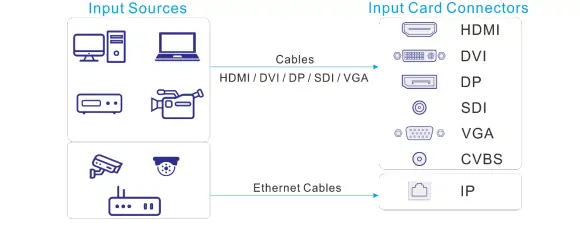
The H15 supports a wide range of input cards, including:
- H_4xDVI, H_4xHDMI, and 0+2xDP1.2for diverse connectivity.
- Specialized cards like H_1xNDIfor network-based video sources and H_4xfiber for ultra-long-distance transmission.
Output options are equally impressive, with choices like:
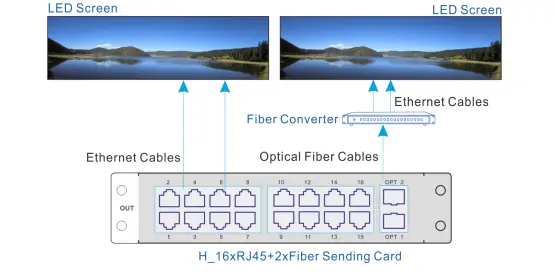
- H_16xRJ45+2xfiber sending cardcapable of loading up to 104 million pixels.
- H_20xRJ45 sending cardsupporting even higher pixel capacities (up to 130 million pixels).
- H_4xfiber sending card, offering a 208 million pixel load capacity.
The chassis total and the per-card figure are different numbers, which is the main source of confusion when comparing configurations. Each card has its own limit: the H_20xRJ45 sending card loads up to 13,000,000 pixels, the H_16xRJ45+2xfiber sending card loads up to 10,400,000 pixels and adds two OPT ports that copy the Ethernet outputs, and the H_4xfiber sending card loads up to 20,800,000 pixels with independent, copy and backup working modes. The enhanced fiber card raises the single-card figure to 26,000,000 pixels. Because the H15 accepts up to 10 output cards, those per-card limits add up to the 130, 208 and 260 million pixel chassis maximums above. Fiber sending cards cannot be used together with the H_20xRJ45 or H_16xRJ45+2xfiber cards to drive the same screen. Spare and expansion NovaStar sending and receiving cards are sold separately, so a chassis can be upgraded card by card instead of replaced.
2.3 Control Architecture
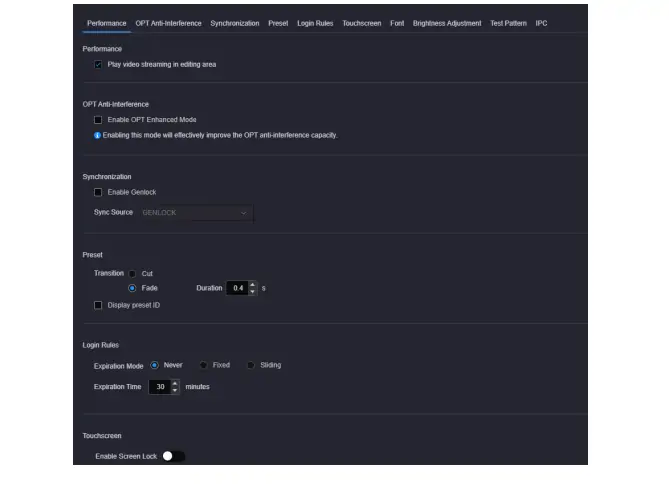
The H15 adopts a B/S (Browser/Server) architecture, enabling cross-platform access via Windows, Mac, iOS, Android, or Linux without requiring additional software installation. This web-based interface facilitates real-time collaboration among multiple users while maintaining fast response speeds.
Additionally, the unit includes:
- A built-in Genlock system for frame synchronization.
- Dual power supply options for enhanced reliability.
- Comprehensive monitoring tools accessible through the front-panel LCD touchscreen or web interface.
3. Novastar H15 Features That Define Its Performance
3.1 Multi-Screen Management
One standout feature of the H15 is its ability to manage multiple screens simultaneously. With support for up to 160 layers and centralized control over presets, brightness, and FTB (fade-to-black), it simplifies complex workflows. Users can group input sources, crop signals, and apply custom settings for each LED screen.
3.2 High-Resolution Support
The H15 excels in handling high-definition content:
- Accepts 8Kx4K@30Hz or 4Kx2K@120Hz per port on the H_1xHDMI2.1+1xDP1.4 input card.
- Supports standard 8K UHD formats including 7680×4320@30Hz and 7680×4320@24Hz, plus decimal frame rates for precise synchronization.
- Offers HDR10 and HLG processing for vibrant visuals.
3.3 Advanced Layering and Customization
A single card handles up to 16 x 2K layers, 8 x DL layers, 4 x 4K layers or 2 x 8K layers (the H15 Enhanced supports up to 10 x 2K layers per card), and the chassis scales to 160 layers in total. It also supports:
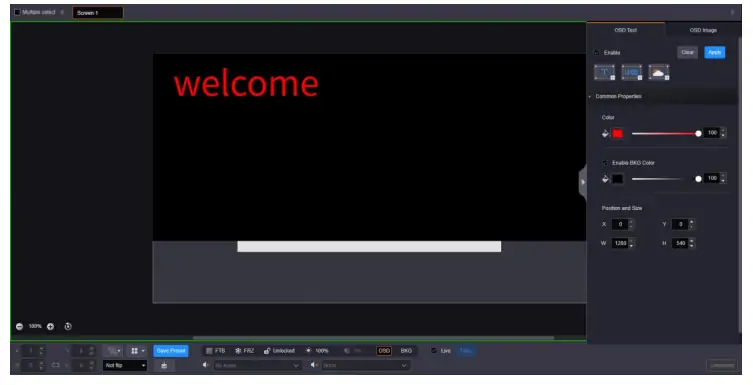
- OSD (On-Screen Display) customization, including static text, dynamic scrolling, weather updates, and clock overlays.
- Background (BKG) images that don’t consume layer resources.
- Low latency—as low as 1 frame—ensuring near-instantaneous signal transmission.
3.4 Redundancy and Reliability
For mission-critical applications, the H15 provides backup mechanisms:
- Backup between devices, input sources, and LED sending cards.
- Optical port redundancy for uninterrupted operation.
- Self-test diagnostics and automatic fault alarms for proactive issue resolution.
3.5 User-Friendly Interface
The intuitive web interface makes setup and operation straightforward. Administrators can configure roles, manage users, and monitor inputs/outputs remotely. Additionally, firmware updates are available directly through the web page, streamlining maintenance processes.
4. Novastar H15 Processor Specifications Breakdown
Let’s dive deeper into the technical specifications that make the Novastar H15 a powerhouse:
4.1 Key Technical Highlights
- Loading capacity: up to 130 million pixels with H_20xRJ45 sending cards, 208 million with H_4xfiber cards and 260 million with the H_4xfiber (enhanced) card.
- Frame Rate Flexibility: Decimal frame rates supported for precise synchronization.
- Color Depth: Supports 8-bit and 10-bit RGB/YCbCr inputs.
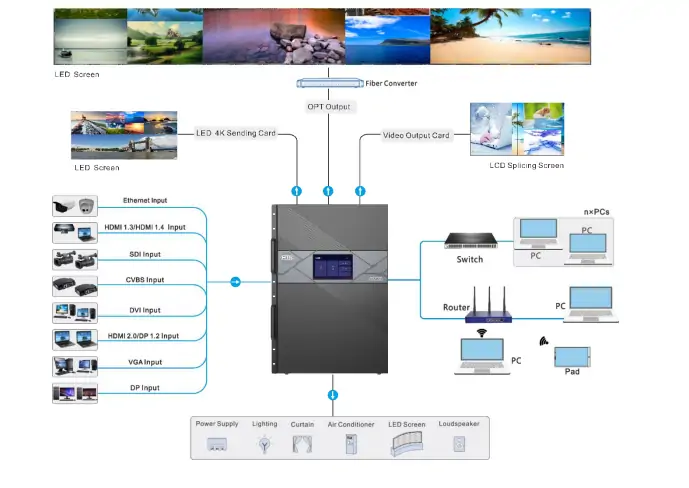
- Connector types: industry-standard connectors include HDMI, DVI, DP, VGA, CVBS, SDI and IP.
- Card capacity: 30 input card slots (120 input channels) and 10 output card slots (40 output channels); all input and output cards are hot-swappable.
- Layering: 160 layers per chassis – up to 16 x 2K, 8 x DL, 4 x 4K or 2 x 8K layers per card.
- Reliability: dual power supplies as standard, optional redundant PSUs, up to 900 W maximum consumption, backup between devices, sources and sending cards, and OPT port redundancy.
- Monitoring: LCD touch panel, web interface and OpenAPI, with input and output status monitoring for every card.
4.2 NovaStar H15 Specifications at a Glance
| Specification | H15 | H15 Enhanced |
|---|---|---|
| Rack unit | 15U | 15U |
| Max input cards / channels | 30 / 120 | 30 / 120 |
| Max output cards / channels | 10 / 40 | 16 / 64 |
| Max layers | 160 total, up to 16 x 2K per card | 160 total, up to 10 x 2K per card |
| Loading capacity – H_16xRJ45+2xfiber | 104,000,000 pixels | 166,400,000 pixels |
| Loading capacity – H_20xRJ45 | 130,000,000 pixels | 208,000,000 pixels |
| Loading capacity – H_4xfiber | 208,000,000 pixels | 332,800,000 pixels |
| Loading capacity – H_4xfiber (enhanced) | 260,000,000 pixels | 416,000,000 pixels |
| 8K input card | H_1xHDMI2.1+1xDP1.4: 8Kx4K@30Hz or 4Kx2K@120Hz | Same card family |
| Processing | 10-bit, HDR10 and HLG, latency as low as 1 frame | Same |
| Presets | Up to 2,000, preset switching under 60 ms | Up to 2,000 |
| Power | 100-240 V, 50/60 Hz, 900 W max, dual PSU standard | Same |
| Dimensions and weight | 482.6 x 683.0 x 533.0 mm, 41.1 kg (chassis) | Same |
| Environment | Operating 0-45 C, 0-80% RH non-condensing, noise 45 dB(A) at 25 C | Same |
| Certifications | CCC, CE, FCC, IC, KC, RCM, UKCA, UL, CB, CMIM, PSE | Same |
Two versions of the same 15U chassis are sold. The standard H15 gives you 10 output card slots and 16 layers per card; the H15 Enhanced gives you 16 output slots and 10 layers per card, which is how it reaches 208, 332.8 and 416 million pixel loading totals. If a project needs more than 130 million pixels or more than 40 output channels, specify the Enhanced chassis.
4.3 Input Card Capabilities
Each input card slot can accommodate varying capacities:
- Single link mode: 4x 2K×1K@60Hz.
- Dual link mode: 2x 4K×2K@60Hzor 1x 4K×2K@120Hz.
Notably, the H_1xHDMI2.1+1xDP1.4 input card introduces 8K capability, setting a new benchmark for high-end applications.
4.4 Output Card Versatility
- Output cards ensure compatibility with different display types:
- H_4xHDMI output card delivers crisp outputs at 4K resolution.
- H_4xfiber sending card supports three working modes: independent, copy, and backup.
4.5 H Series Comparison: H2, H5, H9, H15 and H20
All five chassis in the NovaStar H Series run the same web-based control software, the same HDR processing pipeline and the same input and output card families. The differences are slot count, rack size and loading capacity, so the decision is usually about how many sources you need to bring in and how many pixels you need to drive.
| Model | Rack unit | Max loading (H_20xRJ45) | Max input cards | Max output cards | Max layers |
|---|---|---|---|---|---|
| H2 | 2U | 26 million pixels | 4 | 2 | 32 layers |
| H5 | 5U | 39 million pixels | 10 | 3 | 48 layers |
| H9 | 9U | 65 million pixels | 15 | 5 (10 for H9 Enhanced) | 80 layers (160 for H9 Enhanced) |
| H15 | 15U | 130 million pixels (208 for H15 Enhanced) | 30 | 10 (16 for H15 Enhanced) | 160 layers |
| H20 | 20U | 260 million pixels | 40 | 20 | 320 layers |
A practical rule: if the wall fits inside 65 million pixels and 15 input cards, the H9 delivers the same image quality for less rack space and cost. Move up to the H15 when you need more than 5 output cards, more than 15 inputs, or a chassis you can expand card by card across several project phases.
4.6 Software Integration
NovaLCT software enhances functionality by enabling detailed configurations for irregular screens, dynamic sub-pixels, and EDID management. Moreover, the H15 integrates seamlessly with third-party systems using Open API protocols. Keep both NovaLCT and the H Series firmware current – NovaStar software and firmware downloads are refreshed with each release.
5. NovaStar H15 Price: What Drives the Cost
NovaStar does not publish a list price for the H15, and quotes change with configuration, region and sales channel. What you are actually pricing is three things: the 15U chassis, which ships without input or output cards; the cards you add for your sources and pixel count; and the redundancy and spares the project requires. A single-card build and a fully loaded 10-card system driving 130 million pixels use the same chassis but are nowhere near the same cost, so compare quotes card by card rather than chassis to chassis.
5.1 Factors Influencing Cost
- Card mix and quantity: the base unit ships without input or output cards, and a single H_4xfiber (enhanced) sending card covers 26,000,000 pixels, so card selection drives most of the price.
- Standard or Enhanced chassis: the H15 Enhanced adds 6 output slots (16 instead of 10) and lifts maximum loading capacity from 130 to 208 million pixels with H_20xRJ45 cards.
- Redundancy: dual power supplies are included, while optional redundant PSUs (H_800W Power) and OPT port redundancy add cost but remove single points of failure.
- Fiber and transmission accessories: OPT modules, fiber input cards and converters such as the CVT8-5GS fiber converter change the bill of materials on long-distance runs.
- Spares and service: control rooms and command centers normally keep a spare sending card, input card and power supply on site.
5.2 Competitive Edge
Unlike fixed-configuration processors, the H15 is priced per card, so you buy only the inputs and outputs the project needs and add capacity later without replacing the chassis. Because control runs in a browser, no dedicated workstation or control software licence is required – the same tablet or laptop can run the web interface and NovaLCT. That is the opposite of platforms that lock you into a fixed channel count plus a per-seat control application.
When you compare NovaStar H15 price quotes, ask every supplier for the same card-level bill of materials: chassis version, each input card, each output card, power supply configuration and included accessories. Two quotes for the same chassis with different card lists are not comparable. If the LED wall itself is still being budgeted, the LED screen price guide explains how pixel pitch, cabinet type and installation method change total project cost.
6. FAQs
What is the NovaStar H15?
The NovaStar H15 is a 15U modular video wall splicer and LED controller for fine-pitch LED walls. It works as a splicing processor, as a video controller, or both, and it accepts up to 30 input cards (120 input channels) and 10 output cards (40 output channels).
Can the NovaStar H15 handle 8K inputs?
Yes. The H_1xHDMI2.1+1xDP1.4 input card passes 8Kx4K@30Hz or 4Kx2K@120Hz per port, and standard 8K UHD formats such as 7680×4320@30Hz and 7680×4320@24Hz are supported. Use certified HDMI 2.1 or DP 1.4 cables for full 8K bandwidth.
How many pixels can the NovaStar H15 load?
The standard H15 chassis loads up to 130 million pixels with H_20xRJ45 sending cards, up to 208 million pixels with H_4xfiber sending cards, and up to 260 million pixels with H_4xfiber (enhanced) cards. A single H_20xRJ45 card loads 13,000,000 pixels and a single H_4xfiber (enhanced) card loads 26,000,000 pixels.
What is the difference between the H15 and the H15 Enhanced?
Both are 15U chassis with 30 input card slots. The standard H15 has 10 output card slots (40 channels) and 16 layers per card, while the H15 Enhanced has 16 output slots (64 channels) and 10 layers per card, which raises the maximum loading capacity to 416 million pixels.
How does the H15 compare with the H2, H5, H9 and H20?
With H_20xRJ45 sending cards, the official maximum loading capacities are 26 million pixels for the H2, 39 million for the H5, 65 million for the H9, 130 million for the H15 and 260 million for the H20. Choose the smallest chassis that covers your pixel count, layer requirements and planned expansion.
Is the NovaStar H15 suitable for outdoor use?
The H15 is an indoor rack device rated for 0 to 45 C and 0% to 80% RH non-condensing, so it belongs in a control room or an air-conditioned cabinet. It can drive outdoor LED screens, but the processor itself still needs a protected, climate-controlled enclosure.
Does the H15 support HDR and 3D?
Yes. The H15 processes 10-bit video with HDR10 and HLG, and 3D playback works with the NovaStar EMT200 Pro emitter. Both side-by-side and top-and-bottom 3D formats are supported.
How much does a NovaStar H15 cost?
NovaStar does not publish a list price. A quote depends on the chassis version, the number and type of input and output cards, optional redundant power supplies and fiber accessories. Send your pixel count, source list and screen layout to an EagerLED engineer for a configured price.
What certifications does the H15 hold?
The H15 holds CCC, CE, FCC, IC, KC, RCM, UKCA, UL, CB, CMIM and PSE certification.
7. Conclusion
The Novastar H15 Video Wall Splicer represents a pinnacle of innovation in the realm of video processing and LED control. Its modular design, combined with powerful FPGA architecture, ensures unmatched flexibility and performance. From 8K support to HDR10 processing, every aspect of the H15 is crafted to meet the demands of modern digital signage and professional AV environments.
While the Novastar H15 price might initially seem steep, its value becomes apparent once deployed in large-scale projects. With features like multi-layer management, input source grouping, and automated brightness adjustment, it addresses the challenges faced by integrators and operators alike.
If you’re searching for a reliable, scalable, and future-proof solution, the Novastar H15 Processor is a sound choice for fine-pitch LED walls that need more inputs, more layers and more expansion room than the H5 or H9 provides. Before you order, confirm four numbers: total pixels to be loaded, input sources by connector type, screen count, and the redundancy level the project requires.
Next steps: compare the H Series and VX Series control platforms, review the CVT8-5GS fiber converter when your cable runs exceed copper limits, match the processor to the wall with our indoor LED screen options, and browse more LED control system guides. Our engineers size NovaStar H Series chassis configurations every week – send your pixel map and we will return a card-level bill of materials.
Specifications in this review follow the NovaStar H15 Video Wall Splicer Specifications (V1.15.0) and the NovaStar H Series product page. Reviewed by the EagerLED LED control system team. Last updated September 2026.