An outdoor LED screen is a modular digital display that uses light-emitting diodes to show advertisements, video and public messages outside. For advertising, the right system combines readable content, suitable brightness, weather protection and a practical maintenance plan. Screen area alone cannot tell you whether customers will understand the message.
Choosing an outdoor LED screen for advertising starts with the location: who will see it, from how far away, in what light, and for how long? Retailers, property owners and advertising operators need different combinations of pixel pitch, cabinet design and content control. This guide explains how to compare those choices and budget for the complete installation.
Start with a site survey, test sample artwork at the intended viewing distance, and compare written specifications before ordering. The outdoor LED screen examples below use EagerLED's published product information; calculation examples are explicitly assumed planning scenarios, not measured product performance or guaranteed returns.
1. When does an outdoor advertising LED display make sense?
An outdoor advertising LED display is useful when messages change regularly: seasonal offers, tenant promotions, event announcements or time-sensitive information. A permanent outdoor LED screen can serve a shopping center facade, commercial entrance or dedicated billboard structure. A temporary event may be better served by a rental system with installation and operating support included.
Digital out-of-home advertising, or DOOH, means advertising on digital screens in public places. Purchasing display hardware does not supply a permitted location, an audience or advertising customers. If the objective is a short campaign in another city, compare buying advertising space with owning an outdoor LED screen.
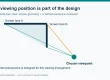
Map the audience's actual line of sight. Trees, parked vehicles, a deep canopy or an oblique viewing angle can reduce exposure even at a busy location. A pedestrian who stops near a store entrance can absorb more detail than someone passing a distant board. Choose one clear message for that viewing opportunity before selecting the display.
For permanent installations, explore EagerLED commercial LED display solutions. Check that the proposed configuration is specifically rated for the site's outdoor exposure; an indoor product placed beneath a canopy is not automatically an outdoor system.
2. Seven checks before choosing an outdoor LED screen
Ask suppliers to answer the same seven questions for each outdoor LED screen quotation. Comparable specifications reveal differences that a price per square meter can conceal.
| Check | What to confirm | Practical reason |
|---|---|---|
| Audience and location | Nearest and typical viewing distances, viewing angles, obstacles and viewing time. | A pedestrian entrance and a distant roadside board need different artwork. |
| Pixel pitch and resolution | Actual pitch in millimeters and complete screen pixel dimensions. | Finer pitch adds detail only if the audience and content benefit. |
| Brightness and dimming | Configured brightness, daylight demonstration and automatic or scheduled dimming. | Keep content readable by day and appropriately dimmed at night. |
| Environmental protection | Front and rear ratings, temperature range, cable entries and drainage. | Protection must cover the assembled installation and site exposure. |
| Structure and access | Cabinet weight, mounting drawings and component replacement routes. | Technicians need safe access after the display is installed. |
| Playback and management | Player capacity, media support, scheduling and offline operation. | Advertisements must remain manageable through network interruptions. |
| Ownership and support | Power conditions, compatible spares, warranty scope and lead times. | These determine operating cost and fault recovery. |
01. Brightness, contrast and outdoor LED screen dimming
Brightness is specified in nits, equivalent to candelas per square meter. There is no single value that guarantees readability at every outdoor location. Direct sun, orientation, reflected light and the darkness of the display's surface all matter. Ask for a daylight demonstration of the quoted configuration using your own advertisement, including its smallest essential lettering.
For an outdoor LED screen near homes or offices, include a nighttime dimming schedule and, where appropriate, an ambient-light sensor. Check sensor placement so nearby lamps or shadows do not distort readings. Inspect low-brightness image quality as well: gradients, dark areas and color consistency can change when the display is dimmed.
02. Weather protection, heat and service access
Request documented enclosure protection for both faces of the cabinet and the conditions under which it applies. A rating on a module does not establish protection for every cable joint or power enclosure. For an outdoor LED screen in a coastal, dusty or hot environment, also ask about corrosion protection, ventilation, condensation management and the approved operating temperature range.
Keep drainage and airflow paths clear in the finished structure. Do not assume an enclosure can be sealed further without affecting cooling. Confirm the installation requirements with the supplier and have qualified local professionals assess structure, electrical supply, earthing and surge protection. Check local advertising permissions and operating restrictions before committing to the screen dimensions.
3. Outdoor LED screen pixel pitch, size and resolution
Pixel pitch is the center-to-center spacing between neighboring pixels. P5 means approximately 5 mm spacing; it does not guarantee that every message is readable from 5 meters. Letter height, viewing angle, eyesight and content contrast affect the result. Select an outdoor LED screen by testing the intended message at the nearest important viewing location.
Horizontal pixels = active width in millimeters ÷ actual pixel pitch in millimeters. Use the same calculation for height, then verify the result against the module and cabinet layout. Active display dimensions exclude decorative surrounds and supporting steelwork.
| Exact pitch assumed | Native resolution | Total pixels | Planning implication |
|---|---|---|---|
| 4 mm | 1,500 × 750 | 1,125,000 | More detail within the same physical area; assess whether close viewers need it. |
| 5 mm | 1,200 × 600 | 720,000 | An arithmetic example for comparing quotations and artwork dimensions. |
| 6 mm | 1,000 × 500 | 500,000 | Larger text and simpler artwork may suit the available pixel canvas. |
| 10 mm | 600 × 300 | 180,000 | Fine detail is limited; test bold advertising graphics at the real distance. |
These are exact-pitch calculations, not available product configurations or guaranteed viewing-distance recommendations. An outdoor LED screen must use buildable cabinet dimensions; commercial pitch labels may be rounded. Ask the supplier to provide the final integer pixel count and cabinet drawing.
A 6 m × 3 m screen has a 2:1 aspect ratio. A standard 16:9 video needs an intentional crop, border or redesigned layout rather than being stretched. Sending a 4K video does not make an outdoor LED screen a native 4K display. The player must scale that file to the actual pixel canvas.
Start with the smallest necessary text, including prices or qualifying details, and test it before buying finer pitch. For a fuller explanation, see the LED display pixel pitch and viewing-distance guide. Avoid selecting solely from a distance rule without checking the artwork.
4. EagerLED outdoor LED screen product examples
The following outdoor LED screen designs illustrate different configuration and maintenance options. The linked EagerLED product pages are the sources for the published features; confirm availability and the exact specifications in the written quotation.

| Product | Published features | What to verify |
|---|---|---|
| EA1000F1 outdoor LED advertising screen | P2.97–P10.42 options; 500 × 250 mm modules; front and rear service; 3,840 Hz refresh rate; IP65; right-angle and curved-corner designs. | Selected pitch, cabinet arrangement, brightness, rating scope and access to all replaceable components. |
| EA-OFixed outdoor LED board | 960 × 960 mm cabinet configuration; four cooling fans per cabinet; IP65 rating; published 140-degree viewing angle. | Ventilation clearance, service space, site temperature and specifications for the selected configuration. |
Refresh rate describes repeated LED light-output updates; it is different from the video frame rate. Camera results also depend on shutter settings, scanning and the configured driving system. If an outdoor LED screen will appear in livestreams or filmed events, test it with the actual cameras instead of relying on the refresh-rate number alone.

Front service is valuable where rear access is restricted, but module removal does not prove that every power supply, receiving card and cable can be replaced from the same side. Request a component-by-component service drawing for the installed outdoor LED screen, including the tools and working space needed.

Fan-cooled cabinets need an unobstructed airflow route and an inspection plan. Ask how filters or fans, where fitted, are accessed and replaced. A decorative enclosure around an outdoor LED screen must be included in the thermal assessment because it can change the operating conditions.
5. Outdoor LED screen price and operating costs
The price of an outdoor LED screen depends on pitch, area, cabinet construction, control equipment and installation conditions. There is no reliable universal installed price without a project brief. Compare quotations with matching scope, delivery terms and warranty responsibilities before deciding which offer is less expensive.
| Cost group | Include in the quotation | Common omission |
|---|---|---|
| Display and controls | Modules, cabinets, receiving cards, player or processor, sensors and compatible spares. | A panel-only offer may exclude equipment needed for playback. |
| Structure and installation | Engineering, mounting steelwork, lifting equipment, labor and access provisions. | Difficult access can change the installed cost substantially. |
| Power and connectivity | Distribution, cabling, protective equipment, data link and commissioning. | Existing building services may need assessment or modification. |
| Delivery and commercial terms | Packing, freight, insurance and applicable duties or taxes. | Different delivery terms can make headline prices misleading. |
| Ongoing operation | Electricity, connectivity, software subscriptions, creative work and maintenance. | Warranty coverage does not necessarily include local labor or access equipment. |
01. Estimate energy using average operating power
Daily screen energy in kWh = area in m² × average operating power in W/m² × hours per day ÷ 1,000. For illustration, an 18 m² outdoor LED screen averaging 250 W/m² for 12 hours uses 54 kWh daily. At an assumed USD 0.15/kWh, the screen alone costs USD 8.10 per day to power.
Those figures are calculation inputs, not measured EagerLED performance or a local tariff. Add auxiliary equipment separately. Ask for average power measured with representative content at the intended brightness; full-white images, dimmed artwork and daily operating schedules can produce very different consumption.
02. Separate energy budgeting from electrical design
The electrical supply for an outdoor LED screen must be assessed using the specified maximum demand and installation requirements, not the average used in a running-cost estimate. Have the electrical designer confirm circuits, protection and cable sizing. Record both maximum power and the conditions behind any quoted average.
When comparing long-term costs, use the same operating hours and electricity assumptions for all options. Include access equipment for repairs and the availability of matching replacement modules. A lower purchase price can lose its advantage if a small fault requires costly lifting equipment or a lengthy parts delay.
6. How to plan LED digital screen advertising
Effective LED digital screen advertising starts with one campaign objective: store visits, enquiries, awareness or tenant advertising revenue. Design each outdoor LED screen creative around one main message, large lettering and strong contrast. A website layout full of small text rarely transfers well to a distant sign.
Build artwork at the native aspect ratio and establish an approval workflow. Set start and end dates, daily operating hours and an approved fallback message. For an outdoor LED screen managed remotely, confirm player storage, supported file formats, user permissions and what happens after power or network loss.
Run a controlled test: upload a new advertisement, schedule it, disconnect the network and restart the player. Verify the agreed behavior and retain a known-good configuration backup. Limit publishing access to authorized staff and keep account ownership with the organization that operates the display.
Scheduled plays are not audience impressions. Six 10-second advertisements form a 60-second loop. Without interruptions, each advertisement plays 60 times per hour, or 720 times over 12 hours. That arithmetic does not establish unique viewers, advertising income or campaign effectiveness.
Use playback logs to verify delivery and separate measures, such as campaign codes or enquiries, to assess response. Compare equivalent periods and note other promotions that could influence results. At roadside locations, follow local content restrictions and avoid creative that asks moving drivers to scan a code.
7. Outdoor LED screen quotation and acceptance checklist
Send the supplier site photographs, installation location, active width and height, nearest viewing distance, sunlight exposure, operating hours, sample content and available maintenance access. State the target installation date and known restrictions. An outdoor LED screen quotation is more useful when it answers this brief line by line.
Request the cabinet drawing, native resolution, configured brightness, protection details, maximum and average power conditions, control-system proposal and spare-parts list. Obtain written warranty scope, response arrangements and replacement lead times. Clarify who handles local service, shipping for repairs and recommissioning after component replacement.
Before handover, inspect the outdoor LED screen with solid-color, grayscale and actual advertising content. Check cabinet alignment, visible pixel defects, color consistency and the agreed day/night brightness settings. Record acceptance criteria in advance so the buyer and installer assess the same requirements.
Test remote scheduling, offline playback, restart behavior and access to replaceable components. Keep wiring diagrams, configuration backups, calibration information where supplied, serial numbers and an inventory of spares. Set an inspection schedule based on the environment and manufacturer instructions, with additional checks after severe weather where appropriate.
Request an EagerLED outdoor LED screen quotation with your site brief. A documented configuration makes it easier to compare proposals and plan a maintainable installation.
8. Outdoor LED screen FAQ
01. Can I replace one failed module without replacing the whole outdoor LED screen?
Often yes, because the display is modular. However, a replacement must match the electrical interface, dimensions, pixel arrangement and controller configuration. Brightness and color can differ between production batches or aged modules. Keep supplier-approved spares and ask whether recalibration is needed after replacement.
02. Can an outdoor LED screen show a live video feed and scheduled ads?
Yes, with a control system that supports both workflows. A signage player designed for scheduled files may need a separate video processor or supported live input. Specify source connectors, required latency, switching behavior and the fallback advertisement if the live source fails.
03. Is a quoted LED lifetime the same as the outdoor LED screen warranty?
No. A lifetime figure may describe LED brightness depreciation under defined conditions. It does not establish the service life of fans, power supplies, seals or other components. Read the written warranty for coverage, exclusions, labor, freight and the process for obtaining replacement parts.
04. Can an existing billboard structure support an outdoor LED screen?
That requires a site-specific structural assessment. Display weight, wind exposure, attachment points and maintenance access may differ from the original sign. Give the engineer the proposed cabinet layout and loading information before treating an existing frame as reusable.
05. Can I expand an outdoor LED screen later?
Expansion can be possible if compatible cabinets, power capacity and controller capacity are planned in advance. Later production batches may not match the original brightness and color. Agree on an expansion drawing, spare capacity and parts availability before purchase rather than assuming any new cabinet will fit.
9. Conclusion
The best outdoor LED screen for advertising is one that matches the audience, site exposure, content and maintenance resources. Confirm readability, compare complete installed costs and test the control system before accepting the project. Keep product specifications separate from assumed calculations and campaign forecasts.
Use the checklists above to turn an outdoor LED screen enquiry into a clear project brief. EagerLED can propose a configuration against that brief, with the final cabinet layout, electrical requirements and service responsibilities documented before installation.
Product references: EagerLED EA1000F1 and EA-OFixed pages, checked October 15, 2026. Published specifications describe product options; final values depend on the quoted configuration. This guide is provided by EagerLED, a supplier of LED displays.