Outdoor LED display boards turn one fixed advertising location into a screen that can show several scheduled messages without reprinting a sign. For advertisers and venue operators, the main advantage is flexibility: creative, timing and calls to action can change as a campaign changes. The screen still has to be specified for its viewing distance, sunlight, weather exposure and installation site. This guide explains where outdoor LED boards work, how to compare them with static billboards, and what to include in a supplier quote.
How do outdoor LED display boards work?
An outdoor LED board combines LED modules into cabinets, then connects the cabinets to a controller and power distribution system. A media player or video processor sends images and video to the screen. A content management system can schedule different messages by time or campaign. The supporting structure, electrical supply, weather sealing and access for service are part of the installed system.
The display is modular, so the final screen dimensions depend on the cabinet layout. Resolution depends on both those dimensions and pixel pitch, the distance in millimeters between adjacent pixels. A smaller pitch creates more pixels across the same area, but it should be chosen for the closest real viewer rather than as a specification to maximize.

What changes compared with a static billboard?
| Decision factor | Outdoor LED advertising board | Printed billboard |
|---|---|---|
| Message changes | Upload and schedule new creative through the control system | Print and install new material |
| Campaigns at one site | Can rotate approved messages | Typically shows one printed message at a time |
| Motion | Can show video or animation where permitted | Static image |
| Power and service | Requires electricity, controls and electronic maintenance | Requires lighting only if illuminated; print and structure still need upkeep |
| Upfront scope | Screen, controller, electrical work, structure and installation | Print, frame, structure and installation |
Flexibility is the real advantage. A shopping center can schedule a morning offer and an evening event on the same board; a venue can switch from event information to sponsor creative. These are possible workflows, not a guarantee of more sales or attention. Actual results depend on location, visibility, content and measurement.
An LED board also introduces costs that a print-only plan may not have: electricity, connectivity, spare modules and specialist service. Local rules may restrict brightness, motion, operating hours and sign placement. Confirm those constraints before buying hardware.
Where do outdoor LED advertising screens fit?
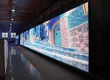
- Roadside and building façades: large-format campaigns viewed from farther away; keep copy brief and plan for traffic speed and sightlines.
- Retail fronts and shopping areas: promotions viewed at walking distance; consider a finer pitch when people can get close.
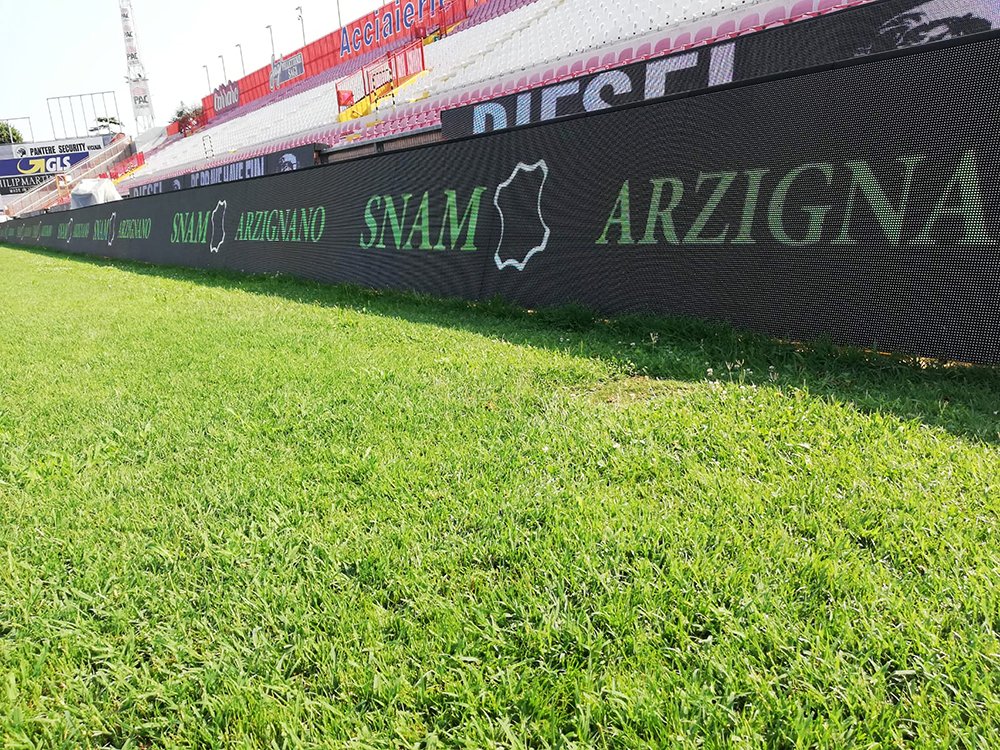
- Stadiums and event venues: sponsor messages, scores and event information; check camera performance and content control requirements.
- Transport and public spaces: schedules or announcements alongside advertising, where site permissions allow both uses.
These sites call for different dimensions and specifications. A pedestrian display and a roadside board should not receive the same pitch recommendation without checking viewing distance. Explore EagerLED commercial LED displays for format options.

How to specify an outdoor LED display board
1. Match pixel pitch to distance and screen size
Start with the nearest typical viewer and the amount of detail the content needs. To estimate native resolution, divide each screen dimension in millimeters by the pixel pitch in millimeters. For example, a 6 m × 3 m screen is 6,000 mm × 3,000 mm. At P6, the theoretical pixel grid is 1,000 × 500 pixels; at P10, it is 600 × 300 pixels. Actual cabinet sizes and compatible module layouts determine the buildable resolution. This example is planning math, not a viewing-distance rule.
2. Check daylight brightness and night operation
Ask the supplier for a brightness specification in nits (cd/m²) for the exact model, then assess the screen’s sun exposure on site. An automatic brightness sensor can reduce output after dark. Excess brightness can be uncomfortable and may conflict with local sign rules. A specification sheet and an on-site viewing test are more useful than assuming the highest nit value is always best.
3. Verify weather protection for the whole installation
Request the front and rear IP ratings separately, including the service side. An IP rating describes enclosure protection against dust and water under defined tests; it does not certify the frame, cable entries, drainage or electrical design. Check wind loading, heat dissipation, access and the conditions under which the warranty applies. EagerLED’s outdoor LED screen guide explains these checks in more detail.
4. Plan viewing angle, service access and control
Record where the audience will stand or travel, including off-axis views. Decide whether maintenance needs front access, rear access or both. Specify who can publish content, how it is approved, whether a network connection is required and what appears if the player goes offline. For a permanent site, ask how a failed power supply or LED module can be reached and replaced safely.
Budget for the complete installed board
A screen-only price cannot describe the cost of a working outdoor advertising site. Request a line-item quotation for cabinets and modules, controller or player, power distribution, structure, installation, permits where relevant, freight, spare parts and commissioning. Then estimate ongoing electricity, connectivity, content production and maintenance.
For a simple energy planning example, a screen averaging 2 kW while operating for 10 hours per day uses 20 kWh per day (2 × 10). Use the actual product’s average-power estimate and your electricity tariff to build a site-specific budget; maximum rated power is a different figure. Compare quotations on the same dimensions, brightness, pitch and included services. See the outdoor LED billboard price guide for a quote checklist.
Make outdoor advertising readable
Hardware cannot rescue a message that takes longer to read than the audience has to see it. Write one main idea per creative, use strong contrast and test the smallest text at the actual viewing distance. Keep a clear call to action. At roadside locations, avoid dense copy and distracting motion; follow the local authority’s rules on animation and brightness.
Plan the publishing workflow as carefully as the display. Define campaign start and end dates, a content owner, approval steps and a fallback message. Use the board’s scheduling tools for time-sensitive offers, but verify that updates reach the display and that expired offers are removed. A QR code may suit a slow-moving pedestrian audience; it is usually a poor primary action for passing drivers.
What to send a supplier before requesting a quote
- Installation address, photos, orientation and expected sunlight exposure.
- Target screen width and height, and nearest and typical viewing distances.
- Content format: static graphics, video, live feed or scheduled campaigns.
- Planned operating hours, available power and network connection.
- Mounting concept, service access and known site or sign restrictions.
- Required warranty, spare parts, training and commissioning scope.
Ask each supplier to state the exact product model, native resolution, pixel pitch, front and rear IP ratings, brightness, average and maximum power, controller, service method and exclusions. This makes proposals comparable and exposes missing installation work before an order is placed. Send your project details to EagerLED for a configuration and quotation.
Frequently asked questions
Are outdoor LED display boards better than printed billboards?
They are better suited to sites that need frequent creative changes, multiple scheduled campaigns or moving visuals. A printed billboard can be simpler for a stable message. Compare the installed and operating costs for your site.
What pixel pitch should an outdoor advertising board use?
Choose pitch from the closest normal viewing distance, screen dimensions and detail in the content. A smaller number means more pixels per meter; it does not automatically mean a better project. Ask for a native-resolution calculation using the proposed cabinet layout.
Can an outdoor LED screen run in direct sunlight and rain?
It can when the selected model and complete installation are designed for those conditions. Verify model-specific brightness, front and rear weather protection, electrical details and a site-specific structural design. Do not treat an IP rating as a guarantee for the whole installation.
How often can an advertiser change the content?
That depends on the player, software, connectivity and approval workflow. A connected system can schedule and upload new creative without replacing printed material. Confirm software capabilities and any recurring fees in the quote.
Editorial note: The resolution and energy figures above are worked examples for comparing specifications. They are not EagerLED product specifications or performance promises. Verify final requirements against the selected model and local installation rules.