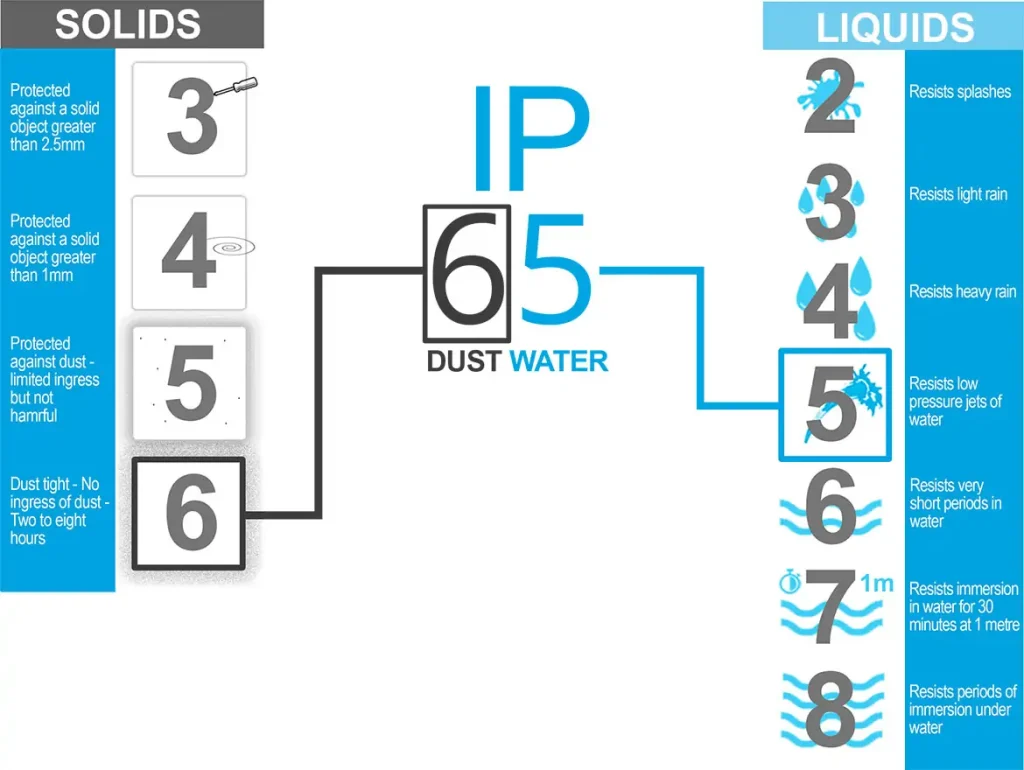
What IP rating does an LED display need? An IP rating describes how an enclosure resists dust and water. In IP65, the first digit (6) means dust-tight and the second digit (5) means protection against water jets. For a fully exposed outdoor LED screen, IP65 is a common starting specification; IP66 provides a stronger water-jet test. Neither rating makes a display suitable for immersion. Check the rating of the complete installed system, including the rear cabinet, seams, power box and cable connections.
This guide explains the IEC 60529 code, compares common LED display ratings and gives buyers a practical way to match protection to the site. It is an enclosure test, not a promise that a screen will withstand every climate, cleaning method or installation error.
Technical review: September 29, 2026. Rating definitions are based on IEC 60529; request the test conditions and product documentation for the exact model you intend to buy.
Quick answer: Dry indoor room: select a product specified for that indoor environment. Sheltered installation: assess splash direction and the entire enclosure. Uncovered outdoor site: start by evaluating IP65 on exposed faces and ask whether IP66 or additional weather protection is needed.
What do the two digits in an IP rating mean?
IP stands for ingress protection. IEC 60529 classifies the degree of protection an electrical enclosure provides against access to hazardous parts, solid objects and water. The first characteristic numeral describes solids, from 0 to 6; the second describes water, from 0 to 9. An X means that a particular characteristic has not been specified or rated, not that the product has zero protection.
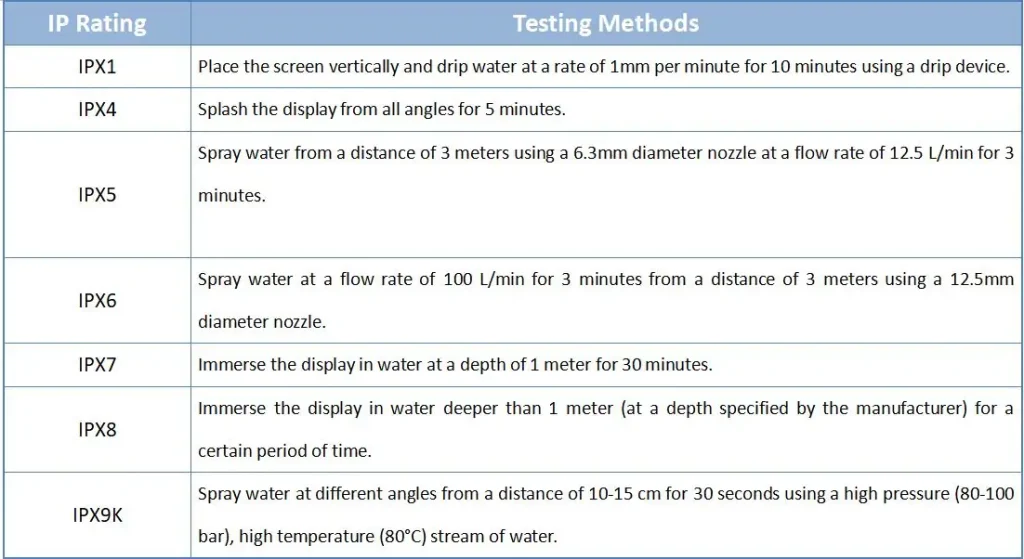
For example, IP65 combines a dust-tight enclosure (6) with protection against water jets (5). IP66 has the same dust digit and a more demanding water-jet category (6). IP67 addresses temporary immersion under its specified test conditions. The water tests for immersion and jets are different, so an immersion rating alone should not be read as proof of resistance to high-pressure washing.
An IP code describes the tested enclosure and configuration. It does not grade UV resistance, corrosion resistance, condensation control, wind loading, brightness or image quality. Those need separate specifications.
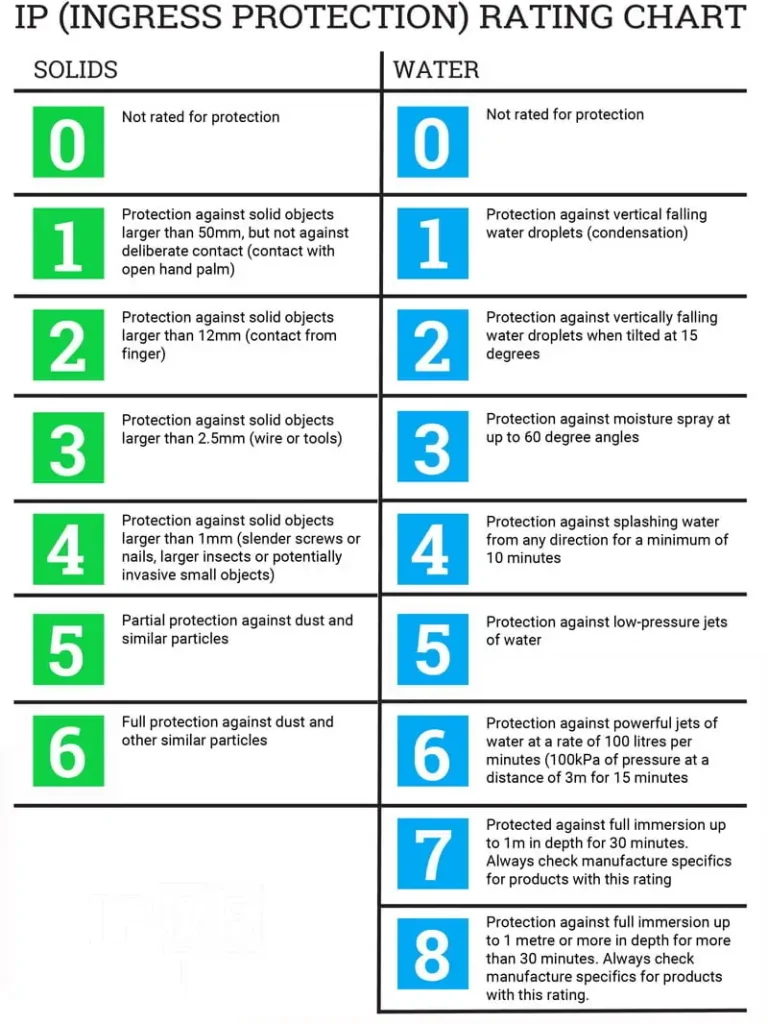
LED display IP rating comparison
Use this table as a selection guide, then confirm the exact product test report and installation conditions. “Outdoor” is a site description, not an automatic certification.
| Rating | Dust/solid protection | Water protection | Typical decision |
|---|---|---|---|
| IP20 | Objects at least 12.5 mm | None specified | Dry indoor space, where the product is otherwise suitable |
| IP44 | Objects at least 1 mm | Splashing water | Only where expected exposure stays within the tested conditions |
| IP54 | Dust protected, not dust-tight | Splashing water | Sheltered location after assessing wind-driven rain |
| IP55 | Dust protected, not dust-tight | Water jets | Exposure requires a site-specific review; do not assume it suits every open-air screen |
| IP65 | Dust-tight | Water jets | Common starting point for an exposed outdoor LED display |
| IP66 | Dust-tight | Powerful water jets | Consider where stronger water exposure is expected |
| IP67 | Dust-tight | Temporary immersion under specified conditions | Only if immersion is a real design requirement; verify jet protection separately |
| IP68 | Dust-tight | Immersion under manufacturer-stated conditions | Check the stated depth, duration and mounting configuration |
Important distinction: An IP67 or IP68 label does not mean an LED wall is intended for underwater operation. It also says nothing by itself about salt spray or long-term corrosion. Do not choose a rating solely because its second digit is larger.
Which IP rating should you choose for an LED screen?
Indoor and sheltered installations
In a dry conference room or retail interior, identify the manufacturer’s indoor specification and the risk of cleaning splashes, drinks or condensation. A canopy can reduce direct rain but does not necessarily stop sideways, wind-driven water. Check the exposed face and rear access area before treating IP44, IP54 or IP55 as sufficient.
Fully exposed outdoor installations
For an outdoor advertising wall or commercial LED display with no shelter, request at least an IP65-rated configuration for exposed parts as a practical starting point, then assess local wind-driven rain, drainage, service access and cleaning. Consider IP66 if the exposure calls for stronger jet protection. A higher label cannot compensate for an unsealed cable entry, incompatible power enclosure or poor installation.
Rental stages and temporary events
An outdoor rental LED display is assembled and disassembled repeatedly. Ask for the rating of the assembled cabinets and connection system, inspect connector caps and gaskets at each setup, and plan for weather during both operation and storage. A front-face rating alone does not establish the rear-side rating.
Coastal or wash-down sites
Salt, heat, humidity and cleaning chemicals are separate concerns from the IP code. Ask for corrosion-resistant materials, an appropriate maintenance plan and documented wash-down limits. Do not equate IP69, IP69K, IP67 and IP68: they describe different tests or standards and should be evaluated against the actual exposure.
How can buyers verify an LED display IP rating?
A useful quotation identifies exactly what was tested. Ask the supplier these five questions before approving the specification:
- What carries the rating? Is it a front module, cabinet face, rear face or the complete assembled display?
- Which standard and code were used? Request the applicable IEC 60529 test report, date, tested model and full IP code.
- How was the sample installed? Confirm cabinet orientation, seams, access doors, ventilation design and cable entry arrangement.
- Are connected parts covered? Check power supplies, junction boxes, connectors and service openings independently.
- What use is excluded? Ask about pressure washing, immersion, salt exposure, operating temperature and maintenance intervals.
Compare the report’s model number and configuration with the bill of materials. If the supplier specifies separate front and rear ratings, record both. If the installation uses a lower-rated accessory in an exposed position, the higher cabinet claim cannot be applied to the entire screen assembly.
How do you maintain water resistance after installation?
Ingress protection depends on intact seals and correct assembly. Inspect gaskets, door latches, cable glands and connectors during scheduled service and after a repair or severe weather event. Replace damaged seals with the manufacturer-specified parts and keep drainage paths clear where the design provides them.
Before cleaning, follow the exact product manual. An IP65 screen is tested for water jets under defined conditions; that does not authorize high-pressure or hot-water washing. After opening a cabinet for service, verify that the enclosure is resealed as specified. If water marks, corrosion or condensation appear, isolate the affected equipment and have a qualified technician inspect it before restarting.
Protection can decline as seals age or cabling is altered. The original IP test is evidence about a tested configuration, not a lifetime guarantee for every installed screen.
Frequently asked questions
Is IP65 waterproof?
IP65 means dust-tight and protected against water jets under its test conditions. It is better described as water-resistant for that exposure. It is not an immersion rating.
Is IP66 always better than IP65 for an outdoor LED display?
IP66 addresses a stronger water-jet test, but suitability still depends on the full installed system, weather exposure, cleaning and maintenance. Ask for both the rating scope and the test report.
Can an IP67 LED display be pressure washed?
Do not assume so. IP67 covers temporary immersion conditions, while jet and high-pressure tests are separate. Follow the manufacturer’s cleaning instructions and request evidence for the relevant test.
Does the front IP rating apply to the whole LED wall?
No. A front-face rating may differ from the rear cabinet and connection ratings. Request front and rear values, plus information on the assembled screen and accessories.
What should I send a supplier for an accurate recommendation?
Share the installation city, indoor or outdoor location, whether the screen is sheltered, dimensions, viewing distance, cleaning method and photos of the front and rear access area. Contact EagerLED with those details to discuss a suitable display configuration.
Takeaway: Match the rating to the water and dust exposure, verify the exact tested assembly, and treat installation and upkeep as part of protection.