


A flexible LED screen is a modular video display that bends along approved curves to fit columns, concave walls and creative architectural surfaces. Its main benefit is shape freedom; its main limits are bend radius, support geometry, heat and service access. It is a strong option when a flat wall cannot deliver the intended experience. However, a bendable module is not a screen that can be folded like fabric. This guide helps designers, venue operators and buyers choose suitable applications, translate a concept into measurable requirements, and identify the compromises before ordering a custom installation.
Table of Contents
1. Flexible LED Screen Uses: A Practical Use-Case Matrix
2. Module Flexibility: What Actually Bends?
3. Curve Radius: Turn the Concept into a Buildable Drawing
4. Mounting: Frame, Depth, Power and Access
5. Content: Design for the Pixel Map and the Viewer
6. Maintenance: Plan Replacement Before Installation
7. Benefits and Limits: What the Specification Must Prove
8. Project Checklist: What to Send with Your Inquiry
9. Frequently Asked Questions
10. Conclusion
1. Flexible LED Screen Uses: A Practical Use-Case Matrix
Choose the application before choosing the shape. A flexible LED screen should solve a viewing, architectural or communication problem. The matrix below compares common projects by their content needs and the constraint most likely to determine feasibility.
| Use case | Useful geometry | Content approach | Main benefit | Critical limit |
|---|---|---|---|---|
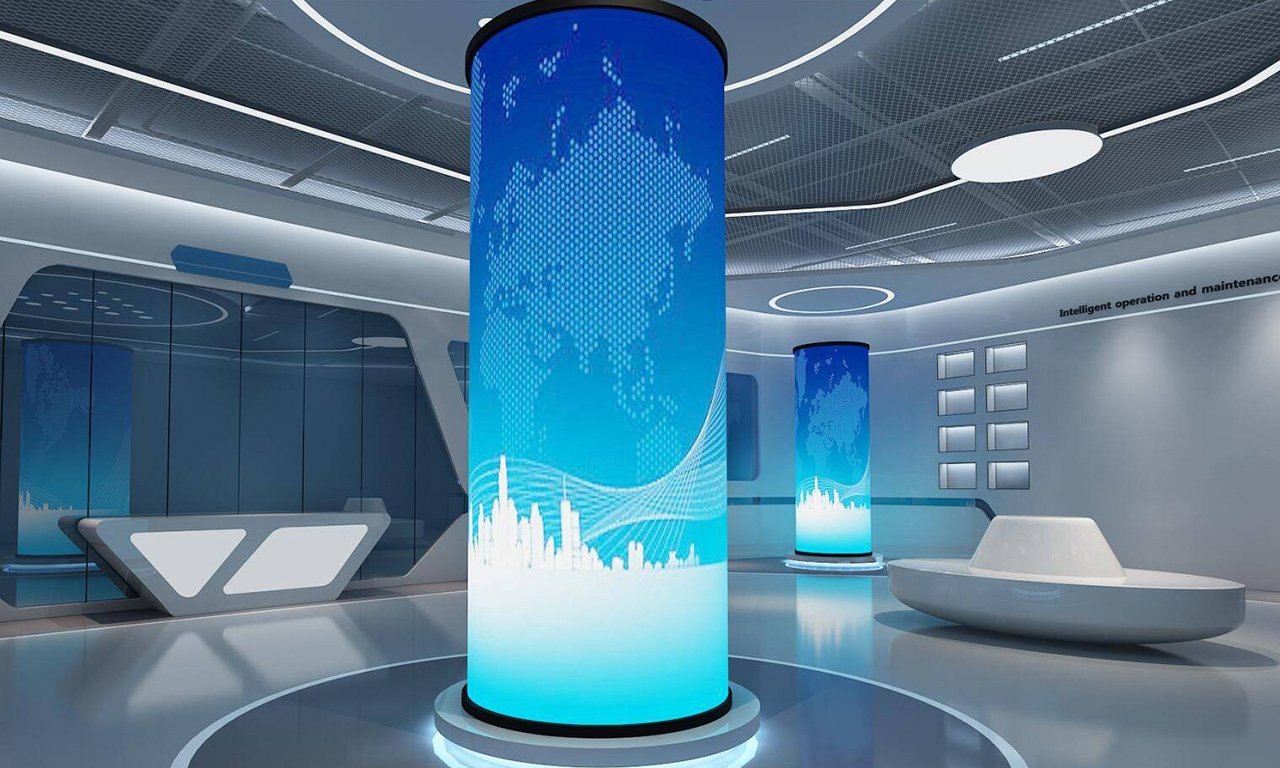
| Retail and shopping malls | Column wrap or convex feature | Repeat short offers and logos around the visible faces | Uses a column as a communication surface | Nearest viewer, impact exposure and closure seam |
| Museums and exhibitions | Concave wall or gentle wave | Panoramas, narrative sequences and large captions | Integrates moving imagery into exhibit architecture | Legibility, low-light image quality and access |
| Corporate and hotel lobbies | Curved feature wall | Brand motion, welcome messages and restrained animation | Follows the interior design | Reflections, operating brightness and quiet cooling |
| Stage and live entertainment | Curves, ribbons and scenic waves | Mapped motion graphics and camera-tested backgrounds | Creates depth and continuity across a set | Rigging, camera artifacts and transport protection |
| Sports-event hospitality areas | Concourse column or sponsor feature | Sponsor loops, schedules and directional messages | Supports branding along visitor routes | Public contact, lighting and environmental exposure |
| Outdoor facade concept | Engineered curved enclosure | Large, daylight-readable messages | Adapts a display to the building form | Requires a specifically rated outdoor system |
1.1 When the format earns its complexity
A flexible LED screen makes sense when the curve is central to the design or when an existing column would otherwise interrupt a visual installation. It does not automatically improve sales, engagement or wayfinding. Define a measurable project objective, such as readable directions from each approach or consistent branding across a curved reception area.
For a temporary sports activation, distinguish a protected indoor sponsor display from a pitch-side installation exposed to balls, rain and repeated handling. Those are different equipment requirements. A decorative soft-module surface should not be assumed to replace a purpose-built stadium perimeter system.
1.2 When a flat or rental wall is simpler
If viewers mainly face one rectangular surface, a conventional flat LED wall may simplify the structure, pixel map and replacement stock. For frequent touring, a rental cabinet system with approved curve locks may be more practical than loose soft modules on a custom frame. Compare the whole operating workflow before committing to the creative outline.
2. Module Flexibility: What Actually Bends?
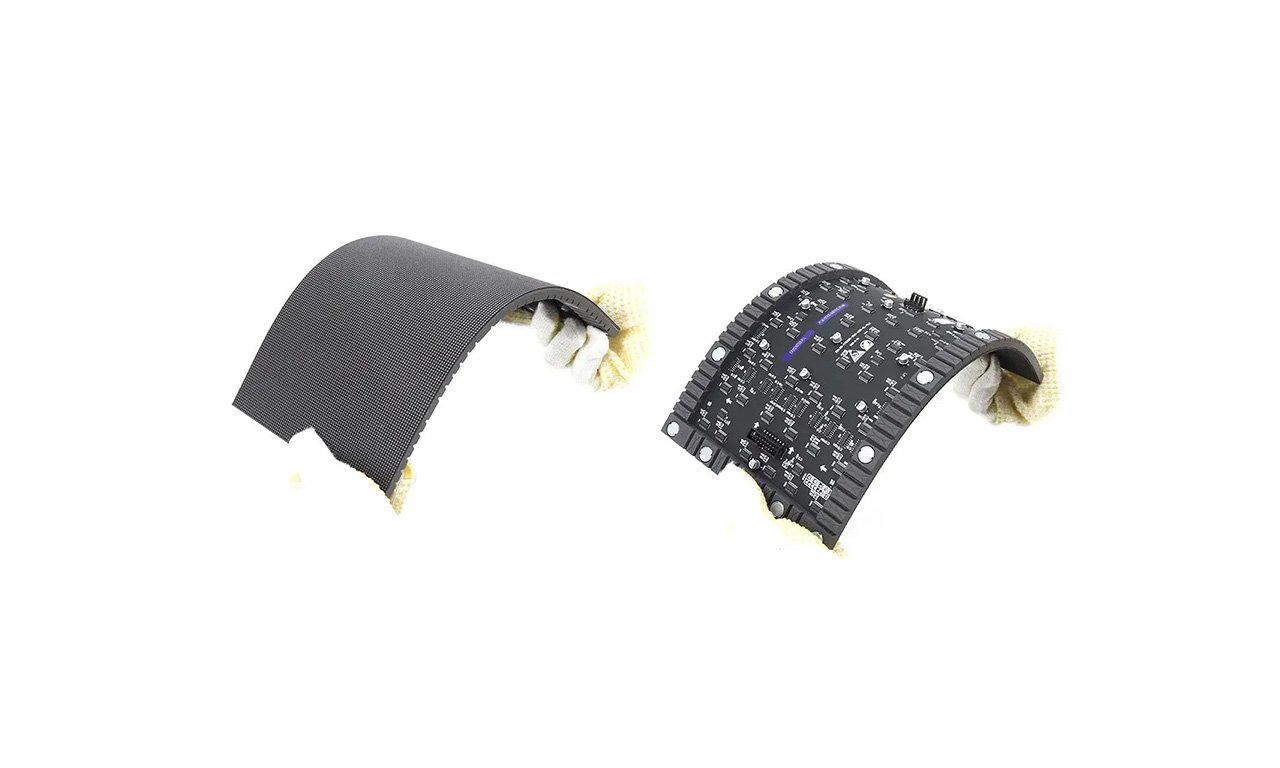
A flexible LED screen uses bendable modules containing LEDs, a flexible circuit assembly, driver components and a pliable support or mask. The modules form the picture surface; the frame establishes its final shape. Power supplies, receiving cards and connectors still require suitable mounting space behind or beside that surface.
2.1 Soft modules versus curved cabinets
Soft modules follow a supported curve within their approved bending direction. A curved cabinet installation can instead use rigid panels positioned at small angles. These approaches produce different surfaces, seam patterns and service procedures. Ask which system the quotation includes rather than accepting “curved LED” as a complete specification.
The EagerLED EA-Flex product page describes magnetic front service and several module formats, including 240 × 120 mm and 320 × 160 mm. Those dimensions affect frame spacing, resolution and spares. A flexible LED screen module with the same pitch but a different size is not automatically interchangeable.
2.2 Flexible does not mean foldable or stretchable
Do not crease, twist or stretch a module to close an inaccurate frame. A published bend angle also does not establish a repeated-folding lifetime. Ask whether the product is intended for a permanent static curve, occasional installation adjustment or repeated movement, and obtain the corresponding handling instructions.
Compound curves need special attention. A cylinder curves in one main direction, while a sphere curves in two. Standard rectangular modules should not be assumed to cover any sphere without gaps or distortion. A flexible LED screen for a spherical feature may require specially shaped modules and a dedicated layout.
2.3 Distinguish LED walls from flexible televisions
A modular direct-view LED installation is different from a rollable OLED television, flexible LCD panel or transparent LED film attached to glass. Their electronics, transparency, handling and mounting methods differ. For operating principles and related terminology, see how a flexible LED display works.
3. Curve Radius: Turn the Concept into a Buildable Drawing
The minimum bend radius of a flexible LED screen is model-specific. Obtain it in millimeters, together with the bending axis and permitted concave or convex direction. Never infer a safe radius from a photograph of a tightly rolled sample.
Video: Curved LED display demonstration
EagerLED demonstrates an EA500H7 curved rental display. Use this as a visual reference; the approved radius and mounting method still come from the project datasheet.3.1 Radius and bend angle are different measurements
Radius describes the size of the circle followed by the surface. A smaller radius means a tighter curve. Bend angle describes the change in direction across a stated length. The EA-Flex page lists a curvature limit of 45 degrees, but that statement alone is not a universal minimum-radius specification for every configuration.
For a circular arc, arc length equals radius multiplied by angle in radians. Without the actual bending length and the manufacturer’s measurement convention, converting a marketing angle into a fabrication radius is unsafe. Request an approved drawing for the exact flexible LED screen module and installed orientation.
3.2 An illustrative cylinder calculation
Suppose a proposed column surface uses 20 modules around its circumference, each contributing 240 mm of nominal arc width. The nominal circumference is 4,800 mm. Dividing by π gives a diameter of approximately 1,528 mm and a radius of approximately 764 mm. These are geometry calculations, not approved EA-Flex operating limits.
The calculation assumes continuous arc width and ignores joint allowances, frame offsets and tolerances. The supplier must confirm that the bending direction is permitted, that the module can follow the radius, and that the final closing seam works. A flexible LED screen cannot correct a mismatch between module count and finished circumference by stretching.
3.3 Approve the tightest transition
For a wave, identify the smallest local radius and the transition between concave and convex portions. Request a physical sample section containing the tightest curve, a module joint and the intended support. Inspect it from the nearest viewing position with white, gray and moving test content. Approving only a broad, gentle section leaves the most difficult part untested.
4. Mounting: Frame, Depth, Power and Access
A flexible LED screen needs stable support. Mounting determines whether a flexible LED screen retains its geometry and remains serviceable. Start with a section drawing and module-layout drawing, not a promise that magnets make installation simple. The support must hold alignment without forcing the modules beyond their mechanical limits.
Video: LED display installation workflow
This EagerLED installation guide illustrates bracket, alignment and access considerations that also inform curved-display planning.4.1 Magnetic attachment needs a suitable structure
The EA-Flex system uses magnetic attachment, but magnets do not attach reliably to every material called metal. Confirm the specified mounting surface, contact areas, retention method and installation orientation. Ceiling, suspended and publicly accessible installations need a project-specific structural design and any additional retention required by the manufacturer and local rules.
Include the weight of the complete system: modules, frame, electronics, wiring and finishes. Ask the responsible installer or engineer to verify anchors and substrate suitability. Do not use the thinness or low weight of a loose module as the load specification for a finished flexible LED screen.
4.2 Total installed depth exceeds module thickness
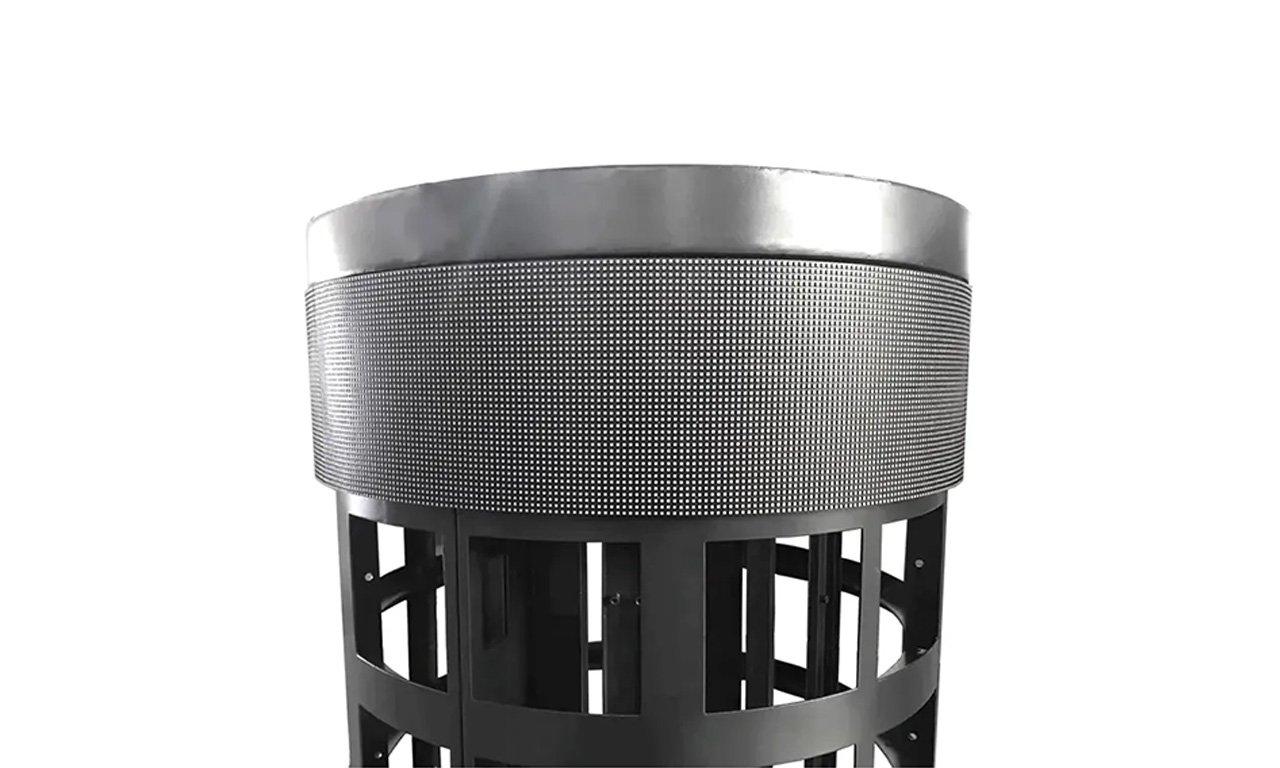
Reserve space for magnets, frame members, cable bends, connectors, power supplies, ventilation and the removal path for failed components. A shallow architectural recess may accept the display face while leaving no way to remove a power supply. Resolve that conflict before the interior finishes are fixed.
For an enclosed column, show where air enters and exits and where heat-producing components sit. Avoid blocking the planned airflow with decorative cladding. Ask for documented power and temperature limits at the intended brightness and operating schedule rather than assuming a curved display runs cool.
4.3 Installation sequence and acceptance
- Survey the mounting surface, available depth, power location and maintenance route.
- Approve frame geometry, module orientation, seam locations and retention details.
- Install the structure and route labeled power and data circuits.
- Fit modules without forcing corners, then verify alignment and connections.
- Load the pixel map, calibrate the display and test the agreed content.
- Demonstrate component removal and hand over drawings, configuration files and spares.
For a flexible LED screen, include a service demonstration at the hardest-to-reach point. A module near an open edge is not representative of one beside a wall return or at the top of a column.
5. Content: Design for the Pixel Map and the Viewer
A flexible LED screen needs content designed for its native pixel canvas and actual sightlines. A standard rectangular video can play, but its important details may wrap out of view, cross a closing seam or become difficult to read at an oblique angle.
5.1 Choose pitch from viewing distance and information size
Pixel pitch is the center-to-center spacing of adjacent pixels. Christie Digital’s pixel-pitch explainer gives approximately one meter of minimum viewing distance per millimeter of pitch as a starting rule. It is a guideline, not an acceptance standard. Test the smallest captions, numbers and logos at the nearest normal viewing position.
A flexible LED screen showing large ambient graphics can tolerate a different pitch from one displaying detailed schedules. Do not pay for finer pitch without checking whether the content needs it. Conversely, a large physical surface does not guarantee enough pixels for small text.
5.2 Calculate the native canvas
For illustration, ten 240 × 120 mm P2 modules across and ten down produce a nominal surface of 2,400 × 1,200 mm. Each module has 120 × 60 pixels, so the complete canvas is 1,200 × 600 pixels, or 720,000 pixels. This calculated example uses the module dimensions described in the EA-Flex module specification guide; it is not a packaged-system offer.
Curving that surface does not add pixels. Export graphics to the approved map, check processor loading capacity and document how physical module positions correspond to content coordinates. Maintain a master template showing seams, visible zones and areas reserved for essential information.
5.3 Columns and stage backgrounds need different compositions
On a column, repeat self-contained messages around the circumference so a visitor can understand one visible face. Keep key text away from the closing seam and avoid requiring viewers to walk around the structure to complete a sentence. On a concave stage wall, test the composition from audience and camera positions.
A flexible LED screen used on camera needs tests with the intended shutter settings, frame rates, brightness and camera movement. Refresh frequency is not video frame rate, and a high refresh specification alone does not eliminate banding or moiré. Approve the actual combination rather than the datasheet number.
6. Maintenance: Plan Replacement Before Installation
Maintenance planning for a flexible LED screen is a design input for a flexible LED screen. Front-removable modules help only when the technician can reach the module, use the correct tool, disconnect it safely and access the failed component behind it.
6.1 Separate module access from electronics access
Ask the supplier to demonstrate replacement of a module, receiving card and power supply in the proposed geometry. Document the order of removal, cable slack, isolation points and required clearance. Follow the manufacturer’s power-isolation procedure; do not assume front service permits hot swapping.
Label module positions and keep a map of signal paths and power zones. This helps distinguish a single-module fault from a downstream data problem or a shared power failure. Store controller configuration, calibration files and compatible software versions where the maintenance team can retrieve them.
6.2 Specify compatible spare parts
For a flexible LED screen, spares should match the ordered module revision, dimensions, LED configuration, connectors and calibration requirements. Agree the quantity based on module count, operating importance and replacement lead time. There is no universal spare percentage that fits every venue.
Retain documented handling and storage instructions. A replacement module that fits mechanically can still create a visible color patch if its calibration or LED batch differs. Include recalibration and alignment checks in the replacement procedure, especially where grazing light makes surface steps obvious.
6.3 Use condition-based inspection
Inspect for lifted edges, displaced seams, damaged pixels, restricted ventilation, loose connections and abnormal heat. Schedule cleaning according to the surface materials and local dust conditions using only approved methods. Record faults and repairs so recurring problems can be traced to a location, circuit or environmental condition rather than repeatedly replacing parts without diagnosis.
7. Benefits and Limits: What the Specification Must Prove
The strongest benefit of a flexible LED screen is architectural integration. Its value comes from placing readable moving imagery on a surface that conventional flat panels cannot follow easily. That benefit should be weighed against the custom structure, commissioning and support requirements.
| Potential benefit | Important limitation | Evidence to request |
|---|---|---|
| Concave, convex and column designs | No universal radius; compound shapes may need custom modules | Model-specific bend limits and approved layout |
| Thin display surface | Installed depth includes structure, electronics and access | Dimensioned section drawing |
| Continuous-looking image | Alignment, calibration and viewing angle affect seam visibility | Curved sample with gray and white test patterns |
| Front module replacement | Hidden electronics can remain difficult to reach | Complete component-replacement demonstration |
| Creative stage scenery | Repeated transport and cameras add separate requirements | Handling plan, suitable frame and camera test |
| Custom visual branding | Shape alone does not establish commercial return | Content plan and project-specific success measures |
7.1 Indoor protection is not outdoor suitability
The selected EA-Flex configurations in EagerLED’s module guide are listed as IP31 indoor products. Do not specify those configurations for direct rain exposure. An outdoor flexible LED screen requires verified protection for the assembled installation, adequate daylight visibility, thermal design and a suitable structure.
A canopy does not automatically create an indoor environment. Wind-driven rain, condensation, dust and sunlight can still reach the equipment. Ask the supplier to assess the actual exposure and identify the protected surfaces and connectors in the quotation.
7.2 Compare complete installed cost
Compare modules, controller, frame, power distribution, cables, spares, freight, installation, mapping, calibration and training within one cost scope. Include content production and the cost of accessing the screen for service. A low module-only price does not describe an operational flexible LED screen.
For wider procurement checks, use the nine-spec LED screen buying guide. Require written warranty coverage, response arrangements, shipping responsibilities and component availability. Those details often matter more to the operator than an unsupported lifetime claim.
8. Project Checklist: What to Send with Your Inquiry
Prepare a flexible LED screen brief that allows the supplier to approve geometry, image quality and service access together. A rendering shows the intended appearance; it does not replace dimensions or an installation specification.
- Application: venue type, indoor or outdoor conditions, operating hours and installation date.
- Geometry: width and height, finished diameter or radius, curve direction, module orientation and available depth.
- Viewing: nearest audience, approach directions, ambient light, smallest text and camera requirements.
- Structure: mounting substrate, attachment method, retention needs and relevant site drawings.
- Electronics: native resolution, processor capacity, maximum power, circuit layout and ventilation plan.
- Maintenance: component access, removal tools, isolation procedure, compatible spares and configuration backups.
- Acceptance: approved sample curve, seam quality, content playback, brightness behavior and replacement demonstration.
Send these details through the EagerLED project inquiry page to request a configuration and an itemized quotation. Ask for exceptions to be identified explicitly. If the proposed flexible LED screen cannot meet the radius or access requirement, revise the geometry before frame production begins.
9. Frequently Asked Questions
9.1 What is a flexible LED screen best used for?
A flexible LED screen is useful for column wraps, curved retail features, museum installations, lobby walls and creative stage scenery. Choose it when the shape improves the intended viewing experience. For a straightforward rectangular display, compare a flat wall before accepting the additional custom engineering.
9.2 How tightly can the modules bend?
There is no universal minimum radius. Obtain the permitted radius, bending direction and handling limits for the exact module. An angle such as 45 degrees is incomplete without the stated bending length and measurement method. The frame drawing must satisfy the manufacturer’s approved limit.
9.3 Can a flexible LED screen be used for outdoor sports events?
Only when the complete system is specified for the event’s exposure, mounting and contact risks. Indoor soft modules are not automatically suitable for rain, direct sunlight or ball impact. A protected hospitality display and a stadium perimeter screen require different evaluations.
9.4 Is it the same as a flexible LED TV?
No. The flexible LED screen discussed here is a modular direct-view commercial display with a separate frame, control system and power distribution. A rollable OLED television is a different technology. Specify the application and required resolution to avoid comparing unrelated products.
9.5 Is front maintenance enough for a shallow installation?
No. Front module access is only one part of maintenance. Technicians also need clearance to remove power supplies and receiving cards and reach connectors safely. Request a complete section drawing and a replacement demonstration before approving the available installation depth.
10. Conclusion
A flexible LED screen is a practical choice when a curved surface serves a clear purpose and the complete installation is engineered around it. Confirm module flexibility, minimum radius, mounting depth, pixel mapping and component access before comparing prices. Use a sample curve and real content to validate the design, then document the support and acceptance requirements. For your next project, start with dimensions, viewing conditions and a maintenance plan. That gives EagerLED the information needed to propose a suitable system and helps you judge the result by measurable performance rather than appearance alone.