Looking for an LED screen supplier in Peru? Start with the type of project: a permanent advertising display, a screen for sale with local installation, or a short-term event rental. The five Peru-based companies below publicly describe relevant services. If you prefer to buy from a manufacturer, EagerLED is based in Shenzhen, China, and has documented a fixed outdoor display supplied to a customer in Peru. There is no single best supplier for every job; compare written specifications, installation scope, and after-sales support before choosing.
Quick answer: For local sales and support, compare Big LED Perú, KLED, EXCTEC LED, NEOLEDPERU, and Pixel Led. For a direct factory quotation, compare EagerLED separately. Ask each company for the same screen size, pixel pitch, brightness, warranty terms, and delivered price so the offers are genuinely comparable.
This guide explains how to choose an LED screen supplier in Peru using a shortlist of local businesses and a practical technical checklist. Company offerings were checked against their public websites in October 2026; the list is unranked and does not represent equipment testing, a service audit, or live pricing. Confirm current availability and project responsibilities in writing.
1. Compare Local Suppliers and Buying Routes
| Supplier | Base / buying route | Relevant offering listed on its website | Good starting point for |
|---|---|---|---|
| Big LED Perú | Peru; local supplier | Sale and rental of indoor and outdoor LED screens | Buyers comparing fixed displays and event rental |
| KLED | Peru; local supplier | Sales, rental, installation, and technical support | Projects needing an installation and support proposal |
| EXCTEC LED | Lima; local supplier | Indoor, outdoor, fixed, and rental screens | Comparing formats for advertising or events |
| NEOLEDPERU | Lima; local supplier | Electronic displays, LED screens, fabrication, and installation | Permanent signage and custom display enquiries |
| Pixel Led | Lima; local supplier | Sale and rental of large LED screens with event structures | Event production and temporary screens |
| EagerLED | Shenzhen, China; direct manufacturer | Rental and fixed-installation LED displays | Factory-sourced equipment for Peruvian projects |
“Pantallas LED Perú” can mean buying hardware, hiring a screen for one event, or purchasing a complete installation. Confirm which service is included before comparing quotes.
2. Find an LED Screen Supplier in Peru: Five Local Options
01. Big LED Perú — local sales and rental
Big LED Perú describes itself as a Peruvian company selling and renting LED screens imported from China and North America. Its site separates high-definition, indoor fixed, outdoor fixed, and outdoor rental screens. Ask whether the proposal includes mounting, a controller, commissioning, and local technical support. When considering this LED screen supplier in Peru, compare purchase and rental routes for the same project.
02. KLED — screens with installation and support
KLED lists LED screen sales, rental, installation, maintenance, and repair in Peru. Its site discusses advertising, retail information, events, auditoriums, and education. For a permanent installation, ask this LED screen supplier in Peru for a site survey and a clear service response plan. For a temporary event, ask what transport, setup, operator time, and dismantling are included.
03. EXCTEC LED — indoor, outdoor, and rental formats
EXCTEC LED presents fixed indoor and outdoor screens as well as outdoor rental screens, with a published contact location in San Isidro, Lima. The site says it provides installation assistance and technical support. Ask this LED screen supplier in Peru for the data sheet for the exact model offered; do not assume that specifications or warranty terms shown for one model apply to another.
04. NEOLEDPERU — electronic signs and fixed displays
NEOLEDPERU promotes LED screens, electronic signs, scoreboards, fabrication, and installation from Lima. Consider this LED screen supplier in Peru when the project includes custom signage or a permanent display. Ask for drawings, enclosure and weather-protection details where applicable, and the process for replacing modules after installation.
05. Pixel Led — large screens for events
Pixel Led describes sale and rental of large LED screens in Lima alongside structures, lighting, and event production. If the display is for a concert, exhibition, or corporate event, request one itemized quote showing the screen, support structure, transport, setup, technician, and removal. Confirm with this LED screen supplier in Peru who is responsible for the video signal and content playback.
3. When a Direct LED Manufacturer Makes Sense
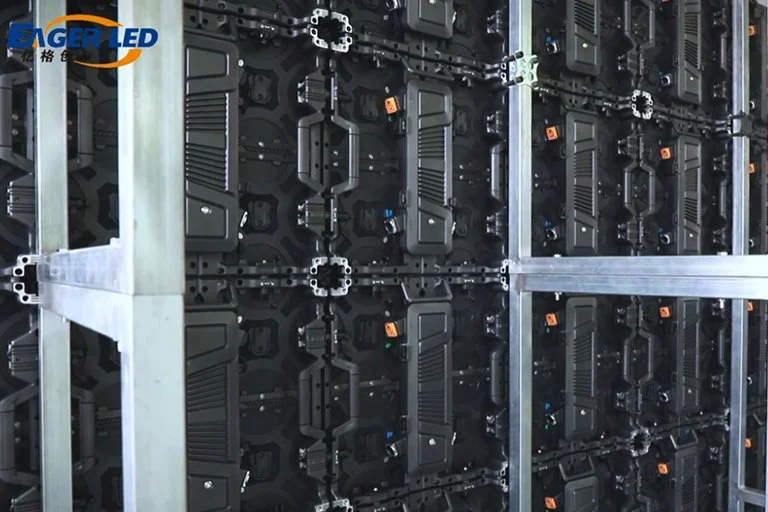
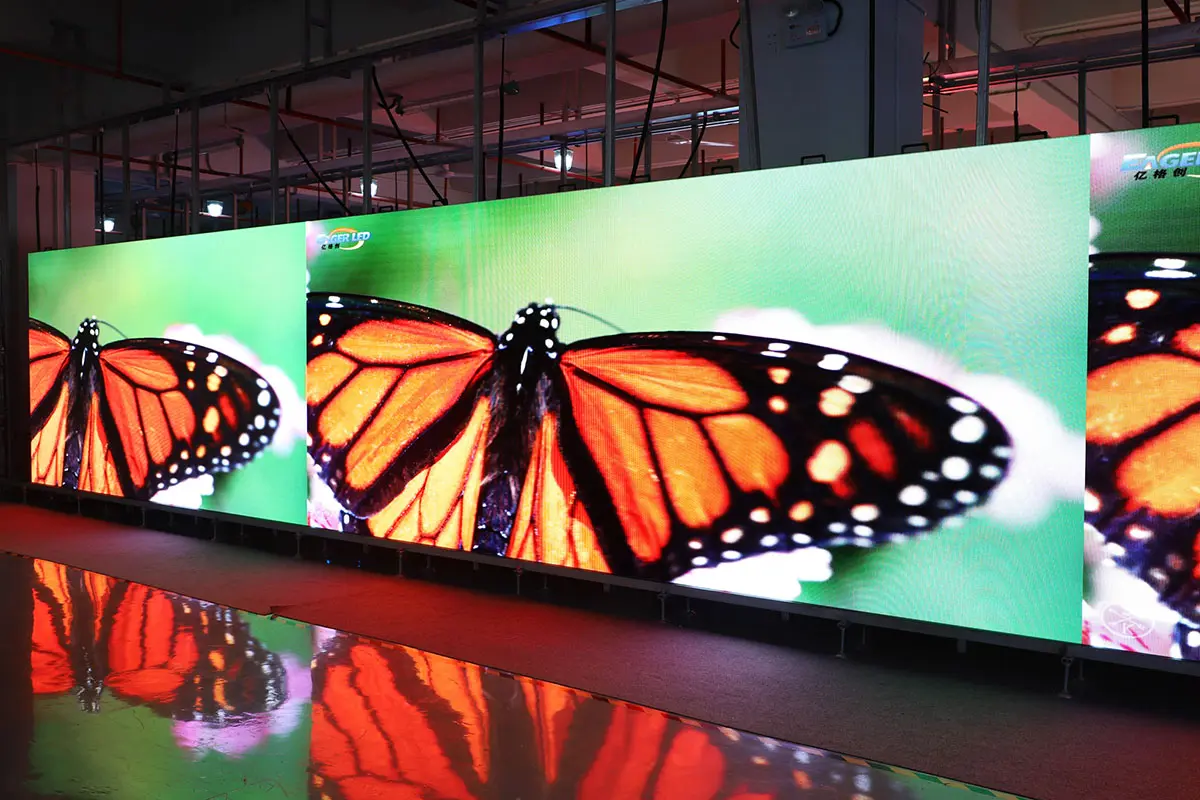
EagerLED is an LED display manufacturer in Shenzhen, China, not a Peru-based installer. Its Peru customer project documents an EA960F2 outdoor fixed display supplied to a Peruvian customer. That is evidence of a supplied project, not a promise of local stock or installation throughout Peru. The project page provides supporting media.
If comparing a local LED screen supplier in Peru with a direct purchase, review EagerLED’s rental LED display range or commercial display range. Request a written proposal specifying the display model, cabinet dimensions, spare modules, controller, shipping terms, documentation, and warranty handling. Budget separately for import arrangements and any local structural or electrical work. Contact EagerLED with the project dimensions and intended use to obtain a model-specific quote.
4. Build a Comparable LED Screen Quotation
- Define the use. State whether the screen is indoor or outdoor, fixed or rental, and what content it must show. A stadium billboard, retail sign, and event backdrop have different requirements.
- Give dimensions in metres. Share width, height, viewing distance, mounting location, and photographs of the site. Ask for the proposed cabinet layout and final pixel resolution.
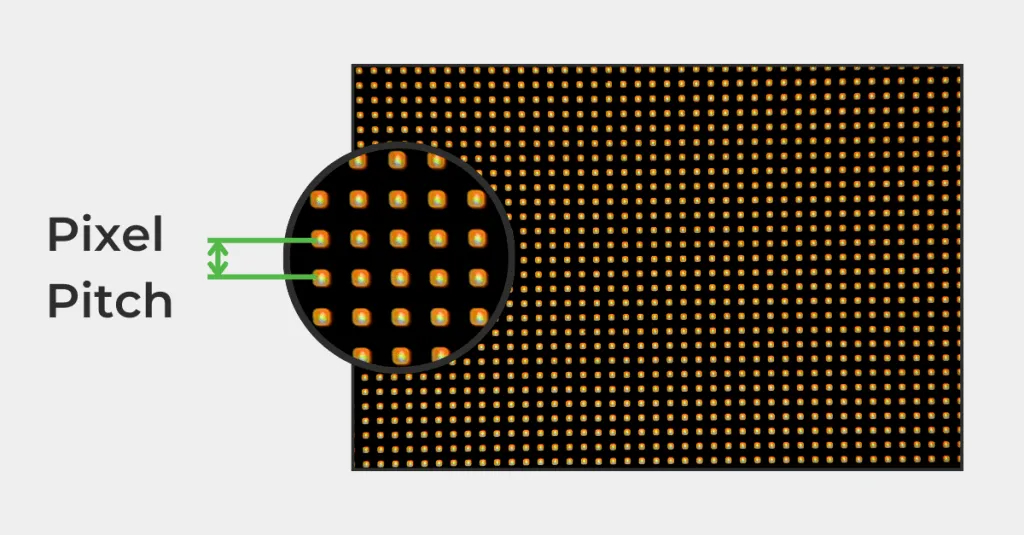
- Compare pixel pitch in millimetres. A smaller pitch can give more detail at close viewing distances, but the right choice depends on the actual audience and budget. Compare samples or model-specific specifications rather than a broad “HD” label.
- Check outdoor performance. Request model-specific brightness in nits, weather-protection rating, operating temperature, and the planned access route for maintenance. Ask who designs the structure and checks the electrical supply.
- Make the total scope visible. Ask whether the price covers the processor, cabling, mounting, transport, installation, training, spare parts, and support. For imports, clarify shipping terms and local responsibilities in writing.
- Test the support promise. Confirm the warranty period, exclusions, repair process, replacement-part availability, and local response arrangements for the exact product quoted.
Send the same brief to every LED screen supplier in Peru on your shortlist. A practical example: a buyer planning a fixed outdoor screen should send every supplier the same wall measurements, expected viewing distance, site photos, power information, and content requirements. The resulting proposals can then be compared on resolution, brightness, service access, installation scope, and total delivered cost instead of headline price alone.
5. Technical Specifications That Change the Buying Decision
A capable LED screen supplier in Peru should connect each specification to your content and site. A product brochure is only a starting point: the final cabinet layout, controller configuration, operating brightness, and maintenance access determine whether the system meets the brief. Use the following table to request evidence without prescribing one universal model.
| Parameter | What to request | Why it changes the decision |
|---|---|---|
| Pixel pitch and resolution | Pitch in mm, cabinet pixel matrix, and total native width × height in pixels | Determines the detail available for text, logos, and close viewing |
| Brightness and dimming | Calibrated luminance in cd/m² (nits), adjustment range, and sensor options | Supports visibility in the actual light while allowing comfortable night operation |
| Refresh and grayscale | Configuration-specific refresh rate in Hz and dark-scene demonstration | Helps assess camera artifacts, tonal steps, and performance at reduced brightness |
| Power and thermal design | Maximum W/m², expected consumption with stated content, and operating limits | Informs electrical capacity, heat removal, and operating-cost estimates |
| Environmental protection | Front and rear IP ratings, test documentation, and installation conditions | Shows which enclosure surfaces are protected and what site protection remains necessary |
| Service and control | Access drawings, replaceable parts, processor capacity, and configuration backups | Determines how quickly faults can be diagnosed and corrected |
01. Match pixel pitch to content and viewing distance
Pixel pitch is the centre-to-centre spacing of adjacent pixels, measured in millimetres. Smaller pitch places more pixels in the same area. It does not automatically make every installation better: a distant roadside audience and people reading small text in a meeting room have different requirements. Ask your LED screen supplier in Peru to show the smallest planned text at the nearest and typical viewing positions.
For a simple calculation, a theoretical 4,000 mm wide screen at 4 mm pitch has 1,000 pixels across; at 2.5 mm pitch it has 1,600. Actual dimensions must follow the cabinet and module grid. Have the LED screen supplier in Peru provide the native pixel canvas before artwork is commissioned. A 4K input signal does not make a lower-resolution wall display four thousand pixels across.
02. Evaluate brightness, refresh rate, and grayscale together
Brightness is luminance, commonly expressed in nits, equivalent to cd/m². The requirement depends on ambient light, orientation, glass reflections, content, and operating hours. Ask an LED screen supplier in Peru for a daytime and evening demonstration when feasible. A maximum-brightness figure alone does not show contrast, uniformity, or image quality after dimming.
Refresh rate in hertz describes display driving behavior and is different from the video source frame rate in frames per second. A high headline number does not guarantee that every camera shutter setting will be artifact-free. For filmed events, ask the LED screen supplier in Peru to test the proposed screen with the intended camera, frame rate, shutter settings, and brightness. Include dark gradients and skin tones, since grayscale quality can deteriorate in demanding operating modes.
03. Specify protection for the actual installation
The IEC 60529 IP classification describes enclosure protection. An IP label is not a general guarantee against corrosion, condensation, overheating, or every outdoor condition. Confirm whether the quoted rating covers the front, rear, connectors, and completed installation. Ask the LED screen supplier in Peru to identify any protective enclosure, drainage, or ventilation needed at your site.
Provide the actual location and exposure rather than simply writing “outdoor Peru.” A sheltered storefront, an exposed coastal structure, and a high-altitude venue can present different design conditions. Request the manufacturer’s stated temperature, humidity, and altitude limits for the exact equipment. Have the installation team assess local conditions and explain any additional protection or derating required.
6. Installation, Maintenance, and Acceptance
Select an LED screen supplier in Peru partly by how clearly it allocates work. The supply of cabinets does not establish responsibility for the supporting structure, building attachment, electrical installation, lifting equipment, or permits. Request a responsibility schedule naming the party that designs, supplies, installs, tests, and maintains each part. This helps prevent gaps between the display vendor and local contractors.
01. Plan service access before ordering
Front-service modules can suit locations without a rear walkway, but every serviceable component still needs an accessible removal route. Rear-service cabinets require space behind the wall and a safe way to reach it. Ask your LED screen supplier in Peru for a drawing showing module removal, power-supply replacement, connector access, cable paths, and the clearance required by tools. Confirm that decorative finishes will not block these routes.
List the spare modules, power supplies, receiving cards, and cables supplied with the project. Match the spare configuration to the installed equipment and retain calibration files. The LED screen supplier in Peru should identify who holds the spares, whether replacements require programming, and how staff will receive training. A box of incompatible parts offers little protection against downtime.
02. Check electrical and thermal requirements
Maximum power is useful for electrical design; typical power is useful for an operating estimate only when the test conditions are stated. Content, brightness, schedule, and temperature affect consumption. Request both figures from the LED screen supplier in Peru and have a qualified local electrical professional design the supply, protection, grounding, and isolation arrangements. Do not size circuits from a marketing average alone.
A planning calculation is screen area multiplied by an agreed average W/m², divided by 1,000, then multiplied by daily operating hours to estimate kWh per day. This is an estimate rather than a measurement. Include processors, cooling, and other auxiliary equipment separately. Confirm the heat-removal path so warm air is not trapped inside a decorative surround or sealed rear cavity.
03. Agree a visible acceptance test
Before shipment or handover, ask the LED screen supplier in Peru to demonstrate the contracted configuration. Check red, green, blue, white, black, gradients, moving video, and your smallest text. Inspect seams and alignment from the intended audience position. Record brightness settings and any camera test conditions so future checks use a comparable baseline.
Also test content upload, scheduled playback, a controlled restart, and the agreed backup behavior. Document unresolved defects and the remedy before signing acceptance. Obtain the cabinet map, serial-number list, configuration files, operator instructions, and support contacts. Test duration, acceptable defects, and corrective actions should be agreed in the purchase specification instead of invented after installation.
7. Compare Rental, Purchase, and Total Project Cost
For a single event, an LED screen supplier in Peru offering a complete rental package may simplify setup and operation. Repeated use may justify ownership, but only after considering storage, transport, trained labor, repairs, and utilization. Compare the expected number and type of jobs over a defined period. Avoid assuming that buying becomes cheaper after a fixed number of events for every business.
Ask the LED screen supplier in Peru to separate the screen from the support structure, processor, transport, rigging, operator time, rehearsal, dismantling, and overtime. State indoor or outdoor use, access hours, loading restrictions, and the required content format. For outdoor events, agree who monitors conditions and who has authority to stop operation under the approved site plan.
For a purchase, compare delivered and installed scope rather than price per square metre alone. A factory offer can exclude local work that another supplier includes. Have the seller identify packing, freight arrangements, documentation, delivery location, and responsibility for import handling. Confirm applicable charges with the appropriate logistics professionals; this guide does not provide a tax rate or a customs quotation.
Request an itemized proposal from each LED screen supplier in Peru with the currency, validity period, payment stages, lead time, exclusions, and change-order process clearly stated. Compare equivalent resolution, brightness conditions, spare parts, and warranty coverage. Keep a separate line for ongoing maintenance and energy. The most useful quote explains both the equipment you receive and the services needed to operate it.
8. FAQ: Choosing an LED Screen Supplier in Peru
01. Can an LED screen supplier in Peru support a project outside Lima?
Ask for the actual service coverage for your city and installation address. A Lima office does not establish that technicians or spare parts are nearby. Request travel charges, a response target, remote diagnosis procedures, and the location from which replacements will ship. For remote sites, agree which faults your own trained staff may handle and which require a visit.
02. Can I expand the screen later using new cabinets?
Possibly, but matching cabinet dimensions alone is insufficient. Ask your LED screen supplier in Peru about module compatibility, LED batches, receiving cards, firmware, calibration data, and continued production of the proposed model. Reserve matching spares where practical. New cabinets may differ visibly from aged ones, so expansion should be designed and tested before purchase.
03. Can I keep using the display if its internet connection fails?
This depends on the playback arrangement. A local player with stored media may continue showing its scheduled content, while live streams or cloud updates can stop. Ask the LED screen supplier in Peru to demonstrate an offline restart and explain content storage, clock settings, and recovery after a power outage. Record who controls the administrator account and any software subscription.
04. How do I avoid last-minute rental substitutions?
Put the agreed cabinet model, pitch, screen dimensions, processor, and substitution rules in the rental order. Require approval before a different configuration arrives. Ask the LED screen supplier in Peru for an equipment confirmation before loading, then run a content and camera check during setup. Also agree the response if the required equipment becomes unavailable.
05. Does a long warranty cover every repair expense?
No universal warranty scope applies. Ask whether parts, diagnostic work, labor, transport, access equipment, and reinstallation are included. The LED screen supplier in Peru should state exclusions and the process for evaluating a claim. Keep serial numbers, commissioning records, configuration backups, and fault photographs so a repair request can identify the correct equipment.
9. Conclusion
The right LED screen supplier in Peru is the one whose verified offering matches your site, content, service needs, and procurement route. Use the five local options as an initial shortlist, compare direct manufacturing separately, and evaluate written specifications instead of unsupported “best” claims. Confirm current capabilities directly before committing.
Start with screen dimensions, viewing distances, installation photographs, operating hours, content examples, and the intended opening or event date. Send that brief with the comparison checklist and request a documented acceptance process. For a factory proposal, contact EagerLED and identify the local installation and maintenance responsibilities at the same time.