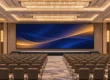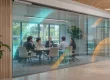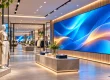


LED wall price should be compared on a defined scope: the screen alone, a delivered equipment package, or a fully installed system. There is no single reliable price per square meter without the cabinet model, pixel pitch, quantity, delivery terms and installation site. For AV integrators preparing a project budget, calculate screen area × quoted unit price, then add the items excluded from that quote.
This guide explains how to compare LED wall price by type and pixel pitch, check unit conversions and build a complete project budget. Dollar figures in the worked examples below are hypothetical calculation inputs, not current EagerLED quotations or verified 2026 market averages. Request a dated, configuration-specific quote before committing a budget.
Key takeaways
- Compare LED wall price only after matching the screen specification and supply scope.
- Convert dollars per m² to dollars per ft² by dividing by 10.764; keep the currency and delivery terms unchanged.
- Choose pixel pitch using the closest viewing distance, required resolution and actual content.
- Add separately quoted processing, structure, installation, spares, logistics and operating costs.
- Use the worked budgets as calculation examples, then replace every assumed input with a supplier or contractor quote.
1. LED Wall Price by Display Type (2026)
For the comparison below, a screen-only quote means LED modules, cabinets, power supplies and receiving cards. Confirm this scope with the supplier: a factory-direct offer can also bundle a processor, spare parts or accessories. The buying channel alone does not tell you what is included.
| Display type | What affects the unit price | Confirm in the quote |
|---|---|---|
| Outdoor fixed / billboard | Brightness, enclosure, service access and environmental requirements | Front and rear protection ratings, mounting scope and the exact cabinet model; see outdoor LED billboard pricing |
| Indoor fixed | Pixel pitch, native resolution, surface treatment and front service | Display area, calibration, controller and service clearance; see indoor LED display pricing |
| Rental / stage | Cabinet mechanics, handling, rigging and processing | Whether the offer is a purchase price or an event hire fee, plus cases and rigging; see LED screen rental costs |
| Transparent | Transparency, pixel layout, dimensions and mounting | Active display area versus overall window area; see transparent LED screen costs |
| Flexible | Module design, curve radius and supporting frame | Minimum bend radius and the custom structure; see flexible LED column costs |
| LED floor | Protective surface, load specification and optional interaction | Applicable load test, support grid, sensors and replacement surface |
| LED poster | Unit dimensions, resolution and playback functions | Price per complete unit, accessories and delivery; see retail LED poster costs |
For a comparable LED wall price, request one currency, one quote validity date and the same delivery destination. Price per ft² = price per m² ÷ 10.764. A hypothetical $600/m² screen price is about $55.74/ft²; it remains a screen-only price after conversion.
Outdoor specifications need a site check. Sun exposure, rain, dust, temperature and service access affect the cabinet choice. Do not assume every outdoor model has the same brightness or protection rating, or that the same pixel pitch means the same product.
Installed prices need local quotations. Ask the integrator to separate equipment, engineering, labor, access equipment, electrical work, commissioning and service. There is no dependable universal multiplier from a factory screen price to a US installed price.
Factory-direct vs installed: what is the difference? A factory-direct price is for the finished screen, delivered on agreed shipping terms. An installed price from a local integrator also includes the site survey, structural design, steel frame, power and data cabling, installation labor, calibration, training and local service. Neither is “right”; they simply cover different scopes. Many buyers source the screen from a factory and hire a local contractor for installation.
2. LED Wall Price by Pixel Pitch
Pixel pitch is an important LED wall price driver. Halving the pitch roughly quadruples the number of pixels per unit area, but does not establish a fixed price multiplier. Pixel density is approximately (1,000 ÷ pitch in mm)² pixels per m². These are pixels, not individual LED dies: the packaging and color arrangement vary by product.
| Pixel pitch | Approximate pixels per m² | What to compare before accepting a price |
|---|---|---|
| P1.25 | 640,000 | Native resolution, close-view text and cabinet alignment |
| P2.5 | 160,000 | Required text size and image detail at the closest seat |
| P3.91 | 65,400 | Cabinet dimensions, stage use and camera tests |
| P4 | 62,500 | Indoor or outdoor specification and brightness |
| P5 | 40,000 | Content readability and viewing distance |
| P6 | 27,800 | Display size and minimum text height |
| P8 | 15,625 | Resolution needed for the planned advertisements |
| P10 | 10,000 | Long-distance content, total resolution and enclosure |
Choose pitch by content and viewing distance. For a first comparison, pitch in millimeters is sometimes used as a rough viewing distance in meters. It is not a minimum-distance guarantee: eyesight, text size, contrast and pixel structure all matter. Check a sample using the actual presentation or video from the nearest seat, and check legibility from the farthest seat.
A finer pitch can improve text and detail even when a coarser display looks acceptable for video. Compare the native resolution of the complete cabinet grid before deciding that two pitches look the same. Our LED display resolution guide explains the calculation.
3. LED Wall Price: The Complete Cost Breakdown
The per-m² screen price is only part of the budget. A complete project adds the control system, structure, installation, shipping and running costs.
| Cost item | Budget basis | What to verify |
|---|---|---|
| LED screen | Area × quoted price per m² | Cabinet quantity, active area and included components |
| Processor / control system | Named model and accessory quote | Pixel capacity, inputs, redundancy and licenses |
| Structure and installation | Separate site-specific contractor quote | Engineering, access equipment, labor and commissioning; avoid double-counting bundled installation |
| Spare parts | Agreed quantities by part number | Module batch, power supplies, receiving cards and calibration data |
| Shipping and import costs | Destination-specific logistics quote | Named Incoterm and place, taxes and exclusions |
| Content management | License and renewal schedule | Included playback, optional subscriptions and support |
| Power | Measured or specified operating kW × hours × tariff | Content, brightness and auxiliaries; maximum load is for electrical design |
| Maintenance | Written service scope and rates | Labor, travel, access equipment and replacement parts |
For the full checklist, see our LED video wall installation cost checklist and LED display power consumption and running costs.
Running cost example (hypothetical): assume a 10 m² screen averages 200 W/m² while showing the intended content at the chosen brightness. Its screen load is 2 kW. At 12 hours per day, 365 days per year and $0.15/kWh, annual screen electricity is 2 × 12 × 365 × $0.15 = $1,314. This is not a specification for an EagerLED model. Add processing, ventilation and other loads, and use measured operating power for budgeting. Use the maximum specified load separately when sizing the electrical supply.
Fixed costs can change the effective LED wall price. A processor, site survey or minimum installation charge may be shared across a larger area. Ask for separate 5 m² and 10 m² quotations on the same specification; do not assume either a fixed discount or a linear total installed cost.
4. LED Wall Price Examples and Budget Calculations
The following LED wall price examples demonstrate arithmetic only. The unit prices are selected assumptions, not market averages, quotations or complete installed budgets. Replace them with valid quotes for the specified cabinets before using the totals for purchasing.
| Scenario | Assumed screen-only unit price | Screen-only calculation | Excluded costs |
|---|---|---|---|
| 6 m² indoor wall | $600/m² | 6 × $600 = $3,600 | Processor, spares, structure, installation, freight and taxes |
| 10 m² rental cabinet purchase | $900/m² | 10 × $900 = $9,000 | Cases, rigging, control, event labor, freight and taxes |
| 40 m² P10 outdoor wall | $280–$420/m² | 40 × $280–$420 = $11,200–$16,800 | Structure, control, electrical work, installation, spares, freight and taxes |
Check the P10 arithmetic: at an assumed $280–$420/m², 40 m² of panels totals $11,200–$16,800. A $22,000 panel subtotal would instead imply $550/m². It cannot be derived from the lower unit-price range unless the specification or included items change. Neither amount establishes the turnkey project total.
How to use these numbers: when you compare a factory quote with a local integrator’s quote, add structure, installation, shipping and duties to the factory price first. Only then is the comparison fair.
Buying or renting? Compare the complete rental fee for your event schedule with purchase, transport, storage, crew, maintenance and expected reuse. There is no universal 3–4 week break-even point. See our LED screen rental cost guide.
5. LED Wall Price by Application
Application changes the specification and the installation scope. Use these requirements to obtain comparable LED wall price quotations; the application name alone is not enough to set a budget.
| Application | Information to supply | Cost items often missed |
|---|---|---|
| Church | Nearest and farthest seats, lyrics, cameras and lighting | Switching, camera testing and service access |
| Meeting room | Text size, resolution, viewing distance and video inputs | Processing, calibration and mounting |
| Retail | Window orientation, opening hours and content schedule | Brightness control, mounting and CMS |
| Stage / rental | Events per year, rigging, transport and camera workflow | Cases, crew, spares and inspection |
| Sports venue | Board dimensions, scoring interface and exposure | Structure, access equipment and data integration |
| Outdoor advertising | Location, dimensions, sun exposure and local requirements | Foundation, permits, power and remote monitoring |
01. Church LED Walls
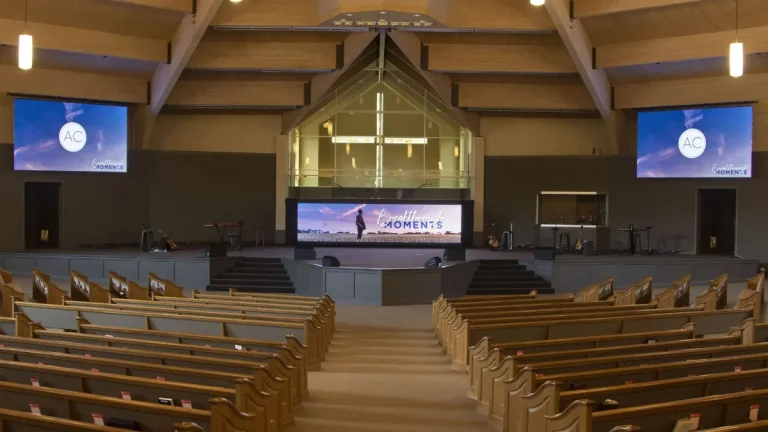
For a church, start with the nearest seat to assess pixel visibility and the farthest seat to assess lyric size. Test the actual slides and camera feeds. Budget for the input switching and processing needed for services. A quoted 3840 Hz refresh rate is not, by itself, proof of clean camera images; test shutter settings, scan behavior, brightness and synchronization.
02. Meeting Rooms and Boardrooms
For a meeting room, compare native resolution and text readability at the closest seats. Fine pitch can increase the hardware budget, but a diagonal size alone does not decide between LCD and LED. Compare complete systems, including seams, mounting, inputs, service access and the actual document content.
03. Retail Stores and Shop Windows
Retailers often start with LED posters, sold per unit rather than per m², and move up to a feature wall for flagship stores. Screens facing a window need extra brightness to stay readable in daylight. See our LED poster display buying guide.
04. Stages, Concerts and Events
For stages, compare the required cabinet locks, rigging options, protective cases and camera behavior. Some fixed and rental products overlap in price, so compare exact models. Estimate rental versus ownership using your event schedule. See our stage LED screen guide for events and concerts.

05. Stadiums and Sports Venues
Stadium projects range from one scoreboard to multiple video and perimeter displays. Obtain separate equipment, structural, electrical and control-system quotations; a venue category does not support one meaningful price range. See our stadium LED display screen guide.
06. Outdoor Advertising Billboards
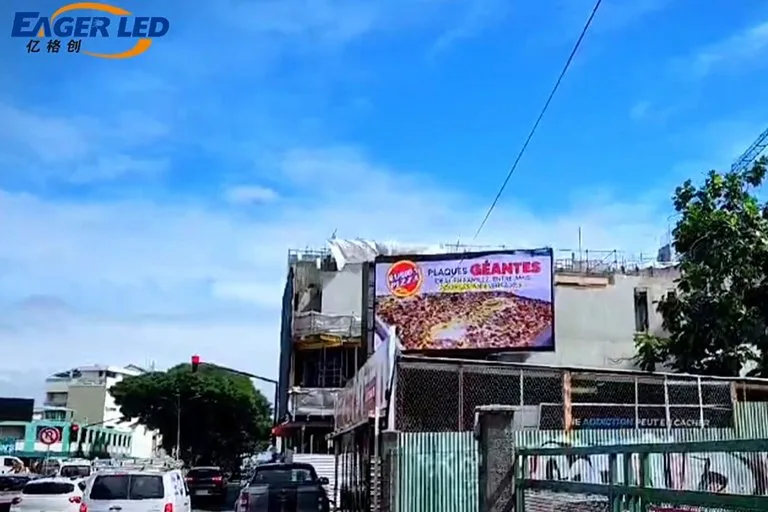
For outdoor billboards, compare pixel pitch and resolution against the intended viewing distance, then confirm daylight performance and environmental requirements. Include the structure, foundation, permits, power supply and remote monitoring. See our LED advertising screen guide.
6. 6 Factors That Change the Price of an LED Wall
Two screens with the same pixel pitch can have different cabinets, components and service requirements. Check the following specifications before treating their LED wall price quotations as equivalent.
01. Pixel Pitch
Finer pitch increases pixel density and can change the module, driver and manufacturing requirements. Request prices for the same product family at the pitches you are considering; do not apply a fixed percentage premium across unrelated models.
02. Indoor or Outdoor
Specify the installation environment, target operating brightness and required protection for each exposed surface. Verify the exact model data sheet and installation instructions. A single brightness or IP rating is not a substitute for a site assessment.
03. Packaging Technology: SMD, GOB or COB
GOB adds a protective layer over an LED module; COB places LED chips directly on the substrate. Durability, contrast, repair method and cost depend on the finished product and its surface treatment. Compare samples and the repair policy. See COB vs GOB and COB vs SMD.
04. Components
Record the LED package, driver IC, power supply and receiving-card models. Compare their specifications, operating conditions, test evidence and warranty. A component brand name alone does not guarantee the lifetime, color consistency or reliability of the complete display.
05. Cabinet and Refresh Rate
Cabinet material, weight, alignment, service access and handling features affect both equipment and installation costs. For filmed use, test the complete display and camera combination. Refresh rate alone cannot guarantee flicker-free recording; shutter speed, scan pattern, driver behavior and synchronization also matter.
06. Size and Order Volume
Ask whether a larger order changes manufacturing, packing or freight costs, and request the discount in writing. Do not assume a standard percentage reduction at a particular area threshold.
7. How to Compare an LED Wall Price Quote
A good LED wall quote lets you see exactly what you are paying for. Use this checklist to compare quotes from different suppliers on the same basis.
01. LED Wall Price Comparison Checklist
- Screen size in m² or ft², resolution and the number of cabinets
- Pixel pitch, LED packaging (SMD, GOB or COB) and LED lamp brand
- Brightness in nits, refresh rate and grayscale
- Cabinet size, material, weight and service access (front or rear)
- Driver IC, power supply brand and receiving card brand
- Processor or sending device model, and how many inputs it has
- Spare modules, power supplies and receiving cards included
- Steel structure, installation and commissioning, if included
- Shipping terms (FOB, CIF or DDP), packing and lead time
- Warranty period, what it covers and how repairs are handled
02. Red Flags in an LED Wall Quote
- Only a lump sum. A single total with no line items makes it impossible to compare suppliers or see what is missing.
- No brand names. Without component models, you cannot verify that competing offers use the same specification.
- No camera acceptance test. A refresh-rate number alone does not establish performance for your shutter speed, frame rate and brightness setting.
- No spare parts. Spares bought later may not match the color of the original batch.
- Unclear shipping terms. A cheap FOB price can end up more expensive than a DDP quote once freight, duties and local delivery are added.
- A very short warranty. Check coverage, exclusions, shipping responsibility, response times and local labor; the duration alone does not define the service value.
8. How to Lower Your LED Wall Price Without Cutting Quality
- Choose pitch by viewing distance. Test the actual content at the nearest and farthest viewing positions before paying for a finer pitch.
- Send every supplier the same specification. Size, pitch, brightness, refresh rate, indoor or outdoor, front or rear service and control system. Otherwise the quotes cannot be compared.
- Ask for a line-item quote. Screen, processor, spare parts, structure, installation, shipping and warranty should each be listed. A quote with no structure or installation line is not cheaper; it is incomplete.
- Agree the shipping terms. FOB, CIF and DDP prices differ a lot. Compare quotes on the same terms.
- Buy spare modules with the order. Agree spare quantities and compatible part numbers with the supplier. Same-batch modules help, but later replacements may still need calibration.
- Use standard cabinet sizes. Custom sizes and shapes add engineering cost; a standard cabinet grid is usually cheaper and faster to deliver.
- Rent for short events. Compare complete rental charges with ownership costs over the actual event schedule.
- Buy direct from a manufacturer. Buying from the factory removes the distributor margin. Check the factory first: certifications, test reports, references and after-sales support. Our guides to LED screen supplier and factory checks and certified LED display factories in China show what to ask.
9. LED Wall Price FAQs
01. How much does an LED wall cost per square meter?
Use a dated quote for a specific model, pitch, quantity and supply scope. A screen-only unit price excludes anything not listed in that offer. The illustrative prices in this guide are calculation inputs, not an EagerLED price list.
02. How do I convert an LED wall price to square feet?
Divide dollars per m² by 10.764. For example, an assumed $600/m² equals about $55.74/ft². Do not compare a converted screen-only price with an installed price without adding the excluded items.
03. How do I budget a 10 × 10 ft LED wall?
The nominal area is 100 ft², or 9.2903 m². At an assumed $600/m², the screen-only calculation is about $5,574. Ask the supplier for the actual cabinet grid: its dimensions may differ from the nominal wall size. Add the quoted system and site costs.
04. Does a low unit price include shipping and installation?
Only if the written scope says so. Request separate entries for packing, freight, customs-related charges, local delivery, installation and commissioning, with a named delivery term and destination.
05. When is renting cheaper than buying?
Calculate both options for the same event dates, screen specification and crew requirements. Include storage, transport, maintenance and future reuse in ownership costs. A fixed number of weeks does not establish the break-even point.
06. Can I compare quotes in different currencies?
Convert them using the same dated exchange-rate assumption and check payment schedules, taxes and validity periods. Keep the original currency totals on your comparison sheet so the exchange-rate effect remains visible.
07. Should spare modules be included in the LED wall price?
List them separately or confirm their quantity within the package. Record the part numbers, batch compatibility, calibration data and storage requirements. The appropriate spare stock depends on display size, repair lead time and downtime tolerance.
10. Get a Factory-Direct LED Wall Quote from EagerLED
EagerLED manufactures indoor, outdoor, rental, transparent, flexible and poster LED displays. Send us your wall size, viewing distance and installation site, and our engineers will recommend the right pixel pitch and send a line-item quote. Contact us at info@eagerled.com or request a quote.