

Choose an LED advertising screen manufacturer by checking whether its proposed display, production controls, and service arrangements fit your project. Start with the installation conditions, issue the same specification to shortlisted suppliers, verify their evidence, and compare complete delivery scopes before considering the lowest price.
For an overseas project contractor, buying the screen is only one part of delivering a working advertising installation. Someone must also resolve structural interfaces, electrical supply, content playback, maintenance access, and fault recovery. An attractive cabinet quotation leaves those responsibilities open unless the contract assigns them.
A suitable LED advertising screen manufacturer should explain both what its equipment can do and where additional engineering or local support is needed. This guide follows that decision process, from understanding the supply scope to approving an order. Distributors and AV integrators can use the same checks when evaluating a supplier for repeat projects.
1. What Does an LED Advertising Screen Manufacturer Provide?
An LED advertising screen manufacturer supplies direct-view LED display hardware assembled from modules, cabinets, power supplies, and receiving electronics. Depending on the agreement, the package may include a processor, media player, software setup, mounting accessories, calibration, documentation, and spare parts.
Direct-view LED screens create images through emitting pixels. They differ from LCD advertising kiosks and illuminated printed signs, even though all three may appear under broad digital-signage searches. Specify the technology when requesting proposals.
The scope of an LED advertising screen manufacturer also differs from that of an installer or media operator. Buying equipment does not automatically include supporting steelwork, local permits, electrical installation, advertising content, or the sale of airtime.
| Work package | What the quotation should identify | Responsibility to confirm |
|---|---|---|
| Display hardware | Cabinet layout, components, processing, accessories | Who supplies and tests the complete system? |
| Mechanical interface | Cabinet drawings, fixing locations, service clearance | Who designs and approves the supporting structure? |
| Electrical interface | Input requirements, load data, connection drawings | Who designs and installs site distribution? |
| Playback | Player, software, licenses, network requirements | Who configures and operates the content system? |
| Handover | Training, configuration backups, maintenance documents | Who accepts the installation and supports it? |
Use this scope map before comparing companies. An LED advertising screen manufacturer can deliver a well-tested screen while your installation still faces delays because nobody has accepted responsibility for the structure or commissioning.
For background on the available application categories, review EagerLED’s commercial LED display options, then request a proposal for the actual location.
2. Key LED Screen Specifications Buyers Need to Understand
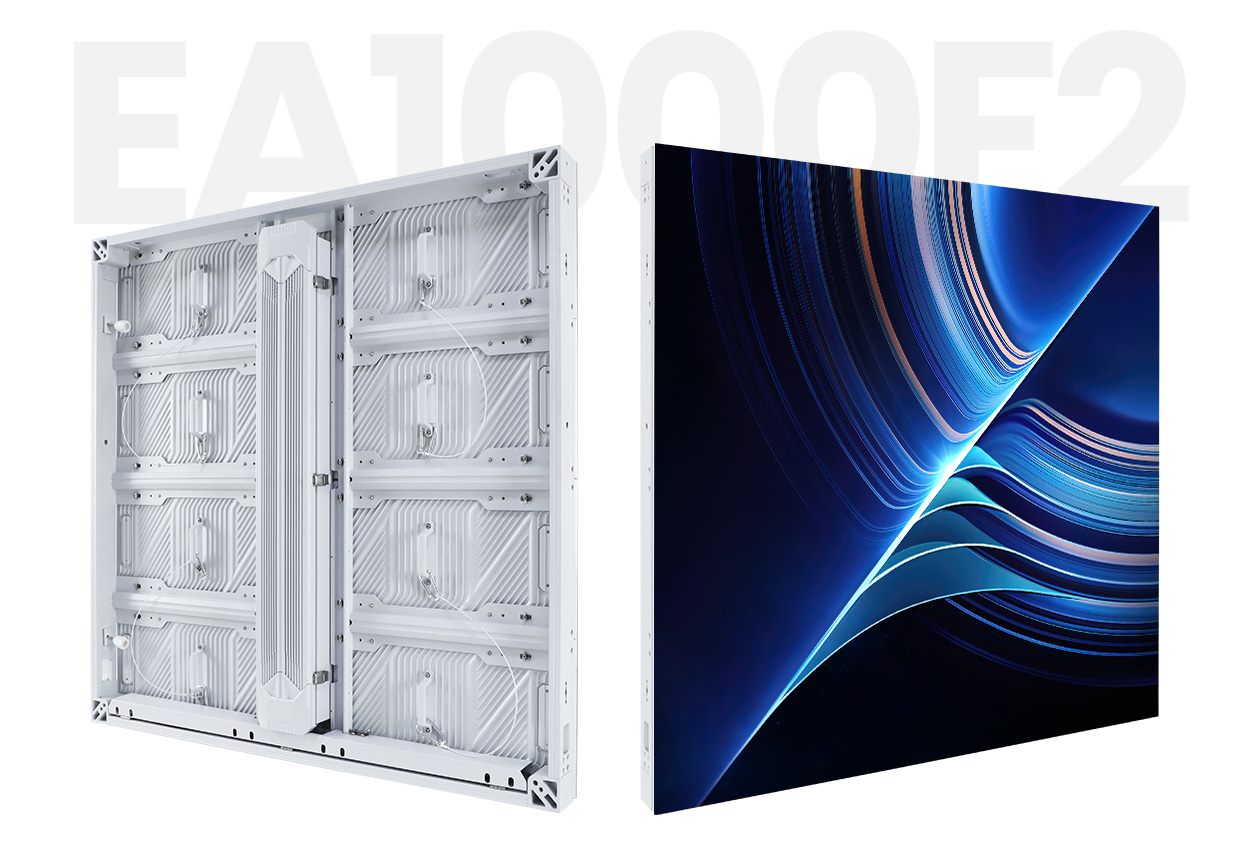
Ask each LED advertising screen manufacturer to connect its specifications to a visible result or an operating requirement. A larger number is not automatically an advantage, and identical headline specifications do not establish equivalent construction.
01. Pixel pitch, resolution, and readable content
Pixel pitch is the distance between adjacent pixel centers. For the same display dimensions, a smaller pitch generally provides more pixels. Whether those additional pixels are useful depends on viewing distance, text size, artwork, and the audience’s viewing angle.
As a hypothetical calculation, a 4.8 m-wide display using a true 4 mm pitch would contain 1,200 horizontal pixels, provided the cabinet layout supports that exact active width. This is an illustration, not a product recommendation. Require the supplier’s actual cabinet matrix and complete pixel map.
Your LED advertising screen manufacturer should demonstrate representative content at the proposed resolution. A detailed photograph may look acceptable while a small price label becomes unreadable. Design around the smallest information the viewer needs to recognize.
02. Brightness, protection, and operating conditions
Brightness must suit the light reaching the screen. Outdoor operation may require substantial daylight output and controlled dimming after dark. Indoor or window-facing applications need their own assessment; an indoor installation behind sunlit glass can still create difficult visibility and thermal conditions.
| Specification | Evidence to request | Common comparison mistake |
|---|---|---|
| Brightness and dimming | Measured conditions and a demonstration across operating levels | Comparing maximum brightness alone |
| Front and rear protection | Applicable enclosure ratings and installation details | Assuming the front rating covers the rear |
| Power consumption | Maximum load and representative operating measurements | Treating maximum power as average consumption |
| Refresh and grayscale | Settings and demonstration using intended content | Treating refresh rate as video frame rate |
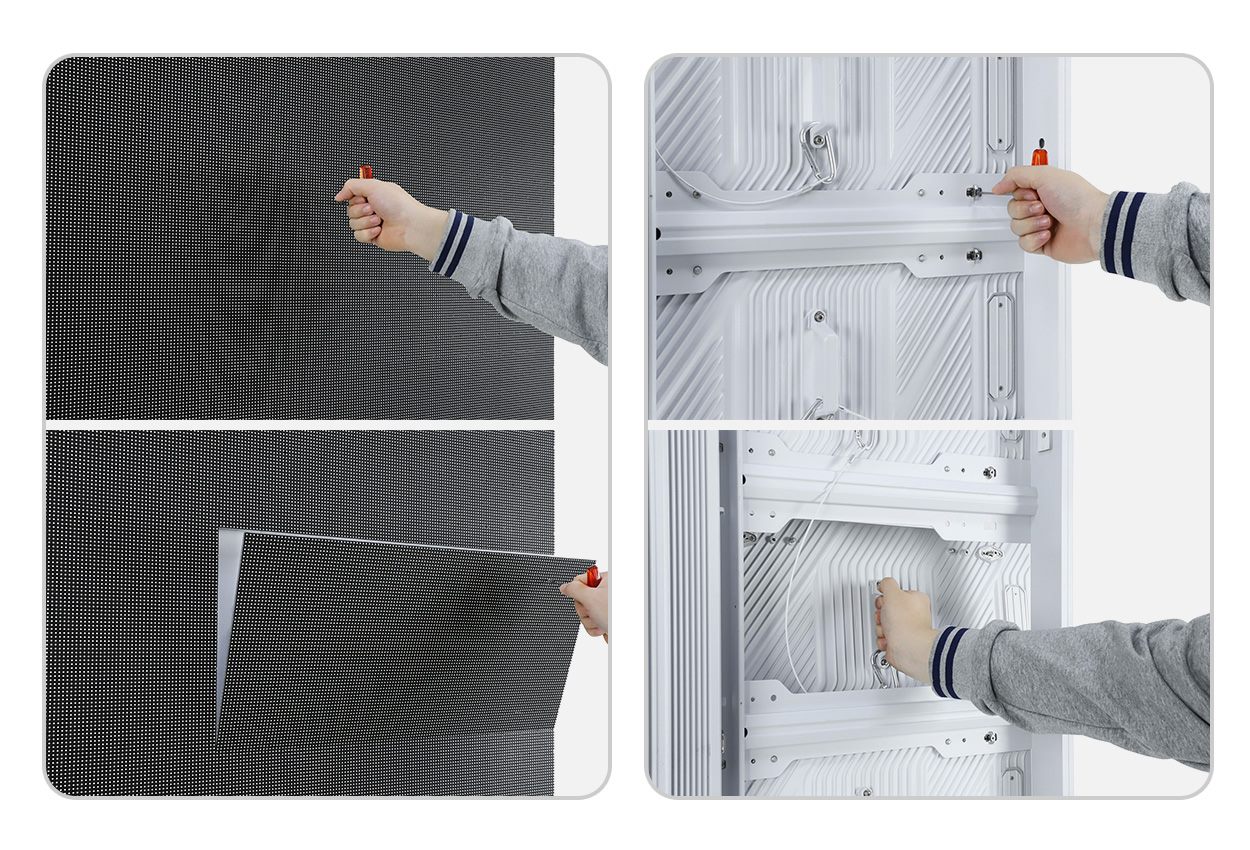
| Maintenance access | Removal sequence, tools, and clearance drawings | Assuming front access covers every component |
| Thermal limits | Cabinet operating conditions and ventilation requirements | Applying a component rating to the assembled screen |
An LED advertising screen manufacturer should disclose how brightness settings, content, and temperature affect measured power. Power-supply loading also needs to respect the component’s specified operating conditions and derating requirements.
If cameras will regularly record the display, test the actual camera settings and signal chain. A refresh-rate claim alone cannot establish acceptable filming performance.
3. Buying Direct from China vs. Using a Local Supplier
Buying from an LED advertising screen manufacturer in China can provide direct access to configuration discussions, production decisions, and customization. The practical benefit depends on how much procurement, integration, and service work your team can manage.
A local supplier may add installation coordination, local stock, field service, or a single contract for the completed system. Those services have value only when their scope and availability are documented. Location alone does not prove technical competence.
| Purchasing route | Potential advantage | Limitation to plan for | Strong fit when |
|---|---|---|---|
| Direct factory purchase | Direct technical discussion and production coordination | Buyer coordinates import, installation, and local repairs | The contractor has integration and procurement capability |
| Local integrator | Site services and one project contact | Hardware origin and service exclusions may be unclear | The buyer needs installation and ongoing field support |
| Factory plus local service partner | Factory access with destination-country assistance | Responsibilities can fall between contracts | Both parties accept a written division of work |
Compare the finished responsibility package. A direct quotation excluding installation cannot be fairly compared with a local turnkey offer until the missing work is priced and assigned.
An LED advertising screen manufacturer does not have to produce every component internally to be accountable for the screen. Purchased power supplies and controllers are normal parts of a system. What matters is control over component selection, incoming inspection, assembly, testing, and changes.
The right LED advertising screen manufacturer should also be comfortable explaining where its scope ends. Clear exclusions are useful: they let you arrange the missing capability before the order becomes a site problem.
4. Match the Manufacturer to Your Advertising Project
Evaluate an LED advertising screen manufacturer against a comparable installation, rather than the most impressive photograph in its portfolio. A large indoor wall does not demonstrate experience with a sun-exposed roadside billboard.
For an outdoor fixed installation, investigate how the proposed system handles water entry points, drainage, ventilation, solar exposure, maintenance access, and component replacement. Wind loading and support design require project-specific engineering; cabinet weight alone does not define the structural load.
For retail interiors, prioritize viewing distance, low-brightness image quality, fan noise, finish, and access during trading hours. If the screen faces through glass, include reflections and heat conditions in the site assessment.
Ask the LED advertising screen manufacturer to explain what would change if the screen moved to a different location. A technically useful answer might involve cabinet construction, pitch, brightness control, service method, or mounting. An unchanged recommendation without examining the new conditions deserves further investigation.
Multi-site advertising introduces another set of questions. Confirm player compatibility, scheduling, user permissions, remote monitoring, and behavior during network loss. Display hardware and the content-management platform may come from separate suppliers, so identify who diagnoses a playback problem.
For irregular shapes or corner displays, the LED advertising screen manufacturer should supply the actual pixel layout and explain processing constraints. A convincing perspective effect also depends on content geometry and viewing position; purchasing a corner cabinet does not supply that creative work.
Use a reference project to ask precise questions: Was the same cabinet family used? Who commissioned it? How were repairs performed? Similar appearance is weaker evidence than similar operating and service conditions.
5. How to Verify a Chinese LED Screen Factory
Start by matching the LED advertising screen manufacturer’s legal identity, quotation, contract, and payment instructions. If manufacturing and exporting entities differ, request a written explanation of their relationship and responsibilities. An unexplained mismatch is a reason to investigate before committing funds.
A factory website is a starting point. EagerLED’s LED display factory page, for example, presents manufacturing and assembly activities. Buyers should connect such published information to the facility and production process proposed for their own order.
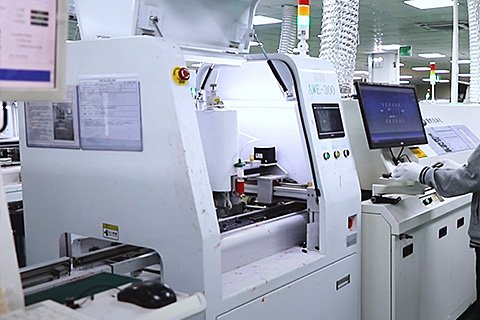
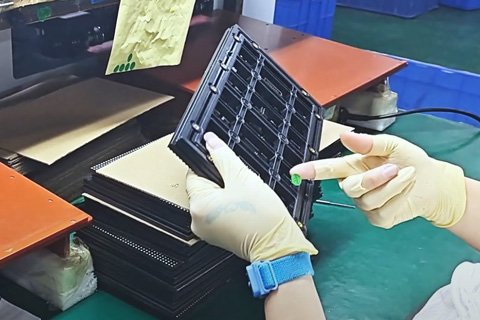
During a live factory review, follow one product through receiving inspection, assembly, testing, and packing. Ask how rejected components are separated, how reworked cabinets are retested, and how the team identifies the batch used in a particular shipment.
| Verification task | Useful evidence | Concern requiring follow-up |
|---|---|---|
| Confirm the business | Consistent entity details and documented relationships | Unexplained changes in contracting or payment entity |
| Check production control | Process records tied to identifiable products | Generic footage with no connection to the proposed order |
| Review traceability | Cabinet serial numbers and component batch records | No method to identify the supplied configuration |
| Confirm inspection access | Agreed inspection scope and access arrangements | Refusal to discuss relevant verification |
| Review change control | Written substitution and approval procedure | Components can change without buyer approval |
An LED advertising screen manufacturer should distinguish a showroom sample from the configuration it will ship. Approve a component schedule and require consent for substitutions affecting performance, compatibility, maintenance, or compliance.
For repeat orders, check how the supplier manages discontinued parts. A factory’s current inventory says little about future compatibility unless there is an agreed process for substitutions and spare-parts planning.
If the project warrants independent inspection, agree its scope before production. A visit is most useful when the inspector has an approved specification and acceptance criteria, rather than a general instruction to confirm that the goods look satisfactory.
6. Which Compliance Documents and Quality Tests Should You Check?
An LED advertising screen manufacturer must support its claims with documents relevant to the supplied model and configuration. A collection of logos on a brochure is not enough to establish what was assessed.
Separate management-system evidence from product evidence. ISO 9001 concerns a quality management system; it does not certify the performance or destination-market suitability of an individual LED screen. Likewise, component documentation does not automatically establish compliance of the complete assembly.
Ask for the applicable declarations, reports, model references, issuing organizations, and scope. Have the documentation checked against the destination and installation requirements. A report covering a different cabinet, power configuration, or product family needs an explanation before it can support your order.
01. Make the sample test representative
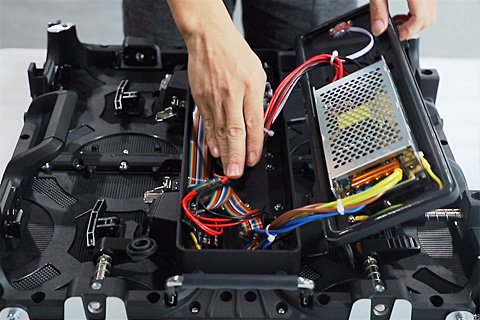
The LED advertising screen manufacturer should identify whether the sample uses the production LED package, driver electronics, power supply, and control configuration. Otherwise, a successful demonstration may tell you little about the final shipment.
Use white, primary colors, gray levels, gradients, moving content, and your actual advertisements. Inspect alignment, visible seams, color differences, and behavior at intended brightness levels. Record the settings so the test can be repeated.
02. Define factory acceptance before production
Agree how the supplier will demonstrate pixel mapping, component replacement, playback recovery, and the handling of any promised redundancy. Record defects, corrective work, and the conditions for retesting.
An LED advertising screen manufacturer may use aging or burn-in tests to reveal early faults. The duration alone is not a reliability guarantee. Ask what content, load, temperature conditions, monitoring, and pass criteria are used.
IP classifications describe enclosure protection against specified ingress conditions. They do not independently establish corrosion resistance, UV durability, condensation control, or suitability for every outdoor location. Request evidence for the environmental exposures your site actually presents.
7. How to Compare LED Screen Quotes and Total Ownership Costs
Send the same specification to every LED advertising screen manufacturer. Then build a comparison using the same screen area, pixel matrix, components, service method, processing capacity, spare parts, and delivery scope.
Start with a common technical baseline and list optional upgrades separately. This makes it possible to see whether a cheaper proposal removes capability or simply offers a different commercial arrangement.
| Cost category | Items to include | Question that improves comparability |
|---|---|---|
| Hardware | Cabinets, processing, players, accessories, spares | Are both quotes complete systems with matching scope? |
| Delivery | Packing, freight, insurance, destination handling | Which charges and responsibilities remain with the buyer? |
| Site works | Structure, access equipment, electrical work, installation | Which items are outside the factory quotation? |
| Operation | Electricity, connectivity, software subscriptions | What assumptions support recurring-cost estimates? |
| Maintenance | Labor, access, replacement parts, repair freight | What does restoring service actually involve? |
A useful LED advertising screen manufacturer will distinguish measured information from estimates. For electricity budgeting, request representative power measurements using stated brightness and content, rather than multiplying the maximum rating by every operating hour.
As a clearly hypothetical example, a 20 m² screen averaging 200 W/m² for 12 hours would use 48 kWh during that operating period. The arithmetic is 20 × 200 × 12 ÷ 1,000. Those inputs are assumptions, not typical performance claims. Replace them with project data and account separately for other equipment and any standby consumption.
Choose a common evaluation period for total ownership cost. Include maintenance access and repair logistics, but avoid inventing failure rates or advertising revenue to make one proposal look better.
Do not assume the lowest-priced LED advertising screen manufacturer is unsuitable. Ask which specific differences explain the price. Equally, a premium quotation needs evidence of the additional hardware, service, or risk allocation it provides.
8. Evaluate Warranty Terms, Spare Parts, and Technical Support
Ask the LED advertising screen manufacturer to describe what happens when one cabinet stops working after installation. Follow the answer from first diagnosis through replacement, repair, testing, and return to service.
This exercise reveals more than the warranty duration. Confirm the start date, covered components, exclusions, repair location, freight responsibility, labor coverage, and treatment of failures found on arrival. Also distinguish an initial response commitment from a restoration commitment.
An LED advertising screen manufacturer offering remote support still needs somebody at the site who can safely inspect equipment, replace parts, and verify the result. Agree what training, tools, access equipment, and electrical competence that person needs.
Plan spares according to the installed quantity, accessibility, replenishment time, and consequences of downtime. There is no universally correct spare-module percentage. A screen above a busy entrance and a display in an accessible workshop have different service needs.
Ask how replacement modules are matched and calibrated. Calibration coefficients and configuration files perform different functions; retaining both, where applicable, helps preserve serviceability. New modules can also differ visibly from an aged installation, so a spare module is not automatically a perfect visual match.
Before handover, the LED advertising screen manufacturer should provide the agreed cabinet map, component list, configuration backups, calibration data, software versions, and maintenance instructions. Check that your team can use these materials during a repair, rather than discovering missing access credentials after a failure.
9. What to Include in Your RFQ Before Placing an Order
Give the LED advertising screen manufacturer a project brief detailed enough to produce a defensible proposal. Include the destination, site photographs, active display dimensions, viewing positions, content examples, installation method, operating schedule, and maintenance constraints.
State what is fixed and what remains open. If pitch has not been selected, ask for alternatives with their pixel matrices and tradeoffs. If structural drawings are pending, identify when they will be available instead of inviting the supplier to assume the interface.
Your RFQ should request a component schedule, cabinet drawings, complete equipment list, compliance evidence, acceptance plan, itemized commercial scope, warranty terms, and production milestones. Require deviations from the specification to appear in a separate list.
Ask each LED advertising screen manufacturer to break the schedule into drawing approval, component procurement, assembly, testing, inspection, packing, and dispatch. Shipping and site commissioning are separate stages. A production lead time without its starting conditions is difficult to use in a project program.
Before ordering, close the unresolved items in writing. Link payment milestones to agreed deliverables and evidence. Define who approves technical changes and which document takes precedence if the quotation, drawing, and contract disagree.
An LED advertising screen manufacturer comparison is complete when the remaining differences are understood and accepted. Selecting a supplier with unanswered technical or service questions simply transfers those decisions into production, where changes can become more disruptive.
10. FAQ
01. Can I expand an LED advertising screen after the first installation?
Possibly, but plan expansion before ordering. Mechanical compatibility, controller capacity, electrical provision, component availability, and visual matching all matter. Ask the LED advertising screen manufacturer to identify which parts can be extended and what may need replacement. A future production batch may not match the original screen’s appearance without adjustment.
02. Can I use my existing content-management software with a new screen?
Often the deciding interface is the media player or video input, rather than the LED modules. Provide the software name, version, playback workflow, and required functions. Confirm resolution, output format, scheduling, monitoring, and licensing through a demonstration. Compatibility with video playback does not automatically include remote device management.
03. Can one supplier provide screens under my own brand?
An LED advertising screen manufacturer may offer private labeling or broader customization, but the scope varies. Distinguish a logo change from redesigned mechanics, electronics, software, or packaging. Confirm ownership of drawings, minimum quantities, documentation responsibilities, replacement-part identification, and the effect of changes on testing and delivery.
04. Does an LED package lifetime claim tell me when the screen will fail?
No. An LED package lifetime figure describes performance under defined conditions and criteria; it is not a replacement schedule for the complete display. Power supplies, connectors, cooling, electronics, environmental exposure, and maintenance also affect service life. Ask what the quoted figure measures and avoid converting it directly into a promised number of operating years.
05. Can an indoor LED screen be installed outdoors under a canopy?
Do not assume that shelter makes an indoor product suitable. Wind-driven rain, humidity, condensation, dust, sunlight, and temperature changes may still reach it. Obtain a written assessment for the proposed location and cabinet. The label “semi-outdoor” is not a substitute for defined environmental limits and installation requirements.
06. Will a higher-resolution screen make a QR code easier to scan?
It can provide more detail, but successful scanning also depends on the code’s displayed size, contrast, clear border, viewing distance, viewing angle, and phone camera. Motion and short display duration can interfere. Test the final code and landing-page link using representative phones at realistic viewing positions before approving the advertising layout.
07. Should I approve sample cabinets before the mounting design is complete?
You can evaluate image quality early, but separate provisional sample approval from final system approval. Confirm that later mounting changes will not alter cabinet orientation, cooling, access, or connections. Record which characteristics were accepted and which remain conditional, so a successful visual test is not mistaken for approval of the entire installation.
11. Conclusion
The right LED advertising screen manufacturer can connect your project requirements to a specific configuration, verifiable production evidence, and a workable service plan. Compare those commitments using one specification and one scope of responsibility, then resolve deviations before production begins.
For an overseas contractor, a dependable purchasing decision should leave clear answers about what arrives, how it is accepted, who installs it, and how it is repaired. Those answers are more useful than an unsupported ranking or a quotation built around a single price per square meter.
When evaluating EagerLED as your LED advertising screen manufacturer, share your screen dimensions, destination, viewing distance, site photographs, maintenance access, and target installation date. Contact EagerLED for a project-specific proposal and request the configuration, documentation, and supply boundaries needed for your comparison.