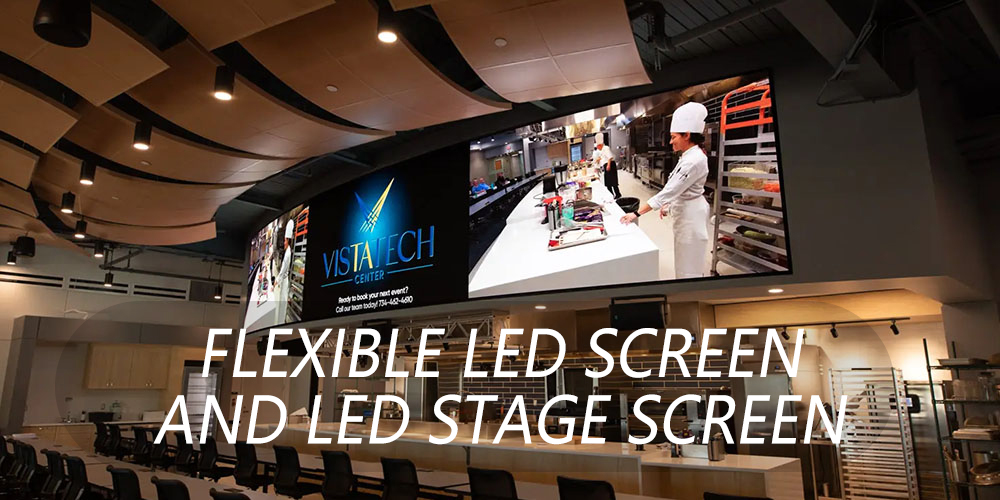
A flexible stage LED screen uses bendable modules or angle-adjustable rental cabinets to turn a flat video wall into a curve, column, wave or other scenic shape. For a one-off event, the right choice depends on the stage geometry, closest audience distance, camera plan, rigging method and whether the screen must be rebuilt at the next venue. This guide explains those decisions and shows where a soft module is a better fit than a curved rental cabinet.
Quick answer: Choose soft flexible modules for tight, custom indoor shapes on a purpose-built frame. Choose curved rental cabinets when a touring stage needs repeatable assembly and a supported arc. A flat rental wall remains the simpler choice when the scenic plan does not need curvature.
What counts as a flexible stage LED screen?
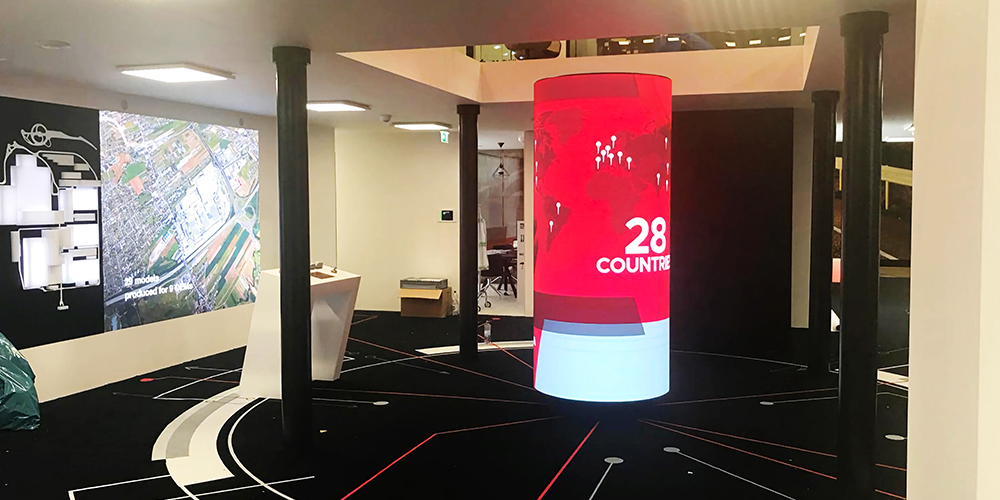
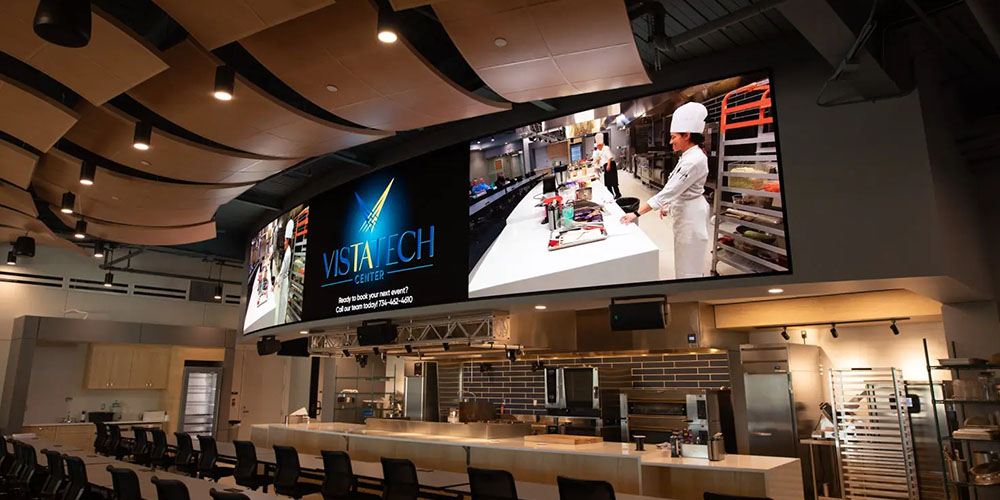
The term covers two different constructions. Soft flexible LED modules bend against a shaped support structure. They suit cylindrical columns, waves and other custom indoor scenery. Curved rental cabinets are rigid panels joined at approved angles to form an arc. They suit stages that are assembled, dismantled and transported repeatedly. Neither system should be bent beyond the limits specified for its module, cabinet or lock.
EagerLED’s EA-Flex indoor flexible display uses magnetic, front-service soft modules. The current product page lists module sizes from 240 × 120 mm to 300 × 168.75 mm, a stated bend limit of ≤45°, 600–800 cd/m² brightness depending on model, a 140° viewing angle and refresh frequency of at least 3,840 Hz. Those figures describe the listed EA-Flex variants; confirm the exact model and project drawing before ordering. For touring arcs, compare EagerLED’s rental LED display range and its supported cabinet angles.
| Stage requirement | Best starting point | Check before approval |
|---|---|---|
| Tight column or wave indoors | Soft flexible modules | Minimum radius, frame geometry, access behind the display |
| Wide arc rebuilt for many shows | Curved rental cabinets | Approved lock angles, cabinet weight, transport and spare units |
| Simple rectangular backdrop | Flat rental cabinets | Canvas size, viewing distance, rigging and power |
Where does a curved screen help on stage?
A curve is useful when the display must follow the set design, wrap a performer, create a central scenic column or extend sightlines toward the sides of a room. It can also separate a main backdrop from side pieces without making the stage look like a single rectangle. A screen used for live camera magnification still needs a canvas that suits the camera feed; an unusual shape can crop faces or captions if content is not designed for it.
For concerts and theater, decide which surface carries playback graphics and which carries live video. For corporate events, protect legibility of slides and sponsor logos from the nearest seats. For sports presentations, separate a temporary stage or entrance display from a permanent arena perimeter system; their mounting, protection and operating needs differ.
Curvature is a design tool, not a quality score. A flat wall may give clearer sightlines, faster setup and easier content reuse when the venue has no curved scenic requirement. The general stage LED screen guide covers the wider choice of backdrop, side screen and video system.
How to choose a flexible screen for an event
Start with the shape and the nearest viewer
Draw the finished front surface, including width, height, curve direction and the smallest radius. Mark the closest audience seat and every camera position. A smaller pixel pitch generally gives finer detail at a short distance, but pitch alone does not determine image quality. Ask for a sample or camera test using the actual content and viewing conditions. Do not assume a soft module can produce any requested curve simply because it bends.
Specify the whole display, not just the LED face
Request the module or cabinet model, approved bend or lock angle, finished dimensions, total pixel count, processor capacity, brightness range, refresh rate, service side and spare parts. The support frame, cables, power supplies and ventilation take space behind the visible screen. A curved display that fits the drawing but blocks service access is difficult to operate during a show.
For an outdoor stage, verify the complete product’s weather protection and the event’s wind and rigging plan. EA-Flex is identified as an indoor product; its specifications should not be assumed to apply outdoors. A qualified local crew should approve structural loads, suspension points, ballast, electrical distribution and cable protection for the venue.
Plan for cameras and content
Professional cameras can reveal flicker, scan lines or color shifts that the audience does not notice by eye. EagerLED lists at least 3,840 Hz for EA-Flex, but the production team should test the intended camera frame rates, shutter settings and content on the chosen configuration. Ask the video operator to map each curved segment and preview text near seams and edges. Brightness should be set for the actual room or daylight conditions rather than left at a maximum setting.
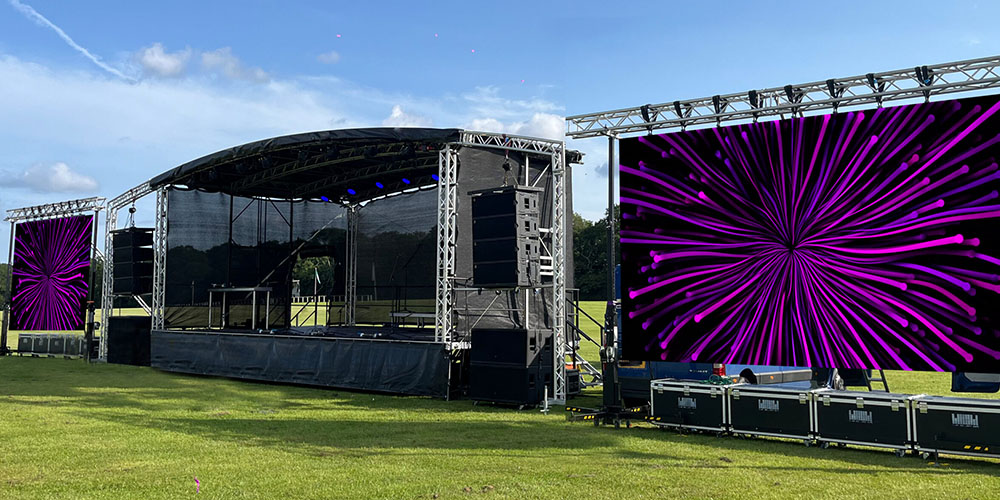
A practical stage planning example
Consider an indoor awards stage with a shallow curved backdrop, a central presentation area and close front-row seats. The production brief should state the backdrop’s arc and dimensions, the first-row viewing distance, whether the screen shows slides or live camera feeds, and the available depth behind the scenic wall. If the backdrop must be installed at several venues, curved rental cabinets may be easier to repeat. If the design calls for a tight continuous wave around fixed scenery, soft modules on a custom frame may fit better.
Before purchase or rental, ask the supplier for a drawing showing module orientation, seam positions, frame supports, power and data routes, processor mapping, front-service clearance and the removal path for a failed part. Run a content proof with a face, fine text, saturated colors and a moving camera shot. This brief is more useful than ordering solely from a pixel pitch or a promotional image.
Installation and show checklist
- Survey the venue. Record stage dimensions, audience sightlines, lighting, access, power and approved rigging points.
- Approve the geometry. Confirm curve radius or cabinet angles against the selected product’s limits, then sign off the support drawing.
- Build the structure. Use the responsible rigging and electrical teams for load, stability and distribution checks.
- Install and label. Fit modules or cabinets without forcing joints; label power and data circuits and protect cable routes.
- Map and calibrate. Configure the processor canvas, check every segment, and adjust brightness and color for the venue.
- Rehearse real content. Test slides, video, live camera feeds, captions and show cues from audience and camera positions.
- Prepare for failure. Keep agreed spare modules or cabinets and a service plan accessible during the event.
- Document teardown. Record faults and pack components so the next build starts with known working equipment.
See EagerLED’s stage rental LED display guide for more detail on setup, safety and spare panels.
Common mistakes to avoid
- Confusing soft modules with curved cabinets. They use different frames, service plans and bend limits.
- Choosing pitch from a rule of thumb alone. Check the nearest viewer, content detail and a real sample.
- Ignoring the back of the screen. Reserve depth for structure, cable bends, cooling and component replacement.
- Using an indoor specification outdoors. Verify the exact weather-rated product and the venue’s outdoor plan.
- Designing content only on a flat monitor. Preview text, faces and moving imagery on the mapped curve.
Frequently asked questions
Is a flexible LED screen the same as a curved rental LED wall?
No. A flexible screen usually uses bendable modules on a shaped support. A curved rental wall uses rigid cabinets joined at supported angles. Both can make a curved stage display, but their installation and service requirements differ.
Can EA-Flex be used for an outdoor concert?
EA-Flex is listed as an indoor display. For an outdoor concert, ask for a product with verified protection for the complete system and a venue-specific weather, wind, rigging and electrical plan.
What information should I send for a quotation?
Send a stage drawing with finished dimensions and curve, nearest viewing distance, indoor or outdoor location, content and camera requirements, installation method, event dates and whether the display will tour. Ask for the proposed model, support drawing, processor plan, service access and spares.
Do I need a flexible display for every stage?
No. Use curvature when it solves a scenic or sightline problem. A flat rental wall is often easier to build and run for a standard backdrop.
Next step: Share your stage drawing with EagerLED’s team to compare a soft module layout with a curved or flat rental cabinet plan. This article is based on EagerLED’s published EA-Flex specifications and practical planning criteria; final dimensions, structural design and model selection must be checked against the actual venue and product datasheet.