

Choosing a commercial LED display is not simply a matter of buying the smallest pixel pitch or the brightest screen. The right specification depends on viewing distance, ambient light, installation method, content, and lifetime operating costs. This guide explains the main display types, realistic budget ranges, and seven factors that help buyers compare proposals on equal terms. It also shows where selected EagerLED products fit, so you can move from a general requirement to a practical shortlist.
1. What Is a Commercial LED Display?
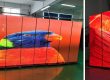
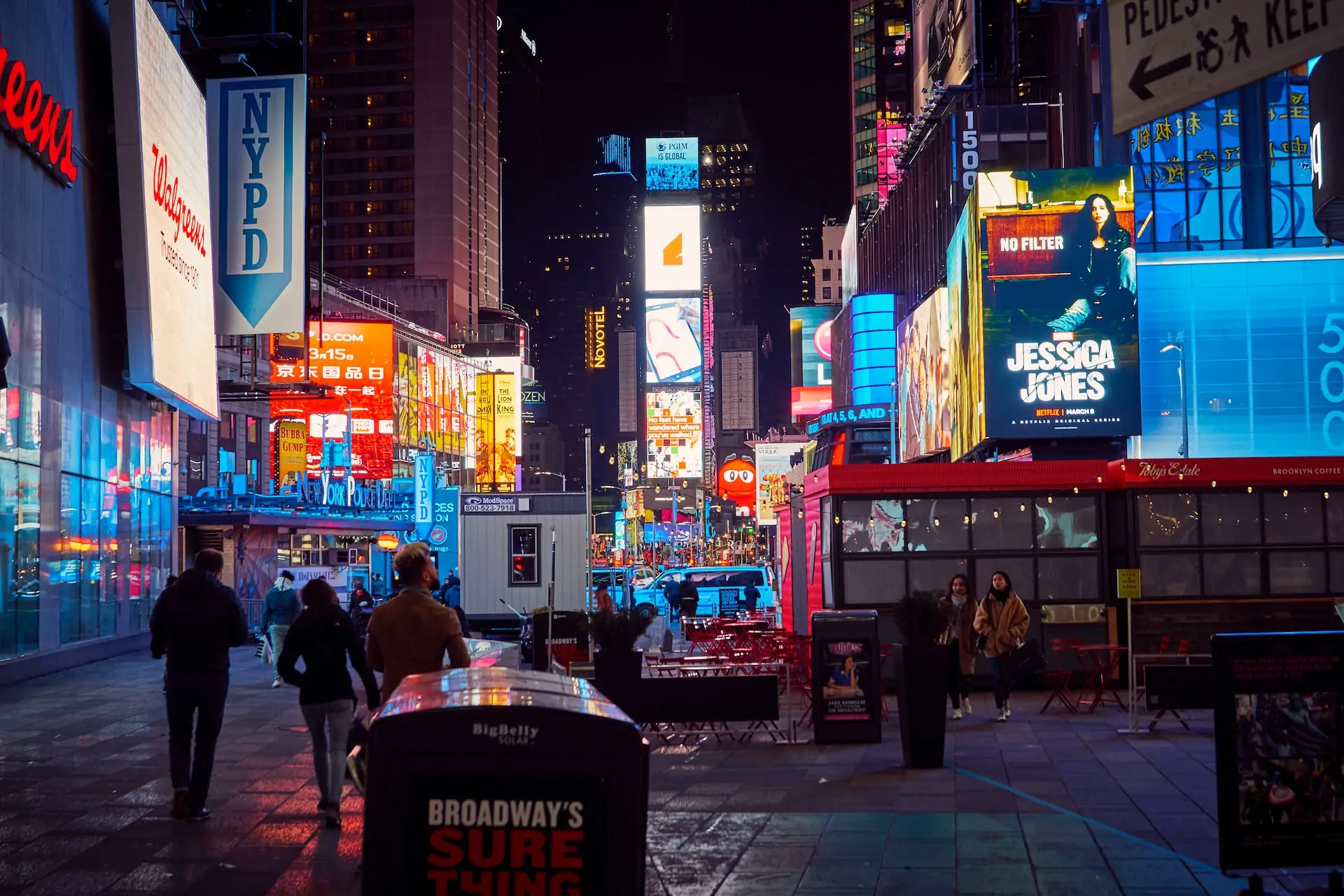
A commercial LED display is a modular, direct-view screen built for business, public, or professional use. Unlike an LCD video wall, it produces the image with individual red, green, and blue LEDs and has no visible bezel between cabinets. Cabinets can be combined into a standard 16:9 wall, an ultra-wide banner, a curved stage backdrop, or a building-sized advertising screen.
1.1 How the modular system works
An LED module contains pixels, driver ICs, and connectors. Modules mount inside cabinets; cabinets connect to power supplies, receiving cards, a video controller, and a steel or aluminum support structure. This layered design matters because a failed module or power supply can usually be replaced without removing the full display.
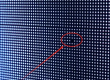
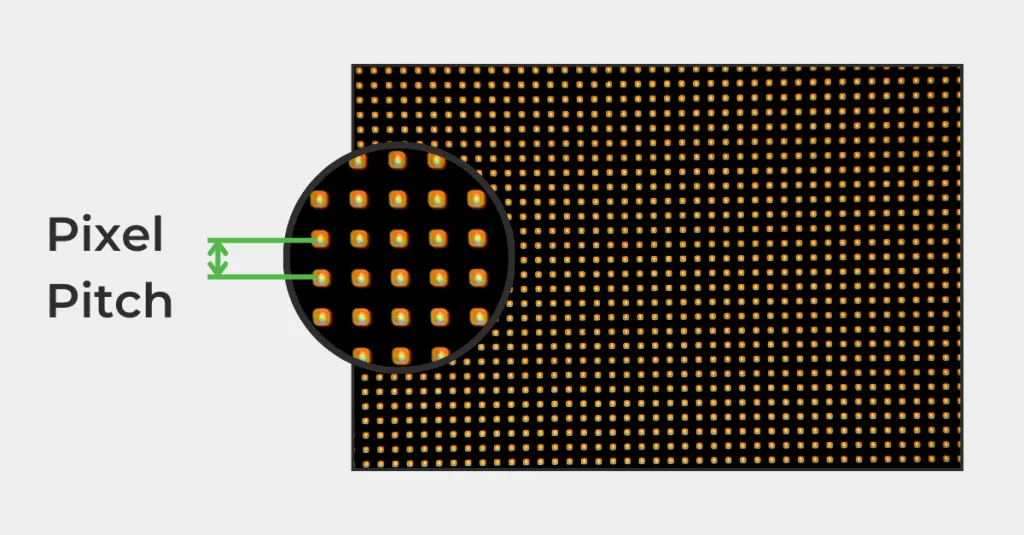
The specification “P2.5” means the centers of neighboring pixels are 2.5 mm apart. A smaller number puts more pixels into each square meter, improving close-view detail while increasing component count, power density, and price. The best pixel pitch is therefore the coarsest pitch that still looks sharp at the closest normal viewing position.
1.2 Why businesses choose direct-view LED
A commercial LED display can deliver high brightness, scalable size, seamless images, wide viewing angles, and long operating schedules. It works especially well when a conventional television is too small, a projector lacks contrast, or an LCD wall’s bezels would interrupt the content. The trade-offs are a higher initial investment, the need for correct structural and electrical planning, and more specification choices.
2. Types of Commercial LED Displays
The installation environment and operating pattern should determine the screen category before you compare pixel pitch. The table below gives a commercial LED display buyer a fast shortlist.
| Type | Typical pixel pitch | Typical brightness | Best uses | Main buying priority |
|---|---|---|---|---|
| Indoor fixed | P1.2-P4 | 600-1,200 nits | Retail, lobbies, meeting rooms, houses of worship | Image uniformity and front service |
| Outdoor fixed | P4-P10+ | 4,500-8,000+ nits | Billboards, facades, stadiums, transport | Weather protection and daylight visibility |
| Rental/event | P1.9-P4.8 | 800-5,000+ nits | Concerts, exhibitions, touring, corporate events | Fast locks, low weight, durability |
| Fine-pitch/COB | P0.7-P1.8 | 500-1,000 nits | Boardrooms, broadcast, control rooms | Close-view detail and low-brightness grayscale |
| Transparent/flexible | P2.6-P10+ | 800-5,000+ nits | Glass storefronts, creative retail, curved architecture | Transparency, shape, and installation constraints |
Ranges are common planning values, not universal limits. Final brightness and pitch depend on the selected model and site conditions.
2.1 Indoor fixed LED
An indoor commercial LED display prioritizes close viewing, quiet operation, fine detail, and convenient maintenance. Front-service cabinets are valuable when the wall sits directly against a finished surface. For meeting rooms and showrooms, evaluate low-brightness grayscale as carefully as maximum brightness: a screen that looks good at 800 nits may show banding when dimmed for comfortable viewing.
2.2 Outdoor fixed LED
Outdoor installations need daylight brightness, sealed modules, corrosion-resistant hardware, drainage, ventilation, and an engineered structure. IP65 is a common target for the exposed front face, but buyers should confirm the rating of both the front and rear. A coastal, dusty, cold, or high-humidity site may require additional protection beyond the headline IP number.

2.3 Rental and event LED
A rental commercial LED display is built to be assembled and removed repeatedly. Die-cast aluminum cabinets, fast locks, corner protectors, climbing supports, and replaceable power/control boxes reduce labor and damage. Mixed 500 x 500 mm and 500 x 1,000 mm cabinets can speed construction, but only if their modules, color calibration, lock positions, and control configuration are compatible.
2.4 Fine-pitch, COB, and all-in-one LED
Fine-pitch displays are used where viewers sit close and expect presentation-grade text. SMD remains common, while COB packages can improve impact resistance, black levels, and protection against moisture or dust. All-in-one systems combine the screen, controller, audio, and user interface for meeting spaces, reducing integration work but limiting custom dimensions.
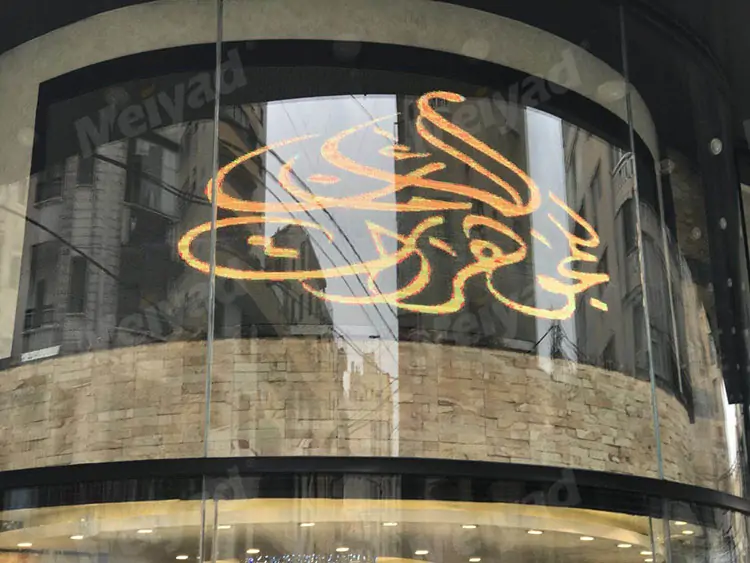
2.5 Transparent, flexible, and poster displays
Transparent LED preserves sightlines through glass, flexible modules wrap columns or curves, and poster displays provide a movable, self-contained digital sign. These formats solve architectural problems rather than delivering the lowest cost per pixel. Confirm transparency, minimum bend radius, structural loading, cable routing, and how the content will look in daylight before choosing one.
3. How Much Does a Commercial LED Display Cost?
Public price guides show how wide the market is: Macropix places LED display prices at roughly EUR 500 to more than EUR 10,000 per square meter, while a 2026 guide from ONE DISPLAY cites about USD 350 to USD 9,500 per square meter across large-pitch outdoor products through premium COB MicroLED. Those figures are useful for scale, but a commercial LED display project quote must reflect the exact bill of materials, quantity, destination, structure, installation, and service scope.
3.1 Indicative hardware budget by screen type
| Screen category | Indicative hardware range (USD/m²) | Why the range varies |
|---|---|---|
| Indoor P2.5-P4 fixed | $700-$2,000 | LED brand, cabinet material, refresh rate, service design |
| Indoor P1.2-P2 fine pitch | $1,500-$5,500+ | Pixel density, SMD vs. COB, redundancy, calibration |
| Outdoor P4-P10 fixed | $650-$2,500 | Brightness, IP design, cabinet, energy efficiency |
| Rental P1.9-P4.8 | $900-$3,000 | Cabinet precision, locks, protection, flight cases |
| Transparent or creative LED | $1,200-$4,000+ | Transparency, custom frames, shape, low production volume |
Budget note: these are broad 2026 planning allowances for display hardware, not EagerLED quotations or guaranteed market prices. Currency, order volume, specifications, freight, tariffs, and local labor can materially change the total.
3.2 Costs beyond the LED cabinets
The cabinet price is only one line in a complete commercial LED display budget. Ask every supplier to identify what is included and price the same scope:
- Control system: sending hardware, receiving cards, video processor, scaling, and backup signal paths.
- Structure: wall brackets, ground support, hanging bars, truss, wind-load engineering, or a custom steel frame.
- Power and data: distribution boxes, breakers, cabling, fiber converters, grounding, and surge protection.
- Logistics: packing, flight cases, freight, insurance, customs duties, and last-mile access.
- Installation: technicians, lifting equipment, permits, calibration, commissioning, and training.
- Lifecycle support: spare modules, power supplies, receiving cards, warranty, remote support, and scheduled service.
3.3 A practical cost example
Consider a 6 m x 3 m indoor retail wall, or 18 m². If suitable P2.5 hardware is budgeted at $1,200/m², the display hardware allowance is $21,600. Adding 20% for the control system, spares, and basic structure brings the equipment allowance to about $25,920. Freight, tax, electrical work, and local installation remain site-specific. This example is not a quote; it shows why comparing only the cabinet price can understate the working budget.
4. Seven Key Factors When Choosing a Commercial LED Display
4.1 Viewing distance and pixel pitch
A useful starting rule is that the pixel pitch in millimeters roughly matches the comfortable viewing distance in meters. P2.5 is therefore a sensible first comparison for viewers around 2.5 m away, while P6 may suit longer-range outdoor viewing. It is a screening rule, not a guarantee: detailed text, 4K content, camera use, and the closest viewer position can justify a finer pitch.
Also calculate native resolution. Divide the screen width and height in millimeters by the pixel pitch. A 4,000 x 2,250 mm wall at P2.5 is 1,600 x 900 pixels, not 4K. If native 4K is essential, either increase physical size or reduce pitch, then assess whether the visual benefit justifies the cost.
4.2 Ambient light, brightness, and contrast
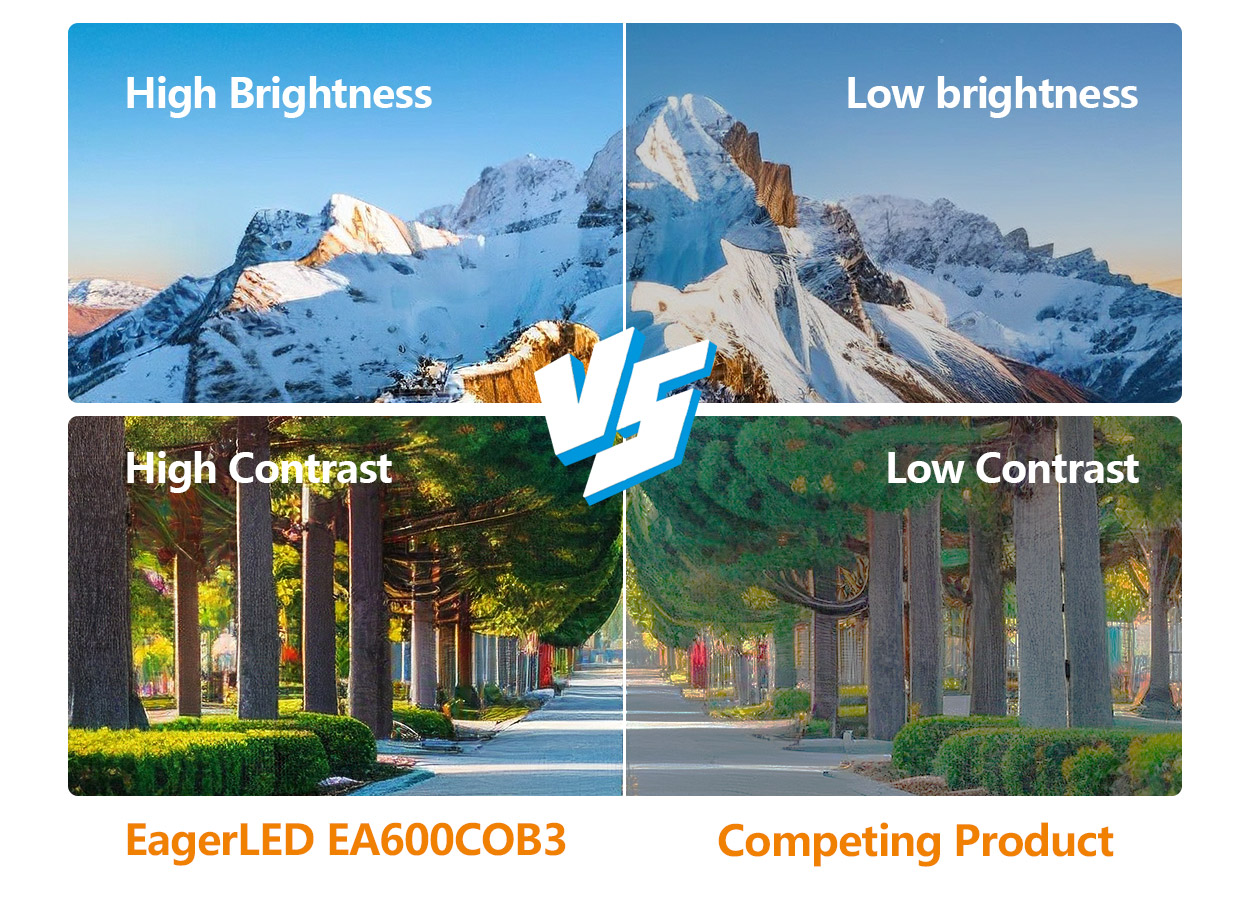
More nits are not automatically better. Indoor screens that are excessively bright cause eye fatigue and may lose grayscale quality when dimmed. Outdoor signs need enough sustained brightness for their orientation, latitude, shade, and operating hours. Ask for calibrated operating brightness, automatic light-sensor control, contrast data, and expected brightness degradation rather than relying only on peak factory output.
4.3 Environment and protection
For an outdoor commercial LED display, document rain exposure, direct sun, temperature range, humidity, airborne salt, dust, and wind load. Check front and rear IP ratings separately. For indoor venues, consider HVAC, smoke or grease, public contact, and acoustic limits. The right enclosure and thermal design can prevent far more downtime than a marginal improvement in resolution.
4.4 Content, resolution, and aspect ratio
For any commercial LED display, start with the content workflow. A 16:9 canvas simplifies standard video, while retail ribbons and facade screens require custom templates. Small text and dashboards need higher pixel density than full-screen video. Confirm input formats, scaling, content-management software, scheduling, remote access, and who will create content at the screen’s native aspect ratio.
4.5 Refresh rate, grayscale, and camera performance
A 3,840 Hz refresh rate is a common professional target for live events, broadcast, and screens that will be filmed, but refresh rate alone does not guarantee a clean camera image. Scan ratio, shutter speed, grayscale at low brightness, driver IC, PWM behavior, and camera settings all interact. Request an on-camera test using the intended frame rate and shutter speed before approving a broadcast or virtual-production wall.
4.6 Installation and maintenance access
Choose front service when the commercial LED display sits against a wall and rear access is impossible. Rear service can be efficient for billboards with a safe catwalk. Verify how technicians remove modules, power supplies, and receiving cards; the clearance required; whether one person can handle the parts; and whether replacing a component affects neighboring cabinets.
4.7 Reliability, warranty, and total cost of ownership
Compare LED batch consistency, driver ICs, power supplies, receiving cards, cabinet precision, certifications, burn-in testing, and calibration records. Ask for spare-parts quantities and availability over the planned service life. Then estimate electricity, scheduled cleaning, labor access, expected module failures, and downtime. A slightly higher hardware price can be economical when efficient power design and front service reduce operating costs.
5. Matching EagerLED Products to Applications
EagerLED offers a commercial LED display portfolio across fixed, rental, outdoor, and transparent categories. The following examples are a shortlist, not a substitute for a project-specific technical review.
| Project need | EagerLED option | Why it belongs on the shortlist |
|---|---|---|
| Indoor fixed wall | EA640F2 indoor LED display | Designed for indoor fixed installation; suitable for commercial interiors and permanent video walls. |
| Outdoor advertising | EA1000F2 outdoor advertising LED screen | Published specifications include 5,000-6,500 cd/m² brightness, IP65 protection, and front/rear service. |
| Simple outdoor fixed installation | EA-OFixed outdoor LED board | Fixed outdoor format with a straightforward cabinet structure and maintenance-oriented design. |
| Touring and events | EA500C6 rental LED display | Built for indoor/outdoor rental workflows where quick installation and repeated handling matter. |
| Glass storefront | EAiFilm transparent film LED | Applies directly to transparent glass surfaces where sightlines and lightweight installation are priorities. |
When requesting a quotation, send EagerLED the screen dimensions, application, indoor/outdoor status, nearest and farthest viewing distances, installation drawings, daytime photos, content type, daily operating hours, input sources, delivery country, and target installation date. That information makes a commercial LED display proposal more accurate and easier to compare.
6. Commercial LED Display Buying Checklist
- Define the job: audience, content, dimensions, aspect ratio, and operating hours.
- Survey the site: viewing distance, ambient light, weather, structure, power, data, and access.
- Set performance targets: pitch, native resolution, brightness, refresh rate, grayscale, and viewing angle.
- Choose a service method: front or rear access, module removal process, safe maintenance clearance.
- Standardize quotations: require an itemized bill of materials and identical scope from each vendor.
- Test critical use cases: view real content, inspect seams and color uniformity, dim the screen, and film it if cameras will be used.
- Plan the lifecycle: spares, calibration, training, warranty response, energy use, and future component availability.
Do not approve a commercial LED display based on a datasheet alone. A sample cabinet, factory acceptance test, or comparable installed reference can expose color, viewing-angle, service, and camera issues before they become expensive site problems.
7. Frequently Asked Questions
7.1 What pixel pitch should I choose?
Use the nearest regular viewing distance as your starting point: approximately 1.5 m for P1.5, 2.5 m for P2.5, and 6 m for P6. Then adjust for text size, desired native resolution, camera use, and budget. A site demo with representative content is more reliable than the rule alone.
7.2 How long does a commercial LED display last?
Manufacturers often state an LED service-life figure around 80,000-100,000 hours to a defined brightness threshold, but usable life depends on operating brightness, temperature, ventilation, power quality, environment, and maintenance. Treat headline lifetime as a comparison input, not a warranty that every component will run untouched for that duration.
7.3 How much brightness is enough?
Many indoor applications operate comfortably around 600-1,000 nits, while a sun-exposed outdoor commercial LED display commonly requires 5,000 nits or more. The correct value depends on ambient light and orientation. Automatic brightness control improves comfort at night and can reduce energy use.
7.4 Is LED better than LCD or projection?
LED is usually stronger for large seamless images, high ambient light, custom dimensions, and long viewing distances. LCD can be more economical for smaller close-view displays, while projection works well in controlled dark environments or temporary situations. Select the technology around the venue, not the trend.
7.5 What should a supplier quote include?
A complete commercial LED display quote should list cabinet and module specifications, controller, spares, structure, power/data accessories, packing, freight terms, installation scope, training, warranty, lead time, and exclusions. It should also state the exact LED, driver IC, power-supply, and receiving-card configuration offered.
8. Conclusion
The best commercial LED display is the one that meets the real viewing, content, environmental, and service requirements at the lowest sustainable lifetime cost. Fix the site criteria first, compare itemized proposals second, and test the critical use case before ordering. EagerLED can then recommend a fixed, rental, outdoor, or transparent solution and prepare a project-specific quotation based on your dimensions and installation conditions.