

An LED display board is an electronic screen that uses light-emitting diodes to show messages, images, and video. Rental LED displays use modular cabinets designed for repeated assembly and transport. The practical choice is between a screen that stays in one location and a system that must work across changing venues, schedules, and audiences.
This guide compares their applications, ownership costs, installation requirements, and operating responsibilities. It helps facility managers, retail buyers, event planners, and AV companies turn a general request for a “large screen” into a measurable specification. Start with the communication task, then evaluate the equipment that can deliver it reliably.
1. What Is an LED Display Board?
An LED display board produces the visible image directly from an array of LEDs. Modules join into cabinets, and cabinets form the screen. A receiving system and controller distribute the image to the correct pixels. Unlike an LCD screen, a direct-view LED wall does not use LEDs only as a backlight behind another display layer.
The term can describe a simple text sign or a full-color video wall. Therefore, specify whether the job needs changing numbers, readable notices, detailed presentations, or moving pictures. An exchange-rate LED board, for example, needs dependable data updates and clear digits; a retail video wall also needs accurate color and suitable image resolution.

01. Understand the complete system
The working system includes the screen, power distribution, controller, playback source, support structure, and service access. A cabinet price alone is not the installed cost. Ask who provides commissioning, content training, replacement parts, and fault diagnosis before comparing proposals for an LED display board.
2. Applications of LED Display Boards
01. Retail, advertising, and corporate communication
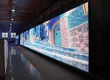
Retail LED display boards can announce offers, explain products, or guide customers through a store. Place the message where shoppers can read it before making the relevant decision. A screen behind a queue serves a different purpose from one facing passing traffic. In offices, prioritize readable announcements and meeting content over maximum brightness.

02. Public information and sports venues
Transport information, venue directions, and scores need clear hierarchy and dependable updating. For an LED display board showing live data, agree on the data source, refresh interval, timestamp, and fallback message. At sports venues, determine whether spectators need scores, close-up action, sponsor messages, or all three; each requires a different layout.

Explore commercial LED display applications when planning a permanent advertising or information installation.
3. What Are Rental LED Displays?
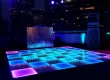
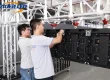
Rental LED displays are reusable screen systems built for transport and repeated installation. Their cabinets commonly use alignment features, quick locks, carrying handles, and replaceable components. The label describes the equipment design; it does not automatically mean that a manufacturer provides local event hire or an operating crew.
Event organizers usually hire a complete service from an AV provider. Rental companies may instead buy cabinets from a manufacturer and operate their own fleet. EagerLED’s rental LED display range is a starting point for equipment selection; confirm delivery, installation, and local support separately.

| Decision | Fixed installation | Rental system |
|---|---|---|
| Operating pattern | Recurring use in one defined location | Repeated deployment at different events |
| Mechanical priority | Mounting, ventilation, and long-term access | Handling protection, locks, and alignment |
| Support planning | Permanent structure and maintenance routes | Approved hanging or ground support for each venue |
| Cost responsibility | Owner budgets for lifecycle service | Hire contract or fleet owner assigns responsibilities |
| Content workflow | Scheduled updates and user permissions | Show files, rehearsals, and live operation |
4. Applications of Rental LED Displays
01. Conferences, exhibitions, and celebrations
At conferences, rental LED displays must make slides legible from the back of the room while remaining comfortable for nearby viewers. Exhibition stands often require finer detail because visitors approach the screen. Weddings and celebrations may emphasize photographs and video, but playback formats and audio synchronization still need rehearsal.

02. Concerts, festivals, and esports
Live entertainment can combine stage graphics with camera feeds. Rental LED displays used for audience close-ups need a tested signal path and acceptable latency. Esports content may contain small interface details, so the viewing test should include actual game footage. Outdoor shows also need a venue-specific structural and weather plan.

5. Benefits of LED Display Boards
An LED display board can present a large continuous image and change messages without replacing printed material. Modular construction also allows sizes that differ from standard televisions. Those benefits matter when the available wall area, audience, or content cannot be served well by a smaller display.
Evaluate the benefit against its operating burden. LED display boards still require cleaning, calibration checks, service access, and replacement components. Power consumption depends on area, brightness, content, and runtime. Request measured operating information instead of assuming that LED technology is always cheaper to run than every alternative.
6. Advantages of Rental LED Displays
Rental LED displays let an event organizer select a screen around a particular room and audience without storing equipment between events. A service package can also assign installation and operation to experienced technicians. Check the contract: transport, rehearsal time, overnight security, and standby support may be separate charges.
For fleet owners, reusable cabinets can serve several configurations. However, matching dimensions does not prove compatibility between batches or models. Confirm locks, electrical connections, receiving electronics, calibration, firmware, and permitted mixed configurations. The value of rental LED displays depends on reliable repeat use, not simply how quickly one cabinet can be connected.
7. How to Select the Right LED Display Board
01. Define the audience and content
Measure viewing positions, including side angles and the nearest viewer. Identify the smallest text that must remain readable. An LED display board for a reception area may show large brand imagery; a control-room wall may require dense information. Test representative content at the proposed physical size before choosing a specification.
Pixel pitch is the center-to-center pixel spacing in millimeters. Smaller spacing provides more pixels within the same area. Planar’s pixel-pitch explanation describes several viewing-distance methods and notes that comfortable viewing also depends on the observer and content. Treat formulas as screening tools, then verify the actual viewing experience.
02. Check the installation specification
| Specification | Evidence to request | Acceptance question |
|---|---|---|
| Pixel pitch and resolution | Exact cabinet pixels and complete wall pixel map | Can viewers read the required text? |
| Brightness and dimming | Performance at intended ambient light and operating level | Is it visible by day and comfortable after dark? |
| Environmental protection | Model-specific front/rear ingress ratings and installation conditions | Are exposed surfaces, connections, and temperatures covered? |
| Electrical demand | Maximum load, typical test conditions, and distribution design | Can the qualified installer support the complete load? |
| Service access | Removal method, clearances, and spare-parts list | Can a failed component be reached after installation? |
| Control and security | Input formats, user roles, backups, and offline behavior | Who can change content, and what happens during a fault? |
For an indoor LED display board, assess reflections and heat as well as brightness. For an outdoor system, include rain exposure, drainage, wind loading, and nighttime dimming. An ingress-protection rating describes specified enclosure protection; it does not certify the complete installation against every weather condition. Compare appropriate indoor LED screen options with the actual site requirements.
03. Calculate the pixel canvas
Consider a hypothetical 4 m × 2.25 m wall with an exact 2.5 mm pitch. Dividing each dimension in millimeters by the pitch gives 1,600 × 900 pixels, or 1.44 million pixels. Sending a 4K video to this wall does not turn it into a native 4K screen. Confirm real cabinet dimensions before finalizing the layout.
8. How to Select the Best Rental LED Display
01. Compare the complete quote
Request the same written brief from every supplier: location, event dates, screen size, indoor or outdoor exposure, audience distances, content, and camera requirements. Include load-in restrictions and available rehearsal time. Rental LED displays with similar headline specifications may arrive with very different support packages.
| Cost item | Confirm in writing | Common omission |
|---|---|---|
| Screen equipment | Model, quantity, pitch, spares, and hire period | Charging extra possession days around the show |
| Processing and playback | Inputs, pixel capacity, media source, and backup | Assuming the screen includes a playback computer |
| Structure and power | Approved support, engineering, distribution, and cables | Comparing equipment-only and installed prices |
| Labor and access | Build, rehearsal, operation, dismantling, and overtime | Ignoring restricted venue working hours |
| Logistics and terms | Delivery, insurance responsibilities, taxes, and cancellation | Excluding transport or damage charges |
There is no reliable universal daily price without that scope. Obtain a dated quotation in a named currency. A factory purchase price per square meter and a local event-hire package describe different transactions. For deeper equipment sizing, use the rental display pixel-pitch and cost guide.
02. Test rental LED displays before the event
Agree an acceptance sequence: cabinet alignment, full-color patterns, low-gray gradients, representative slides, video, and source switching. Check the smallest text from intended audience positions. Record the approved brightness, processor settings, and wall map so a replacement operator can reproduce the setup.
A high refresh-rate figure alone does not guarantee clean camera footage. Camera exposure and LED timing must work together; ARRI and ROE Visual’s testing illustrates the importance of synchronization. Test the actual cameras, frame rates, shutter settings, and lighting before using rental LED displays on a filmed show.
9. Emerging Trends in LED Display Technology
Finer pitch, protected LED surfaces, improved processing, and curved cabinet options expand what LED display boards can do. Select a feature because it solves a project problem. A curved wall needs compatible cabinets and a content canvas designed for its geometry; a smaller pitch needs sufficient processing capacity.

For rental LED displays, handling protection and repairability can matter as much as a specification upgrade. Ask for a demonstration of module replacement and cabinet alignment. Compare the usable image at the intended brightness, including dark scenes, rather than judging only bright showroom footage or a technology label.
10. Maintenance Tips for LED Display Boards
01. Plan inspection around the environment
Use the manufacturer’s cleaning and maintenance instructions for the exact model. Inspect ventilation paths, visible damage, connectors, seals, and image uniformity at intervals suited to the installation. Log recurring faults by cabinet and module position. Isolate electrical power for service as required by the manufacturer and qualified technician.
02. Keep compatible spares and records
Maintain configuration backups, calibration files, connection diagrams, and a spare-parts inventory. A physically similar replacement module may differ in color or electronics. Rental LED displays also need checks after transport: examine locks, corners, cables, and cases before dispatch. Define who authorizes repairs and how quickly replacement parts can reach the site.
11. The Role of LED Displays in Smart Cities
LED display boards can communicate transport updates, public notices, and environmental measurements. Their value depends on the information workflow: establish source ownership, approval rules, update frequency, and an obvious stale-data response. A bright screen displaying outdated instructions is an operational problem.

For an exchange-rate LED board or other changing numerical display, show units and the update time clearly. For public alerts, define priority overrides and alternative communication channels. Do not assume a commercial advertising screen is a certified life-safety system. Network access and administrator permissions also need ongoing management.
12. Rental LED Displays for Marketing Campaigns
Build the campaign around one action: visit a booth, understand a product benefit, or scan a relevant link. Rental LED displays work best when the message can be understood during the audience’s available viewing time. A busy animation may attract attention while obscuring the offer.

Prepare content to the agreed pixel canvas and keep important text away from edges and obstructions. Test QR codes from realistic distances and angles. If rental LED displays show live social posts, assign moderation and a fallback playlist. Measure scans, qualified inquiries, or completed actions rather than treating every passerby as a confirmed viewer.
13. Sustainability in LED Display Manufacturing
01. Measure energy and extend useful life
Compare LED display boards at equivalent area, brightness, content, and operating hours. Daily energy in kilowatt-hours equals average power in kilowatts multiplied by runtime. For illustration, a measured 1.8 kW average over 10 hours uses 18 kWh; this is a calculation example, not a product rating.
Ask about repairable modules, replacement-part availability, packaging reuse, and responsible end-of-life handling. Rental LED displays can be reused across events, but transport and workshop activity still contribute to their impact. Evaluate the whole operating pattern before making an environmental claim.
02. Can a solar powered LED display board work?
A solar powered LED display board is feasible only when generation, storage, and load are matched. Calculate daily screen energy, controller consumption, conversion losses, local seasonal sunlight, and the required autonomy during poor weather. Large full-color screens may need substantial solar and battery capacity. Specify backup behavior before describing a system as independent of grid power.
14. The Future of LED Display Boards and Rental Screens
Future planning should protect serviceability and content compatibility. When buying an LED display board, ask how long essential components will remain available, whether configuration files can be exported, and what replacement workflow is supported. A documented upgrade path is more useful than an unsupported promise of unlimited lifespan.
AI-assisted scheduling or content creation can support a display workflow, but software must still obtain approved information and publish through controlled permissions. Touch, sensors, or audience interaction require additional hardware and integration. Rental LED displays do not gain these capabilities simply because a promotional description calls them “smart.”
15. Maximizing ROI with LED Display Boards
01. Choose placement around a measurable action
LED screen placement strategies should start with sightlines, viewing time, and the next customer action. Check reflections, obstructions, queue positions, and the angle of approach. In retail, compare message performance during similar trading periods and account for promotions or seasonal changes that also affect sales.
02. Calculate contribution after operating costs
For an LED display board, estimate incremental gross profit or verified communication savings, then subtract content, electricity, service, and other recurring costs. If a hypothetical installation costs $30,000 and produces $6,000 annual net benefit, simple payback is five years. This illustration excludes financing and tax; it is not a promised result.
For rental LED displays, track event contribution after transport, labor, repairs, storage, and equipment financing. Compare ownership with equivalent outsourced events across realistic utilization scenarios. Avoid a universal “buy after this many events” rule because staffing, local hire prices, and the required equipment mix differ.
16. Why Invest in LED Display Technology?
Invest when the communication benefit justifies the complete system and its operation. An LED display board is appropriate when its size, shape, viewing performance, and update flexibility solve a defined problem. Rental LED displays suit changing event requirements when the logistics and technical responsibilities are clear.
Before approving either option, assemble a brief containing dimensions, viewing positions, environmental conditions, content examples, operating hours, power availability, support method, and budget scope. Ask the supplier to respond with an exact model, pixel map, itemized equipment list, maintenance plan, and acceptance criteria. This makes proposals comparable and reduces preventable disputes.
17. Conclusion: Choose LED Displays Around the Operating Task
Choose an LED display board for a well-defined permanent communication role, and evaluate rental LED displays around repeat deployment or a specific event service. Verify the image with real content, compare complete costs, and assign responsibility for installation and maintenance. These steps turn an attractive screen into a dependable communication system.
18. FAQ: LED Display Board and Rental LED Displays
01. What is an LED board used for?
An LED display board presents changing text, images, or video for advertising, information, presentations, and entertainment. Specify the content and viewing distance first: a numerical information sign and a detailed video wall need different pixel layouts and control systems.
02. Can display boards be used for indoor and outdoor events?
Yes, when the model and installation suit the environment. Outdoor rental LED displays need suitable brightness, enclosure protection, connections, and support engineering. An indoor screen does not become outdoor-rated because it sits beneath a temporary cover.
03. What should an LED display board rental price include?
Confirm the screen, processing, support structure, power distribution, transport, installation, operation, dismantling, and spares. State the hire period and local venue requirements. Compare the total payable scope rather than a headline equipment rate.
04. Should I buy from a manufacturer or hire locally?
A manufacturer supplies equipment; a local AV provider may supply a complete event service. Buying rental LED displays means arranging storage, transport, technicians, maintenance, and utilization. For one event, obtain a local service quotation alongside any equipment proposal.
05. How do I choose a rental LED display supplier?
Ask for the exact model, relevant project references, compatibility information, service arrangements, and a demonstration with your content. For event hire, verify crew availability and contingency responsibilities. For fleet purchases, prioritize spare parts, repair training, and repeatable calibration.
06. Is a smaller pixel pitch always the best choice?
No. Smaller pitch increases pixel density, but the benefit depends on content and viewing distance. Compare representative images and text at the intended position. Also consider cabinet handling, processing load, operating brightness, and the budget available for the complete system.