

LED display flight cases should be specified around the exact equipment, approved packed quantity, internal support arrangement, external dimensions and loaded weight. A reusable case is part of the handling system. Buyers need a packing schedule and a practical fit review before assuming that a quoted case will suit transport, storage and repeated deployment.
This guide helps rental companies, distributors, AV integrators and project contractors review case quotations and receiving procedures. It focuses on what to document and verify. It does not establish lifting limits, stacking ratings, airline acceptance or a universal packing method for every LED cabinet.
The worksheets below are proposed procurement tools. Numerical examples are hypothetical and are not EagerLED product packing specifications. Use the supplied drawings and handling instructions for the actual order. LED display flight cases should remain identifiable throughout delivery, deployment and return to storage.
1. Define what the LED display flight cases contain
Start with the equipment schedule. Separate different cabinet formats, complete poster displays, controllers, loose modules and installation accessories. Ask the supplier to identify which case serves each item group. One line stating “cases included” does not reveal the number of packages or whether cables and support hardware need separate packing.
For LED display flight cases, the intended use also matters. Equipment shipped once to a permanent installation has a different handling pattern from cabinets that travel repeatedly. EagerLED’s packaging overview describes wooden packaging and reusable flight-case options. The purchasing decision still needs the actual shipment and operating requirements.
Define the packed configuration explicitly. State whether handles, protective covers, brackets or detachable accessories remain attached. A case designed around a bare cabinet may not accommodate the same cabinet with an accessory fitted. Likewise, an accessory removed for transport needs its own assigned location and identification.
| Field | Information to request | What it resolves |
|---|---|---|
| Case identity | Case model or drawing reference and revision | Which design the price covers. |
| Approved contents | Equipment model, configuration and quantity | What may be packed together. |
| Internal arrangement | Support, dividers and accessory locations | How movement and contact are controlled. |
| External size | Overall packed dimensions and measurement convention | Storage, transport and access planning. |
| Weight | Empty case and fully packed gross weight | Handling and shipment review. |
| Operating limits | Approved handling, storage and stacking instructions | Which uses require further confirmation. |
LED display flight cases are not interchangeable merely because their outside dimensions look similar. The internal arrangement, supported equipment and loaded condition are equally important. Request a representative packing demonstration for the specified equipment and retain the approved arrangement with the order documents.
2. Check the internal fit before approving production
Review how the case supports the equipment and keeps separate items from contacting each other. Ask the supplier to explain the intended load-bearing surfaces and any areas that must remain free of pressure. Do not infer acceptable contact points from the strongest-looking part of a photograph.
For LED display flight cases, assess the loaded arrangement rather than an empty shell. Confirm that the lid closes as intended without forcing equipment into place. Check that loose accessories cannot migrate into the display area during handling. The appropriate protective materials and clearances should come from the supplier’s approved packing design.
| Review point | Question | Evidence to retain |
|---|---|---|
| Equipment orientation | Which way does each item enter and face? | Labeled packing photograph or drawing. |
| Support and separation | Where is the equipment supported and separated? | Approved internal arrangement. |
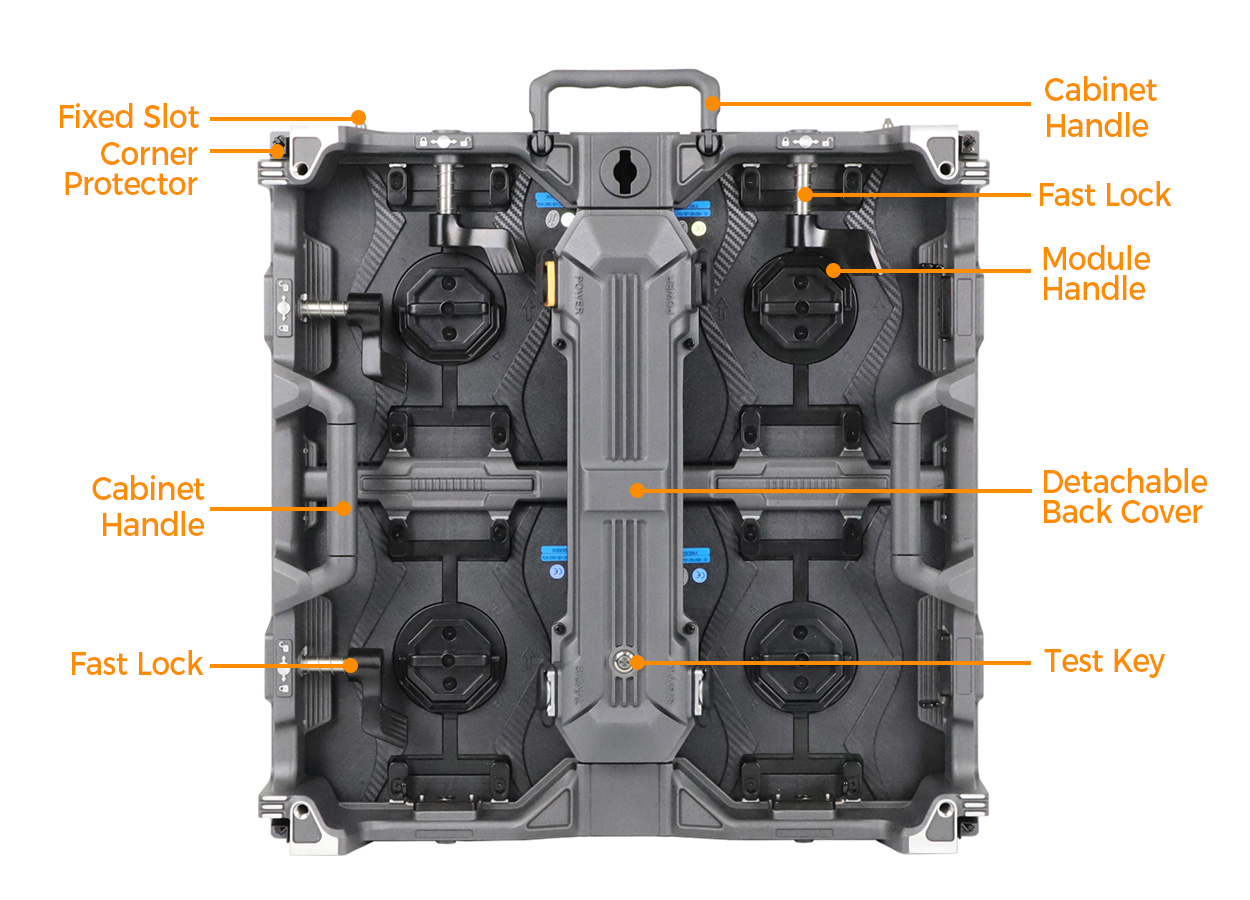
| Protruding features | Are handles, locks and connectors accommodated? | Fit check using the ordered configuration. |
| Accessories | Can contents remain secured in their assigned places? | Compartment list and packing instructions. |
| Closure | Does the case close correctly when fully loaded? | Loaded-case demonstration and acceptance record. |
Ask whether the case has been designed for the exact hardware revision. A changed connector housing, protective corner or mounting bracket can alter the fit. LED display flight cases should be reviewed again when a relevant equipment dimension or packing configuration changes. Keep the revision relationship in the purchase record.
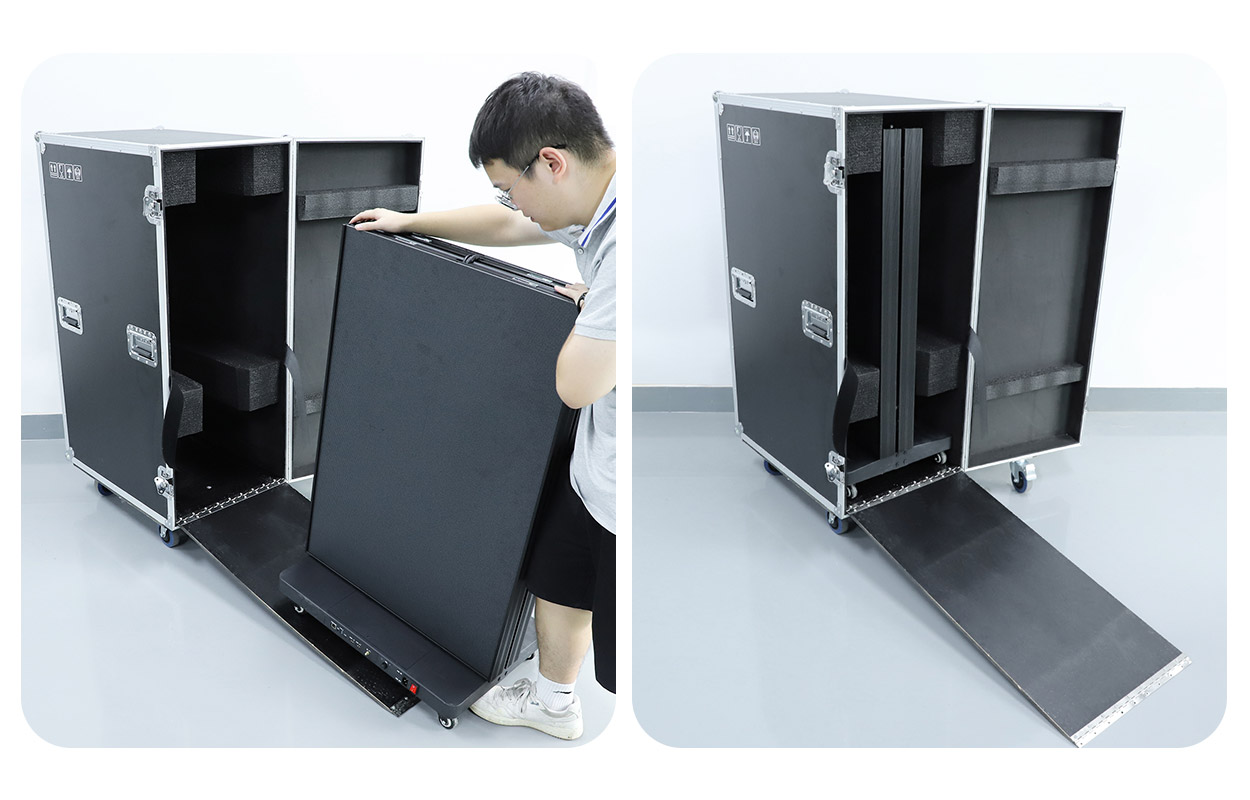
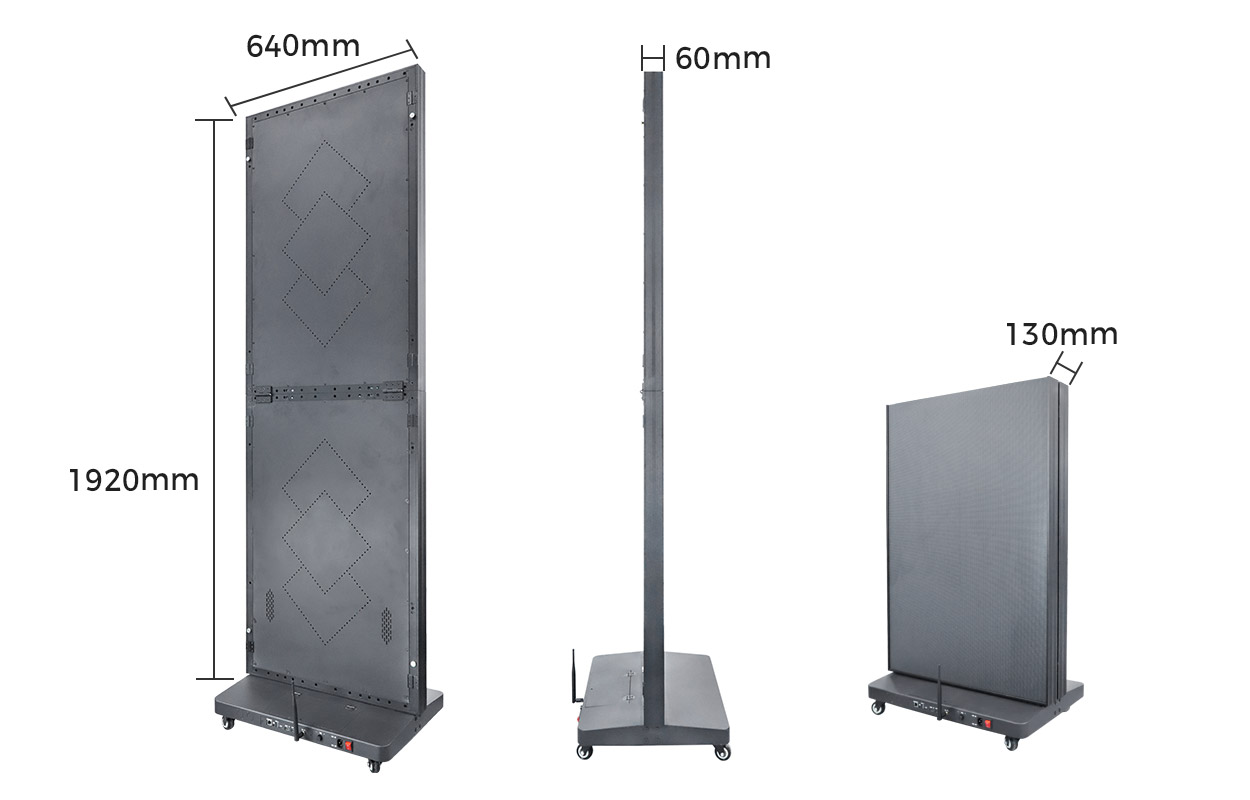
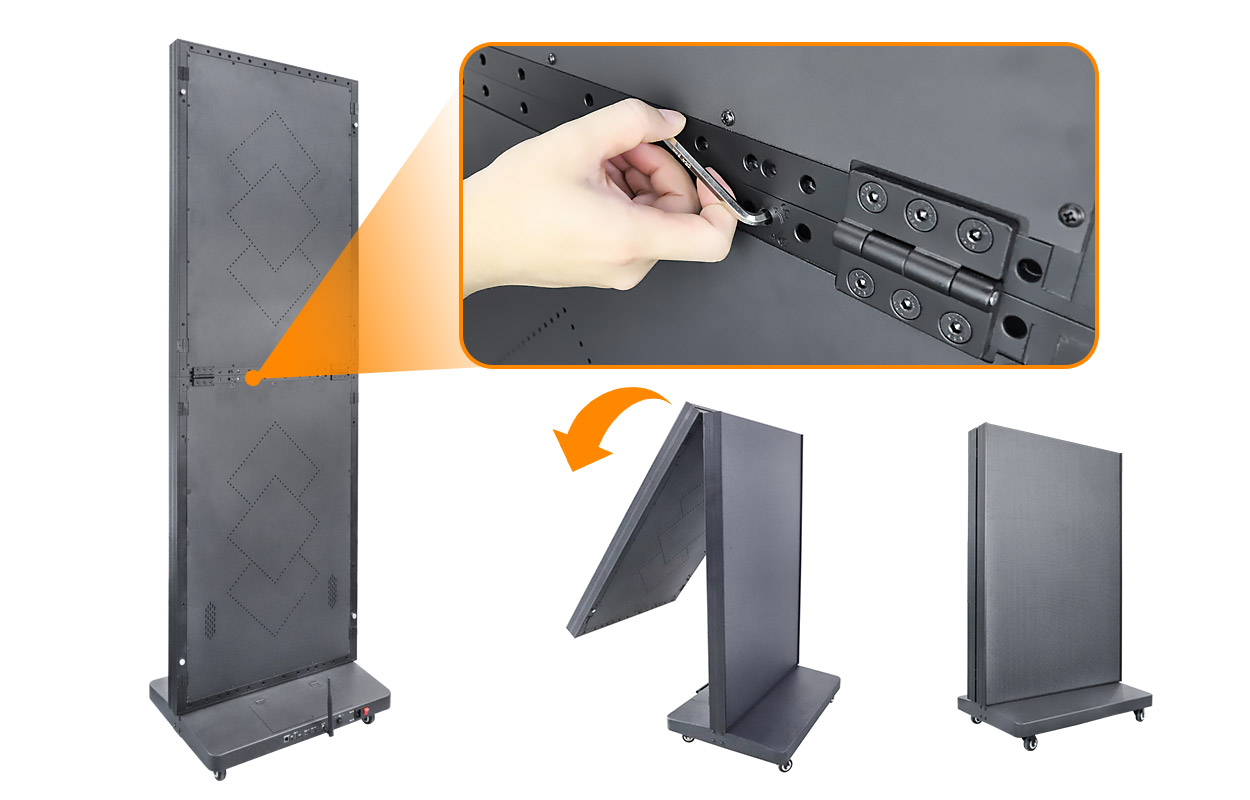
For folding products, specify the transport position separately from the operating position. The EA1920iP4 product page illustrates a folding display and its case. That example does not establish the dimensions, handling method or capacity of a case offered for another model.
Do not treat a successful fit demonstration as proof of a particular shipping test or certification. If the purchase requires test evidence, identify the applicable report and the configuration it covers. LED display flight cases should be described only with claims that the supplier can substantiate for the delivered design.
3. Calculate the case schedule from approved capacities
Calculate package counts only after the supplier confirms how many units of each type belong in a case. Round up separately for incompatible item groups. Include spare equipment, processors and accessory cases in the final schedule. A cabinet quantity alone cannot establish total freight volume or a complete vehicle loading plan.
The following example is purely arithmetic. Assume one approved case type holds four large cabinets and another holds six small cabinets. These capacities are invented for illustration and are not recommendations or specifications for EagerLED products. The actual LED display flight cases may use different capacities and configurations.
| Item group | Quantity | Assumed approved capacity | Cases required |
|---|---|---|---|
| Large cabinets | Twenty-four | Four cabinets per case | Six |
| Small cabinets | Eighteen | Six cabinets per case | Three |
| Additional large spare | One | Same dedicated case type | One additional partly filled case |
| Processors and accessories | Project-specific list | Separate packing approval required | Not determined by this example |
The extra spare changes the large-cabinet total from six full cases to seven cases. The partly filled case needs an approved arrangement too; empty positions do not authorize improvised packing. This is one reason LED display flight cases should be calculated from the complete order rather than the main screen quantity alone.
Compare alternative packing proposals using the same equipment list. Fewer large packages may change access and handling needs, while more small packages can increase counting and storage work. LED display flight cases should be evaluated with the people who will receive and move them, not only by the number of boxes shown on the quotation.
Keep each case type on its own schedule line even when the quoted prices are identical. Separate lines make it easier to reconcile a partial delivery and identify which package is missing. Add an actual weight and measurement record when the completed shipment is ready, then reconcile material differences with the earlier estimate.
For each case type, request the largest external dimensions in the shipped condition. Confirm whether wheels, handles, wrapping or a pallet alter those dimensions. Record gross weight including the case and contents. Keep equipment net weight as a separate field so it cannot be mistaken for the shipment weight.
For illustration, a rectangular package measuring 1.2 × 0.8 × 0.9 m has a geometric volume of 0.864 m³. Ten identical packages total 8.64 m³ before considering loading constraints. This calculation is not a truck-capacity guarantee: orientation, stacking approval, clearances and load securing still need the transport provider’s plan.
Carrier charging methods also vary. FedEx’s dimensional-weight explanation describes charging by dimensional or actual weight, whichever is greater, for the service context on that page. Obtain the current method from the selected carrier. Do not apply one parcel divisor to every route or freight service.
4. Review handling, storage and site access
Check the proposed packages against the actual delivery route. A case may fit a truck but fail to pass a narrow venue turn or lift entrance. Give the logistics team the confirmed case schedule, dimensions and weights. Ask it to review unloading, movement, storage and the equipment needed at the destination.
LED display flight cases with wheels still need an approved handling plan. Wheels do not establish suitability for stairs, ramps, rough ground or every floor surface. Ask the supplier to identify intended use and the transport team to assess the actual route. Do not infer a one-person handling allowance from a promotional demonstration.
Record which parts of a case can be used for handling and which cannot. Handles, lifting points and securing points may have different intended functions. The responsible team should use the supplied instructions and verified ratings. This guide does not assign a load capacity to any visible fitting.
Stacking must be confirmed for the exact loaded condition. LED display flight cases should not be stacked because another company’s case looks similar or because the empty boxes seem stable. Obtain the supplier’s limits and the transport provider’s approval for the planned arrangement. Mark unknown stacking capability as unresolved.
Plan storage for both loaded and empty cases. At an event, empty packaging can occupy space that was not visible in the screen’s floor plan. Confirm where cases will remain, who controls access and how they return for strike. A missing case can delay repacking even when the display itself is working correctly.
Environmental protection also needs a defined scope. The name LED display flight cases does not prove water resistance or safe outdoor storage. Request the relevant limitations and keep cases in the approved conditions. If the route may expose packages to weather, the logistics plan must address that exposure explicitly.
5. Accept the delivered LED display flight cases
Prepare the receiving process before the shipment arrives. Assign someone to compare case identifiers and package counts with the packing list. Record visible condition before opening and retain photographs where needed. If damage or a discrepancy is found, preserve the evidence and follow the agreed supplier and carrier reporting process.
Inspect the contents using the approved unpacking method. Separate a case problem from an equipment problem in the record. A damaged wheel, a missing accessory and a damaged module require different follow-up. LED display flight cases should not be accepted merely because the main display powers on after delivery.
| Finding | Record | Disposition to obtain |
|---|---|---|
| Package count matches | Case identifiers and receiving signature | Continue with contents inspection. |
| Visible case damage | Location, photographs and arrival condition | Supplier or logistics assessment before reuse. |
| Contents differ from list | Actual items and missing or extra identifiers | Reconcile shipment and inventory records. |
| Internal support differs | Comparison with approved packing arrangement | Technical review before repacking. |
| Returned item condition uncertain | Separate hold status and responsible owner | Inspection and release before next deployment. |
Verify the labels remain readable when cases are positioned normally in storage. A label hidden under a removable cover may not help a warehouse crew identify the contents. Use an agreed identifier that links the case, packing list and equipment record. Keep personal contact details or unnecessary sensitive project information off widely visible labels.
For LED display flight cases, retain a reference photograph of the accepted internal arrangement. The next crew should know which spaces belong to which items without relying on memory. If the accepted arrangement differs from the original proposal, update the packing instruction and identify the revision that now governs reuse.
6. Control return packing and repeated use
After an event, reconcile equipment before closing the cases. Use the same approved slot and accessory list that supported the outbound shipment. Record substitutions, damaged items and missing pieces. LED display flight cases should return with an accurate contents record, not simply with every available space filled.
Inspect reusable packaging as part of the return process. Look for changes to the shell, closures, wheels and internal supports, then obtain the appropriate assessment where condition is uncertain. Do not assume a case remains fit for service because it completed the previous trip. Separate damaged packaging from ready equipment.
Keep replacement packing materials controlled. An improvised insert can change how the equipment is supported or prevent proper closure. Ask the case supplier for approved replacements and retain their identity in the service record. LED display flight cases need a repeatable packing arrangement across crews and locations.
For mixed fleets, label approved compatibility explicitly. An empty case should not automatically receive any cabinet that appears to fit. If equipment is moved between case groups, verify the permitted configuration and revise the contents list. This helps prevent an urgent load-out from creating a hidden mismatch.
Review recurring issues with the supplier using evidence. Identify the case revision, equipment, route, handling conditions and photographs. Avoid claiming a design failure from an unexplained mark, but do not hide a repeated pattern. LED display flight cases can be improved more effectively when the discussion is tied to specific observations.
Keep the empty-case location visible in the event plan. If packaging is moved to an off-site warehouse, identify the return booking and the person who releases it. Include enough time for inspection before strike. This makes packaging availability a planned dependency rather than a last-minute search.
7. LED display flight cases FAQ
Does the name flight case mean airline approval?
No. LED display flight cases need acceptance by the actual carrier for the specific shipment. Confirm dimensions, gross weight, packaging and handling requirements with that carrier. Do not treat the product name as evidence of a certification or an airline baggage allowance.
How many cases should a quotation include?
Calculate from the approved capacity of each case type and the complete equipment list, including spares. LED display flight cases for accessories may add packages. Ask for a case-by-case packing schedule rather than estimating only from the main screen’s cabinet count.
Can different cabinet sizes share a case?
Only if the case design explicitly supports that mixed arrangement. LED display flight cases require approved separation and support for every item. Similar overall dimensions or spare space do not establish that a mixed load is suitable.
Which weight should the freight quote use?
Provide the actual packed gross weight and external dimensions requested by the transport provider. Equipment net weight excludes packaging. LED display flight cases may also be assessed under dimensional-weight or other service rules, which the selected provider must confirm.
Can we stack loaded cases in storage?
Use only the verified limits for the exact case and loaded condition, with the responsible storage team’s approval. LED display flight cases have no universal stacking allowance established here. Keep an unknown rating unresolved until the supplier provides suitable instructions.
Can existing cases serve a new screen purchase?
Have the supplier review their identity, condition, internal layout and intended equipment. Reused LED display flight cases may need approved changes or may be unsuitable. Compare against the new cabinet configuration before treating reuse as a confirmed budget saving.
What should we do when packaging arrives damaged?
Document the condition and affected identifiers, preserve evidence and follow the agreed reporting process. Do not reuse uncertain LED display flight cases until the responsible party assesses them. Separate equipment inspection from the decision about whether the packaging remains serviceable.
8. Conclusion
LED display flight cases should be purchased with a defined packing arrangement, reliable dimensions and clear operating limits. Check fit, count the complete shipment, review the delivery route and keep receiving and return records. These steps make reusable packaging easier to manage across projects and crews.
For an EagerLED order, send EagerLED your cabinet list, spares and transport requirements. Include the destination access constraints and any cases you hope to reuse. Those details support a practical proposal for LED display flight cases and a packing schedule that can be reviewed before shipment.