A sample cabinet from an LED display manufacturer can look convincing during a demonstration and still leave important purchasing questions unanswered. Will production units use the approved components? Will adjacent cabinets match at the brightness your customer actually needs? Can a technician replace a module without creating a visible patch?
An LED display manufacturer audit helps buyers investigate those questions before committing to production. For distributors, AV integrators, and project contractors, its value lies in connecting product requirements with the factory’s ability to repeat, document, and support them.
This guide explains how to assess an LED display manufacturer through practical checks covering materials, assembly, image performance, reliability, and shipment release. Use it to build an order-specific quality control checklist when discussing a project with EagerLED or another supplier. Acceptance limits should come from the approved specification, applicable requirements, and operating environment.
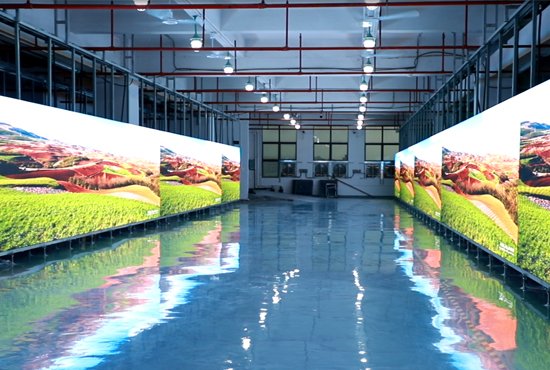
1. What Does an LED Display Manufacturer Audit Cover?
An LED display manufacturer audit evaluates whether a factory has the people, processes, equipment, and records needed to produce the agreed display consistently. It examines how requirements reach the production line, how defects are controlled, and how delivered products remain traceable.
The scope should identify the factory address, product family, manufacturing stages, and subcontracted operations. A supplier that assembles cabinets may purchase finished modules; another may also perform printed circuit board assembly. Both arrangements need clear accountability and effective controls.
Ask the LED display manufacturer to identify who approves materials, authorizes production changes, releases finished goods, and investigates field failures. These responsibilities should remain clear when sales, engineering, and production disagree about a delivery deadline.
A useful audit report records four things for each checkpoint: the requirement, evidence examined, finding, and action owner. Mark unavailable evidence as unverified. A verbal assurance should not receive the same status as an observed process supported by current records.
For example, an unresolved component substitution calls for engineering review. A missing inspection signature requires confirmation that the inspection happened. Those findings have different implications and should not disappear into a single average score.
2. Pre-Audit Checklist: Documents, Certifications, and Capacity
Send the LED display manufacturer a project brief before arranging the audit. Include screen dimensions, pixel pitch, installation method, viewing conditions, service access, destination market, control system, and commissioning deadline. Specify camera use, coastal exposure, or restricted ventilation where relevant.
Agree which records will be available and ensure the people responsible for quality and engineering can attend.
| Audit area | Evidence to request | Buyer decision supported |
|---|---|---|
| Company and factory identity | Business details, manufacturing address, contracting entity | Confirm who manufactures and who carries contractual responsibility |
| Product definition | Approved drawings, bill of materials, revision history | Establish exactly what will be supplied |
| Quality management | Procedures, internal findings, corrective-action examples | Assess whether controls operate beyond written policy |
| Product conformity | Applicable declarations, model-specific reports, certificates where required | Check relevance to the configuration and destination |
| Measurement capability | Instrument list, calibration status, test procedures | Determine whether performance claims can be verified |
| Production capacity | Current workload, process schedule, test and rework capacity | Evaluate whether the delivery plan is credible |
01. Separate management certification from product conformity
ISO 9001 concerns a quality management system. Certification does not certify every display model or ensure every shipped unit conforms. Check the certificate’s scope, covered site, and status with the issuing body.
For EU-bound equipment, a CE logo alone is insufficient evidence. Review the applicable conformity assessment and EU declaration of conformity, together with supporting documentation relevant to the supplied product.
Ask the LED display manufacturer how configuration changes are reviewed against existing reports. A document covering another enclosure or power configuration needs an explained technical basis for applicability.
Capacity also needs context. An LED display manufacturer may have available assembly labor but limited calibration space or aging positions. Review the bottleneck for your product and how rework would affect the promised shipment date.
3. Incoming Quality Control: LEDs, Driver ICs, and Power Supplies
Incoming quality control, or IQC, determines whether purchased materials are suitable for production. Start with the approved bill of materials, including controlled alternatives. Brand names alone leave room for differences in component series, electrical characteristics, and optical performance.
At the receiving area, have the quality team demonstrate how an incoming lot is identified, checked, accepted, or quarantined. Then examine how its identity follows the material into production.
| Material | Practical verification | Evidence to retain |
|---|---|---|
| LED packages | Confirm specified part, optical grouping, polarity, and storage requirements | Lot identification, supplier documents, incoming results |
| Driver ICs and PCBs | Check part markings, board revision, dimensions, and specified electrical features | Approved BOM, board inspection record, revision approval |
| Power supplies | Verify exact model, output specification, connectors, and intended operating conditions | Model record, incoming checks, relevant technical documentation |
| Receiving cards and cables | Confirm hardware versions, compatibility, pin assignments, and cable construction | Approved configuration and incoming inspection record |
LED optical grouping, often called binning, helps manage variation between components. The audit should establish how the factory controls grouping across an order and its service spares, without assuming binning alone guarantees a uniform screen.
A capable LED display manufacturer should also control substitutions. Agree which changes require written buyer approval and what verification must follow. A component described as equivalent may still affect calibration, power loading, or repair compatibility.
Choose an actual rejected material record and review its disposition. Was it returned, reworked, or approved under a documented concession? The LED display manufacturer should be able to explain who made that decision and how unintended use was prevented.
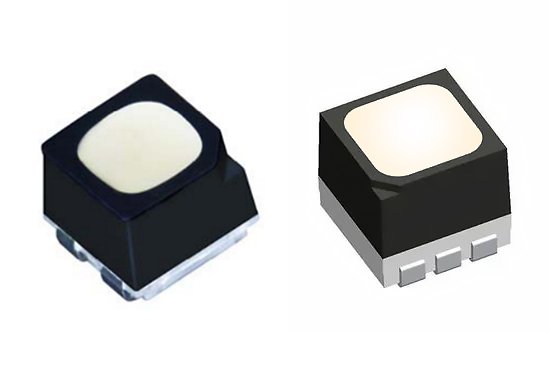
4. Production Quality Control: SMT, Soldering, and Assembly
Production controls need to match the display architecture. A conventional surface-mount device module, a coated module, and a chip-on-board product do not share every manufacturing step. Ask the LED display manufacturer to show the process route for the quoted product.
01. Review assembly settings and defect handling
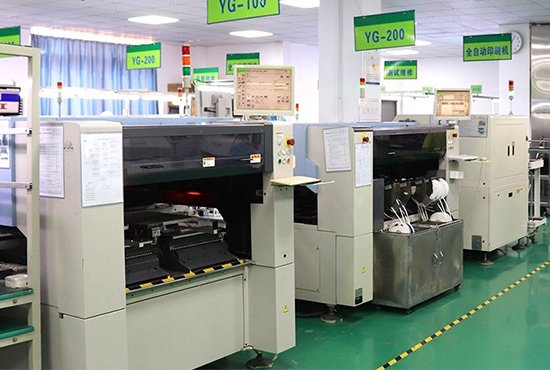
For surface-mount technology, or SMT, review solder-paste handling, placement setup, reflow-profile approval, and inspection arrangements. Check that work instructions match the current PCB and component revisions.
Automated optical inspection can help identify visible assembly defects, but the audit should establish its coverage and how flagged boards are evaluated. Equipment ownership alone says little about settings, operator response, or repeated fault patterns.
Request an example of a recurring assembly defect. Review the initial finding, affected production, repair method, and evidence that the corrective action worked. The LED display manufacturer’s repair records should show how affected modules re-enter inspection and reliability screening.
02. Check ESD controls and mechanical consistency
Electrostatic discharge can damage sensitive electronics, including damage that escapes immediate detection. Review the controls appropriate to each handling stage: personnel grounding, work surfaces, verification records, and protective packaging.
At cabinet assembly, examine connector retention, cable routing, fastening instructions, module seating, and alignment. Assemble adjacent cabinets to assess seams and flatness in the intended arrangement. Inspect how protective earth connections are implemented where required by the design.
Ask for a module replacement demonstration using the intended service method. Observe access, connector handling, retention, and alignment after refitting. This gives an AV integrator useful information about maintenance effort before the display reaches a difficult installation site.
The LED display manufacturer should document any mismatch between the approved service concept and what technicians can actually perform on the assembled product.
5. LED Display Testing: Brightness, Color, and Dead Pixels
Performance testing should reproduce the settings that matter to the project. A display that looks uniform at high brightness may reveal uneven dark tones when dimmed for a meeting room or studio.
Have the LED display manufacturer record the controller, receiving-card firmware, configuration, brightness setting, test content, and measurement conditions. Those details make results repeatable and help distinguish hardware faults from configuration errors.
| Test | How to evaluate it | What to record |
|---|---|---|
| Pixel and subpixel defects | Display primary colors, white, black, and suitable low-level patterns | Fault location, type, persistence, and agreed disposition |
| Brightness | Measure under an agreed pattern and operating condition after stabilization | Instrument, geometry, settings, measured luminance |
| Color and uniformity | Compare cabinets and modules using neutral fields and specified color targets | Measurement positions, calibration state, visible differences |
| Low grayscale | Inspect dark ramps and low-level neutral images at operating brightness | Lost detail, abrupt transitions, tint, or uneven patches |
| Camera performance | Test the intended camera modes and display signal chain | Frame rate, shutter settings, synchronization, observed artifacts |
| System functions | Exercise mapping, restart behavior, inputs, and purchased backup functions | Configuration, interruption behavior, recovery result |
01. Define defects before counting them
A dead pixel, a failed red subpixel, a stuck-on emitter, and an intermittent row fault are different findings. Agree the counting unit, defect categories, viewing conditions, and treatment of clusters before inspection.
The LED display manufacturer and buyer should document acceptance criteria for the actual application. A generic allowable percentage can conceal a distracting cluster or an entire faulty line. Avoid translating a cabinet sampling rule into an allowable pixel-defect rate.
02. Verify calibration and camera behavior separately
Calibration adjusts brightness and color output to improve uniformity. Ask for configuration backups and a practical demonstration of restoring the correct data after servicing.
A refresh-rate specification alone cannot establish camera suitability. Camera exposure and LED drive timing interact. Include the intended brightness and camera settings in acceptance testing.
For virtual production or broadcast projects, arrange a witnessed camera test involving the LED display manufacturer and integrator. Separate timing artifacts from moire and other camera-dependent effects so that each finding has an appropriate remedy.
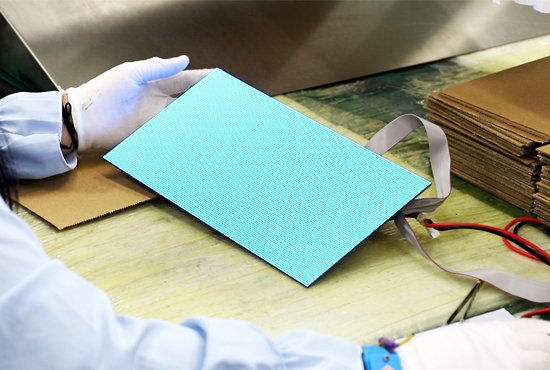
6. Burn-In and Reliability Tests for Indoor and Outdoor LED Displays
Burn-in, often called aging in LED display production, operates the product under defined conditions to screen for failures. It provides useful production evidence, but its duration alone does not predict service life.
The burn-in procedure supplied by the LED display manufacturer should define the test stage, content sequence, electrical loading, ambient conditions, duration, and inspection intervals. Its records should identify the units tested and distinguish uninterrupted operation from time spent awaiting repair.
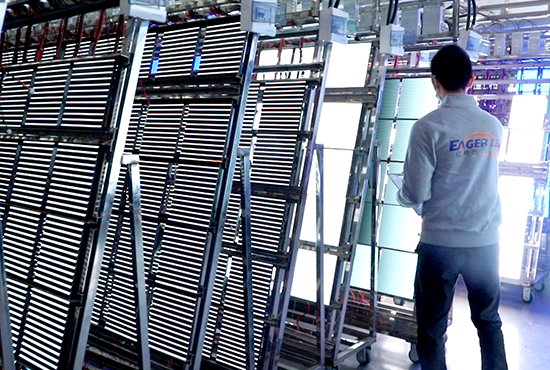
EagerLED’s published quality-control process describes module testing and aging of assembled displays. For a purchase order, confirm the procedure applicable to the selected model and request corresponding records. Public process descriptions provide a starting point for verification.
01. Match reliability checks to the installation
| Application | Conditions to discuss | Useful audit evidence |
|---|---|---|
| Indoor fixed installation | Restricted ventilation, operating brightness, access space | Thermal evaluation under relevant loading and service demonstration |
| Outdoor advertising | Rain exposure, dust, solar heating, drainage | Enclosure test documentation and review of installation interfaces |
| Rental and staging | Repeated handling, connection cycles, transport damage | Lock and connector checks, assembly trials, protective packing review |
| Coastal or demanding environments | Salt exposure, condensation, cleaning practices | Materials and coating specifications with relevant validation evidence |
An LED display manufacturer should distinguish routine production screening from design qualification. Environmental testing on representative samples does not mean every shipped cabinet has undergone that test. Record the tested configuration and its relationship to the order.
IP classifications concern enclosure protection under defined conditions. Check the covered surfaces, connectors, installation orientation, and report scope. An IP claim does not by itself establish resistance to corrosion or performance in every outdoor environment.
Where protection depends on field sealing, drainage, or ventilation, assign those tasks explicitly. The LED display manufacturer and installation contractor need compatible assumptions about how the finished wall will operate.
02. Include electrical and power verification
Require an electrical test plan covering the checks applicable to the product’s design and destination. Review protective-earth continuity, insulation-related tests, and other required checks with qualified personnel using approved procedures. Keep design assessment evidence separate from routine production results.
For power planning, ask the LED display manufacturer to state the measurement conditions behind its figures: input supply, brightness, content, and operating mode. A reading taken with ordinary video should not be presented as maximum demand. The integrator needs suitable design information for distribution, cooling, and startup behavior, rather than one unexplained wattage figure.
7. Final Inspection: Sampling, Packaging, and Acceptance Criteria
Final inspection should reference the approved order revision, including authorized changes. Confirm quantities, cabinet layout, accessory scope, and the identity of the units offered for inspection.
Before the visit, agree with the LED display manufacturer which checks cover every unit and which use sampling. Sampling requires a defined lot, inspection unit, selection method, defect classification, and acceptance or rejection rules.
Acceptance quality limit, or AQL, is a parameter used in specified sampling schemes. It is not a guarantee that a shipment contains no defects, nor a blanket permission to ship a stated percentage of faulty pixels.
The LED display manufacturer should present the lot for buyer- or inspector-controlled selection. Where practical, inspect an assembled wall or an agreed representative arrangement to expose mapping, cabinet-matching, and seam issues that isolated cabinet checks can miss.
Review the shipment as a working system:
- Match packing labels and serial numbers to the cabinet layout and inspection records.
- Reconcile spare modules, power supplies, receiving cards, cables, and service tools with the order.
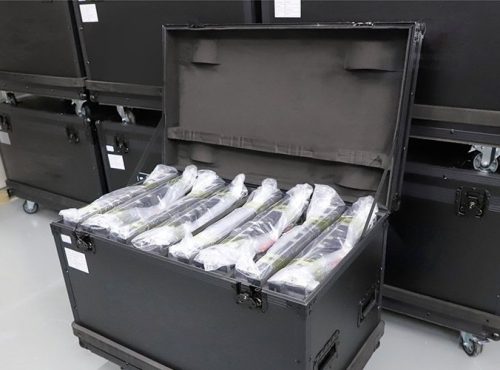
- Verify edge protection, cabinet restraint, accessory separation, and suitable protection for sensitive electronics.
- Retain approved configuration files, calibration backups where applicable, drawings, and service instructions.
Document failures with their location, requirement, evidence, and required action. For a rejected lot, agree containment, rework, and reinspection scope before release. Repairing the units found in a sample does not establish that the remaining lot is acceptable.
The LED display manufacturer’s final release record should identify the packed goods it covers. Factory acceptance should also be distinguished from site acceptance, which addresses installation, connectivity, and operation in the completed venue.
8. Factory Audits vs. Product Inspections: Benefits and Limits
A factory audit assesses production capability and control. A product inspection evaluates identified goods against agreed criteria. Laboratory testing answers defined technical questions about submitted samples.
| Activity | Best use | Practical limitation |
|---|---|---|
| Factory audit | Evaluate process control, traceability, resources, and accountability | Does not approve every future shipment |
| Pre-shipment inspection | Check the available order before release | Limited by access, selection, inspection scope, and timing |
| Laboratory testing | Verify specified characteristics using controlled methods | Findings apply to the tested samples and stated conditions |
For a new LED display manufacturer, combine the activities according to project risk. A factory review can reveal a weak change-control process before production. A shipment inspection can establish whether the delivered configuration matches the order. Relevant laboratory evidence can address tests that a routine factory visit cannot perform credibly.
Choose auditors for their ability to evaluate electronics manufacturing and the intended display application. A general merchandise inspection may miss receiving-card configuration, calibration retention, or low-grayscale behavior. Conversely, a display demonstration alone leaves purchasing and process controls unexplored.
An LED display manufacturer may perform reliable internal checks, while the buyer adds independent verification where uncertainty remains. Agree the division of work so that important checks have an owner and duplicate visits do not consume time without adding evidence.
9. How to Compare LED Display Manufacturers and Spot Quality Red Flags
Compare quotations only after aligning the technical and service scope. Pixel pitch and screen area leave many variables unresolved: component selection, cabinet construction, access method, control hardware, spares, and acceptance testing.
When comparing one LED display manufacturer with another, rate each requirement as verified, partly verified, unverified, or nonconforming. Attach the supporting record and identify its product scope. Separate requirements that must be satisfied from preferences that can be traded against price or lead time.
Give particular attention to these findings:
- Production records identify different components from the approved BOM without an authorized change.
- A claimed test has no identifiable units, conditions, or recorded results.
- Failed or uninspected materials can return to production without controlled disposition.
- Recurring defects are repaired repeatedly without investigation of their cause.
- Warranty wording leaves responsibility for diagnosis, freight, replacement, or configuration support unclear.
Request a corrective-action response with an owner, completion date, and evidence needed for closure. Depending on the finding, closure may require a document check, observed demonstration, reinspection, or further technical testing.
An LED display manufacturer that identifies a limitation and proposes verifiable corrective work gives buyers a clearer basis for a decision than an unsupported assurance of compliance. Supplier approval can be conditional on completing that work before production or shipment, as appropriate.
For EagerLED project discussions, prepare one shared brief for purchasing, engineering, and installation teams. Include operating conditions, required evidence, acceptance responsibilities, and service expectations. This makes the supplier comparison relevant to the wall you intend to commission and maintain.
10. FAQ
01. Can I audit an LED display manufacturer remotely?
Yes, for activities suited to remote review. Request a live walkthrough with locations and records selected by the auditor, visible product identifiers, and access to engineering staff. Record gaps caused by camera coverage, connectivity, or unavailable areas. Use an onsite auditor when physical measurements, sample selection, or unresolved findings require direct access.
02. How much does an LED display manufacturer audit cost?
Cost depends on location, duration, auditor expertise, product complexity, subcontractor visits, and required testing. Request a quotation separating document review, onsite work, reporting, travel, and follow-up. Compare the deliverables as well as the fee; two audit quotations may cover substantially different work. There is no defensible universal price for every project.
03. Is a factory audit worthwhile for a small LED display order?
Order value is only one consideration. A small display with difficult access or a fixed opening date can still have costly failure consequences. Start with document review and sample evaluation, then expand verification around unresolved risks. A standard replacement order from a proven source may justify a narrower scope than a new custom design.
04. Does a passed audit cover repeat orders from the same supplier?
A previous audit is useful background, but repeat orders still need configuration and quality review. Ask the LED display manufacturer to disclose relevant changes in components, production location, subcontractors, and processes. Reassessment becomes more important after persistent field failures, significant design changes, or a long gap since the last meaningful review.
05. What should a distributor request for private-label displays?
Agree access to model identification, production traceability, configuration files, approved artwork, service instructions, and relevant conformity documentation. Decide who maintains revisions and responds to technical queries. Branding does not remove product responsibilities. For EU-bound products, selling a display made for you under your own brand can place you in the manufacturer role.
06. What happens if replacement LED modules are discontinued?
Discuss obsolescence before ordering. Ask the LED display manufacturer about change notifications, spare inventory options, compatibility review, and repair routes. Keep module revisions and calibration information with the project records. A later module with matching dimensions and pixel pitch may still differ in electronics, optical behavior, or configuration requirements; approve replacements through testing.
07. What if the factory will not share confidential production records?
Agree a confidentiality arrangement and request redacted examples or supervised review. Customer names and commercial prices may be unnecessary for verifying process control. However, the auditor still needs enough information to connect materials, production, and test results. Record any remaining evidence gap and its effect on the purchasing decision.
08. Should the final balance depend on passing inspection?
Agree payment and release milestones with the LED display manufacturer before placing the order. Define the required report, acceptance authority, handling of nonconformities, and evidence of completed corrective work. Keep those milestones consistent with the contract and shipping arrangements. An inspection report does not independently change agreed payment terms or eliminate later warranty obligations.
11. Conclusion
An LED display manufacturer audit is most useful when it produces a purchasing decision supported by identifiable evidence. The essential checks connect the approved specification with materials, production controls, display performance, application conditions, and the goods prepared for shipment.
Use the findings to resolve uncertainties while there is still time to change components, improve a process, or repeat a test. Keep the accepted configuration and release records available to the people who will install and service the display.
When selecting an LED display manufacturer, assess how clearly the supplier explains its methods and demonstrates results for your project. To discuss an EagerLED solution, send the team your project brief and audit requirements, including the destination, installation environment, technical specification, and acceptance plan. That information provides a practical basis for aligning the product, verification work, and delivery scope.