

Choose an outdoor LED display by matching viewing distance, screen resolution, sunlight exposure, weather protection, service access, and total installed cost. Start with the message people must read, then select the hardware that can deliver it reliably at your site. The smallest pixel pitch or highest brightness is not automatically the best purchase.
This LED outdoor display buying guide explains how the system works, compares practical specifications, and shows how to evaluate proposals for shops, billboards, stadiums, and events. It includes calculation examples and a purchasing checklist so you can ask suppliers for measurable evidence instead of relying on broad claims such as “HD,” “waterproof,” or “energy saving.”
By Miki · Published by EagerLED · Updated
Editorial scope: EagerLED manufactures LED displays. This guide combines its published product specifications with buyer evaluation criteria. Examples are calculations, not customer test results; confirm the configuration, installation design, and quotation for your own site.
How to Choose Outdoor LED Displays: Six Buying Checks
The best outdoor LED display is the one that passes your site and content tests at an affordable total ownership cost. Compare proposals using the same screen area, native resolution, luminance, operating hours, and installation scope. Use these six checks before selecting a supplier:
- Define the audience and message. Record the nearest and typical viewing distances, viewing angles, and smallest essential text. Use a sample of your actual advertising, scores, or notices to judge readability.
- Select the installation type. Choose fixed cabinets for permanent signage or outdoor-rated rental cabinets for repeated assembly. Confirm exposed-weather suitability for transparent designs.
- Confirm the cabinet layout and pixel map. Request exact screen dimensions and native pixels, not only a P-number or an “HD” label. Check whether the processor can map your content without unreadable scaling.
- Test daylight and nighttime operation. Verify calibrated brightness at the intended site, then demonstrate dimming, dark gradients, and sensor fallback. Include camera tests for recorded events.
- Verify protection and maintenance. Obtain front and rear IP ratings, environmental limits, connection details, and a demonstration of replacing modules and power supplies. Agree safe service access with the installer.
- Compare the complete cost and acceptance terms. Include controls, mounting, electrical work, delivery, commissioning, spares, electricity, and support. Put the agreed tests and warranty exclusions in writing.
For detailed specification ranges, use our outdoor LED screen brightness and cost guide. The checklist here focuses on turning those specifications into a purchase decision.
1. What Is an LED Outdoor Display?
An LED outdoor display is a modular, direct-view screen engineered for outdoor operation. Red, green, and blue light-emitting diodes form pixels; their combined output produces full-color images and white. Modules fit into cabinets, usually made from aluminum or steel, and cabinets join to create the required display area.
How do outdoor LED screens work?
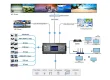
A media player or live video source supplies content to a controller. Receiving cards distribute image data to the modules, and driver circuits regulate the LEDs. Power supplies convert incoming electricity to the voltages the electronics require. A content management system may schedule playlists, but internet access, Wi-Fi, cellular connectivity, and remote monitoring depend on the selected control hardware.
An outdoor LED display therefore needs more than LED panels. The complete system includes mounting, power distribution, signal transmission, environmental protection, and a way to maintain it. Confirm who supplies and supports each part before comparing prices.
Outdoor LED display versus LCD and indoor LED
Direct-view LED scales to large dimensions without the fixed panel sizes of conventional LCD signage. Outdoor-rated LCD can still suit compact information kiosks and close-view menus. Indoor LED modules are not made outdoor-ready simply by increasing brightness or putting a roof above them. Exposure, enclosure design, condensation, and heat must all be assessed.

2. Why Businesses Choose Outdoor LED Displays
The main value of an outdoor LED display is the ability to change a visible message quickly. A retailer can schedule offers, a venue can show event information, and a campus can replace outdated notices without printing another sign. These advantages depend on appropriate content, reliable operation, and a suitable location.
Visibility and timely communication
Good visibility comes from adequate luminance, strong contrast, readable typography, and a clear sightline. A bright outdoor LED display cannot compensate for tiny lettering or a tree blocking the screen. Test a sample message from the intended viewing position, including off-axis approaches, before approving the design.
Operational flexibility and measurable value
Assign ownership of the content calendar, approval process, and emergency overrides. Use scheduled playlists for routine information and retain an offline fallback if connectivity fails. For advertising, measure attributable enquiries, offer redemptions, or contracted advertising revenue. Avoid treating foot traffic as guaranteed sales or assuming an LED outdoor display will pay for itself within a fixed period.
3. Understanding the Types of LED Outdoor Displays
Choose the installation category before choosing pixel pitch. An outdoor LED display built for permanent wall mounting has different handling and maintenance requirements from a screen transported between events.
| Type | Suitable application | Critical buying check |
|---|---|---|
| Fixed cabinet | Building signage and permanent billboards | Structure, sealing, cooling, and safe service access |
| Rental cabinet | Touring productions and temporary events | Approved rigging, locks, handling protection, and spare panels |
| Transparent or mesh | Facades where light transmission matters | Actual transparency, viewing distance, and outdoor rating |
| Stadium perimeter | Advertising beside the playing area | Protective design, support angle, and camera performance |
| Custom curved display | Corners and architectural installations | Cabinet geometry, content mapping, and replacement access |
Fixed and rental configurations
A fixed outdoor LED display should be specified around the site and its service life. A rental system emphasizes repeated assembly, transport, and inspection. Rental describes the equipment category; a manufacturer selling rental cabinets does not necessarily provide local event hire, operators, or rigging services. Confirm those services separately with the event contractor.

Transparent and custom configurations
Transparent LED structures contain visible LED strips or mesh rather than becoming perfectly clear glass when switched off. Some products belong behind glazing and are not rated for exposed installation. For an outdoor LED display on a facade, verify the complete assembly, wind behavior, cable routing, and viewing-angle performance. Curved surfaces also require content designed for their geometry.

4. Key Attributes to Check Before Buying an Outdoor LED Display
The top features of outdoor LED displays are useful only when the supplier explains how they are measured. Request configuration-specific data, rather than assuming every pixel pitch in a product family has identical performance.
Pixel pitch, viewing distance, and native resolution
Pixel pitch is the center-to-center spacing between adjacent pixels, measured in millimeters. P4 means approximately 4 mm; P10 means approximately 10 mm. At the same physical size, a smaller pitch gives more pixels. It can improve fine detail, but it also changes cost, data load, and component count.
Use the nearest important viewer, typical viewing distance, and smallest required text to shortlist pitches. The common “pitch in millimeters equals distance in meters” shortcut is only an initial screening rule, not a guarantee of comfortable viewing. Assess actual content on a sample outdoor LED display before committing.
Calculation: horizontal pixels = screen width in millimeters ÷ pixel pitch. Vertical pixels use the same formula with height. A hypothetical 6 m × 3 m screen at P5 has 1,200 × 600 pixels; at P10 it has 600 × 300 pixels. Neither is native Full HD. Final dimensions must match the available module and cabinet increments.
| Specification | What it affects | Evidence to request |
|---|---|---|
| Pitch and pixel resolution | Text detail and image clarity | Cabinet layout, native pixel map, and sample content |
| Calibrated brightness | Daylight readability | Measured luminance, operating mode, and dimming demonstration |
| Front and rear IP ratings | Dust and water ingress protection | Test scope covering the supplied enclosure and connections |
| Refresh and grayscale | Motion and low-brightness appearance | Camera test at intended shutter settings and screen brightness |
| Power consumption | Electrical capacity and running cost | Maximum load plus measured typical load with stated content |
| Service method | Repair time and access costs | Module, power supply, and receiving-card replacement demonstration |
| Environmental limits | Reliability at the actual site | Operating temperature, humidity conditions, and corrosion provisions |
Brightness and nighttime dimming
Brightness is expressed in nits, equivalent to cd/m². As a model-specific example, the EagerLED EA960F4 outdoor advertising display lists 6,000–6,500 cd/m² across its published P4.44–P10 variants. This is a specification for that product family, not a universal requirement for every location. Confirm calibrated output for the exact configuration offered.
For your outdoor LED display, evaluate direct sun, orientation, shade, reflections, and nighttime surroundings. Request an ambient-light sensor or a dependable dimming schedule where appropriate. Check whether darker operation still preserves readable detail and smooth gradients. Excessive nighttime output can cause glare and unnecessary energy consumption.
For additional technical comparisons, see our brightness, IP rating, and cost reference.
Weather protection and thermal design
The IEC 60529 IP Code classifies enclosure protection. IP65 indicates dust-tight protection and resistance to water jets under specified test conditions; it does not mean unlimited waterproofing. Ask whether front and rear ratings differ and whether connectors, service doors, and installed cable entries are included.
An outdoor LED display also needs suitable drainage, gasket maintenance, thermal management, and corrosion protection. A higher immersion rating alone does not establish suitability for salt exposure. Discuss coastal air, dust, freezing conditions, and solar heating separately. Do not cover ventilation openings or substitute enclosure materials without engineering review.
Service access and camera performance
Front service is useful when a wall prevents rear access, but confirm which components can actually be removed from the front. Rear service needs a safe working area behind the display. Compare the access equipment, isolation procedure, and time required for a routine module replacement.
If cameras will record the outdoor LED display, test the proposed panel and controller together. Refresh-rate marketing alone cannot guarantee freedom from bands or flicker at every shutter speed. Include live video, dark gradients, fine text, and the expected broadcast workflow in acceptance testing.
5. Outdoor LED Display Installation and Maintenance
Plan installation before ordering cabinets. An outdoor LED display is an assembled electrical and structural system, and decisions made at the quotation stage determine whether technicians can maintain it later.
Survey the site and agree responsibilities
Record dimensions, screen orientation, viewing positions, obstructions, access routes, and nearby occupied spaces. Have qualified local professionals assess the mounting structure, foundations, wind loads, electrical design, and applicable approvals. Define responsibility for these items explicitly; a cabinet quotation alone does not cover the complete installation.
For temporary events, obtain the approved support arrangement and operating limits from the rigging provider. Plan cable protection, audience separation, weather monitoring, and shutdown procedures. The assembly video below illustrates equipment handling; it is not a substitute for a site-specific structural plan.
Commission the complete system
Check cabinet alignment, signal mapping, grounding provisions, protected power connections, dimming, and content scheduling. Run full-screen color patterns to inspect failed pixels and module-to-module differences. Test power recovery and network interruption, then document the controller configuration, calibration files, and accepted image quality.
Build a maintenance plan
Set inspection frequency according to the manufacturer’s instructions and site exposure. Include seals, corrosion, drainage, fans or filters where fitted, connectors, and structural fasteners. Follow the specified cleaning method and electrical isolation procedure; an IP rating does not authorize pressure washing an outdoor LED display.
Keep compatible spare modules, power supplies, and receiving cards with clear labels and storage conditions. Request calibration data and confirm how a replacement module will be matched to an aging screen. Record faults, repairs, and brightness changes so recurring problems become visible before they cause a prolonged outage.
6. Real Use Cases by Industry
These are selection scenarios, not claims of measured customer results. The right outdoor LED display specification changes with the message, audience movement, and operating environment.
High-traffic retail and roadside advertising
For high-traffic locations, prioritize a message that can be understood during a short glance. Use large text, one main idea, and a strong foreground/background contrast. Assess approach angles and obstructions. A finer pitch will not rescue an overloaded layout. Test daytime and evening content on the proposed outdoor LED display and confirm local operating restrictions with the project team.
Stadiums and live events
A stadium outdoor LED display needs readable scores from the farthest relevant seats and useful video from closer positions. Ask for seating-distance analysis, scoreboard integration, camera tests, and a failure-recovery plan. Perimeter advertising requires a different cabinet arrangement from a large elevated video board. See EagerLED stadium LED display options when comparing those formats.
Transport hubs, campuses, and public notices
Timetables and wayfinding require legibility, reliable data feeds, and clear fallback messages when information is unavailable. Avoid decorative animation that competes with essential text. Define who can approve or override content, how updates are logged, and whether the outdoor LED display must keep playing locally when the network is unavailable.
7. Outdoor LED Display Pricing, Running Costs, and ROI
Outdoor LED display screen price depends on area, pitch, LED and driver selection, cabinet construction, brightness, controls, and service requirements. A price per square meter is meaningful only when the scope and specification match. Request a dated quotation for the exact configuration rather than treating an online range as a project budget.
| Cost item | Include in the quotation | Common omission |
|---|---|---|
| Screen hardware | Cabinets, modules, power supplies, receiving cards | Spare modules and calibration files |
| Control and content | Processor, player, software, and required licenses | Recurring subscriptions or mobile data |
| Site works | Structure, foundations, electrical work, and access equipment | Professional design and local approvals |
| Delivery and commissioning | Packaging, transport terms, installation, and testing | Import charges, training, and travel expenses |
| Operation | Electricity, content production, cleaning, and inspections | Cooling equipment and service access costs |
| Support | Warranty scope, response process, and replacement parts | Labor, return freight, and out-of-warranty repairs |
Calculate electricity using realistic assumptions
Daily energy in kWh = area in m² × average power in W/m² × operating hours ÷ 1,000. For illustration only, an 18 m² outdoor LED display averaging 250 W/m² for 12 hours consumes 54 kWh per day. At an assumed electricity rate of $0.15/kWh, that equals $8.10 per day, excluding other equipment and tariff charges.
These are calculation inputs, not measured EagerLED performance or a price offer. Replace them with your supplier’s measured data and local tariff. Typical consumption varies with content and brightness; maximum consumption is needed for electrical design. Compare competing screens using the same image sequence, luminance, area, and test duration.
Evaluate return without promising it
Estimate incremental gross profit or advertising income, then subtract electricity, content, maintenance, and other operating expenses. Compare the resulting annual net benefit with the full installed cost. Use conservative, expected, and optimistic scenarios for occupancy, sales attribution, downtime, and service costs. If the net benefit is uncertain, a short event hire or a smaller pilot may provide better evidence before a permanent purchase.
8. Outdoor LED Display Technology Trends Worth Evaluating
Assess new features through their measurable effect on your project. The outdoor LED display market includes many designs, but broad market-growth claims do not tell you whether a particular cabinet suits your site.
Energy efficiency and remote diagnostics
More efficient power designs, sensible brightness control, and scheduled operating hours can reduce consumption. Request side-by-side measurements before accepting a percentage-saving claim. Remote diagnostics can help identify temperature, power, or communication faults, but confirm what is actually monitored, who receives alerts, and whether access requires a subscription.
Finer pitch and creative content
Smaller-pitch outdoor LED display products can support closer viewing, while curved installations enable distinctive architectural content. Neither feature removes the need for site assessment. For an immersive corner display, content perspective and the viewer’s position matter as much as the cabinet shape. Choose an upgrade because it improves the audience’s experience or reduces operating effort, rather than because it is described as an AI feature.
9. Why Consider EagerLED, and How Should You Evaluate a Quote?
Use model-specific information as the starting point. For example, the EagerLED EA960F2 outdoor LED screen page lists a 960 × 960 mm cabinet, 480 × 320 mm modules, front and rear service, and an IP66 protection claim. Verify the exact pitch, brightness, power, and test documentation for the offered configuration before placing an order.
Compare rental LED display cabinets if repeated assembly is central to the project. For permanent advertising, review commercial LED display solutions. Select between product families by installation needs and evidence, not by brand claims alone.
Information to send with your enquiry
Provide the location, screen width and height, nearest and typical viewing distances, photographs of the site, sunlight direction, operating hours, content examples, and available maintenance access. Include the expected installation date and whether the request covers equipment only or a complete project. This makes outdoor LED display proposals easier to compare.
Evidence to obtain before acceptance
Request a cabinet layout, pixel map, electrical load schedule, bill of materials, service demonstration, spare-parts list, test records, and written warranty terms. Agree the acceptance criteria and responsibility for installation defects versus equipment faults. Ask how long compatible replacements are expected to remain available and how support handles a failed cabinet during operation.
10. FAQs About LED Outdoor Displays
How bright should an outdoor LED display be in sunlight?
The required brightness depends on sun exposure, screen orientation, contrast, and content. Compare calibrated output for the proposed model and test readability at the site. Specify nighttime dimming as well as daytime capability; the highest available nit rating is not automatically the best operating setting.
Is P4 or P10 better for an LED outdoor display?
P4 provides more pixels within the same area and can support finer detail at closer viewing distances. P10 can suit larger, more distant messages. Select using actual screen resolution, viewing distances, text size, and a content demonstration instead of a universal distance rule.
How much does an outdoor LED display cost?
There is no reliable single price without dimensions, pitch, cabinet specification, and installation scope. Compare itemized quotations that include controls, structure, electrical work, transport, commissioning, spares, and support. Estimate electricity and maintenance separately to understand the ownership cost.
Are outdoor LED displays completely waterproof?
No IP rating means protection against every outdoor condition. Check the tested enclosure rating, front and rear protection, cable entries, installation method, and maintenance requirements. Rain resistance does not establish resistance to corrosion, condensation, flooding, or unrestricted pressure cleaning.
Should I rent or buy an outdoor LED display?
For occasional events, compare local hire including transport, setup, operators, and dismantling. Purchase may make sense for regular use when storage, trained staff, maintenance, and utilization justify it. Buying rental-type cabinets is different from booking a complete event rental service.
How long does an LED outdoor display last?
Service life depends on operating temperature, brightness, duty cycle, component quality, exposure, and maintenance. An LED brightness-retention figure is not a warranty for the entire system. Ask about the stated lifetime definition, replaceable components, spare availability, and written support coverage.
11. Conclusion: Choose an Outdoor LED Display Around the Site
A reliable outdoor LED display purchase begins with viewing conditions and a clear communication goal. Confirm resolution, calibrated brightness, environmental protection, service access, and complete project cost. Then test the proposed configuration with your own content and agree acceptance criteria before delivery.
Prepare a short site brief and contact EagerLED for a configuration-specific proposal. A useful quotation should explain what is included, what the installation requires, and how the LED outdoor display will be supported after commissioning.