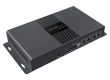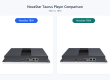


Choosing between the NovaStar VX1000 Pro and VX600 Pro isn’t just about comparing price tags — it’s about matching the right processing power to your actual production needs. Both belong to NovaStar’s VX Pro Series, a line of all-in-one LED controllers that combine video processing, sending control, and real-time preview into a single 1U chassis.
The VX600 Pro covers most mid-scale rental gigs and corporate events comfortably, while the VX1000 Pro steps up with more Ethernet ports, higher pixel capacity, and broadcast-oriented connectivity.
This guide breaks down where they differ, where they overlap, and which one earns its place in your flight case.
Table of Contents
1.NovaStar VX1000 Pro vs VX600 Pro Overview
2.VX1000 Pro vs VX600 Pro Specifications Comparison
3.Key Feature Differences
4.NovaStar VX1000 Pro vs VX600 Pro: Input and Output Comparison
5.NovaStar VX1000 Pro vs VX600 Pro: Which LED Video Processor Fits Your Project?
6.NovaStar VX1000 Pro vs VX600 Pro: Price and Value Comparison
7.FAQ
8.Conclusion
1.NovaStar VX1000 Pro vs VX600 Pro Overview
1.1 What Is NovaStar VX1000 Pro?
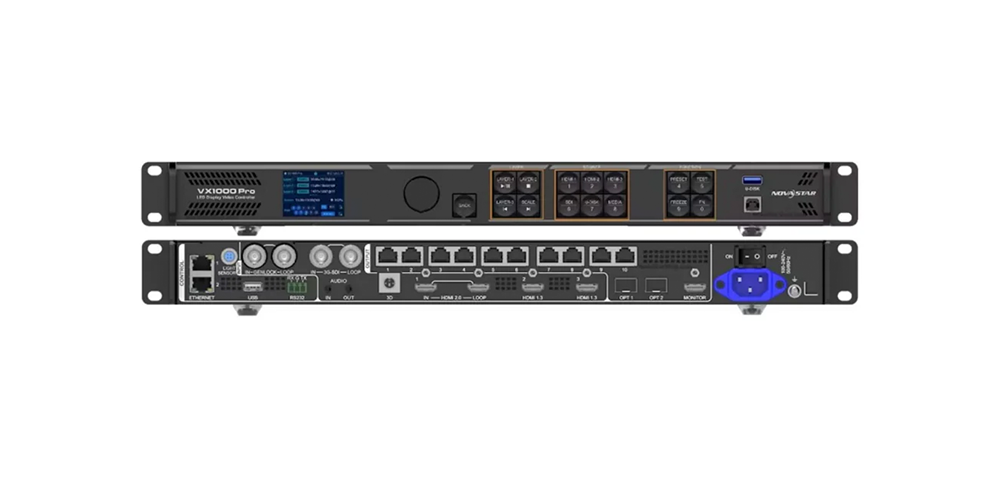
The NovaStar VX1000 Pro is a higher-capacity LED video controller built for larger and more complex applications. It supports up to 6.5 million pixels through 10 Gigabit Ethernet ports, making it ideal for large conferences, broadcast studios, multi-screen stage setups, fine-pitch LED displays, and ultra-wide LED walls.
1.2 What Is NovaStar VX600 Pro?
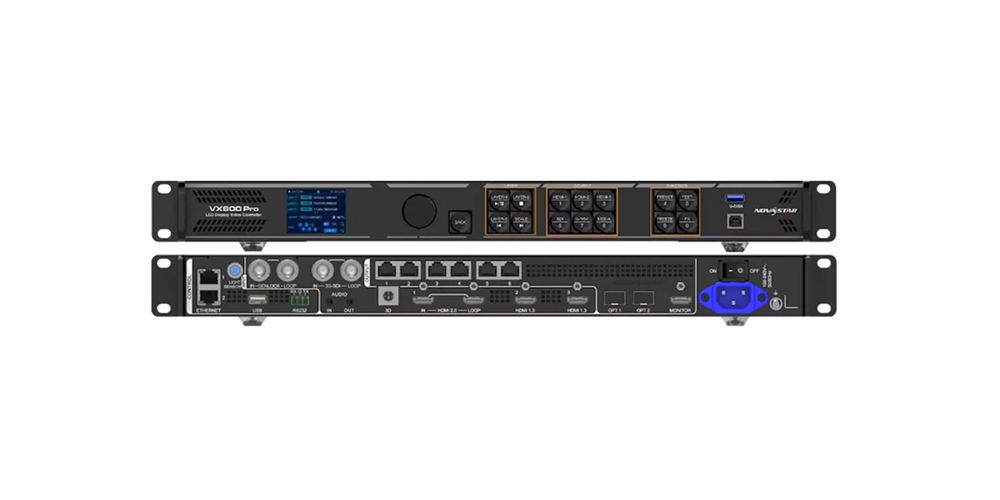
The NovaStar VX600 Pro is a mid-range all-in-one LED video controller designed for small to medium-scale LED projects. It supports up to 3.9 million pixels with 6 Gigabit Ethernet ports, making it suitable for corporate events, wedding AV, houses of worship, and small rental productions.
1.3 Main Similarities and Differences
Both the VX1000 Pro and VX600 Pro use NovaStar’s SuperView III processing engine and share many core features, including:
- 6-layer management
- HDR10 and HLG support
- 3G-SDI input with loop-out
- Same chassis size (6 × 302.2 × 50.1 mm)
- Same weight (9 kg)
The main difference is processing capacity. The VX600 Pro is designed for smaller LED screens, while the VX1000 Pro provides double the pixel capacity and more Ethernet outputs for larger LED display projects. The choice mainly depends on your screen size, pixel pitch, and project complexity.
2.VX1000 Pro vs VX600 Pro Specifications Comparison
| Specification | VX600 Pro | VX1000 Pro |
| Max Pixel Capacity | 3.9 million | 6.5 million |
| Max Output Resolution | 10,240 × 8,192 px | 10,240 × 8,192 px |
| Max Input Resolution | 4K × 2K @ 60Hz | 4K × 2K @ 60Hz |
| Ethernet Ports | 6 × Gigabit | 10 × Gigabit |
| Fiber Outputs | 2 × 10G Optical | 2 × 10G Optical |
| HDMI Inputs | 1 × HDMI 2.0, 2 × HDMI 1.3 | 1 × HDMI 2.0, 2 × HDMI 1.3 |
| 3G-SDI | 1 × Input (Loop Out) | 1 × Input (Loop Out) |
| DisplayPort | Not Supported | Not Supported |
| USB | 1 × USB 3.0 (Media Playback) | 1 × USB 3.0 (Media Playback) |
| Video Layers | Up to 6 | Up to 6 |
| User Presets | 256 | 256 |
| Working Modes | Video Controller, Fiber Converter, ByPass | Video Controller, Fiber Converter, ByPass |
| HDR Support | HDR10, HLG | HDR10, HLG |
| Genlock | Yes | Yes |
| 3D Support | Yes (Side-by-Side, Top-and-Bottom) | Yes (Side-by-Side, Top-and-Bottom) |
| Dimensions | 482.6 × 302.2 × 50.1 mm | 482.6 × 302.2 × 50.1 mm |
| Net Weight | 3.9 kg | 3.9 kg |
| Power Consumption | ~41 W | ~43 W |
| Street Price (USD) | ~$960–1,444 | ~$1,380–2,935 |
From the specifications, the NovaStar VX1000 Pro and VX600 Pro share almost the same processing features, including 4K60 input, HDR10/HLG, Genlock, USB playback, and six video layers. The main differences are pixel capacity, Ethernet port count, and price. If your LED display exceeds 3.9 million pixels or requires more output ports, the VX1000 Pro is the better choice. Otherwise, the VX600 Pro delivers nearly the same functionality at a lower cost.
3.Key Feature Differences
3.1 Processing Performance
Both the NovaStar VX1000 Pro and NovaStar VX600 Pro use the latest SuperView III processing engine with stepless scaling. Image quality is identical on both LED video controllers. Whether you’re scaling a Full HD signal to a large LED display or adjusting colors, the visual performance remains the same.
The VX1000 Pro does not deliver better image quality. Its advantages are higher pixel capacity and more Ethernet outputs for larger LED projects.
3.2 4K Input Support
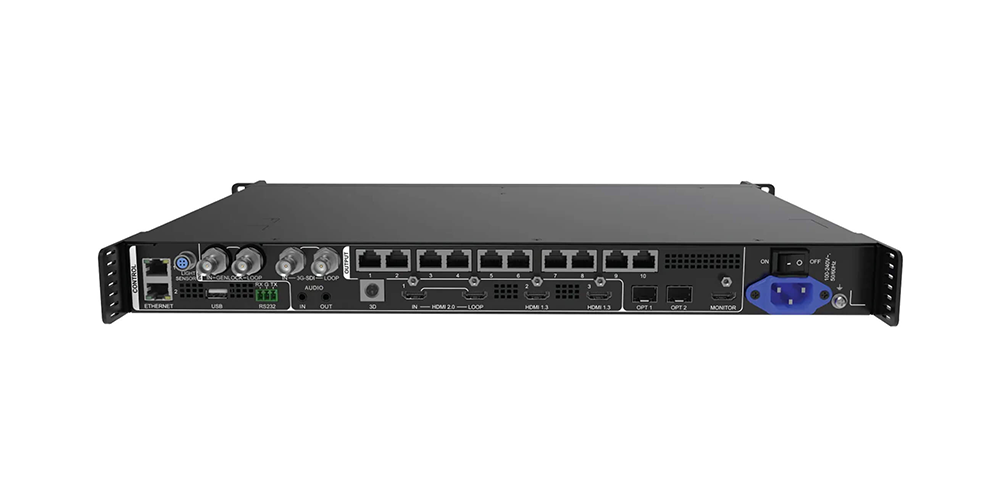
Both NovaStar LED processors support 4K × 2K @ 60Hz input through HDMI 2.0 and provide up to 12-bit color depth. The 4K processing pipeline is identical on both models.
Neither controller includes a DisplayPort input. If your media server or PC only provides DisplayPort output, you’ll need an active DP-to-HDMI converter regardless of whether you choose the VX600 Pro or VX1000 Pro.
3.3 Layer Management
The VX1000 Pro and VX600 Pro both support up to six video layers, configurable as 4K × 2K, 4K × 1K, or 2K × 1K. Each layer can be resized, repositioned, and prioritized independently.
For most LED display applications—such as live events, conferences, churches, or rental projects—six layers are more than sufficient for the main video, PIP, logos, subtitles, and overlays.
When HDR is enabled on Layer 1, that layer is dedicated to HDR content, reducing the available layer resources. This limitation applies to both models.
3.4 HDR & Color Processing
Both NovaStar VX1000 Pro and VX600 Pro support HDR10 and HLG through HDMI 2.0 or 3G-SDI inputs. They also provide 10-bit HDR processing, 12-bit color depth, 3D LUT color management, and pixel-level brightness and color calibration with NovaStar calibration software.
Whether you’re building a broadcast studio, XR stage, or high-end LED display system, both controllers offer the same color-processing capabilities.
3.5 Latency
Both LED video controllers provide the same low-latency performance.
| Working Mode | Low Latency | Standard |
| Video Controller | 1–2 frames | 2–3 frames |
| ByPass | 0 frames | 1 frame |
| Fiber Converter | 0 frames | — |
For live IMAG, conferences, concerts, and other real-time LED display applications, ByPass mode delivers 0-frame latency on both the VX1000 Pro and VX600 Pro, ensuring smooth camera-to-screen synchronization.
4.NovaStar VX1000 Pro vs VX600 Pro: Input and Output Comparison
4.1 HDMI & DP Inputs
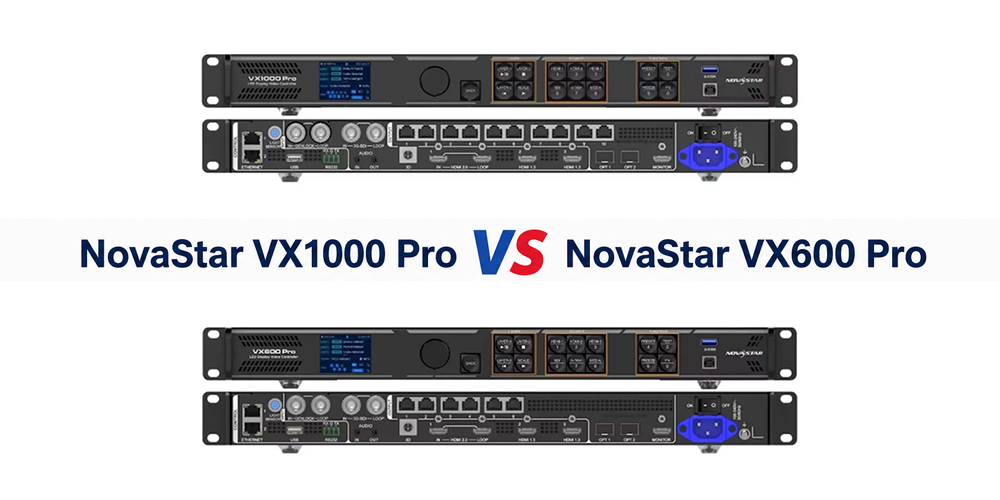
Both the NovaStar VX1000 Pro and VX600 Pro feature the same HDMI input configuration:
- 1 × HDMI 2.0 input (up to 4K×2K @ 60Hz)
- 2 × HDMI 1.3 inputs (up to 1080p)
- 1 × HDMI 1.3 monitoring output
Neither NovaStar LED controller includes a native DisplayPort input. This may be a limitation for users working with DP-based workstations, professional graphics cards, or media servers. If your setup requires DisplayPort connectivity, an active DP-to-HDMI converter will be needed for both the VX600 Pro and VX1000 Pro.
4.2 SDI Input and Loop Output
For live production and broadcast applications, SDI support is an important feature of a professional LED display controller.
Both the VX1000 Pro and VX600 Pro include:
- 1 × 3G-SDI input
- 1 × SDI loop output
- Support for up to 1920×1080 @ 60Hz signals
This makes both processors suitable for applications using SDI cameras, video switchers, and long-distance signal transmission. Some older comparison articles incorrectly state that the VX600 Pro does not support SDI. However, current production versions of both models include SDI connectivity. Always confirm the exact configuration with your supplier, as regional versions may vary.
4.3 Ethernet Output Capacity
The biggest difference between the NovaStar VX1000 Pro and VX600 Pro is the number of Gigabit Ethernet outputs.
| Model | Ethernet Ports | Maximum Load Capacity |
| VX600 Pro | 6 × Gigabit Ethernet ports | Approx. 3.9 million pixels |
| VX1000 Pro | 10 × Gigabit Ethernet ports | Approx. 6.5 million pixels |
Each Ethernet port can handle around 650,000 pixels under typical conditions. The additional four Ethernet ports on the VX1000 Pro LED video processor provide more flexibility for large LED screens, ultra-wide displays, and complex cabinet layouts.
More output ports allow installers to distribute pixel loads more efficiently, simplify network wiring, and reduce the need for additional switches. For rental LED displays, large-format LED walls, and irregular screen configurations, the VX1000 Pro offers a cleaner and more scalable setup.
4.4 Fiber Outputs
Both the NovaStar VX600 Pro and VX1000 Pro are equipped with two 10G optical fiber outputs:
- OPT 1: Primary fiber port with self-adaptive function (can also work as an input)
- OPT 2: Backup or copy output
For large LED display installations that require long-distance transmission between the controller and receiving cards, fiber connectivity is essential. Since both models provide the same dual-fiber output design, there is no major difference between them in this area.
5.NovaStar VX1000 Pro vs VX600 Pro: Which LED Video Processor Fits Your Project?
The right choice between the NovaStar VX1000 Pro and VX600 Pro depends on your LED display size, pixel capacity, and future expansion requirements. Both models are powerful LED video processors for professional LED screens, but they are designed for different project scales.
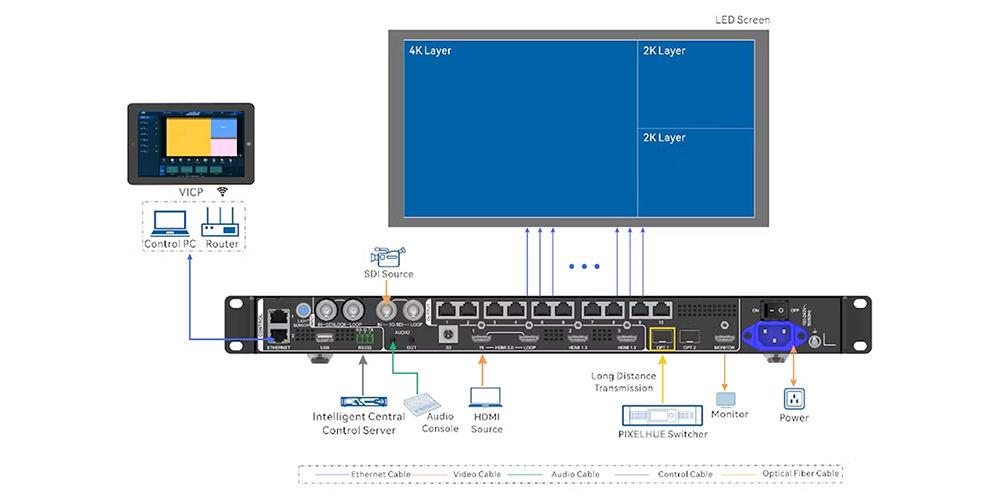
For most medium-sized rental applications, including conferences, product launches, concerts, and corporate events, the NovaStar VX600 Pro LED video processor is usually sufficient. It supports common LED screen sizes while keeping equipment costs lower, making it a practical option for rental companies managing multiple events.
The NovaStar VX1000 Pro is a better choice for larger rental LED displays that require higher output capacity. It is ideal for:
- Ultra-wide LED backdrops
- Multi-screen stage designs
- Large fine-pitch LED walls
- Projects exceeding 3.9 million pixels
With more Ethernet outputs, the VX1000 Pro provides greater flexibility for complex LED screen layouts and simplifies signal distribution during installation.
5.2 Fixed LED Display Installations
For permanent LED installations such as retail displays, lobby screens, meeting rooms, and worship venues, the VX600 Pro LED display controller can meet the needs of most small and medium-sized projects.
If the LED screen size does not exceed its pixel capacity, choosing a higher-end processor may not bring noticeable benefits.
The VX1000 Pro LED video processor is more suitable for large fixed installations, including:
- Command centers
- Broadcast studios
- Immersive exhibitions
- Large-format LED video walls
Its higher pixel capacity and additional Ethernet ports provide better scalability for future upgrades.
5.3 Broadcast and Studio Applications
Both the NovaStar VX1000 Pro and VX600 Pro support professional broadcast workflows with:
- 3G-SDI input and loop output
- Genlock synchronization
- Low-latency ByPass mode
For small studios, streaming setups, and standard LED backgrounds, the VX600 Pro delivers enough performance and connectivity.
The VX1000 Pro is recommended for more demanding broadcast environments, such as LED volume studios, multi-display systems, and complex production setups. Its additional outputs allow more flexible signal routing without replacing the processor as the system grows.
5.4 Corporate AV Events
Corporate AV applications range from simple presentation screens to large keynote stages with multiple LED surfaces.
For standard corporate events with single or dual LED screens under 3.9 million pixels, the NovaStar VX600 Pro is the more cost-effective option.
For larger events featuring:
- Wide LED stage backdrops
- Side LED screens
- LED floor displays
- High-resolution presentation walls
the NovaStar VX1000 Pro offers more flexibility. Its additional Ethernet ports help reduce system limitations and make future expansion easier.
5.5 Quick Recommendation: VX1000 Pro or VX600 Pro?
Choose the NovaStar VX600 Pro if you need:
- A cost-effective LED display controller
- Medium-sized LED screens
- Rental events with standard configurations
- Fixed installations within the pixel limit
Choose the NovaStar VX1000 Pro if you need:
- Larger LED displays with higher pixel loads
- More Ethernet outputs for complex layouts
- Rental stages with multi-screen designs
- Broadcast or immersive LED applications requiring future expansion
In short, the VX600 Pro is the better value choice for most standard LED projects, while the VX1000 Pro is designed for larger and more demanding LED display systems.
6.NovaStar VX1000 Pro vs VX600 Pro: Price and Value Comparison
When comparing the NovaStar VX1000 Pro and VX600 Pro LED video processors, price is an important factor, but the better choice depends on your project requirements and expected return on investment.
| Cost Metric | VX600 Pro | VX1000 Pro |
| Typical market price | Around $960–$1,444 | Around $1,380–$2,935 |
| Cost per Ethernet port | ~$160–$240 | ~$138–$294 |
| Cost per million pixels | ~$246–$370 | ~$212–$452 |
Actual pricing for the NovaStar LED controller may vary depending on region, distributor, warranty terms, and purchasing channels. Authorized local suppliers may offer higher prices with added benefits such as technical support and longer warranty coverage, while direct purchasing from overseas distributors may reduce upfront costs but could provide limited local service.
Which Processor Offers Better Value?
For rental companies, the value of the VX1000 Pro LED video processor depends on whether the additional capacity helps win larger projects. If the extra Ethernet outputs allow you to support larger rental LED displays, ultra-wide stages, or high-pixel-count events that the VX600 Pro cannot handle, the higher initial investment can quickly pay off.
However, if your typical projects stay within the pixel capacity of the VX600 Pro LED display controller, choosing the lower-cost model can provide better profitability and faster return on investment.
Similar Hardware Design, Minimal Additional Costs
One advantage of both models is that they share a similar hardware platform. The NovaStar VX1000 Pro and VX600 Pro use the same chassis design, similar flight case dimensions, and almost identical power consumption (approximately 41W for VX600 Pro and 43W for VX1000 Pro).
This means the price difference mainly comes from the increased processing capacity and additional Ethernet outputs of the VX1000 Pro, rather than extra costs in transportation, rack space, or power requirements.
7.FAQ
7.1 What is the main difference between NovaStar VX1000 Pro and VX600 Pro?
The main difference between the NovaStar VX1000 Pro and VX600 Pro LED video processors is the output capacity. The VX600 Pro provides 6 Gigabit Ethernet outputs, while the VX1000 Pro offers 10 Ethernet outputs and supports a higher pixel load.
For standard LED screens, the VX600 Pro is usually enough. The VX1000 Pro is designed for larger LED displays, complex screen layouts, and projects that require more expansion flexibility.
7.2 Does NovaStar VX600 Pro support SDI input?
Yes. The NovaStar VX600 Pro LED display controller includes a 3G-SDI input with loop output, supporting up to 1920×1080 @ 60Hz signals.
Both the VX600 Pro and VX1000 Pro support SDI, making them suitable for live events, broadcast applications, and LED displays connected to professional cameras or switchers.
7.3 Which one is better for rental LED display projects, VX600 Pro or VX1000 Pro?
For most medium-sized rental LED display projects, the NovaStar VX600 Pro offers better value because it provides enough processing capacity for common event screens while keeping equipment costs lower.
The VX1000 Pro LED video processor is recommended for larger rental applications, such as ultra-wide LED backdrops, multi-screen stage designs, and high-pixel-count LED walls where additional Ethernet outputs are required.
7.4 Can NovaStar VX1000 Pro replace VX600 Pro for small LED screens?
Yes, the NovaStar VX1000 Pro can handle smaller LED screens, but it may be unnecessary if the project does not require its additional output capacity.
If your LED display size stays within the VX600 Pro’s pixel limit, choosing the VX600 Pro can reduce investment costs while delivering similar image processing performance.
7.5 Do NovaStar VX1000 Pro and VX600 Pro have the same image quality?
Yes. The NovaStar VX1000 Pro and VX600 Pro use the same processing technology, so there is no major difference in image quality.
The main reason to choose the VX1000 Pro is not better picture quality, but higher output capacity, more Ethernet ports, and greater flexibility for large LED display systems.
7.6 Which NovaStar LED controller should I choose: VX1000 Pro or VX600 Pro?
Choose the NovaStar VX600 Pro LED controller if you need a reliable solution for standard LED displays, medium-sized rental events, or fixed installations with moderate pixel requirements.
Choose the NovaStar VX1000 Pro if your project involves large LED walls, broadcast environments, immersive displays, or future expansion. The extra Ethernet outputs provide more flexibility for complex LED screen configurations.
8.Conclusion
The NovaStar VX1000 Pro and VX600 Pro share the same core processing technology, including 4K input, HDR support, Genlock, and six-layer management. The main difference is output capacity: the VX600 Pro is ideal for standard LED displays, rental events, and fixed installations under 3.9 million pixels, while the VX1000 Pro is designed for larger LED walls, broadcast applications, and complex screen layouts requiring more Ethernet outputs.
For most users, the VX600 Pro offers the best balance between performance and cost. However, if your projects involve larger screens, future expansion, or high-pixel-count LED systems, the VX1000 Pro provides greater flexibility and long-term value.