

Retail LED poster cost should be compared per ready-to-run entrance position, including the display, playback system, base, delivery, spare parts and staff handover. A cheaper screen-only quote can leave a store paying separately for the equipment and work needed to show its first promotion. Ask suppliers to price the same physical location and operating workflow before comparing totals.
This guide addresses one purchasing question for retail marketing buyers in the United States and Canada: what belongs in the budget for an indoor entrance poster? It uses published EA1920iP5 specifications to show how configuration affects the comparison. It does not provide an invented market price or assume that a brighter display automatically increases sales.
In this guide
Define the retail LED poster cost per entrance
Start with a plan of the entrance, showing the viewing direction, nearest stopping point, daylight exposure, power outlet and clear walking route. A unit immediately inside a doorway may face very different conditions from one farther inside the store. Photograph the location during its brightest operating period rather than relying on a photograph taken after sunset.
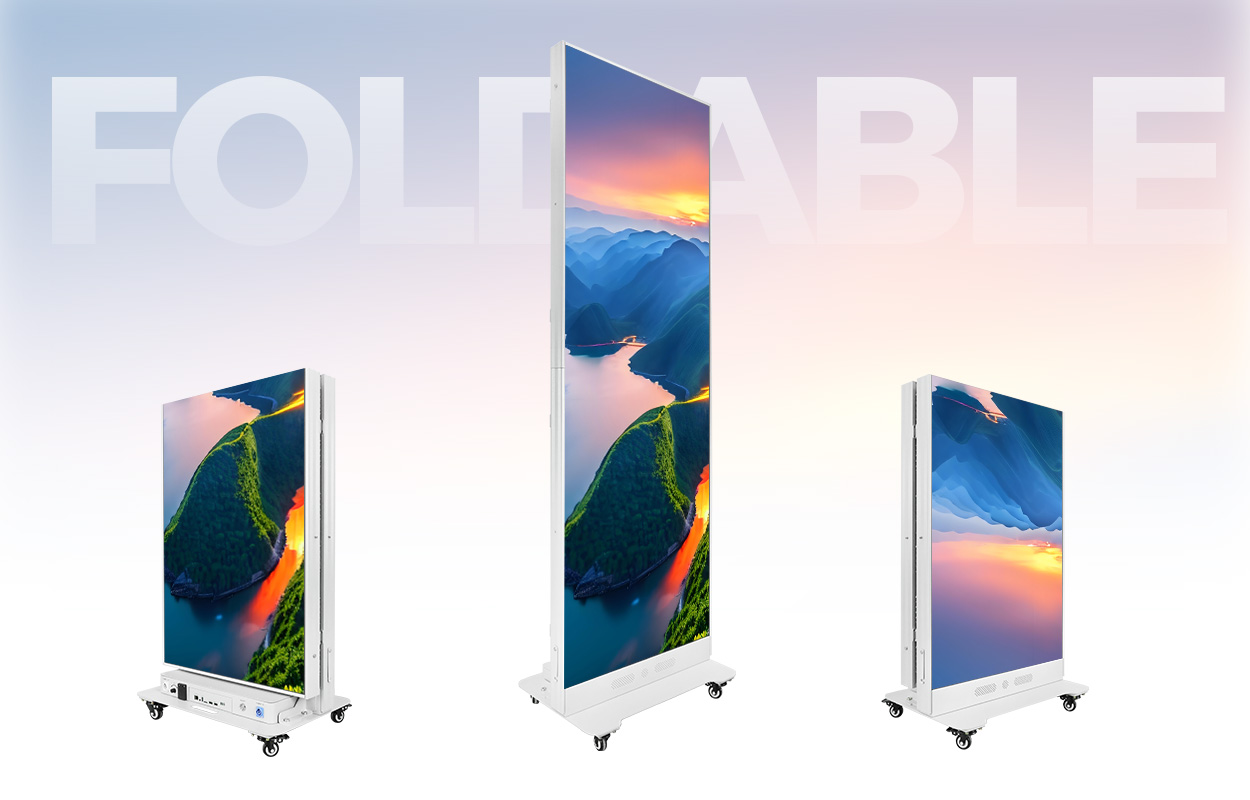
Define whether you need one advertising face, two independently addressed faces or several units joined into one canvas. These are different systems. Do not divide the price of a two-face assembly by two and assume that each face can operate as an independent freestanding sign. Request a drawing of the complete assembly, including its base.
For a chain rollout, separate the first-store pilot from repeat-store supply. The pilot may include artwork adaptation, network approval and staff instructions that do not recur in exactly the same form at every branch. Keep those setup costs visible so the repeat-order comparison remains useful.
Compare a named configuration, not a generic poster
The EA1920iP5 product specification, checked on October 21, 2026, lists a 640 × 1920 mm indoor display format, front-removable 320 × 160 mm modules and both SMD and COB options. The SMD table lists P1.25 through P2.5, while the separate COB table lists P1.25, P1.53 and P1.86. A quote must identify which table and pitch apply.
Smaller pitch means more pixels within the same physical area. Whether the additional detail is useful depends on the actual artwork and nearest viewing position. Test your smallest price label or product disclaimer on the proposed configuration. A video of large, colorful shapes cannot establish that small retail text will be readable.
| Published parameter | P1.25 SMD | P2.5 SMD | Budget implication |
|---|---|---|---|
| Display format | 640 × 1920 mm | 640 × 1920 mm | Same stated format; confirm the complete assembly drawing. |
| Module resolution | 256 × 128 pixels | 128 × 64 pixels | Different pixel counts; compare the real artwork. |
| Published brightness | 600 cd/m² | 800 cd/m² | Pitch alone does not determine daylight suitability. |
| Average / maximum power | 120 / 360 W per set | 120 / 360 W per set | These are published values, not a metered result at your store. |
| Protection grade | IP31 | IP31 | Indoor specification; do not budget it as an outdoor sign. |
These verified differences make retail LED poster cost comparisons more precise, but they do not establish a price premium between pitches. Obtain current quotations for the actual configurations. The listed protection grade also does not validate exposure to rain, floor washing or condensation near an open entrance.
Separate the six parts of the quote
Use a common scope sheet so a supplier can mark every line as included, optional, excluded or awaiting site information. Ask for both the unit quantity and the extended amount. A percentage allowance without a component list is difficult to compare or use when a store needs a replacement part.
| Cost group | Request in writing | Common uncertainty to resolve |
|---|---|---|
| Display assembly | Model, pitch, package type, faces, base and supplied dimensions | Whether the pictured configuration is the quoted one |
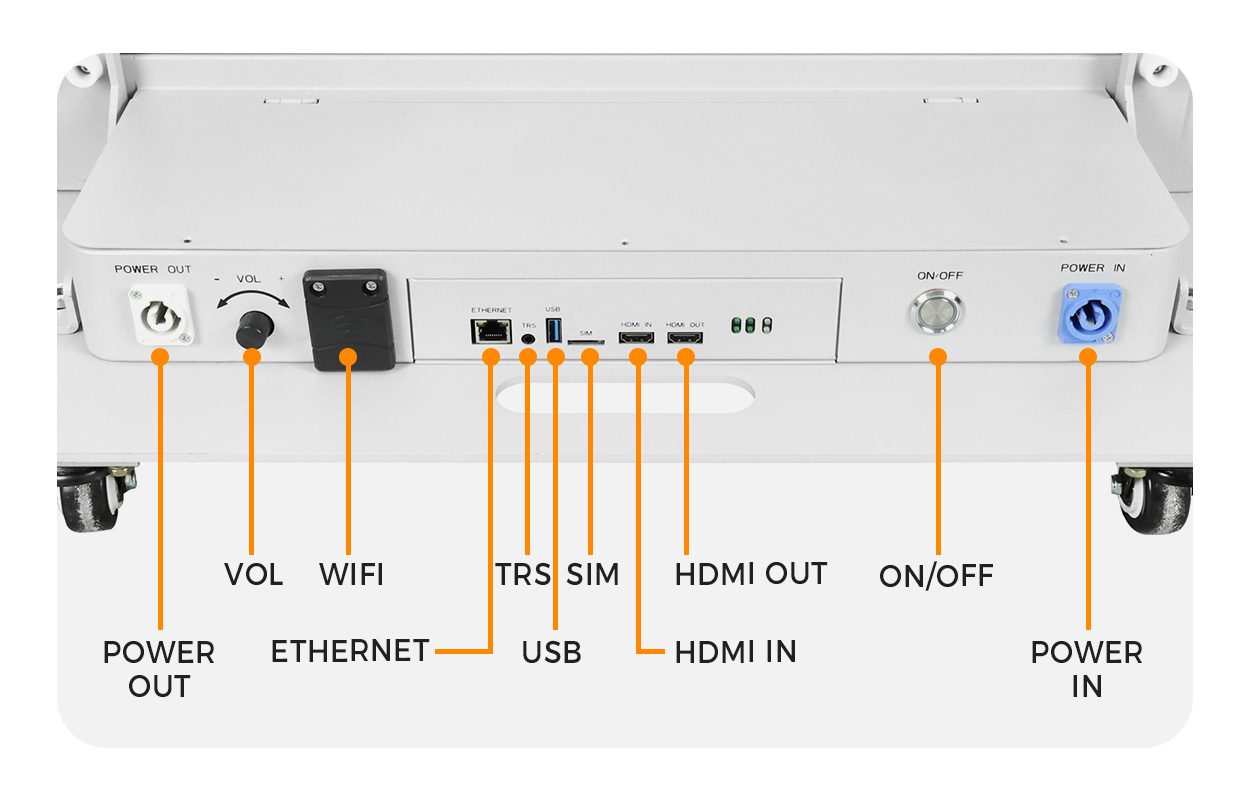
| Playback and access | Controller model, supplied interfaces, accounts and recurring charges | Which functions need a network, subscription or additional hardware |
| Delivery | Packing, freight, insurance, delivery point and trade term | Who handles import, unloading and final movement inside |
| Store preparation | Power, cable protection, network approval and placement work | Which tasks belong to the local installer |
| Maintenance | Named spare modules, tools, replacement route and warranty terms | What happens while a failed component is being serviced |
| Launch and operation | Artwork adaptation, first upload, staff instruction and update ownership | Whether the store can change a promotion without outside help |
Keep currency, quotation validity and tax treatment consistent when comparing retail LED poster cost. For a North American buyer, the destination address and agreed delivery responsibility matter more than a generic shipping estimate. Confirm the compliance documentation needed for the destination and exact assembly; a company certificate or a different model’s report does not establish acceptance for this order.
Calculate running costs with explicit assumptions
For an energy estimate, multiply the selected configuration’s average kilowatts by daily operating hours and operating days. As an illustrative calculation, 0.12 kW × 12 hours × 30 days equals 43.2 kWh per month for one set. Multiply that result by the store’s actual electricity tariff. This is a planning example using a published 120 W average, not a guaranteed monthly bill.
Actual consumption depends on brightness, content and operating conditions. For circuit planning, use the confirmed maximum input and the installer’s assessment rather than this average-energy calculation. Also confirm what the supplier means by one set and whether all required electronics are included in the stated figure.
The operational part of retail LED poster cost includes staff time. Identify who prepares portrait artwork, checks local pricing, schedules campaigns and removes expired offers. A technically working display with stale content still creates work. Cloud access can help a multi-store team, but ask which account owns the screens and what happens when connectivity is unavailable.
Check the delivery route before choosing packaging
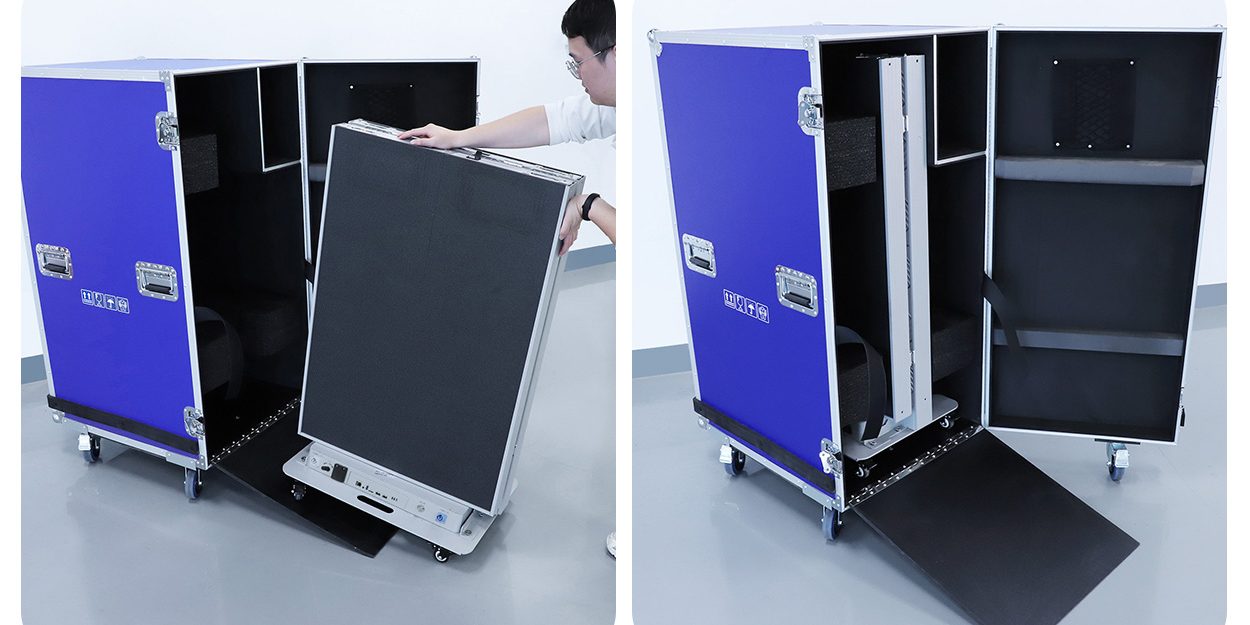
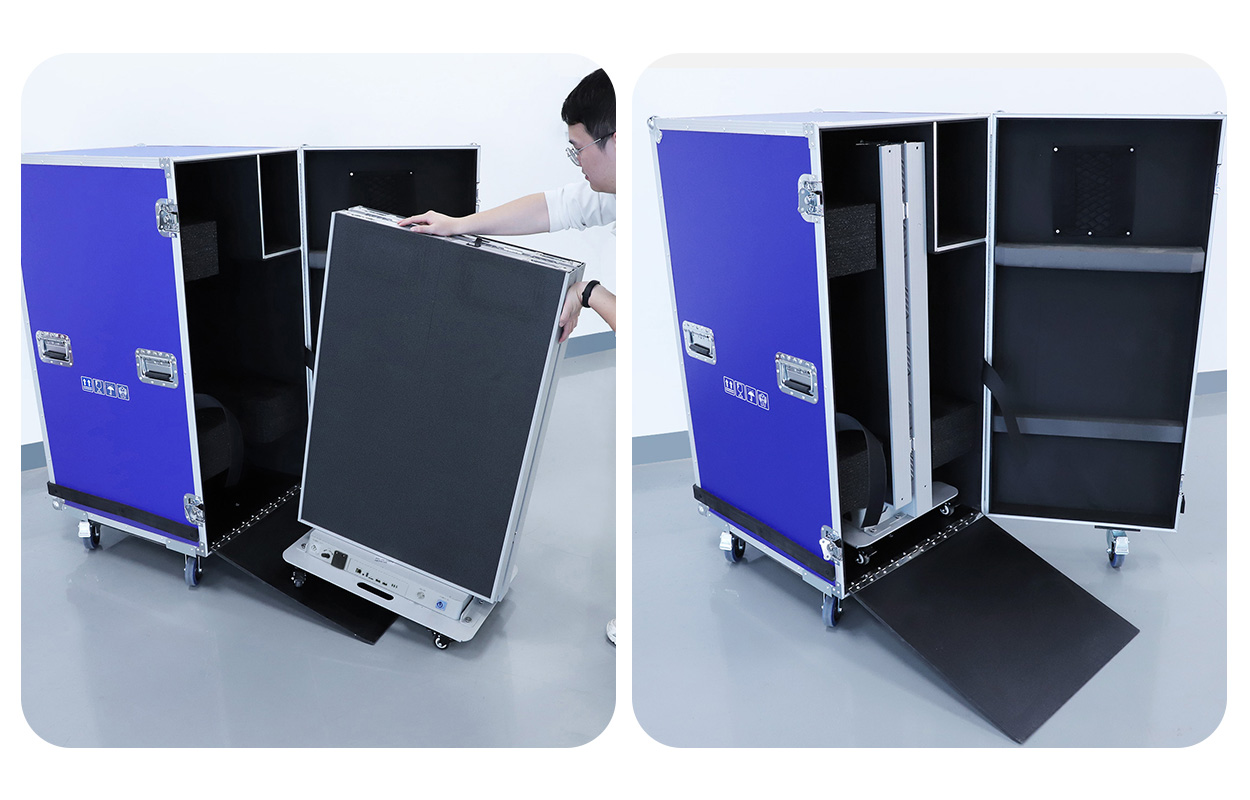
The EA1920iP5 page lists a 55 kg display weight and shows a dedicated flight-case packing arrangement. That figure is not the packed shipping weight. Request gross weight, case dimensions, unloading requirements and the final route through doors, lifts and stockrooms. Casters help reposition a unit on a suitable surface; they do not make stairs or uneven thresholds safe.
A fixed store may need different packing from a poster that moves between branches. In a retail LED poster cost comparison, state whether the case will be reused, where it will be stored and who will move it. Do not assume that reduced folded volume produces the same percentage reduction in freight: transport charges also depend on gross weight, carrier rules and destination services.
Watch the EA1920iP5 demonstration from @EagerLEDdisplay for the folding format and physical handling arrangement. Use it to prepare questions about the supplied unit; it is not evidence of performance in your entrance or a promise about installation labor.
Use a pilot to qualify the repeat-store budget
Before expanding to more branches, agree on a small acceptance checklist: approved position, readable artwork in daytime conditions, stable placement, protected cables, successful local content replacement and a documented service contact. Have store staff demonstrate the update workflow. No customer messages or live personal information are needed for this check.
Record observed problems and their remedies separately from sales results. Increased foot traffic, additional purchases and payback require a defined measurement method and comparable trading conditions. Retail LED poster cost is a procurement calculation; it cannot by itself establish the revenue the display will generate. For broader format choices, see the poster LED display buying guide.
Frequently asked questions
Should every store buy the same pixel pitch?
Only if the viewing conditions and artwork support that choice. Group stores by nearest viewing position, daylight and content requirements, then qualify a configuration for each group rather than assuming that one pilot represents every entrance.
Can the indoor model be placed outside temporarily?
The published EA1920iP5 protection grade is IP31. Temporary use does not remove exposure risks. Specify a separately verified outdoor configuration when the position is outdoors or exposed to rain.
Should a cloud subscription be included in the purchase price?
Ask the supplier to identify the supplied platform, account ownership, license term, optional fees and offline workflow. A statement that cloud control is supported does not establish that every service is included indefinitely.
Can I remove the freight case from a repeat order?
Ask for an alternative packing proposal and its protection limits. Confirm whether that packing is suitable for the planned delivery route and any later movement between stores; a lower packing charge may change handling requirements.
How should I compare warranty offers?
Compare the named covered components, exclusions, claim evidence, repair or replacement route, freight responsibility and available spares. A warranty duration without those terms is insufficient to estimate service cost.
Request a store-ready quotation
Send entrance photographs, the destination country and address, the required advertising faces, nearest viewing distance, daily operating hours, artwork samples and branch quantities. Ask for retail LED poster cost to be separated into hardware, playback, spares, packing, delivery and any local work. Discuss the entrance and request a configuration-specific quote.