An advertising LED display is a modular digital screen that uses light-emitting diodes to show brand messages, product offers and video. Unlike a printed billboard, it can change campaigns without replacing a physical sign. Choosing the right advertising LED display means matching the screen to the audience, ambient light, content and maintenance access.
For a shop, the priority may be readable prices at close range. For a roadside location, visibility, weather protection and dependable operation matter more. This guide explains indoor and outdoor options, pixel pitch, operating costs and the questions to ask before requesting a quotation. It is written for buyers planning to purchase a screen; buying advertising time on an existing billboard is a different service.
1. Why Do You Need an Advertising LED Display?
An advertising LED display is useful when the message changes frequently, the viewing area needs a custom size, or several campaigns must share one location. A supermarket can schedule different offers by time of day; a shopping center can rotate tenant promotions without repeated printing and installation.
Start with the communication problem. Record where people stand or move, how long they can see the screen and the smallest information they must read. A large video wall with tiny text can be less useful than a smaller, well-positioned sign with a clear offer.
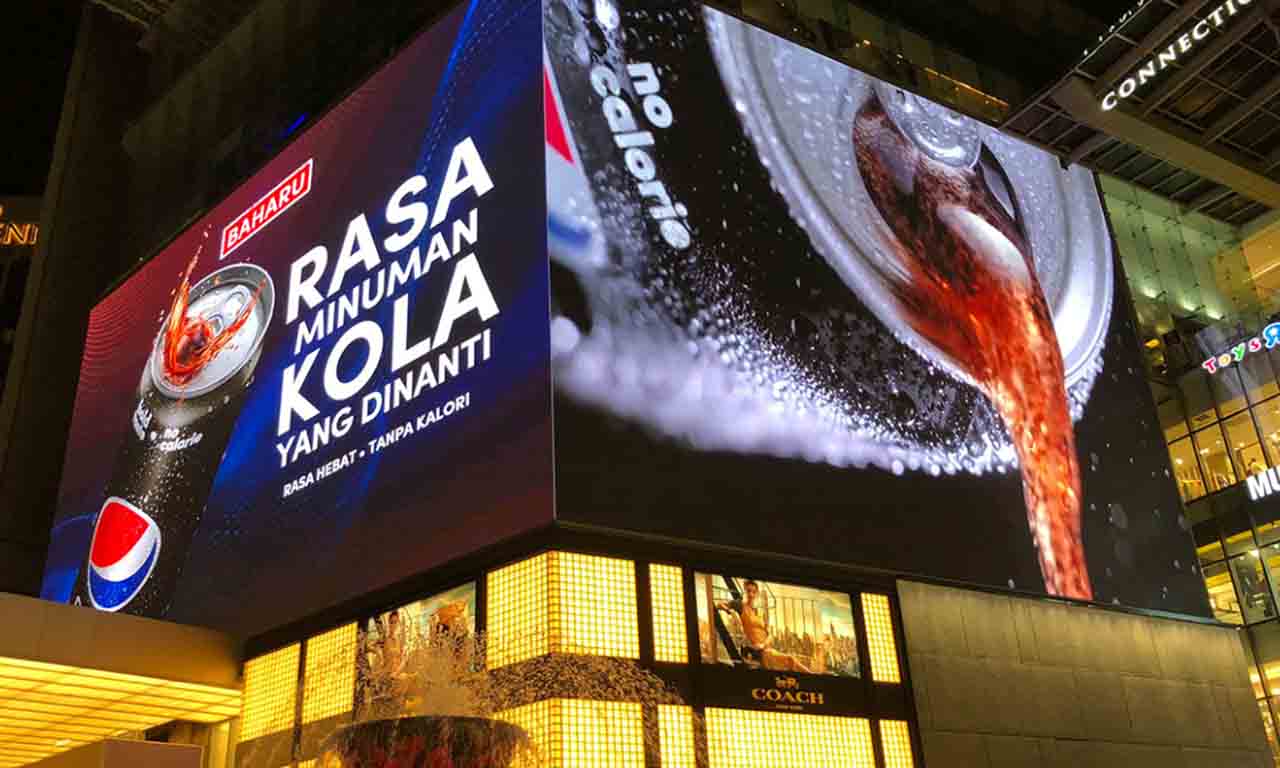
LED screen advertising does not automatically create sales or a profitable media business. Results depend on audience quality, creative work, placement, uptime and measurement. Before investing, define a practical outcome such as store visits, offer redemptions or advertiser renewals. For a short campaign, compare screen rental or existing media inventory with ownership.
2. Advertising LED Display Advantages
01. Flexible campaigns and a scalable canvas
The main advantage of an advertising LED display is controlled message delivery. A compatible player or content management system can schedule approved campaigns, replace expired promotions and distribute content across locations. This reduces repeated print production, although content design, software and staff time still have costs.
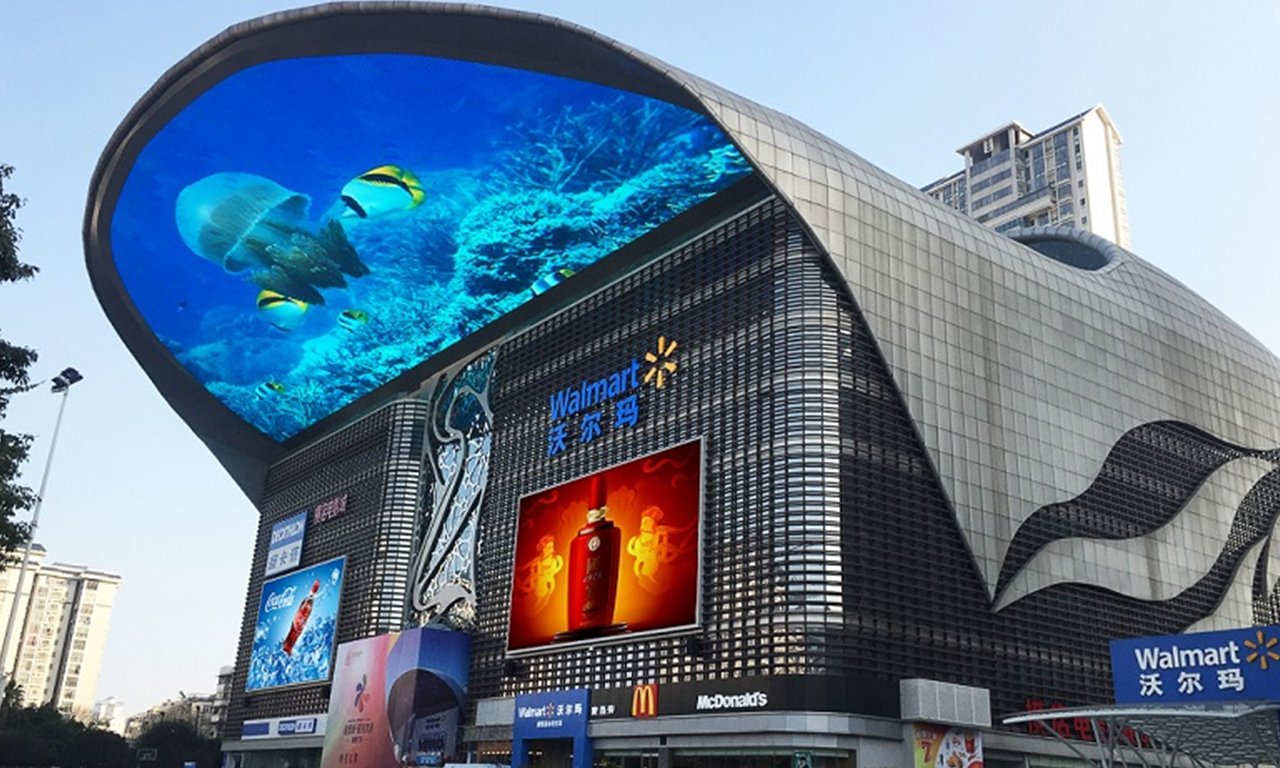
Modular cabinets allow wide, tall or large-format installations. The physical dimensions and native pixel resolution must be designed together: adding more square meters does not necessarily produce a sharper image. Keep a consistent aspect ratio where possible so creative teams can reuse assets without awkward cropping.
02. Serviceable hardware and measurable operation
An advertising LED display can be repaired by replacing compatible modules, power supplies or receiving cards rather than discarding the entire screen. This benefit depends on access, spare parts and trained technicians. It does not mean every cabinet is waterproof, maintenance-free or made from the same material.
Remote monitoring and playback logs can help operators detect faults and confirm that campaigns ran. These logs establish delivery, not how many people actually looked at an advertisement. Combine them with an appropriate audience measurement method and clearly separate measured results from estimates.
3. Advertising LED Display Application Scenarios
The best advertising LED display specification follows the location. Use this comparison to identify the main constraint before asking suppliers to recommend a model.
| Location | Audience and content | Main selection check |
|---|---|---|
| Retail stores and malls | Pedestrians; offers, prices and product video | Close-range text readability and comfortable brightness |
| Building facades and plazas | Mixed distances; large brand graphics | Sun exposure, mounting loads and service access |
| Airports and stations | Moving or waiting passengers; timed campaigns | Sightlines, reliable scheduling and separation from essential wayfinding |
| Exhibitions and pop-up promotions | Close viewers; repeated setup and transport | Handling protection, assembly method and storage |
01. Retail and commercial spaces
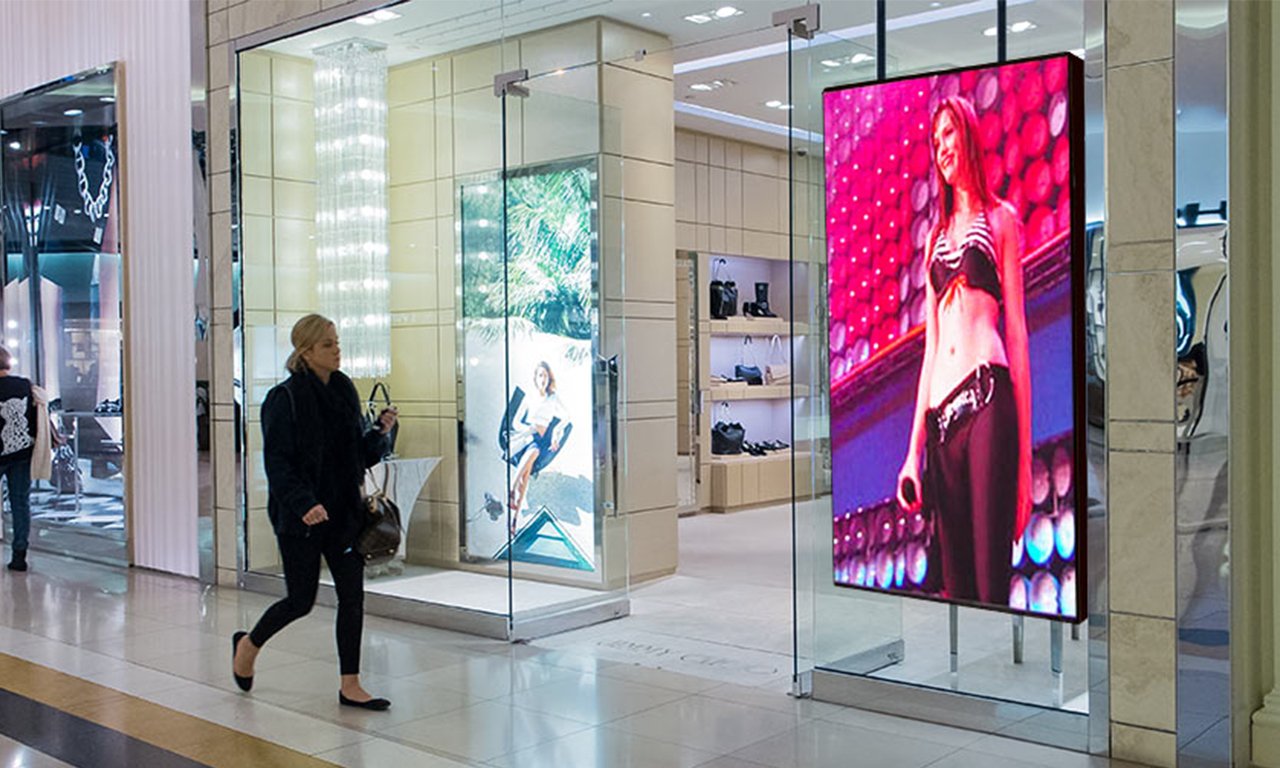
Inside stores, place an advertising LED display where people can pause without blocking circulation. Test actual product names and prices at the intended distance. Evaluate screen reflections and brightness under normal shop lighting, including the dimmer conditions near closing time.
02. City landmarks and building facades
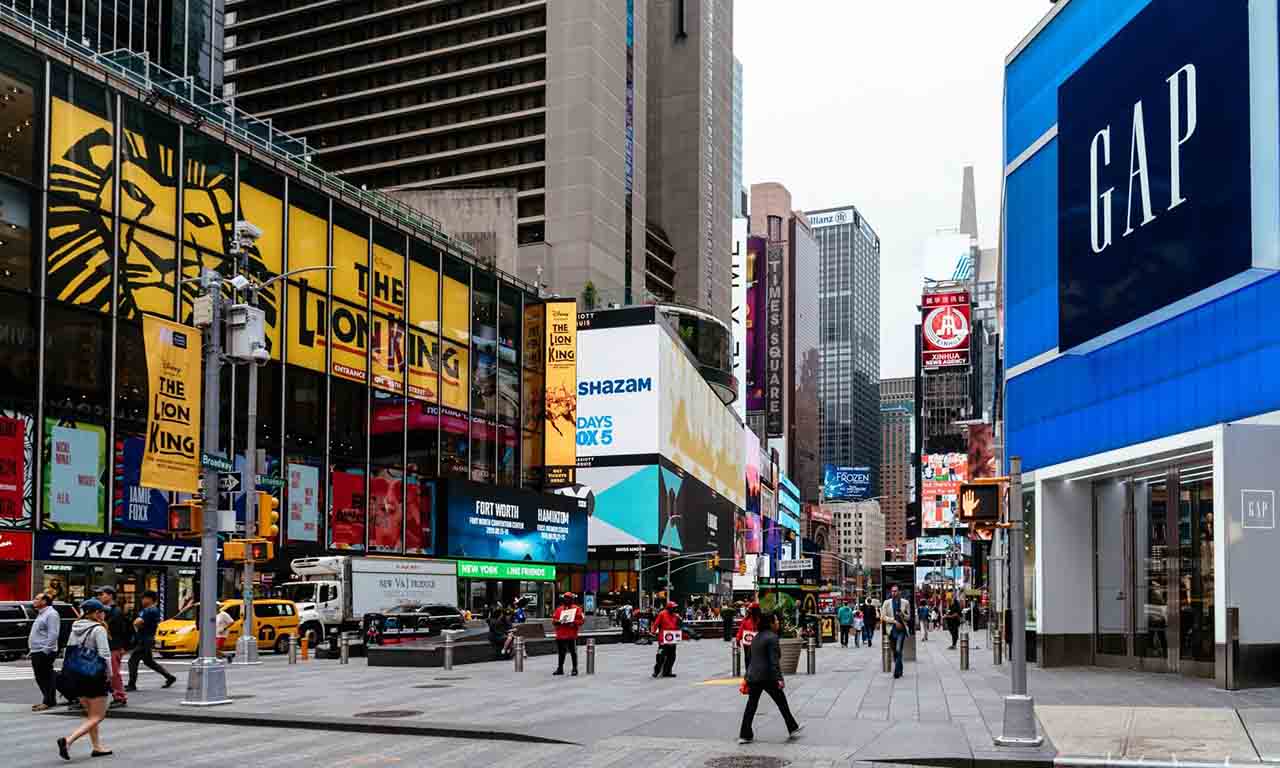
Outdoor placements need more than maximum brightness. Check visibility from the real approach direction, shadows, nearby windows and seasonal sunlight. For a corner installation, content must be mapped to the screen geometry; a convincing 3D illusion also depends on the intended viewing position and purpose-built creative work.
03. Transportation hubs
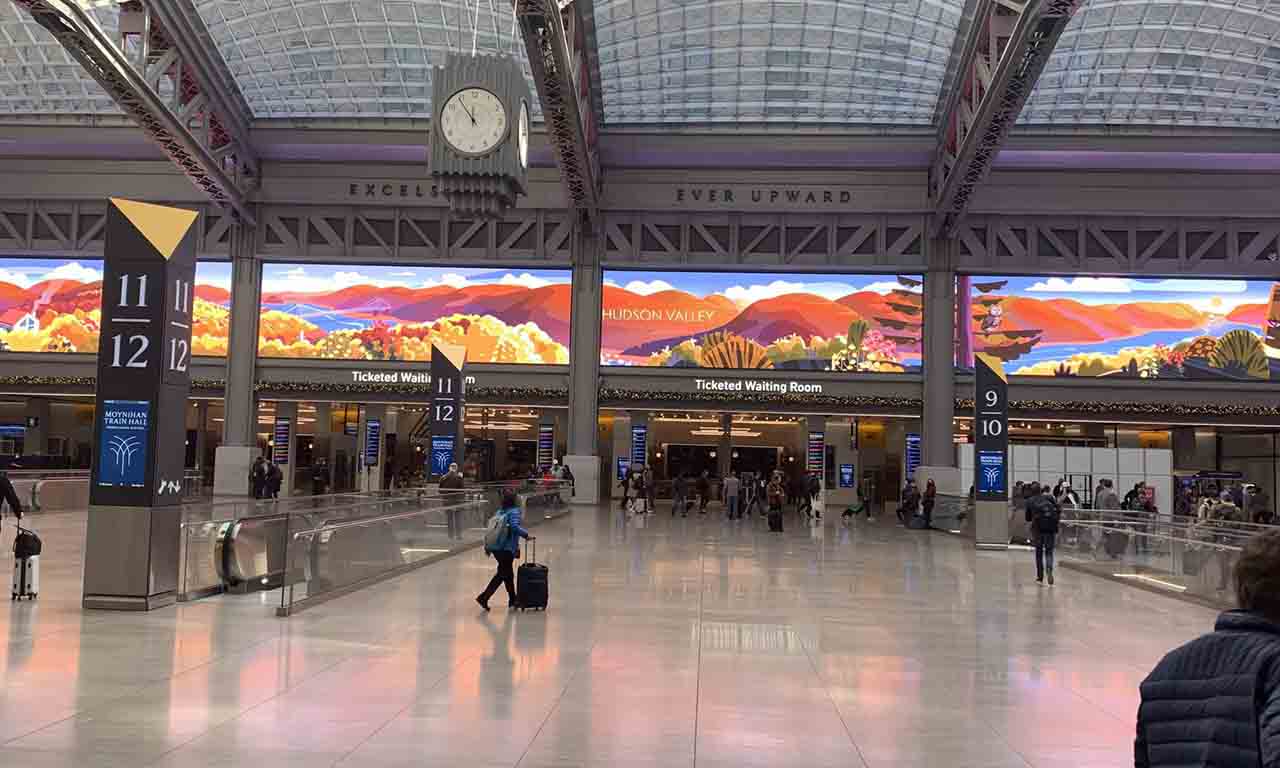
An advertising LED display in a terminal must coexist with operational information. Keep promotional playlists separate from safety messages and essential departure information. Agree on who can interrupt playback, how emergency overrides work and what happens if the network connection fails.
4. Advertising LED Display Types
01. Indoor advertising LED display
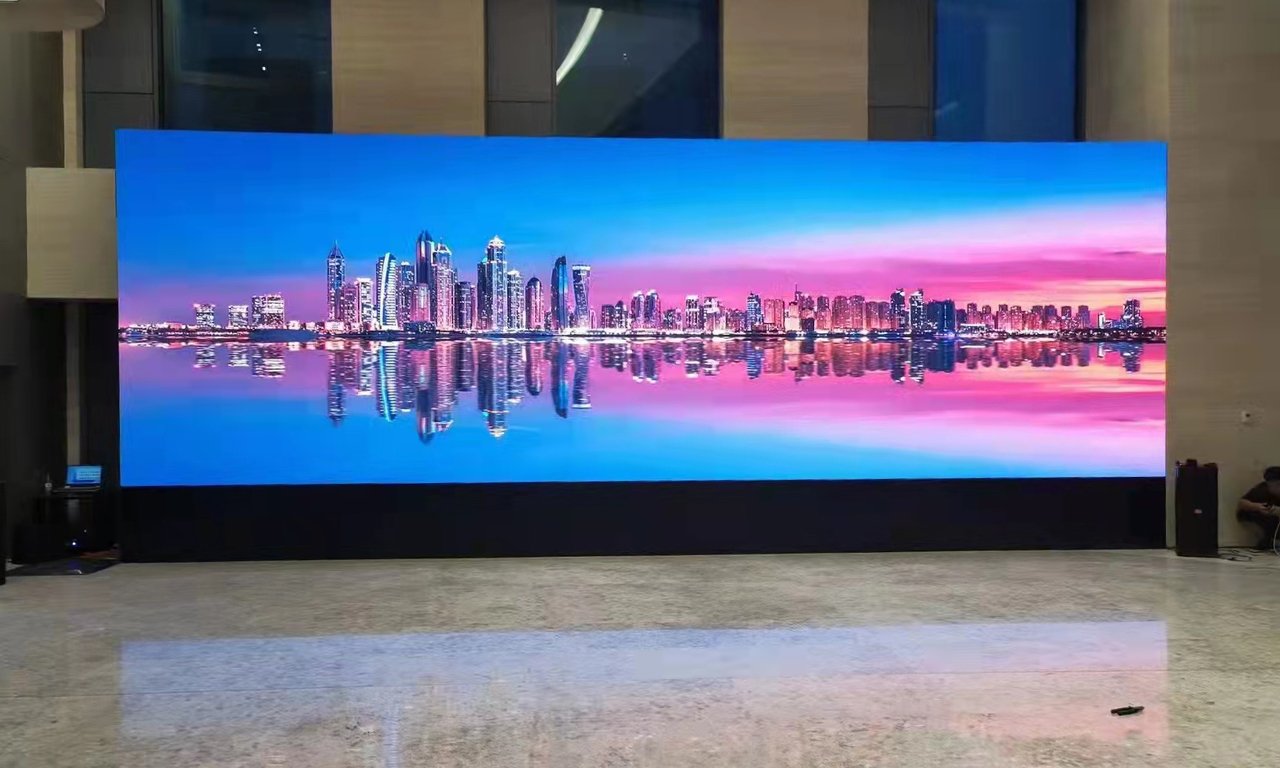
An indoor advertising LED display typically prioritizes fine detail, color consistency and front access in limited space. Compare low-brightness image quality as well as peak output. Dark gradients, skin tones and small text can expose weaknesses that a bright promotional demo hides. Explore indoor LED screen options after defining your viewing distance.
02. Outdoor advertising LED display
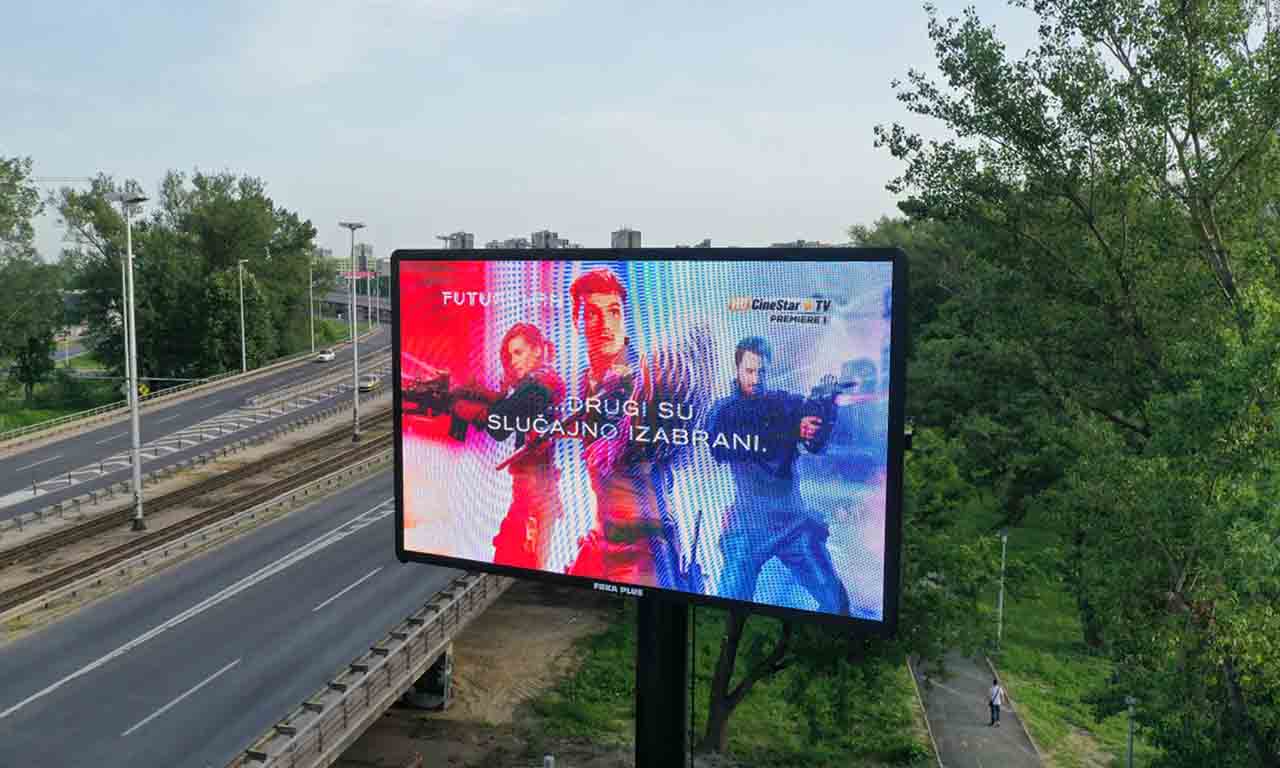
An outdoor advertising LED display needs suitable brightness, enclosure protection and thermal design for its site. Ask for front and rear protection ratings separately, plus the rated operating temperature and installation requirements. An enclosure rating does not establish resistance to every combination of salt, condensation, heat and wind.
A screen mounted behind glass is a special case. The glass may shield it from rain while creating reflections and trapping solar heat. Confirm the actual conditions with the supplier instead of choosing an ordinary indoor model solely because it is inside a building.
03. Poster and portable LED displays
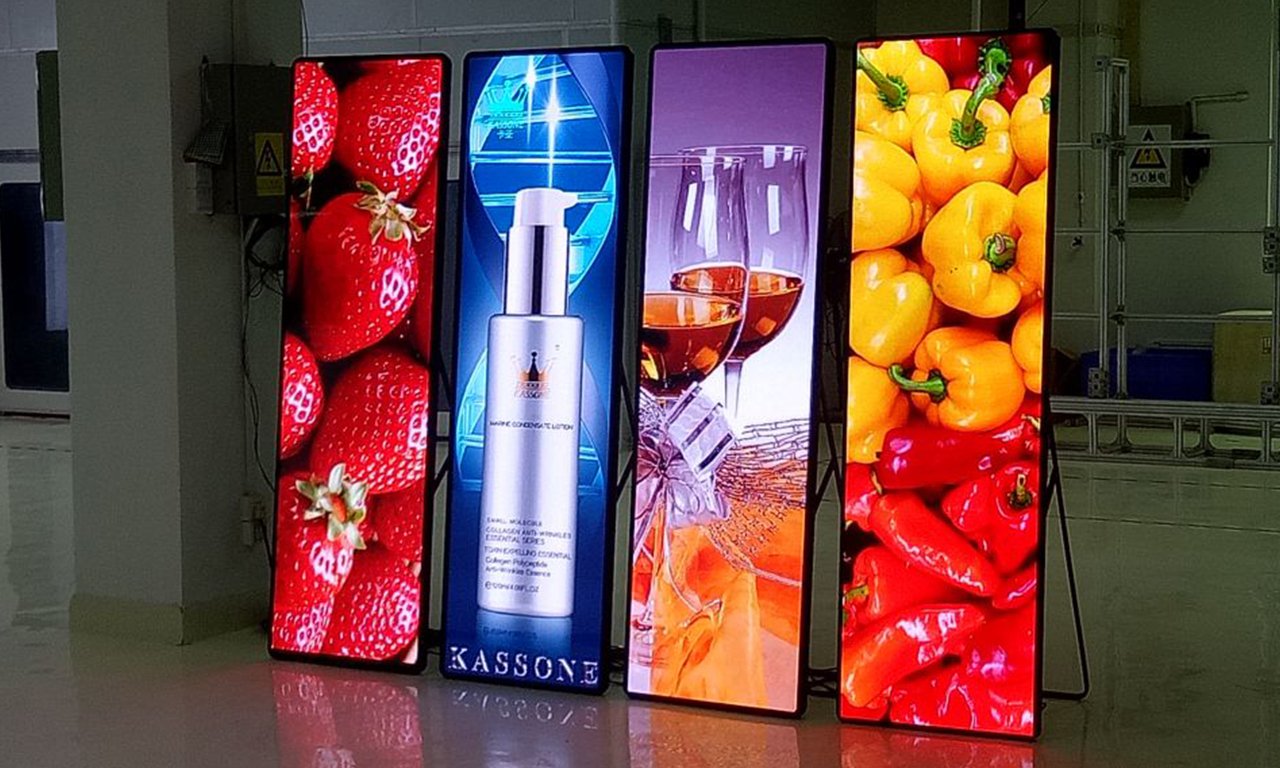
A poster-format advertising LED display suits lobbies, entrances and temporary promotions where a full wall is unnecessary. Check the base stability, cable routing, transport protection and available content resolution. When several posters are joined, verify synchronized playback and the visible seam. Compare LED poster display configurations for the intended installation.
5. How to Choose an Advertising LED Display
01. Match pixel pitch to content and viewing distance
Pixel pitch is the center-to-center distance between adjacent pixels, measured in millimeters. A P4 advertising LED display has a nominal 4 mm pitch. Smaller pitch provides more pixels within the same physical area, but usually increases the hardware requirement and price.
Do not treat a pitch-to-distance rule as a guaranteed readability standard. The result also depends on eyesight, text size, contrast, content and how long someone can look. Request a demonstration using your smallest text at the closest and farthest important viewing positions.
| Nominal pitch | Pixels per square meter | Theoretical pixels on a 6 m × 3 m screen | Useful comparison |
|---|---|---|---|
| P2.5 | 160,000 | 2,400 × 1,200 | More detail for close viewing |
| P4 | 62,500 | 1,500 × 750 | Balance detail against cost |
| P6 | About 27,778 | 1,000 × 500 | Large graphics with fewer fine details |
| P10 | 10,000 | 600 × 300 | Simple messages viewed from farther away |
These are calculated examples, not offered cabinet configurations. Horizontal pixels equal width in millimeters divided by pitch; vertical pixels use the same calculation with height. Final dimensions must fit the selected cabinet and module grid. A 6 m × 3 m P4 screen is therefore not a native 4K display, even if its processor accepts a 4K input.
02. Specify brightness, contrast and refresh performance
Brightness is commonly specified in nits, equivalent to cd/m². Ask suppliers to justify the proposed operating level for measured site conditions and demonstrate dimming. An advertising LED display should remain readable in daylight and comfortable at night; running at maximum output continuously is rarely a sensible operating plan.
Refresh rate, expressed in hertz, is different from video frame rate. A high refresh specification alone does not guarantee clean camera footage. If visitors or production crews will film the screen, test the complete system with representative cameras, shutter settings and dimmed brightness. Also inspect low-gray detail, color uniformity and off-axis appearance.
03. Confirm the control system and service method
Choose the player around the workflow: locally stored playlists for scheduled signage, live inputs for events, or a system supporting both. Verify total pixel capacity, output-port limits, supported media formats and recovery after a power interruption. Request an offline-playback demonstration rather than assuming cloud access is always available.
For a wall-mounted advertising LED display, front service can reduce the need for a rear corridor, but the exact components accessible from the front must be documented. Rear-service cabinets need safe, permanent working space. Include module removal clearance, cable bend space and ventilation in the drawing.
6. Advertising LED Display Cost and Power Consumption
The installed advertising LED display cost includes much more than the panel price per square meter. Compare quotations for the same dimensions, pitch, brightness, controller, service access and warranty scope. A low equipment price can be offset by expensive structure, access or replacement logistics.
| Cost item | What to request in the quotation | Common omission |
|---|---|---|
| LED hardware | Cabinets, modules, power supplies, receiving cards and spares | Matching spare modules from the same production batch |
| Control and content | Player, processor, licenses, connectivity and commissioning | Recurring software fees or content production |
| Installation | Structure, electrical work, access equipment and labor | Local engineering and site preparation |
| Delivery | Packing, freight, insurance and delivery responsibility | Taxes, customs charges and unloading |
| Operation and service | Energy estimate, inspections, cleaning and repair terms | Lift hire, technician travel and downtime |
01. Calculate energy using realistic assumptions
Use maximum power for electrical-system planning and representative average power for an operating-cost estimate. They answer different questions. Actual draw varies with brightness, image content, ambient conditions and hardware configuration. Ask for a measured figure with its test conditions.
Illustrative calculation: assume a 20 m² advertising LED display averages 250 W/m², operates 12 hours daily for 30 days, and electricity costs $0.15/kWh. Monthly screen energy is 20 × 250 ÷ 1,000 × 12 × 30 = 1,800 kWh. The corresponding energy cost is $270. These are assumptions, not an EagerLED product rating or a local tariff; cooling, networking and other equipment are additional.
02. Compare ownership with campaign revenue or savings
For a media operator, estimate sellable advertising time, realistic occupancy, sales commissions and recurring expenses before calculating payback. For a retailer, compare campaign results against a baseline using offer codes or a suitable controlled test. Avoid treating all passing traffic as verified ad impressions.
Request an itemized quotation rather than a universal advertising LED display price. Screen size, destination, installation conditions and service obligations can change the project total substantially. A useful supplier comparison also states what is excluded and who is responsible for each excluded task.
7. Installation, Maintenance and Acceptance Checks
01. Plan structure, weather exposure and electrical access
Before ordering an advertising LED display, have the site assessed for mounting capacity, wind exposure, cable routes, drainage and ventilation. Use qualified local professionals for structural and electrical design, and confirm applicable approvals with the relevant authority. A cabinet datasheet cannot establish that a specific building attachment is adequate.
Protection ratings must apply to the installed assembly, including connectors and cable entries. Confirm which faces were tested and how access doors are sealed after maintenance. Do not assume an IP label covers submersion, corrosion or unrestricted pressure washing. Follow the manufacturer’s cleaning and operating instructions.
02. Set acceptance criteria before delivery
Agree on the checks that determine acceptance: correct cabinet count and dimensions, pixel mapping, agreed pixel-defect criteria, brightness uniformity, color calibration and playback at the native resolution. Inspect full-screen white, red, green, blue and dark gradients, then run representative campaign material.
Test power recovery, network loss, scheduled on/off behavior and any specified redundancy. Keep copies of configuration files, calibration data, wiring diagrams and serial numbers. Require a practical demonstration of module replacement and operator training, so the handover proves that the installation can be maintained.
03. Keep content and maintenance under control
An advertising LED display needs a named operator, approved publishing accounts and a review process for campaigns. Use readable text, one main message and creative designed for the real display resolution. Set campaign expiry dates and a fallback playlist to prevent blank screens or outdated offers.
Plan inspections around the environment and operating hours. Check ventilation, fasteners, connectors and moisture indicators where specified, and record faults and repairs. Stock compatible replacement parts and clarify warranty exclusions, shipping responsibility, labor coverage and response arrangements before purchase.
8. EagerLED Advertising LED Display Solutions
EagerLED offers different cabinet and service formats for advertising projects. Use the following examples to start a specification discussion, then request confirmation of current availability and the exact configuration. Product families should not be treated as interchangeable simply because they display the same content.
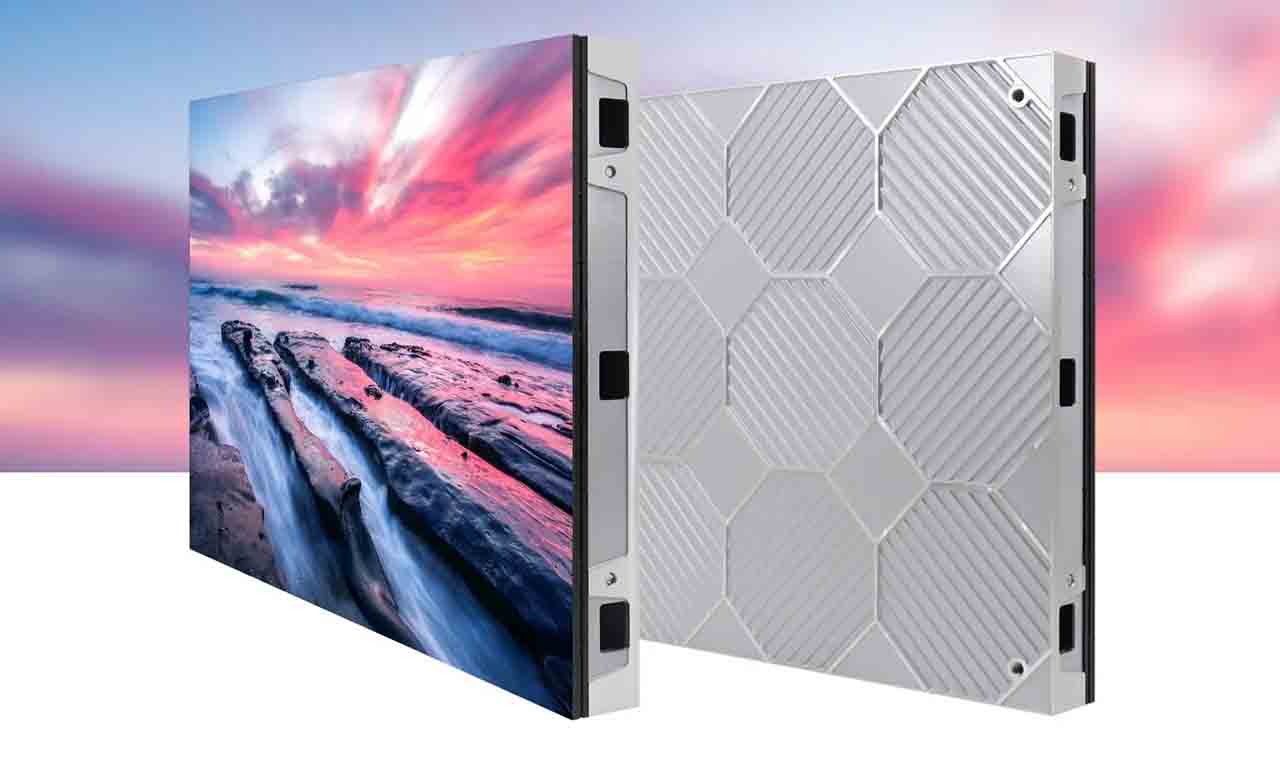
01. EA640F2 indoor front-service cabinets
The EA640F2 indoor LED display uses a 640 × 480 mm cabinet format with front service. It is a starting point for an indoor advertising LED display where close viewing and accessible maintenance matter. Confirm the offered pixel pitch, native resolution and wall attachment details for your project.
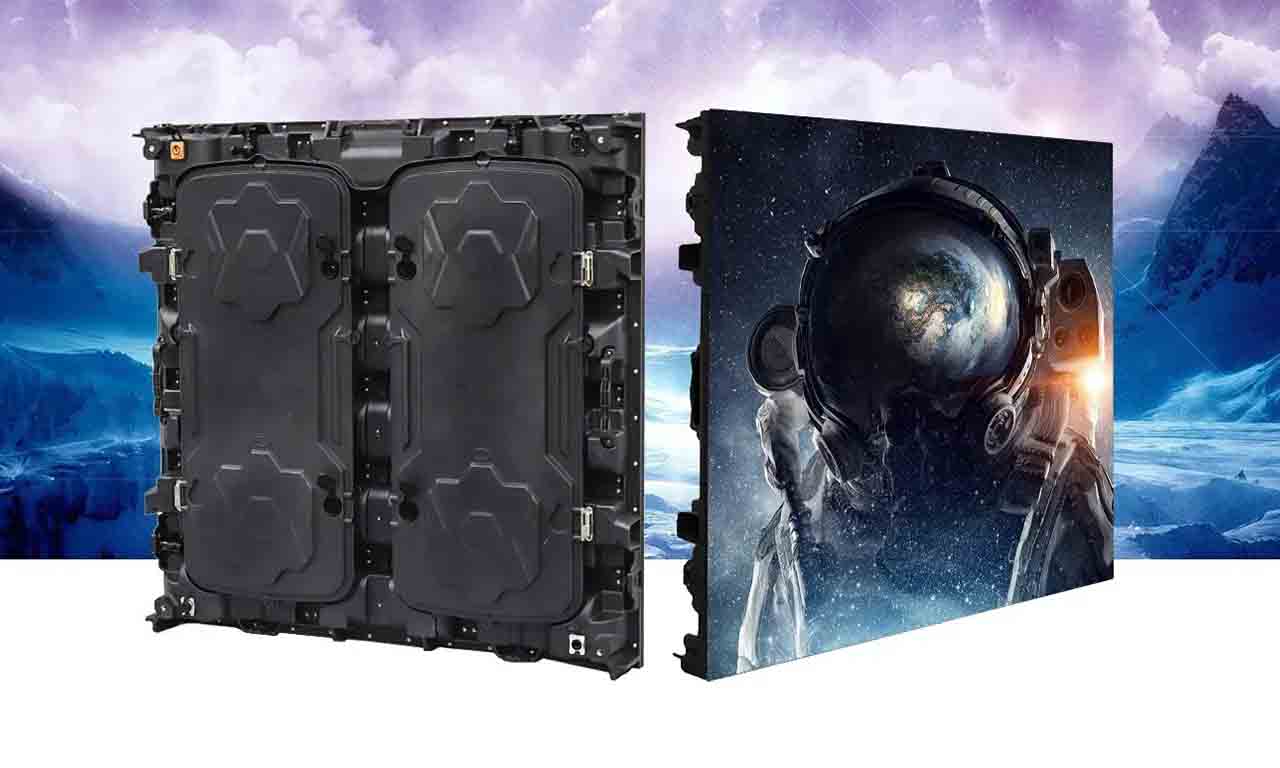
02. EA960R1 rear-service cabinets
The EA960R1 cabinet overview describes a 960 × 960 mm rear-service format. Evaluate it where a permanent rear working area is possible. For an outdoor advertising LED display, confirm the selected module, enclosure protection and thermal configuration rather than relying on the cabinet name alone.
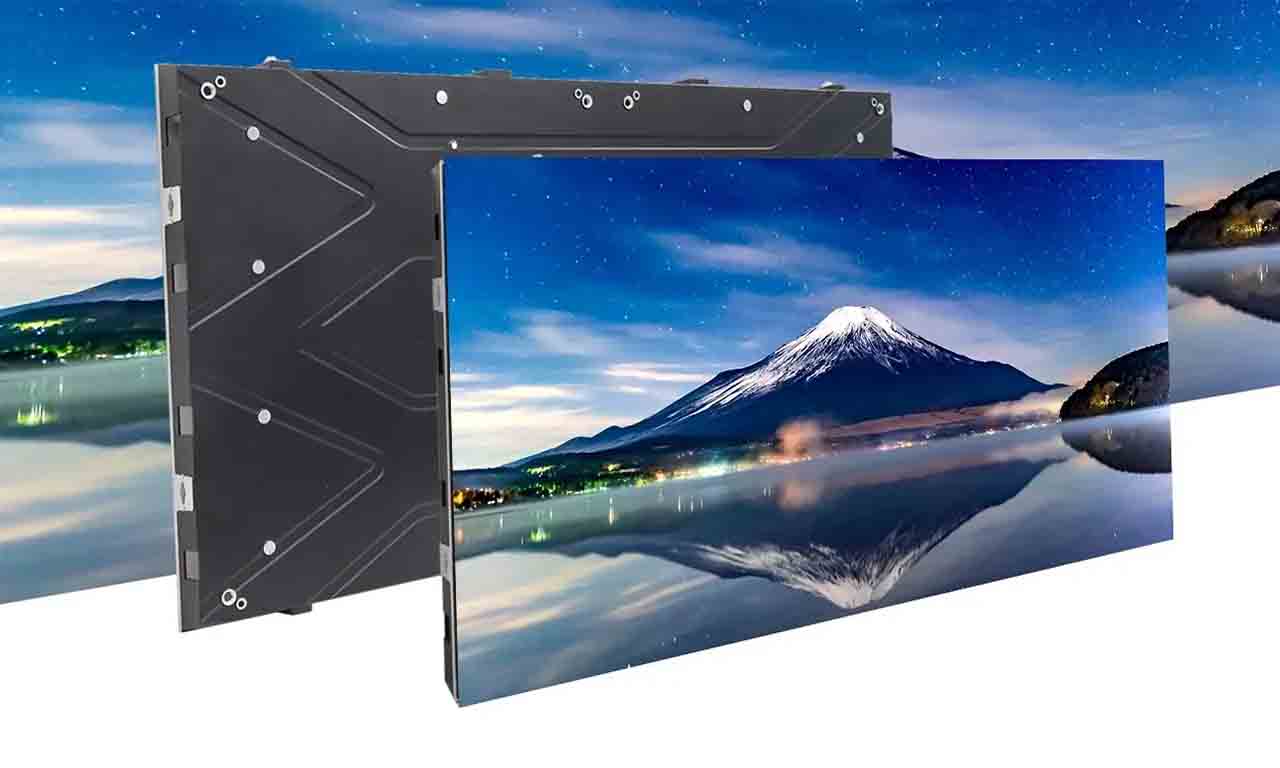
03. EA250W indoor wall installations
The EA250W indoor wallpaper display overview presents a slim, front-service approach for indoor walls. Check the supporting wall, fixing design and available cabinet combinations. A slim advertising LED display still requires suitable cable routes, power distribution and component-removal space.
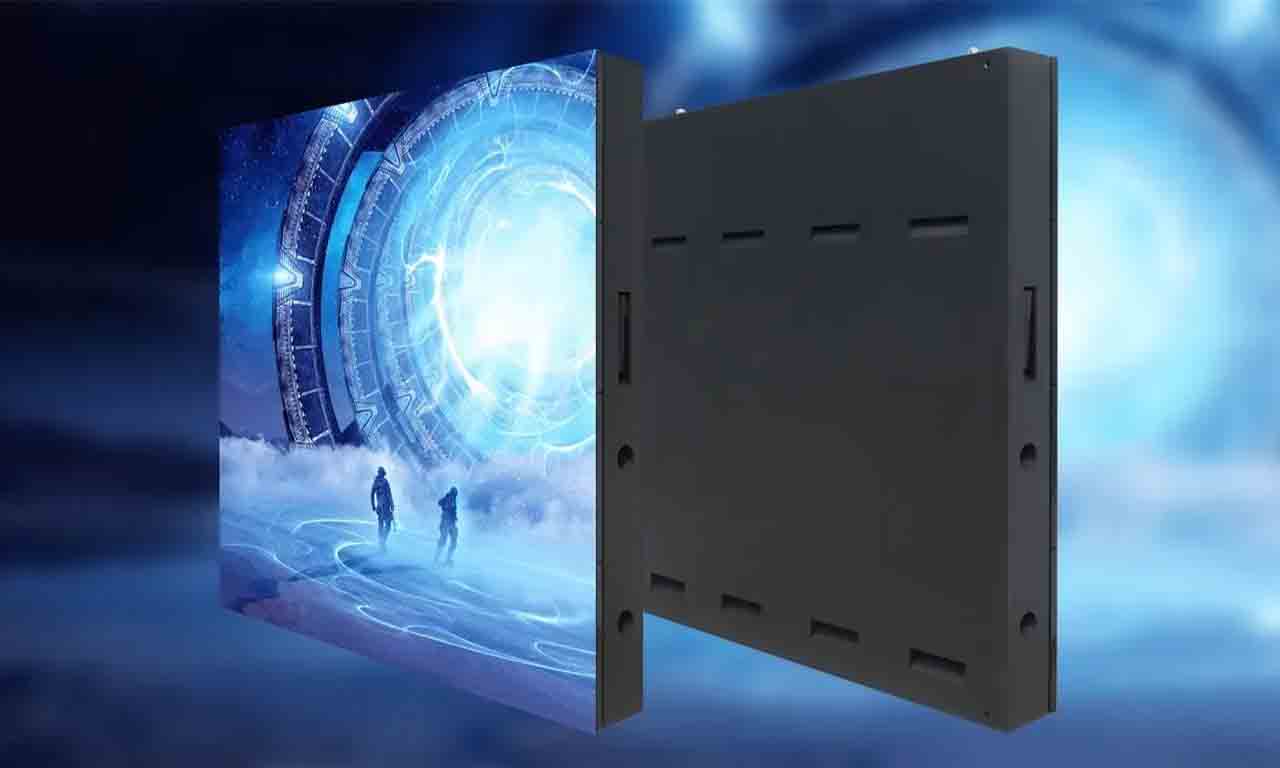
04. EA250F outdoor front-service installations
The EA250F outdoor front-service format is relevant when rear access is restricted. Compare current options in the commercial LED display range. Ask how technicians reach each serviceable component and restore weather sealing. Confirm brightness, protection and cooling requirements against the actual site, especially for sun-exposed facades.
To receive a comparable advertising LED display proposal, supply the location, installation photographs, available width and height, viewing distances, daily operating hours and example content. Include your budget range, delivery destination and preferred service access. This lets the supplier explain the trade-offs instead of recommending a model from screen area alone.
9. Advertising LED Display FAQ
01. Can I control an advertising LED display from my phone?
Yes, if the selected player and software support mobile control. Confirm whether the connection uses local Wi-Fi, a cloud service or mobile data, and whether scheduling and account permissions are included. Ask for a demonstration on the actual controller; a display panel by itself does not provide an app.
02. Will an advertising LED display keep playing without internet?
It can if the media player stores content locally and supports offline playback. Cloud-only services or live streams may behave differently. Before accepting the system, disconnect the network and check that the approved playlist continues, schedules remain correct and reconnection does not erase content.
03. Can an existing LED screen be upgraded to a finer pixel pitch?
Sometimes, but it is not automatically a module-only replacement. Mechanical fit, power supplies, receiving cards, wiring, controller capacity and calibration must all be compatible. Ask the supplier to assess the existing system and compare the complete upgrade cost with a replacement screen.
04. Does a 3D advertising LED display require special glasses?
Common outdoor “naked-eye 3D” campaigns do not require glasses. They use perspective-based content designed for a screen’s shape and an intended viewing zone. The effect can weaken from other angles. Confirm content-production requirements separately from the cost of the display hardware.
05. Can I buy advertising time instead of buying an LED display?
Yes. Contact the operator of an existing digital billboard or a media agency for campaign inventory. Ask about location, scheduling, loop length, proof of playback and audience measurement. An advertising LED display equipment quotation covers the screen system; it does not automatically include a media location or advertising rights.
10. Conclusion
A successful advertising LED display starts with a clear brief: who needs to see it, what they need to read and how the installation will be operated and maintained. Compare pixel resolution, site-appropriate brightness, service access and total installed cost together.
Use the tables and acceptance checks above to evaluate proposals on the same basis. When you are ready, send EagerLED your project requirements for a configuration-specific quotation. The aim is an advertising LED display that suits the location and remains practical to manage throughout its working life.