

A commercial LED advertising display creates value by combining visible, large-format messages with content that can be updated and scheduled without replacing printed panels. It can support retail promotions, brand campaigns, and paid advertising slots. Its business value depends on the location, audience, content, uptime, and total operating cost. A bright screen alone does not guarantee more sales or a positive return on investment.
Key takeaways: Use digital advertising when changing messages and reusable screen time solve a real business need. Evaluate benefits alongside electricity, maintenance, and content costs. Measure attributable results before scaling a campaign.
By EagerLED. Product examples below refer to EagerLED’s published specifications; financial calculations are illustrative planning examples, not customer results.
What is a commercial LED advertising display?
A commercial advertising screen uses direct-view light-emitting diode (LED) modules to display text, images, and video. Cabinets join to form the required screen area, while a controller and media player manage the content. Indoor and outdoor models serve different environments; weather protection and suitable brightness must be confirmed for the selected configuration.
Typical locations include shopping-center entrances, storefronts, commercial building facades, and transport waiting areas. Outdoor digital advertising is often described as digital out-of-home (DOOH) advertising. A fixed facade screen is not automatically a mobile display, and a transparent screen is a separate design choice rather than a standard feature of every advertising installation.
Explore EagerLED’s commercial LED display solutions for available screen formats and application examples.
6 advantages of LED screen advertising
1. Visible messages at the point of attention
Self-emitting LED pixels make large-format content visible without relying on light projected onto a surface. The useful result is a readable message at the intended viewing distance, not simply the highest brightness setting. Check the installation in daylight and at night, with the actual logo, text size, and background colors.
2. Scheduled content for different trading periods
A compatible player can schedule breakfast, lunch, and evening promotions on the same screen. This lets a retailer match messages to opening hours, stock availability, or events. Remote updates depend on the selected player, software, network connection, and access permissions; they are not an automatic capability of the LED cabinet itself.
3. Reusable advertising space
One display can rotate several campaigns without reprinting and physically replacing each poster. A media operator can also sell scheduled slots to multiple advertisers. Sellable capacity is not the same as sold inventory: allow for unsold time, venue messages, maintenance interruptions, and contractual playback commitments.
4. Placement close to the relevant audience
A shopping-center screen can reach visitors near stores; a waiting-area display can present messages to people with more time to read. Judge the location by sightlines, dwell time, obstructions, and audience relevance. Foot traffic does not prove that everyone sees the advertisement, and location alone does not establish the audience’s income or occupation.
5. Modular layouts and planned service access
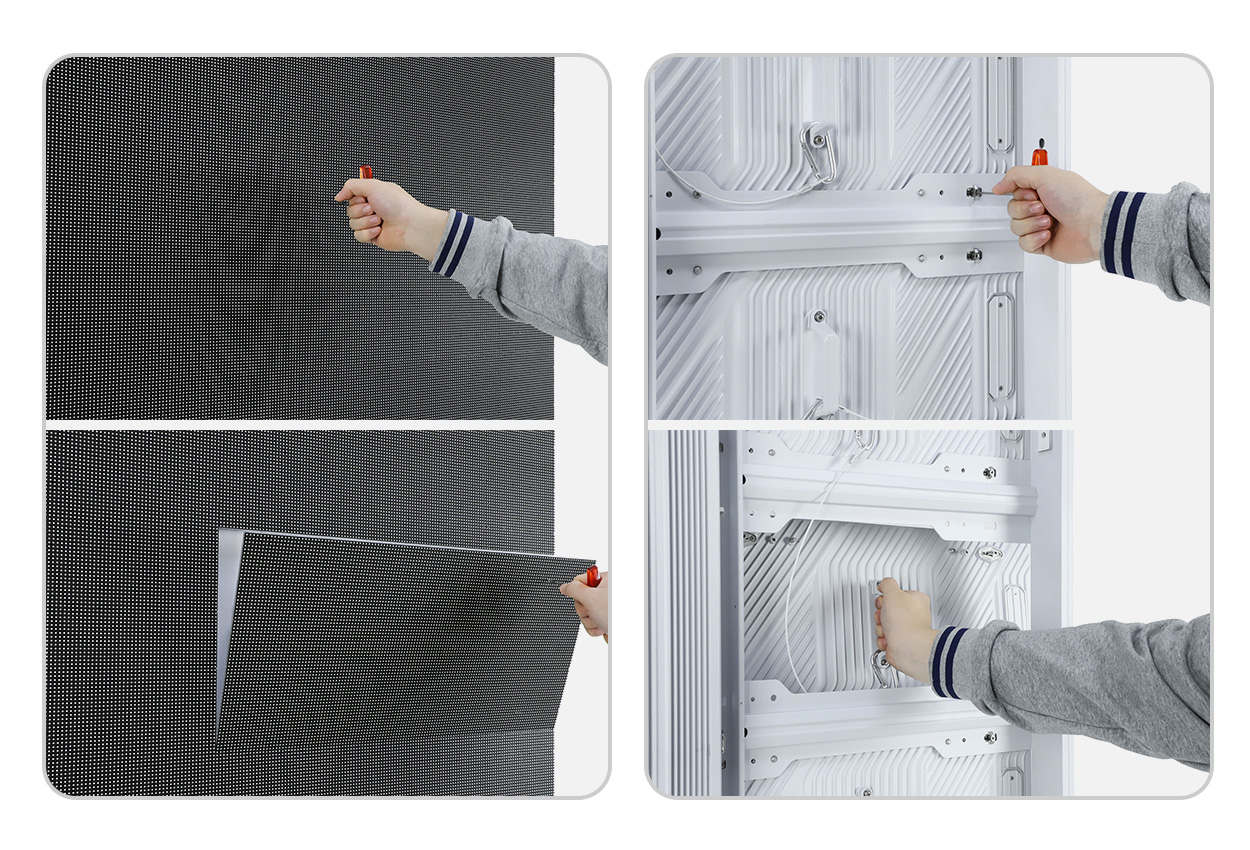
Cabinet-based construction supports large surfaces and selected corner layouts. Service access matters commercially because a module that can be reached and replaced helps an operator manage downtime. Confirm the service route, spare-module availability, and support process before selecting the installation structure.
6. Campaigns that can be evaluated and improved
Use offer codes, campaign-specific landing pages, inquiries, or store-level sales comparisons to evaluate results. For pedestrian locations, a readable QR code can support response tracking. Compare similar periods and account for discounts, seasonality, and other advertising. Playback logs show whether content ran; they do not establish how many people watched or purchased.
LED advertising vs. static signage
Digital signage is most useful when message flexibility earns enough value to justify the equipment and operating requirements. Static signage remains a practical option for a stable message.
| Decision factor | LED advertising display | Static sign or billboard |
|---|---|---|
| Message changes | Update files and schedules through the chosen control system. | Replace or reprint the physical artwork. |
| Content | Text, still images, and video where site rules allow. | One continuously visible message per printed face. |
| Shared space | Rotate campaigns; agree slot length and playback frequency. | Usually dedicates the face to one message at a time. |
| Cost profile | Installed equipment, electricity, content production, and maintenance. | Structure, printing, replacement labor, and lighting if used. |
| Best fit | Frequent promotions, scheduled content, or recurring demand for paid slots. | A long-running message where a simpler installation meets the need. |
Costs, energy use, and ROI
Total cost of ownership includes the screen, controller, structure, installation, electrical work, logistics, and ongoing expenses. Include content creation, software or connectivity fees, electricity, cleaning, spare parts, service access, and repairs. If renting advertising space on someone else’s screen, use the media fees and production costs instead of counting equipment you do not own.
Estimate electricity from average operating power
Daily screen energy (kWh) = screen area (m²) × average operating power (W/m²) × operating hours ÷ 1,000.
For illustration only, a 12 m² screen averaging 250 W/m² for 12 hours per day uses 36 kWh per day. At an assumed electricity rate of $0.15/kWh, that is $5.40 per day or $162 over 30 days. These are hypothetical inputs, not an EA1000F2 power specification. Add separate controller, ventilation, or other equipment loads where applicable; actual billing can also include demand charges and taxes.
Use measured average power for realistic operating budgets, and the specified maximum load for electrical planning. Content brightness, ambient-light settings, operating time, and the chosen hardware affect consumption. Automatic dimming can reduce unnecessary light output, but no fixed saving such as “one-third less energy” applies to every installation.
Calculate simple payback using net benefit
Monthly net cash benefit = attributable gross profit + net advertising income + avoided print costs − ongoing screen costs. Avoid counting the same benefit twice. For a retailer, use gross profit attributable to the campaign rather than treating all sales revenue as profit.
Simple payback in months = initial installed investment ÷ positive monthly net cash benefit. If the net benefit is zero or negative, these assumptions do not produce a finite payback period.
| Planning input | Assumed amount |
|---|---|
| Initial installed investment | $30,000 |
| Monthly attributable gross profit or net ad income | $1,800 |
| Monthly avoided print costs | $200 |
| Monthly ongoing screen costs | $800 |
| Monthly net cash benefit | $1,200 |
| Simple payback | 25 months |
If the monthly net benefit falls to $600, payback becomes 50 months. This sensitivity check shows why occupancy, location quality, and running costs matter. Simple payback excludes financing, taxes, discounting, and residual value; it is a planning measure, not a guaranteed return. For a defined evaluation period, a simple ROI estimate is (cumulative net benefit − initial investment) ÷ initial investment × 100%.
What to check before investing
- Define the commercial goal. Specify whether the screen supports store promotions, brand visibility, or paid advertising inventory, and select a measurable outcome.
- Check the location. Record viewing distance, audience movement, sun direction, obstructions, available power, and maintenance access. Confirm applicable site approvals and advertising restrictions with the responsible local parties.
- Test the intended content. Preview the actual artwork at the proposed pixel resolution. Check small text, glare, viewing angles, and camera appearance when filming matters.
- Compare complete proposals. Request the selected model, service method, power figures, control system, installation scope, spare parts, warranty terms, and exclusions.
- Build and review a conservative budget. Include low-demand and downtime scenarios. Measure campaign response and actual operating costs against the assumptions.
A verified hardware example: EagerLED EA1000F2
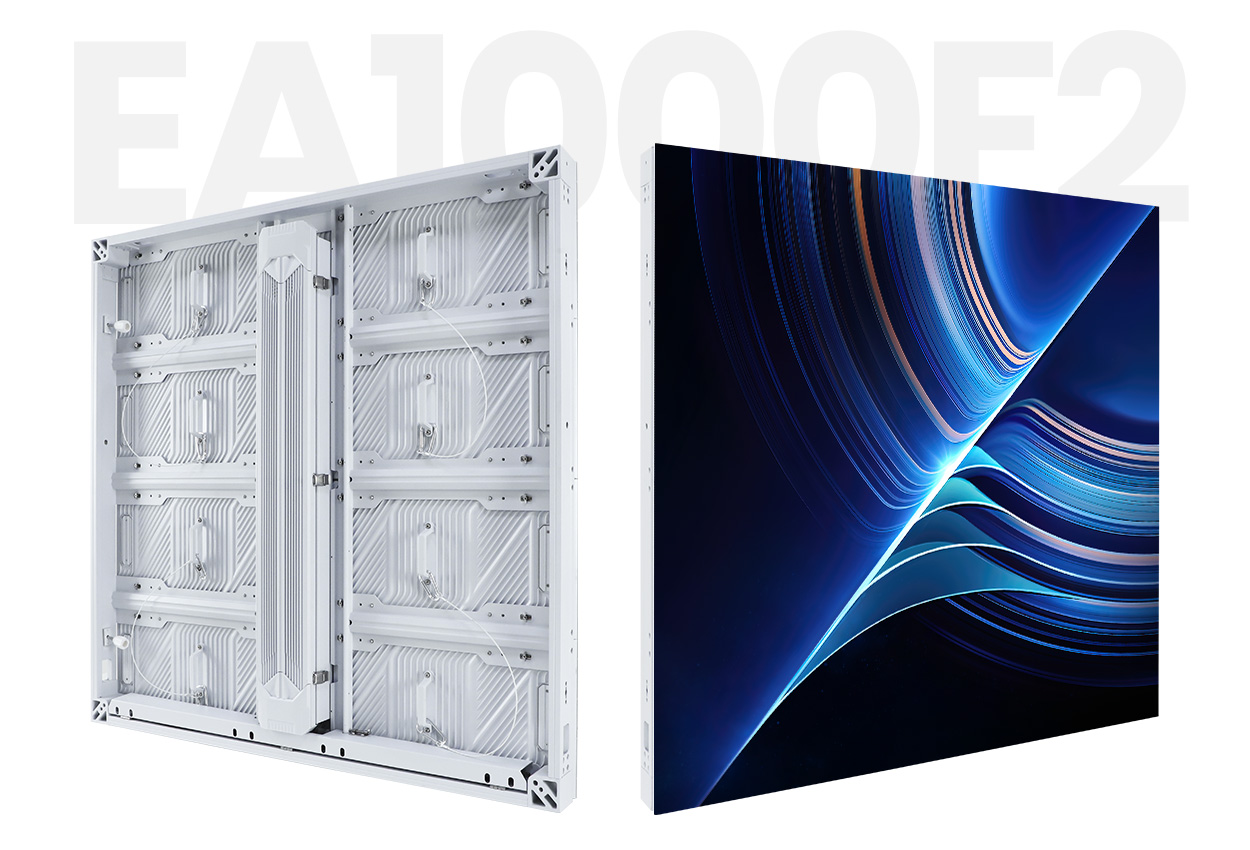
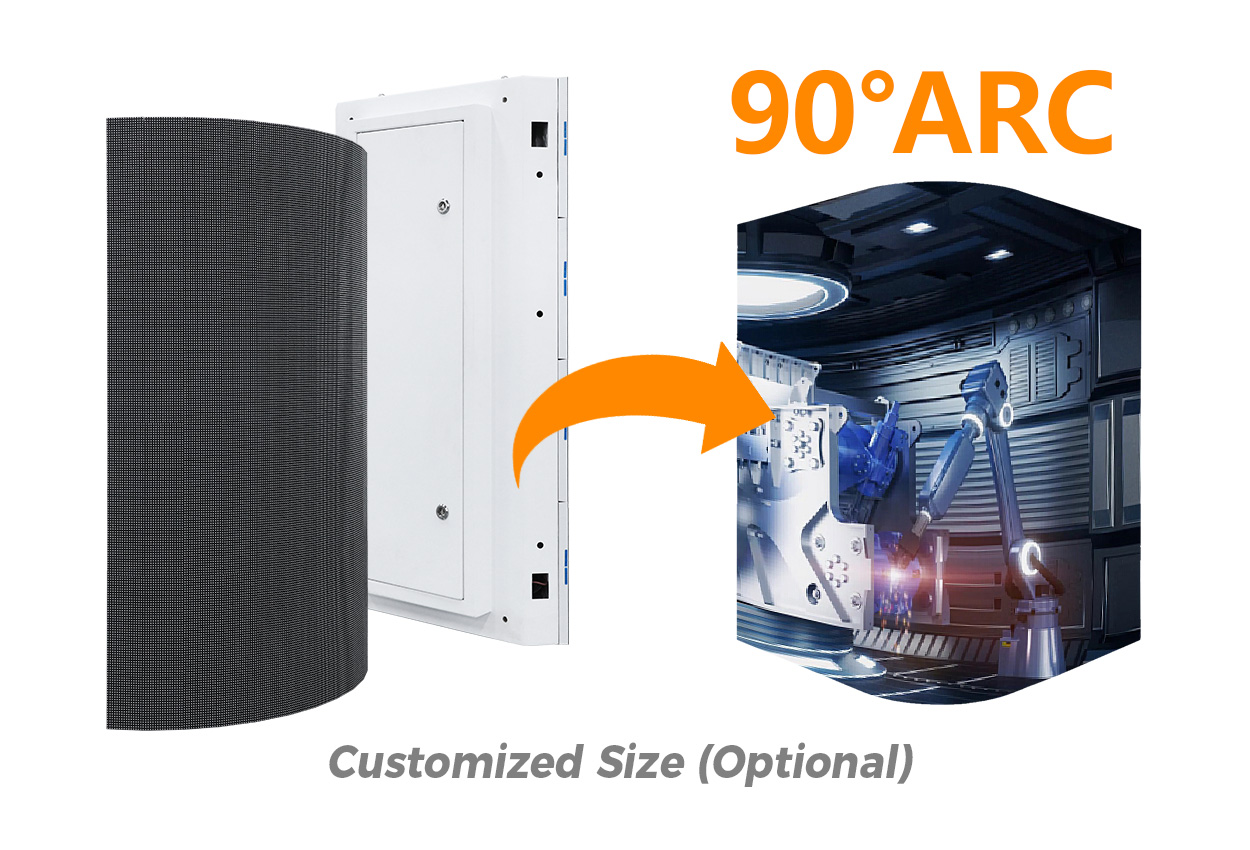
The EA1000F2 outdoor advertising LED screen page lists a 1000 × 1000 mm aluminum cabinet weighing 28.4 kg, front and rear module service, and IP65 protection. Published configurations offer 5,000 or 6,500 cd/m² brightness and a refresh rate of at least 3,840 Hz. Optional 45-degree beveled and 90-degree curved cabinets support selected corner installations.
These are model-specific design inputs, not specifications for every commercial LED screen. Confirm the exact configuration, protection scope, and installation requirements in the project documentation. Hardware specifications also do not demonstrate an advertiser’s revenue, audience reach, or payback.
For detailed screen-type and specification choices, read how to choose a commercial LED display. To assess a project, send EagerLED your dimensions and installation requirements, including the location, viewing distance, planned operating hours, and content goals.
Frequently asked questions
What are the main advantages of LED screen advertising?
The main advantages are bright, large-format visuals, scheduled messages, reusable advertising space, location-based placement, modular layouts, and measurable campaigns. Results depend on audience fit, readable content, reliable operation, and total cost.
Is an LED advertising display better than a static billboard?
It is a stronger fit when messages change frequently or several advertisers share the same location. A static billboard can be more economical for one long-running message with a limited budget. Compare total installed and operating costs, not screen price alone.
How do you calculate the payback period of an advertising LED screen?
Divide the initial installed investment by the positive monthly net cash benefit. Include attributable gross profit or advertising income and avoided print costs, then subtract electricity, content, maintenance, connectivity, and other ongoing costs. If the monthly net benefit is zero or negative, there is no finite payback under those assumptions.
Are all commercial LED advertising displays waterproof and energy-saving?
No. Outdoor suitability and power consumption depend on the selected model and the complete installation. Confirm the protection rating, operating conditions, measured or specified average power, brightness settings, and service requirements. A fixed energy-saving percentage cannot be assumed for every screen.
Does a matte or glossy screen surface work better outdoors?
A matte or low-reflection surface can reduce mirror-like reflections, but outdoor readability also depends on brightness, contrast, sun direction, the LED mask or coating, and viewing angle. Compare an actual sample under site lighting; a matte or glossy label alone is not enough.