Which China rental LED display manufacturers should you compare? Unilumin, Leyard, EagerLED, Absen, LianTronics, ROE Visual, INFiLED, and AOTO offer useful starting points. The right choice depends on your event mix, indoor or outdoor operation, camera requirements, service arrangements, and complete system cost. Compare a specific rental LED display configuration, rather than choosing on brand reputation alone.
This guide is for rental companies, event production teams, and integrators purchasing reusable panels. Here, “rental” describes equipment designed for repeated installation and transport; it does not mean a local screen-hire service. If you need equipment for one event, a local production supplier may be more appropriate than importing a fleet.
Editorial scope: EagerLED publishes this guide and is one of the suppliers included. The eight companies are a procurement shortlist, not an independently tested ranking or a claim of market-share leadership. Product examples below draw on manufacturer documentation reviewed in September 2026. Confirm the exact model, regional availability, and contractual specifications before ordering.
Comparing outdoor rental LED wall manufacturers? Start with a documented outdoor cabinet, then compare the exact model’s front and rear protection, brightness, service access, rigging accessories, and camera behavior. A brand’s indoor rental specifications do not establish outdoor suitability. If you are looking for an alternative to Absen, use the table to shortlist other suppliers, then request like-for-like quotations with the same pitch, wall size, processor, cases, spares, and support scope.
Start with the comparison below, then use the specification and quotation checklists in section 9. For cabinet options, explore our event and touring display range.
| Manufacturer | Product or portfolio to investigate | Main procurement question |
|---|---|---|
| Unilumin | Upad IV indoor rental family | Which cabinet and creative accessories support your layouts? |
| Leyard / Planar | CarbonLight CLI and CLM families | Do you need solid indoor panels or a mesh solution? |
| EagerLED | EA500C6 indoor and outdoor variants | Which pitch, protection rating, and spare package are included? |
| Absen | PL V2 indoor and outdoor platform | Are the selected panel sizes and accessories compatible? |
| LianTronics | Rental portfolio directed to Esdlumen | Which brand, model, and service entity appear on the contract? |
| ROE Visual | Black Pearl indoor family | Has the full panel-and-processor system passed your camera test? |
| INFiLED | ARmk2, EZmk2, and outdoor rental options | Which platform matches your touring and creative requirements? |
| AOTO | RM indoor rental family | Which model revision and processing configuration are quoted? |
1. Unilumin
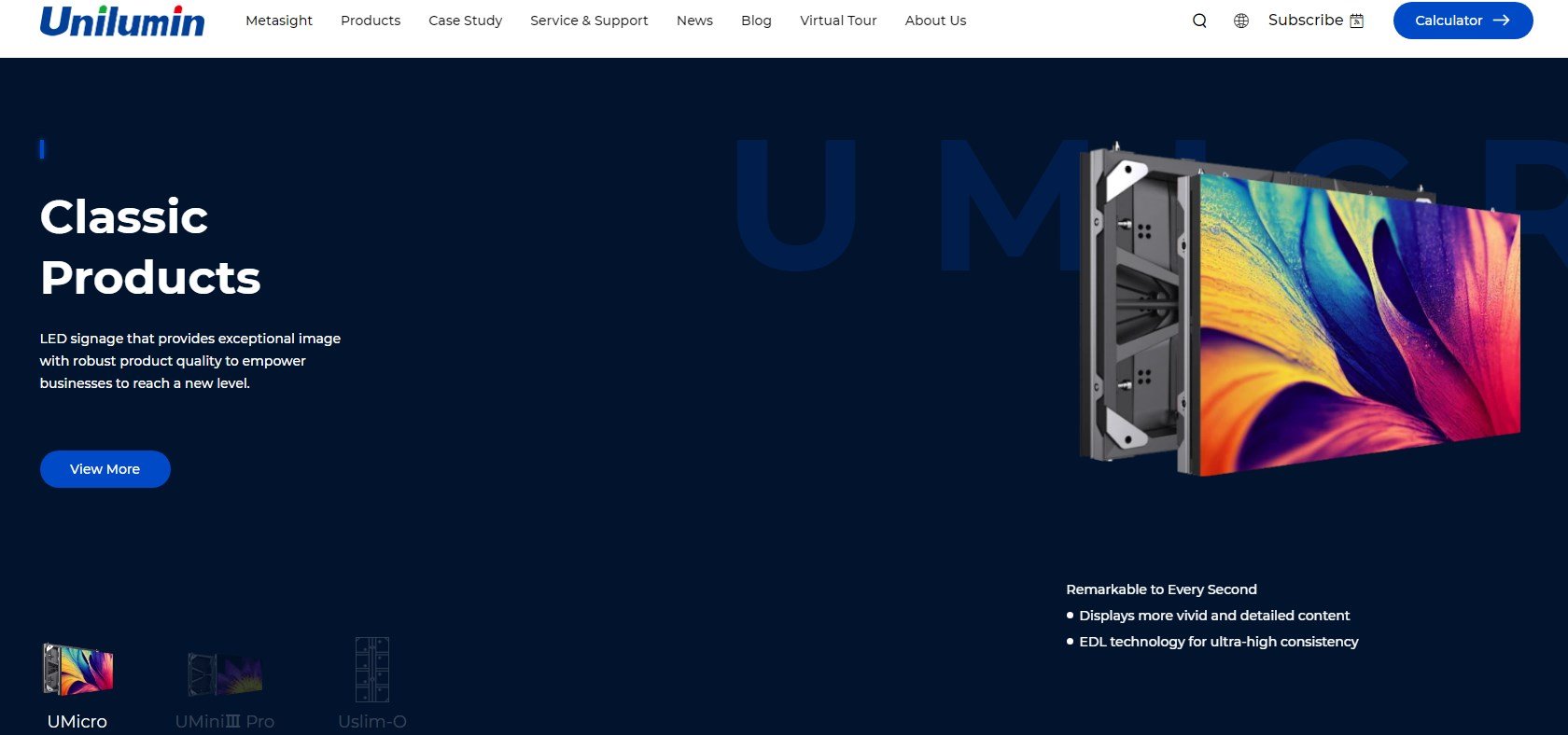
Unilumin’s Upad IV product page provides a concrete rental LED display example for indoor events. It describes magnesium cabinets, modular servicing, and options for curved or corner configurations. These details are more useful to a buyer than general statements about display innovation.
01. Rental LED display selection checks
For a fleet used at conferences and exhibitions, ask for a demonstration of cabinet alignment, module replacement, and packing. Test a replacement module in the same wall to establish how calibration data transfers and whether the repair remains visually consistent.
Choose the exact Upad variant before comparing brightness, weight, or pitch with another supplier. A specification from an indoor model should not be applied to an outdoor rental LED display. Ask which optional components are required for corners and curves, and include those components in the quotation.
Operationally, check whether your crew can access the power box after the screen is installed. A quick repair on a bench may require additional clearance when the same cabinet is suspended or positioned against a stage structure.
2. Leyard
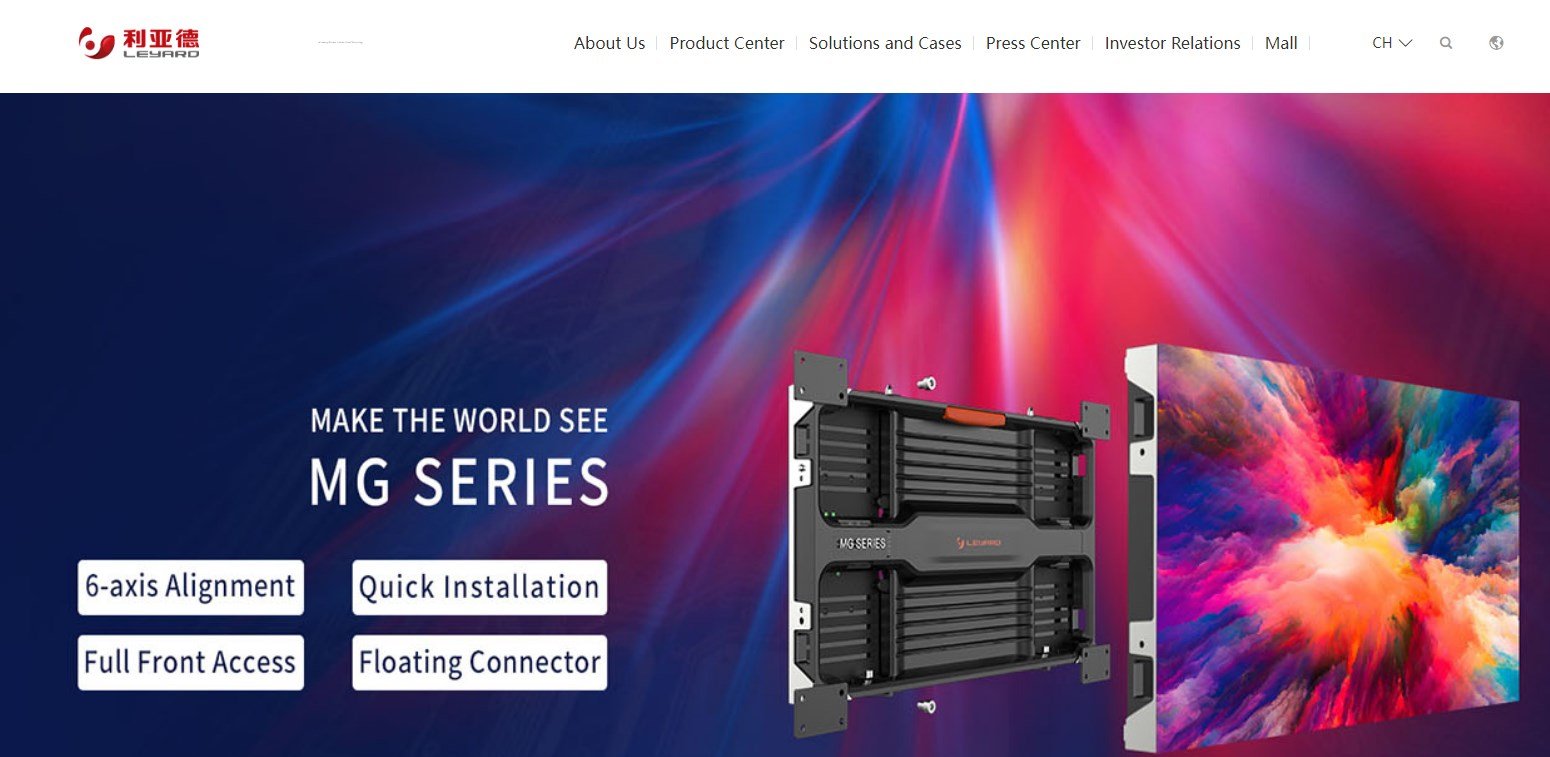
For Leyard-related rental LED display sourcing, examine the Planar CarbonLight portfolio. Its CLI family addresses indoor applications, while CLM provides mesh options for temporary or fixed installations. The published range distinguishes these applications; they should not be treated as interchangeable screen types.
01. Match panel construction to the job
Carbon-fiber construction can make handling and creative structures attractive, but cabinet weight alone does not describe the transported system. Include mounting frames, flight cases, cables, processing, and spare modules when comparing a rental LED display package.
Ask the supplying entity to demonstrate the proposed installation, especially for suspended signs, curved surfaces, or unusual aspect ratios. Confirm that the quoted accessories and support documentation match that exact configuration.
A mesh display and a solid fine-pitch panel solve different visual problems. Evaluate transparency, background lighting, image density, and audience distance using your actual content. A visually open stage design may be desirable for a concert but unsuitable for small presentation text at a corporate event.
3. EagerLED
EagerLED’s EA500C6 cabinet specifications illustrate an indoor and outdoor rental LED display platform. The page lists 500 × 500 mm cabinets, quick locks, corner protection, and compatible mixed splicing with EA1000C6 cabinets. Outdoor and indoor configurations have different brightness and protection requirements.

01. Build a complete rental LED display quotation
For a P3.91 outdoor project, specify the screen dimensions, required cabinet count, ambient conditions, and camera use. Ask for the selected model’s front and rear protection ratings, maximum electrical consumption, receiving-card configuration, and service access. The quotation should identify what is standard and what is optional.
Include processing, rigging components, flight cases, cables, and replacement parts in the discussion. This makes comparisons with other rental LED display manufacturers more meaningful than comparing a panel-only price.
When evaluating support, agree on the contact channel, working hours, escalation process, and replacement-part arrangements in writing. Request a configuration backup and operator training as deliverables. These commitments are more useful than an unspecified promise of lifetime assistance.
4. Absen
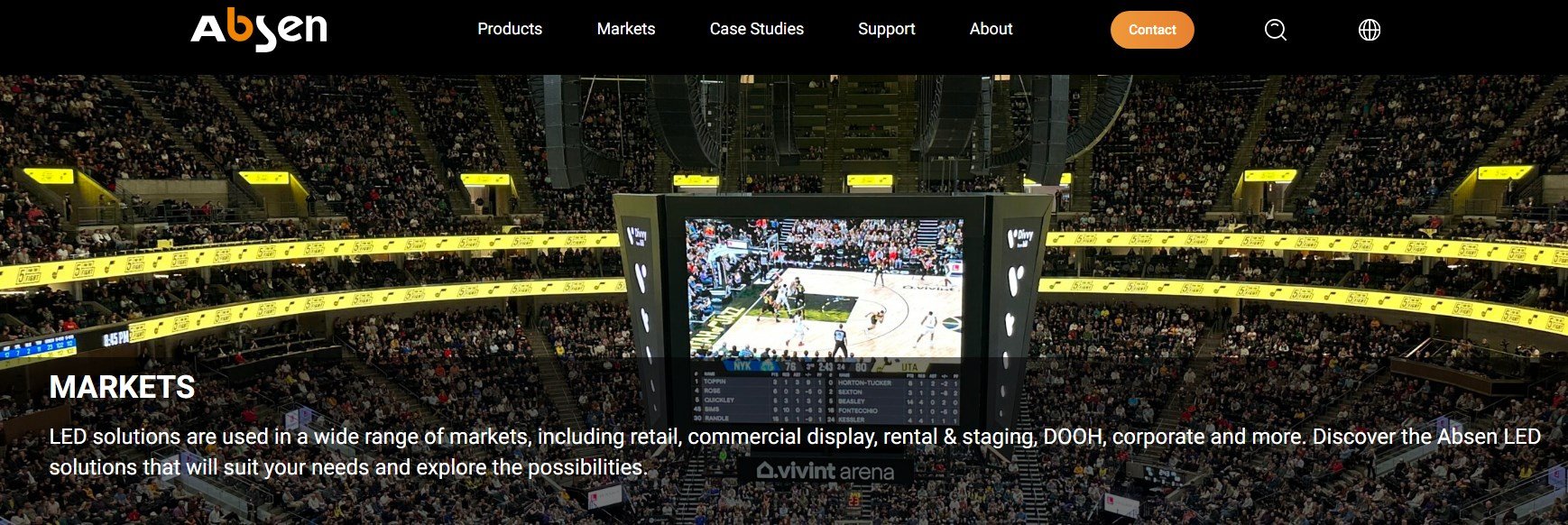
Absen’s PL V2 rental platform includes indoor and outdoor versions and two panel formats: 500 × 500 mm and 500 × 1000 mm. Its product page separates indoor and outdoor pixel-pitch options, giving purchasers a starting point for a consistent rental LED display specification.
01. Check the whole platform
Larger cabinets can reduce the number of units handled for a wall of a given size. Smaller cabinets offer more increments for screen dimensions. Compare both approaches using your common jobs, transport space, and crew workflow rather than assuming one cabinet format is always better.
Before purchasing a mixed-format rental LED display, obtain written confirmation of mechanical, electrical, and calibration compatibility. Check how replacement modules and power components are identified across the chosen variants.
For camera-heavy events, test the quoted processing configuration with your cameras. An XR-oriented product description is a reason to investigate performance, not evidence that every camera position and shutter setting will work without adjustment.
5. LianTronics
LianTronics rental documentation directs buyers to Esdlumen rental products. It describes LianTronics as focused on fixed installation and fine-pitch displays, and Esdlumen as focused on rental and commercial displays. This distinction matters when updating an older manufacturer shortlist.
01. Identify the rental LED display supplier precisely
Ask which company supplies the panels, which brand appears on the documentation, and which organization handles service in your market. Use the exact rental LED display model on the purchase specification rather than relying on an older family name from a comparison article.
For a project that combines permanent displays and event inventory, evaluate the two requirements separately. A fixed-installation panel may have excellent image quality but lack the protection, repeated assembly features, or transport packaging your rental operation needs.
Request the proposed system’s current data sheet and accessory list before scoring it against competitors. If the seller proposes an alternative model, repeat the compatibility and demonstration checks instead of assuming that the replacement is equivalent.
6. ROE Visual
ROE Visual’s Black Pearl documentation describes indoor panels for live events and camera applications, with hanging, stacking, and curved installation options. This is a relevant rental LED display example for buyers who need to assess both audience-facing images and recorded footage.
01. Test the rental LED display with your cameras
Use the intended cameras, lenses, frame rates, shutter settings, and working distances in the evaluation. Look for scan artifacts, moiré, color differences, and loss of shadow detail. An image that looks clean to the audience can still cause problems on camera.
Confirm the processor, receiving hardware, firmware, and calibration workflow included in the demonstration. Those components should match the delivered rental LED display system. Record a repeatable setup so your operators can recreate it on future jobs.
Also compare access to compatible additional inventory. If you expect to supplement your own wall for larger events, verify matching models and calibration arrangements with potential supply partners before treating cross-rental availability as a purchasing benefit.
7. INFiLED
The INFiLED rental portfolio includes platforms for touring, corporate events, camera applications, and creative stage designs. Current examples include ARmk2 and EZmk2, alongside outdoor and transparent options. Choose the relevant rental LED display family before comparing detailed specifications.
01. Evaluate creative flexibility against fleet simplicity
Curved panels, mesh products, and corner solutions can expand the jobs a production company accepts. They can also add accessory types, setup procedures, and spare-part requirements. Ask the supplier to demonstrate the layouts that matter to your business.
For an outdoor rental LED display, examine the complete support system and the documented operating conditions. Screen transparency or cabinet rigidity does not establish the suitability of a finished stage structure by itself.
Have your crew assemble, dismantle, and pack a representative section. Note the handling sequence, alignment adjustments, and opportunities for connector or edge damage. The results provide a practical basis for comparing a flexible platform with a simpler flat-panel inventory.
8. AOTO
AOTO’s RM indoor rental data sheet describes a rental LED display family with protected corners, integrated locking, and adjustable curves. The document distinguishes model variants and states that specifications can vary with the selected model or contract.

01. Specify the exact model revision
Ask for the complete model designation, packaging technology, processor, and cabinet revision in the offer. Avoid expanding product initials into technical claims unless the manufacturer documents that meaning. Similar names can refer to materially different configurations.
When a fine-pitch rental LED display is intended for presentations or studio work, review both text readability and low-brightness image behavior. Test grayscale gradients, skin tones, motion, and camera output rather than evaluating only a bright demonstration video.
Confirm module replacement procedures and the spare configuration required to retain a uniform image. Your receiving inspection should compare the delivered hardware with the agreed sample, including connector layout and service access, before the equipment enters the rental schedule.
9. How to Choose a Reliable Rental LED Display Screen Manufacturer
A useful rental LED display comparison starts with a written brief. Describe the jobs the equipment must serve, then ask each supplier to price the same system boundary. Our stage screen selection checklist provides additional application guidance.
01. Evaluate rental LED display quality and specifications
Specify wall size, audience distance, content type, indoor or outdoor location, camera use, and installation method. A smaller pixel pitch increases pixel count for the same screen area, but it should be justified by the viewing requirement. Purchase the resolution you need, together with dependable mechanics and serviceability.
| Item | What to compare | Evidence to request |
|---|---|---|
| Pixel pitch and resolution | Physical pitch, cabinet pixel matrix, and complete wall resolution | Cabinet drawing and pixel map for your dimensions |
| Brightness | Output at agreed calibration and operating conditions | Model-specific data sheet and sample demonstration |
| Outdoor protection | Front and rear ratings, connectors, and permitted environment | Applicable test documentation and installation instructions |
| Camera behavior | Refresh, scan behavior, grayscale, and synchronization | Recorded test with the proposed hardware and settings |
| Mechanics | Locks, alignment, edge protection, and access | Assembly and service demonstration |
| Power and signal | Maximum demand, circuit allocation, controller capacity, and backup paths | System wiring diagram and equipment schedule |
| Image consistency | Uniformity across panels and replacement modules | Calibration records and mixed-module test |
P3.91 sizing example: Suppose a quoted cabinet measures 500 × 500 mm and contains 128 × 128 pixels. A 6 × 3 m wall needs 12 × 6 cabinets: 72 cabinets covering 18 m². Its native resolution is 1,536 × 768 pixels. This is a worked example, not a specification for every P3.91 product. Confirm the actual pixel matrix; nominal pitch labels are rounded.
An outdoor rental LED display must be evaluated for daylight visibility and environmental exposure. Ask an outdoor rental LED wall manufacturer for separate front and rear protection information. A front rating does not automatically cover rear electronics, open connections, or the entire installation.
For filming, a high refresh-rate number alone cannot guarantee clean footage. Brompton’s ShutterSync explanation shows why camera shutter timing and LED refresh must work together. Test the rental LED display at the intended brightness and camera settings before accepting it.
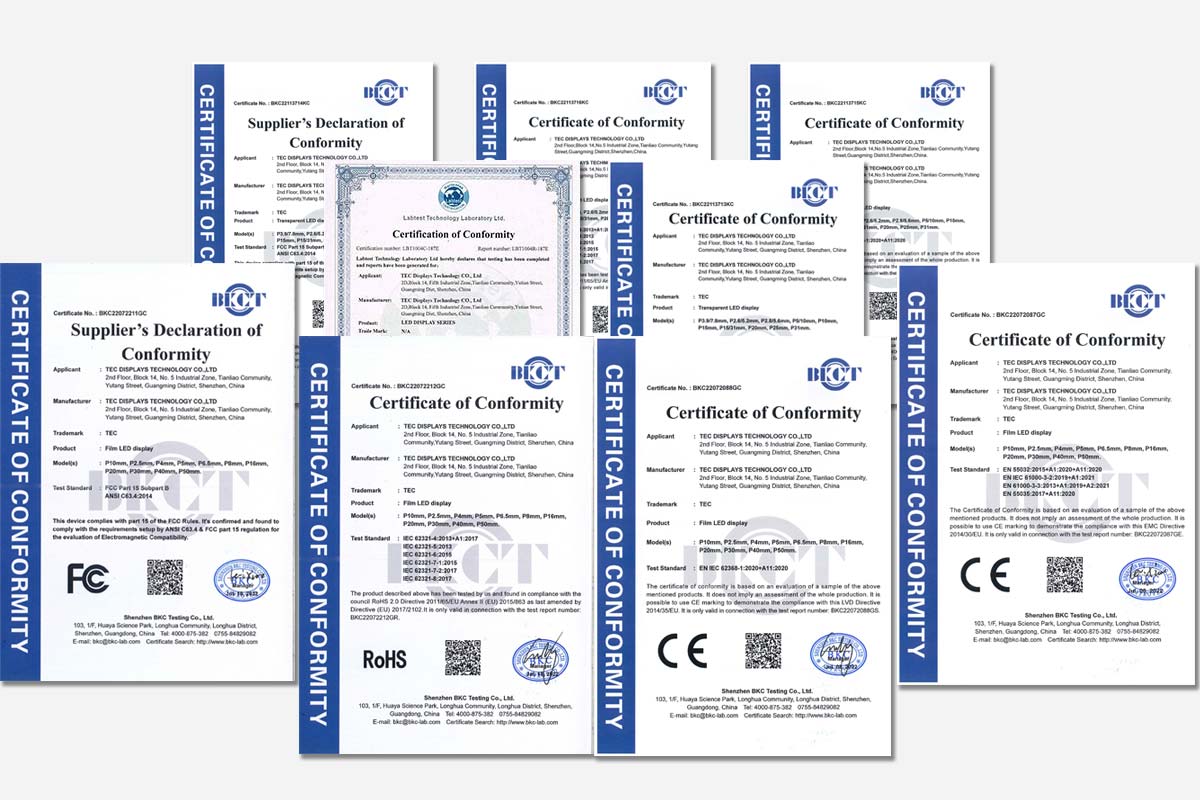
Request documentation tied to the supplied model and destination requirements. A photograph of certification logos does not verify a specific shipment. Keep the model designation, supporting documents, electrical drawings, and supplier commitments together in the procurement record.
02. Evaluate customer support and service
A rental LED display earns its place in a fleet when it can return to work quickly. Ask who diagnoses faults, where repairs take place, and what happens outside normal business hours. Clarify whether remote support, on-site attendance, shipping, and replacement components are included or chargeable.
Request spare modules, receiving cards, power supplies, and cables appropriate to the selected configuration. Agree on quantities using your fleet size, event schedule, and replacement lead times. Include configuration files, calibration backups, and a practical operator handover.
03. Check customization and flexibility
For a rental LED display that must form curves or corners, ask for approved drawings and a demonstration of the actual accessories. Confirm allowed combinations of cabinet sizes and pitches. Mechanical fit alone does not prove that panels can share a controller configuration or maintain a consistent image.
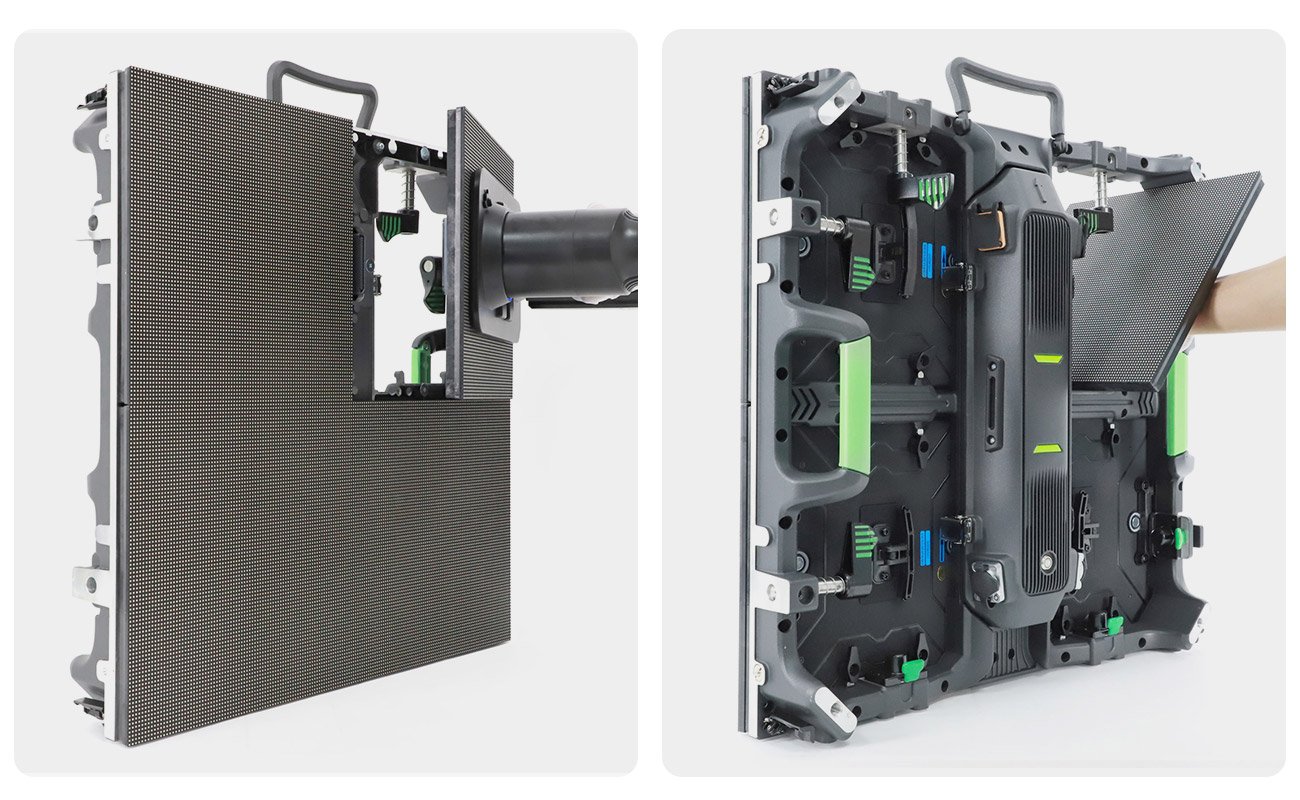
Evaluate packing as part of customization. Check how many cabinets fit in each case, the handling weight, and protection for LEDs and connectors. For outdoor structures, obtain a project-specific rigging assessment and follow the applicable installation instructions; do not derive structural limits from display marketing claims.
04. Review warranties and guarantees
Compare the written scope of coverage, exclusions, repair location, response process, and responsibility for freight. A longer headline warranty does not necessarily mean faster recovery. Ask how replacement modules are matched to the original batch and how calibration is handled after repair.
Record what happens if a rental LED display arrives with damage or fails the agreed acceptance checks. Define the evidence required, reporting process, and remedy before shipment. Keep an agreed sample or inspection record as the baseline for resolving discrepancies.
05. Assess production capacity and experience
Ask for references involving comparable rental LED display projects and permission to verify them. Review the proposed production schedule, inspection stages, and packaging process. A large factory image or a broad country count does not establish delivery capability for your specific order.
Before dispatch, inspect full-color fields, grayscale ramps, representative content, seams, locks, and service access. Record cabinet identifiers and defects. Include controlled checks of backup signal paths if redundancy is part of the order, using the supplier’s documented procedure.
06. Analyze rental LED display cost and value
Compare complete quotations rather than an isolated price per square meter. A rental LED display supplier may exclude processing, cases, or support hardware from a headline price. There is no defensible universal price without a defined configuration, quantity, delivery basis, and service scope.
| Cost category | Required quotation detail | Why it matters |
|---|---|---|
| Display hardware | Model, pitch, cabinet quantity, and specified components | Prevents comparison of unequal systems |
| Processing | Controller, receiving hardware, capacity, and optional redundancy | Determines supported inputs and operation |
| Installation accessories | Approved hanging or stacking components and cables | Identifies missing deployment equipment |
| Transport and spares | Cases, spare quantities, packing dimensions, and weights | Supports handling and service planning |
| Delivery | Named delivery basis, freight scope, destination charges, and timing | Clarifies the landed-cost calculation |
| Support | Training, warranty scope, repair freight, and response arrangements | Exposes ongoing operating obligations |
Estimate ownership cost over your intended service period: acquisition, transport, labor, repairs, storage, and replacement inventory. Use your own utilization records. A lower purchase price can lose its advantage if assembly takes longer or the rental LED display remains unavailable while waiting for parts.
07. Rental LED display FAQs
01. Which rental LED display manufacturer is best?
The best fit is the supplier whose specific system meets your application, inspection, service, and budget requirements. Use the eight-company shortlist to request comparable proposals, then evaluate samples. This article does not assign an independently verified performance ranking.
02. Is P3.91 suitable for an outdoor rental LED display?
It can be, if the particular cabinet is designed for outdoor operation and provides the brightness, protection, resolution, and service access your event requires. P3.91 identifies nominal pixel pitch; it does not establish weather protection or suitability for every viewing distance.
03. Can an indoor rental LED display be used outdoors?
Do not assume so. Confirm the manufacturer’s permitted environment and the complete installation requirements. Similar cabinet dimensions do not make indoor and outdoor models interchangeable, and temporary shelter does not automatically address moisture, temperature, or electrical exposure.
04. Does 3840 Hz refresh guarantee flicker-free video?
No. Camera frame rate, shutter timing, panel scanning, processor configuration, and brightness also affect the recorded image. Evaluate the complete rental LED display system with your intended camera setup and retain the settings that pass testing.
05. What should I send a rental LED display supplier for a quote?
Send wall dimensions, quantity, event type, viewing conditions, indoor or outdoor location, installation method, camera requirements, destination, and delivery schedule. Request an itemized system offer including processing, accessories, cases, spares, training, and warranty arrangements.
10. In Conclusion: Choose a Rental LED Display by Evidence
Compare China rental LED display manufacturers through current model documentation, representative demonstrations, and clear commercial commitments. Preserve the distinction between an indoor event panel, an outdoor rental LED display, and equipment intended for camera-focused production. The strongest proposal is the one that explains how the complete system will perform in your working conditions.
Shortlist suitable suppliers, issue one consistent brief, and check the delivered equipment against the agreed configuration. To discuss an EagerLED system, review our rental cabinet options and provide your dimensions, application, and service expectations. That information supports a useful engineering discussion and an itemized quotation.