A transparent LED wall is a see-through display made from spaced LED strips or modules. It shows video while leaving part of a window, stage, or facade visible. The right choice depends on viewing distance, daylight, transparency, weather exposure, mounting, and service access. This guide explains those tradeoffs so buyers can prepare a useful specification and compare quotes.
For EagerLED’s current range, browse the transparent LED screen collection. This article focuses on planning a wall installation rather than listing every model.
Transparent LED wall: quick answers
- How does it stay see-through? Open gaps between LED light bars allow light and sightlines through the display; it is not a solid sheet of transparent glass.
- Where does it work best? Retail windows, glass facades, exhibition displays, and stage backdrops where the view behind the screen matters.
- What is the main tradeoff? More open area generally means fewer pixels and less image detail at the same screen size.
- What determines cost? Pixel pitch, brightness, indoor or outdoor protection, cabinet type, control equipment, supporting structure, and installation.
Jump to: How it works · Types · Specification checklist · Applications · Installation · Cost · EagerLED options · FAQs.
How does a transparent LED wall work?
Each light bar contains LEDs that form pixels. A controller sends video data to the pixels, while the spaces between the bars remain open. From the intended viewing distance, viewers see both the image and the scene behind it. Dark or unlit areas of the video can make an object appear to float; a bright full-screen image will reduce the see-through effect.
Transparency is a product specification, not a promise that every installation preserves the same view. The published percentage usually describes the open area of the display. Frames, wiring, mounting hardware, the glass behind it, and the content itself also affect the real-world result. Ask for a daylight demonstration using your actual content before choosing a cabinet.
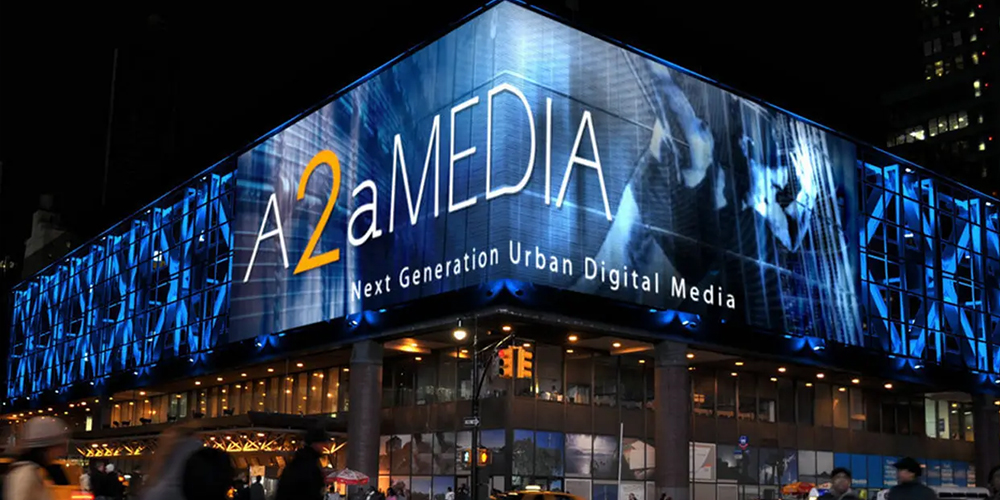
A transparent LED wall differs from transparent LED film and a conventional opaque LED wall. Cabinet systems use rigid modules and a support structure; film products can be applied to suitable glass. A standard LED wall may deliver denser pixels and stronger contrast when retaining a view is unnecessary.
Which type fits the project?
| Type | Typical use | Question to resolve |
|---|---|---|
| Indoor fixed cabinet | Shop windows and glass partitions | Can the screen be serviced from the accessible side? |
| Outdoor fixed cabinet | Exposed facade or permanent outdoor display | Does the exact cabinet meet the site’s weather and structural requirements? |
| Rental cabinet | Events, stages, and temporary installations | How will cabinets hang, stack, travel, and connect? |
| Transparent LED film | Suitable existing glass surfaces | Is the glass, wiring route, and service plan compatible? |
Side-emitting and front-emitting LED layouts can change transparency, viewing angle, and brightness, but those outcomes depend on the specific product and pixel pitch. Compare datasheets and a real sample rather than assuming one layout is always better.
Transparent LED wall specification checklist
1. Viewing distance and pixel pitch
Pixel pitch is the distance between pixels. A smaller pitch can show finer detail at close range, but it typically reduces the open area and increases cost. Start with the nearest normal viewing position and the content type. Large lettering seen from a street needs a different pitch from fine graphics seen across a shop window. Request the native pixel resolution of the complete wall, not just the cabinet pitch.
2. Transparency and visual contrast
Ask for the transparency percentage at the chosen pitch. For example, EagerLED lists 60% transparency for its EA1000TiF2 indoor fixed cabinet. Background lighting matters: a bright scene behind the wall can wash out displayed content. A content test should include daytime and nighttime conditions.
3. Brightness and operating hours
Specify whether the display faces direct sun, shaded daylight, or controlled indoor light. The required brightness can differ even between two indoor windows. Ask the supplier for the brightness of the selected configuration and how it is controlled across the day. Avoid paying for an outdoor brightness specification when the installation is in a controlled interior.
4. Weather protection, power, and heat
For exposed locations, verify the protection rating of the complete installation, including connections and power equipment. EagerLED’s EA1000TOF2 outdoor fixed wall is listed as IP65; the EA1000TiF2 indoor cabinet is listed as IP33. Check power capacity and ventilation using the selected model’s average and maximum power figures. Do not use a generic “energy saving” claim as an electrical plan.
5. Structure and maintenance access
Get a site drawing showing glass dimensions, mounting points, structural capacity, cable routes, service clearance, and any restrictions on drilling. The frame and fixings need engineering review for the project site, especially on a facade or overhead installation. Decide before purchase whether technicians can reach modules and power supplies from the front or rear.
Where does a transparent LED wall make sense?
Retail windows
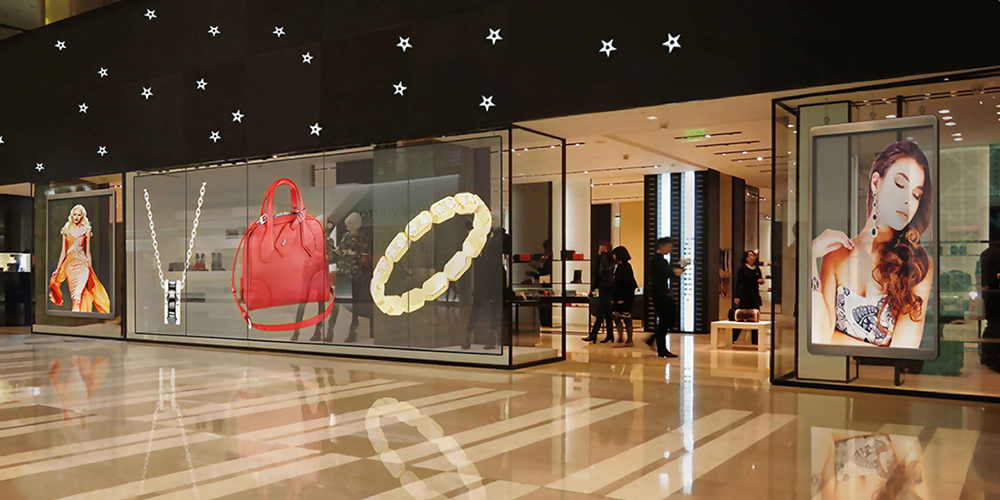
Motion graphics can face the street while customers can still see merchandise and the interior. Keep critical text large enough for the viewing distance, and test whether reflections on the glass obscure it. Where close-up detail matters more than the view, compare an opaque display or a smaller screen.
Glass facades
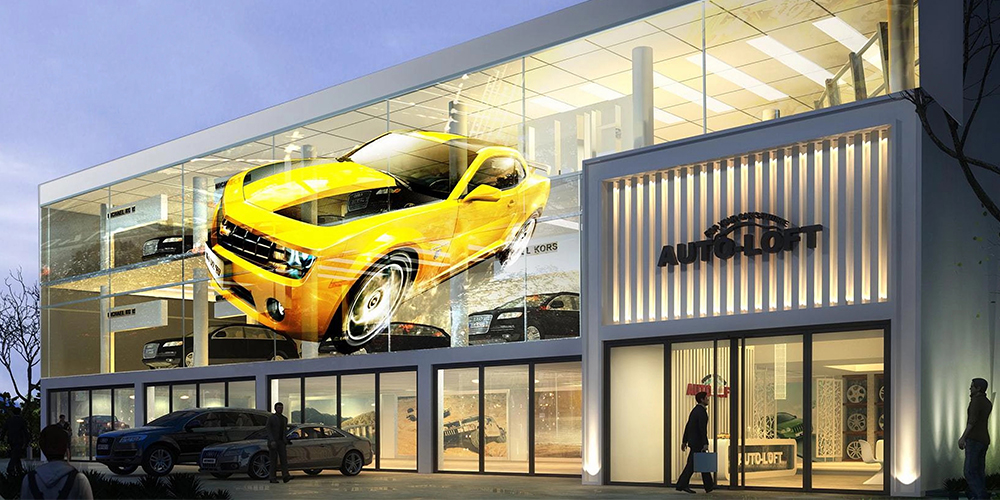
A facade installation can add digital content without fully covering glazing. It needs early coordination with the building owner, facade engineer, electrician, and local approval process. Review wind load, weather sealing, power, maintenance access, and the effect of nighttime brightness on the surroundings.
Stages and exhibitions
Transparent cabinets can layer performers, scenery, and video. Rental projects need a rigging plan, compatible cabinet sizes, spare modules, and a camera test. Ask for the refresh-rate specification of the selected model if the wall will be filmed or broadcast.
For a broader product overview, see EagerLED’s transparent LED screen range.
How do you plan installation and maintenance?
- Survey the site. Measure the visible area, viewing distance, ambient light, support points, available power, and access for future service.
- Choose the cabinet and layout. Confirm pitch, transparency, cabinet dimensions, pixel resolution, and where the content will be viewed from.
- Engineer the support. Check total load, mounting method, wind exposure where applicable, and cable routes. Obtain the approvals required for the location.
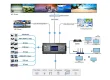
- Plan the control system. Confirm video source, processor, network or media player, content dimensions, and any scheduled brightness control.
- Commission and document. Test image alignment, brightness, power, and service access; record cabinet layout and keep the correct spare parts.
A hanging rental wall, a window-mounted indoor wall, and an exposed fixed facade need different supports. Use the installation drawings and product manual for the exact model rather than treating one mounting detail as universal.
What affects transparent LED wall cost?
There is no reliable single price for every transparent LED wall. The display hardware is only one part of the budget. Ask for an itemized quote covering:
- Chosen model, pitch, brightness, transparency, cabinet sizes, and spare parts;
- Video processor, sending equipment, software or media player, and cabling;
- Support frame, electrical work, installation, commissioning, and shipping;
- Service access, warranty terms, and ongoing content or maintenance needs.
As a practical example, a permanent outdoor wall may need weather-protected cabinets and a more involved support plan than an indoor retail window. That can change the total project cost even if the visible screen area is identical. Share drawings and the operating environment to make competing quotes comparable.
Current EagerLED transparent LED wall options
| Model | Published fit and specifications | Explore |
|---|---|---|
| EA1000TiF2 | Fixed indoor; 60% transparency; 1000 × 1000 mm or 1000 × 500 mm cabinets; rear access. | Indoor model |
| EA1000TOF2 | Fixed outdoor; 60% transparency; 1000 × 1000 mm cabinet; IP65; rear access. | Outdoor model |
| EA1000TOR1 | Outdoor rental; 1000 × 500 mm cabinet; IP65; hanging, stacking, and fixed setups. Transparency varies with pitch. | Rental model |
These are published product examples, not a substitute for a project-specific datasheet. Confirm the exact pitch, brightness, power draw, protection, maintenance direction, and current availability before ordering.
Transparent LED wall FAQs
Can you see through a transparent LED wall while it is on?
Yes. The open spaces between light bars remain see-through. The apparent transparency changes with the content, background light, and viewing angle, so request a sample test for the site.
Can a transparent LED wall be used outdoors?
Yes, when the selected model and the complete installation are designed for outdoor conditions. Check the actual IP rating, connections, structure, and maintenance plan. An indoor cabinet should not be treated as an outdoor cabinet.
Is a transparent LED wall as sharp as a normal LED wall?
Usually there is a tradeoff. A transparent layout leaves open space, so it may have fewer pixels than an opaque wall of the same size. Match pitch and native resolution to the viewing distance and the content.
What information is needed for a quote?
Provide the screen width and height, installation drawing or photos, indoor or outdoor location, nearest viewing distance, typical lighting, mounting method, operating hours, and video source. EagerLED can then recommend a configuration and itemize the project quote.
Ready to specify a wall? Send EagerLED your dimensions and site details for a tailored recommendation.