

When people first come across the Novastar ET2S-G, the name itself doesn’t immediately tell you much. It sounds like another box in a long line of LED control hardware, and in a way, that’s true. But once you look a little closer, it becomes clear why this model gets attention. The ET2S-G is built for LED display control, and more specifically for setups where reliable signal handling, stable output, and practical on-site operation matter more than flashy marketing language.
In most cases, the people looking at this unit are already dealing with LED walls, rental displays, fixed installations, or some kind of video processing workflow. They need gear that can sit in the middle of a system and quietly do its job. That is really the point of the ET2S-G. It is not meant to be dramatic. It is meant to be useful.
1.Understanding the Novastar ET2S-G
2.Where the ET2S-G Fits in an LED System?
3.Main Characteristics of the Novastar ET2S-G
4.Signal Handling and Output Behavior
5.Why Users Choose Novastar ET2S-G Media Server?
6.Typical Use Cases of Novastar ET2S-G
7.How It Compares in Practical Terms?
8.Installation and Workflow Considerations
9.Who Should Consider the ET2S-G
10.Conclusion
1. Understanding the Novastar ET2S-G
At its core, the Novastar ET2S-G is an LED controller designed to manage signal input and output for LED display systems. It belongs to NovaStar’s lineup of professional display control products, and the “G” version is generally associated with support for Gigabit Ethernet output, which is a big part of what makes it suitable for modern LED screen environments.
If you have worked with LED displays before, you already know the controller is often the part that quietly decides whether a system feels smooth or frustrating. A good controller helps maintain stable image transmission, sensible color handling, and dependable communication between the source and the display cabinet. The ET2S-G fits into that role.
It is usually used where users need a compact controller that can handle typical LED video tasks without becoming overly complicated. That balance is important. Some systems need a huge amount of processing power. Others just need dependable control and a clean signal path. The ET2S-G is more in that second category, though it still carries the kind of professional features people expect from NovaStar equipment.
2. Where the ET2S-G Fits in an LED System
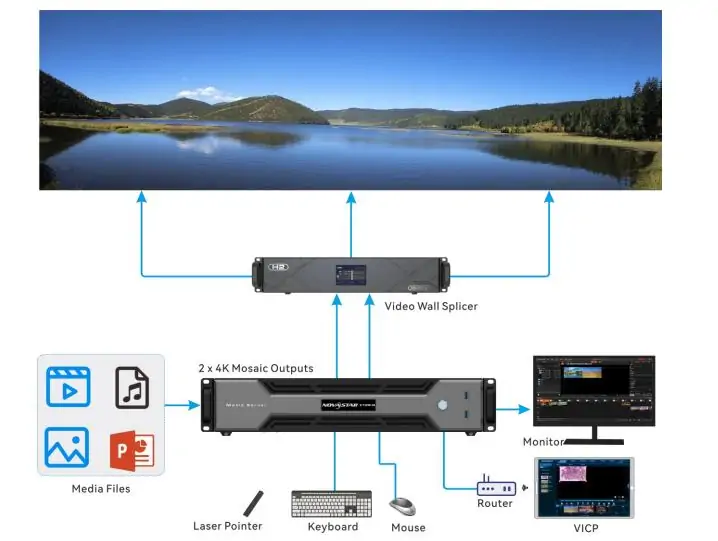
To understand the ET2S-G properly, it helps to think about the full LED workflow. A video source feeds into the controller, the controller processes or routes the signal, and then the LED cabinets receive the data through Ethernet ports. That sounds simple, and in theory it is. In practice, there are enough little issues in LED work—signal loss, mismatched resolution, cabling problems, configuration mistakes—that a solid controller ends up doing a lot more than just passing data along.
The ET2S-G sits in that middle layer. It receives the input, manages the output, and helps ensure the screen shows the image the way it should. For operators, that means fewer headaches during setup and fewer surprises once the display goes live. It also makes the system easier to maintain over time, which is something people sometimes ignore until they are standing in front of a screen that refuses to behave.
This type of controller is especially useful in rental and staging environments, though fixed installations can use it too. LED display operators usually care about speed, reliability, and ease of use. The ET2S-G is aimed at that kind of workflow.
3. Main Characteristics of the Novastar ET2S-G
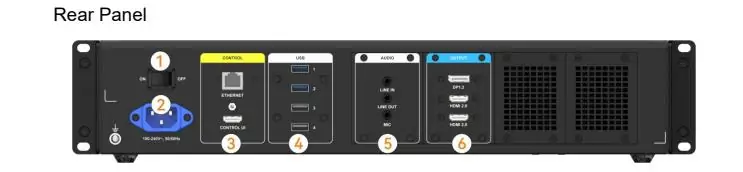
The ET2S-G is best understood through its practical features rather than just a spec list. It is a professional LED controller, so the hardware is built around stable processing and output management. The model name suggests a generation of equipment that supports Gigabit network transmission, which matters because LED screens often depend on multiple Ethernet connections to handle pixel data properly.
Another thing worth noting is that devices like this tend to be used in systems where the control chain needs to stay compact. Nobody wants unnecessary bulk in a rack or behind a display setup. That is why a controller such as the ET2S-G is appealing. It gives users a focused set of control functions without forcing them into a larger or more complicated environment than they need.
The controller is also part of a broader NovaStar ecosystem. That matters more than it may seem at first. If a technician already knows the NovaStar software and workflow, then deploying the ET2S-G becomes easier. Familiar tools save time. They also reduce errors, and in LED work, errors can get expensive fast.
4. Signal Handling and Output Behavior
A lot of the value in a controller like this comes from how it handles input and output under real-world conditions. LED displays are not always installed in calm, predictable environments. Sometimes the cable run is longer than expected. Sometimes the screen needs to be reconfigured at the last minute. Sometimes the source content changes and the operator has to adapt on the fly.
The ET2S-G is built with that kind of usage in mind. Its main task is to keep the video signal moving cleanly from source to screen. When that works, the whole display feels more professional. Colors stay consistent, the image remains stable, and the system is less likely to introduce little artifacts or timing issues that become obvious once the screen is lit up.
That may sound like a simple thing, but anyone who has spent time around LED panels knows it is not always simple at all. A controller has to be boring in the right way. The ET2S-G seems designed to do exactly that.
5. Why Users Choose Novastar ET2S-G Media Server?
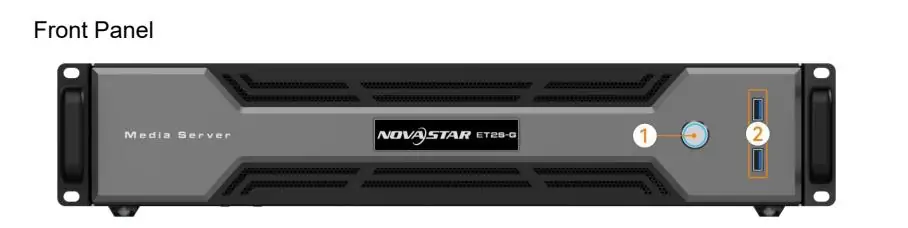
There are plenty of LED controllers on the market, so why would someone choose the Novastar ET2S-G specifically? Usually it comes down to a few practical reasons. The first is reliability. People in display work often stick with equipment they trust, and NovaStar has built a strong reputation in that area.
The second reason is compatibility. The ET2S-G is made to fit into professional LED display systems, so it is useful for users who need a known, proven control unit rather than something experimental or overly niche. That can matter a lot when a project has a deadline and there is no room for guesswork.
Another reason is efficiency. The unit is designed to handle control duties without overcomplicating the job. For many setups, that is exactly what is needed. Not every screen requires a giant processing pipeline. Some just need a controller that works, does not get in the way, and gives the operator confidence during deployment.
6.Typical Use Cases of Novastar ET2S-G
The ET2S-G can show up in a few different kinds of projects, and that flexibility is part of its appeal. It is commonly associated with LED video walls, indoor display installations, rental events, stage backdrops, and other environments where visual content needs to be delivered cleanly and consistently.
In fixed installations, the controller may sit quietly in a control room or rack and manage the screen day after day. In rental work, it may be moved from one event to another, which means the hardware needs to be dependable enough to handle frequent setup and teardown. That is a tougher job than it sounds. Equipment gets bumped, cables get swapped, and time is always short.
The ET2S-G is also useful in systems where operators want a straightforward controller instead of a more advanced platform with extra functions they may never touch. That does not make it basic in a bad way. It just means it is focused.
7. How It Compares in Practical Terms
When people evaluate LED controllers, they usually are not doing it in a vacuum. They are comparing how much control they get, how simple the configuration feels, and whether the unit fits the project without creating unnecessary complexity. The ET2S-G tends to be appreciated for being straightforward.
That does not mean it is the answer for every system. Large or highly specialized LED projects may need more advanced processing options, more expansive control features, or different output capacities. But for many standard professional setups, the ET2S-G covers the main job quite well.
In practice, that is often what wins. A product does not have to do everything. It just has to do the right things reliably. This controller seems to fit that idea.
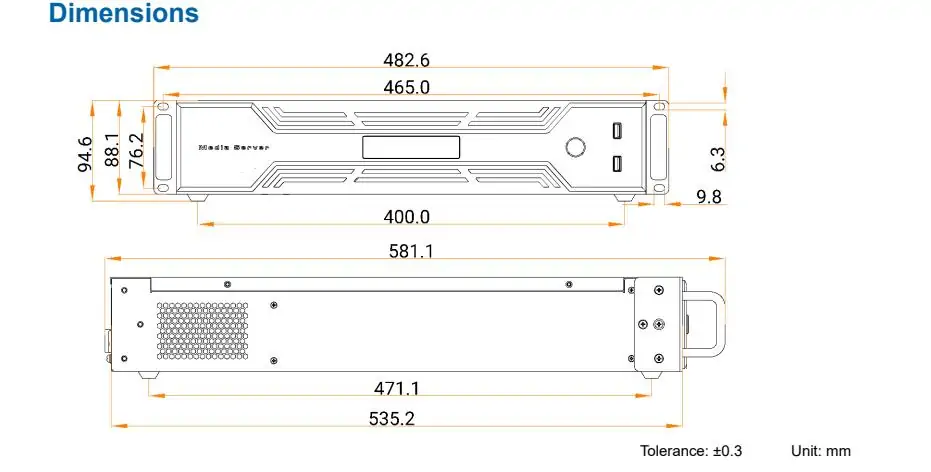
8. Installation and Workflow Considerations
One thing that matters a lot in LED work is how easily the equipment slots into the rest of the system. A controller can have good specs on paper and still be annoying to deploy if it creates unnecessary setup friction. The ET2S-G is generally used in workflows where the operator wants a clean, manageable setup.
The cabling side is important here too. Since the controller is part of the signal path, a stable connection from source to controller and from controller to receiving cards or cabinets is essential. Even a solid controller cannot fully compensate for poor wiring or sloppy configuration. That is just the reality of display systems.
The good news is that a professional unit like the ET2S-G is built for this kind of environment. It is not a consumer gadget pretending to be pro gear. It is meant to live inside a proper LED control chain and do its work without drawing attention to itself.
9. Who Should Consider the ET2S-G
The Novastar ET2S-G is a sensible choice for LED technicians, integrators, rental companies, and display operators who need a dependable controller for standard professional LED applications. It is particularly relevant for people who already work within NovaStar-based systems or who want a controller with a familiar operating model.
If your project needs stable output, practical handling, and compatibility with professional LED display setups, this model is worth looking at. If you need something far more elaborate, then you may need to move up to a different product in the lineup. That said, a lot of real-world installations do not need the most complex option available. They need the one that stays predictable under pressure.
And that is where the ET2S-G earns its place.
10. Conclusion
So, what is the Novastar ET2S-G? Put simply, it is a professional LED controller designed to handle signal management for LED display systems with stability and practical use in mind. It fits into setups where users want reliable control, Gigabit-based output handling, and a product that works smoothly in real operating conditions.
It is not the kind of device most people will talk about for fun, and honestly, that is fine. Controllers like this are supposed to be dependable rather than exciting. In LED work, dependable usually wins. The ET2S-G seems built around that idea, and for many projects, that is exactly what makes it valuable.