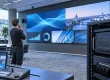
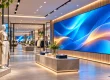
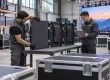
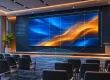
Quick answer: A transparent LED screen is ideal for brand promotion because it adds high-impact motion to glass while preserving part of the view, daylight, and merchandise behind it. That makes it especially useful for retail windows, showrooms, product launches, exhibitions, and glass facades where an opaque billboard would hide the space or product.
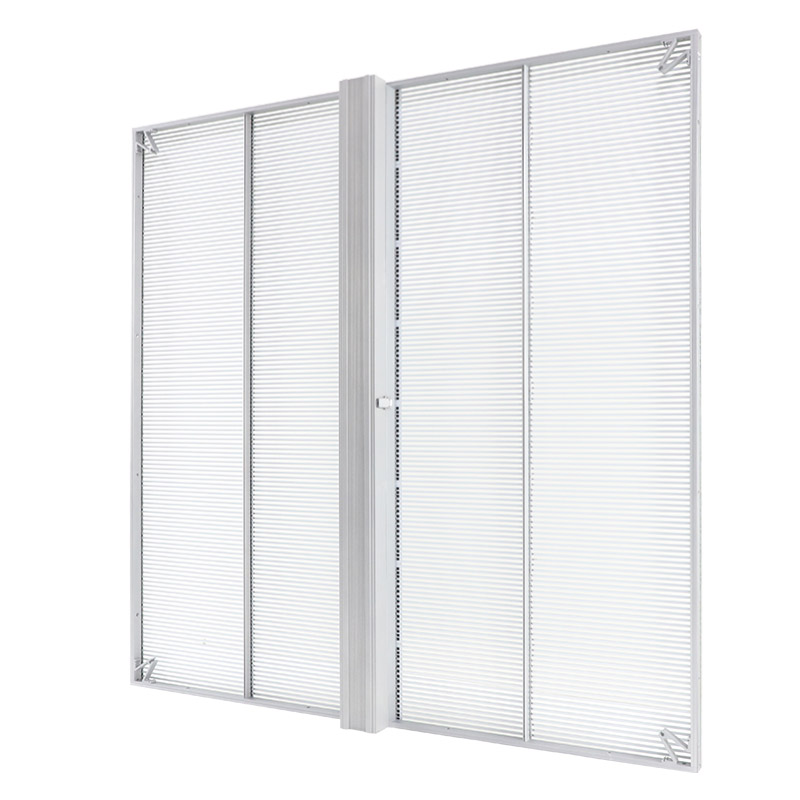
Unlike a conventional solid display, a transparent LED display uses an open structure that lets viewers see digital content and the physical setting together. The result can make a logo, product silhouette, campaign message, or launch animation appear integrated with the storefront instead of placed in front of it.
A transparent LED screen for brand promotion is most effective when the campaign needs both a bright digital message and a visible product, interior, or building behind it. The decision depends on the actual glass, daylight, audience path, artwork, and maintenance route; transparency alone does not predict campaign performance.
Key takeaways for brand teams
- Preserves context: shoppers can still see products, interiors, or architecture behind the campaign.
- Fits high-value glass: retail windows and curtain walls become digital brand surfaces without a fully opaque backdrop.
- Supports changing campaigns: scheduled video and graphics can be updated for launches, seasons, and promotions.
- Requires a balanced specification: pixel pitch, transparency, brightness, viewing distance, and service access must be planned together.
- Model figures are not universal: current EagerLED examples range from 60% transparency for an indoor fixed model to up to 70% for an outdoor fixed model.
1. 7 reasons transparent LED screens work for brand promotion
01. They keep the product and store visible
A storefront campaign should attract attention without hiding the reason people should enter. A transparent LED screen can show motion, color, and branded graphics while preserving a partial view of merchandise, lighting, and activity inside. This is the central advantage for retail advertising: the digital layer supports the physical display instead of replacing it.
02. They turn existing glass into a campaign surface
Retail windows, showroom partitions, exhibition structures, and glass curtain walls already occupy prominent sightlines. A transparent LED screen uses that location for content while keeping the architectural role of the glass. Brand teams gain a large-format media surface without needing to place a solid video wall directly in front of the window.
03. Motion helps a campaign stand apart from static signage
Product rotations, logo reveals, color transitions, launch countdowns, and short promotional loops create more visual change than a printed graphic. The screen can also switch between brand storytelling, product information, event schedules, and calls to action. The benefit is flexibility, not an unsupported promise of guaranteed engagement: creative quality, viewing angle, dwell time, and placement still determine whether people notice and understand the message.
04. The content can connect with the physical display
Transparent LED screen content can be composed around a real object behind the screen. For example, a footwear launch can place animated lines around the featured shoe, a vehicle showroom can highlight design details without hiding the car, and a cosmetics window can frame a product with seasonal color and motion. This layered presentation is difficult to reproduce with a fully opaque display.
05. Campaigns can change without rebuilding the window
Digital assets can be scheduled and replaced as a promotion changes. One installation can support a product launch in the morning, event information during the day, and a brand film in the evening. Teams should still establish content approval, playback, and fallback procedures before launch so the screen never shows an outdated offer or an empty input.
06. Current models support wide viewing and camera-friendly playback
Published figures for the EA1000TiF2 indoor transparent LED screen include a 140-degree viewing angle and a refresh rate of at least 3,840 Hz. Those model-specific figures support viewing across a broad approach path and smoother capture during product launches or social video. Final performance depends on the selected pixel pitch, controller, camera settings, and content.
07. Modular service access can reduce campaign disruption
Transparent LED screen cabinets are modular, so a service plan can focus on accessible components instead of replacing an entire media surface. Both current indoor and outdoor EagerLED fixed models use rear-access maintenance. Before specifying a screen, confirm that technicians will have enough safe space behind the installation and that spare modules, power supplies, and receiving cards match the final configuration.
2. Best brand promotion use cases
01. Retail storefront advertising
Transparent LED screens are especially suitable when the window itself is valuable. Fashion, jewelry, cosmetics, consumer electronics, and automotive stores can run branded motion while leaving key products visible. This directly answers the search question “why are transparent LED screens ideal for retail store advertising”: they combine a changeable digital message with continued product visibility.
02. Product launches and brand activations
A product launch can coordinate transparent animation with a real item, presenter, or stage set. For temporary events, an outdoor rental transparent LED screen provides a more project-specific route than a permanent facade system. Plan the cabinet layout, rigging, weather exposure, content resolution, and camera test before the audience arrives.

03. Showrooms, museums, and corporate interiors
A transparent display can add specifications, stories, navigation, or promotional video without visually sealing off the space behind it. In a showroom, the strongest execution keeps the physical product as the focal point and uses the screen to explain or frame it. Museums and visitor centers can use the same layering principle for contextual information.
04. Glass facades and architectural media
Outdoor transparent LED screens can turn a building surface into branded media while retaining part of the view through the structure. Outdoor projects require a purpose-built model, suitable protection, verified structural support, power and data planning, drainage, ventilation, and a maintenance route. An indoor model should not be treated as an outdoor substitute.
3. Transparent LED vs. opaque LED and LCD
| Decision factor | Transparent LED screen | Opaque LED display | LCD signage |
|---|---|---|---|
| View behind display | Partially preserved through the open structure | Blocked by the solid display surface | Blocked by the panel |
| Best placement | Retail glass, curtain walls, showrooms, stages, exhibitions | Solid walls, billboards, stages, and spaces needing a complete image canvas | Close-view indoor menus, information screens, and smaller-format signage |
| Visual effect | Content appears layered with products or architecture | High-impact image on an opaque background | Familiar flat-panel presentation |
| Main planning trade-off | Balance pixel pitch, transparency, brightness, and viewing distance | Balance resolution, brightness, weight, and service access | Manage bezel, panel size, brightness, and installation depth |
| Choose it when | The glass, product, or space behind the content must remain visible | Maximum image fill and contrast matter more than sightlines | The audience is close and the required display area is relatively compact |
For a wider buying framework across display types, use the commercial LED display selection guide. For product families and installation formats, review EagerLED’s transparent LED screen range.
4. Current indoor and outdoor specification examples
The following figures are examples from current EagerLED model pages, checked on September 4, 2026. They are not universal specifications for every transparent LED display. Confirm the exact pixel pitch, cabinet, brightness, protection, power, and service configuration on the final project quotation.
| Published specification | EA1000TiF2 indoor fixed | EA1000TOF2 outdoor fixed |
|---|---|---|
| Typical brand location | Retail windows, glass walls, showrooms, commercial interiors | Facades and permanent outdoor architectural displays |
| Transparency | 60% | Up to 70% |
| Brightness | Up to 5,000 cd/m2 | 4,500 to 5,000 cd/m2 |
| Refresh rate | At least 3,840 Hz | At least 3,840 Hz |
| Protection grade | IP33, fixed indoor use | IP65, outdoor use |
| Cabinet examples | 1,000 x 1,000 mm or 1,000 x 500 mm; 6.7 kg published for the 1,000 x 1,000 mm cabinet | 1,000 x 500 mm, 1,000 x 750 mm, or 1,000 x 1,000 mm; published weights from 8.5 to 15.8 kg |
| Maintenance access | Rear access | Rear access |
Compare the complete model details on the EA1000TiF2 indoor page and the EA1000TOF2 outdoor page.

5. Site survey: choose a transparent LED screen for brand promotion
A useful proposal starts with measurements rather than a single headline percentage. Record the clear glass width and height, mullion positions, ceiling and floor fixing points, street orientation, opening hours, and the location of power and network equipment. Photograph the storefront at the hours when the campaign must work. A transparent LED screen that looks striking after sunset may need a different brightness setting, artwork, or glass treatment in direct afternoon sun.
01. Map the audience and viewing distance
Mark where people first notice the window, where they slow down, and where they can read a call to action. The useful viewing distance may range from a sidewalk across the street to a person standing at the glass. Pixel pitch should be selected for the closest important viewing point and the size of the campaign artwork. A finer pitch increases pixel density, but it can also reduce openness, increase power use, and raise cost. Ask for a full-size sample viewed through the actual glass rather than treating a pitch number as a quality guarantee.
02. Test brightness through the real glazing
Published LED brightness is normally measured at the display, not at a pedestrian’s eye after light passes through tinted or coated glass. Glazing transmission, reflections, direct sun, and the brightness of the shop interior all affect perceived contrast. A transparent LED screen for brand promotion should be tested with representative content in daylight and at night. Include dimming schedules so the campaign remains legible without becoming uncomfortably bright after dark. Avoid promising a universal nit threshold: the correct setting depends on the site.
03. Check structure, power, and service access
Confirm whether the display hangs from a building structure, sits on a floor-supported frame, or uses another engineered support. Glass itself is not automatically a load-bearing mounting point. Obtain cabinet weights, drawings, maximum and typical power demand, controller locations, cable routes, ventilation requirements, and the service direction from the selected model. If rear access is required, leave a safe working route behind the screen. For outdoor work, ask a qualified local team to verify wind loads, electrical protection, drainage, and applicable permits.
| Site question | What to record | Why it changes the specification |
|---|---|---|
| How far away is the audience? | Nearest and farthest useful viewing points | Guides pitch, type size, image detail, and screen dimensions |
| How much daylight reaches the glass? | Sun direction, glazing type, reflections, operating hours | Guides brightness testing, dimming, and artwork contrast |
| What must remain visible? | Products, interior sightlines, daylight needs | Guides transparency target and content placement |
| How will technicians reach it? | Rear clearance, access equipment, safe work hours | Determines cabinet and maintenance suitability |
| What supports the installation? | Structural drawings, attachment points, local approvals | Determines feasible size, weight, and mounting design |
6. Measure the value of transparent LED screen advertising
Brand teams should agree on the desired action before choosing content. Store entry, product enquiries, event attendance, QR scans, and recalled campaign message are different outcomes. Screen impressions alone do not prove that the promotion influenced them. Establish a baseline for comparable days or locations, record the campaign schedule, and note major changes in weather, store hours, media spend, and promotions. If possible, compare similar windows or alternate campaign periods.
A transparent LED screen for brand promotion should be managed as a creative system, not just purchased as hardware. Assign an owner for the content calendar, approval, remote publishing, daily playback checks, and emergency replacement assets. Keep the call to action readable in the few seconds available to a passerby. Use a short, trackable URL or QR code only if it remains large enough for the viewing distance. For a product launch, coordinate the on-screen reveal with the physical display and staff talking points.
Set a clear test plan: photograph or video the screen from the primary approach in morning, midday, and evening; check the display while the shop lights are on and off; verify that content remains readable from side angles; and review camera footage if the campaign will be filmed. This practical evidence is more valuable than an unsupported claim that transparent LED advertising always increases sales. The screen can improve visibility and flexibility, while the actual commercial result depends on location, offer, creative, and execution.
7. Content strategy for a transparent advertising screen
- Design around the physical scene. Treat the product, interior, or architecture behind the screen as part of the composition. Position graphics so they frame important objects instead of covering them.
- Use strong contrast and simple shapes. Large logos, bold type, clean silhouettes, and controlled motion are easier to understand from a distance than fine text or dense interfaces.
- Keep one message per loop. A short sequence should make the brand, product, and intended action clear before the viewer moves past the window or event area.
- Test at the real viewing distance. Review the content from the main approach paths, not only from directly in front of the screen. Test in daytime and evening conditions when the location operates across both.
- Prepare camera and playback tests. For launches, live streams, and social video, test the selected refresh rate, controller settings, shutter speed, exposure, and content before the event.
- Plan a fallback asset. Keep a verified brand slide or loop ready if live data, a media player, or a campaign file fails.
8. Transparent LED campaign planning checklist
- Campaign objective: define whether the screen must drive store entry, introduce a product, support an event, or strengthen architectural branding.
- Environment: confirm indoor or outdoor use, ambient light, weather exposure, operating hours, and reflective glass conditions.
- Viewing: record the nearest and farthest useful viewing distances plus the main approach angles.
- Specification balance: choose pixel pitch, transparency, brightness, and screen size together rather than optimizing one number in isolation.
- Structure: verify glass condition, cabinet layout, total installed load, support points, rigging or mounting, and local engineering requirements.
- Power and data: plan circuits, distribution, control equipment, cable paths, ventilation, and emergency shutdown access.
- Service route: confirm front or rear access, working clearance, spare parts, and the process for replacing a module.
- Content proof: test final files on the chosen pixel map under real light and camera conditions.
- Measurement: define a campaign-specific outcome such as store entries, QR scans, event visits, or qualified enquiries before launch.
9. Limitations and when another display may be better
A transparent LED screen is not automatically the best display for every advertising project. Its open structure creates the see-through effect, but it also means the content does not have the same solid visual background as an opaque LED wall. Dark scenes, fine text, low-contrast artwork, or a poorly chosen pixel pitch can reduce clarity.
Choose an opaque LED display when image fill, contrast, and a complete visual canvas matter more than the view behind the screen. Choose LCD signage when the audience is close, the display area is smaller, and detailed text is a priority. Choose a transparent LED screen when preserving the glass, product, or architectural context is central to the campaign.
Sunlight, reflections, viewing distance, content design, structural support, power, service access, and local installation requirements all affect the result. Ask suppliers for model-specific drawings and specifications rather than relying on category-level percentages. EagerLED can prepare a configuration after the site dimensions, environment, viewing distance, and campaign objective are known.
10. Frequently asked questions about transparent LED screen advertising
01. How much does a transparent LED screen for a retail window cost?
Cost depends on screen area, pixel pitch, cabinet design, controller, support frame, electrical work, installation access, and service coverage. Ask for an itemized quote and compare installed cost and operating needs, not only a price per square meter.
02. Does a transparent LED screen work behind tinted or double-glazed glass?
It can, but tinted and coated glass reduce transmitted light and may add reflections. Provide the glazing specification and test a sample with the intended content from the sidewalk in daylight and after dark before approving the configuration.
03. Can customers read text on a transparent LED display from across the street?
Yes if the display area, pixel pitch, type size, contrast, and viewing angle suit that distance. Large, short headlines work better than paragraphs. A full-size artwork test at the farthest important viewing point is the reliable check.
04. Can a transparent LED screen display black backgrounds?
Black pixels emit little or no light, so the scene behind the screen remains visible through open areas. This creates a floating effect but cannot produce the same solid black background as an opaque LED wall. Design around the real background.
05. What is the difference between transparent LED film and a cabinet screen?
LED film is a thin format applied to or near glazing, while modular cabinet screens use a frame and serviceable LED components. Their pitch, transparency, brightness, installation, repair method, and suitability for outdoor exposure vary by product; compare model drawings and samples.
06. How long does a transparent LED screen last in a storefront?
Service life varies with LED design, brightness setting, operating hours, heat, environment, maintenance, and the definition of end of life. Request the manufacturer's stated test conditions, warranty terms, spare-parts plan, and expected brightness maintenance for the exact model.
07. Can a transparent LED screen be curved or cut to fit unusual glass?
Some systems support custom layouts or angled structures, but standard cabinets cannot simply be cut to size. Share accurate glazing and mullion drawings early so the supplier can plan a feasible cabinet grid, edge treatment, and structure.
08. Does transparent LED advertising require a permit?
Requirements depend on the city, building, size, brightness, location, electrical work, and whether the display faces a road or is mounted outdoors. Have the local installer or building owner confirm signage, structural, and electrical approvals before ordering.
11. Conclusion
A transparent LED screen for brand promotion works best when the campaign benefits from a digital layer over real merchandise, people, or architecture. Its value is the combination of adaptable motion and preserved sightlines. Select the system using the actual viewing distance, glazing, daylight, structure, power, and maintenance route; then test the final artwork at the site. EagerLED can prepare a project-specific recommendation from dimensions, photographs, operating conditions, and campaign goals. Contact EagerLED with your project brief to compare suitable transparent LED screen configurations.