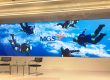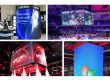


Large and giant LED screens are modular, direct-view video walls built by joining LED cabinets into a large display surface. The right specification depends on the nearest viewer, the content, ambient light and the installation environment. Physical size alone does not determine image quality: pixel pitch and the resulting native resolution matter just as much.
This guide explains how to compare giant LED screens for indoor venues, outdoor advertising and live events. You will find practical sizing calculations, a cost checklist and operating advice to help turn an initial idea into a clear project brief. Start with where people will stand and what they need to see, then choose the screen and supporting equipment.
1. What is a giant LED screen?
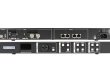
A giant LED screen produces images using red, green and blue light-emitting elements arranged into pixels. Modules fit into cabinets; cabinets connect mechanically and electrically to create the complete display. A video processor and control system map the incoming picture to the screen’s pixel layout.
Unlike an LCD video wall, a direct-view LED wall has no LCD panel bezels crossing the picture. However, cabinet alignment still matters: poor assembly can leave visible seams. Unlike projection, the display emits light directly, which can make it suitable for brighter environments when the correct model is selected.
“Giant” is a descriptive term, not a fixed industry size class. Large LED screens can form a conventional rectangle, a panoramic stage backdrop or a purpose-designed curved surface. Define width, height, aspect ratio and native resolution in the quotation instead of relying on labels such as “giant,” “HD” or “4K compatible.”

2. Features of giant LED screens: specifications that matter
01. Pixel pitch, viewing distance and resolution
Pixel pitch is the centre-to-centre distance between adjacent pixels, measured in millimetres. P4 means approximately 4 mm spacing. A smaller pitch provides more pixels in the same area, helping with close viewing and fine text, but generally raises display and processing costs.
For giant LED screens, assess the closest regular viewing position before choosing pitch. A demonstration with your smallest text and real graphics is more useful than a universal distance rule. Visual comfort also depends on eyesight, viewing angle, contrast and content. Detailed dashboards need a different assessment from broad concert graphics.
Native width in pixels = active screen width in millimetres ÷ pixel pitch in millimetres. Use the same calculation for height. A theoretical 6 m × 3 m P3 display produces 2,000 × 1,000 pixels; at P6, the same area produces 1,000 × 500 pixels. Actual cabinet dimensions and module pixel counts determine the buildable layout.
| Nominal pitch | Calculated native resolution | Pixels per square metre | Buyer consideration |
|---|---|---|---|
| P2.5 | 2,400 × 1,200 | 160,000 | More detail for close viewing; verify cabinet layout |
| P3 | 2,000 × 1,000 | About 111,111 | Balance text detail with area and cost |
| P4 | 1,500 × 750 | 62,500 | Assess text legibility at the nearest seat |
| P6 | 1,000 × 500 | About 27,778 | Better suited to simpler content viewed farther away |
| P10 | 600 × 300 | 10,000 | Use large graphics and short messages |
These are mathematical examples, not available product configurations or guaranteed viewing distances. A 4K input does not make a lower-resolution wall native 4K. For a true 3,840 × 2,160 canvas, confirm that the physical pixel matrix reaches that resolution and that the processor supports the full mapping.
02. Screen size, aspect ratio and sightlines
Start with the usable installation width, the nearest and farthest viewers, and the shape of the content. For a 16:9 image, screen height = screen width × 9 ÷ 16. A screen 6 m wide would be 3.375 m high and cover 20.25 m² before allowing for cabinet sizes, trim and service access. A 6 m × 3 m screen is 2:1, so standard 16:9 material needs a planned crop, side space or a custom content canvas.
Ask for a cabinet layout drawing that shows the buildable width and height, native pixel matrix, total weight and mounting points. Test the smallest required text from the nearest seat and check sightlines from the sides and back of the audience. The largest screen that fits the wall is not necessarily the clearest or most practical choice.
03. Brightness, contrast and outdoor protection
Brightness is measured in nits, equivalent to candelas per square metre. Giant LED screens facing daylight require a different brightness assessment from displays inside a dark auditorium. Request a proposal based on screen orientation, direct sunlight, operating hours and surrounding light, with dimming for evening conditions.
Maximum brightness is only one part of legibility. Reflections, black level and low-brightness grayscale also affect the picture. For indoor comparisons, see our indoor LED screen guide. For exposed sites, review our outdoor LED screen guide alongside the chosen product’s data sheet.
An IP rating describes tested enclosure resistance to solids and water; it does not certify wind resistance, corrosion resistance or unlimited outdoor operation. Check front and rear protection separately, together with connectors, cable entries, drainage and the stated operating temperature range. An indoor cabinet does not become outdoor-rated simply because it sits under a canopy.
04. Refresh rate, control and maintenance access
Large LED displays used on camera need testing with the intended frame rate, shutter settings and brightness level. A high advertised refresh rate alone cannot guarantee clean footage. Scan behaviour, camera synchronisation, processing and exposure can still produce bands or artefacts.
Specify front or rear servicing before the structure is designed. Front access can reduce rear clearance requirements, while rear access needs a safe maintenance route. Ask how technicians replace modules, power supplies and receiving cards, and whether calibrated spare modules will be supplied from a compatible production batch.

3. Applications of giant LED screens
The application determines more than screen size. Giant LED screens for permanent advertising, touring shows and control rooms face different installation cycles, ambient conditions and content requirements. Match the cabinet family to the job before comparing headline specifications.
| Application | Main priority | Questions to resolve before ordering |
|---|---|---|
| Indoor venues and retail | Readable content at close range | Nearest viewer, reflections, text size and front service access |
| Concerts and temporary events | Repeatable assembly and dependable playback | Rigging limits, handling protection, camera tests and backup signal |
| Outdoor advertising | Daylight visibility and environmental suitability | Sun exposure, dimming, enclosure protection and maintenance route |
| Stadiums and sports venues | Sightlines and reliable live information | Seat coverage, scoring integration, camera feeds and operator workflow |
| Control rooms and conferences | Detailed information and consistent images | Native resolution, low-brightness performance and input management |
01. Indoor venues, control rooms and conferences
An indoor giant LED screen can support presentations, wayfinding, product launches or data visualisation. Test representative slides at the actual seating distance. A beautiful video demonstration does not prove that spreadsheet cells or dashboard labels will be readable.

Control rooms need special attention to continuous operation, content layout and recovery after a signal failure. Establish which sources must remain visible and who operates the system. In conference venues, agree whether the canvas will show one presentation or a central slide with separate live-camera windows.

02. Large LED screens for events and stages
For events, giant LED screens help distant audiences follow speakers and performers. Rental cabinets typically prioritise handling, alignment and quick assembly. Confirm flight cases, transport weight, approved rigging accessories and access for the installation crew.
Buying rental-series hardware and hiring an event screen are different services. An event hire quotation should identify transport, installation, technicians, processing and operating hours. A manufacturer’s cabinet quotation should identify exactly which system components and accessories are included.

03. Outdoor advertising and stadium displays
Outdoor giant LED screens need an engineered mounting structure and a plan for weather, power and servicing. Billboard content should communicate quickly with large type and strong contrast. Stadium installations also need sightline checks so that the screen does not obstruct spectators or create unreadable viewing angles.
A curved billboard can support perspective-based 3D creative work, but the effect depends on the animation and intended viewing position. The cabinet shape alone does not turn ordinary video into a convincing three-dimensional scene.

4. What are the benefits of giant LED screens?
The main benefit of giant LED screens is a configurable image surface that can serve a large audience. Modular construction allows designers to match the display to a venue, and replaceable components can support practical servicing when access and spare parts are planned properly.
Dynamic content provides another advantage. Operators can schedule announcements, switch between presentations and video, or integrate live information through the appropriate control system. These capabilities require compatible software, clear permissions and a reliable workflow; they are not automatic features of every cabinet.
Large LED screens also have trade-offs. More area increases structural load, electrical demand and maintenance exposure. Higher resolution can increase content-production and processing requirements. Compare alternatives for your specific room and audience, and avoid assuming that a larger display always delivers better value.
Set measurable goals before purchase: readable content at designated seats, acceptable on-camera performance, a documented service response and a realistic operating budget. Claims about advertising returns or energy savings should be supported by the project’s own audience data and power measurements.
5. Factors affecting the cost of giant LED screens
The total cost of a giant LED screen includes the display, control equipment, support structure, electrical work, installation, logistics and ongoing operation. A price per square metre is useful only when the compared quotations cover the same specification and scope. There is no single reliable installed price for all projects.
01. Build a complete project budget
For giant LED screens, smaller pixel pitch, different LED packages, higher performance electronics and specialised cabinet designs can change the hardware price. Site access, structural requirements and service arrangements can change the installed cost just as significantly. Ask suppliers to separate these items.
| Budget item | What the quotation should identify | Common omission |
|---|---|---|
| LED cabinets and modules | Active area, pitch, native resolution and spare quantities | A comparison based only on area |
| Processing and control | Inputs, pixel capacity, mapping and required licences | Extra equipment for the final canvas |
| Structure and installation | Engineering, mounting, access equipment and labour | Building reinforcement or difficult site access |
| Electrical and environmental work | Distribution, cabling, protection and thermal design | Power upgrades or cooling provisions |
| Shipping and delivery | Packing, shipment scope and destination handling | Unclear responsibility for local charges |
| Operation and support | Energy assumptions, service terms and replacement parts | Labour, travel or downtime outside the warranty |
As an arithmetic example, a 6 m × 3 m screen has an area of 18 m², about 194 ft². If a supplier quotes a cabinet-only rate of R per m², the cabinet subtotal is 18 × R. Add each remaining line item to build the project total. R is a quotation input, not a published EagerLED price.
Compare quotations in the same currency and on the same delivery basis. Record the quotation date and validity period, and obtain a destination-specific breakdown from the supplier and local installation team. This makes differences visible without presenting an unverified price range as a firm offer.
02. Estimate operating cost and decide whether to buy or hire
For giant LED screens, estimate energy using measured or documented average consumption for representative content and brightness: energy in kWh = area in m² × average W/m² × operating hours ÷ 1,000. Keep the manufacturer’s maximum demand figure separate for electrical design.
For example, 18 m² operating at an assumed average 200 W/m² for 10 hours uses 36 kWh. This is an illustration, not a product specification; it excludes processors and cooling. Multiply the measured daily energy by your applicable electricity tariff to estimate running expense.
Hiring may suit a one-off festival or short campaign. Ownership may suit repeated use where trained operators, storage and maintenance are available. Compare costs across the same number of events, including transport, crew, repairs and downtime. Do not base the decision only on the cabinet purchase price.
6. Tips for installing and operating giant LED screens
01. How to ensure high-quality visuals on a giant LED screen
Start with a documented pixel map and create content for that canvas. Preserve the intended aspect ratio and check cropping before the show. Upscaling cannot recover detail absent from a low-resolution source. For presentations, test the smallest type from the most demanding audience position.
Align cabinets carefully, load the correct receiving-card configuration and calibrate brightness and colour across modules. Examine white, grey and solid-colour patterns, followed by actual video at the planned operating brightness. Giant LED screens should look consistent across the whole surface, including replacement modules and cabinet boundaries.
Run the intended cameras during acceptance testing. Check live feeds for latency and confirm that the processor’s signal path supports the required inputs. Keep known-good configuration backups and agree a recovery procedure for loss of playback, a processor fault or an interrupted signal.
02. Plan structural, electrical and service access
Giant LED screens require project-specific structural and electrical design. Provide the installation team with cabinet mass, mounting details, maximum electrical demand and the environmental specification. Qualified local professionals should assess the supporting structure and power distribution before installation.
For suspended or outdoor displays, obtain a documented rigging or mounting plan and site-specific operating limits. IP protection does not establish a structure’s wind capacity. For temporary events, define who monitors conditions and who can stop operation under the approved event plan.
Protect ventilation paths and allow technicians to reach replaceable parts safely. Do not assume that every wall requires the same cooling method. Thermal design should follow the cabinet documentation and measured site conditions, including direct sun, enclosed spaces and hot-air recirculation.
03. Specify giant LED screens for your location
Location changes the purchasing brief. Buyers of giant LED screens in the UK, US, India and Australia should provide the city, venue type, site photographs and expected operating conditions. Use millimetres for cabinet drawings, with feet and inches added where the local installation team needs them.
- United Kingdom: clarify indoor use versus exposed event sites, the local installation partner and the arrangements for service visits. Include GBP as a comparison currency when preparing a local project budget.
- United States: provide dimensions in both metric and imperial units, confirm venue power with the electrical contractor and request a clear split between imported hardware and local installation. Compare USD quotations with matching inclusions.
- India: document the actual site’s heat, dust, rainfall and power conditions. These vary considerably by location. Ask how the proposed display will be supported locally and obtain an INR project budget from the relevant contractors.
- Australia: assess sun exposure, coastal conditions where relevant, delivery distance and access for maintenance. Include AUD operating and service estimates in the ownership comparison.
These are procurement prompts, not country-wide product approvals. Request the documentation required for the exact model and destination from the supplier and local project team. Confirm who handles installation, inspection and support; never assume that an overseas hardware purchase includes those services.
04. Maintain the display and verify acceptance
Keep a maintenance log for giant LED screens covering cleaning, inspections, faults, module replacements and calibration. Follow the manufacturer’s cleaning and moisture-handling instructions. Retain configuration files, cabinet maps and spare-part references where the operating team can access them.
Do not treat an LED component’s quoted lifetime as the service life of the complete display. Power supplies, connectors, fans where fitted, receiving cards and environmental exposure all affect reliability. Agree acceptance criteria, warranty exclusions, service response and spare availability in writing. Our LED screen supplier checklist helps structure that review.
7. Giant LED screens provided by EagerLED
EagerLED offers cabinet options for different installation needs. The following examples illustrate how to shortlist giant LED screens by application. Confirm current availability, configuration and the supplied technical documents before specifying either model.
01. EA1000C6 for rental and event installations
The EA1000C6 rental LED display uses 500 × 1,000 mm cabinets. EagerLED’s product page describes quick locks, corner protection, curved installation options and compatibility with EA500C6 cabinets. The outdoor version is listed with IP65 protection; confirm the exact indoor or outdoor version in your quotation.
For giant LED screens assembled repeatedly, discuss handling, rigging accessories and compatible spares alongside picture performance. Request a layout drawing and camera test for the proposed configuration.

02. EA3D-VR for outdoor creative advertising
The EA3D-VR outdoor LED billboard is presented with front and rear service access, optional 90-degree curved cabinets and IP66 cabinet protection. Confirm the final specification and service method against your site drawings.
For perspective-based advertising, plan content production, the intended viewing area and the cabinet geometry together. A giant LED display needs correctly prepared creative content to deliver the desired illusion.

8. Giant LED screens: frequently asked questions
01. How much does a giant LED screen cost?
The cost depends on area, pixel pitch, cabinet specification and installation scope. Ask for an itemised quotation covering hardware, processing, structure, electrical work, shipping and support. A cabinet-only price cannot establish the total cost of an installed giant LED screen.
02. Which pixel pitch is best for large LED screens?
Choose pitch from the nearest viewing position and the smallest detail that must remain readable. Smaller pitch creates more pixels per square metre, but it is not automatically the best value. Test representative text, video and graphics before approving the specification.
03. Can giant LED screens show native 4K?
Yes, when the assembled display has at least a 3,840 × 2,160 pixel matrix and the signal system supports it. Accepting a 4K input is different from displaying every source pixel. Verify the cabinet map and total native resolution in the proposal.
04. Can an indoor giant LED screen be used outdoors?
Only use a display in conditions approved for that model. Outdoor operation requires suitable enclosure protection, connectors, brightness, thermal performance and mounting. A roof or temporary cover does not automatically make indoor equipment suitable for an exposed event.
05. Should I hire or buy giant LED screens for events?
Hire can suit occasional use when you need delivery, installation and an operator. Buying may suit regular events with suitable crew, storage and maintenance. Compare the full cost over the expected number of uses, and clarify whether the offer covers equipment or an operated event service.
06. How do I improve visual quality on a giant LED screen?
Match content to the native canvas, align cabinets, calibrate brightness and colour, and test real material from the intended viewing positions. For broadcast use, test the complete display and camera combination. Refresh-rate specifications alone do not guarantee artefact-free footage.
9. Conclusion: specify giant LED screens around the project
The best giant LED screens balance audience needs, native resolution, site conditions and lifetime operating costs. Define the nearest viewer, content type and installation environment first. Then compare complete systems with measurable acceptance criteria and a practical service plan.
To request a useful proposal, send your screen width and height, destination city and country, indoor or outdoor location, viewing distances, content examples, operating hours and installation schedule. Add site photos, mounting information and whether the project is permanent or temporary. Contact EagerLED with your project brief to discuss suitable giant LED screens and an itemised quotation.