

The 16:9 aspect ratio has become the dominant standard across televisions, monitors, broadcasting systems, and LED screens. Today, most commercial LED video walls, digital signage, and conference room displays use the 16:9 format because it supports HD, Full HD, 4K, and 8K content with full-screen playback — no stretching or black bars.
Although the 4:3 LED display aspect ratio still exists in certain legacy systems, monitoring environments, and vertically-limited spaces, the vast majority of digital advertising, broadcast media, and presentation content is created in 16:9.
This guide focuses on why 16:9 is the preferred LED display format, how it compares to 4:3, and how to select the ideal aspect ratio for your specific LED screen installation.
Table of Contents
1.What Is Aspect Ratio?
2.What Is a 16:9 Aspect Ratio LED Display?
3.Why Is the 16:9 Aspect Ratio the Industry Standard?
4.Technical Requirements for Designing a 16:9 LED Display
5.How to Calculate 16:9 Screen Dimensions?
6.Aspect Ratio 4:3 vs 16:9 in LED Display
7.How to Choose the Right LED Screen Ratio?
8.When Should You Choose a 16:9 LED Display?
9.FAQ
10.Conclusion
1.What Is Aspect Ratio?
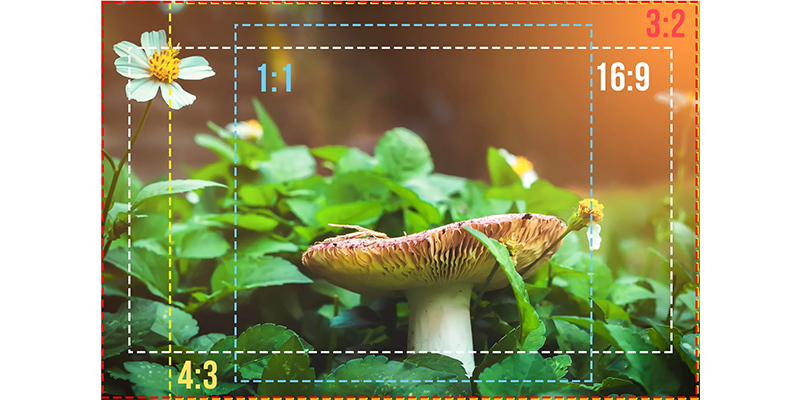
Aspect Ratio is the proportional relationship between the width and height of a display. It is written as two numbers separated by a colon, such as 16:9, 4:3, or 21:9.
Unlike screen size, Aspect Ratio does not describe how large a display is. Instead, it describes the shape of the screen. Choosing the correct Aspect Ratio helps videos, images, presentations, and graphics display correctly without stretching or black bars.
1.1 Aspect Ratio vs Screen Size
Many people confuse Aspect Ratio with screen size, but they are different.
Aspect Ratio describes the shape of the screen.
Screen Size describes the physical size of the display, usually measured diagonally in inches or meters.
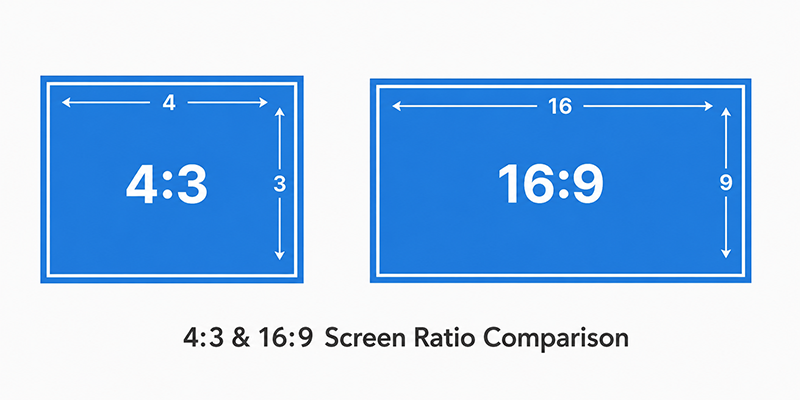
For example, a 100-inch 16:9 LED display and a 100-inch 4:3 LED display have the same screen size but different shapes. The 16:9 Aspect Ratio is wider, while the 4:3 Aspect Ratio is taller.
1.2 Why Aspect Ratio Matters for LED Displays
The aspect ratio of an LED display determines how content appears on the screen — whether images display natively, stretch, scale, or show black bars.
When the content ratio matches the LED screen ratio, the viewer experiences accurate proportions, balanced visuals, and full-screen presentation. When the format does not match, the result may include distortion, cropping, or letterboxing.
This is why buyers should not only request a “16:9 LED screen.” They should also confirm installation space, viewing distance, pixel pitch, target resolution, and content format before finalizing the LED display size.
1.3 Common Screen Aspect Ratios
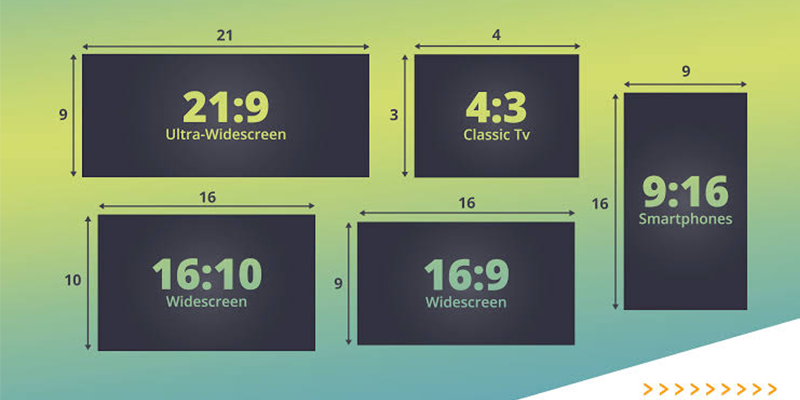
While multiple aspect ratios exist, not all are commonly applied in modern LED display projects. Below is an overview of today’s mainstream display ratios:
1.3.1 4:3 Aspect Ratio — Traditional Display Format
The 4:3 ratio was widely used in first-generation televisions, CRT monitors, projectors, and early data displays. While its usage has dropped significantly, it still appears in legacy control rooms, security monitoring stations, and older educational facilities.
Today, 4:3 serves primarily as a legacy or special-purpose display ratio rather than a universal deployment option.
1.3.2 16:9 Aspect Ratio — Current Industry Standard
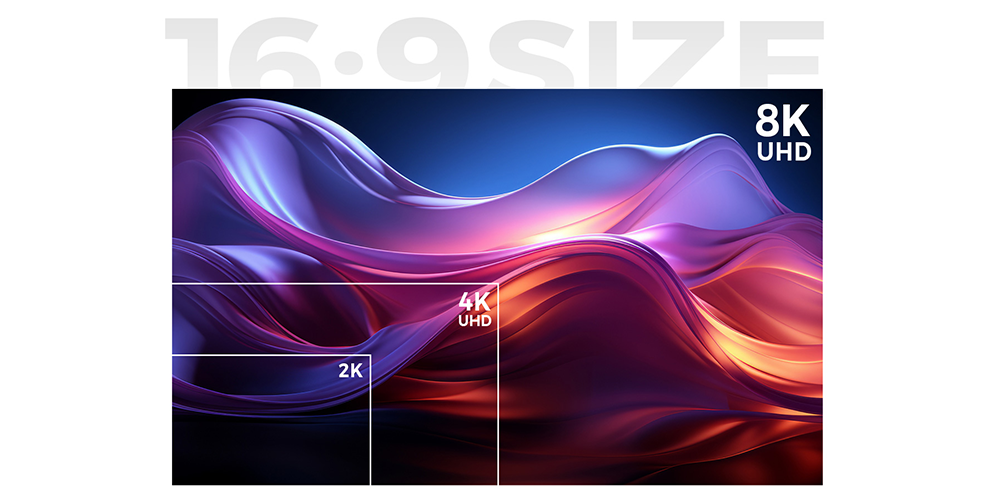
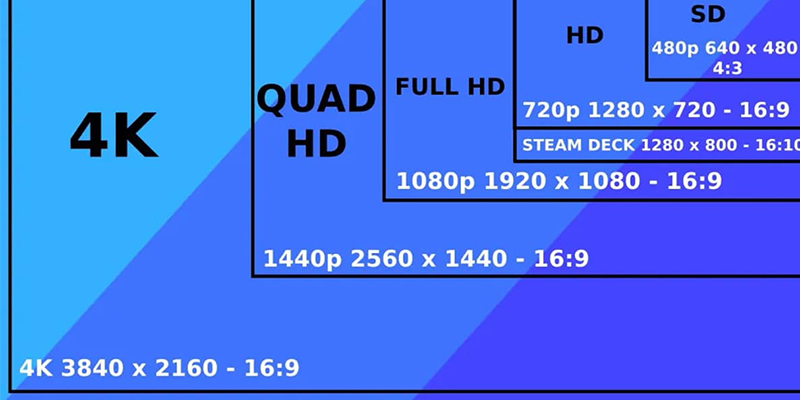
The 16:9 aspect ratio is the dominant format used across commercial LED display applications. This ratio inherently matches mainstream digital and broadcasting formats, including HD (1280×720), Full HD (1920×1080), UHD/4K (3840×2160), and 8K (7680×4320).
Because no aspect correction or conversion is required, 16:9 delivers the lowest resource consumption and the most accurate picture output. It is the default choice for corporate AV, digital signage, broadcast studios, live events, and retail displays.
1.3.3 16:10 Aspect Ratio — Computing Display Format
The 16:10 ratio offers slightly increased vertical workspace between 4:3 and 16:9. It was popular in professional computing workstations and early high-resolution displays. However, its incompatibility with standardized video broadcasting and frequent scaling needs have caused its usage in LED applications to decline as 16:9 remains dominant.
1.3.4 21:9 Aspect Ratio — Ultra-Wide and Immersive
The 21:9 ultra-widescreen format delivers a cinematic viewing experience ideal for immersive environments and control rooms with multi-window layouts. While it offers strong visual impact, it typically requires custom content formats and is mainly used for creative, high-end projects.
1.3.5 32:9 Aspect Ratio — Ultra-Wide Commercial Panoramic Format
The 32:9 ratio is equivalent to two 16:9 screens side by side. It is used in environments requiring extended horizontal viewing — trading floors, transportation hubs, and panoramic architectural displays.
2.What Is a 16:9 Aspect Ratio LED Display?
A 16:9 Aspect Ratio LED Display is an LED display with a width-to-height ratio of 16:9. In other words, for every 16 units of width, the screen has 9 units of height.
The 16:9 Aspect Ratio is also called 1.78:1 widescreen because the screen is about 1.78 times wider than it is tall.
Today, the 16:9 Aspect Ratio is the global standard for TVs, monitors, LED video walls, Full HD, 4K, and 8K content. Since most videos, presentations, and streaming platforms use this format, a 16:9 Aspect Ratio LED Display delivers full-screen images without stretching, cropping, or black bars.
3.Why Is the 16:9 Aspect Ratio the Industry Standard?
The 16:9 Aspect Ratio has become the standard for almost every modern LED display. It offers the best balance between compatibility, image quality, installation, and long-term value.
3.1 Perfect for Modern Content
Most videos, presentations, TV programs, and streaming platforms use the 16:9 Aspect Ratio.
A 16:9 Aspect Ratio LED Display shows content without black bars, stretching, or cropping. This means less editing and faster setup for live events.
3.2 Easy to Build and Expand
Many LED display cabinets are designed for the 16:9 Aspect Ratio, including popular sizes like:
- 640 × 360 mm
- 600 × 337.5 mm
- 500 × 500 mm (combined into 16:9 layouts)
This makes it easy to build larger LED video walls while keeping the correct Aspect Ratio.
3.3 Better Viewing Experience
The 16:9 Aspect Ratio is wider than older formats like 4:3, making images look more natural.
It creates a better viewing experience for advertising, conferences, concerts, sports events, and digital signage.
3.4 Works with Most LED Controllers
Most professional LED display controllers, including NovaStar, Colorlight, Brompton, and Huidu, are optimized for the 16:9 Aspect Ratio.
This provides smoother scaling, better image quality, and lower latency during playback.
3.5 Lower Cost and Better Compatibility
Because the 16:9 Aspect Ratio is the industry standard, compatible cabinets, modules, accessories, and replacement parts are easy to find.
It also supports popular resolutions like Full HD, 4K, and 8K, making a 16:9 LED display a smart long-term investment.
3.6 Limitations of the 16:9 Aspect Ratio
Although the 16:9 Aspect Ratio is the best choice for most LED displays, it is not perfect for every application.
(1)Ultra-wide content
Movies or videos created in 21:9 or 32:9 may show black bars or require cropping on a 16:9 LED display.
(2)Vertical content
For TikTok, Instagram Reels, digital menu boards, and portrait advertising, a 9:16 Aspect Ratio is usually a better choice.
(3)Narrow installation spaces
In elevators, corridors, or other narrow spaces, a vertical Aspect Ratio often uses the available space more efficiently than 16:9.
(4)Large outdoor landmarks
Some stadiums, transportation hubs, and landmark buildings use extra-wide custom Aspect Ratios to create a stronger visual impact than a standard 16:9 LED display.
4.Technical Requirements for Designing a 16:9 LED Display
When designing a 16:9 LED display, pixel pitch, brightness, and cabinet size are the key factors that affect image quality, viewing distance, and installation flexibility.
Pixel Pitch and Brightness
The right pixel pitch depends on the viewing distance and application:
|
Application |
Recommended Pixel Pitch |
Brightness |
|
Indoor fine-pitch display |
P1.25–P1.56 |
800–1,500 nits |
|
Indoor commercial display |
P1.86–P2.5 |
800–1,200 nits |
|
Outdoor LED display |
P3.91–P6.67 | 4,000–6,500 nits |
A simple rule is: pixel pitch (mm) × 1000 ≈ minimum viewing distance (mm).
For example, a P2.5 LED display provides a clear image from around 2.5 meters away.
Cabinet Size and Configuration
The cabinet size also affects how easily an LED wall can achieve a true 16:9 layout.
- Fine-pitch LED displays:600×337.5mm cabinets naturally match the 16:9 ratio, making them ideal for indoor video walls.
- Rental LED displays:500×500mm cabinets can be combined into different 16:9 screen sizes for stages and events.
- Modular design:Allows faster installation, easier maintenance, and future expansion.
Choosing the right combination of pixel pitch, brightness, and cabinet configuration ensures the LED display delivers the best image quality and performance for its environment.
5.How to Calculate 16:9 Screen Dimensions?
A 16:9 aspect ratio means the screen width is 16 units while the height is 9 units. This standard format is widely used in TVs, monitors, projectors, and LED video walls because it matches most HD, 4K, and 8K video content.
For LED displays, understanding 16:9 dimensions helps designers create screens that display videos and presentations without stretching or cropping.
5.1 16:9 Aspect Ratio in Pixels
A 16:9 resolution means the width and height follow the same 16:9 proportion. The pixel resolution can be scaled up or down while keeping the same aspect ratio.
|
Resolution |
Width (Pixels) | Height (Pixels) |
Aspect Ratio |
|
HD |
1280 | 720 |
16:9 |
|
Full HD |
1920 | 1080 |
16:9 |
|
QHD |
2560 | 1440 |
16:9 |
|
4K UHD |
3840 | 2160 |
16:9 |
| 8K UHD | 7680 | 4320 |
16:9 |
How to Check a 16:9 Resolution
You can calculate the missing dimension using these formulas:
- Height = (Width ÷ 16) × 9
- Width = (Height ÷ 9) × 16
For example:
- 1920 ÷ 16 = 120
- 120 × 9 = 1080
Therefore, 1920×1080 follows the 16:9 aspect ratio.
5.2 16:9 Aspect Ratio in Inches
For physical screens, the size is usually measured diagonally in inches. The width and height can be calculated from the diagonal size:
- Width = Diagonal × 0.872
- Height = Diagonal × 0.490
For example, a 100-inch 16:9 display has:
- Width: about 87.2 inches (2215mm)
- Height: about 49 inches (1245mm)
The same calculation applies to LED video walls, regardless of whether the screen is small or several meters wide.
5.3 Common 16:9 Screen Sizes for LED Displays
Modular LED panels make it possible to build different screen sizes while keeping a 16:9 format. Common configurations include:
|
Diagonal Size |
Approx. Width | Approx. Height |
Typical Application |
|
55″ |
48″ (1219mm) | 27″ (686mm) |
Meeting rooms and control rooms |
|
110″ |
96″ (2438mm) | 54″ (1372mm) |
Small event backgrounds |
|
165″ |
144″ (3658mm) | 81″ (2057mm) |
Conference halls and stages |
|
220″ |
192″ (4877mm) | 108″ (2743mm) |
Large events and broadcast studios |
| 330″+ | 288″+ | 162″+ |
Large venues and outdoor LED displays |
Maintaining a 16:9 design ensures that videos, presentations, and live content fit the screen perfectly. This makes it an ideal format for everything from indoor LED video walls to large-scale outdoor displays.
6.Aspect Ratio 4:3 vs 16:9 in LED Display
Aspect ratio plays an important role in LED display design. While 16:9 has become the standard format for modern video content, 4:3 is still used in some specialized applications. Choosing the right aspect ratio helps ensure better content compatibility, installation efficiency, and viewing experience.
(1) Screen Shape and Viewing Experience
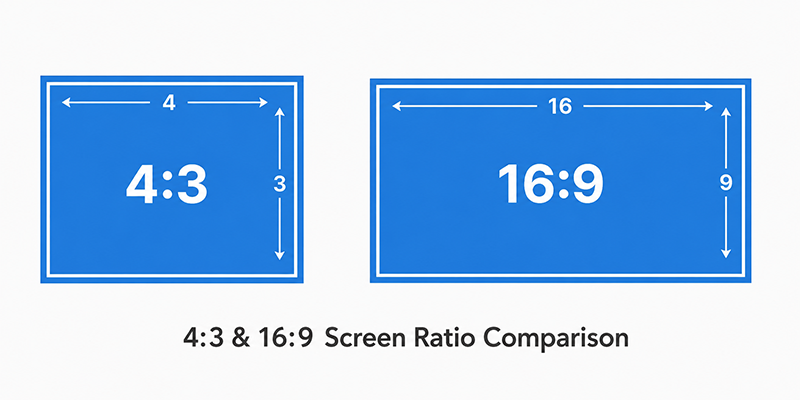
The 4:3 aspect ratio has a more square-shaped design with greater vertical height. It is suitable for applications that require more vertical information, such as control rooms, monitoring systems, and data dashboards. However, most modern video content is created in wider formats, which may result in black bars or cropping when displayed on a 4:3 screen.
The 16:9 aspect ratio provides a wider viewing area and matches today’s video standards. It is ideal for applications such as advertising, live events, sports displays, and conference presentations where visual impact is important.
(2) Content Compatibility
Most modern media content, including online videos, broadcasts, advertisements, and presentations, is produced in 16:9. Using a 4:3 LED display may require scaling, cropping, or adding black bars, which can affect the final image quality.
A 16:9 LED display works naturally with HD, Full HD, 4K, and 8K content. It reduces the need for format conversion and simplifies content management.
(3) Application Scenarios
4:3 LED displays are mainly used in specific environments, including industrial control centers, security monitoring rooms, older AV systems, and applications that display large amounts of text or data.
16:9 LED displays are widely used in modern commercial and professional environments, including digital signage, retail stores, corporate spaces, conference rooms, broadcast studios, houses of worship, and live events.
(4) Installation and Design Flexibility
A 4:3 LED display can be a practical choice for projects with limited space or existing infrastructure. However, fewer standard cabinet options are available compared with wider formats.
The 16:9 format offers greater design flexibility. Standard LED cabinets can be combined more easily into large video walls, while compatible processors, mounting systems, and spare parts are widely available.
(5) Audience Coverage and Viewing Experience
The aspect ratio does not directly determine the LED display’s viewing angle, but it affects how content is presented to different audiences.
A 4:3 display is better suited for applications where viewers are positioned in a fixed area, such as control rooms or monitoring stations.
A 16:9 display provides a wider image area, making it more suitable for larger audiences in conference halls, retail spaces, stadiums, and event venues.
Summary Comparison Table
|
Feature |
4:3 Aspect Ratio | 16:9 Aspect Ratio |
| Screen Shape | More square, with greater height |
Wider horizontal format |
|
Content Compatibility |
Better for legacy content and data displays | Native support for modern video formats |
| Best Applications | Control rooms, monitoring, industrial systems |
Advertising, events, broadcast, retail, corporate |
|
Video Playback |
May require scaling or cropping | Direct support for HD, 4K, and 8K content |
| Installation Options | Fewer standard solutions |
Wide range of cabinet and mounting options |
|
Content Processing |
More adjustments may be required |
Simple setup with fewer conversions |
|
Long-Term Support |
Mainly used for specialized applications | Current industry standard |
| Overall Efficiency | Suitable for specific needs |
Better choice for most modern LED projects |
7.How to Choose the Right LED Screen Ratio?
Choosing the right aspect ratio affects how content is displayed, how efficiently the screen space is used, and how easily the LED display can be installed and maintained. Consider the following factors before selecting a screen format.
7.1 Content Format Comes First
The content you display should be the first consideration.
For video, live broadcasts, advertising, presentations, and most modern digital content, 16:9 is the preferred choice because it matches current HD, 4K, and 8K standards.
A 4:3 LED display may still be suitable for legacy monitoring systems, industrial dashboards, or applications built around 4:3 content. However, make sure the content source will continue using this format throughout the display’s service life.
7.2 Installation Space
The available installation area plays an important role in choosing the right ratio.
For the same width, a 4:3 screen requires more vertical space than a 16:9 screen. In commercial environments with limited ceiling height, a 16:9 design is often easier to install.
Before selecting the ratio, measure the available width, height, and mounting conditions to avoid space limitations.
7.3 Viewing Distance and Audience Position
Aspect ratio should be considered together with screen size and pixel pitch.
For fixed viewing positions, such as control rooms or monitoring stations, a 4:3 format can work well. For larger audiences spread across conference rooms, events, retail spaces, or venues, the wider 16:9 format usually provides a better visual experience.
7.4 Budget and Long-Term Cost
The total project cost depends on more than the initial screen price.
A custom 4:3 LED wall may require additional cabinets, customized structures, and special content adjustments. In contrast, 16:9 displays benefit from standardized cabinet sizes, widely available components, and simpler content management.
7.5 Practical Recommendation
For most modern LED display projects, 16:9 is the most practical and future-ready choice. It works well for commercial displays, conference rooms, broadcast studios, retail environments, and live events.
Custom ratios such as 21:9, 9:16, or creative multi-screen layouts can be considered for special designs or unique spaces. The right aspect ratio ensures better content compatibility, easier installation, and higher long-term value.
8.When Should You Choose a 16:9 LED Display?
A 16:9 LED display is the most suitable choice when your main content includes videos, presentations, live camera feeds, advertising media, or high-resolution content such as 4K and 8K. It matches current content standards and works well for most commercial LED display applications.
However, some projects may require different aspect ratios depending on the space, content type, and design goals:
- Vertical digital signage(retail menus, information displays, advertising totems): Consider 9:16 portrait layouts for narrow spaces and vertically oriented content.
- Wide monitoring environments(control rooms, traffic centers, trading floors): Consider 21:9 or 32:9 formats for displaying multiple windows and large amounts of data.
- Architectural and creative installations(building facades, immersive environments, artistic displays): Custom ratios or multi-screen designs may provide greater visual impact.
- 4:3 retrofit projectswith existing structures: Matching the original screen ratio may be more practical when rebuilding the installation space is costly.
Selecting the correct aspect ratio during the planning stage allows the LED supplier to accurately design the screen size, cabinet quantity, pixel pitch, resolution, power requirements, and mounting structure. This helps reduce installation risks and prevents expensive modifications later.
9.FAQ
9.1 Is 16:9 or 4:3 better for LED displays?
For most modern LED display applications, 16:9 is the better choice. It matches current video standards and works naturally with advertising content, presentations, live broadcasts, and 4K/8K media without unnecessary cropping or scaling.
9.2 Can a 16:9 LED display show 4K content?
Yes. A 16:9 LED display can display native 4K content when the screen resolution reaches 3840×2160 pixels.
9.3 What resolutions follow the 16:9 aspect ratio?
Any resolution with a width-to-height ratio of 16:9 follows this format. Common examples include:
- 1280×720 (HD)
- 1920×1080 (Full HD)
- 2560×1440 (QHD)
- 3840×2160 (4K UHD)
- 7680×4320 (8K UHD)
The resolution can scale up or down while keeping the same 16:9 proportion.
9.4 Why is 16:9 the standard for LED displays?
16:9 became the dominant format because most modern video content, including television broadcasts, streaming platforms, digital advertising, and presentations, is produced in widescreen format.
9.5 Can I use a custom aspect ratio for my LED display?
Yes. Custom aspect ratios are possible and are often used for creative installations, special venues, or unique architectural designs.
However, custom formats may increase costs because they can require customized cabinet layouts, mounting structures, content adjustments, and additional system configuration.
For most commercial projects, a standard 16:9 design provides better compatibility and lower overall cost.
9.6 Does a 16:9 LED display simplify installation?
Yes. Standard 16:9 LED configurations make installation easier because they work well with common cabinet sizes, LED processors, and mounting systems.
For example, fine-pitch LED cabinets designed around 16:9 formats can be combined into standard video wall sizes, reducing configuration time and simplifying maintenance.
9.7 Can a 16:9 LED display be installed vertically?
Yes. A 16:9 LED display can be rotated 90 degrees for portrait applications such as digital signage, advertising towers, retail displays, and creative stage designs.
The LED hardware remains the same, while the content is rotated through the video processor or playback system.
9.8 Can modular LED panels achieve exact 16:9 sizes?
Yes. Modular LED panels can be arranged into 16:9 displays by selecting suitable cabinet sizes and configurations.
For example, a 3×3 array of 600×337.5mm cabinets creates a display size of 1800×1012.5mm, which follows the 16:9 ratio.
For other cabinet formats, the supplier can calculate the correct cabinet arrangement based on the required screen size, resolution, and installation conditions.
10.Conclusion
Choosing between a 4:3 and 16:9 aspect ratio LED display depends mainly on your content requirements, installation space, and application goals.
Today, 16:9 LED displays have become the preferred choice for most modern projects because they match widely used HD, 4K, and 8K content formats. They provide better compatibility with video sources, easier system integration, and more efficient screen design.
A 4:3 LED display can still be a practical solution for specific applications, including legacy system upgrades, control rooms, and projects where existing structures or vertical space requirements are important.
Before selecting an aspect ratio, consider your screen location, viewing distance, content format, and future usage plans. The right choice helps maximize image quality, simplify installation, and improve long-term project value.
For most applications such as conference rooms, digital signage, broadcast studios, live events, houses of worship, and retail spaces, a 16:9 LED video wall remains the most practical and widely compatible solution.