


A ballroom LED wall budget should separate the equipment you buy from the work required at each hotel: content preparation, support, power, delivery, setup, rehearsal and operation. For an AV rental company buying inventory in Latin America, the lowest cabinet price is useful only when that inventory fits recurring room layouts and can be deployed within the venue’s access window.
Start with the actual presentation canvas and the hotel’s delivery restrictions. Then ask every supplier to price the same cabinet configuration, processing, cases and spares. This guide covers purchasing indoor rental inventory, rather than quoting a one-day managed rental service. No regional equipment prices, import rates or labor rates are assumed.
In this guide
1. Define the room before the ballroom LED wall budget
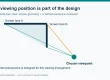
Ask the hotel for the usable stage width, ceiling height, service-door dimensions, loading route and permitted setup hours. Record the nearest seat, farthest seat and camera position. A screen that fits the room drawing may still leave insufficient space for support hardware, technicians or emergency access.
Get the presentation team involved before choosing pitch. Small spreadsheet labels, translated subtitles and detailed charts make different demands from a sponsor logo. Test the smallest important text at the final physical size. If people at the back cannot read the slide, increasing text size or adding relay screens may help more than buying finer pixels alone.
For a divisible ballroom, price the configurations used in each room section. A single large screen can be economical for a plenary session but unavailable for simultaneous breakouts. Your ballroom LED wall budget should identify which events can run together, which share a processor, and which need separate operators.

2. Cost the cabinet grid and the presentation canvas separately
Cabinets determine the physical dimensions; the content source determines the intended image format. These do not automatically match. The EA500C6 product page, checked October 21, 2026, lists a 500 × 500 mm (19.7 × 19.7 in) cabinet and an indoor cabinet weight of 6.5 kg (14.3 lb). Indoor and outdoor configurations have different specifications.
Calculated planning example: a 5.5 × 3 m (18.0 × 9.8 ft) wall uses 11 columns and six rows of these cabinets: 66 working cabinets covering 16.5 m² (177.6 sq ft). At the listed indoor cabinet weight, the cabinets alone total 429 kg (946 lb). This excludes structure, cabling, processors, cases and spares. It is not a flown-load approval.
The wall ratio is 11:6, or approximately 1.833:1. A 16:9 presentation fitted to the full 3 m height occupies approximately 5.333 m of width. Keeping all of the slide therefore leaves about 83 mm (3.3 in) at each side, assuming centered content. Filling the whole wall instead requires a revised canvas or agreed cropping; the processor’s exact pixel map still needs confirmation.
Carry these choices into the ballroom LED wall budget. Ask whether the quote includes slide adaptation, a branded border, source scaling and a rehearsal file. The cabinet purchase does not pay for presentation editing unless that work is expressly included.
| Item | Basis to request | What remains separate |
|---|---|---|
| Working cabinets | 66 matching 500 × 500 mm indoor cabinets in the example | Spare cabinets and spare modules |
| Image canvas | Exact cabinet pixels, output map and slide treatment | Content editing and source computers |
| Cabinet mass | 429 kg using the published indoor weight | All support, cables and accessories |
| Room access | Packed case dimensions and loaded weights | Hotel handling, lifts and local delivery |
3. Separate acquisition, venue and repeat-event costs
A useful ballroom LED wall budget has three ledgers. The acquisition ledger covers assets entering your fleet. The venue ledger covers a particular room and event. The repeat-event ledger records the costs that recur whenever those assets leave the warehouse. Keep the same boundary when comparing alternatives.
In the acquisition ledger, request the cabinet model, pitch, receiving configuration, processor, approved support accessories, signal conversion, power distribution, matched spares and transport cases as separate lines. Ask whether configuration files and calibration records are supplied with the ordered batch. A processor supporting the required total pixel count can still have output-width, port-loading or input-format limits.
For the venue ledger, obtain the hotel’s actual requirements for power connections, rigging, floor protection, handling staff, vehicle access and rehearsal time. Do not assume the hotel permits an outside crew to perform every task. Conversely, do not add imaginary mandatory hotel fees: record a cost only after the venue or local contractor confirms it.
For the repeat-event ledger, include warehouse preparation, loading, travel, setup, testing, operation, strike, return inspection and repairs. Distinguish the time reserved for rehearsal from the time used to assemble the wall. A screen assembled just before doors open can leave no opportunity to fix source switching or unreadable slides.
| Cost group | Ask for | Comparison rule |
|---|---|---|
| Equipment purchase | Itemized configuration and quantities | Compare like-for-like usable systems |
| Import and delivery | Named delivery term, destination and payer | Separate freight, local handling and applicable taxes |
| Hotel services | Written access and service requirements | Use the actual hotel and event date |
| Event crew | Roles, hours, rehearsal and strike scope | Do not compare equipment-only with managed production |
| Fleet maintenance | Spare identities and replacement procedure | Include matching, testing and return-to-stock time |
4. Check handling and service before forecasting savings
The current EA500C6 page describes alignment pins, dual quick locks, corner protectors and an opening rear cover. These features are relevant to repeated handling, but they do not establish a guaranteed setup time, crew size or repair rate. Ask your technicians to inspect the proposed revision and rehearse a representative build.

Allow service access in the stage plan. A narrow space between the wall and hotel drape may complicate replacement even when the cover is easy to open. Qualified personnel should isolate equipment as required before electrical servicing; an accessible cover is not permission to work on energized components.
Use the official demonstration below to discuss cabinet formats, handling and assembly with the supplier. It shows EA500C6 and EA1000C6 rental hardware, rather than a verified ballroom project. Watch the cabinet connections and ask which demonstrated features apply to your quoted indoor revision. Do not infer labor savings from an edited demonstration.
EA500C6 and EA1000C6 demonstration from the EagerLED channel.
5. Test utilization assumptions with your own event calendar
There is no universal event count at which purchasing becomes cheaper than hiring. In a ballroom LED wall budget, use the portion of event revenue remaining after direct event costs, then account separately for financing, storage, insurance, maintenance and downtime. Compare the same production scope under both ownership and hire.
A practical model is: annual contribution = paid deployment days × contribution per deployment day − annual fixed fleet costs. Define contribution per day after the variable costs you actually incur. Avoid deducting a cost again if it is already included in that contribution. Keep tax and financing treatment consistent with your accountant’s method.
Run a lower-utilization scenario, a typical scenario and a busy scenario from your own bookings. Include overlapping event dates: 20 prospective days on a calendar do not equal 20 achievable deployments if several need the same inventory at once. Record cancellations and venue restrictions explicitly.
For a wider introduction to purchase versus hire and the signal path, use the rental LED display guide. Keep your ballroom LED wall budget focused on recurring hotel presentation jobs rather than borrowing assumptions from outdoor festivals.
Frequently asked questions
Should I buy outdoor cabinets for occasional hotel events?
Do not assume outdoor protection is a free upgrade. Compare the quoted cabinet weight, indoor dimming behavior, image quality and cost against your actual mix of work. The EA500C6 page distinguishes indoor and outdoor configurations; select the version for the intended exposure and test it in the ballroom.
Can two breakout rooms share one processor?
Possibly, but confirm independent source routing, output loading, cable distances and operator control. Two physically separate screens do not necessarily require two processors, nor does spare output capacity automatically provide independent shows.
Does a 16:9 laptop output guarantee a 16:9 wall?
No. The cabinet grid fixes the wall’s physical proportions. Agree on fitting, borders, cropping or a custom slide canvas and verify the processor map before finalizing content.
How should I compare USD equipment quotes with local event income?
Use a documented exchange-rate assumption and date, keep payment milestones separate, and test sensitivity before committing. Ask the relevant local adviser about applicable import and tax treatment; a currency calculation alone does not establish landed cost.
What evidence should I request before approving the batch?
Request the exact configuration list, cabinet and case packing schedule, spare-part identities, saved mapping files, agreed image checks and a demonstration of your actual presentation content. Record acceptance criteria and exclusions in the purchase scope rather than assuming a general product video proves them.
Prepare a ballroom-specific quotation request
Send the hotel delivery city, stage dimensions, room layouts, smallest slide text, viewing positions, camera needs and recurring event schedule. Add access restrictions, required delivery term and your preferred separation of equipment, spares, cases and freight. Discuss your ballroom LED wall budget with EagerLED so the proposed configuration can be compared against the same documented brief.