A church LED wall layout should be planned from the seating area: record the nearest and farthest seats, side-seat sightlines, available stage opening, content size, camera positions, and maintenance access before fixing screen dimensions. Confirm the native pixel matrix from the actual cabinet grid, then have qualified professionals review the mounting and electrical design.
Use this page for room layout, screen sizing, and installation planning. For the overall purchase decision and complete quote scope, read the church LED video wall buying guide. If your committee is still choosing a display technology, compare LED, LCD, and projection for churches first. The figures below are planning examples, not a site-specific engineering proposal.
Quick answer: Choose a church LED wall when the congregation needs a large, seamless image that stays readable under the room’s normal lighting. Specify the screen from the nearest seat outward, check the native pixel count before promising 1080p or 4K, and include structure, power, processing, spares, and training in the quote.
How to choose in five steps:
- Measure the nearest and farthest seats, stage opening, and normal room light.
- Test real lyrics, scripture, and camera feeds at the proposed size and pixel pitch.
- Confirm native pixels, cabinet layout, brightness at service levels, and camera performance.
- Have a qualified installer verify structure, power, ventilation, and service access.
- Compare complete installed quotes with the same scope, warranty, spares, and training.
1. What is a church LED wall?
A church LED wall is a direct-view display assembled from cabinets and smaller LED modules. Each pixel emits its own red, green, and blue light. A video processor maps incoming content to the wall’s native pixel grid, and receiving cards distribute the image to the cabinets. The result can be a broad, continuous display without the visible seams of a tiled LCD wall. A failed module can normally be serviced without replacing the entire screen, although the exact access method depends on the cabinet design.
Names such as LED wall for church, church LED screen, and church video wall usually describe the same kind of system. It differs from an LED-backlit television: the church LED wall itself is the image-producing LED surface. It also differs from projection because the display emits light toward the audience instead of reflecting light from a screen. That distinction matters when windows, house lights, or stage lighting wash out a projected image.
A church LED wall can show lyrics and scripture, sermon notes, live image magnification (IMAG), captioning, welcome messages, and backgrounds. The content system, audio system, cameras, and volunteer workflow remain separate design decisions. An LED wall does not improve sound by itself, and brighter images do not guarantee more meaningful worship. Its value is reliable visual communication in the particular room.

2. When does a church LED wall improve the worship experience?
01. Visibility in the normal lighting of the room
For many congregations, the strongest reason to consider a church LED wall is readable text with the sanctuary lights at their normal service level. A direct-view screen can keep contrast when windows are uncovered or the stage is lit. It can also show a speaker’s face to distant seats without forcing the entire room into darkness. The goal is comfortable viewing, not maximum brightness: an overbright wall behind a preacher can cause glare, poor camera exposure, and eye fatigue.
02. A flexible visual canvas
Modular cabinets let a church LED wall fit a stage opening, side wall, or wide backdrop. A single wide canvas can carry lyrics in a safe central zone while less critical artwork fills the edges. That freedom is useful, but a nonstandard aspect ratio needs content designed for it. Otherwise volunteers will spend every weekend cropping slides, stretching videos, or accepting black bars.
03. Clear communication for in-person and online audiences
A church LED wall can support readable lyrics, scripture references, translations, captions, announcements, and IMAG. Those uses help people follow a service from the back row and can reduce the need for printed sheets. For a livestream, test the wall on the actual cameras. LED scan behavior, refresh rate, shutter speed, dimming, and color calibration can produce bands or moiré on video even when the wall looks good to the eye.
| Decision factor | Church LED wall | Projector and screen |
|---|---|---|
| Room light | Direct-view image generally holds contrast better in bright rooms. | Works best when ambient light and spill onto the screen are controlled. |
| Screen size and shape | Cabinets can form a wide or custom canvas; pixel count depends on size and pitch. | Large image is possible with the right projector, lens, throw, and screen. |
| Space | Needs structural support, power, processing, and service access. | Needs throw path or mounting location and a suitable projection surface. |
| Initial cost | Often higher once cabinets and infrastructure are included. | Often lower for modest sizes in controlled lighting. |
| Ongoing care | Plan for module replacement, calibration, cleaning, and spare parts. | Plan for optics, filters or light-source service as applicable. |
Projection is still a reasonable answer when the sanctuary is dim, the budget is tight, or the installation cannot support the weight and power of a church LED wall. Compare complete installed systems under the same lighting and with the same lyrics, camera feed, and sermon slides. Avoid deciding from a manufacturer’s peak-brightness number alone.
3. How do you choose the right church LED wall specifications?
01. Start with seats, content, and native resolution
Measure the closest and farthest regular viewing positions, including balconies and side seating. Then mark the usable wall opening, sightline obstructions, and the height of a seated viewer’s line of sight. A church LED wall behind the platform should not force people in the front row to look sharply upward or hide the pastor behind a wall of light. For lyrics, test an actual slide from the farthest seat at the font size the church uses, rather than relying only on a diagonal screen size.
Pixel pitch is the center-to-center distance between adjacent pixels, expressed in millimeters. Smaller pitch puts more pixels into the same physical area and tends to cost more. A rough planning relationship is horizontal pixels ≈ screen width in millimeters ÷ pixel pitch in millimeters. For example, a 4.8 m-wide P2.5 church LED wall has roughly 1,920 horizontal pixels; its exact native resolution depends on cabinet and module geometry. A 4.8 m-wide P3.9 wall has about 1,231 horizontal pixels, even if its processor accepts a 1080p or 4K input. Input compatibility is not native screen resolution.
Christie’s LED video wall planning guide uses approximately three meters of viewing distance per millimeter of pitch as an optimal-distance estimate. Treat that as a starting point, not a rule: eyesight, content detail, screen size, budget, and the closest seat all affect the choice. Ask for an on-site or full-scale sample with real lyrics and camera content before selecting a pitch.
| Pitch | Approx. distance from the 3 m/mm guide | Approx. horizontal pixels at 4.8 m width | Likely use to evaluate |
|---|---|---|---|
| P1.9 | 5.7 m / 19 ft | 2,526 | Close seating or fine detail; verify the added cost is useful. |
| P2.5 | 7.5 m / 25 ft | 1,920 | Many medium sanctuary layouts with lyrics and IMAG. |
| P3.9 | 11.7 m / 38 ft | 1,231 | Deeper rooms or stage backdrops viewed from farther away. |
These are rounded calculations for comparison, not product promises. The P3.9 distance is a mathematical extension of the cited planning relationship. Cabinet increments can change final width and native resolution. A church LED wall should be specified from the actual product drawing, not just a nominal pitch.
Worked sizing example: A proposed 4.8 m × 2.7 m wall has 12.96 m² of image area. At a nominal P2.5 pitch, the simple pixel calculation gives about 1,920 × 1,080 native pixels (4,800 ÷ 2.5 by 2,700 ÷ 2.5). This is an illustration, not a cabinet specification: the actual product may require different outside dimensions, and the final quote should state the cabinet grid and native pixel count. Show the same lyric slide and camera feed on a full-scale sample before committing.
02. Check brightness, dimming, and color in the room
Ask a supplier for the display’s rated maximum brightness in nits, its useful operating range, and how smoothly it dims at the church’s normal light level. Indoor brightness needs depend on daylight, stage lighting, and screen position; buying the highest available nit rating is rarely the best shortcut. A sanctuary church LED wall should retain consistent color and readable text at the brightness people will actually use. Check black level, viewing angle from side seats, and whether the wall casts unwanted light onto the platform.
For a church that records or streams services, bring the production camera to the demonstration. Request information about refresh rate and scan method, then test at real camera frame rates and shutter settings. A high advertised refresh rate alone does not guarantee a clean camera image. Compare grayscale, low-brightness color, and skin tones, and ask whether the processor can store repeatable presets for worship, teaching, and daylight services.
03. Match the cabinet and processor to the job
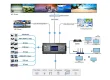
A permanently mounted church LED wall benefits from a cabinet with front service if rear access is limited. Rental-style cabinets make sense for a portable church or a multipurpose venue that sets up and removes the screen frequently. Confirm the wall’s native dimensions, processor output capacity, input formats, scaling, and backup signal path. If multiple sources are needed, map the complete chain from the presentation computer and camera switcher through the processor to the wall.
Ask how a failed power supply, receiving card, or module will be replaced on a Sunday morning. A spare-parts kit and a trained local contact can be more valuable than a marginal gain in nominal specifications. For outdoor use, verify the complete system’s weather rating and installation details; an outdoor-rated cabinet does not automatically weatherproof exposed connectors, cabling, or the supporting structure.

4. Where should a church LED wall be installed?
01. Main sanctuary and side displays
The main sanctuary church LED wall is often placed behind or beside the platform for lyrics, scripture, and visual backgrounds. A central backdrop offers one large canvas; side walls may be better for a deep or wide room because people can see a speaker’s face without turning toward the center stage. In either layout, trace sightlines from the nearest seat, back corners, accessible seating, and balcony. Keep the screen clear of lighting fixtures and provide a safe separation from performers and set pieces.
If the wall sits directly behind a speaker, leave a content-safe area around the person. Fast animation and bright white backgrounds can distract from a sermon and cause camera exposure changes. A church LED wall should support the service’s visual hierarchy. During spoken sections, many teams use restrained backgrounds and high-contrast text. The service plan matters as much as the hardware plan.

02. Lobby, multipurpose rooms, and outdoor gatherings
A lobby screen usually has a different job from the sanctuary wall: welcome messages, wayfinding, schedules, and community announcements. It may need a different pitch because viewers stand closer. A fellowship hall may need a portable or wall-mounted display that serves events beyond worship. Do not simply copy the main sanctuary church LED wall specification into every room.
Outdoor services add direct sunlight, weather, wind loading, power distribution, and local permitting. An outdoor church LED wall needs an enclosure and rigging plan suitable for the location. Where a church rents a wall for occasional events, include transport, setup time, spares, and an operator in the comparison with ownership.

03. Structure, power, cooling, and access
Before ordering, have a qualified installer assess wall or truss capacity, anchoring, cable routing, electrical circuits, ventilation, and maintenance clearance. The screen’s mass is only part of the load; the support frame and any suspended equipment also matter. Require a drawing showing cabinet count, exact outside dimensions, total weight, service direction, and connection points. A church LED wall installed against a solid wall may need front-service modules because technicians cannot reach the back.
Document the commissioning test: dead pixels, cabinet alignment, color and brightness uniformity, signal failover, start-up and shut-down, and operation at normal service brightness. Keep the as-built wiring diagram and processor configuration where volunteers can find them. This reduces dependence on one technician and makes future repairs faster.

5. What does a church LED wall really cost?
A quote for a church LED wall should cover more than LED panels. For budget planning, add the display cabinets, processor, mounting structure, electrical work, installation, commissioning, taxes and freight, then identify ongoing power, spare-parts, and service costs separately. Pixel pitch, physical area, cabinet type, processor, structural work, labor, electrical work, and local support can all change the total. Published price ranges vary so widely that a universal per-square-meter number can mislead a church planning committee. Ask at least two suppliers to price the same screen dimensions, target pitch, installation conditions, warranty, and handover requirements.
| Cost line | What to request in writing | Why it matters |
|---|---|---|
| Display hardware | Cabinet model, pitch, quantity, native pixel count, included spares. | Comparable quotes need the same usable image area. |
| Processing and signal | Processor model, input/output capacity, cabling, backup plan. | Insufficient capacity can force later upgrades. |
| Mounting and electrical | Frame, engineering, installation labor, circuits, permits where required. | These may be excluded from a display-only price. |
| Commissioning | Calibration, camera tests, source presets, operator training. | A working wall needs a repeatable Sunday workflow. |
| After-sales support | Warranty scope, response time, spare modules, shipping and labor terms. | Downtime and replacement costs affect lifetime value. |
Calculate a five-year ownership view that includes expected operating hours, electricity, cleaning, spares, service visits, and likely content or processor upgrades. Ask for typical power draw under ordinary content as well as maximum draw for electrical design. A church LED wall may run well below its peak specification during worship, but electrical infrastructure must be sized safely by the installer. For a portable church, compare the labor and storage cost of ownership with renting an LED screen only when it is needed.
Supplier due diligence should include product documentation, a relevant installation example, local installation capability, spare-part availability, and a clear warranty claim process. If a sample wall is available, inspect full-white and low-gray uniformity, cabinet seams, and text at the planned seating distances. These practical checks say more than a claim that one church LED wall is universally “best.”
6. How should a church run and maintain its LED wall?
01. Build content around legibility
Design lyrics and scripture for the actual church LED wall resolution and aspect ratio. Keep essential words away from the outer edges, use strong text-to-background contrast, and avoid placing long lines over busy footage. A 16:9 video may require letterboxing or a deliberate crop on an extra-wide wall. Test font size from the farthest seat and check that line breaks suit the pace of singing. If captions or multiple languages are used, reserve enough screen area from the start.
Create a small set of templates for worship lyrics, sermon points, announcements, and IMAG. Confirm who can change each template and who approves content before services. A church LED wall can display a great deal of information, but too much movement or text can compete with the speaker and congregation. Volunteers need a straightforward cue sheet and a fallback slide or alternate display if the primary source fails.
02. Use simple operating and service routines
Record normal brightness presets for daylight and evening services. Train operators to start the processor and wall in the correct order, select sources, recognize a disconnected signal, and shut down safely. Keep the manufacturer’s cleaning instructions near the equipment; abrasive cleaners and pressure on LED modules can cause damage. Schedule periodic checks for loose connections, dust, color mismatch, and failed modules. Log any replacement module’s batch and calibration settings.
For livestreams, test the church LED wall after major camera, lighting, processor, or content changes. A wall can look uniform to the room while showing rolling bands in a close-up camera shot. Keep a camera-tested preset rather than asking volunteers to diagnose scan artifacts during the service. The aim is a predictable system that a trained team can operate without a specialist at every event.
7. Which EagerLED church LED wall options are relevant?
EagerLED offers fixed-installation and rental display families; the right choice depends on room and operating model. For the product overview, see its church LED display solutions page. For a permanent indoor church LED wall with limited rear clearance, the EA640F2 indoor front-service display is an option to assess. Its 640 × 480 mm cabinet format and front maintenance approach may simplify a wall-mounted installation. Confirm the available pitch, actual screen resolution, power and brightness specification, and compatibility with the proposed processor on the current product sheet before ordering.
For a portable church or event program, the EA500C6 rental display is a different type of solution. Its 500 × 500 mm cabinet format is intended for repeated assembly. Verify whether the quoted configuration is indoor or outdoor, how the cabinets lock and align, what weather protection applies to the complete installation, and how much setup labor the church can provide. The indoor LED screen range and rental LED display range provide other configurations to compare.
Send a supplier the sanctuary plan, screen opening, closest and farthest seats, normal room lighting, camera format, desired content, mounting surface, and operating schedule. Ask for a scaled layout, native pixel count, processor diagram, power schedule, spare-parts list, and an installed price. A useful proposal explains why its church LED wall specification fits those measurements; it should not depend on a generic size recommendation.
8. Church LED wall FAQ
01. What size church LED wall should we buy?
Start with sightlines and the usable platform opening, then test the actual lyric font from the farthest seat. Screen width alone does not determine readability. Confirm the final cabinet grid, aspect ratio, and native pixels before approving a size.
02. What pixel pitch is best for a church LED wall?
There is no single best pitch. Measure the closest regular seat and test sample content there. As a planning estimate, Christie’s guide relates pitch in millimeters to about three times that number in meters for optimal viewing, but the right choice depends on the room, content, and budget.
03. Is a church LED wall better than a projector?
A church LED wall often holds contrast better in a bright room and offers a seamless custom-sized canvas. A projector can be a sensible lower-cost choice when the room is dark enough and the required image size, throw, and maintenance plan fit. Compare complete installed systems in the church’s actual lighting.
04. Can we use a church LED wall for livestreaming?
Yes, but test the proposed wall with the church’s camera frame rate, shutter, lighting, and dimming levels. Refresh-rate claims do not guarantee a band-free image. Request a camera-tested preset and document it for volunteers.
05. What should be included in a church LED wall quote?
Request cabinets and spares, processor and signal cabling, mounting and structural design, electrical work, installation, calibration, training, warranty terms, and local service responsibilities. Confirm what is excluded and who will provide it.
06. Can a church LED wall be mounted without rear access?
Yes, if the selected cabinet supports front service and the installer plans safe access to the modules, power supplies, and receiving cards. Check the manufacturer’s service drawings before finalizing the wall construction.
07. How long does a church LED wall last?
LED products are often rated by the time it takes their light output to fall to a specified fraction of its original level, not by a guaranteed failure date. Actual service life depends on brightness, temperature, maintenance, components, and operating hours. Ask for the manufacturer’s rating and warranty terms for the exact product.
9. Conclusion: choose a church LED wall from the room outward
A church LED wall is a strong option when the congregation needs readable visuals under normal lighting and the church can support the installation and operating cost. Start with the nearest seat, the back-row text test, and the real service content. Then settle screen dimensions, pixel pitch, native resolution, brightness, camera performance, mounting, and the complete installed quote.
The best church LED wall for one sanctuary may be unsuitable for another. Bring the facilities team, worship team, and video volunteers into the decision, request a sample demonstration, and keep the final system simple enough to operate every week. If your church is evaluating options, share the room measurements and use case with EagerLED to obtain a configuration and written quote that can be compared with other proposals.