

An indoor LED display is a modular direct-view screen designed for controlled indoor spaces. Its main advantages are a seamless scalable image, adjustable brightness, close-viewing pixel pitches, camera-friendly refresh rates, flexible layouts, and serviceable modules. It is especially effective in boardrooms, retail, control rooms, broadcast studios, auditoriums, houses of worship, and indoor event venues.
For a model-specific reference, the EagerLED EA640F2 indoor LED display covers P1.25 to P4 pixel pitches, 600 to 800 cd/m² brightness, and a refresh frequency of at least 3,840 Hz. Its 640 × 480 mm front-service cabinet is 60 mm thick and weighs 7.5 kg. These figures illustrate one product family, not universal specifications for every indoor LED screen.
Last reviewed: August 31, 2026. Technical review: EagerLED display solutions team. Product values below are taken from the published EA640F2 specification table and should be reconfirmed for the final project configuration.
Key takeaways
- Choose pixel pitch from the closest viewer, smallest important content, and required native resolution, not from pitch alone.
- Use high refresh and sufficient grayscale for cameras, but verify the final screen with the intended frame rate and shutter settings.
- Compare installed cost, service access, power, cooling, structure, and controller capacity instead of comparing panel prices only.
- Indoor and outdoor LED displays are not interchangeable. Confirm enclosure protection, brightness, and environmental limits for the actual site.
Table of Contents
- What is an indoor LED display?
- Seven advantages of indoor LED displays
- Best indoor LED display applications
- Indoor LED vs LCD video wall vs projector
- How to choose an indoor LED display
- EagerLED specification example
- Frequently asked questions
What Is an Indoor LED Display?
An indoor LED display is a direct-view video screen assembled from LED modules and cabinets. Red, green, and blue light-emitting diodes form the pixels, so the viewer sees light produced directly by the display rather than an image reflected from a projection screen.
In this guide, indoor LED display means a modular direct-view LED wall. It does not mean an LCD television that uses LEDs only as a backlight. The modular structure lets a system integrator build a large canvas from repeatable cabinets, replace individual modules, and select a pixel pitch that fits the viewing distance and content.
Seven Advantages of Indoor LED Displays
1. A seamless image at large sizes
LED cabinets join edge to edge, so the active image does not have the repeated panel bezels found in an LCD video wall. This is valuable when a logo, face, data map, or camera shot must cross panel boundaries without visible grid lines. Alignment and calibration still matter: poor cabinet flatness or inconsistent modules can create visible seams even when there is no physical bezel.
2. Readable images in bright indoor environments
Direct-view LED can maintain strong image visibility in retail areas, lobbies, atriums, and other spaces with substantial ambient light. Brightness should remain adjustable; running a screen brighter than the room requires can reduce comfort and waste power. The EA640F2 range, for example, lists 600 to 800 cd/m² depending on pixel pitch.
3. Pixel-pitch choices for near and far viewers
Pixel pitch is the center-to-center spacing between adjacent pixels, measured in millimeters. A smaller pitch places more pixels in the same area and supports closer viewing or finer text. The EA640F2 range spans P1.25, P1.53, P1.86, P2, P2.5, P3.076, and P4, with published densities from 640,000 down to 62,500 pixels/m².
Smaller is not automatically better. Once the content is clear at the closest intended seat, a still-finer pitch can add cost and controller load without creating a meaningful viewing benefit. AVIXA’s display-size guidance also distinguishes the active image area from the physical display size and relates viewing needs to content detail.
4. High refresh options for cameras and motion
A high refresh frequency reduces the risk of scan lines or banding when an LED wall is filmed. The EA640F2 specification lists at least 3,840 Hz refresh and at least 60 Hz frame frequency. Those values are useful starting points for studios, live events, and hybrid meetings, but an on-camera test is still necessary because camera frame rate, shutter angle, scan mode, controller settings, brightness, and grayscale all interact.
5. Flexible size, aspect ratio, and layout
Cabinets can be arranged to match a wall, stage, set, or architectural opening. As one practical example, four 640 × 480 mm cabinets across and three cabinets high create a 2,560 × 1,440 mm 16:9 canvas. With P2 modules, that arrangement produces an approximate native resolution of 1,280 × 720 pixels. Final dimensions and resolution must be calculated from the exact cabinet and module grid.
6. Modular front-service maintenance
Front-service designs allow technicians to reach LED modules, receiving cards, and power components without a rear maintenance corridor. This can save valuable room depth in a lobby or conference space. Modular service also means a failed module can be replaced without removing the entire wall, provided spare modules are color-matched and the installation allows safe access.
7. Power and thermal loads can be planned from real specifications
An LED wall should be designed around both average and maximum power, not a generic efficiency claim. Across the published EA640F2 configurations, average power ranges from 117 to 195 W/m² and maximum power from 351 to 580 W/m². Actual consumption changes with brightness, content, calibration, and operating schedule, so electrical distribution and cooling should be sized with project-specific margins.
Best Indoor LED Display Applications
| Application | What matters most | Why direct-view LED fits | Selection caution |
|---|---|---|---|
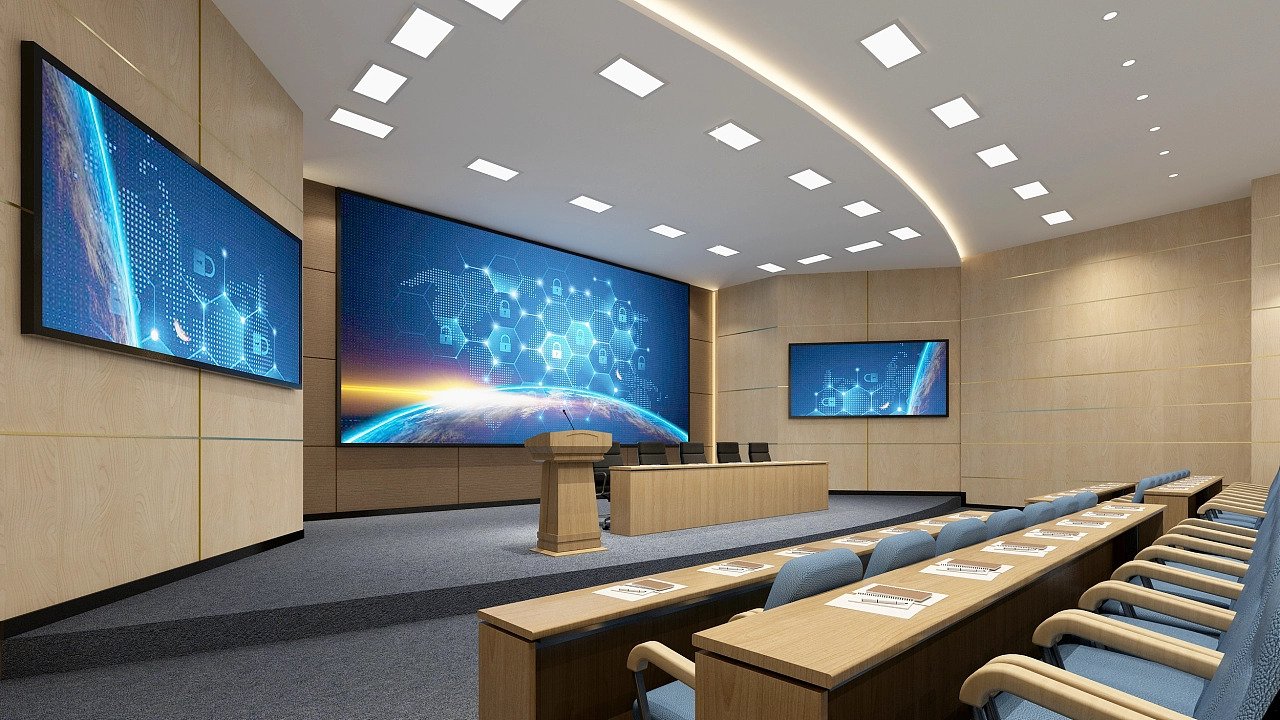
| Boardrooms and classrooms | Fine text, close seats, quiet operation | Large seamless canvas for presentations and conferencing | Validate the smallest spreadsheet text from the nearest seat |
| Retail, showrooms, and lobbies | Ambient light, brand color, flexible dimensions | Bright, attention-holding content without a repeated bezel grid | Avoid excessive brightness at short viewing distances |
| Broadcast and virtual production | Refresh, grayscale, color calibration, camera sync | The wall can act as both a background image and an interactive light source | Test the final processor, camera, shutter, and brightness together |
| Control rooms | Small data, uptime, redundancy, front access | A continuous monitoring surface can be scaled to the room | Specify spare parts, redundant signal paths, and service procedures |
| Auditoriums and houses of worship | Long sightlines, camera use, wide viewing area | Large images remain visible across a broad audience | Size the image for the farthest viewer, not only the front row |
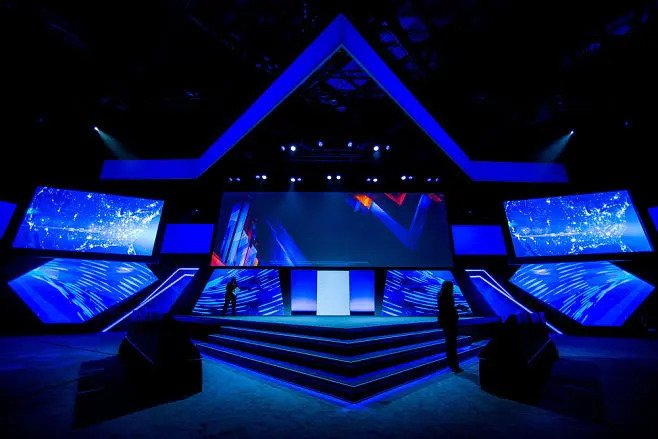
| Indoor events and stages | Rigging, fast assembly, camera performance | Modular screens can scale to different productions | Use rental-rated cabinets and approved rigging, not a fixed-installation cabinet by default |
For a broader explanation of LED screen construction and current technology trends, see EagerLED’s guide to how indoor LED screens work. This page focuses on advantages, applications, and project selection so the two resources serve different search needs.
Indoor LED vs LCD Video Wall vs Projector
| Decision factor | Direct-view LED | LCD video wall | Projector |
|---|---|---|---|
| Image seams | No repeated panel bezel across the active image | Panel borders remain visible to some degree | No panel seams on one projected image |
| Bright-room visibility | Strong when brightness is correctly specified | Good, subject to panel finish and reflections | Depends heavily on ambient light, screen, and projector output |
| Size and shape | Highly modular within cabinet and structure constraints | Built from fixed panel sizes and a rectangular grid | Flexible image size but requires optical throw or specialized lenses |
| Close-viewing detail | Excellent with an appropriate fine pixel pitch | High pixel density at common panel sizes | Depends on native resolution, image size, optics, and focus |
| Service model | Modules and electronics can be serviced individually | Individual panels are replaced or recalibrated | Light engine, filters, optics, and alignment require maintenance |
| Typical buying logic | Best when seamless scale and layout flexibility justify the installed cost | Useful when standard panel geometry and close detail are acceptable | Useful when a large image and controlled light make projection practical |
No technology wins every room. A small meeting space may be better served by a single LCD display. A dark auditorium with a suitable throw path may favor projection. Direct-view LED becomes compelling when the project needs a very large seamless canvas, high ambient-light visibility, custom dimensions, or modular service access.
How to Choose the Right Indoor LED Display
- Record viewing distances and content. Measure the closest and farthest viewers, then identify the smallest text, data point, or visual detail that must remain legible. Use the active image size in the calculation, not the outside dimensions of the structure.
- Calculate the physical grid and native resolution. Divide the active width and height by pixel pitch for a planning estimate, then confirm the result against the exact module and cabinet grid.
- Measure ambient light and set a brightness range. Specify enough output for the room plus smooth dimming for darker content and longer sessions. Do not copy an outdoor brightness target into an indoor project.
- Define camera requirements. If the screen will be filmed, document camera frame rate, shutter, intended brightness, and content playback workflow. Request an on-camera test with the proposed receiving cards and controller.
- Plan service access. Decide between front and rear service before the wall and structure are finalized. Confirm module extraction clearance, spare parts, calibration workflow, and safe technician access.
- Design power, heat, and structure. Use maximum power for electrical capacity and a realistic operating profile for heat calculations. Confirm wall loading, mounting tolerances, grounding, and local code requirements with qualified professionals.
- Match protection to the environment. The IEC 60529 IP Code classifies enclosure protection against access, solid objects, and water. An indoor model listed as IP31 should not be treated as rainproof or substituted for an outdoor cabinet.
- Compare total installed cost. Include steelwork, power distribution, controller, spares, installation, calibration, shipping, maintenance access, and content systems, not only the LED cabinet price.
Industry context
Explaining the breadth of dvLED use, Ramzi Shakra, senior product manager at Epson America, said: Expanding our commercial display portfolio with dvLED allows us to support visual display needs for virtually any indoor application.
Epson press release, June 3, 2026.
Dean Tsai, then Head of the Projector & LED Display Business Unit at ViewSonic, said: The complete product line-up delivers large-sized presentation displays for a wide array of usage scenarios.
ViewSonic press release, September 17, 2020. These are manufacturer viewpoints rather than neutral standards, but they reflect the category’s expansion beyond specialist broadcast installations.
EagerLED Indoor LED Display Specification Example
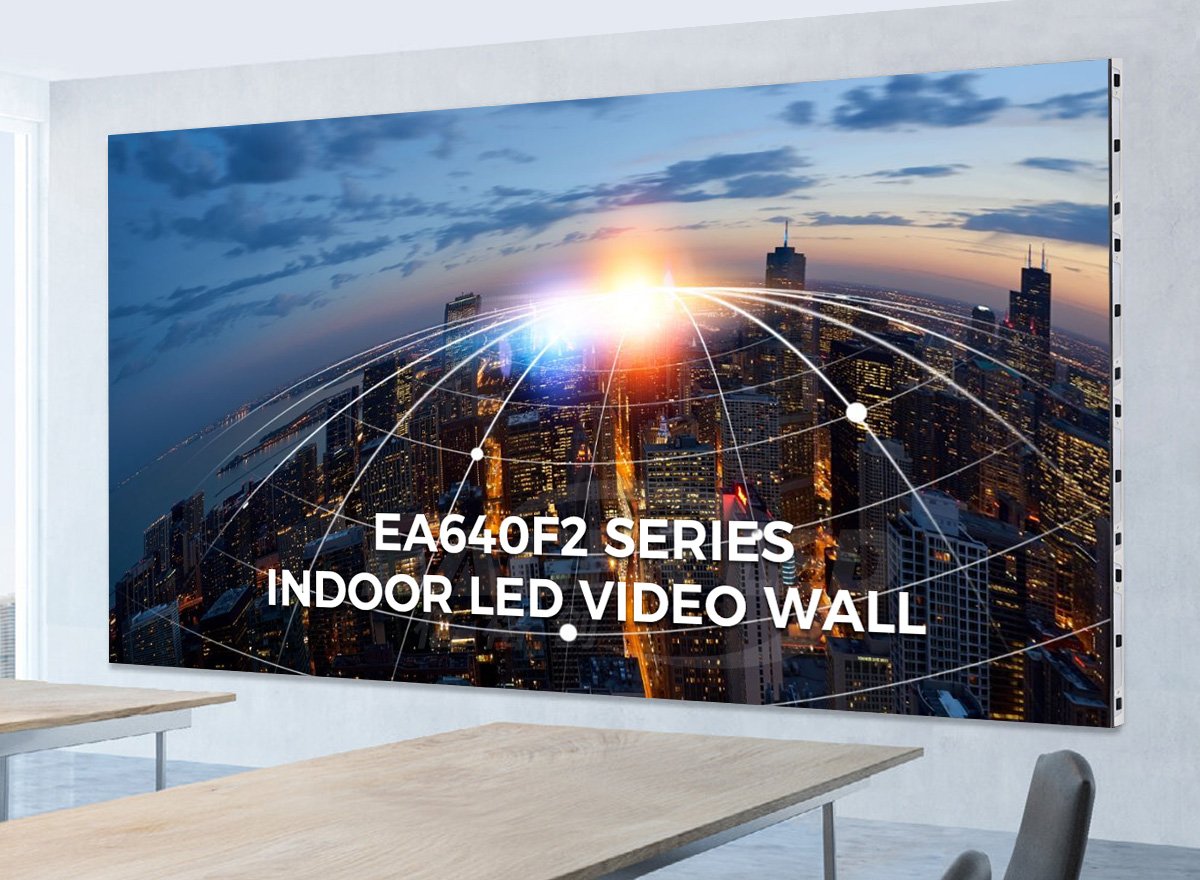
The following values summarize the published EA640F2 SMD configurations. They provide a concrete comparison framework, but a final quotation should identify the exact pixel pitch, LED package, controller, power design, and project conditions.
| Specification | Published EA640F2 range | Why it matters |
|---|---|---|
| Pixel pitch | P1.25 to P4 | Determines pixel density, viewing distance, and cost |
| Pixel density | 62,500 to 640,000 pixels/m² | Higher density supports finer detail at a given screen size |
| Brightness | 600 to 800 cd/m² | Must suit room light while remaining comfortable when dimmed |
| Refresh frequency | At least 3,840 Hz | Important for motion quality and on-camera performance |
| Viewing angle | 140 degrees | Helps maintain visibility across wider seating areas |
| Cabinet | 640 × 480 mm, 60 mm thick, 7.5 kg | Defines wall geometry, loading, and service depth |
| Average power | 117 to 195 W/m² | Supports operating-cost and heat planning |
| Maximum power | 351 to 580 W/m² | Supports circuit and peak-load planning |
| Protection grade | IP31 | Confirms it is an indoor cabinet, not an outdoor weatherproof substitute |
Review the complete EA640F2 specification table or browse EagerLED’s indoor LED screen solutions. For camera-intensive projects, the guide to high-refresh-rate LED displays explains why refresh settings matter.
Indoor LED Display FAQ
What are the main advantages of an indoor LED display?
The main advantages are a seamless large image, modular sizing, adjustable brightness, fine pixel-pitch options, high-refresh configurations for cameras, flexible aspect ratios, and serviceable modules. The value of each advantage depends on the room, content, viewing distance, and maintenance plan.
Where are indoor LED displays commonly used?
Common applications include boardrooms, classrooms, retail stores, shopping centers, corporate lobbies, control rooms, broadcast studios, virtual production stages, auditoriums, houses of worship, museums, and indoor live events.
What pixel pitch should I choose for an indoor LED display?
Choose pixel pitch from the closest viewing distance and the smallest content that must remain clear. Fine pitches such as P1.25 to P1.86 suit closer viewers and detailed content, while larger pitches can be economical when viewers are farther away. Confirm the choice with the final screen size, native resolution, and a sample test.
How bright should an indoor LED screen be?
There is no single indoor brightness target. The display must overcome the room’s ambient light while dimming low enough for comfortable close viewing. As one product example, EA640F2 configurations list 600 to 800 cd/m². Measure the site and specify usable brightness adjustment rather than selecting the highest number.
Is an indoor LED display better than an LCD video wall or projector?
Indoor LED is usually the stronger choice for a very large seamless image, high ambient-light visibility, custom dimensions, or modular service. LCD may be more practical for smaller close-viewing installations, while projection can be effective in controlled light with suitable throw space. The correct choice depends on the room and total installed cost.
Get a Project-Specific Indoor LED Recommendation
For an accurate configuration, share the active screen width and height, closest and farthest viewing distances, ambient lighting, content type, camera requirements, mounting surface, service-access limits, installation country, and supply voltage. EagerLED can then recommend pixel pitch, cabinet layout, controller capacity, power design, and spare modules for the project.