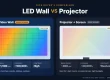


A creative LED display is a video screen designed around a distinctive shape, architectural surface or interaction. Curved walls, column wraps, spheres, transparent backdrops and interactive floors can all belong to this category. The important difference is how the screen geometry, support structure and content work together, rather than a particular LED package or aspect ratio.
Choosing a creative LED display therefore involves more than comparing screen area and price. Buyers need to establish where people will stand, what they must read, how the installation will be supported and how technicians will reach failed parts. This guide explains the main formats, design decisions, cost drivers and supplier checks for commercial projects.
Use the comparisons below to build a project brief before requesting quotations. Numerical product examples are identified with their source and configuration; they are not universal specifications for every creative LED display. A sample demonstration and an agreed acceptance procedure remain essential for unusual shapes.
1. What Is a Creative LED Display?
A creative LED display changes the relationship between the image and its surroundings. It may follow a curved wall, surround a column or form a sculptural object. Some projects use standard rigid cabinets arranged at angles; others require flexible modules or specially engineered shapes. A conventional rectangular display can also support a creative installation through its placement and content.
01. Geometry, content and service access
The screen is one part of a larger system. A structural drawing defines the physical surface, a pixel map defines where the image appears, and a service plan defines how the system stays usable. For a creative LED display, these documents should agree before fabrication begins. A visually impressive rendering is not enough to establish that modules, cables and replacement tools will fit.
A flexible module is not an unrestricted sheet that can be bent or cut anywhere. The approved bending direction, minimum radius, connectors and mounting method depend on its design. Similarly, transparent does not automatically mean outdoor rated, and a protective coating does not make a wall module suitable for walking.
02. What changes compared with a flat wall?
Compare equivalent image quality and scope. A custom shape may require more engineering while still using familiar LED components. The following questions expose differences that a price per square metre can hide.
| Decision | Flat rectangular wall | Creative installation |
|---|---|---|
| Geometry | Repeated cabinets on a planar frame | Approved curves, corners or custom modules |
| Content | A rectangular canvas with known resolution | Pixel mapping, masks and shape-specific safe areas |
| Maintenance | Front or rear access according to the model | Access demonstrated at the most difficult location |
| Spares | Compatible modules from the specified batch | Additional unique shapes and orientations identified |
| Quotation | Defined screen and installation scope | Separate engineering, structure and content scope |

2. Types of Creative LED Screens Compared
Select the construction method that fits the site and maintenance plan. A creative LED display may combine several formats, but each interface adds alignment, cabling and content requirements.
01. Flexible and soft LED screens
Flexible modules follow supported curves for columns, waves and rounded interiors. Their flexibility belongs to the module; the supporting frame still needs accurate geometry. Confirm the permitted radius and whether repeated bending is allowed. On a creative LED display with tight curves, test seams and brightness from oblique viewing positions before approving the full build.

02. Transparent LED screens
Transparent screens leave openings between emitting elements so viewers can see through part of the surface. They can suit retail windows and event backdrops, but apparent transparency depends on viewing angle, pitch, structure and the scene behind the screen. Assess a creative LED display in the actual daylight conditions: a percentage alone does not predict text readability or contrast. Optical transparency also cannot be converted directly into a structural wind-load reduction.

03. Custom-shaped and irregular screens
Logos, sculptural outlines and angular surfaces may require purpose-designed modules or cabinets. Ask which parts are standard and which are unique, and obtain a labelled spare-parts drawing. Existing LED modules should not simply be cut to fit a silhouette. For this creative LED display format, the mechanical segmentation and pixel layout must be developed together so the intended shape can be manufactured and serviced.

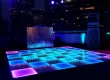
04. Floor and interactive displays
Floor screens need a purpose-built load-bearing assembly, suitable surface grip and service access. Distributed load figures do not by themselves approve concentrated loads, rolling equipment or vehicles. Confirm the exact intended use with the supplier and project engineer. An interactive creative LED display also needs sensors, software and a tested response path; ordinary video playback does not provide interaction automatically.

05. Spherical and cylindrical displays
Cylinders typically curve around one axis, while spheres require segmentation across a more complex surface. Content must account for the seam, poles and areas hidden from each viewing position. A creative LED display that visitors can walk around should be assessed from multiple directions. Keep essential text within readable zones instead of assuming one continuous message will remain visible around the whole object.

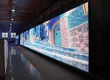
06. Curved walls and ribbon displays
Rigid cabinets with adjustable joints or flexible modules can produce curved surfaces. Check the supported concave and convex angles for the exact cabinet combination. Long ribbons are effective for short messages and motion, but a shallow pixel height limits detailed images. The best creative LED display layout follows audience sightlines rather than assuming a larger curve automatically improves every seat.

| Format | Useful application | Verify before ordering |
|---|---|---|
| Flexible modules | Columns and curved indoor walls | Bend limits, support accuracy and removal clearance |
| Transparent panels | Windows and open stage backdrops | Pitch-specific openness, contrast and environment rating |
| Custom shapes | Brand objects and irregular surfaces | Unique spare parts and pixel map ownership |
| Floor display | Walkable experiences | Load cases, surface grip and service procedure |
| Sphere or cylinder | Exhibitions and architectural features | Seams, content distortion and all-around access |
| Curved ribbon | Stages and venue messaging | Joint angles, readable text height and alignment |
3. Creative LED Display Design: From Concept to Installation
01. Survey the site and define the image
Record the dimensions, nearest and farthest viewers, ambient light, operating hours and camera positions. Establish whether the objective is readable text, detailed product imagery or atmospheric motion. A creative LED display designed mainly for abstract animation may need a different pixel density from a similarly sized screen showing schedules or technical diagrams.
Document mounting points, electrical supply, cable routes and the equipment needed for installation. Check access to the building as well as the finished position: a cabinet that fits the wall may not fit the lift. Structural and electrical design should be approved for the actual site and loads before manufacturing commitments are made.
02. Select pixel pitch through content testing
Pixel pitch is the centre-to-centre spacing between neighbouring pixels, stated in millimetres. A smaller pitch places more pixels in a given area. For a regular square grid, halving pitch produces approximately four times as many pixels per unit area; this is a geometric relationship, not a claim that price will quadruple.
Viewing-distance rules are only a starting point. Font size, eyesight, contrast, content detail and viewing angle affect the result. Test the smallest important text at the closest and typical viewing positions. For a creative LED display with uneven geometry, also inspect the sections seen at steep angles. The LED display pixel pitch guide provides additional selection context.
03. Evaluate brightness, scan mode and camera behaviour
Specify brightness in cd/m², also called nits, alongside the intended operating setting and ambient light. Maximum output is not always the useful setting indoors. Inspect colour, gradients and shadow detail at the brightness actually required. Reflections from windows or polished floors may matter as much as the screen specification.
Refresh rate in hertz describes display updating behaviour, while video frame rate describes the incoming images. Scan ratio, driver timing, camera shutter and exposure can all affect recorded results. A high refresh-rate claim alone does not guarantee freedom from bands or other camera artefacts. Test the proposed creative LED display configuration using the intended cameras and settings, including dimmed operation.
04. Approve mapping, controls and heat management
Obtain the exact pixel canvas, cabinet orientation and receiving-card map. Check processor capacity for the actual resolution, frame rate and bit depth, including unusual output widths and unused canvas areas. Specify who supplies the media server, licences, configuration backups and operator training. Redundant equipment is only useful when failover has been configured and tested.
A creative LED display needs an airflow path around its electronics and a serviceable arrangement of power supplies. Ask for maximum and representative operating power separately, and document the test conditions. Avoid treating a typical-content power estimate as the basis for electrical circuit sizing. Check whether enclosing the screen changes cooling or access requirements.
05. Demonstrate maintenance and acceptance
Have a technician demonstrate removal of the hardest-to-reach module, power supply and receiving card. Front service still requires working space and a safe approach. Agree acceptance checks for seams, colour consistency, dead pixels, content mapping and recovery after power loss. Record the approved configuration so a future replacement can be calibrated to the installed system.
4. Creative LED Display Applications by Industry
01. Retail and shopping malls
Column wraps and window screens can integrate messages into a shop without requiring a new flat wall. Test merchandise visibility behind transparent panels and keep promotional text readable while people move. A creative LED display should support the customer journey; avoid layouts where essential information disappears around a corner before it can be read.
02. Stages and live events
Rental projects place extra emphasis on rigging, transport, assembly repeatability and camera tests. Identify who approves each hanging or stacking arrangement and keep the cabinet connection instructions with the crew. For a travelling creative LED display, label modules and cables clearly so the approved map can be rebuilt consistently at the next venue.
03. Museums, showrooms and exhibitions
Close viewing, quiet rooms and subtle content make low-brightness image quality especially important. A sphere may communicate a globe effectively, while a curved wall may better support a presentation. Evaluate fan noise, accessibility, text placement and the experience of visitors who cannot stand at the ideal viewing point.
04. Facades and outdoor landmarks
An outdoor creative LED display needs project-specific weather protection, drainage, heat management and structural design. Confirm protection of both exposed faces and cable connections. Review local installation and operating requirements with the relevant project professionals. See the LED display IP rating guide when comparing enclosure claims; an IP rating does not describe every environmental risk.
05. Hospitality and interactive attractions
Bars, hotels and attractions can use curved fronts or interactive floors to change the character of a space. Include cleaning, spill response, content scheduling and replacement access in the operating plan. Test sensor behaviour with realistic numbers of users so the experience remains understandable when several people interact simultaneously.
5. Creative LED Display Cost and Budget Planning
There is no reliable universal price for a creative LED display without dimensions, configuration and installation scope. Compare quotations for the same approved drawing and acceptance requirements. A low hardware price may omit structure, controls, shipping or commissioning, while a higher proposal may include those items.
01. Separate hardware from project services
Pixel pitch, module technology, custom geometry and environmental protection affect the equipment specification. Engineering, access equipment, cable distances and local installation affect the delivered project cost. Request separate prices for unique parts, spare modules and optional redundancy so each decision can be evaluated without losing the baseline comparison.
| Cost item | Ask the supplier to include | Why it changes the comparison |
|---|---|---|
| Modules and cabinets | Exact configuration, quantity and spare types | Different pitches or unique shapes change the hardware scope |
| Control and playback | Processor, receiving cards, software and licences | An incomplete system may need additional purchases |
| Structure and installation | Engineering, mounting, lifting and site labour | Access and building constraints vary by location |
| Content and commissioning | Pixel map, test media, calibration and training | Hardware alone does not deliver a finished experience |
| Logistics | Packing, freight, insurance and delivery terms | Factory and delivered prices are different scopes |
| Ownership costs | Energy assumptions, maintenance and replacement access | A difficult repair can cost more than the replacement part |
02. Compare lifetime cost and delivery milestones
For a creative LED display, total ownership cost includes operation and service as well as purchase. Ask for a representative power measurement with stated content and brightness, then apply the planned schedule and local electricity rate. Include cleaning, access equipment, spare stock, software subscriptions and content updates. Treat the result as a scenario with explicit assumptions.
Request milestones for drawing approval, sample acceptance, fabrication, testing, shipment and site commissioning. Custom parts and destination logistics make generic lead-time promises unreliable. Identify which approvals the buyer must provide and what happens when the opening date changes. Keep contingency tied to specific unresolved risks rather than an unsupported universal percentage.
6. Advantages and Limitations
01. Where the format adds value
A creative LED display can use architectural surfaces that are awkward for flat screens and create a recognisable feature within a venue. Reprogrammable media allows the same physical installation to support different campaigns or events. Its value depends on audience visibility, content quality and operational reliability, so agree a useful measure of success before choosing the shape.
02. Where complexity becomes a disadvantage
Unique components can complicate replacement, and unusual surfaces may need dedicated content production. Curvature can create difficult sightlines rather than solve them. Compare the creative LED display concept with a simpler layout using the same communication objective. If the design depends on a single ideal camera position, document that limitation rather than promising the same effect to every viewer.
7. How to Choose a Creative LED Display Supplier
Evaluate evidence for the proposed configuration. Ask for comparable installations, mechanical drawings, a clear bill of materials and a demonstration of content mapping. A creative LED display supplier should explain the limits of its design and identify any engineering or content work supplied by another party.
Request test documentation relevant to the intended environment and destination. Confirm that model numbers and configurations match the quotation. For floors, clarify the load cases and support arrangement; for exposed installations, clarify enclosure protection and connections. Marketing photographs cannot substitute for project-specific approval.
Agree warranty exclusions, response arrangements, spare availability and the process for replacing discontinued parts. Obtain configuration files, calibration data and operator documentation at handover. The ability to maintain a creative LED display after the original installation team leaves is an important part of supplier selection.
8. EagerLED Creative LED Display Solutions
The following product families illustrate different approaches to a creative LED display. Confirm the exact model and drawing with EagerLED before treating a product-page specification as a project commitment.
01. EA-Flex for supported indoor curves
The current EA-Flex flexible LED display page describes soft indoor modules with magnetic front service. It lists brightness of 600–800 cd/m² depending on model and refresh frequency of at least 3,840 Hz. These are manufacturer-listed product examples, not universal targets. Check the selected module size, pitch and approved bending geometry for the installation.

02. EA1000TOR1 for transparent rental structures
The current EA1000TOR1 outdoor transparent screen page lists 1,000 × 500 mm cabinets, 80 mm depth, 7.5 kg cabinet weight and IP65 protection. Transparency is configuration-specific: the page identifies 60% for P3.91-7.82, with other values for other pitches. For a creative LED display, compare the exact configuration, permitted assembly and maintenance access instead of applying one transparency percentage to the whole family.

03. EA-iFloor for purpose-built floor installations
The EA-iFloor indoor floor display page describes 500 × 1,000 mm cabinets, 250 × 250 mm modules and front service. It also publishes a load claim above 2,000 kg/m². Treat that figure as a manufacturer claim requiring confirmation of test conditions and support arrangement; it does not independently approve a vehicle, point load or moving equipment on your installation.
For any creative LED display brief, provide drawings, dimensions, viewing distances, environment, content requirements and access constraints. Ask for a configuration-specific proposal and identify who is responsible for the structure, electrical work and final acceptance.

9. Creative LED Display FAQ
01. How much does a creative LED display cost to install?
Installation cost depends on structure, access, location, cabling and commissioning scope. Ask for hardware, site work and content as separate line items. Compare delivered and installed totals under the same delivery terms; a factory equipment price is not a complete project budget.
02. Can existing video be reused on an irregular screen?
Often yes, if it is cropped, masked or placed within a suitable region of the canvas. Obtain the exact pixel map and preview the composition with the content team. Keep subtitles, logos and other essential details away from seams, hidden surfaces and severe distortion.
03. Does a creative LED display need special software?
Some layouts can use a conventional LED processor and player, while complex mapping or interaction may need a media server or additional software. Specify the required outputs, canvas dimensions, licences and operating workflow before choosing the control system. Ask who owns and maintains the project files.
04. Can an indoor flexible screen be installed outdoors?
Only if the exact product and complete installation are approved for those conditions. Flexibility does not establish weather resistance. Confirm exposed surfaces, connectors, drainage, temperature limits and mounting with the supplier; do not infer outdoor suitability from a protective mask or marketing photograph.
05. How do I avoid camera bands on a creative LED display?
Arrange a camera test with the proposed modules, drivers and processor at the intended brightness. Use the actual frame rate, shutter and exposure settings. Refresh-rate numbers alone do not describe all timing interactions, and an acceptable result with one camera may not transfer to another.
06. What should be handed over after commissioning?
Request cabinet and cable drawings, pixel maps, configuration backups, calibration records, software details and a labelled spare-parts list. Include a demonstrated replacement procedure and a recovery test after power interruption. Record warranty contacts and the agreed acceptance results so future operators can reproduce the approved setup.
10. Conclusion
A successful creative LED display starts with a clear communication objective and a serviceable design. Choose the shape together with the content, viewing conditions, structure and control system. Verify product-specific limits, compare complete quotation scopes and test the intended operating conditions before committing to production.
To plan your creative LED display, prepare a site drawing, dimensions, audience distances, lighting conditions, installation schedule and sample content. Contact EagerLED with your project brief to discuss an appropriate configuration and the information needed for a detailed quotation.