An LED screen rental business should buy its first fleet only after matching realistic bookings to a complete operating budget. Count the cabinets needed for profitable, deliverable jobs, then include spares, processing, cases, transport, technicians, storage, and repair capacity. A panel purchase price and an assumed daily hire rate cannot establish whether ownership makes sense.
This guide is for a small AV rental company considering its first owned LED inventory. The decision is whether to own a defined, repeatable service package, continue hiring equipment from partners, or combine both approaches. The examples below are planning exercises, not market prices, revenue forecasts, or promises of investment returns.
Begin with your own completed jobs and credible sales pipeline. Separate events you could actually deliver from inquiries that merely mention a large screen. An LED screen rental business can have strong demand for AV services while having insufficient repeat demand for one particular cabinet family, pixel pitch, or screen size.
1. Start with the jobs your LED screen rental business can serve
Review recent projects by actual display requirement. Record active dimensions, indoor or outdoor conditions, nearest viewers, smallest text, camera use, show duration, delivery distance, and support method. Then record why you won or lost the work. A lost job caused by an unavailable technician is not automatically a reason to buy more panels.
Group recurring requirements into a small number of service packages. An indoor conference package may need fine text, quiet operation, and predictable room access. An outdoor event package adds exposure and site engineering considerations. Buying one fleet for every possible application can create compromises that are expensive to explain to customers after the order.
For each package, identify the minimum complete delivery: screen, approved support, power distribution, processing, sources, cable sets, transport, setup, rehearsal, operation, and strike. Keep unusual projects outside the initial standard package until you understand their extra resources. A clearly bounded offer is easier to price and train staff to deliver consistently.
01. Separate evidence from sales optimism
List confirmed bookings separately from repeat customers without dates, qualified opportunities, and general inquiries. Include the likely timing and screen configuration, not just potential revenue. For an LED screen rental business, ten inquiries on the same weekend represent a capacity problem rather than ten independent opportunities spread evenly across the year.
Ask whether customers accept the proposed specification. A fleet that suits conference graphics may not meet a production company’s camera test or a close-viewing exhibition brief. Demonstrate the intended content before treating an inquiry as demand for the exact equipment you plan to buy. Record any additional processing or content preparation needed to make that package usable.
02. Compare ownership with a partner route
Obtain current partner-hire terms for the same package, including collection, return, damage responsibility, support, and availability during busy periods. These terms create a comparison point for ownership. They are not proof that partner equipment will always be available, so distinguish a firm supply arrangement from an informal understanding.
An LED screen rental business may own the regularly used core and hire extra cabinets for exceptional jobs. Verify mechanical, electrical, image, and configuration compatibility before relying on that expansion route. A matching model name or nominal pixel pitch alone does not prove that cabinets from different batches can form an acceptable wall.
2. Calculate usable fleet capacity
Start with a cabinet layout for each standard package. Use the exact active dimensions and native pixel matrix, then confirm controller capacity and the permitted support arrangement. The rental LED display overview is a starting point for comparing formats; final fleet calculations need the proposed model’s current specification.
For illustration, a hypothetical 6 × 3 m (19.7 × 9.8 ft) wall built from 500 × 500 mm (19.7 × 19.7 in) cabinets uses twelve columns and six rows, or seventy-two cabinets. That is the visible wall only. It excludes standby cabinets, damaged stock, and any other screens required for the same event.
01. Track cabinet-days and complete jobs
Area alone can hide scheduling conflicts. Track how many cabinets are committed and for how long they are unavailable for another booking. Include preparation, outbound travel, setup, rehearsal, show time, strike, return travel, inspection, and repair. A one-day event can occupy stock for several calendar days without producing several days of chargeable hire.
Define utilization consistently. One possible operating measure is paid cabinet-days divided by owned cabinet-days during the same period. Keep quarantined and standby stock visible in the denominator if you want the measure to show the cost of owning it. Use a separate availability measure to explain why otherwise usable inventory was unavailable.
For a hypothetical fleet of one hundred cabinets over thirty days, the ownership denominator is three thousand cabinet-days. If fifty cabinets earn hire revenue for six days, that contributes three hundred paid cabinet-days, or ten percent on this definition. Do not replace six paid days with the longer warehouse-to-warehouse period. Record that longer period as committed capacity instead. An LED screen rental business can then see whether low paid utilization comes from weak demand, long transport cycles, reserved spares, or unavailable equipment. Each cause calls for a different response; buying more panels addresses only some of them.
For the LED screen rental business, also record the number of complete simultaneous systems you can deliver. Cabinets may be available while processors, distribution, technicians, or vehicles are already allocated. Two small jobs do not automatically fit because their combined screen area is smaller than your largest wall.
02. Reserve stock deliberately
Set aside spares according to recovery needs, travel distance, repair turnaround, and consequences of a visible failure. There is no universal percentage that proves adequate cover. Identify which components must travel with the event and which can remain at the workshop with an agreed delivery route.
Keep reserve stock separate from saleable capacity in the booking system. If the LED screen rental business regularly uses every spare to complete a larger wall, it has changed its service promise. Either price and arrange an alternative recovery plan or reduce the committed display size; do not quietly remove support capacity from the forecast.
3. Build the complete ownership budget
Separate initial acquisition, ongoing fixed expenses, and costs caused by individual jobs. This helps you compare ownership with partner hire without mixing cash payments and accounting measures. Use supplier quotations and your own operating records for amounts. Ask the company’s accountant to align depreciation, financing, tax treatment, and cash-flow reporting with its circumstances.
The LED screen rental business equipment budget needs more than panels. Include control equipment, flight cases, approved support accessories, power and signal distribution, test tools, spares, configuration work, training, freight, and the receiving inspection. Keep optional capabilities separate so the base purchase is not justified by work you have not yet established.
| Cost group | Items to collect | Check before using the total |
|---|---|---|
| Initial delivery | Cabinets, control, cases, cables, support accessories, spares, freight, inspection, training | Identify exclusions and confirm a complete working package |
| Continuing overhead | Storage allocation, insurance, software, administration, planned staff capacity | Separate new cash commitments from existing shared resources |
| Job-dependent expense | Crew, travel, vehicle use, local equipment hire, accommodation, event consumables | Use the actual event duration and location rather than a flat average |
| Repair and downtime | Parts, diagnostic labor, shipping, replacement hire, unavailable stock | Avoid counting the same repair allowance twice |
| Future change | Replacement modules, discontinued parts, software changes, fleet expansion or disposal | Test uncertain assumptions instead of treating resale as guaranteed |
Do not treat an existing warehouse or employee as free. For a cash decision, identify the additional payment required. For profitability, also consider the capacity taken away from other work. Keep both views available and label them clearly; otherwise a low cash outlay can disguise a service that consumes valuable staff time without adequate contribution.
01. Keep the quotation basis consistent
Ask each hardware supplier to quote the same cabinet count, pitch, indoor or outdoor version, control configuration, spare list, packaging, and delivery scope. Compare payment timing and inspection conditions as well as the total. Differences in included support or shipping can explain an apparently lower price without indicating a more efficient fleet.
For an LED screen rental business, replacement compatibility deserves its own written response. Request the module, receiving-card, power-supply, and connector identification for the offered build. Ask what records and settings accompany replacements. Do not assume that buying more panels later will automatically extend the original calibrated wall.
4. Test utilization and contribution together
Utilization measures activity; it does not measure profit by itself. Calculate the contribution from a representative job by subtracting its job-dependent costs from its revenue. That contribution must help cover continuing overhead and the chosen ownership model. Compare like-for-like periods and avoid counting a customer deposit as completed-job profit.
The standard break-even relationship is fixed costs divided by contribution per unit. For mixed rental jobs, define a comparable unit or calculate contribution by package first. An average assembled from a short local conference and a remote multi-day festival can hide differences in crew, transport, and equipment occupancy.
Use an LED screen rental business scenario sheet with conservative, expected, and busy-period cases. These are assumptions to test, not forecasts. Change more than the booking count: include the job mix, duration, discounting, travel, repair burden, and payment timing that could accompany each case.
| Scenario | What to change | Question the result should answer |
|---|---|---|
| Fewer bookings | Reduce paid jobs while retaining storage, insurance, and committed staff costs | Can the business carry the fleet through an uneven season? |
| More distant events | Increase travel and stock occupancy without assuming a higher hire rate | Does the extra revenue compensate for the additional delivery burden? |
| Overlapping dates | Allocate processors, crew, vehicles, and standby stock to concurrent events | Which resource becomes the first constraint? |
| Extended repair turnaround | Remove affected cabinets and allow for replacement hire | Can confirmed jobs still be delivered at the promised scope? |
| Slower customer payment | Move receipts later while leaving supplier and payroll dates unchanged | What operating cash is needed before the job is fully paid? |
Keep the purchase decision separate from a target payback slogan. Simple payback can be a useful screen when defined consistently, but it can ignore timing, residual value, and changes in future work. Record its limitations and review the full cash schedule. Do not accept a vendor’s utilization assumption as evidence of your own demand.
Review actual results after each early booking. If an LED screen rental business repeatedly spends more crew time on testing or packing than estimated, update the package cost before taking more work at the same rate. Learning from the first jobs is useful only if those findings change the next quotation and inventory plan.
5. Prepare people, spares, and transport
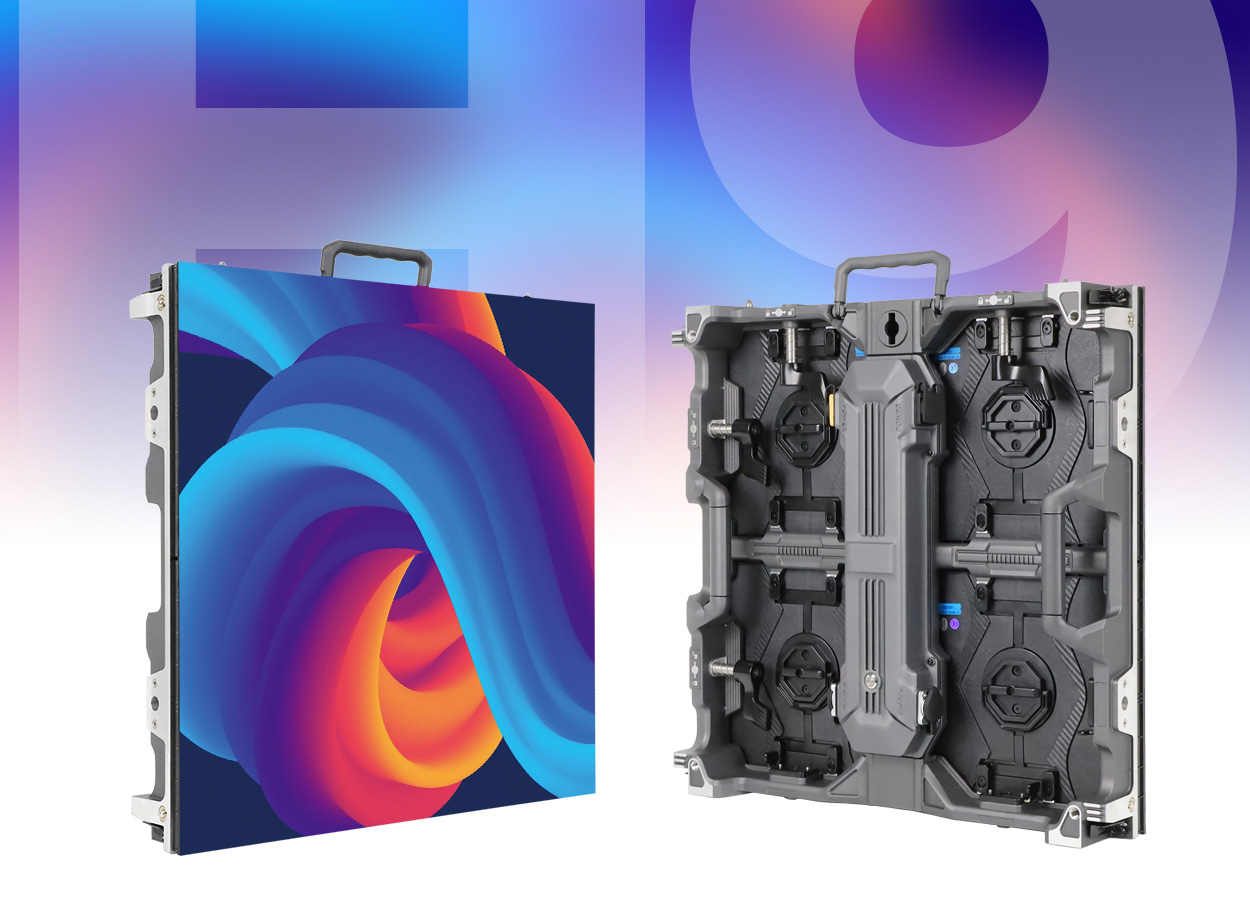
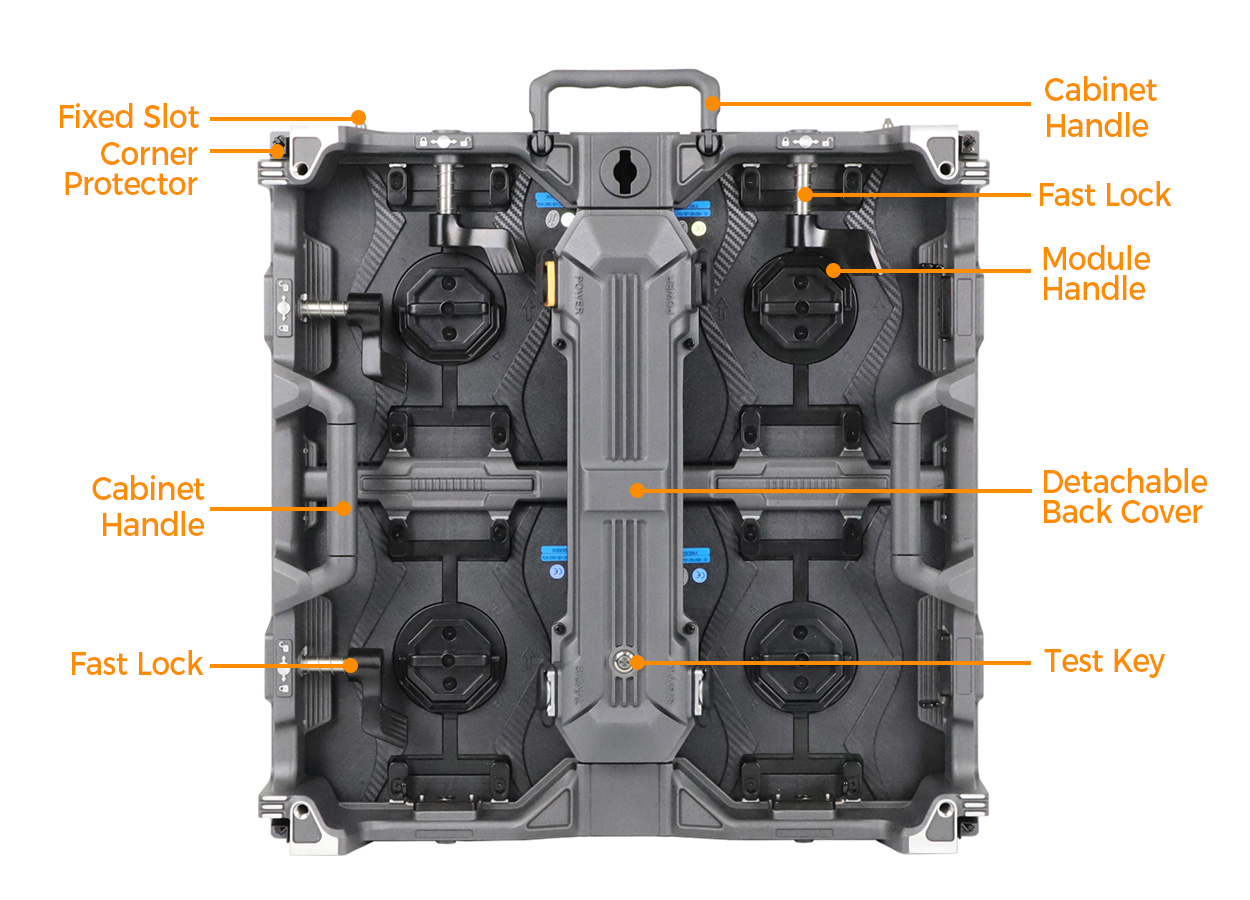
Choose equipment around tasks the team can deliver. The EA500H9 rental cabinet page shows a 500 × 500 mm format, front and rear service design, and a detachable rear power box. These are relevant features to demonstrate; they do not establish a universal repair time or authorize work on an energized or suspended screen.
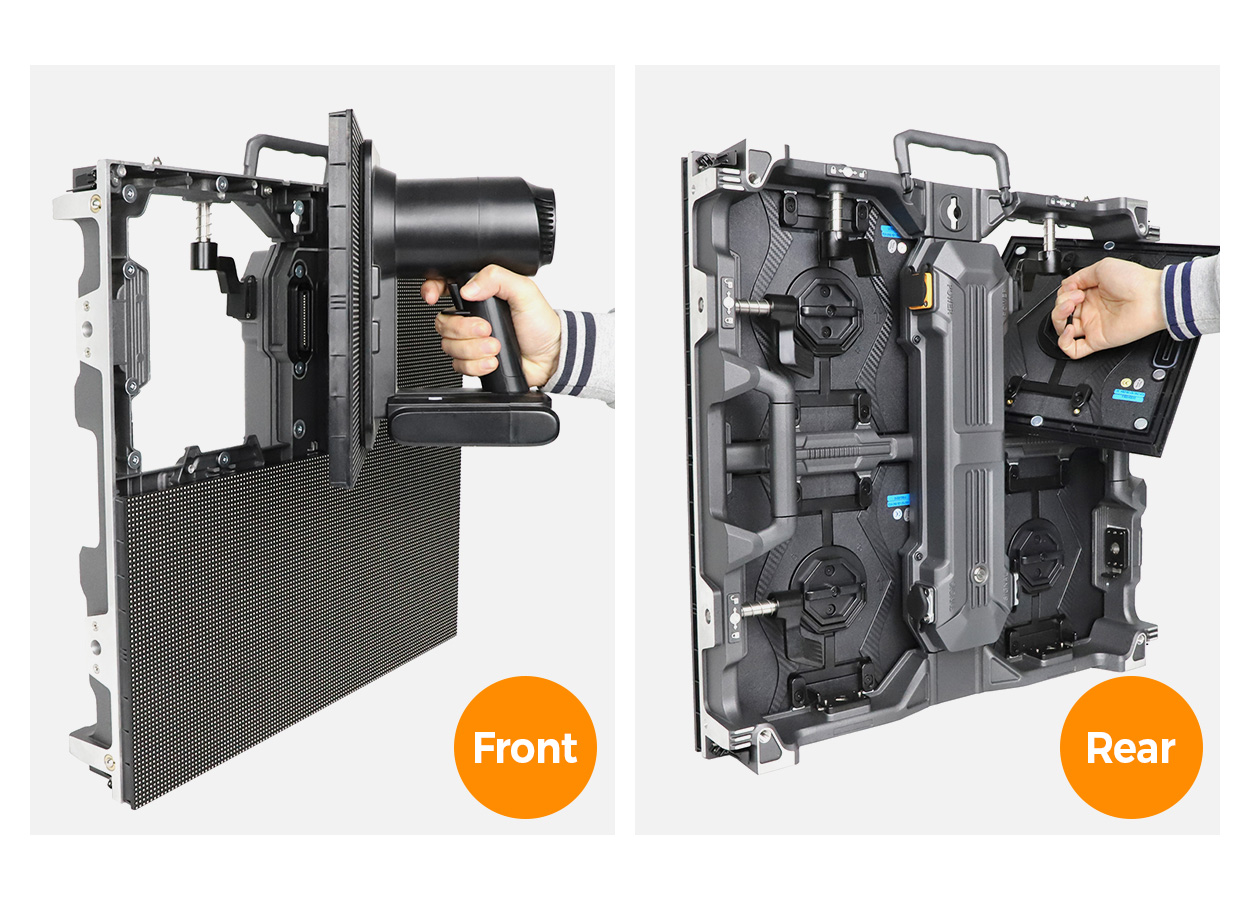
Have technicians rehearse receiving inspection, assembly, mapping, image checks, backup recovery, disassembly, and packing with the proposed equipment. Record the actual process and training gaps. Qualified personnel must handle structural and electrical responsibilities for each project. Product familiarity does not replace the site’s approved installation and work plan.
01. Make replacement stock usable
A spare module is useful only when it matches the installed configuration and the team can identify it. Label components by compatible family, batch where relevant, and storage location. Keep accepted configuration files and test records with the fleet. Test replacements before dispatch rather than discovering a mismatch during an event.
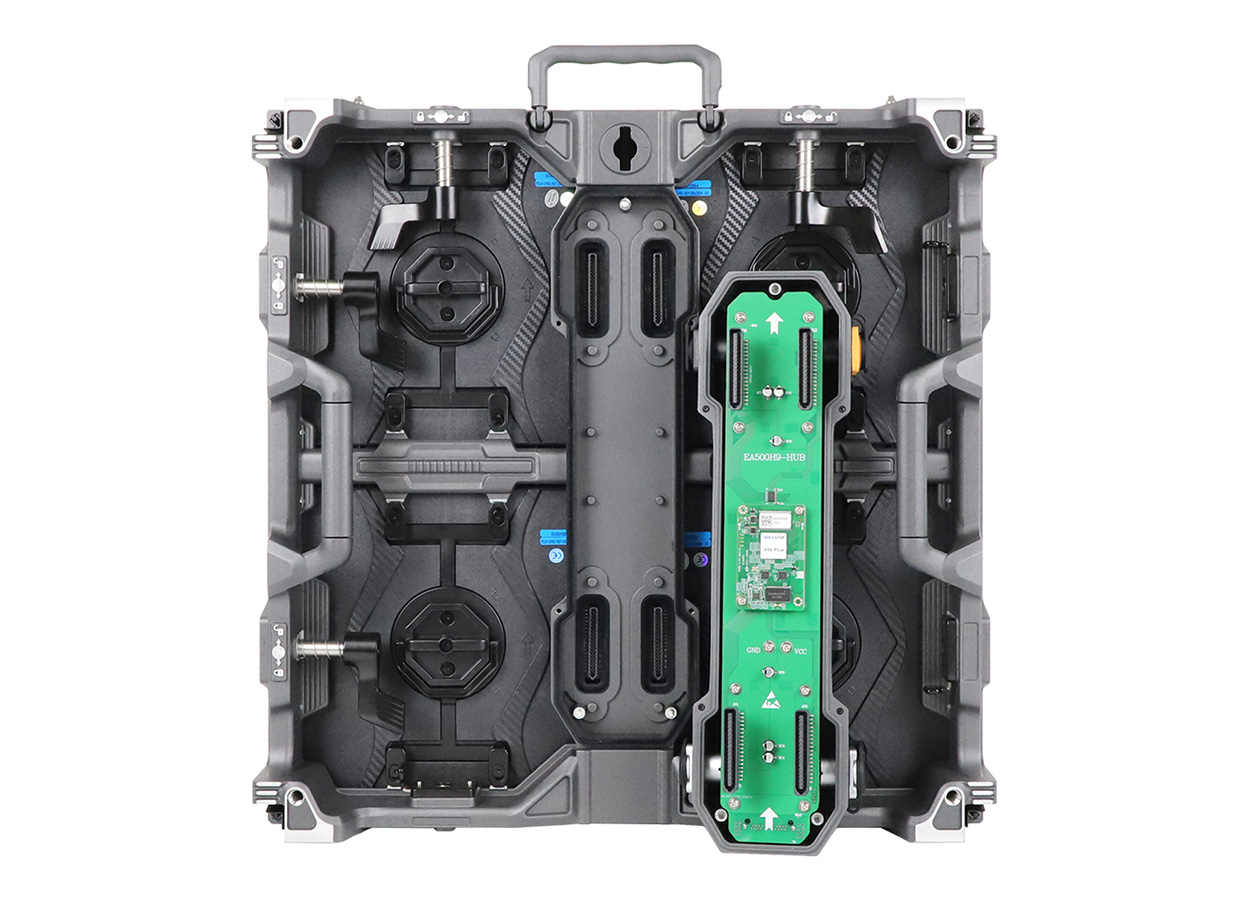
The spare-parts inventory guide provides a framework for compatibility records and usable stock counts. Apply it to the LED screen rental business by linking every dispatch to the support kit that travels with that particular screen, including tools and documented recovery files.
02. Include the return journey
Ask how cabinets, modules, and accessories are protected in their actual cases. Check vehicle space, loading arrangements, access constraints, and who inspects returned equipment. A cabinet that comes back in its case is not necessarily ready for the next dispatch. Separate returned stock awaiting inspection from tested stock available for booking.
Allow time for cleaning and approved maintenance according to the product instructions and observed conditions. Record damage, missing accessories, and intermittent faults against the relevant asset. An LED screen rental business needs this feedback to estimate downtime and repair spending from evidence rather than a generic allowance repeated every year.
6. Stage the purchase decision
Before a bulk order, demonstrate the intended package with representative content and the proposed processing. Confirm flat and any required creative layouts, image consistency, service access, and repeatable configuration recovery. Use the sample to resolve specification questions, not to declare every future event suitable for the same equipment.
Agree what the supplier must deliver before acceptance: equipment identification, packing list, manuals, configuration files, spare compatibility information, inspection results, and training scope. Define how discrepancies will be recorded and resolved. Keep the acceptance criteria specific enough that another employee could perform the check if the original buyer is unavailable.
Purchase a fleet size supported by the service packages and schedule you have tested. Set a later review point for expansion using actual bookings, contribution, downtime, and lost-work reasons. The LED screen rental business should expand because a documented constraint limits deliverable work, not because a larger stock count looks impressive in a catalog.
Frequently asked questions
Should a new rental company buy the smallest pixel pitch available?
Choose from actual viewing distances, content detail, camera requirements, and the work you can sell. Finer pitch can add capabilities, but it can also change acquisition cost, handling needs, and repair exposure. Compare samples with representative customer material before making it the fleet standard.
Can standby cabinets be rented out between major events?
Possibly, if their return, inspection, and availability leave the agreed reserve intact for every confirmed job. Treat that as an explicit scheduling decision. Do not count the same cabinet as both paid capacity and immediately available backup for another event.
How should canceled events enter the forecast?
Use the actual contract and collection experience. Separate any retained cancellation payment from avoided or already incurred delivery costs. A canceled event may free equipment but still consume preparation time; reflect that distinction in both the schedule and job contribution.
Does owning panels eliminate dependence on other suppliers?
No. You may still need local support systems, additional processing, transport, specialists, or compatible extra stock. Identify those dependencies and obtain terms for them. Ownership is useful when it improves the complete service you can deliver, not merely the equipment list.
What should be checked before buying used cabinets for the first fleet?
Verify identity, condition, service history, configuration files, image consistency, and access to compatible replacement parts. Compare the complete ready-to-work cost, including testing and repairs, with alternatives. A low cabinet price can be misleading when essential accessories or records are missing.
Request a fleet proposal built around real bookings
Prepare the standard wall layouts, event environments, content examples, simultaneous-job requirement, transport constraints, and support plan. Add the initial spare list and the evidence you need from a sample demonstration. These inputs let suppliers price a complete fleet while keeping optional expansion separate.
Request an EagerLED rental fleet proposal with those requirements. Ask for cabinet and control configurations, compatible spares, cases, training, and delivery scope. Use the resulting quotation in your own operating model before deciding how much inventory to own.