

Large-format displays command attention. They illuminate concerts, orient people in airports, and increase participation in church services. These are not just ordinary TVs. They are LED video wall configurations.
An LED video wall is made of multiple small LED video wall panels. These combined create one large display without gaps. The common term for this unit is video wall LED system. The video wall has become the modern standard for digital displays.
You are beginning to see them in retail stores, community events, stadiums, and corporate offices. Churches now utilize video walls to carry worship and messages. They work in indoor and outdoor use and come in different physical sizes of display.
But here is a question you most likely don’t know: How do you know how many LEDs are in your wall, and why does it matter? That is what this guide will help you with.
1.What is Display Contrast Ratio?
2.How to Test Contrast Ratio?
3.Why Does Contrast Ratio Matter in an LED Display?
4.Static Contrast Ratio vs Dynamic Contrast Ratio
5.Contrast Ratio of LED, LCD, OLED, QLED Displays
6.1000:1 vs 3000:1 vs 5000:1 LED Screen Contrast Ratio
7.What Factors Influence Screen Contrast Ratio?
8.How to Improve LED Display Contrast Ratio?
9.How to Choose the Best Contrast Ratio?
10.FAQs
11.Summary
1. What Is an LED Video Wall?
A LED video wall is a large screen comprised of small LED panels. Each panel has thousands of tiny lights, called diodes, which create the image seen on the wall.
This is not the same as a TV or a projector. A video wall has no thick edges or bezels, which means there is one continuous picture without breaks.
There are two basic types. A regular wall most often uses LCD screens or projection, while a direct-view LED video wall displays are viewed directly from the LED, making it brighter, sharper, and allowing for daylight usage in large spaces.
Since LED diplay panels can be built to any size, you can create a small wall for the lobby of a local business or a massive wall in a stadium. The panels lock together like blocks, allowing you to configure the shape to fit and flow with your space.
2. What Are the Benefits of LED Video Walls?
LED video walls are very popular. They eliminate many of the challenges that early screens were faced with. They are brighter, more durable, and easier to use compared to projections or LCD displays. The following are the advantages.
2.1 Large-Scale Viewing
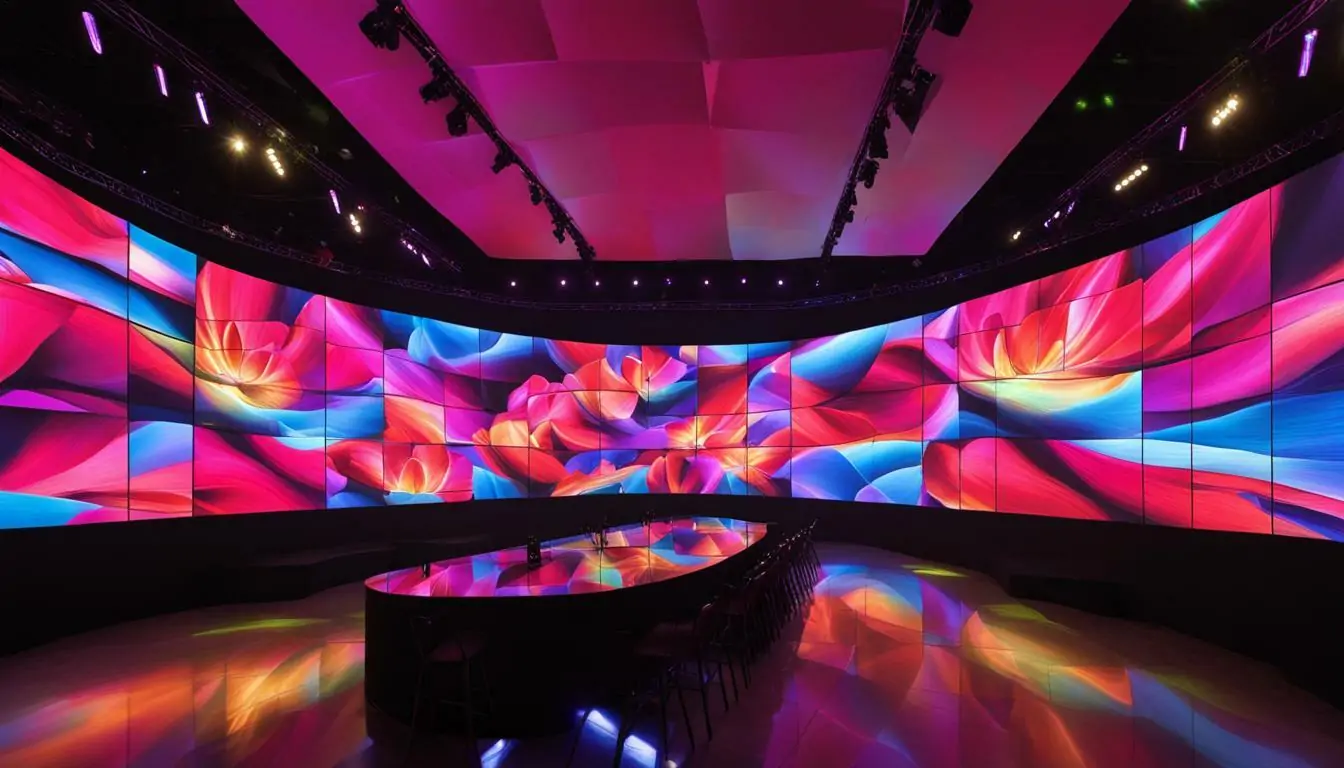
Unlike normal TVs, which have thick borders around each panel, an LED video wall has no thick borders. When you connect the LED video wall panels, they create a tight lock. You can then see one continuous image without borders. This makes it easy for everyone to watch a movie, an advertisement, or a live program from any seat. Even in very large venues, everyone can see a clear picture at the same time.
2.2 High Brightness and Contrast
In bright rooms, projectors may appear washed out, and LCDs struggle outside. An LED video wall can be sharp in direct sunlight. This video wall has a high contrast, making dark areas really dark and light areas really bright. That’s why stadiums, churches, and retail stores trust the LED display wall formats for visual clarity.
2.3 Long Lifespan
LEDs are designed for endurance. An LED Wall display that is well-made can stay operational for 60,000 to 100,000 hours. That is several years of daily operation. Businesses, churches, schools, and event spaces can rely on LED technology to avoid the need for frequent replacements.
2.4 Flexible Sizes and Shapes
With modular panels, you can build almost any shape or size. From small lobby displays to huge stadium walls, the design can scale to your needs. You can also create curved or creative layouts that catch more attention than flat screens.
2.5 Better Viewing Angles
A projector often looks dim if you sit off to the side. An LED video wall has wide viewing angles. This means the picture stays bright and clear whether you stand in the front, back, or at the side of the room.
2.6 Strong Return on Investment
While the upfront expense of purchasing your first LED wall can be expensive, the numerous advantages provided by the display quickly add up. Lower energy consumption, lengthy lifespan, and fewer upkeep will save on costs over the life of the video wall as well. This translates to most buyers being able to justify video walls as a smart long-term investment.
3. What Are the Applications and Trends for LED Video Walls?
The use of LED walls is growing fast. By 2030, the global market will be worth many billions. More industries are turning to these screens because they are bright, flexible, and built to last.
3.1 Retail and Corporate Spaces
Supported by ads, sales, promos, or product displays, many retailers are using these video walls to capture customer attention. They are brighter and more dynamic than posters or LCD media, ensuring to engage anyone walking by.
Businesses are using them in offices or lobby areas for branding or welcoming messages, and live data displays like stock market updates, daily schedules, etc.
3.2 Events and Entertainment
Concerts, sporting events, and festivals utilize large screens to better connect the audience with what is transpiring on stage. Portable video walls can be installed and taken down quickly for a one-time performance, while permanent walls stay in place in arenas or theaters. Many event planners even utilize large screens for a trade show or product launch to create that memorable moment.
3.4 Churches and Houses of Worship
A video wall in the church community will help pastors and worship leaders to share sermons, lyrics, and videos with a large gathering. It allows people in the back to see everything clearly. So many churches are starting to replace their old projectors with LED walls because they are brighter, last longer, and are more maintenance free.
3.4 Essential for Professional Applications
A high display contrast ratio for professional LED displays is crucial in industries such as film production, digital signage and gaming. This allows professionals to judge the content accurately, and produces more precise and engaging images.
3.5 Control Rooms and Museums
Control rooms, like those used by police and other organizations dealing with public safety, use video walls to display multiple video feeds at the same time. They need these screens to work continuously without fail. Museums use them for interactive exhibits, digital artwork, and as a method to tell stories on a grand scale to provide visitors with an immersive experience.
3.6 Education and Universities
Schools and universities are installing LED walls in classrooms, sports facilities, or auditoriums. There are teachers who will display their lessons on them, as schools will use them for assemblies, graduations, and events on campus.
3.7 Transportation Hubs
Airports, train stations, and bus terminals use video walls to share schedules, maps, and announcements. A curved led video wall can fit into wide spaces, while large flat walls guide travelers with real-time updates.
4. What Types of LED Video Walls Are Available?
Not all LED video walls are the same. The right type depends on where and how you use it. Here are the main options:
4.1 Indoor LED Display Wall
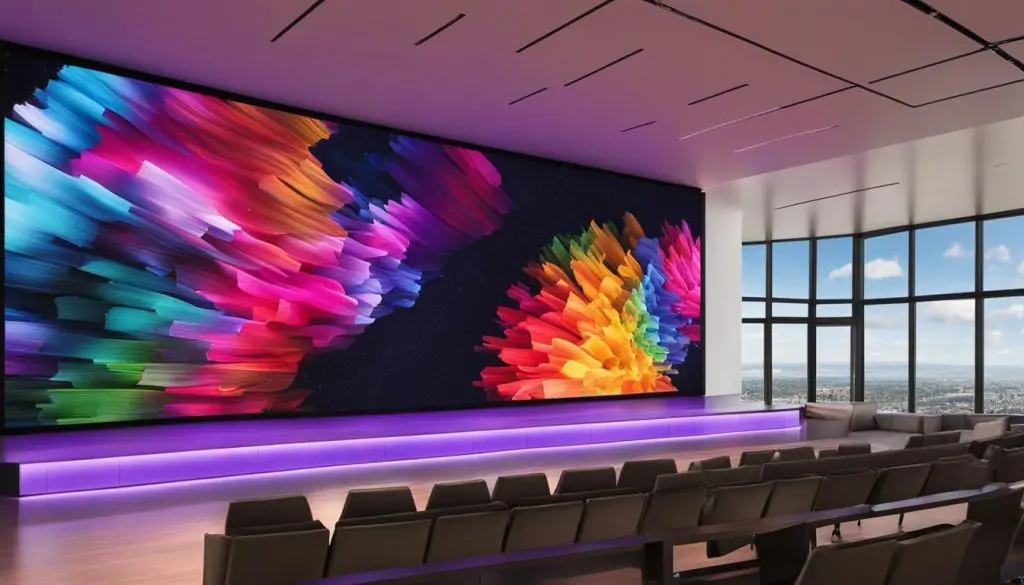
An indoor led wall is made for offices, malls, churches, and museums. It has a smaller pixel pitch, which means more detail for close viewing. The brightness is lower than that of outdoor walls because it does not need to fight sunlight.
4.2 Outdoor LED Display Wall
This type is built to handle sunlight, rain, and wind. It is very bright and strong, so people can see it from far away. You will find them in stadiums, billboards, and outdoor events.
4.3 Direct View LED Video Wall
A direct-view LED wall shows the image straight from the LEDs without another layer in front. This makes it sharper and brighter than LCD or projection setups. It is now the standard for both large indoor and outdoor displays
4.4 Flexible and Curved LED Video Display
A flexible video wall can bend and fit into creative designs. A curved led wall wraps around spaces like stages or exhibits. Both give a more immersive experience and open new design options.
4.5 Portable LED Video Wall
It is built to move. Event organizers use them for trade shows, concerts, and festivals. They are fast to set up and take down, which saves time and labor.
4.6 Transparent LED Display Wall
A transparent video wall works like a screen you can see through. It looks like glass but still shows video or images. Many shops use them on windows so people can see both the display and what’s inside the store.
4.7 3D LED Display
Some modern LED walls use 3D technology without glasses. These are popular in advertising because the image looks like it pops out of the screen. They are often used in city centers to catch attention.
5. How Do I Know How Many LEDs Are in My Video Wall?
Every LED video wall is built from thousands or even millions of tiny LED lights. The number depends on the screen’s size and pixel pitch. Knowing this helps you plan cost, brightness, and power use.
5.1 Understanding Pixel Pitch
Pixel pitch tells you how close the LEDs are to each other. It is measured in millimeters. A smaller number means the LEDs sit closer together. That gives you more detail.
- P1 = 1 mm gap (very high detail, short viewing distance).
- P2 LED wall = 2 mm gap.
- P3 LED wall = 3 mm gap.
- P4 = 4 mm gap.
- P5 LED wall = 5 mm gap (good for long-distance viewing).
Smaller pitch = more LEDs in the same space.
5.2 Formula for LED Count
You can use a simple video wall calculator formula:
(Width ÷ Pitch) × (Height ÷ Pitch) = Total LEDs
- Example 1: Wall size = 3m × 2m, Pitch = P3
→ (3000 ÷ 3) × (2000 ÷ 3) = about 666,000 LEDs - Example 2: Wall size = 5m × 3m, Pitch = P2
→ (5000 ÷ 2) × (3000 ÷ 2) = about 3.7 million LEDs
This shows how pitch changes the LED count quickly.
5.3 LED Count vs. Viewing Distance
The more LEDs in your wall, the sharper the image. But you don’t always need maximum detail. Match the pitch to how far away your audience will be:
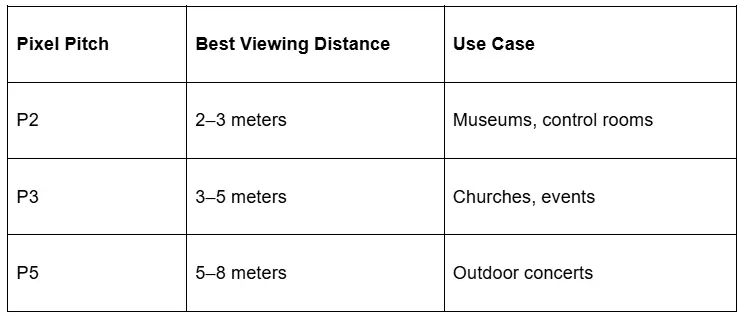
Doing so can help avoid over-specifying features that the audience does not see.
A wall with more LEDs is going to use more power. This means bright and brilliant, but it also means higher bills. It is important to consider all aspects of the environment and what specifications you want when selecting LED wall panels. Take care to balance your specifications with the outlay of running the screen daily.
6. How Much Does an LED Video Wall Cost?
The price of an LED video wall is related to the size, type, and application usage or purpose. The cost to purchase a video wall can range from $10,000 to $100,000 or more.
Smaller indoor setups and common styles are on the cheaper end, while larger, outdoor walls with high brightness go far above $100,000.
This wide range means understanding the price for planners is important, while factoring in size for determining how much an LED display will cost you, relative to your needs.
If you don’t need a screen to use every day, an LED display rental may be your best option. Rentals usually cost or rent out for about 10% of the purchase price per day.
For example, A wall that costs $30,000 may rent for about $3,000 for a single day. Sometimes, regions refer to the cost to rent, as the “LED display wall hire”, but it essentially means the same concept of renting or borrowing the wall for a short term period.
Below are a few factors that affect the LED display wall price:
Pixel Pitch: A smaller pixel pitch = (more) LEDs = (higher) price.
Size: The larger the wall, the more LED panels that are required, which increases the price.
Indoor/outdoor: Outdoor models will always cost more compared to indoor models because outdoor models require better brightness and weather-proofing.
LED Count (number): More LEDs mean more draw of power and a higher price.
The calculator simply may ask you to choose a wall size, small, medium, large, and type of pixel pitch, then it will provide some LED count and probably some general numbers for a budget.
7. How to Install and Maintain LED Display Walls?
Setting up and caring for an LED wall is simple if you plan well. A good LED wall installation also makes the system last longer.
7.1 Fast Setup with All-in-One Systems
Some walls come as all-in-one LED display wall systems. These are pre-built units with panels, power, and controls already connected. You can set them up quickly, often in just a few hours. They work well for schools, small churches, or corporate spaces.
7.2 Modular Panels for Easy Replacement
Most walls use video wall panels that connect like blocks. If one panel fails, you can replace it without touching the whole wall. Many panels are “hot-swappable,” meaning you can swap them while the rest of the wall is still running.
7.3 Cleaning and Maintenance
A wall will last longer with simple care:
- Dust the panels gently to keep colors bright.
- Check cables and power connections often.
- Make sure airflow is clear so the system does not overheat.
8. How Do I Choose the Right LED Video Wall?
The selection of the appropriate LED wall will depend upon the intended environment, duration of use, and proximity of the audience to the screen.
For screens that will be used in a lobby, museum, or church, you will want to purchase an indoor LED video wall. Indoor displays are closer to “high definition”; they are very detailed, but do not have the same level of brightness as outdoor displays.
For displays that will be used in a stadium, billboard, or music festival, you will want to purchase an outdoor LED display wall. Outdoor displays are brighter and made to withstand sun, rain, and wind.
A permanent wall makes sense for churches, office buildings, and stadiums that are using the wall on a daily basis. For example, if attending a trade show, renting a wall is cheaper than purchasing one. Set up and enjoy the power of a portable wall, and return it.
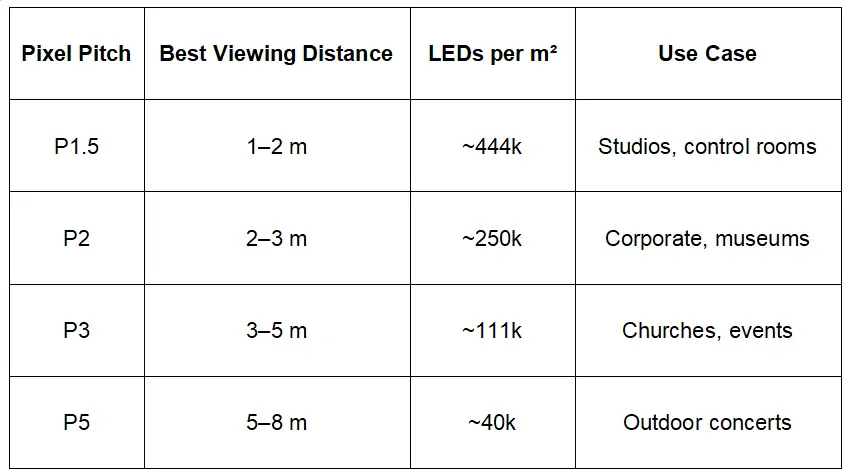
Pixel pitch is a factor when choosing which panels to purchase for your display, as this determines how the image will look from different distances. Use this chart for your guidance when selecting preferred panels.
9. FAQs
1. How many LEDs are in a 165” video wall?
A 165-inch LED wall usually has more than 1 million LEDs, depending on the pixel pitch. Smaller pitch = more LEDs packed in the same space.
2. Does having more LEDs always mean better quality?
Yes, more LEDs mean higher detail. But if people watch from far away, they won’t notice the extra sharpness. The right pitch for your viewing distance matters more than just the LED count.
3. What is the difference between a flexible and a curved video wall?
A flexible video wall can bend into different shapes and layouts. A curved LED wall has a fixed curve. Flexible panels give you more freedom to design and reuse, while curved walls add immersion in one set shape.
4. How much does it cost to rent an LED wall for events?
The LED wall for event rental price is usually about 10% of the purchase price per day. For example, a $40,000 wall may cost about $4,000 per day. Some companies also offer led video wall hire for longer packages.
5. Are LED video walls a good choice for churches?
Yes. A church led video wall makes lyrics, sermons, and videos clear for large groups. They are brighter and longer-lasting than projectors, making them a strong choice for worship spaces.
11. Conclusion & Future Outlook
A modern way to display content at scale is with a led video wall. LED video wall panels are used to create walls for events, churches, retail, and corporate branding. LED video walls are bright, seamless, and flexible and can last for many years with simple maintenance.
The future brings with it new trends. MicroLED has the potential for even greater detail. Transparent LED walls may be able to turn windows into displays. AI content scheduling may reduce the amount of human work needed to run walls smarter.
If your goal is to plan your own system, start simple: size, pixel pitch, and budget. Then, adapt it to your space and audience.
Use our LED video wall calculator to plan your perfect design today.