

Outdoor LED signs are modular, direct-view displays built to show messages in daylight and withstand the conditions at a specific site. A useful buying decision starts with the audience: how close people stand, how long they can read, where sunlight falls, and who will service the display. This guide explains how to select an outdoor LED display screen, plan installation, compare quotations, and operate it responsibly. It covers storefronts, roadside advertising, venues, and public information systems without treating one specification as right for every project.
Quick answer: For outdoor LED signs, choose pixel pitch from the nearest realistic viewing distance and the smallest text you need to show. Confirm measured brightness at the operating setting, front and rear ingress-protection ratings, structural and electrical design, service access, and the complete installed cost. Ask for a drawing and a site-specific specification before ordering.
For business buyers: A storefront message board, a large outdoor LED sign, and a roadside billboard serve different viewing distances and require different mounting plans. Start with the sign location, screen size, audience distance, and the message viewers must read. Then request a quotation for the complete system, including the structure, power, control equipment, commissioning, and service access. Send EagerLED your site details for a project-specific recommendation.
1. What are outdoor LED signs?
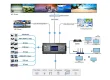
Outdoor LED signs use arrays of red, green, and blue light-emitting diodes to make full-color images directly at the screen surface. Cabinets hold the LED modules, power supplies, receiving cards, and wiring. A controller sends content to the cabinets; a media player or content management system can schedule messages and monitor playback. Unlike a backlit LCD enclosure, a direct-view outdoor LED display screen can be built from multiple cabinets into a custom-sized surface.
“Outdoor” describes an engineered system, not simply a bright panel. The face, rear, seams, connectors, ventilation path, mount, and power distribution must suit exposure to water, dust, heat, wind, and corrosion. An IP rating on the front does not automatically describe the rear or the finished installation. The right outdoor LED signs also match local light and sign rules, viewing geometry, maintenance access, and a content plan.
Project example: EagerLED EA320F P6.67 outdoor advertising display in Bahrain.
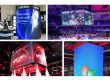
Typical uses include storefront promotions, transport information, stadium announcements, outdoor advertising, and temporary events. A permanent roadside billboard and a rental wall may both use LED technology, but they require different cabinets, access plans, and engineering. Start by describing the job before comparing pixel pitch or price.

2. Types of outdoor LED signs and where they fit
The word “sign” covers several installation patterns. The table below helps match outdoor LED signs to the environment. It is a starting point; final suitability depends on the cabinet specification and a site survey.
| Type | Typical use | Main design question |
|---|---|---|
| Fixed wall or pole display | Retail exterior, plaza, roadside advertising | Can the structure carry dead load and calculated wind load? |
| Rental or mobile display | Outdoor events and touring campaigns | How quickly can crews assemble, secure, and service it? |
| Double-sided display | Approaches with traffic in two directions | Are both faces readable and safely supported? |
| Curved or corner display | Architectural façades and 3D creative | Does the content work from the intended viewing angles? |
| Transparent display | Selected glass-front applications | Is the product explicitly rated for its outdoor exposure? |
01. Fixed outdoor LED displays
Fixed outdoor LED signs are designed for long-term operation on a wall, column, roof, or purpose-built structure. Select front service when rear access is limited; choose rear service only when a safe working space remains after installation. Cabinet dimensions affect seams, structural framing, and replacement logistics. If a sign faces a road, a short readable message usually matters more than fine image detail.
For a large outdoor LED sign, viewing distance alone is not enough to choose a pitch. Measure the approach angle and the available reading time, then test the smallest planned headline at the proposed pixel resolution. A business sign that shows changing offers may need a different content schedule and brightness limit from a venue display or a roadside billboard.
02. Rental, mobile, and creative displays
Rental outdoor LED signs prioritize repeatable assembly, protective handling, locking hardware, and fast module swaps. A trailer or mobile display also needs transport restraints, leveling, and a site-specific wind plan. Curved outdoor LED signage can create a striking corner effect, but “3D” is a content and viewing-position technique rather than a separate pixel technology. Check the view from actual pedestrian routes before commissioning creative content.
Transparent and flexible products require special scrutiny. A transparent LED product installed behind glass may be an indoor-rated screen, even if pedestrians see it from outdoors. Flexible modules vary in bend radius and weather sealing. Request the installation drawing and ratings for the exact product rather than assuming all outdoor LED signs share the same protection.

3. How to specify an outdoor LED display screen
For outdoor LED signs, compare specifications at the same stated test conditions. A catalog maximum is not necessarily the brightness used all day, and a module-level rating may not describe a complete cabinet. Ask suppliers to identify test methods, the service side, and which parts are included.
01. Pixel pitch, viewing distance, and resolution
Pixel pitch is the center-to-center spacing between adjacent pixels, in millimeters. A smaller pitch creates more pixels per square meter, allowing smaller text or closer viewing, but it normally increases hardware cost and data demand. A common early estimate is roughly one meter of minimum viewing distance per millimeter of pitch. It is only a screening rule: text size, eyesight, contrast, content, and display dimensions can change the outcome. Test a sample with the real message at the closest expected viewing point.

| Example pitch | Approximate pixels per m² | Possible starting application | Verify on site |
|---|---|---|---|
| P3–P4 | About 111,000–62,500 | Close-view pedestrian information | Smallest required text and viewing angle |
| P5–P6 | About 40,000–27,800 | Storefront and plaza viewing | Nearest viewer and planned screen size |
| P8 | 15,625 | Larger exterior signs | Message legibility from the approach |
| P10 | 10,000 | Longer-distance, large-format content | Whether details disappear at close range |
These pixel-density values are mathematical examples calculated as (1,000 ÷ pitch in mm)²; actual products may use a nominal pitch that differs slightly. Screen resolution equals physical width divided by pitch by physical height divided by pitch, with dimensions in matching units. For example, a 4 m × 2 m P5 display is about 800 × 400 pixels before cabinet sizing is adjusted. An outdoor LED display screen that is too small for its message remains hard to read even with finer pitch.
02. Brightness, contrast, and dimming
Brightness is expressed in nits, or cd/m². Outdoor LED signs facing direct sun typically need a higher available output than shaded installations, but the correct target depends on sun angle, ambient contrast, local rules, and cabinet design. Verify measured brightness and readability at noon, then check nighttime dimming. An ambient-light sensor and sensible schedule can prevent glare and reduce energy use. Black masks, surface reflection, calibration, and viewing angle also influence legibility; a larger nit number alone does not guarantee a better image.
03. Weather protection and temperature
IP65 means the tested enclosure is dust-tight and protected against water jets. It does not promise immersion resistance, protect a connector left open, or replace proper drainage. For outdoor LED signs, request separate front and rear IP ratings and clarify how joints, cable glands, service doors, and ventilation maintain protection after installation. Salt-air sites may need a corrosion treatment and materials suitable for coastal exposure. Check the operating-temperature range at the expected brightness and local ambient temperature, including solar heating inside an enclosure.
04. Refresh rate, color, control, and power
If cameras will film outdoor LED signs, ask for refresh-rate and scanning specifications and test with the actual cameras. A higher refresh rate can reduce visible scan artifacts, but camera shutter settings and processing still matter. Confirm color calibration, spare-module matching, gray-scale performance at dim settings, and control-system compatibility. Ask for average and maximum power per square meter, power-factor information, circuits, surge protection, grounding requirements, and the redundancy arrangement. The electrician must design for the maximum stated load, not only average playback.
| Specification | What to request | Why it matters |
|---|---|---|
| Viewing and pitch | Nearest and farthest viewer distances; sample text test | Determines usable resolution and message size |
| Brightness | Measured operating brightness and dimming method | Balances daylight readability with night comfort |
| Ingress protection | Front/rear ratings and completed-cabinet details | Identifies exposure limits and service risks |
| Structure | Cabinet weight, fixing drawing, wind-load design | Supports safe mounting at the specific site |
| Power and control | Maximum load, circuit plan, playback and monitoring | Prevents undersized electrical and data systems |
| Maintenance | Access route, spares, warranty, service instructions | Reduces downtime after installation |

4. Size outdoor LED signs for readable content
Before selecting a cabinet, decide what the viewer must understand in the time available. A pedestrian can pause; a passing driver may have only seconds. Put one idea on each screen and make the essential words large enough to read from the intended point. Avoid fine print, rapid animation, and content that relies on sound. Consult the applicable local sign and road-safety requirements before finalizing motion or brightness.
Map the viewing area with distances, approach angles, obstructions, and sun direction. Then create a full-scale content mockup at the intended resolution. Measure whether the logo, call to action, and any required notice stay legible. For outdoor LED signs used as public information, prioritize contrast, simple wording, and a backup message when network content fails. Consider multilingual content only when the dwell time allows it.
A media player can schedule campaigns and emergency notices, but it should not be the only operational control. Define who approves content, who can change it, how access is secured, and what appears during network outages. Keep a local fallback playlist if the project requires continuous information. Monitor cabinet temperatures, power status, and failed modules where the control system supports it.

5. Install and maintain outdoor LED signs safely
01. Survey and engineer the site
Start installation with a survey of the structure, ground or wall substrate, service access, electrical route, drainage, and network path. A qualified structural engineer should check the mounting arrangement and local wind loads. A qualified electrical contractor should size protection, cabling, grounding, and isolation for the maximum demand. The contractor should also confirm permits and local operating restrictions. Outdoor LED signs on roofs, poles, and public-facing façades need particular attention to safe lifting and access.
02. Build, seal, and commission
Verify cabinet alignment, fastening torque, cable strain relief, weather seals, earthing, and ventilation before energizing an outdoor LED display screen. Inspect the display at full white and representative content, at bright and dim settings, and from each important viewing angle. Check color uniformity, dead pixels, playback, scheduled dimming, sensor behavior, network recovery, and emergency isolation. Photograph the finished wiring and cabinet labels for future service.Project example: An EA320F P5.33 outdoor display installed in Dubai.
Commissioning should include a handover record: cabinet and module serial numbers, controller configuration backup, electrical test results, maintenance instructions, spare-part inventory, and a named support route. A quote that ends at cabinet delivery leaves critical installation work unresolved.
03. Plan service before a fault occurs
Choose front or rear service based on the actual access route, not a brochure illustration. Keep compatible spare modules, power supplies, and receiving cards where downtime is expensive. Inspect seals, drainage, fans or heat paths, fasteners, and exposed cables on a schedule suited to the climate. Clean outdoor LED signs using the manufacturer’s procedure and isolate power where required. Avoid pressure washing unless the completed installation is expressly approved for it.
Record brightness settings, power consumption, alarms, and repairs. This history helps distinguish a failing component from a content or controller problem and informs future procurement. If the display is part of a public information system, define an escalation procedure for outages and incorrect messages.

6. What do outdoor LED signs cost?
There is no reliable universal price for outdoor LED signs. Cost depends on display area, pitch, brightness class, cabinet and LED package, protection, structural steel, electrical works, control system, access equipment, freight, tax, permits, and service. A small fine-pitch screen can cost more per square meter than a larger coarse-pitch screen. Published price ranges are often difficult to compare because they omit different parts of the project.
Price planning example: For a proposed 4 m × 2 m sign, the display area is 8 m². Ask every supplier to quote the same 8 m² area and the same pixel pitch, brightness, cabinet access, warranty, and delivery terms. Then compare separate line items for the mounting structure, electrical work, controller, installation, commissioning, and spare parts. This produces a useful project price comparison without mistaking a cabinet-only price for the installed total.
| Cost item | Question for the supplier | Common omission |
|---|---|---|
| Display hardware | Are cabinets, modules, control cards, and spares included? | Spare parts and calibration |
| Structure and installation | Who designs and certifies the mount? | Steel, lifting, and access equipment |
| Electrical and network | Who provides circuits, distribution, surge protection, and data? | Site power upgrades |
| Software and content | Are licenses, training, and initial templates included? | Recurring fees and content production |
| Operation | What are measured average and maximum power loads? | Electricity and scheduled service |
| Warranty and support | What are response times, exclusions, and freight terms? | Labor and replacement shipping |
For a simple energy estimate, multiply average operating power in kW by daily operating hours and the local electricity rate; include dimming schedules and seasonal differences. Request an annual service allowance and a realistic spare-parts plan. Compare quotations on the same scope and warranty terms, then ask for a final bill of materials. The lowest cabinet price may produce a higher installed or operating cost.
When requesting outdoor LED signs, send the supplier screen dimensions, closest and farthest viewing distance, content examples, site photos, mounting surface, exposure, operating hours, access route, and target installation date. Ask for a drawing that states pitch, pixel resolution, front and rear IP ratings, weight, maximum power, maintenance direction, controller, and the assumptions behind the quote. This makes alternatives comparable and surfaces missing engineering early.

7. EagerLED outdoor LED display options
EagerLED offers outdoor LED signs for different mounting and service needs. The EA320F outdoor LED display is an option to review where front and rear service access matters. The EA960F3 outdoor LED billboard is another fixed-installation option, including configurations for creative corners. Compare the current product datasheets and confirm the exact cabinet, pitch, IP rating, and service arrangement in the quotation; configurations can differ.Product demonstration: EA960F3 outdoor fixed LED display configured for a corner 3D advertising installation.
For a wider procurement checklist, see EagerLED’s commercial LED display buyer’s checklist. If supplier capability is a concern, use the LED screen supplier factory checks. These related guides help turn a visual concept into a verifiable specification. For creative content, the 3D LED screen explanation covers the viewing conditions behind the effect.

8. Frequently asked questions about outdoor LED signs
01. What pixel pitch should I choose for outdoor LED signs?
Start with the nearest viewing distance and smallest required text, then test a real sample. P3–P4 may suit closer pedestrian viewing; P8–P10 may be appropriate for larger signs seen farther away. These are examples, not universal rules.
02. Are outdoor LED signs waterproof?
An IP rating describes tested protection for a specified enclosure. Confirm separate front and rear ratings, connector sealing, drainage, and installation details. IP65 does not mean the display may be submerged or that an unfinished installation is weatherproof.
03. How bright should an outdoor LED display screen be?
Specify brightness from the actual sunlight exposure and local restrictions. Ask for operating brightness, contrast, and automatic nighttime dimming. Test readability at the site or under comparable conditions instead of selecting solely from a maximum nit figure.
04. Can outdoor LED signs run continuously?
Many systems are designed for extended operation, but continuous use depends on the rated product, cooling, electrical design, maintenance, and environment. Confirm the operating duty, temperature range, and support plan in the product specification.
05. What affects outdoor LED sign installation cost?
Structural steel, lifting, electrical distribution, network access, permits, and service access can materially change the installed cost. Request an itemized quotation for the complete site, not only the screen cabinets.
06. How often should an outdoor LED sign be maintained?
Follow the manufacturer’s schedule and adjust it for dust, salt air, rain, and operating hours. Inspect seals, drainage, cooling, connectors, and image uniformity; keep a service log and compatible spares.
9. Conclusion: choose outdoor LED signs from the site backward
The best outdoor LED signs communicate a clear message at the real viewing distance, remain readable in local light, and can be serviced safely over their working life. Define content and site conditions first, then compare pitch, brightness, weather protection, structural design, power, and lifetime cost on the same basis. A concise, documented specification makes an outdoor LED display screen easier to quote, install, maintain, and evaluate.
Ready to compare options? Share your intended width and height, nearest viewing distance, installation location, photos, and content examples through the EagerLED contact page. Ask for a written proposal that identifies the exact product configuration, power requirements, weather ratings, service method, and what installation work is included.