



A roadside LED billboard supplier should be qualified against the configuration that will be delivered and the way it will be maintained at your site. Ask for a traceable equipment schedule, model-specific protection evidence, a workable service drawing and a documented acceptance process before approving a production order.
This guide is for outdoor media owners sourcing fixed advertising screens for Southeast Asian locations. It focuses on the evidence behind a purchasing decision, rather than ranking manufacturers or repeating brightness specifications. A factory tour and a product photograph can start the discussion, but neither proves that the quoted assembly fits the finished installation.
In this guide
1. Start a roadside LED billboard supplier file with equipment identity
Request one controlled configuration schedule covering cabinet family, pixel pitch, module revision, receiving electronics, power supplies, connectors and processor. Ask the supplier to identify permitted substitutions and how changes will be approved. A family name alone is too broad for checking spare parts or test evidence.
Use the same schedule throughout the quotation, drawing review, sample approval and shipment checks. Record the date and revision on each document. If a cabinet changes during production, the update should identify affected quantities and explain whether earlier approvals remain applicable.
The EagerLED EA960R5 product page, checked October 21, 2026, provides a useful reference: 960 × 960 mm (37.8 × 37.8 in) magnesium alloy cabinets, concealed cable routing, rear maintenance access and four cooling fans. These are published product features, not a site approval or a verified reliability result.
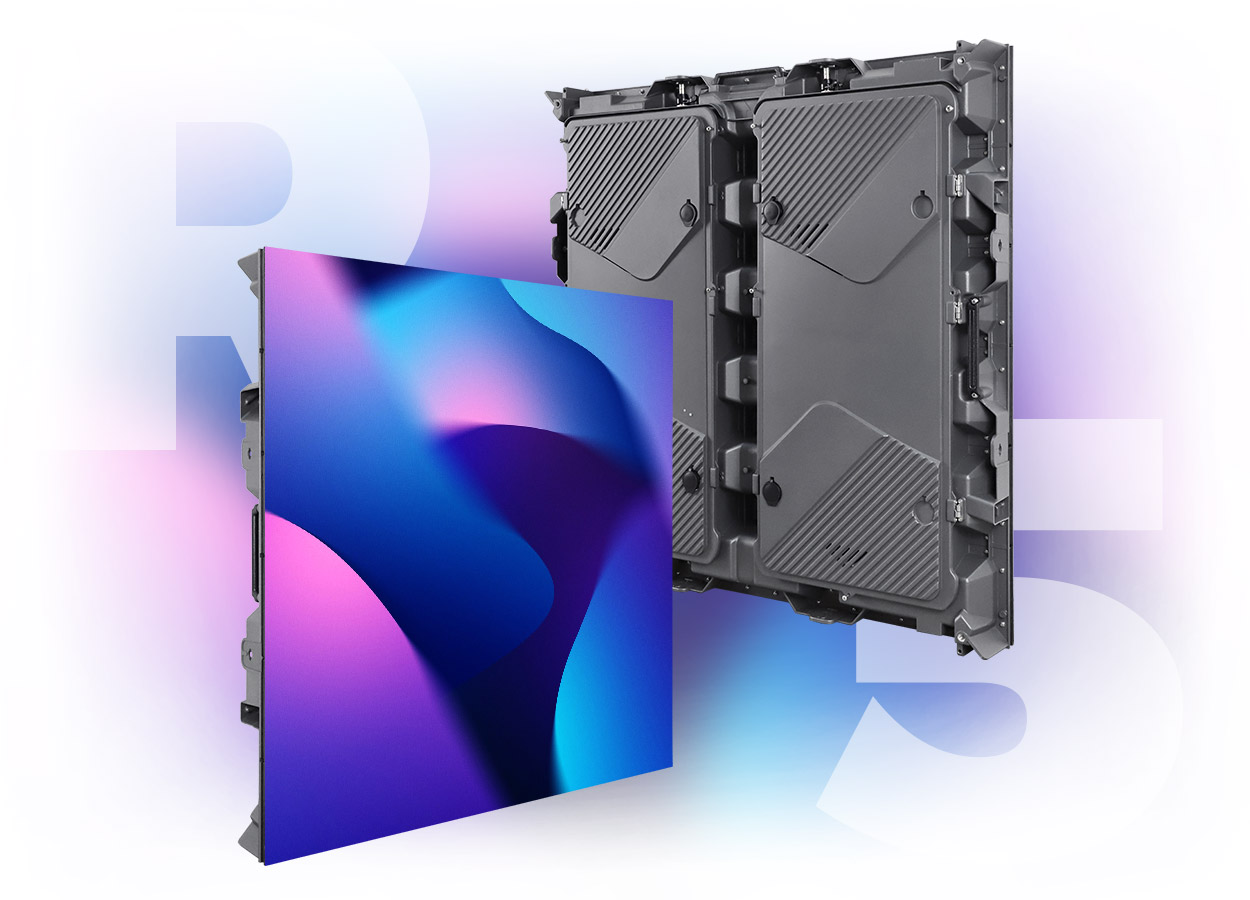
Ask each roadside LED billboard supplier to return the proposed cabinet drawing against your required dimensions. For example, an eight-column, four-row EA960R5 grid is 7.68 × 3.84 m (25.2 × 12.6 ft): 32 cabinets and approximately 29.49 m² (317.4 sq ft). The calculated physical ratio is 2:1, not 16:9. Confirm the actual pixel map and content treatment separately.
2. Separate a protection claim from installation evidence
The current EA960R5 page states IP65 protection. Ask which complete assembly and faces that rating covers, what test document supports the offered revision, and which installation details are required to preserve the protection. Do not silently convert a general IP65 headline into independently verified front-and-rear ratings.
Request the report identifier, tested model, configuration, test date and issuing organization. The buyer’s technical adviser should decide whether that evidence matches the project. A logo in a brochure is not the report, and a report for a different enclosure does not establish coverage for the ordered cabinet.
For a roadside LED billboard supplier, the cabinet boundary is only part of the discussion. Agree who designs and seals cable entries, joins the cabinets, provides drainage, routes external cables and protects the electrical distribution. Record inspection requirements after installation and after service work.
Describe the site’s actual exposure: wind-driven rain, dust, possible salt exposure, nearby heat sources and access restrictions. Do not assume an ingress rating establishes corrosion resistance, wind capacity, flood tolerance or suitable operating temperature. Ask for evidence for those requirements separately where they apply.
| Claim | Record to request | Question that remains |
|---|---|---|
| Cabinet protection | Identified report for the offered assembly and configuration | Does it cover the installed faces, entries and joints? |
| Site compatibility | Approved installation drawing and stated operating limits | Does the actual enclosure and surroundings fit those limits? |
| Regulatory documentation | Applicable product documents identifying model and scope | Has the local responsible party confirmed project requirements? |
| Support | Written responsibilities, exclusions and replacement process | Who performs and pays for local access and labor? |
3. Require a service demonstration that matches the installed space
Rear maintenance requires a safe route to the rear components. For EA960R5, the official photograph below shows the doors open, with fans and internal components visible. Use it to request a dimensioned service drawing; do not estimate the required corridor from the photograph.
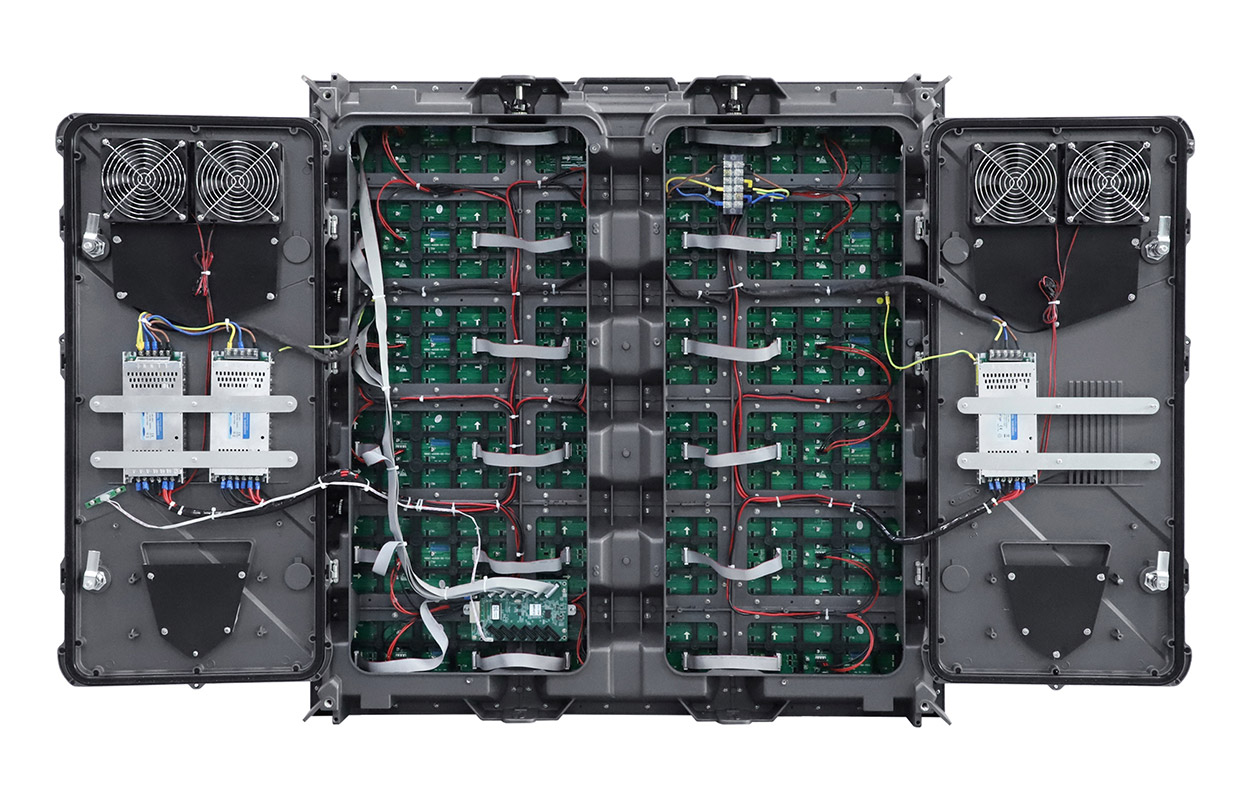
Have your roadside LED billboard supplier demonstrate the replacement path for a module, power supply and receiving card, using the proposed arrangement. Clarify which tasks require isolation, what tools are needed and how seals are inspected afterward. Agree on safe working methods with qualified local personnel.
The practical route includes getting a technician and replacement component to the work position. An elevated screen may need access equipment and a traffic-management arrangement even when the cabinet itself is simple to open. Obtain a local service plan before treating remote technical support as a complete maintenance solution.
If the installation cannot provide rear access, reject that arrangement or request a documented alternative configuration. Do not mount a rear-service cabinet against a wall and assume modules can later be removed from the front. Compare the outdoor advertising display range by the actual service method, not by appearance.
4. Tie acceptance to the ordered batch
Build an acceptance record before production is complete. Identify the sample or batch, intended checks, acceptable results and the person who closes each open item. Test methods and durations should be agreed for the application; an arbitrary workshop running time is not a universal proof of reliability.
Ask the roadside LED billboard supplier to demonstrate the agreed content, brightness settings, calibration, source recovery and maintenance sequence on identified equipment. Keep observations separate from promises. If remote monitoring, scheduled dimming or alerts are proposed, record the specific hardware and software providing those functions.
For buying decisions involving temperature and output, the hot-climate roadside display checklist explains the separate thermal questions. Its EA960F4 example must not be treated as EA960R5 test evidence. Product family, revision and test conditions must match.
| Stage | Retain | Close before |
|---|---|---|
| Drawing approval | Cabinet grid, service route, cable entries and responsibility boundary | Releasing the installation arrangement |
| Batch acceptance | Configuration revision, identified equipment, checks and unresolved items | The agreed acceptance milestone |
| Packing | Cabinet quantities, case identities, spares and document manifest | Shipment approval under the purchase agreement |
| Site handover | Final mapping, settings, local service contacts and maintenance instructions | Accepting the complete installed system |
5. Compare the support boundary as carefully as the price
A roadside LED billboard supplier quote should distinguish supplied equipment from structural engineering, local installation, power works, content management, access equipment and ongoing service. Name the destination and delivery term. Ask the local responsible parties to confirm permits and applicable requirements; do not infer them from another country’s project.
Request warranty terms and exclusions in writing, including the process for identifying faults and obtaining replacement parts. Clarify whether freight, local labor and access costs are included. Do not assume a duration advertised for a company applies to every component or every installation condition.
Match the spares list to the ordered configuration. Similar dimensions or the same nominal pitch do not establish interchangeable modules. Agree how batch identity and calibration information will be retained so the service team can request the correct replacement later.
Frequently asked questions
Is a live factory tour enough to qualify the supplier?
No. A tour can help establish facilities and processes, but the purchasing file still needs the offered configuration, relevant documents, acceptance evidence and support responsibilities. Ask the host to show equipment tied to the proposed order rather than relying on unrelated production footage.
Can I use the billboard as a traffic information sign?
Commercial advertising and traffic information are different applications. Do not assume a general advertising cabinet meets requirements for road-control or safety-critical messaging. Have the responsible local project team define that scope before procurement.
Should an IP65 claim settle a coastal installation?
No. Ask about the specific materials, surface protection, connectors, mounting environment and maintenance requirements. Ingress protection alone does not establish resistance to the site’s corrosion exposure.
What if the packing list names a different revision?
Pause acceptance of the discrepancy and ask the supplier to reconcile it with the approved configuration and supporting evidence. Record whether it is a labeling correction or a material substitution; do not assume the difference is harmless.
Does a high refresh specification prove the final camera result?
No. If filming matters, test representative cameras, shutter settings, content and screen brightness on the offered system. Keep the observed result and configuration in the acceptance record.
Request a traceable roadside proposal
Send the target dimensions, viewing conditions, destination country, site photographs, rear-access drawing and intended operating schedule. Ask your shortlisted roadside LED billboard supplier for a configuration schedule and an itemized scope with open requirements clearly identified. Discuss your roadside billboard requirements with EagerLED.