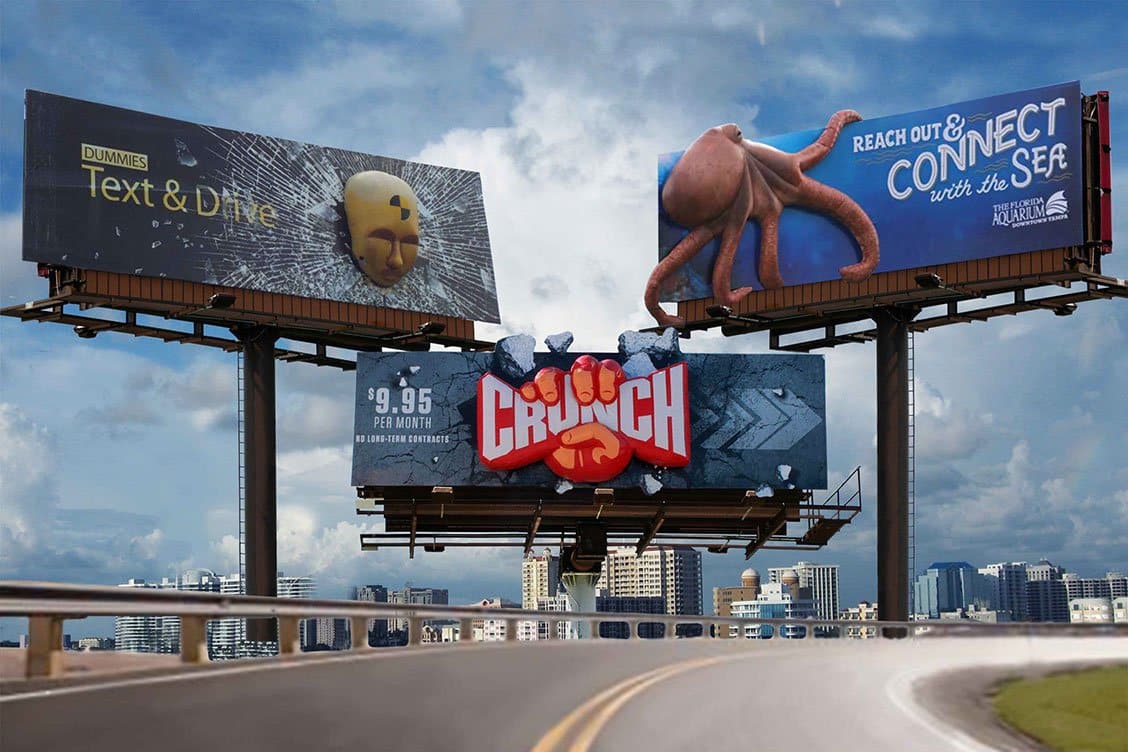
3D billboards in China are large LED displays that use perspective-matched animation to create the illusion of objects extending beyond a screen. The familiar corner-screen effect is usually called anamorphic or naked-eye 3D. People can see it without glasses, although the illusion is strongest from a planned viewing area. The objects remain on the display; they do not physically float above the street.
This guide explains how Chinese 3D billboards work, where to research real installations, and how to compare screen purchases with advertising bookings. It also covers content production, outdoor engineering, and the differences between LED illusions, holograms, AR, and so-called 5D experiences. For a visitor, the priority is the location and current program. For a buyer, it is the complete system and its operating cost.
1. China 3D Billboard: Technology and Principles
01. How do 3D LED billboards work?
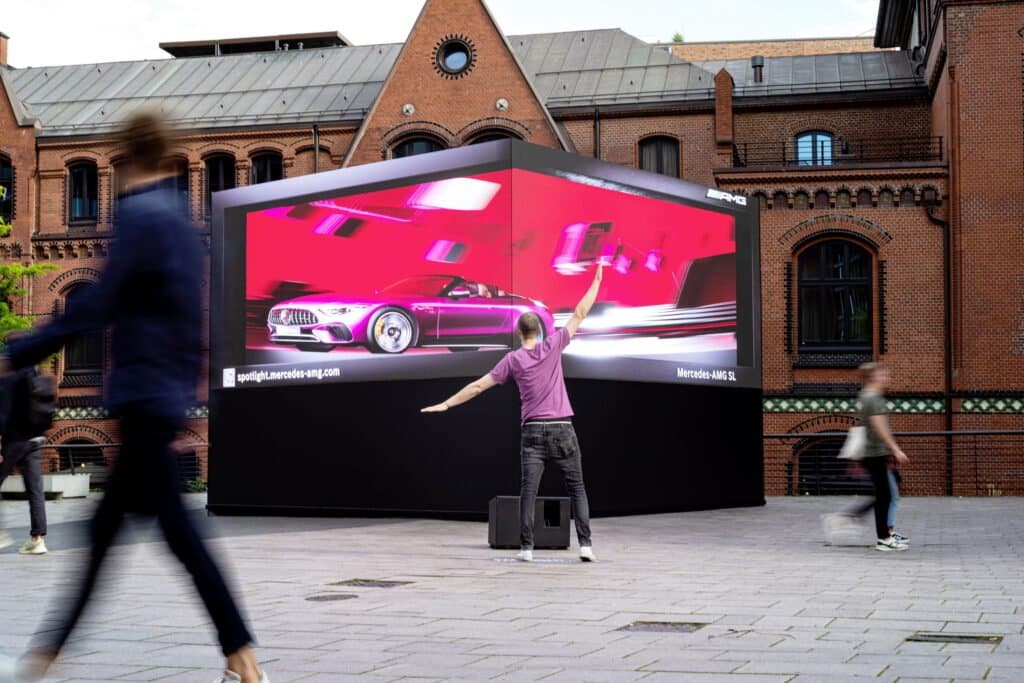
A convincing 3D LED billboard begins with a surveyed screen and a virtual camera. The animation team models the display’s dimensions, corner angle, elevation, and intended audience position. It then renders a scene whose perspective aligns with the physical screen. A simulated box, window, or architectural frame gives viewers a reference plane; an animated object appears to cross that plane.
Shadows, occlusion, relative size, and motion reinforce the depth impression. A curved or right-angle LED surface can strengthen it by extending the image around a building corner. However, installing a corner screen alone does not create a 3D effect. Standard advertisements still look like standard video unless the content has been designed for that geometry.
The viewing area matters as much as the screen. Walk far to either side and the illusion may stretch or flatten. For 3D billboards in China, a busy plaza with a clear pedestrian sightline can therefore be more useful than a larger display facing fast-moving traffic. Ask for a perspective simulation from several real viewing positions before approving fabrication.
02. Is a hologram billboard the same technology?
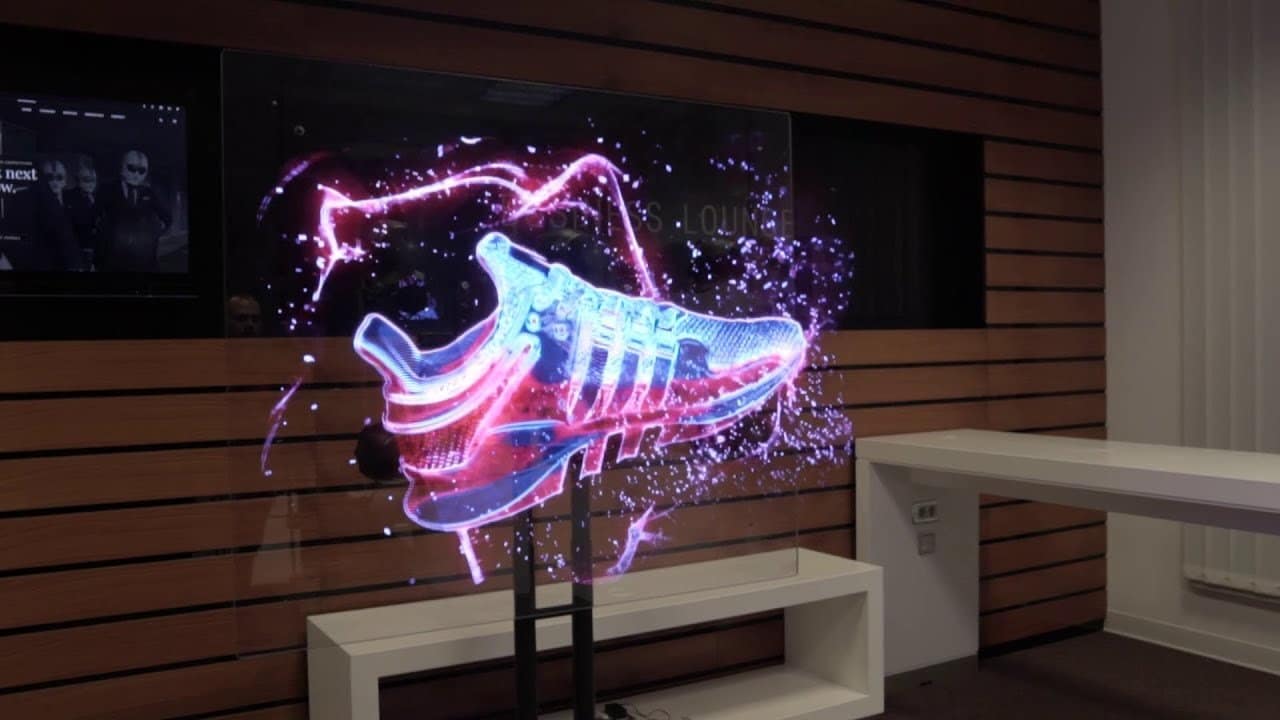
Usually, no. “Hologram billboard” and “holographic billboard” are often informal labels for a striking visual, not a precise description of the hardware. A conventional anamorphic LED billboard emits a two-dimensional video image from its surface. It does not reconstruct a free-standing holographic object, and it does not ordinarily send separate images to each eye.
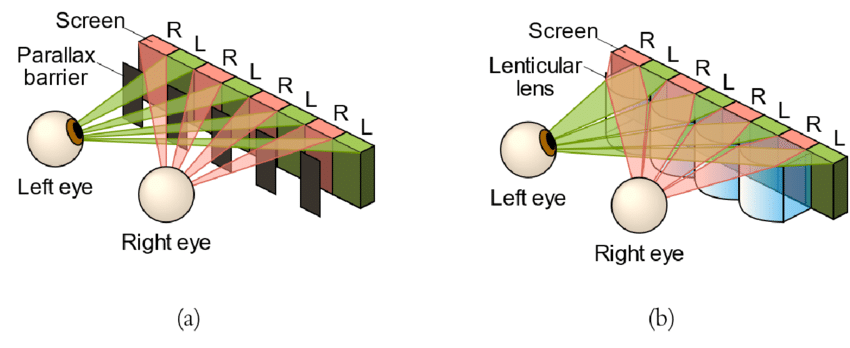
Lenticular lenses and parallax barriers belong to other glasses-free display approaches that direct different views toward different positions. Those methods should not be assumed to explain every giant outdoor screen. Likewise, a transparent display, projection installation, or rotating LED fan needs its own technical description. Ask the supplier to identify the actual display mechanism rather than relying on a marketing name.
03. Which hardware specifications matter?
For outdoor 3D LED billboards, evaluate the complete signal path: media playback, video processing, sending and receiving equipment, power distribution, and LED cabinets. A mismatch between the content canvas and the physical pixel map can distort the scene. Misaligned modules, brightness differences, or unsynchronized screen faces can make the virtual frame visibly break.
| Item | Why it matters | What to request |
|---|---|---|
| Pixel pitch and resolution | Determine detail at the actual viewing distance. | Cabinet layout, total pixel map, and sample content at native resolution. |
| Corner geometry | Controls the perspective illusion and visible seam. | Measured corner radius or angle and a matching content template. |
| Brightness and dimming | Balance daylight readability with comfortable night viewing. | Calibrated brightness settings and an automatic dimming demonstration. |
| Refresh and playback | Affect motion and filming quality. | Test video at the planned frame rate and representative camera settings. |
| Weather protection | Protect modules, connectors, and power equipment. | Model-specific front and rear protection ratings and installation details. |
| Service access | Determines repair time and ongoing operating effort. | Front or rear access drawings, spare parts list, and replacement procedure. |
As an illustrative calculation, a 12 m by 6 m screen at a nominal 6 mm pitch has about 2,000 by 1,000 pixels. Actual dimensions must follow the selected module grid. Calling a display “4K” or “8K” is less useful than confirming its real canvas, viewing distance, and delivered content. A high refresh-rate label also does not guarantee band-free phone recordings under every shutter setting.
2. How Much Does a 3D Billboard Cost in China?
01. Separate buying hardware from renting advertising time
There is no single reliable national price for 3D billboards in China. A hardware quotation, a completed installation budget, and a media booking buy different things. Marketplace prices per square meter may exclude controllers, steelwork, shipping, installation, or animation. A landmark advertising rate may instead cover scheduled plays on a screen that someone else owns.
For a screen purchase, calculate the supplied LED area first, then identify every excluded item. For a campaign, request the exact venue, dates, clip duration, plays per day, operating hours, and share of the advertising loop. A monthly price without those details cannot be meaningfully compared with another offer. Obtain a current written quotation in a stated currency.
| Cost component | Buying a screen | Booking an existing screen |
|---|---|---|
| LED cabinets and control | Specify area, pitch, processors, and spares. | Usually part of the operator’s infrastructure. |
| Structure and installation | Budget engineering, mounting, lifting, and commissioning. | Confirm whether special setup or testing is charged. |
| 3D animation | Commission geometry-specific content and revisions. | Confirm whether production is included or separately priced. |
| Location and media time | Assess site rights and ongoing occupancy costs. | Request dates, play frequency, loop share, and availability. |
| Electricity and maintenance | Budget power, servicing, and replacement parts. | Ask how downtime and missed plays are handled. |
| Delivery and commercial terms | Clarify freight, taxes, currency, and warranty scope. | Clarify taxes, cancellation terms, approvals, and proof of playback. |
For example, two 100 m² 3D LED billboards may have very different project costs if one uses a standard flat cabinet arrangement and the other needs a custom corner, restricted lifting access, or a finer pixel pitch. This is a scope comparison, not a price estimate. Avoid treating any broad internet price range as a binding EagerLED quotation.
02. Estimate operating costs with explicit assumptions
Electricity budgeting should use expected average consumption at the intended brightness and content, while electrical design must account for specified maximum demand. The planning formula is: screen area × average watts per square meter ÷ 1,000 × operating hours = kilowatt-hours. Add other system loads separately.
If an illustrative 100 m² display averages 300 W/m² and runs for 12 hours, the LED display consumes approximately 360 kWh per day. These are example assumptions, not measured consumption for a particular model. Multiply by the site’s tariff and include control equipment, cooling where required, maintenance access, and future content refreshes. Request measured evidence for any energy-saving claim.
For a broader purchasing framework, see the outdoor LED billboard price guide. It complements this article’s focus on the special content and geometry requirements of 3D billboards in China.
3. Iconic 3D Billboards in China: Locations and Verification
Location research should distinguish a documented screen from a current advertising schedule. Famous videos can continue circulating long after a particular animation stops running. Confirm the exact building, map pin, screen face, and current operating information before planning a visit or campaign. Do not assume that every display in a shopping district supports the same content format.
| City and region | Location or reference | What is documented | What to confirm |
|---|---|---|---|
| Chengdu, Sichuan | Taikoo Li / Chunxi Road shopping area | CGTN has documented naked-eye 3D imagery in the Taikoo Li business circle. | Exact screen, current animation schedule, and best pedestrian viewpoint. |
| Chongqing municipality | Guanyinqiao (Guanyin Bridge), Light of Asia | The operator identifies its 3,788 m² corner LED landmark and naked-eye 3D projects. | Bookable surface, available dates, content template, and approved viewing area. |
| Shanghai municipality | TLQ commercial complex | Linsn’s guide describes an L-shaped public-art screen and its creative collaborators. | Current venue naming, operator, programming, and advertising availability. |
01. Chengdu 3D billboard: verify the specific screen
The Chengdu 3D billboard search often points to the Taikoo Li and Chunxi Road retail area. CGTN’s coverage includes a panda on a naked-eye 3D screen in the Taikoo Li business circle. This documents the effect and location context; it is not a promise that the same clip is playing today.
For an on-site visit, use both the English and Chinese place names: Chengdu (成都), Taikoo Li (太古里), and Chunxi Road (春熙路). For a media booking, ask the operator for the screen’s own name and address. Nearby screens can have different dimensions, contracts, and sightlines even when they are promoted under the same shopping-district name.
02. Chongqing and Shanghai: use identifiable references
Chongqing’s Light of Asia is associated with Guanyinqiao (观音桥). Its operator describes a 3,788 m² LED corner screen and its use for naked-eye 3D projects. The area figure describes the installation, not necessarily the usable canvas or inventory included in a particular campaign contract.
For Shanghai, Linsn’s China billboard guide identifies an L-shaped screen at the TLQ commercial complex and describes a public-art collaboration. Treat this as a documented research lead, with present-day operating details to be confirmed. EagerLED is not claiming to have supplied these landmark installations.
Chinese 3D billboards are also widely discussed in connection with Beijing and other major cities. A city name alone is insufficient for purchasing media. Request recent site photographs, an unedited playback sample, and written confirmation from the authorized operator before paying for advertising time.
4. How 3D Billboards Capture Attention and Support Campaigns
01. Design the animation for the place and the audience
Effective 3D billboards connect the visual surprise to a recognizable product or message. Establish the virtual frame, introduce one clear action, and leave enough time for the brand to be understood. An elaborate animation that hides the product until the final instant may entertain without communicating the campaign’s purpose.
Start production with a site pack: cabinet drawings, native resolution, screen mask, corner dimensions, viewing coordinates, safe text zones, clip length, frame rate, and delivery format. Approve a simple perspective test before paying for detailed modeling and simulation. This exposes geometry problems when changes are easier to make.
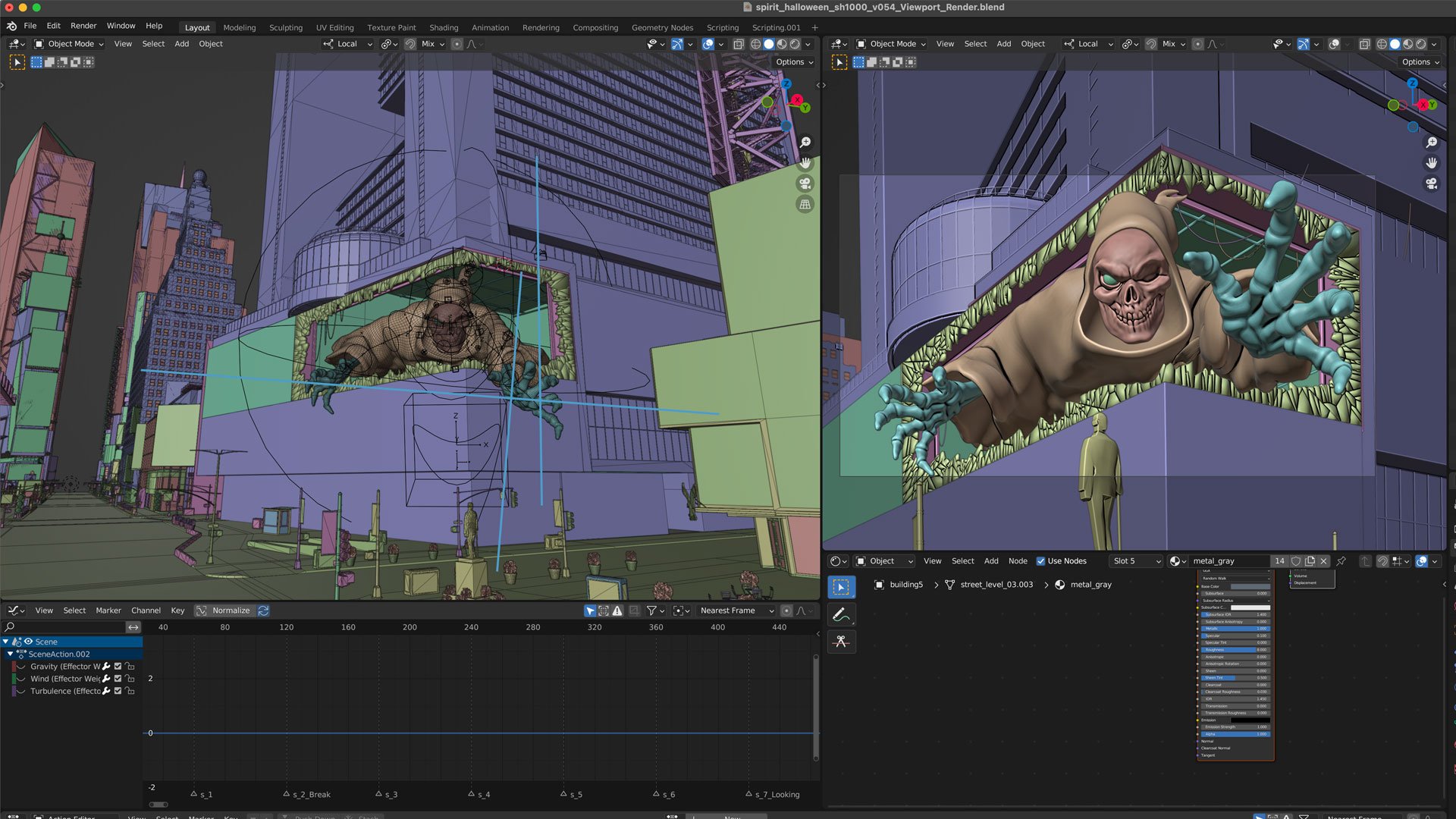
A useful approval sequence is storyboard, rough animation, material and lighting review, final render, and on-screen calibration. Define who pays for revisions if the screen dimensions or content brief change. Keep a clean master and the screen-specific delivery files, with agreed rights for advertising, social edits, and future adaptations.
02. Measure attention separately from business outcomes
For 3D billboards in China, distinguish scheduled plays, estimated audience exposure, social video views, and qualified business responses. These are different measurements. Foot traffic past a shopping district is not the same as verified viewing, and a viral clip does not automatically establish sales uplift.
Ask the operator for playback logs and an explanation of audience estimates. For attribution, use a memorable campaign URL, a location-specific offer, or another trackable response method suitable for the viewing distance. Compare results with a defined baseline and acknowledge other media running at the same time.
Interactive 3D billboards may add participation, but only when the interaction is clear and practical. Review response delay, sensor coverage, queue space, and the fallback loop if the interactive system stops. The core advertisement should still make sense to people who simply walk past.
5. Market Trends and Practical Developments in 3D Billboard Advertising
01. Evaluate capabilities rather than unsupported forecasts
The China 3D display market includes different products: outdoor advertising screens, indoor immersive environments, stereoscopic displays, and other visualization systems. A market forecast for all 3D displays should not be presented as a forecast for outdoor 3D billboards alone. Check the report’s category definitions, base year, and research method before quoting growth figures.
For a current project, more useful questions concern deliverable capabilities: tighter cabinet alignment, consistent calibration, manageable power consumption, remote monitoring, and easier content updates. Each must be verified for the proposed model and installation. A product roadmap or promotional claim is not evidence that a specific feature is included in a quotation.
02. Use AI and real-time content with clear responsibilities
AI tools can assist with concepts and production tasks, while real-time engines can vary scenes in response to approved inputs. Neither automatically produces perspective-correct content for 3D LED billboards. The geometry, pixel mapping, timing, visual consistency, and final output still need technical review.
Define approval ownership for every dynamic element. Keep brand assets, text, and product claims under review, and provide a tested fallback video. If audience interaction requires cameras or other sensors, establish what data is needed and how it will be handled before choosing the technology. Avoid adding complexity that does not improve the viewing experience.
Maintenance planning also deserves attention. Specify spare modules, receiving cards, power supplies, configuration backups, remote access responsibilities, and expected service response. For overseas projects purchasing from China, confirm which organization supplies local installation and after-sales support. The LED screen supplier factory checklist explains practical supplier verification steps.
6. AR, VR, and 3D Billboards in Shopping Experiences
01. AR extends the experience onto a device
Augmented reality can add a phone-based product demonstration or virtual try-on after someone notices a billboard. The AR experience needs its own compatible application or browser flow. The outdoor screen creates awareness; the device provides a separate interactive layer. They should share a clear message and a usable next step.
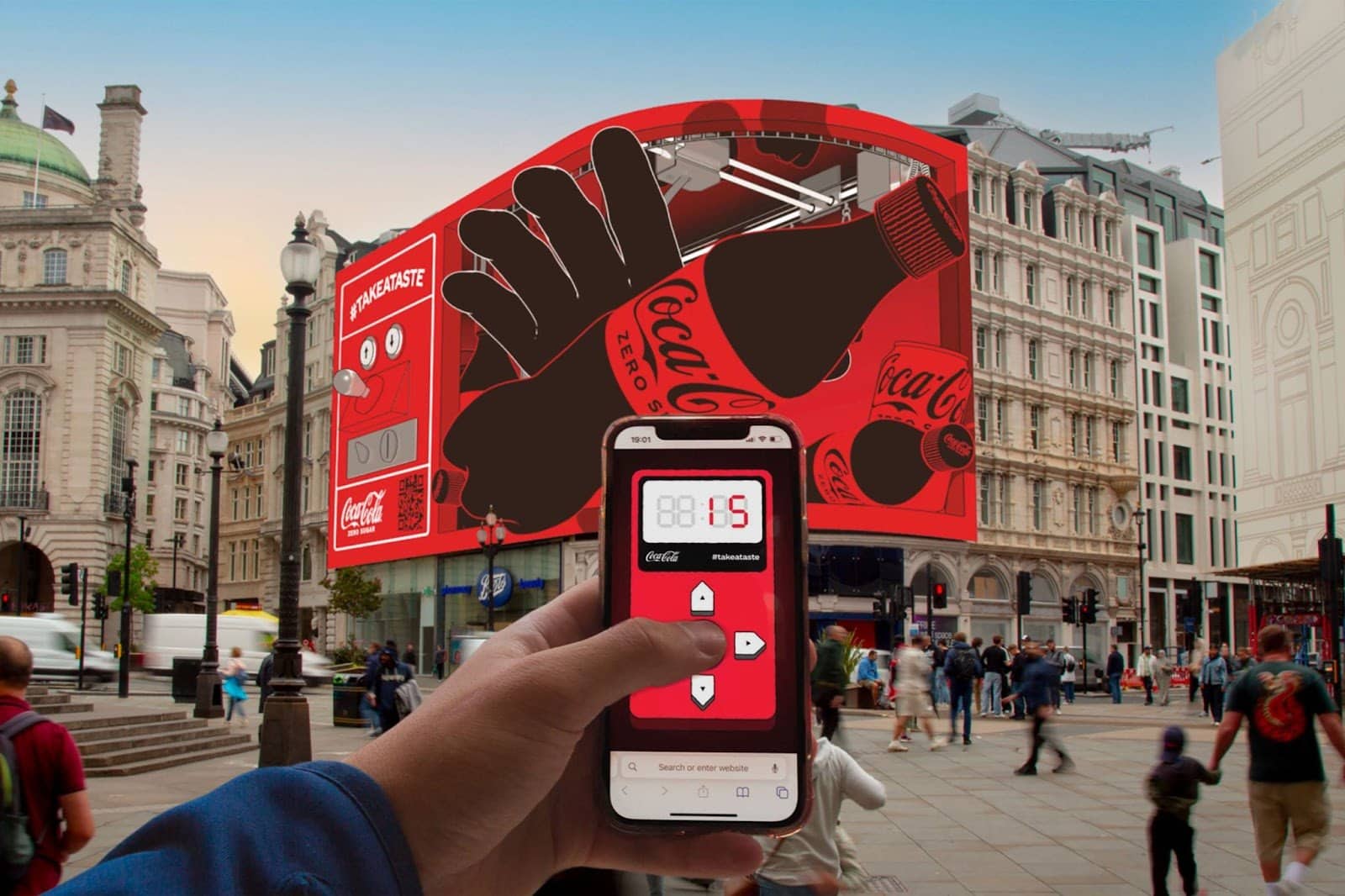
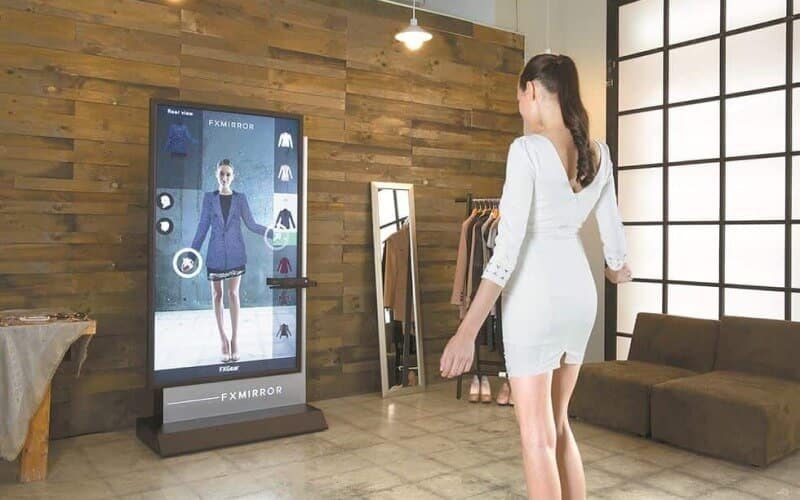
For shopping campaigns using 3D billboards in China, consider the language, audience habits, connection requirements, and distance from the actual store. A readable destination and simple action are more useful than a dense block of instructions. Test the complete journey on the devices and networks your audience is likely to use.
02. VR is a separate immersive environment
Virtual reality typically places the participant inside a simulated environment through a headset. It can support a showroom or product experience, but it is not required to watch an outdoor 3D LED billboard. Presenting AR, VR, and anamorphic video as interchangeable makes it harder for buyers to understand the equipment and staffing they need.

A retail concept can combine these formats, provided each solves a distinct problem. Use the screen for visibility, a device-based experience for exploration, and the store or website for conversion. Evaluate completion rates and usability at each step instead of assuming additional technology always improves the campaign.
7. Comparison Between 3D Billboards and 5D Billboards
“5D billboard” is not a sufficiently precise purchasing specification. Vendors may use it for combinations of visuals, sound, motion, environmental effects, or interaction. Ask what is physically delivered and how each effect is operated. The label alone does not prove a better image or stronger marketing results.
| Question | Anamorphic 3D LED billboard | Experience marketed as 5D |
|---|---|---|
| Main effect | Perspective-based depth on a physical LED screen. | A vendor-defined combination of visual and additional sensory effects. |
| Viewer equipment | Usually no glasses or headset. | Depends on the specific system and participation method. |
| Typical evaluation | Sightlines, geometry, content, brightness, and playback. | All visual checks plus each additional effect and its operating requirements. |
| Best fit | Public-facing visual advertising and landmark displays. | A controlled venue where the extra effects serve a clear purpose. |
| Quotation requirement | Specify screen, control, content, installation, and service. | List every effect, device, staffing need, and recurring cost separately. |
Choose the experience that fits the location and audience. Many outdoor campaigns need a dependable 3D LED billboard and a strong creative idea. Extra effects can be useful in a controlled attraction, but they also add equipment, maintenance, and coordination. Require an on-site demonstration against the actual brief before committing.
8. Frequently Asked Questions About 3D Billboards in China
01. Are 3D billboards in China real or fake?
Real LED installations can produce the effect visible to people standing in the intended viewing area. Some online advertisements are CGI composites, however. Confirm the venue, operator, and unedited footage from different positions. A spectacular social clip alone does not prove that an installation exists.
02. Where can I see a Chengdu 3D billboard?
The Taikoo Li and Chunxi Road retail area is a documented starting point. Confirm the exact screen and current programming before visiting. Famous panda or character animations may be temporary campaigns rather than permanent attractions.
03. How much do 3D billboards in China cost?
The answer depends on whether you are buying hardware, commissioning a complete installation, or renting advertising time. Request an itemized quote covering the relevant scope. Screen area and pitch matter for ownership; location, dates, frequency, and content requirements matter for a media booking.
04. Can an existing LED screen display 3D content?
Potentially, if its geometry, resolution, sightlines, and playback system support the intended illusion. A flat screen can show perspective-based animation, while a corner may strengthen the effect. Survey the existing installation and run a content test before promising an upgrade.
05. Do naked-eye 3D billboards need glasses or holographic projectors?
Typical anamorphic LED billboards need neither. They use rendered perspective on an LED surface. Other glasses-free technologies exist, so ask for the precise mechanism whenever a vendor describes a product as a hologram billboard or holographic billboard.
06. Where can I buy 3D billboard advertising or a screen?
Buy advertising time from the authorized venue operator or media agency. Buy a display system from a manufacturer or integrator, with installation responsibilities agreed separately. EagerLED’s EA3D-VR outdoor 3D LED display is a hardware solution to discuss with its team; it is not a booking for a famous Chinese landmark screen.
9. Conclusion: Plan 3D Billboards in China Around the Site
Successful 3D billboards in China combine accurate screen geometry, suitable LED hardware, purpose-made content, and a clear audience viewpoint. Start by deciding whether your objective is to visit a landmark, book a campaign, or own a display. That decision determines which location information, quotation, and technical checks you need.

For a hardware inquiry, send the installation country and city, site photographs, screen dimensions, corner drawing, viewing distances, daylight conditions, maintenance access, and intended operating hours. Include the target launch date and whether animation production is required. EagerLED can then discuss the appropriate commercial LED display configuration and a clearly scoped proposal.
Contact EagerLED with your project brief to assess a 3D LED billboard for your location. For further general purchasing considerations, the separate 3D billboard buying guide covers benefits and supplier selection.